August 18, 2005
debating the end of environmentalism
I can only note this continuation of the debate about the end of environmentalism. I have to catch a plane now to Adelaide so I will try and weave the Australian dimension of it tomorrow, if ADSL-2 has been set up whilst I've been in Canberra. My luck will be that I cannot get online.
Recall that 'the end of environmentalism' thesis meant that the basic categorical assumptions that underlie environmentalism have inhibited the movement's ability to consider opportunities outside environmental boundaries that would allow progressives to compete more effectively with conservatives and their narrative of optimism. As Werbach says:
The problem is not that environmentalism and the moral intellectual framework we call liberalism are dead. The problem is that we have been in denial about it for more than 20 years. The sooner we acknowledge these deaths, the sooner we can give birth to something more powerful and relevant.
The something "more powerful and relevant" is a an aspirational ideology as powerful as liberalism once was, and as powerful as fundamentalism is today.
Update: 20th August
I read the responses and I found them not very relevant. The core of the debate is this text. It states that environmentalism has failed to win national legislation that would reduce the threat of global warming. The environmetnal movement is not articulating a vision of the future commensurate with the magnitude of the crisis. It is promoting technical policy fixes (signing Kyoto) instead of a big vision and a core set of values.
August 17, 2005
Environmentalism: losing the plot?
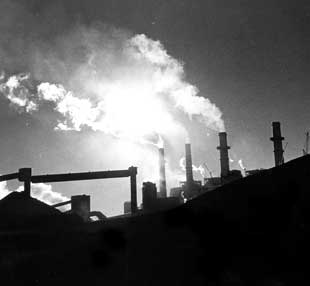 In these times of conservative moral values, free markets and high technology the environmental movement is increasingly on the defensive and has a tendency to speak in simple slogans.
In Australia the farmers, in the form of the Nationals, have gained control of environmental reform, the old ways of doing things are defended in terms of Australian identity, little progress is being made of restoring water to our rivers, and biodiversity is seen in terms of candyfloss.
So we do we environmentalists stand today? What do we need to do?
A tough quote from 'Environmentalism is dead. What next?' by Adam Werbach posted in In These Times:
"The loss of the Arctic National Wildlife Refuge is yet one more piece of evidence that environmentalism, as a political movement, is exhausted. The signs of environmentalism's death are all around us. Environmentalists speak in terms of technical policies, not vision and values. Environmentalists propose 20th century solutions to 21st century problems. Environmentalists are failing to attract young people, the physical embodiment of the future, to our cause. Environmentalists are failing to attract the disenfranchised, the disempowered, the dispossessed and the disengaged. Environmentalists treat our rigid mental categories of what is "environmental" and what is not as things rather than as social and political tools to organize the public. Most of all, environmentalism is no longer capable of generating the power it needs to deal with the world's most serious ecological problem---namely, global warming."
Werbach says that it is time to go back to the drawing board.By this he means that to step outside the limits of an artificially narrow discourse to articulate a more expansive, more inclusive and more compelling vision for the future. This means that we will cease to be environmentalists and start to become [American] progressives.
I guess it all depends on what we mean by enviomnmentalism. Werbach understands it to mean what Michael Shellenberger and Ted Nordhaus described the process of environmental policy-making in the October 2004 paper, 'The Death of Environmentalism':
The three-part strategic framework for environmental policy-making hasn't changed in 40 years: first, define a problem (e.g. global warming) as "environmental." Second, craft a technical remedy (e.g., cap-and-trade). Third, sell the technical proposal to legislators through a variety of tactics, such as lobbying, third-party allies, research reports, advertising and public relations.
Werbach adds that by the American bicentennial, this kind of environmentalism had triumphed. Sweeping protections had been put in place, and the focus was now as much on implementation through the courts as it was on new legislation in Congress. Similarly in Australia. Presumably this environmentalism speak in terms of technical policies, not vision and values.
May 11, 2005
letting things be#2
Here's a bit of a challenge from Freya Mathews:
"Faced with the devastating environmental and social impacts of corporate capitalism and contemporary global markets, the advocate of letting-be might search for the essence of capitalism and find it in the liberal tenet of freedom---the right of everyone to pursue their own good in their own way subject only to a minimal requirement that their doing so not extinguish the like right of others. She notices the isomorphism between this principle of freedom and her own principle of letting-be. Instead of opposing this freedom, out of disgust for the havoc it wreaks on the environment and on the fabric of society, she expands its scope: truly to follow through on liberalism, she points out, is to let everything, human and other-than-human alike, work out its own good in its own way--in other words, to let everything be. How is she to convince liberals that not only human beings but all things are entitled to work out their own good in their own way? She will have to persuade them to change their metaphysical premise. And how is she to accomplish this? By couching her argument within her opponents' terms of reference. If, as is generally the case, liberals' terms of reference are rationalist, then she must demonstrate rationally that a change of metaphysical premise is needed. She must out-reason, out-argue, the proponents of reason and argument."
Freya Mathews, Letting the World Do the Doing. Letting things be is a different ethos to that of making things letter through control and domination that characterises the instrumental reason of modernity.
May 10, 2005
letting things be
I've been in budget lockup all afternoon and I'm just too tired to post. So have a read of this paper by Freya Mathews. It is opportune since the environment did not figure all that strongly in the federal budget. In fact it was never mentioned in the Treasurer's speech, even though the economy depends, and impacts, upon natural processes.
Mathews says:
"The trap for environmentalists, in thinking about nature, is to reify it, to conceive of it in terms of things rather than processes. When we think of it in this way, we understand it as consisting of all those things which are not the product of abstract human design: forests, swamps, mountains, oceans, etc. We then contrast nature with the human-made environment, consisting of cities, artefacts, technologies, etc. We make the same mistake in thinking about nature at the level of the self: the natural self is equated with the body, the instincts, intuitions, emotions etc, and this is contrasted with the civilized self, consisting of the controlled rational ego. The environmentalist's defence of nature is accordingly read as a project not only to save existing swamps, forests, etc, but to restore lost ones. Introspectively it is taken to imply a counter-cultural ethos of spontaneity, intuitiveness and instinctuality. From the present point of view, this is a mistaken reading. To 'return to nature' is not to restore a set of lost things or attributes, but rather to allow a certain process to begin anew."
So what does 'returning to nature' mean in the urbanized world we live in?
Mathews suggests that it means:
"...allowing this world to go its own way. It means letting the apartment blocks and warehouses and roads grow old. Yes, we shall have to maintain them, since we shall need to continue to use and inhabit them. Inhabitation will also call for adaptation and aesthetic enhancement. But this is compatible with a fundamental attitude of letting be, of acquiescence in the given, and of working within its terms of reference, rather than insisting upon further cycles of demolition and 'redevelopment'. Gradually such a world, left to grow old, rather than erased for the sake of something entirely new, will be absorbed into the larger process of life on earth. Concrete and bricks will become weathered and worn. Moss and ivy may take over the walls. Birds and insects may colonize overhangs and cavities within buildings. Green fingers will open up cracks in pavements. Bright surfaces will fade, acquiring natural patinas. Under the influence of gravity, the hard edges of modern architecture will soften, and imitate the moulded contours of landforms. Given time, everything is touched by the processes of life, and eventually taken over by them, to be fed into the cycle of decay and rebirth."
Interesting eh?
January 12, 2004
Whilst painting the electronic cottage during the day I've been thinking about what has been happening to wilderness in Tasmania. Many Tasmanians have an empathy with place--Tasmania as a natural place.
This implies both a deep concern with the processes of life integral to the temperate rain forest and an understanding of human beings in ecological proceses.
January 09, 2004
land ethic
I've been rennovating all day this past week and I'm too tired in the evenings to do much in the way of posting.
I have been able to track the debates on wilderness and the logging of old growth forests in Tasmania.
It seems to me that what is missing in these debates a conception of wilderness as an ecosystem, a conservatist/environmental ethic that starts from a land ethic, and a land ethic based upon ecosystem integrity.
January 02, 2004
Re-thinking wilderness
The previous post on wilderness and this one over at junk for code indicate the challenge to the traditional conception of wilderness.
This is the one traditionally associated with preventing the building of the Franklin Dam in Tasmania in the 1970s and allowed Tasmania's rivers to continue to flow free. This romantic conception continues to be deployed in campaigns to save Tasmania's old growth native forests from being clear felled for wood chips for the Japanese market. It has underscored the preservation activity in Australia and the US that saw the creation of national parks, and been used to criticise the massive species extinction currently happening in Australia.
Thus the conception of wilderness is contested. We can meet the challenges by rethinking wilderness in terms of the ecosystem: wilderness is an ecosystem (an interconnected community of life) that has been minimally disrupted by the intervention of human beings. In responding to this conception of wilderness philosophy extends ethical concerns to non-human beings. It challenges the assumption that right behavior is exlusively a question of human relationships, works up an account of intrinsic value and a land ethic, and grants moral status to animals.
January 01, 2004
conflicts over wilderness
One of the criticisms that the indigenous people have directed at environmentalism is centred on the concept of wilderness. Wilderness, as a counter point to the domination of nature by instrumental reason, presupposes nature without any trace of of human interaction. This tacitly denies the very existence of Aboriginal people in the landscape and makes them invisible.
In effect the doctrine of terra nullius lives on within wilderness.
The result was that the establishment of national parks (the practical embodiment of wilderness) were established Aborigines were denied their customary inherited rights to use land for hunting gathering, building, rituals and rites.
Or, if the noble savage conception was used instead, them this presupposed idealised harmony of indigenous people in their relation to the land. They practiced the ideal model of conservationism; one that whites should aspire to. The indigenous people had the right dwelling conception and the right caring for the land ethos. Whites should learn from aborigines as noble savages.
Hence the conflict between the Aborigines and the Greens overlay the conflict between the greens and the pioneer settlers who celebrated the conquering and taming of nature as progress.
December 19, 2003
philosophy, wedge politics, environment
There is an interesting discussion that touches on philosophy in our political life by Wendy Wedge over at Crikey.com.au. The article is on the relationship between The Australian Greens, wilderness and forests.
Lets grant Wendy's main political point: that the Australian Greens practice wedge politics on envirornmental issues. Of course they do. Wendy is right that Bob Brown plays the old gowth forests of Tasmania as symbolic politics into the hearts and minds to the left of centre electorate in the inner city suburbs of Melbourne and Sydney.
The symbol is 'wilderness' and it is successsfully deployed against the ethos of utility of an instrumental economic reason. The symbol of wilderness used to be wild rivers, such as the Gordon River in Tasmania when the fight was about dams and hydro power.
One should not express suprise by this. After all, The Australian Greens are a parliamentary party that is seeking to increase its representation in the Senate. It aims to replace the Australian Democrats in holding the balance of power. And wedge politics works--Tampa showed that. Why not appropriate the successful tactics and strategies of the enemy?
Now to the philosophical point. Wendy Wedge says that the philosophical objection to the Greens is that:
"....philosophically they discount the value of the human and claim that the interests of nature are paramount. The argument goes that without nature there won’t be humans. Except that things are a bit more complicated than that as greens with a lower case “g” are discovering. Recently they have run into problems with indigenous Australians who have objected to environmentalist hijacking the word “wilderness”. You know – as in any area to be saved “is the last vestige of wilderness in (insert relevant geographic area)”.
Now as any fule knows...our indigenous inhabitants have been managing the landscape for some tens of thousands of years. Indeed, they are insisting that the greens stop using the word wilderness and that governments give indigenous nations rights of co-management of national parks....The trouble for the greens is that if they concede that “wilderness” has and needs to be “managed” some of their other claims start to look dodgy."
Several points can be made.
First, romanticism was the first expression of the ecological impulse, and romantic currents flow strongly within the symbolic politics of preserving what is left of "wilderness." Wilderness as uninhabitated in the sense used in Tasmania does not mean untouched by himan hand. The colonial history there is one of the white colonists destroyed indigenous Tasmania society, claiming the land fot r their own, and putting it to use as a resource to make a dollar. The politics of wilderness in Tasmania is concerned to preserve the old growth native forests in the Styx Valley from the "wise management" of the utilitarian foresters. It aims to preserve both the forests and the species living within this habitat.
Secondly, 'wilderness' of the 1970s environmental movement meant a widening of the sphere of ethics to include the natural world-- a land ethic if you like. that aimed to defend the existence rights of wilderness and in precedence of over human-use rights. It argued that right behaviour was not exclusively a question of human relationships, but also involved our relationship to nature and the moral staus of non-human entities. It's ecocentrism referred to the interconnectedness of all life.
Thirdly, I'm not sure that the philosophy being the Australian Greens is simply a romantic conception of nature. The green philosophy today also has something more to do with ecological science. Thus it accepts that human beings live within ecosytems not outside them, that ecosystems underpin our economic systems, and that the policy compass should be set towards ecological sustainability.
However, Wendy Wedge is not convinced by such well known considerations. Her concerns are political not philosophical She says the Australian Green's:
"...problem is their philosophic heritage. Greenery has taken, in grossly over-simplified terms, two forms over the past two millennia. Starting with the Romans and continuing through the Brits one lot wanted to make things green by regulating and controlling things through law. On the other hand there was another lot – mainly the German romantics, who had a sort of mystical view of nature and a transcendental view of how we might all recapture some pre-lapsarian rapture. This German romanticism is also claimed, from time to time, to be a precursor of Nazism and, thus, is the basis (if not understood as such) for the claims by inept Coalition backbenchers that greens are like Nazis. Sadly the substantive historical point is overlooked in the midst of Tory hysteria and hype and the tendency of some some greens to want it all in terms of both heritages."
The importance of pinning this romantic interpretation on the Greens as a political party and a new social movement is that it provides a justification for the old duality of economics being rationality itself and the critics being irrationalists. It is then added that an [instrumental] economic rationality leads to liberalism whilst romantic irrationality (intuitive and mystical modes of knowing) leads to totalitarianism. Hence the recent 'Greens are Nazi's' charge.
This is the wedge politics of the culture wars, as it is designed to splinter the centre left attracted to the Greens but which loathes fascism.
July 23, 2003
Ecological gaps
This post (and its antecedents) by John Quiggin, when juxtaposed to my visit to the Murray Mouth last weekend and watching Roman Polanski's Chinatown about the LA Basin, got me thinking.
Here is what I thought.
The current concerns to increase the environmental flows in the River Murray and the closure of its mouth due to lack of river flow, means that we stand at the end of an era of development without ecological limits.
That was what I thought when I stood at the mouth where sea, sky, water and land touch.
The lack of concern for, nay indifference to, the ecology of the Murray-Darling Basin in the 1940s Snowy Mountain Hydro-Electric Scheme has rebounded on us. Though water now water fuels the economy we now discover that there is not enough water, the irrigators need to have their entitlements reduced, and Adelaide has to go on water restrictions.
I then realized that we have not really come to grips with the land that we live in. Adelaide has a Mediterranean environment that is shaped by a dialectic of water and drought. In a fundamental sense the white pioneers inherited language and cultural inheritance failed the newcomers to this continent. Since English terminology is specific to a humid climate not a Mediterranean environment, its conception of river as water flowing inside two banks fails to grasp a river that consists of floodplains and wetlands.
In applying the English category to the River Murray the floodplains and wetlands were remaindered out and disappeared from sight. What the English category failed to grasp was the strangeness of this land. So the land (Murray-Darling Basin) had to be shaped to fit the concept. Hence the Snowy Mountain Hydro-Electric Scheme: it was a technological fix to turn a brown land green, droughtproof the Basin and keep the river flowing all year round for the irrigators.
A nature-defying mode of habitation never turned out that way it was all planned. An European-style agriculture based on water diverted from a working river has turned out to an ecological failure.
This failure of inherited categories to cut reality at the joints 200 year years ago points to a larger claim: that the Murray-Darling Basin remains opaque as a historico-natural phenomenon to Anglo-American paradigms of urbanism. Our cities, such as Adelaide, sit at odds to the land in an ecological sense. They are not a part of the ecology of the place.
So talking about increasing the price for water, converting water entitlements to property rights, cutting back allocations strikes me as tinkering. I fear that the technological fix of market levers embody more Anglo categories that will be imposed on an alien landscape. The category "Resource" is the foundation upon which the whole free market rests (eg., the efficient allocation of scarce resource), but it does not capture the ecology of the riverine environment. What is not captured by resource is going to remaindered.
The future is one of a stalemate over the limited water supply and ever-increasing demand between three main groups-- agricultural, urban and environmental. Water is for fighting over and cities, farmers and environmentalists will battle over who will control the Basin's water. South Australia's growth has been, and still is, closely tied to water development. The traditional way of closing the gap between supply and demand has been to increase supplies -- either by building new facilities such as dams or by tapping underground aquifers is not an option in South Australia. Recycling storm and sewerage water is but little is being done.
What needs to change fundamentally is the way we have designed our cities and agricultural systems. Instead we will go for the cheap and quick repair job--buying water on the open market to prop up environmental flows so the working river has a modicum of health.
If you want to push this thought a bit further then it puts into question the deployment of the modernist conception of the Baconian Enlightenment project by the liberal state to make Australia modern. This use of modernist science (reductionist and elimination of old ideas by new ones) involved an ahistorical, instrumental reason to improve the human condition coupled to an appeal to a tacit notion of progress. It has been thrown into question because its categories got things messed up-----to put it nicely, they failed to explain how the nature/society dialectic in the Murray-Darling Basin worked; failed by a long shot.
Want more? Well the analytic philosophers not only misunderstood the philosophical tradition; they also failed to understand how science worked because they were unaware of the actual history of science and the existence of technoscience. They were blinded by a pure science attaining Absolute Truth that transcended mundane human history.
July 10, 2003
river keepers challenge growth fetish
This looks to be a good book. River keepers are what we need in Australia today, especially for the Murray-Darling river system.
We do have the stirrings of a citizen perseverance to transform the Murray-Darling River catchments into a "critical legal battleground of the environmental movement". But we have yet to see litigations to force state governments, Adelaide city and other communities on the river, several commonwealth agencies, and various corporations to clean up their acts and comply with environmental law.
It is the white death of salt and the lack of environmental flows not PCB's that is the big concern in the Murray-Darling Basin; the dryland salinity threatens farmland and drinking water, whilst the lack of environmental flows caused by the overallocation of water threatens the life of the Murray-Darling river.
And we do have a third story that is playing itself out; namely the story of repeated neo-liberal political assaults against environmental regulations and their enforcement by water authorities/utilities to protect the irrigators. The battering ram is property rights. The aim of the assault is less to paralyze, and more to get around, the federal government's environmental policies in the Basin--eg., the cap on water diverted from Murray-Darling River----and their enforcement. The driving force behind the assualt is the twin assumption that the economic growth is the central aim of public policy and that markets must prevail.
For many politicians the answer to every problem is more economic growth, even though economic growth in the Murray-Darling Basin has degraded the basin's ecologyto the point where it now needs substantive repair.
No worries say the neo-liberal economists. More economic growth will provide the wealth that will enable us to address the environmental problems. What is important is to find the right techniques and instruments to manage the economy to ensure sustainable economic growth. Moreover technology will save the day---stop environmental decline and ease the increasing pressure on resource consumption and extraction by irrigators.
The economists are uncritical advocates of, and apologists for, economic growth and assume as self-evident that increased economic growth equals increased wellbeing. It is self-evident that increases in the GDP and more money in the pocket leaves people and the environment better off.
That neo-liberal assault wave on environmental protection of our rivers appears to have given rise to the beginnings of a counter-wave of aroused public opinion to save the river. The counter-wave challenges the neo-liberal transfer of political authority from the state to the deregulated market, where the interests of big corporations are hegemonic. Rarely does the state step in to block development.
May 08, 2003
a few reflections on a holiday
It is a slow return to work after the week long holiday in the wilderness around Mallacoota Inlet. The holiday was a leaving or escaping from a stressful urban life to replenish my health. It is the emotion that all the 4 wheel drive adverts appeal to as they sell their latest airconditioning bushbashing model for jaded middle class consumers. It is sad to see romanticism trashed.
The Croajingolong wilderness on the eastern coast of Australia near the Victorian and New South Wales border was such a contrast to the standard view that nature is an enemyand that it has to be tamed and reconstructed into an agricultural and industrial machine. Despite the inroads of industrial tourism and a history of local commercial fishing that had depleted fish stocks, there was recognition that wilderness had intrinsic value.
The latter view was embodied in the landscape we drove through as we travelled from Adelaide to the Great Dividing Range. The landscape had been shaped by the Snowy Mountains Hydro-Electricity Scheme. It assumed that technology can change for the better, that the power of science can solve all the nation's problems, that scientific practice is apolitical and that technology + science can provide the knowledge to harness natural resources for the benefit of the nation's population.
The Snowy Mountains Scheme embodied the view that modernizing country through science and techology was the role of the liberal state. Under this modernist ethos the broad development of the natural resources of the nation required a partnership between science and the state to undertake research and promote industrialization. The Snowy Mountains Scheme is a twentieth century icon of Australian modernity.
So the history of the landscape is one of rivers are transformed into organic machines and old growth forests become wood factories through the use of brute force technology. Tomorrow's bounty in the form of economc growth will be the result of todays technology (agriculture+electricity+dams) is the justification. This utilitarianism favours short-term economic considerations over long-term environmental ones.
Technology and science are then linked to the bureaucracies, universities and financial institutions by the political machinery to create a brute force politics that pushes aside all opposition to development.
That was the history of the landscape I drove through on the way to spend a week in the wilderness. That history is being reworked or transformed in the knowledge economy with biotechnology and genetic modification under a neo-liberal mode of governance under the guise of excellence. The shift is from creating the wealth of nations from physical assets (natural resources) to creating wealth from the nation's intellectual resources through the development of science-based industries. It is the commercial importance of science and technology that is stressed as the way to shape the nation state's future.
In the knowledge economy the loose linkages between the bureaucracies, universities, industry and financial institutions are tightened by the state to shape and structure the exploitation of intellectual capital for the sake of wealth creation.
April 23, 2003
Poisoning Ourselves
A talk to the Southern Fleurieu Marine Conservation Society (17 April 2003)
In this talk I want to address the need to shift the policy compass to sustainability in the Murray-Darling Basin by arguing in terms of the closure of the Murray Mouth. That is how the River Murray impacts on us in this part of the river country known as the Murray-Darling Basin.
The closure of the Murray Mouth indicates that something has gone badly wrong with the River over and above the impact of the drought. So we ask: what has gone wrong in the Murray Darling Basin? How did the river stop flowing? What happened? How can we put things right?
We sense that a tragedy has happened and we guess that it will be difficult to put things right. The tragedy? We are poisoning ourselves. To put it another way we are fouling our own nest.
It is difficult to accept that we are poisoning ourselves. Why would we do anything so silly? Yet poisoning ourselves, I will argue is a good diagnosis, for why our way of life is sick.
The way I am approaching this is in terms of a therapeutic concern to remove those poisonous beliefs and values that make our way of life sick. The task is just like the medical doctor, namely, to identify what makes us sick, offer a diagnosis and suggest a remedy that will cure the sickness.
The medical conception of philosophy is not an uncommon way of looking at things. Thus the drought indicates that the land is suffering, something bad has happened; there is a diagnosis about farmers living with the risk of drought and a remedy is found to prevent further damage and suffering in the form of better management of risk.
So what we are doing with this philosophical therapy is looking at our cultural beliefs, including our way of looking at nature, is to see how they contribute to our bad practices in the Basin. It is the beliefs and practices of developmentalism that have contributed to the ill-health of the Basin’s ecology. A philosophical therapy implies that we can change this way of governing ourselves.
1. A Fable
One way that we can try to make sense of what has happened to us is to frame it in a story or narrative. Look, we say, this is how we got to where we are now. This narrative gives us a historical knowing.
Joe and Jane are family farmers in a country where public policy is rule by the debt truck that magically appears during elections. They are worried because ABC Radio has just mentioned that the river’s mouth down south has closed.
Joe remarks, “The drought must be bad upstream. We should use the money from the rice to pay off the debt on the place.”
Jane nods. “It’s the sensible thing to do”, she says.
A few months latter after inspecting some of the property, Jane says to Joe, “Salinity is getting worse. Nearly 50% of the land is now affected. Maybe we should plant trees.”
“Let’s get some advice”, Joe says. Aren’t the salinity scientists preparing a report for the catchment management board?”
“Oh, those environmental scientists were all downsized a few months back, due to budget cutbacks”, Jane said.
A few days latter Joe said, “I’ve spoken to the bank. They said it was a good time to pay off the debt with the world economy in recession”.
A few weeks later Janes tells Joe that the wetlands have dried upon and the trees are showing signs of stress.
“I thought there was an allocation of water for the wetlands in the catchment board’s water allocation plan”, said Joe.
“Oh that duck water was sold off by the Water Authority”, said Jane. “They borrowed it and never paid it back. We need some good rains.”
“Oh well”, says Joe, “the country will bounce back once the rains come. It always does. We have to get that debt paid off.”
A month or so later Jane tells Joe that the river has dried up. “It’s no longer flowing”, she says. “I reckon it’s all the cotton development upstream. The dams the cotton and rice farmers have built upstream have taken all the run off from the rains.
A few months go by. Things become pretty grim on the farm with no water.
A few months later Joe says, “Honey, we are all right. I sold our water licences to the upstream cotton growers and paid off the net debt on the farm. The market value was $80 million, the debt was $20 million and we are $60 million better off. We are debt free. Isn’t freedom such a wonderful feeling?
Jane is angry. “What sort of logic is that? The country is ruined and you sell the water licence for the sole reason to pay off the net debt? How we are supposed to be better off? What use is the land without a water licence? You are only concerned about the debt on the farm and not the country. Yet is the ill health of the catchment that has caused the farm to fail.
Joe looks stunned. He was looking to be affirmed as a marketplace hero by his beloved.
He says, “But we can use the money to buy property investment units on the Gold Coast and live off the rental stream. Maybe we could even become property developers”
Jane looks at him and says, “Shouldn’t we be thinking about the catchment? Do we not belong to the land? Are we not part of the local community? We should be caring for the land”.
She pauses for a moment, then she says, “Do not these things count too? Why is making money is everything?”
So what is the point of the fable, apart from Joe being concerned about money and being shaped by the ethos of the market, and Jane’s concern about the environment that goes beyond a duty of care to a catchment care? The fable suggests that we gain our understanding of the big changes that shape our individual lives when they have already happened. Historical knowing is a retrospective knowing, a looking back on what’s already happened, say what has happened since the Snowy Mountains Hydro-Electric Scheme was built after WW2. We then interpret what has happened to the river country in the Murray-Darling Basin to make sense of this history.
2. How did we get here?
The historical narrative suggested, or implied by, by the fable indicates a situation where the European agricultural footprint has been too heavy on the landscape. Hence we devastated salinised landscapes, unhealthy rivers, declining biodiversity etc. Admittedly, this is big picture stuff, but we apply it to the local area of the river country where we belong. We can ask: how did the Ramsar-listed Coorong wetlands get to be in such a bad way? The question arises from the current dredging of the Murray Mouth inlet to let the sea flow into the Coorong’s lagoons.
The following practices have helped to explain why the Coorong is in such a bad way:
●the Upper South East Drainage System. This deals with the rising saline groundwater in farmland caused by bad farming practices, eg., clearing too much of the landscape, by taking it off farm;
●too great an extraction of the groundwater aquifer, eg., in the Angas/Bremer Region, by the viticulture industry;
● the lack of flow of our local rivers in the Eastern Mt. Lofty Ranges due to farm dams storing the run off in the upper catchment and direct pumping;
●treating our wetlands as cheap agricultural drainage systems (eg., the Southern lagoon of the Coorong); or treating the river as water storage basins for irrigators, eg., Lake Alexandrina;
·too much water has been taken out of the River Murray upstream by irrigators.
This narrative gives us a form of historical knowledge, which enables us to look back on our history, reflect on it, and become aware of it. It gives another way of reading the Snowy Mountains Hydro-electricity Scheme to the standard one of the triumph over nature, masculine toughness shaping nature, science and technology as instruments producing a better world. This historical knowledge gives us an environmental history that questions the whole enlightenment ethos of progress and gives us an insight into the ecological wreckage caused by the storm we call progress.
This environmental knowing suggests that current agricultural productions systems are ecologically unsustainable. It is not simply that there is not enough water in the river as suggested by the fable. There is not water in the river due to the way we produce food in the Basin. It implies that we need to do more than tinkering around the edges by increasing efficiency in the use of water---maybe our European-style agriculture is not suitable for the landscape.
3. What is the poison causing the damage to our way of life?
The medical conception of philosophy leads us to interpret the above as symptoms that signify the ill-health or sickness of our way of life. Something is wrong with our current mode of life. So what is sick about our way of life?
The basic diagnosis suggested by a therapeutic philosophy is that the sickness has been caused by an ongoing commitment to development, a commitment to economic growth through the wine and horticulture industry. This is development in the form of water for growth. It is part of the big dream is associated with the Snowy Mountains Hydro-electricity Scheme was to divert water from the Snowy westward to make the deserts bloom. And the economic growth of the wine and horticulture industry indicates that the dream is a reality.
So why is our way of sick? It is a sick way of life because we are not treating our rivers as rivers, or our wetlands as wetlands. Thus we cannot raise and lower Lake Alexandrina because it conflicts with the requirements of the wine industry. Our rivers are drained of environmental flows because of the need for water by irrigators.
True, many people dispute this kind of diagnosis. They say that it is just bad management by the state governments in the past. The states should have been more sensible in allocating water licences. Too many licences were issued. What is needed now is better management through sustainable reform. This is best done through the market and it x can be achieved through proper property rights, water trading etc.
This is right. But it does not go far enough. We need to ask what drives the bad management practices? Why do they continue given our knowledge about the River Murray’s ill-health?
The answer is that the state’s concern for regional development and wealth creation caused them to use water to drive economic growth and ensure flourishing regional communities. It is the policy goal of wealth creation that has lead to the over-allocation of water in the Murray-Darling Basin and our rivers becoming salty.
Developmentalism means increasing the economic pie so that everyone is better off in terms of their standard of living. It has lead to
● no water being allocated for the environment
●when water is allocated it is borrowed for development
●when open irrigation channels are piped to lessen leakage and evaporation the water saved is used for further development rather than returned to the river.
We need to wake up from this dream because developmentalism now threatens the very foundations of the human life that has been built in the Murray-Darling Basin as well as the future of Adelaide.
This will not be easy because we are ensnared in the dream of development or progress. What this means is that we enframe the world of nature through the ethos of developmentalism. We see resources not rivers. We see agricultural land not fragile ecosystems. We see ourselves as developers and money makers not as custodians or caretakers. So we work inside the enframing. Questioning this enframing, and treating it as a poison, gives us the beginnings of an environmental history that focuses on our relation to nature.
4. What can we do?
Few people dispute the diagnosis that our current mode of life is unsustainable. Everyone realizes that we cannot continue with business as usual, and that something has to be done to repair the damage, even if they find developmentalism as a poison hard to accept. Repairing the damage is where we begin to get into disputes and enter into the realm of politics. Many different remedies are on offer to deal with the poison.
Take the Rann Government. It addresses the closure of the Murray Mouth by saying said that dredging the mouth to keep it open is only a bandaid. The real cause is not enough water coming down the river. We need more water by way of environmental flows for the River Murray—at least 1600 gigalitres. This has to come from the Eastern states. That is the political message it sends back to the eastern states. And it keeps on sending that message.
It’s not a good remedy. It implies that SA needs to do nothing to improve the health of the River Murray. The problem is that SA can act within it is own borders. What the eastern states see is that SA needs to act to ensure that the water saved is returned to the river, and is not used for further development, as is happening with Clare.
●It can do something to ensure healthy local rivers that flow into the River Murray and Lake Alexandrina; it can cut Adelaide’s dependence on River Murray water by moving it towards a sustainable city; the same can be done for Whyalla through solar–powered desalination;
●it can act to ensure that the Upper South farmers become responsible for their salinised landscapes by changing their practices;
●it can control development in the Barossa the Clare Valley and Angas Bremer areas and regulate and provide incentives to facilitate the wineries greening their production processes to ensure a more efficient use of water;
●it can prescribe water resources in the Eastern Mt Lofty Ranges to control unregulated development.
But SA doesn’t do these things, even though it needs to recover around 160 gigalitres of water from within its own boundaries as its share of clawing back for environmental flows under the Living Murray Project.
5. What is the remedy?
Why is there a lack of government intervention? Why do we not change the way we are governing ourselves? We know that we are fouling our own nest. So why is there a lack of action by SA to do something substantial to claw back water for environmental flows for the River Murray?
Well this way of looking at things is rejected by policy makers. The answer the the senior bureaucrats and policy advisors – the policy elite - give is that they reckon they have found the one true medicine to cure us from the poisons. Economics, they say, is the only way of analysing the issues and devising the remedies. The poison they identify is big government intervention: state government’s have over-allocated the f ground and surface water by dishing out water licences to fuel economic growth. The diagnosis is that there has been too much government involvement. The remedy is a healthy dose of market medicine. If we set up a water market with property rights, allowed interstate trading then this will increase the efficiency in the use of water and improve sustainability. Governments should row not steer. The market will steer through its logic of encouraging the efficient use of water resources.
This diagnosis is too simple. The market will increase efficiency in water usage and prosperity to some communities, but it will not restore damaged landscapes or repair our badly stressed rivers by itself. Government intervention is required to ensure that water reform actually results in increased environmental flows for the River Murray. More medicine is required. But the politicians are not listening; or if they are, then they are more engaged in media stunts and appearing to look good rather than doing anything substantive.
The gap between rhetoric and reality is so great that we citizens begin to suspect that the politicains have something to hide.
6. Another story?
What we have realized is that we are not getting is government action to create a new sustainable mode of living. Politics, many say, is actually putting the break on the shift to sustainability. To make sense of this blockage we need another story to get our bearings on our political history.
During the 1990s a gap opened up between the neo-liberal market policies favoured by the policy elite and ordinary people who were fed up from two decades of market reform. During the 1990s people were in a bitter mood about losing their communities and finding their way of life eroding. They were frustrated and felt powerless because they weren’t being listened to. Hence, Pauline Hanson’s One Nation Party was used by the regional populists in the 1990s to give Canberra a good kick, to wake it up from its neo-liberal dream, and to ensure that the politicians heard what the people saying about how they were suffering from economic reform.
What this indicates is that politics is where the policies and people’s concerns collide and politicians have been forced to bridge the gap between the two. The solution has been to continue with economic reform as a way to engage with global, economy and a caring eye to those suffering through the transition. This caring is articulated by the social liberalism (Paul Keating) and the social conservatism (John Howard); and it aims to minimise the impact of market outcomes, cushion the hardest hit and least able to cope, and provide alternatives.
On this story it is held that basically the policy elite are right and a battered public just didn’t understand that the economic reforms were for their own good. On this story we get a policy drift, a policy vacuum, arising from the clash between economic reform and the social consequences. Hence all the talk about lack of policy agenda a searching around for a new policies and a new vision. We then hear the cries for good leadership.
We have a similar policy paralysis around water reform to ensure more sustainable practices and higher environmental standards for landscape conservation. The socio-economic consequences of the reforms are big and the politicians are running for cover.
But what the ecological crisis in the Murray-Darling Basin indicates that we are involved in a debate about value; s about what sort of society we want Australia to be. Those who live downstream near the Murray Mouth are clear. It has to be a sustainable Australia. Only a sustainable Australia will ensure that the Murray’s Mouth remains open. This reform needs to be driven by local action based on local knowledge.
Bibliography
Lindy Edwards, How to Argue with an Economist, (Cambridge University Press, Melbourne, 2002).
April 19, 2003
A challenge to Libertarians
The Oz collective libertarian blog Libertarian.org is going great guns. New writers, lots of attitude, substance and style. Good on you guys. Keep it.
Here is an easter challenge from a lefty schooled by ye ole Marxist philosophers at Flinders University of South Australia.
The Austrian School argument was successful against the central planning of the old Soviet-style socialism. But in 2003 the thesis that socialism is the embodiment of a boot stamping on a human face in the mud is wearing a bit thin, especially with the formation of the environmental state within liberal capitalism. What has been bequeathed to us by Hayek is the duality of socialism and capitalism as opposites.
But history did not end in 1991 with the defeat of socialism and the triumph of liberal capitalism.
You guys do not have much in the way of a good reason to show why we should escape the environemental state. From what I can see you offer property rights, competitive markets and a spontaneous liberal order as a way to meet the ecological crisis (eg., the Murray-Darling Basin in Australia). Negatively, its cheapshots at knee jerk environmental populists.
Is not the newly forming environmental state fundamentally at odds with the ethos of egalitarian individualism?
Do you have a good reason to show why we should escape the environmental state as the new form of the iron cage of liberty?
Without a good reason it seems to me that you guys face political defeat.
February 28, 2003
The ship of state and the storms of nature
The classic image of politics is that of the [city] state as a ship sailing the seas with the government equivalent to the captain and crew with their special skills and knowledge. The city, like the ship, is an instrument, has been built by humans to subjugate chance, contingency, nature and external danger. The ship needs to be in good shape if citizens are to live flourishing lives. Those on board the ship believe that their technological/scientific resourcefulness that subdues an uncontrolled nature, coupled to an enlightened, utilitarian reason that devises lots of management plans, will overcome any threat, contingency or ungoverned chance.
And yet tragedy can be sense below the surface.
They are optimists. The power of luck to impact negatively on human lives (eg. drought) can be minimized through subduing and dominating nature (building the Snowy Mountains Hydro Electricity Scheme). Human lives can flourish( by making the deserts bloom).
This requires consensus in the city and conflict to be minimised. That was the message that came out of the River Murray Forum in Adelaide this week. Order and harmony must prevail. People are see as material or tools for exploitating nature 9the river and land) to ensure ongoing wealth creation.
Insoluable conflicts do not arise on the ship of state because all values are commensurate with those of the market and wealth creation. You can only the environmental damage if you have the money to do so. You only get the money through wealth creation. Those who create conflict because of their different principles (greenies) are seen as obstacles to be overcome or tamed. The utilitarians who run their ruler and calculus over everything engage in a ruthless simplification of the world of value because they effectively eliminate conflicting obligations. There is no tragic conflict in their world between wealth creation and the health of the river. We all pull together to ensure a healthy working river.
And yet we sense the tradgey beneath the modern surface of political life. It is a tragedy that finds its clearest expression in letters to the editor--these letters are almost playing the role in contemporary life that the Greek Chorus played in a Greek tragedy such as Antigone.
The tragedy is the conflict between between wealth creation and the free market and the ecological health of the river as a commons. These are in deep conflict.
The former is morally defective because it is so narrowly focused on money that it is unwilling to accept the long-term consequences of irrigated agriculture. The neo-liberal economists and politicians draw a line through farmers and greenies; and roughly say that what falls to one side of the line (the greens) is a foe, bad and irrational; and what falls to the other side is friend, good and rational.
The greens are equally onesided and narrow. They claim that they are pure and are all for therestoring the river for its own sake. They talk about river red gums, birds, fish, wetlands, greenhouse, revegetation and environmental flows. They draw on ethics, imagination, and green groups in civil society. If one listened to the greens on would not know that a global market existed and that Australian agriculture has adapt to the competitive pressures of the market to survive.
Is this not a conflict between different ways of envisioning the world with their different values and rank ordering of priorities? The concerns of each and their picture of what matters is radically different. Each emphasises the important values that the other has refused to take into account. (I am structuring this conflict in Hegelian terms of opposition). Each sphere of value strives to negate the other in terms of political conflict.
Those who run the ship of state (ie., the SA government politicians at the River Murray Forum) were most concerned to annul the contradictions in the city; reconcile the different forces (wealth and ecological) of human action. They wanted to achieve consensus through cooperation. So what was required in the communique was conflict-free harmony in the drafting session. The SA Government desired to develop a civic order that incoporates and respects both ecological obligation and private property right.
The politicians are not just saying that they respect the different principles, claims and concerns; they are saying that the very possibility of conflict between the different spheres of values can be overcome or eliminated. This overcoming is done in terms of the accepted public policy talk about healthy working rivers. 'Healthy working rivers' is harmonious synthesis.
Creating harmony through synthesis. It is pastiche Hegel. Dialectics on roller skates. It is a refusal of the discordant elements of reality by those who believe in happy stories about triumphant progress. The politicians are driven by an ambition to eliminate conflict. They only see the light of constraint. It promises salvation/redemption.
The dense and compressed letters written to newspapers---the open eye of public opinion-- would point out that ships travelling over the waves are often wrecked in storms. This image highlights the vulnerability of human enterprise to external happenings. Technological progress through the domination of nature has lead to salinised landscapes and rivers that no longer flow. The human triumphs achieved through the controlling power of instrumental reason (making deserts bloom) turn out to be a compressed document of reason's limitations, transgressions and conflicts. What started out as a civilizing instrument ends up being uncivlized.
The vision of the letter writers---as a modern day Greek chorus--- is one of human beings being ensnarred in the prison of unbearable political conflict. Their dark vision is one of tragedy and it is driven by the terrible side of life.
The power of the negative (ie., Hegel with passion) is what the harmonious synthesis of 'healthy working rivers' has to deny---the negative that highlights living on the razor edge of luck. A harmonizing political reason can only achieve the desired consensus through tacitly denying the terrible power of continency, political conflict based on different and competing values and the sickness of instrumental reason that insists its single way is the correct way.
And philosophy? What does it say about living on the razor edge of luck? What therapy does it propose for the sickness of civilization? A conservative philosophy would say 'stick close to human conventions that have been built up, and established over time. They, the city's convention ---as tradition---offer us a good guide to what is important and worthy of our attention. They are a form of healingthat can counter an instrumental utilitarian reason that thinks in numbers, counting weighing, measurement, calculas and and equations.
And an eco-philosophy in the city? What does the crippled fool in the world of public policy say? It speaks in the name of practical reason that responds more openly to the shape and powers (ecology) of the natural world, is more flexible about the vulnerability of human beings, more accepting of strife and the disrupting power of the passions and more concerned to build a mode of life based on 'a caring for'. The new sustainable mode of life breaks with, or transgresses, the established conventions of the city that have been built up around the use of water in urban life and its hinterlands.