April 29, 2004
it was a time
I'm reading Lester Bangs. Re-reading the material in Psychotic Reactions and Carburetor Dung (1987), and Mainlines, Blood Feasts, And Bad Taste because I'd read a lot of this emotional thinking aloud before. I'm reconnecting with it. The narrative is one of keeping the faith as rock music sank pretty low during the 1970s.
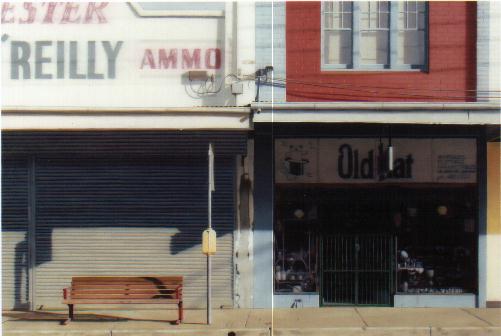
Lester's material takes me back, since it is about capturing the mood or feel of a place.

It's a memory of a place where I once lived, walked the streets hearing the sounds of the unruly guitar-based energy of Midnight Oil being played everywhere.
It was a time when I listened to Astral Weeks, read Lester Bangs on rock and roll on the balcony overlooking main street, wondered about what had ever happened to Bo Diddley during nerve-torn nights. I used to devour Rolling Stone for insights into the gems of our popular culture that were buried in all the rubbish and the muck put out by our cultural heroes.
That was the time people were into pastoral nostalgias and assassinations and and struggled with the whole Miles Davis thing. It was long after Andy Warhol had been killled and I'd stopped reading Allan Ginsberg or listening to Bob Dylan.
I never did connect to Lester Bangs Detroit rock and roll bands. I could no hear the inner pain turned into deep poetry there. I did with punk though. Were Lester's Detroit bands good hard rock bands playing for the working class? Maybe the hard rock and fiery, pulsating sounds of Midnight Oil---before they went 'artsy' and experimental with '10, 9, 8, 7, 6, 5, 4, 3, 2, 1' --- was the Australian equivalent?
Artsy? Well, it became more political, as with 'Beds are Burning' from (Diesel and Dust) with slide into blandness with Garrett's predictable nasal growl, the same guitar chuggin, the lack of musical variety. The 'alternative music' becomes dull and formulaic. However, some of the songs become iconic in our culture:--'The Dead Heart', 'Blue Sky Mining', the 'Forgotten Years'. Musically Midnight Oil pettered out in the 90s. Yet when I saw them performing on television at the Sydney 2000 Olympics I was taken back by the intensity of the performance and its political criticism of our conservative national culture. It was all over in late 2002 when Garrett left the band.
Lester Bangs. He's full of the emotions of place even though his "gonzo" style is dismissed as "...a Beat-derived spew of words that aims for Kerouac and occasionally rises to the level of the execrable Charles Bukowski." His writings on rock music and Miles Davies' 'urban environment music' brings back memories of the urban landscape around inner Melbourne: that soft focus of the light playing across the shop facades of urbanscapes.

William Breen, Goes Further Tastes Better, 2003
Bangs was a partisan of rock at its noisiest-- he saw rock music as the ecstatic disruption of culture. He actually tried to put down what the music meant in the context of our world: what it said about who we are, what we do, how we choose to live, where we’re at and where we’re going.
Posted by Gary Sauer-Thompson at April 29, 2004 12:18 AM | TrackBack