January 04, 2005
tropical paradises
Many European tourists head straight to the gems of south Thailand to soak up the sun along tropical beaches, dive on spectacular coral reefs and indulge in a languid, sometimes lascivious, lifestyle.Thailand is very hot right now.
These tourist areas were badly hit by the massive waves and walls of water crashing into coastal towns and beach resorts lining the Andaman coast of Phuket island, as well as Krabi and Phang-nga on the adjacent mainland, Trang, Ranong and Satun further south.
Khao Lak district in Phang-nga province was very badly affected.
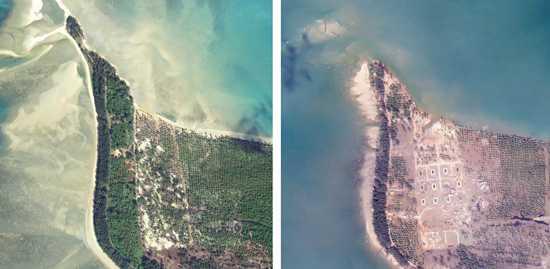
Reuters, Satellite images show the popular tourist destination of Khao Lak in southern Thailand before and after the tsunami struck.
The Indian Ocean has a significant threat from both local and distant tsunamis" and should have a warning network but has never shown the initiative to do anything. Thai officials had plenty of time to warn tourists. They reportedly played down warnings, afraid that if there was a false alarm, tourism might be seriously damages as had happened once before.When the broadcasts were beamed to tourist resorts in the country's south they underestimated the threat.
Thailand will need months to repair the damage to its lucrative tourism industry.
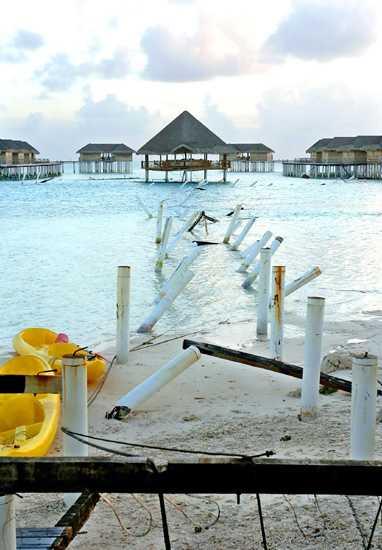
The Maldives may not be so lucky. Maldives a cluster of atolls in the Indian Ocean, are heavily dependent on travel and tourism. It was badly damaged by the tsunami, which left at least 117 dead or missing and caused damage that is estimated at more than 1.3 billion dollars -- or, twice the nation's gross domestic product.
AP
How then to lend a hand? Getting the tourists back is one answer.
However, the Asian tsunami has delivered unto the Maldives that nation's worst nightmare, a disaster foretold: being drowned by the sea. As this is a country whose highest point is just 7 feet above sea level, global warming could, over time, produce destruction similar to that wreaked by the tsunami. The atmosphere warms, the sea grows hotter, water levels rise, and the Maldives suddenly discover that they are no longer a cohesive population of mostly Sunni Muslims.
The Maldives are in danger of being transformed into an underwater coral reef.Hence their concerns.