January 23, 2005
Rock Criticism
Tis a cool Sunday morning in Adelaide and I have had a few moments to myself to be able to look around the web. I do not have that luxury very often.
Is cultural criticism all but dead now? When commentators ask these kind of questions they are mostly looking back to the cultural criticism of yesteryear, when a narrow high culture literary criticism ruled.
That hegemony is now going.Thank goodness.
I found a literay culture overbearing and stuffy and accepted that the counter culture of the 1960s and 1970s expressed in Rolling Stone and Creem magazines as a breathe of fresh air. Yet that never really displaced a literary one did it?
Cultural criticism is more democratic now, as it is starting to be produced from below, and is far more diverse. As George Cotkin says:
"Cultural criticism has certainly changed over the years. The old days of the critic who wielded unchallenged authority have happily passed. Ours is a more pluralistic age, one not beholden to a narrow literary culture. Today cultural criticism is alive and well, populated at the top by giants such as Harold Bloom, Susan Sontag, Richard Rodriguez, Morris Dickstein, Eve Kosofsky Sedgwick, and Frederic Jameson: all critics with differing perspectives and concerns. And cultural criticism, more than ever, is percolating up from below. Blogs and Amazon reviews are opening up the cultural space of criticism, offering new possibilities."
The online world is the key to these new possibilities as you can see here and here, to take two different kinds of examples.
And rock criticism? It is filled with nostalgia for the past and the privileging of old-timey rock 'n' roll:
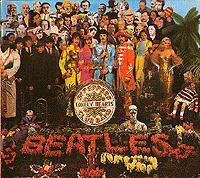 This 1969 album now sounds so tired and a hackneyed.I have not listened to it for years. I go back to Revolver.
Yet it is still celebrated as one of the greatest rock albums.It helped to create the rock and teen pop divide (rock is good, pop is bad) and a culture of reverence for the celebrities and icons of rock.
Give me early Velvet Underground and Nico anyday.
Or the Beach Boys Pet Sounds.
Yet this is yesterday: a time before the record industry set out to convince consumers record industry that songs made by clueless kids manufactured to resemble some marketing team's composite of a successful pop star is what popular music is, and should be, about.
So is the old rock criticism in need of some debunking. Has it decayed?
A history of rock criticism. Have the critiques or "think pieces" being replaced by gossip and artist profiles? Do rock critics now write for each other and rock musicians and so their work remains somewhat irrelevant to the broader culture?
Posted by Gary Sauer-Thompson at January 23, 2005 09:26 AM | TrackBackAnd today I read in Salon that Bob Dylan has been named a finalist for the (American) National Book Critics Circle Award for Chronicles, Vol. 1. Perhaps the old literary culture is so dead & dried out it seeks to suck a bit of life from the popular culture. Dylan's book is good, by the way. Deadpan funny in places & valuable as an explanation of Dylan's poetics: he calls it "folksong logic."
Posted by: joseph duemer on January 24, 2005 11:31 AMJoseph,
I guess I should have said 'a modernist literary culture', as it was high modernism that was so resolutely opposed to a lowly mass or consumer culture in the mid 20th century.
Bob Dylan is a good choice--he is a bridge between the two. Or maybe it was the beats who opened the gates and stepped into popular culture culture.In the visual arts it would be Warhol.
Dylan is probably a better bridge than the Beatles, or the writing in the rock music magazines.
What stands between a high modernist and a pop culture is the general literary/culture best represented by Partisan Review that stood in opposition to the narrow positivist culture that dominated academe in the 1940s and 1950s. Partisan Review connected to the wide society through the idea of the public intellectual.
Those days are well gone. Hence all the recent nostalgia and lament about the good old days. Today there is a lot more mixing and intermingling as the old boundaries between high culture, journalism, writing, popular culture and the culture industry have broken down---thank goodness.
Posted by: Gary Sauer-Thompson on January 24, 2005 10:22 PM