Thought-Factory.net Rhizomes1 Philosophical Conversations Public Opinion philosophy.com Junk for code
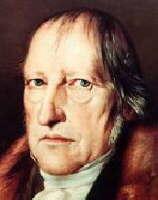
hegel
"When philosophy paints its grey in grey then has a shape of life grown old. By philosophy's grey in grey it cannot be rejuvenated but only understood. The owl of Minerva spreads its wings only with the falling of dusk." -- G.W.F. Hegel, 'Preface', Philosophy of Right.
RECENT ENTRIES
SEARCH
ARCHIVES
Library
Links - weblogs
Links - Political Rationalities
Links - Resources: Philosophy
Public Discussion
Resources
Cafe Philosophy
Philosophy Centres
Links - Resources: Other
Links - Web Connections
Other
www.thought-factory.net
'Constant revolutionizing of production, uninterrupted disturbance of all social conditions, everlasting uncertainity and agitation distinquish the bourgeois epoch from all earlier ones ... All that is solid melts into air, all that is holy is profaned.' Marx

Hayek, classcal liberalism, liberal order   August 18, 2008

Hayek differs from classical liberalism because of his attempt to re-ground the doctrine of liberalism without recourse to the fiction of the social contract, and by attempting to avoid the critiques usually made of rationalism, utilitarianism, the postulate of a general equilibrium or of pure and perfect competition founded on the transparency of information. The re-grounding is evolutionary, in that the market evolves. The market comes about at a particular time in history, as part of the emancipation from traditional society of the feudal order during the emergence of modernity.

Modern society constitutes a "spontaneous order" which no human will could ever reproduce or surpass, which came into being according to a Darwinian model. Modern civilization is neither a product of nature nor an artifice but the result of cultural evolution where selection operates automatically. From this viewpoint, social rules play the role attributed to mutations in neo-Darwinian theory: certain rules are retained because they are "more efficient" and provide an advantage to those who adopt them ("rules of correct behavior"), while others are abandoned.

The market is obviously the key to Hayek's understanding of modernity. In a society of individuals, exchange takes place within the context of the market, which is the only conceivable means of integration. For Smith and Mandeville, the market is an abstract mode of social regulation. It is governed by an "invisible hand" following objective laws which supposedly regulate relations among individuals, independently of any human authority. This theory takes into account habits, customs and even the traditions which have accompanied the emergence of the market. To some extent, as with Ferguson, market exchange becomes the specific modality of social relations based on custom.

For Hayek the market is not ordered according to goals: it leaves them undetermined and only deals with reconciling means.y combining the evolutionist theory and the doctrine of the "invisible hand," the "naturality" of the market it established without having to posit it as original. He does away with the idea of a natural order or self-evident truth. At the same time, he appropriates the liberal postulate according to which there are objective laws such as the free interaction of individual strategies leading not only to order but to the best possible one.

For Hayek, the market is no longer simply an economic mechanism for the optimal allocation of resources in a universe traditionally described as governed by scarcity -- a mechanism ordered by some positive finality (individual happiness, wealth, well-being); rather, it is a sociological as well as political order, an instrumental formal support for the possibility of individuals to freely pursue their particular objectives. In short, it is a structure, i.e., a process with no subject, spontaneously managing the coexistence of the plurality of private goals, which imposes itself on everyone to the extent that, by nature, it prevents individuals as well as groups from trying to reform it.

The law's objective is no longer to organize individual actions in terms of the common good or of some particular project, but to codify the rules whose only function is to protect individual freedom of action, i. e., to indicate to each person what he can count on, which material objects or services he can use for his projects, and the kind of action he can engage in. It is equivalent to the rule of the catallactic game in which there are winners and losers.

| Posted by Gary Sauer-Thompson at 6:10 PM | | Comments (0)
Germaine Greer: On Rage   August 15, 2008

Germaine Greer is currently in Australia as she is the keynote speaker at the Melbourne Writers' Festival on August 22. She has written an essay on rage, indigenous culture and the silence of aboriginal men, which explores what is driving the violence in Indigenous Australia and how gender has a role to play in this. I have yet to read it, and I am going by this op-ed in the Sydney Morning Herald. Greer says:

Rage is not just an extreme form of anger. Anger, which can range from mere crossness to blazing indignation, is an emotion like any other. Rage is a disabling mental condition that can be lethal. It is the end product of repeated insult and humiliation that the sufferer has been powerless to avenge, and it is utterly destructive ... Rage is what overwhelms us in unbearable situations that we can neither fight nor flee....When the person in the grip of rage seeks a palliative for his agony, we can expect him to abuse it, so incorporating it in the general scenario of self-harm. In a culture of reticence, such as Australian Aboriginal culture, disinhibition is an aim in itself. Drink allows the festering poisonous rage to find an inefficient outlet in incoherent yelling and screaming, and finally in violence towards the self and others.

She goes on to say that:
In considering the desperate condition of Australian Aboriginal people after 200 years of abuse physical and mental, we should not be surprised to find towering rates of domestic violence. Children taken from their parents and treated cruelly in institutions will learn cruelty. Children who are bashed by their parents will bash their own children; children who see their fathers bash their mothers will replicate the same pattern in their own relationships.

Greer goes to say that what is obvious is that when the Aboriginal man was dispossessed by the white intruder he lost his moral authority over his family:
How was he supposed to cope when the woman who was his designated wife was taken from him and used by the white intruder, and then as insolently abandoned with her children by him at foot? If she went voluntarily it was bad enough; if she was kidnapped and he was powerless to rescue her, his misery would hardly have been less. When he found himself with the responsibility of rearing the children of the white man who would neither acknowledge them or support them, his feelings toward them and their mother can hardly be expected to be benign.

Greer says that Aboriginal people pass through our courts every day, but we have never allowed Aboriginal people to judge us. We hear every day of their crimes against our laws, but nothing of our crimes against theirs. As long as the Aboriginal silence is filled with whitefella noise the situation can only get worse.

To the soul crushed by rage, words like "reconciliation" and "apology" sting worse than taunts. As for intervention, it is simply more of the same.

| Posted by Gary Sauer-Thompson at 7:49 PM | | Comments (0)
industry protection and greenhouse gas reduction   August 11, 2008

Gary Banks, the Productivity Commission Chairman, sums up his recent Colin Clark Memorial Lecture about industry protection thus:

Australia’s approach to industry policy has evolved considerably from the protectionist regime that so concerned Colin Clark, and our economic performance has been much the better for it. With strong pressures emerging for new industry policy initiatives, it is important that these too undergo rigorous evaluation .... good policy requires governments to be active in areas where there are genuine market failures that intervention has good prospects of correcting. It requires careful attention to the design of programs up front, and evaluation after the fact. And it requires that governments rebuff any claims for assistance that, while couched as being in the interests of the economy or environment, result principally in transfers from taxpayers to the recipients, with little or no public benefit.

Banks adds that these requirements can be technically demanding and politically challenging. But they are integral to achieving the productivity performance that Australia must aspire to if it is to meet the challenges that lie ahead.

Referring to the proposed emissions trading scheme (ETS) to reduce greenhouse emissions from Australia's coal-fired power stations and energy intensive export industries Banks says:

A more active ongoing rationale for certain industry policy measures is distributional. Such considerations most obviously arise in cases where government decisions lead to a loss of pre-existing ‘property rights’, where an element of compensation may be called for. The assistance arrangements put in place for dairy farmers, following the abolition of quotas as part of the deregulation of their industry in 2000, are a case in point. But again, reminding us of Colin Clark’s insight, we find this theoretical justification being pushed to the limits. Thus, in the context of the current debate about ETS, there is the prospect that some more highly emission-intensive businesses will in some way be compensated for the impacts on their profitability and shareholder value.

Banks adds that 'sovereign risk’ considerations are clearly relevant where major policy changes come out of the blue. However, he points out that the prospect that government action might one day be taken to address greenhouse gas emissions is hardly news — the Commission (IC 1991) conducted the first inquiry into the costs and benefits of doing this, in the lead-up to the ‘Rio Earth Summit’ almost two decades ago. Moreover, depending on how such compensation is paid, it could delay the adjustments in economic activity that the ETS is designed to drive.

So we have a new form of industry protection buried within protecting the environment from greenhouse pollution

| Posted by Gary Sauer-Thompson at 10:54 AM | | Comments (0)
internet + transparency of governance   August 8, 2008

Some of the papers that form the Publius Project are very informative. Ellen Miller's Of, By, For and Open to the People is concerned with greater government transparency and accountability. Miller rightly says that information is the currency of democracy and that transparency in the work of government is an invaluable step towards establishing public trust. She observes:

Unfortunately, today we have the opposite. All too often, special interests influence the legislative and regulatory process, breeding public mistrust and cynicism. Much of the lobbying and influence peddling – whether in Congress or the Executive Branch — is carried out in secret, and the laws requiring disclosure are woefully inadequate.

This is similar in Australia where governments and the bureaucracy have devised a myriad of ways to circumvent freedom of information laws to ensure that a culture of secrecy and impunity remains. This secrecy is being reinforced by the ever increasing surveillance of the national security state.

Miller says that this situation of closed walls and doors will begin to change:

As a result of information technology, for the first time in history government has the ability to conduct its business with extensive openness and transparency. In this networked age, we are increasingly communicating, sharing and collaborating with each other in radically new and powerful ways. The information technology revolution will impact and transform our society as profoundly as the printing press did 500-years ago, and radio and TV did in the last century...The changes coming will be fundamental, radical, and profound. The constantly-evolving Internet is enabling a highly-networked world of Web sites, wikis, and blogs making thorough and accurate information dissemination and collection happen at lightning speed.

She quotes Lawrence Lessig's view that this picture points to the next great hope for the information revolution: that we might be able to learn as much about governments and business as they have learned about us. That this might be the end of their effective privacy, just as it has effectively been the end of ours.

| Posted by Gary Sauer-Thompson at 2:20 PM | | Comments (0)
the art of government   August 6, 2008

Today the art of government is tightly linked to governing the economy. Good government has as its object the economy. In Foucault’s conception of the art of government, the target of power shifts away from that of the prince and the ‘juridical theory of sovereignty’, since to govern meant to govern not over territory as such, but over “things” such as the emergence of what Marx called the capitalist mode of production. It is the emergence of capitalism that enables the art of government to shift away from e prince and the ‘juridical theory of sovereignty’.

On Foucault's account of the emergence of the art of government in modernity population now appears as the end of government, in the sense that object of government will be “improving the condition of the population” increasing its wealth, and its health and wellbeing. Crucially it will do so through means and techniques that are, so to speak, immanent to the field of population itself, acting both directly, through campaigns directed at the population, and indirectly, according the internal principles, regularities and aggregate effects of population.

This territory is explored by Foucault in The Birth of Biopolitics: Lectures at the College de France, 1978-1979. In the first chapter Foucault explores the art of government, political economy and liberalism.

| Posted by Gary Sauer-Thompson at 7:59 PM | | Comments (0)
Foucault + Enlightenment   August 4, 2008

Australian conservatives routinely talk in terms of postmodernism as rigidly imposed dogma, of us being paralyzed by postmodernism. It hobbles Australia's best and brightest university students by locking them into narrow, prescriptive and politically correct ways of thinking and using language.

We find similar views amongst Left liberals of the modernist variety. Thus Gavin Kitching, whose entry into this discourse is the linguistic determinism of postmodernism (language that people speak forces or causes them to think and act in certain ways), argues in his The Trouble With Theory, that postmodern theory is at best irrelevant to, and at worst undermining of, persuasive political arguments. Irrelevant?

Compare that account with Christina Hendricks in her Foucault's Kantian critique: Philosophy and the present in Philosophy & Social Criticism [Vol. 34, No. 4, (2008)] argues that Michel Foucault is engaged in a kind of critical work that is similar to that of Immanuel Kant. The abstract states:

Given Foucault's criticisms of Kantian and Enlightenment emphases on universal truths and values, his declaration that his work is Kantian seems paradoxical. I agree with some commentators who argue that this is a way for Foucault to publicly acknowledge to his critics that he is not, as some of them charge, attempting a total critique of Enlightenment beliefs and values, but is instead attempting to transform them from within. I argue further that Foucault's self-professed Kantianism can also productively be read as a means of encouraging change in his intellectual audience, a call to courage to take up the thread of Enlightenment thought that Foucault finds in Kant's essay, `What is Enlightenment?': that of directing one's philosophical efforts towards questioning and transforming one's own present in its historical specificity, for the sake of promoting the values of freedom and autonomy therein.

She argues that Foucault e encourages his audience to take up for themselves through tracing his own intellectual lineage to Kant. In so doing, he encourages contemporary philosophers to consider the value and effects of their work on the present social and political contexts in which they live.

| Posted by Gary Sauer-Thompson at 12:00 AM | | Comments (0)
China's Great Firewall   August 1, 2008

The Great Firewall of China --- or the Golden Shield Project, to give it its official name ---- is intended to prevent, deter and detect anyone who reads, downloads or publishing reports deemed to challenge the government's hold on power. Many of the banned websites, words and phrases are related to the government's so-called "five big enemies" or no-gone zones: Tibetan independence, Taiwan independence, China's Muslims in the western province of Xinjiang, the Falun Gong movement and dissidents.

In addition to these the list contains some foreign news websites and sites with content relating to, for instance, public health and environmental issues. The authorities also use keyword-matching tools which can identify suspect words or phrases.

The task of political censorship is made easier because almost all internet traffic between China and the outside world comes through a small number of gateways at one of three points located near the cities of Beijing, Shanghai and Guangzhou in the south.

So what we have is a totalitarian political system using internet censorship, to keep the Chinese public locked in ignorance. It is part of a system that deprives the public of freedom of expression and uses its power so that nobody dares speak out.

We in Australia cannot afford to be superior on this issue and continue the old western game of insult, humiliation, and loss of face to China based on foreign arrogance. Though national humiliation narrative is very entrenched in Chinese culture since the Opium wars, state internet censorship in the process of being in place around pornography by the Rudd Government. Since such censorship is accepted by many in Australia---maybe a majority of its citizens---it is difficult to play the old game of reminding the Chinese that they are still not equal and they are still not good enough.

| Posted by Gary Sauer-Thompson at 11:52 PM | | Comments (0)
republican liberty   July 30, 2008

The Republican tradition includes Aristotle, Cicero, Machiavelli, Milton, Harrington, Montesquieu, Rousseau, Madison and Adams. According to Hans Oberdiek, in this review of Cécile Laborde and John Maynor (eds.), Republicanism and Political Theory,

There are two strands of old republicanism: one represented by Aristotle's concern for the good life to be realized in and through participation in self-governing communities, the other a neo-Roman tradition that emphasizes freedom (or independence) from the arbitrary will of an "alien power" under the rule of law. If Michael Sandel and Charles Taylor represent contemporary neo-Athenian interpretations of republicanism, Skinner and Pettit represent neo-Roman contemporary interpretations.

I have mentioned this before on philosophy.com. Here I want to explore the features that distinguishes 'republican' liberty from its more familiar ‘liberal’ counterpart. What stands out in the Republican conception of liberty is the linking of liberty or freedom with self-government.

We can interpret the latter by turning to Quentin Skinner's Tanner Lecture (1986)---The Paradoxes of Political Liberty----- where he says:

The suggestion has been that the idea of political liberty is essentially a negative one. The presence of liberty, that is, is said to be marked by the absence of something else; specifically, by the absence of some element of constraint which inhibits an agent from being able to act in pursuit of his or her chosen ends, from being able to pursue different options, or at least from being able to choose between alternatives.

A classic statement of that conception of liberty is given by Hobbes, and it was directed at the classic Republican conception of liberty that linked freedom with self-government. As Skinner says on this account, if we wish to assure our own individual liberty, it follows that we must devote ourselves as wholeheartedly as possible to a life of public service, and thus to the cultivation of the civic virtues required for participating most effectively in political life.

| Posted by Gary Sauer-Thompson at 4:08 PM | | Comments (1)