August 22, 2013
BIFB13: Jackie Ranken's Kitchen Stories
Jackie Ranken exhibited an intriguing and whimsical body of work at the BIFB13 entitled Kitchen Stories and other realities.
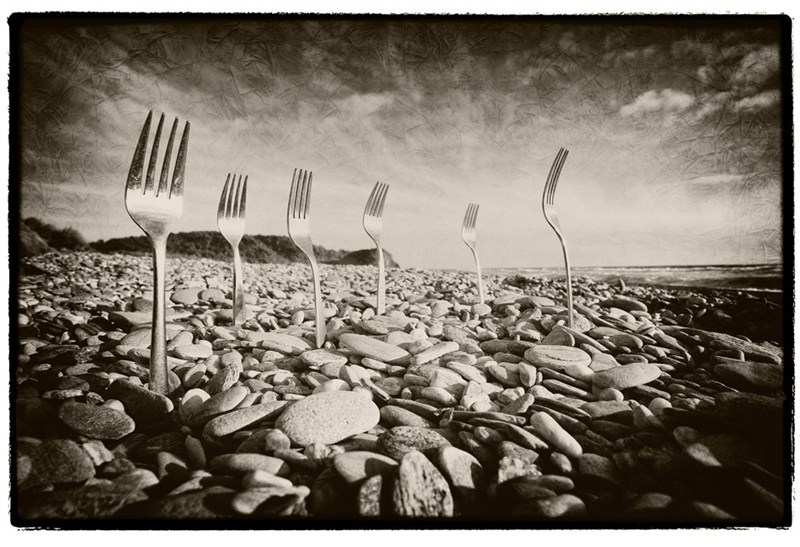 Jackie Ranken, Standing Forks, from Kitchen Stories
Rankin selects an environment, throws kitchen utensils in the air, photogpraphs them, then writes a little story about the event. The environment is a backdrop or stage for the flying kitchen objects These anecdotes in the author’s own hand surround the image to recount Ranken’s connection with the object and the circumstances of the photo-making encounter.
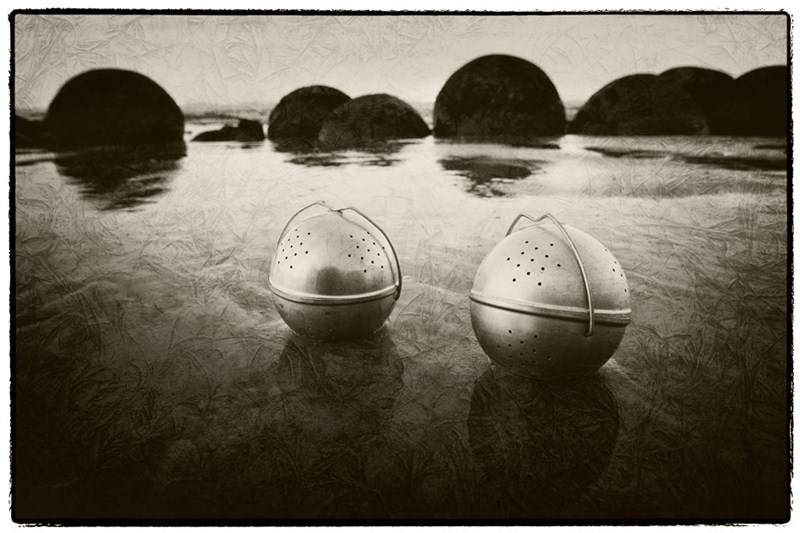 Jackie Ranken, Moeraki Rice Cookers, from Kitchen Stories
All the images in the series are in black and white and are sepia toned on a texture paper.
August 17, 2013
BIFB13: Claudia Faehrenkemper
One of the photographic projects in the core programme of the Ballarat International Foto Biennale 2013 is the photomicrography of Claudia Faehrenkemper.
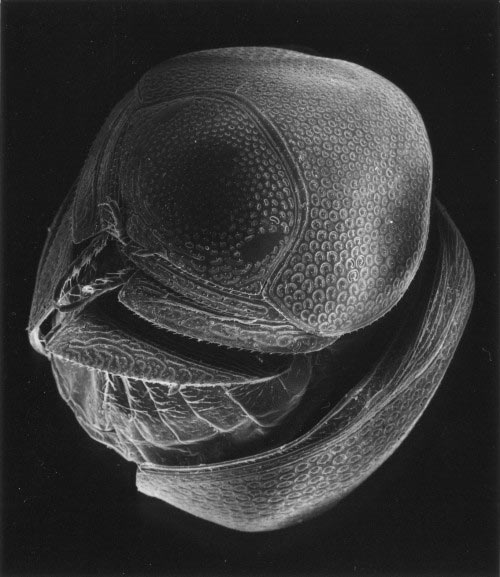 Claudia Faehrenkemper, Beetle, silver gelatine print on fiber based paper, from the series Imago
Her representations of beetles and the heads of insects continues tradition of the use of photomicrography for artistic expression, which enjoyed the greatest popularity in the twentieth century.
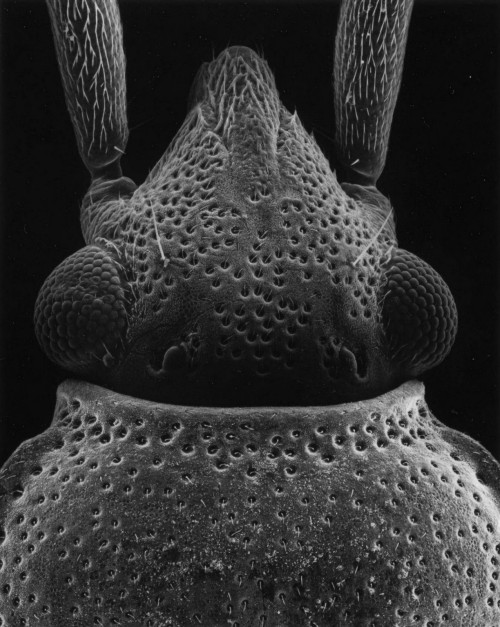 Claudia Faehrenkemper, head of insect, silver gelatine print on fiber based paper, from the series Imago
Claudia Faehrenkemper's roots are the Dusseldorf Academy of Art of Bernd + Hiller Becher
August 16, 2013
BIFB13: Adelaide Photographic Artists exhibition
I've been on a road trip for the last two weeks experiencing some very dodgy and flakey internet connections. We have just arrived in Ballarat for the Ballarat International Foto Biennale 2013, which opens tomorrow. We stay here for three days then return to Adelaide before going on a phototrip to the upper west coast of Eyre Peninsula.
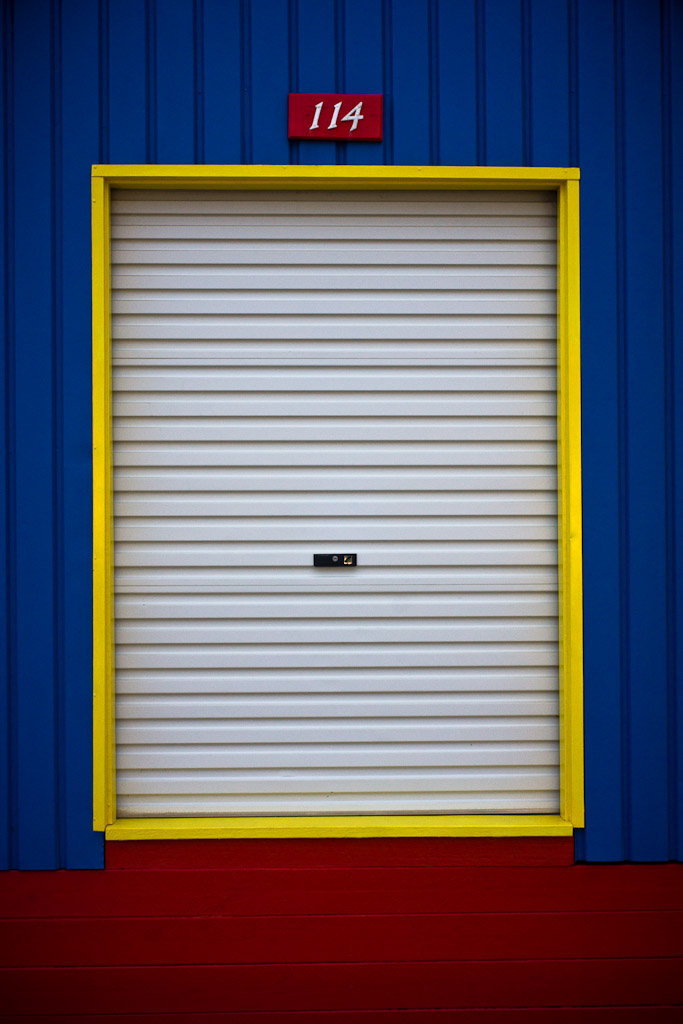
Gary Sauer-Thompson, Beach Hut, Mt Martha, Melbourne, 2012
One of the Fringe programmes in the CBD is the Dark Exhibition by the Adelaide Photographic Artists on the ground floor of the Mechanics Institute Building 117 Sturt St. It will open tomorrow at 12.15 pm. The "DARK" artists are, Alice Blanch, Marc D Bowden, Sandra Elms, Hilary Hann, Terry Hann, Tony Kearney, Suzanne Laslett, Craigh Marsden, Danica Gacesa McLean, Jennifer Sando, and Gary Sauer-Thompson.
There is a book that includes more work than the exhibition and a website. My photography---the Queenstown series--- on the website can be seen here.
August 2, 2013
remembering John Cato
The Ballarat International Foto Biennale13 will have a tribute show for John Cato. Cato forged his voice as a photographic artist in the early 1970s when photography was just starting to be taken seriously as an art form in Australia.
He was a pioneer in the field, and became an educator in art photography. It is an exhibition of work from 1971-1991 which honours John Cato's achievement as photographer and as teacher.
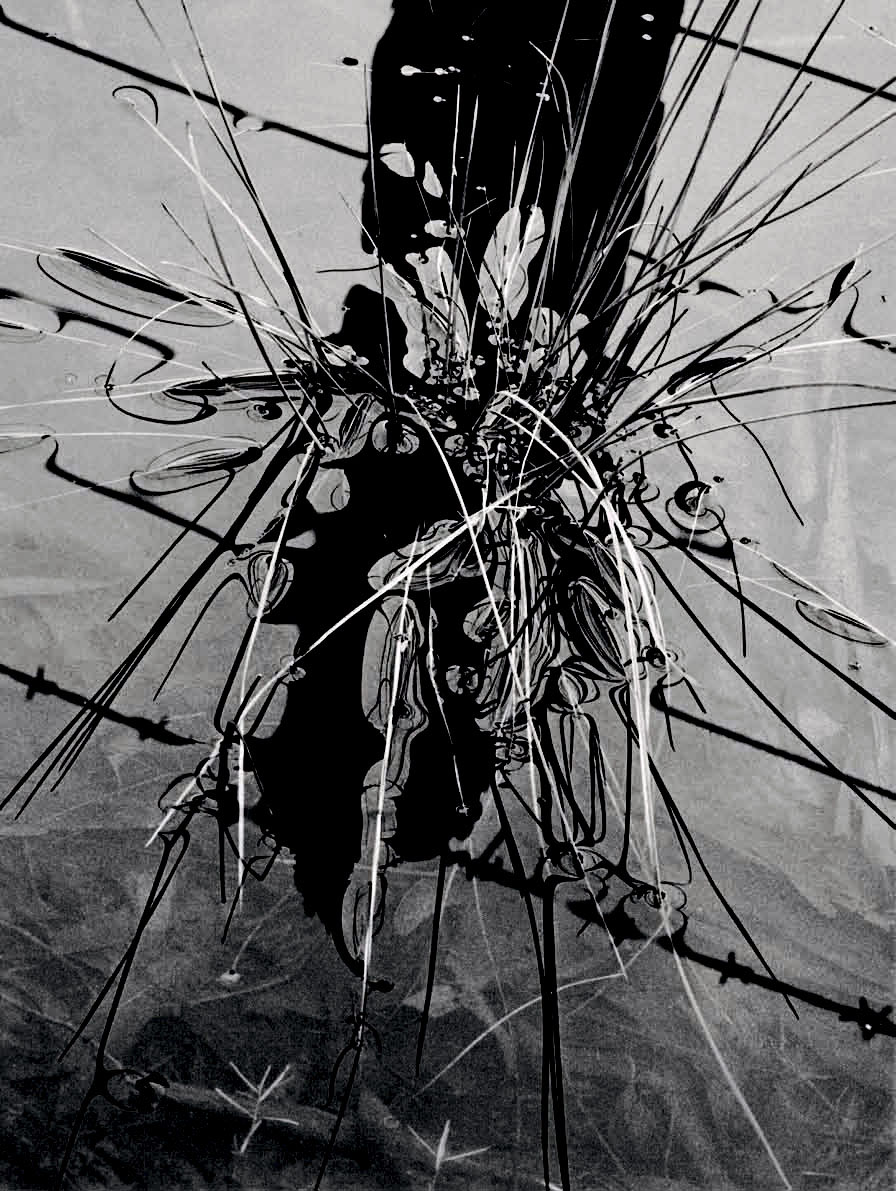 John Cato, Double concerto #13, from the Double Concerto series 1985-91, Gelatin silver photograph
John Cato ran a commercial studio in partnership with the photographer Athol Shmith and much of his early personal work was undertaken during holidays and spare time away from the studio. Eventually he abandoned being a commercial photographer in favour of a new career as an educator.
John Cato, Double concerto #13, from the Double Concerto series 1985-91, Gelatin silver photograph
John Cato ran a commercial studio in partnership with the photographer Athol Shmith and much of his early personal work was undertaken during holidays and spare time away from the studio. Eventually he abandoned being a commercial photographer in favour of a new career as an educator.
Cato was involved in the foundation years of the Photography Studies College in South Melbourne and a lecturer there, where I studied photography under him. He was a lecturer at Prahran College of Advanced Education, becoming Department Head in 1979 until he returned in 1991 by which time it was called Victoria College.
Cato's visual essays----(eg., Earth Song’ 1970-1971; ‘Essay I, Landscapes in a Figure 1971--1979; Essay II, Figures in a Landscape' 1978-83; 'Double Concerto: An Essay in Fiction’ 1984-1991)---developed the vocabulary of his own inner landscape while leaving the interpretation of this landscape open to the imagination of the viewer.
 John Cato, Tree - a journey (no. 8), From the essay "Tree - a journey" (1972-1974).
These visual essays--the first in Australian photography?--- are a reflection of the psyche, not an exploration of light or form. Whilst I was at Photography Studies College I mostly ignored the spiritualist aspects of the landscape and concentrated on the forms.
August 1, 2013
Art Gallery of SA: Heartland--Ian North
The Art Gallery of South Australia’s Heartland exhibition promises to be a contemporary showcase of some of South Australia’s best local artists commenting on the idea of ‘place’ and identity both physically and conceptually.
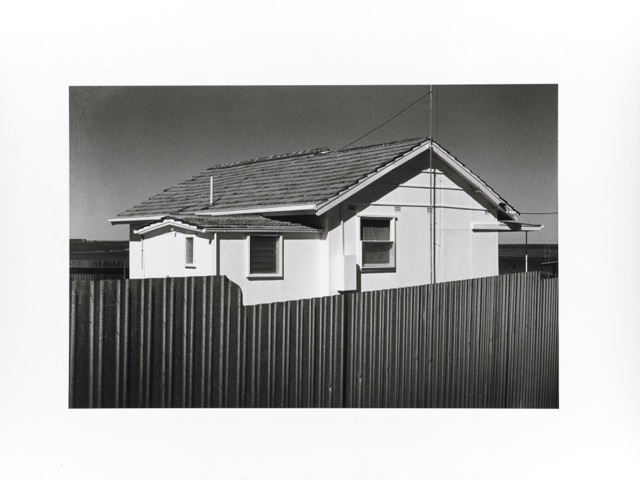 Ian North, Felicia 22 (Yorke Peninsula), 1976, gelatin silver print, selenium-toned, on fibre-based paper, printed by Sandra Barnard under the supervision of the artist, 2011
The exhibition includes the work of James Darling, Lesley Forwood, Hector Burton, Angela and Hossein Valmanesh along with Kim Buck, Paul Sloan, Amy Joy Watson, Kate Breakey, James Darling, Wendy Fairclough, Stewart MacFarlane, Ian North, Annalise Rees, Chris De Rosa and Yhonnie Scarce and the Tjanpi Desert Weavers.
Felicia 22 is part of North’s solo exhibition of his body of work entitled Felicia: South Australia 1973-1978 at the Australian Centre for Photography, Sydney. There is an artist’s monograph by the same name. The Felicia portfolio of portfolio of thirty-eight photographs dated from 1973 to 1978 when North was Curator of Paintings at the Art Gallery of South Australia.
It consists of suburban scenes of houses, streets and laneways in Adelaide and surrounds, as well as some photographs of the peninsulas, north and south.
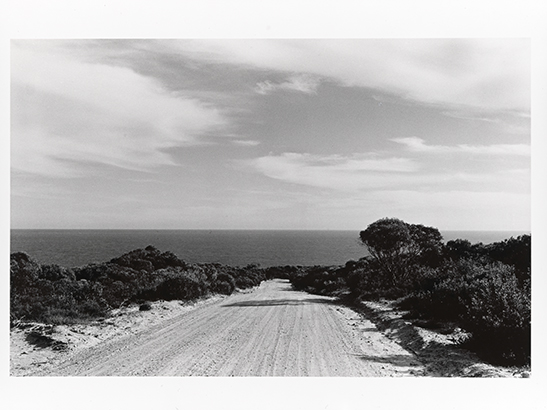 Ian North, Felicia 38 (lower Fleurieu Peninsula) 1978, printed by Sandra Barnard under the supervision of the artist, 2011, gelatin-silver plate, selenium toned on fibre-based paper,
Many of the images were taken at midday with brilliant skies and very harsh shadows .