February 22, 2014
Darren Almond: moonlight landscapes
Darren Almond's series of “full moon” photographs consist of landscapes in far flung destinations that were taken at night, with a long exposure, using only the light of the full moon. Unlike, say, the seascapes of Hiroshi Sugimoto, in which the grey of the sea imperceptibly meets the grey of the sky in epically long exposures, Almond's landscapes have a deep, painterly tonal range.
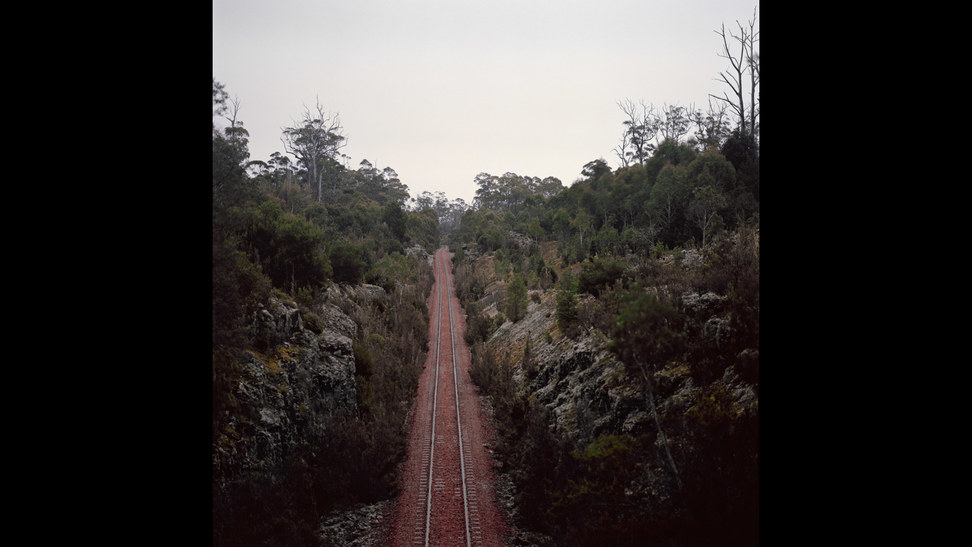 Darren Almond, Tasmanian Tracks, 2013
Almond's Tasmania is one of dark forests, empty valleys and a single train track through deserted Tasmanian bush-land. It’s a world without people:
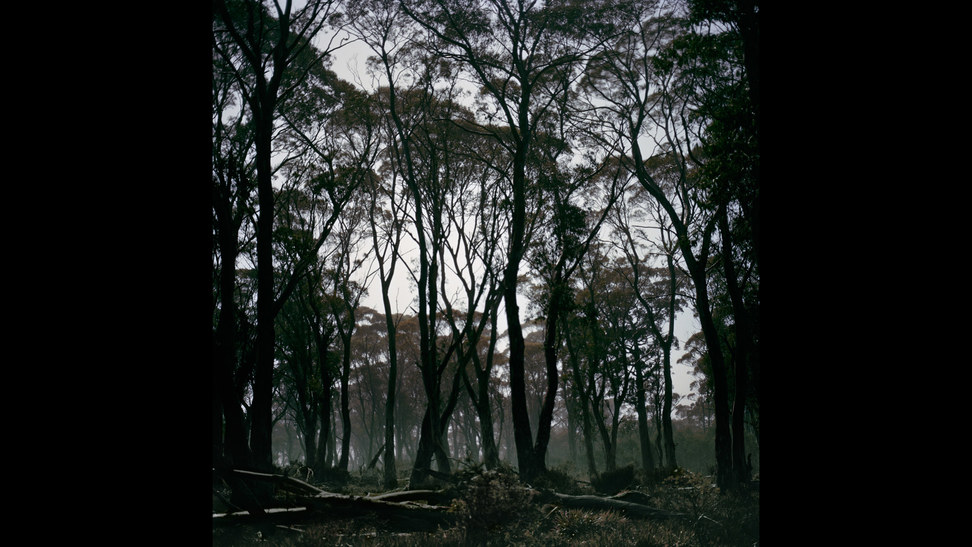 Darren Almond, Eucalyptus Forest, Tasmania, 2013
The rail tracks show how technology and industrialisation has altered nature as wilderness.
February 12, 2014
Australian photography: Sonia Macak
Macak was born in Czechoslavakia in 1979 and migrated to Australia in 2002 with her Czech husband, who had previously moved to Australia.She lives on a 13-hectare property at Clarendon, just outside Buninyong, near Ballarat
with her husband and their three boys. On the property is her studio and dark room.
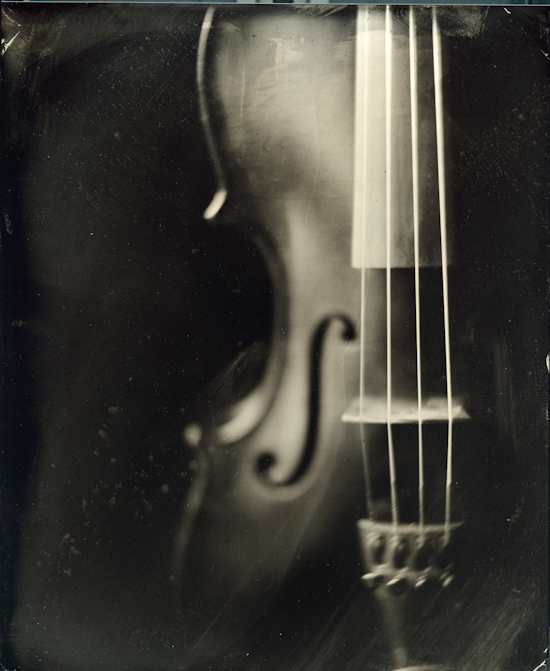 Sonia Macak, Strings, 8x10in tintype, collodion
Her work mostly consists of children, with her own children being the subjects in many of her pictures. These were shown at the Ballarat International Foto Biennale 2013 in an exhibition entitled Through the Looking Glass.
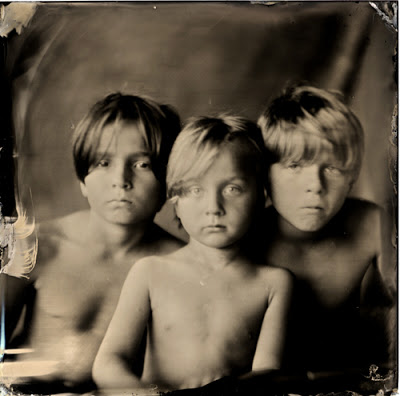 Sonia Macak, Three, 2012 8x10, collodion
Her photography started in 2006 with a digital SLR (Nikon d700), then 35mm film, then medium format film (Rolleiflex SL66) and the darkroom, then back to collodion photography and salt printing using an Anthony Bellows 8x10in wetplate dedicated camera and a Whole Plate Chamonix view camera.
February 1, 2014
Australian photography: Sonia Payes
Sonia Payes is an international new media artist and photographer based in Melbourne. Her series of portraits of Australian artists and key figures in the art world is one of her most popular series (Sonia Payes: Portraits of Australian Artists, Macmillian Art Publishing , Victoria, Australia).
More recently Sonia's work has veered towards surreal haunting and landscapes. Her landscapes in her Ice Series and haunting, surreal, mysterious and disturbing. These bizarre and beautiful colours reveal the world in a new, unreal and unruly light.
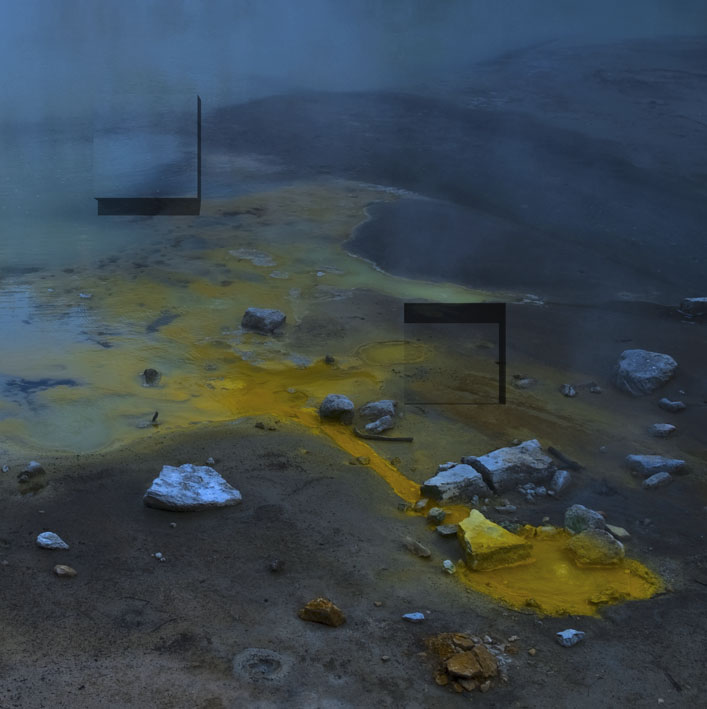 Sonia Payes, Ice Scape Series 3 (2010) c print on metallic paper,
These Icescapes are part of the Luminous Interlude (2011) body of work.
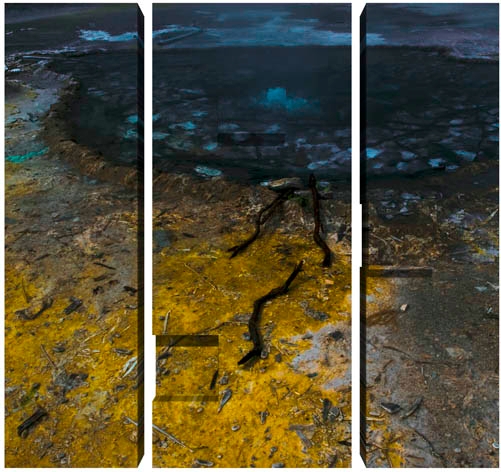 Sonia Payes, Ice Scape Series #4 (2011) flex paper, dibond backing face mounted to acrylic in 3 panels.
There is spatial play between the surface depicted and the apparent depth of the photograph at work that refers to surrealism and its dreamscapes.