July 31, 2004
a modern aesthetic
This is a well-known Australian modernist image. Iconic almost.
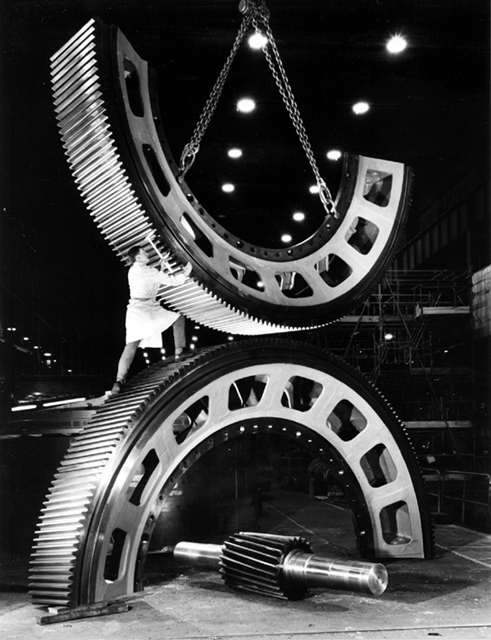
Wolfgang Sievers
It has become a modernist art image even though its origins are in industrial and commerical photography. It was conscripted by the modernist art institution to help construct a modernist canon and a modern aesthetic.
That aesthetic was understood in very simplistic terms: as a shift from representation (the mirroring of naturalism) to abstraction based on certain stylistic characteristics such as the close-up, the bird's-eye and other asymmetrical and unnatural camera perspectives.
It was simplistic in another way. The modernist aesthetic was understood as the new. The new was modern industrial society as opposed to the old pastorial Australia in the nineteenth century. The modernist images were assumed to reflect the modern world.
July 30, 2004
Urban photography
I've always puzzled about colour photography being a genre of photography that has its aesthetic precedents in color snapshots and National Geographic travelogs.
I prefer to see it has street photography that has turned from black and white in the 1940s to colour in the 1970s due to technological advances in colour.

Christopher Todd Lower East Side, NYC from New York series
Maybe the use of colour made photography recognizable as art in terms of style and subject matter?

Christopher Todd Untitled Untittled New York series
Does it matter about the art stuff? What we have are ordinary snapshots of urbanscape in New York. it is what you'd see as you walked around the streets of a big city.

Christopher Todd New York series
The construction of an expression out of a vernacular idom that walks a fine line between the trival and beauty.
July 28, 2004
Mungo man
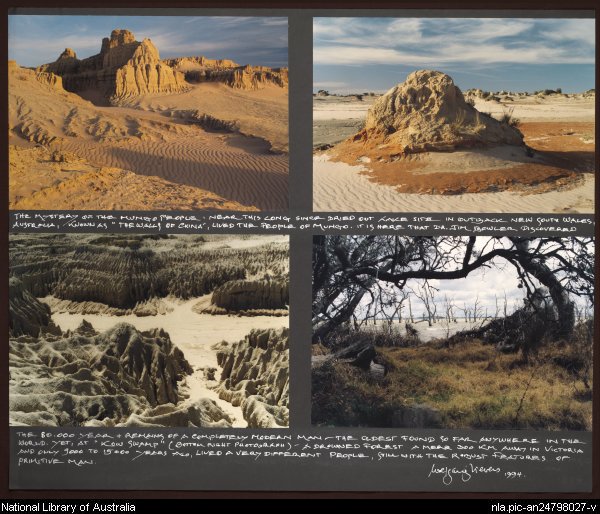
Wolfgang Sievers, The mystery of the Mungo man, New South Wales and Victoria, 1994
The description says:
"Near this long dried out lake site in outback New South Wales, Australia, known as "The walls of China", lived the people of Mungo. It is here that Dr. Jim Bowler discovered the 80,000 year + (sic) remains of a completely modern man - the oldest found so far anywhere in the world. Yet, at "Kow Swamp" (bottom right photograph) - a drowned forest, a mere 300 km away in Victoria and only 9,000 to 15,000 years ago, lived a very different people, still with the robust features of primitve man."
The dates are disputed.
July 27, 2004
the camera eye
This camera does not question.
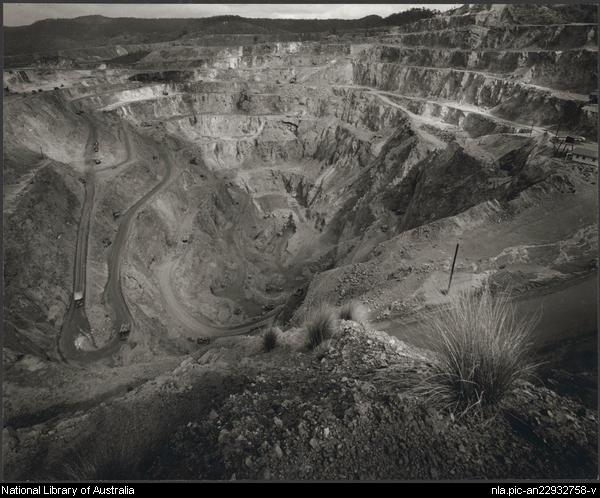
Wolfgang Sievers, Mt. Morgan mine, Central Queensland, 1963
It remains locked into a visual regime. The camera does not suggest multiple or conflicting points of view. It erases difference.
We see what the camera sees.
July 26, 2004
the Last Waltz
I finally made it down to Kino's. Among the DVD's, I came away with was the recently released The Last Waltz, Martin Scorsese's 1978 capsule history of The Band and American popular music.
 I was revisiting this particular moment of rock and roll history (I'd seen the video many years before) in the light of this revisionist rock criticism. It certainly is refreshing given all special effects, costume changes and elaborate sets of the superstar concerts, with their giant video screens, background dancers and a circus-style presentation.
The music from The Band's farewell performance at The Winterland in San Francisco on Thanksgiving Day 1976, was rawer and more energetic than their later studio albums. There was a touch of desperation, passion and bite in the music was there in the mid- 1960s when they toured Britain with Dylan as the Hawks. That musical expression had long gone, but it returned in the form of rollicking barrel-house fun.
The Last Waltz is commonly seen as the best rock concert "documentary" that has been filmed. If we go beyond the rock glamour we find a documentary film and a stand alone soundtrack that explore cultural myths and musical legends. The surface romanticism of the film is undercut by the darker pessimism of a ruined life on the road and approaching death from booze, drugs, excess and despair. The pessimism was in their music:
"It makes no difference how far I go
Like a scar the hurt will always show
It makes no difference who I meet
They're just a face in the crowd
on a dead end street."
This moment was a summation of the different musical influences that fed into American rock and roll and the confluence of the literary (the beat poets), music and film cultures. Martin Scorsese shot the film whilst finishing New York New York, and he understood that he was a witness to the ending of a cultural period. This is woven into a bittersweet narrative about a group's love for music, and its sorrow at bidding farewell to an experience it loved, yet was destroying them.
July 25, 2004
Winter & Exile on Main Street
I was depressed yesterday. I was tired as it had been a hard week. It was raining and cold. Suzanne was holidaying on the Sunshine Coast enjoying the sunshine. Winter had pressed in around me. A lonely weekend in mid-winter
I was listening to Robert Johnson. This phrase from Hellbound on my Trail kept replaying itself in my mind.
"I got to keep movin'
I got to keep movin'
blues fallin' down like hail
blues fallin' down like hail
Umm mmm mmm mmm
blues fallin' down like hail
blues fallin' down like hail
And the days keeps on worryin' me
there's a hellhound on my trail
hellhound on my trail
hellhound on my trail"
Robert Johnson
Then I played the Rolling Stone's Exile on Main Street, that excellent album, with its mixture of rock & roll, blues, soul, and country and its American references to drugs morgues, courthouses, bordellos, deserted highways, soul survivors and defeated people still searching for the American dream. The casualities and nerve-torrn nights are everywhere in this dark dense album.
I was too depressed to even drive to Kino's to get some films on DVD. There was no winter sunshine today.
So I walked the city streets of the inner city with the two poodles. We were exploring Adelaide's built environment looking at all the new apartments going up around me. The state is reputed to have a good 20th century architectural story to tell. It is a strong and regionally distinctive story told by its surviving 19th-century bluestone, limestone and sandstone villas, banks, churches, schools and public buildings. A heritage story.
Today? Do the new apartments at Halifax Street add to that heritage? They depressed me even further. Small enclosed boxes within rectangular complexes running along both sides of a street. Row after row of depressing visual forms across several street blocks. Many of these were cheap and nasty without balconies. It was hardly a gathering place There was little by way of a “village center” that would function very much like a town square, with exterior and interior spaces for social activities and meetings.
I saw nothing approaching this kind of work.
This is MIT village by Frank Gehry:

I kept on thinking to myself why cannot that be done in Adelaide. Why recycled straight modernist lines and flat surfaces?

This is not momumental architecture. It is modest and local:

It is innovative form without being excessive. Adelaide could have done something like this:

It had two city blocks (an old contaminated Council depot) given over to urban living to play with remake Adelaide. The dream of building an "ecological city" in the heart of Adelaide faded. What we got instead was pedestrian urban design.
I came back home, played some more Robert Johnson, then more of the Rolling Stone's Exile on Main Street. I wanted to hear a world weary, bar room band playing in some honky tonk jive expressing their bleaklived experience of the pain and joy of the underside of urban life. You see that underside in the broken glass on the ground, the empty shops, the urban nosie and the shadow figures in the enveloping gloom as you walk the streets.
The music is what gives expression to the despair of being hemmed in and torn. It is expressed in Exile on Main Street where everyone is heading for an overload whilst being stranded on a dirty road. This music takes us by beyond the bleak drugged nihilism of Sticky Fingers to facing the depths of despair w e find ourselves in.
July 23, 2004
fashion
The gaze of the fashion photographer. What is it doing apart from cultivating our desire? Suggesting the priority of signification over perception?

Melvin Sololsky Vogue, 2002
We have a spider crawling over the eye of a female model, who signifies beauty? It this not more a denigration of the eye than an affirmation of beauty?
It is more the body being reduced to text upon which the photographer's seeking gaze encodes than an representation of female beauty?
Is it about darkness and lightness of the fixed monologic eye?
And we have female models as mannequins:

Melvin Sololsky Vogue, 2002
The photo denotes reality in a form of imitation of a fashion shoot, but it also has a rhetorical cultural overlay of meaning shaped by the cultural context in which it received.
Is there another layer of meaning ......eg., one about death? One about an existence that once was? When female bodies were human bodies not mannequins? A trace of a time when the centred, self-possessive self was centre stage?
Maybe we should start to question the fashion apparatus with its inherited code of perspective; one that assumes the human eye is at the centre of the system of representation, and puts the eye in a divine place?
July 22, 2004
technology
Technology has a midas touch.
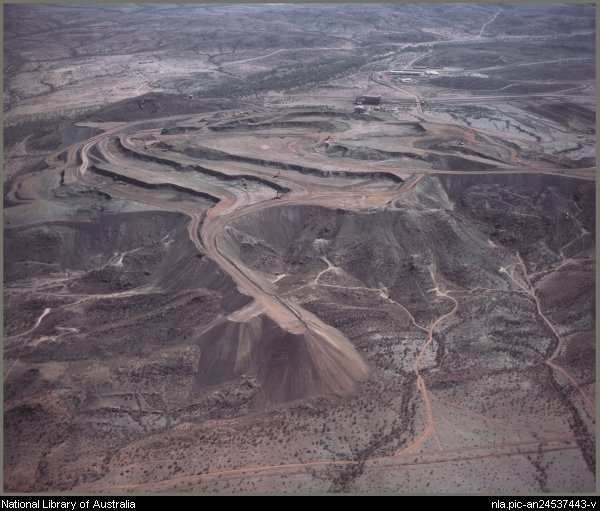
Wolfgang Sievers, Hamersley Iron in the Pilbara near Mt. Tom Price, W.A., 1975.
Everything which technology as a mode of being comes in contact with becomes uniformily subsumed into a system of efficiently exploited resources. This world of technology that refashions our habitat does not provide us with a home.
It makes us homeless. How can we dwell in a quarry where resources are extracted and refuse dumped? A quarry is no place for us to dwell. We just reside there whilst we rip the guts out of the country.
So how do we find a place that can be our home?
July 21, 2004
the colonial eye
Europe's imperial eye represents Australia as terra nullius. The frontier imagery simultaneously reflects the colonial and continuing confrontation with alien environmental conditions.
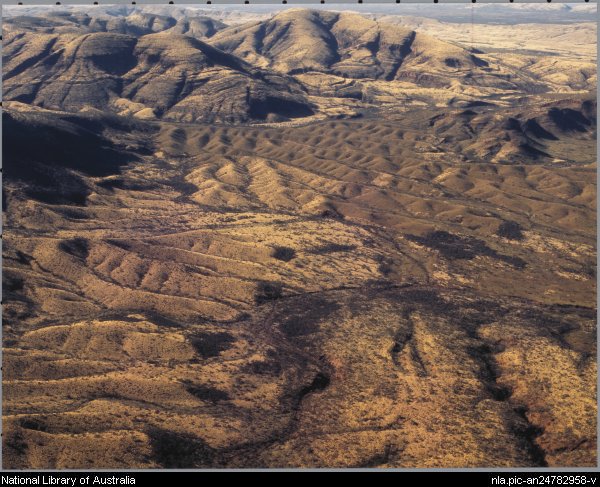
Wolfgang Sievers, the Hamersley Ranges, 1977
Australia's frontier developmentalism centred around a need to 'clear the way' for development - to establish a regulatory landscape in which impediments to development are controlled and brought to order.
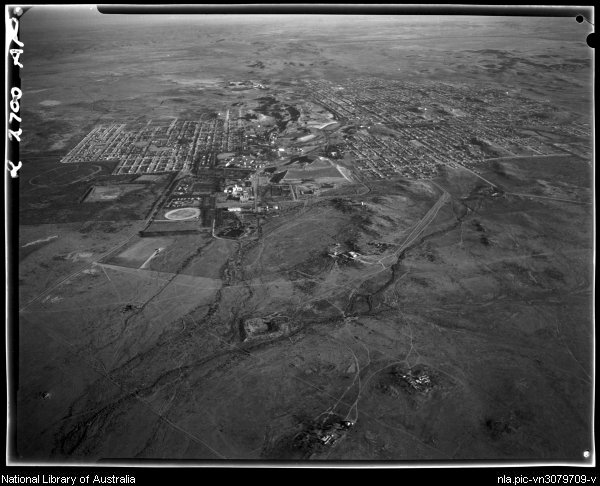
Wolfgang Sievers, Broken Hill, 1959
This comprised an emptying of landscapes of unwanted elements: trees were cleared; rivers dammed; and indigenous populations slaughtered and contained. On the other hand, the landscapes were filled with new elements: new property titles; new pastoral and agricultural species; mining and new people.
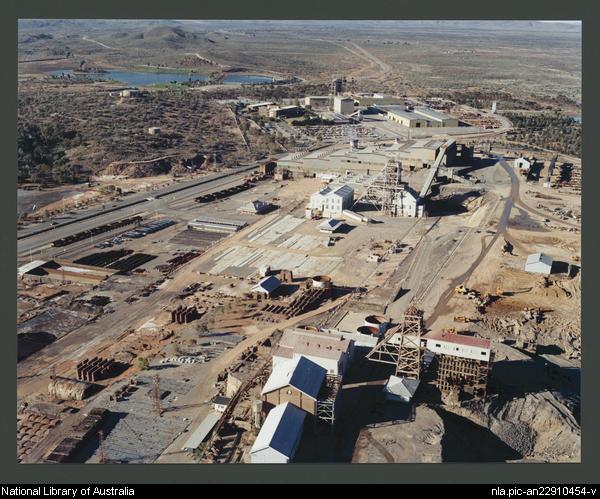
Wolfgang Sievers, North Broken Hill Associated Smelters, NSW 1980
On the 'edge of empire' the alien and incomprehensible Other -signifies the hostile and inhospitable environment, the incomprehensible distances separating the empire's edge from its heartland, the variegated perils threatening 'our' northern frontier and the threats of the indigenous Other.
July 20, 2004
Tourist eye on Tasmania
An email from Eden, who has just been holidaying in Tasmania. Eden writes:
Gary,
After reading your blog over the past few months, I made a concerted effort to seek out some of the areas of Tas that have sustained environmental damage. From the air, it was easy to spot the logging areas -- not because of bald spots, but because of the neat rows of plantation regrowth. It was like looking at a man with hair transplants. Those areas were few and far between, at least. While I was never forced off the road by a logging truck, I can assure you that it's no fun to be driving in front of or next to them in a tiny Mitsubishi Lancer. I don't know if the regulations have changed since I was there, but there was a debate underway about the state limiting the number of hours a logging truck driver could be on the road to 12 hours per day. The drivers were complaining that their routes were long and that would dramatically cut down on their income by limiting the number of loads they could do each day. After seeing the speed at which they were traveling already, I shudder to think of the result if they're trying to beat curfew.
As for Queenstown, it was heartening to see the regrowth beginning. I've attached a couple of photos; it was a misty day and the photos are indistinct:

Eden, Queenstown, Tasmania, 2004
The other photo is a poorly framed sign I found on the east coast of Tassie in Elephant Pass:
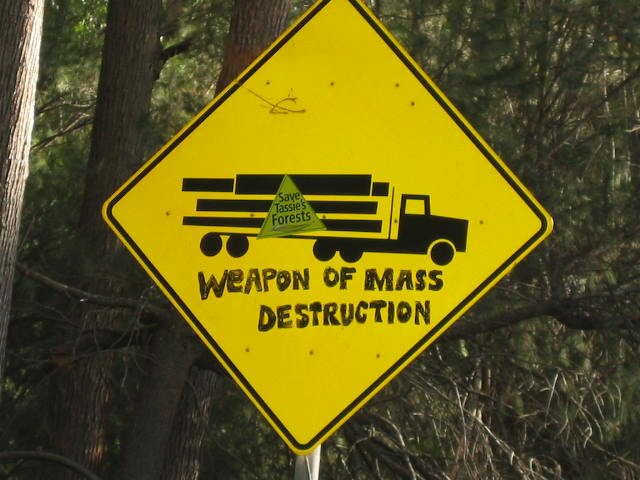
Eden, Road Sign, Tasmania, 2004
Eden's description of her holiday is here. You can discover more of Tasmania here.
July 19, 2004
a visual regime
In this post I mentioned the idea of photographic modernism questioning the hegemonic visual regime that is based on the transparency of language.
That visual regime was premised around light, transparency, homogenizing sameness and the objectifying gaze of the observing (humanist) spectator that saw the landscape as resources.
I suggested that Australian photographic modernism's emphasis on beauty, form and the celebration of the industrial machine did not put this visual regime into question.

Wolfgang Sievers,
ACI Engineering, Burwood, Victoria, 1981.
There is no disruptive power to the images of this Fordist modernism based on a naive representationalism. This is the dominant visual regime or the given visual order premised on the neutral eye:

Wolfgang Sievers, Bruck Mills, Wangaratta, Victoria, 1950.
The camera was the eye's technological extension and fostered the Cartesian visual regime with its emphasis on obviousness.
July 18, 2004
wilderness#4
You can see why Tasmania is such a special place for Australians and why many want to protect it:
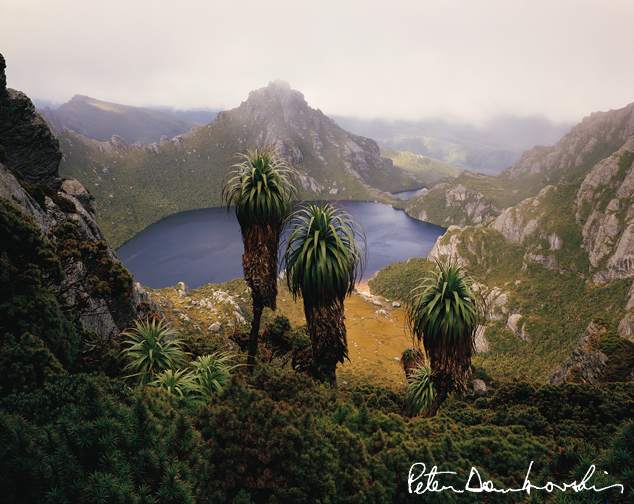
Peter Dombrovskis,Lake Oberon, World Heritage Area, Western Tasmania
Wilderness means something in terms of value in Tasmania; an aesthetic value that cannot be reduced to economic value. Wilderness acts as a counterpoint to the industrial culture of late modernity. We place it into opposition to the harshness and bleakness of the industrial urban landscape;and we contrast the sounds of wilderness to the urban noise that surrounds us in the desolation row of the city.
I write that whilst listening to Captain Beefheart and the Magic Band's Ashtray Heart< on their 1980 album Doc at the Radar Station. The sounds of doped street kids with switchblades screaming at one another float up to me, as I read how Lester Bangs wanted his music to be along the lines of the:
"...mechanical, mindless heart of noise and the relentless pistol rhythms which seemed to represent the essence of both American life and American rock 'n' roll."
Aah. That would be the raving disorder of Iggy and the Stooges in their most frenzed and raw moments.
You cannot imagine a nomadic Lester hanging out in Tasmania getting high on the sublimity of wilderness, caring for the landscape or doing a phenomenology of nature.
Now Beefheart---well, Don Van Vilet---hung out in the Mojave Desert away from Lester's psychotic industrial society on speed where we need all those filter mechanisms to cope with industrial life.
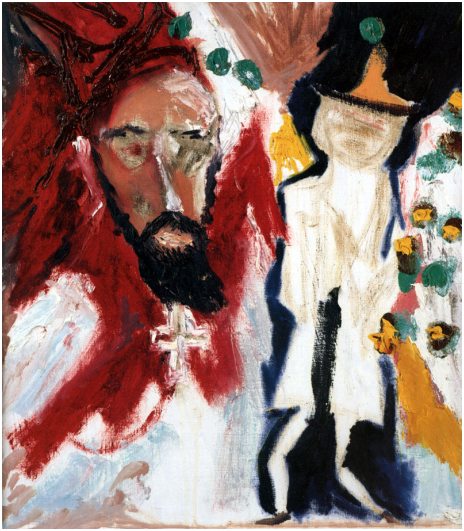
Dave Van Vilet, Avah Creen, 1984
You can see why wilderness attracts many from afar and why they desire to visit Tasmania for their holidays. This is one of the last true wilderness regions on Earth and it encompasses a wider range of natural and cultural values than many other region on Earth. The Tasmanian Wilderness areas need World Heritage protection.
July 17, 2004
animation
I haven't been following the visual culture of the US Presidential election much due to a lack of time. But I did come come across some witty animation by JibJab. It features George Bush and John Kerry doing a sing along to an adapted version of Woody Guthrie's well-known This Land is Our Land.

It's very very good. Take a look.
Do we have anything similar in Australia?
July 15, 2004
Fordist modernism#2
Photographic modernism celebrates technology and the conquest of nature:
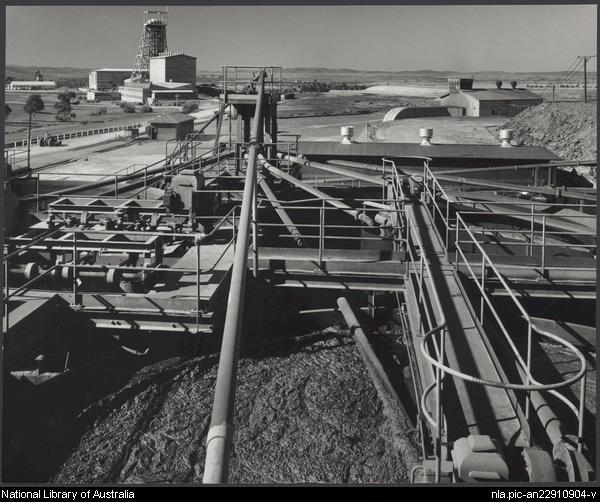
Wolfgang Sievers, BHAS North Broken Hill lead and zinc flotation units, 1959
We do not get a questioning of the embodied eye gazing at nature and just seeing resources there to be exploited for human use.
July 14, 2004
Tasmanian Wilderness#5
This picks up on my earlier post on Peter Dombrovskis' excellent
representations of the Tasmanian wilderness.

Peter Dombrovskis, The Masterpiece Alcove, Franklin River, Southwest Tasmania
Another post on Dombrovskis can be found at Monkey Filter
Wilderness is beautiful is key meaning this work. Dombrovskis' work says that Tasmania is the home of wilderness:

Peter Dombrovskis, Myrtle tree in rainforest, Mount Anne, Southwest Tasmania.
July 13, 2004
Fordist modernism
Photographic modernism celebrated the machine or technology:
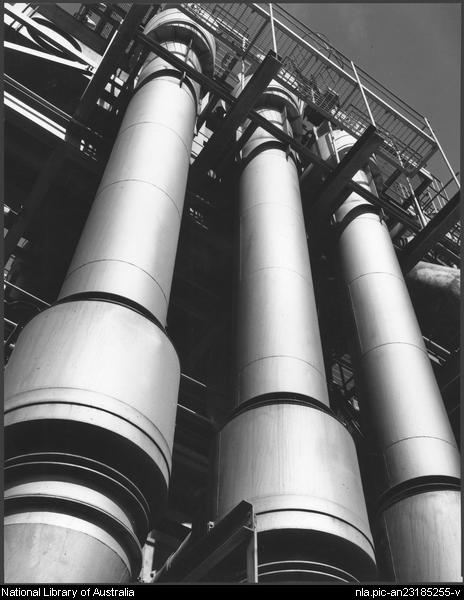
Wolfgang Sievers, B.H.A.S., Pt. Pirie, 1967
It was a machine aesthetic reduced to form. This relatively stable aesthetic of Fordist modernism has given way to ferment and instability.
This photographic modernism does not question the way of seeing of European vision embodied in the observing eye. It is still part of the visual regime.
July 12, 2004
observing nature: the look from above
The early Europeans reacted to their new environment with hostility and alienation. Their culture viewed the world as a predictable system, with its Cartesian time-space co-ordinates. It was a Gods-eye view that was blind to its own slanted perpective and cultural bias.
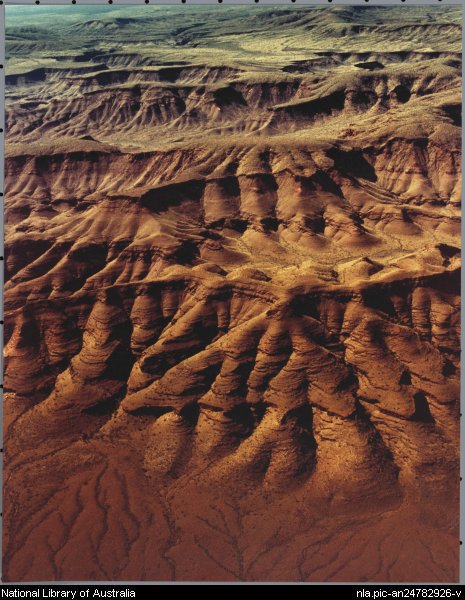
Wolfgang Sievers, The Hamersley Ranges, near Wittenoom, Western Australia, 1975
They lamented the fact that Australia lacked the human associations of a historic past.
The European's scientific method assumed the observer to be disinterested and detached from the object observed.
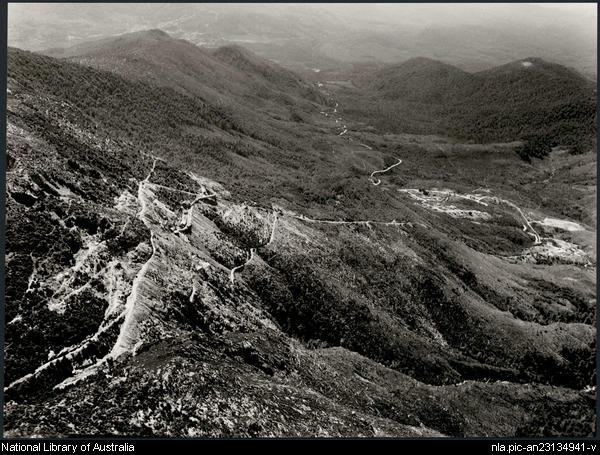
Wolfgang Sievers, BHAS mineral exploration Western Tasmania near Zeehan, 1959
The observer looks down at that landscape from a plane and asks:'what minerals can be mined there'? How much can be made? The concern is with exploiting the resources buried in the landscape with the latest technology.
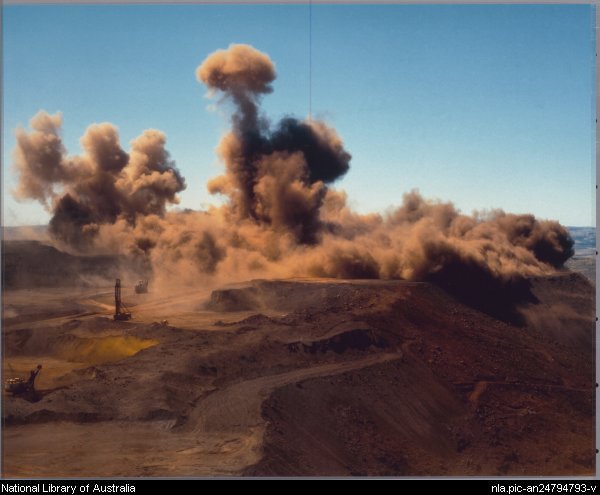
Wolfgang Sievers, Blasting at Mt. Tom Price, the Pilbara, Western Australia, 1974
In contrast, Australian [European] landscape painting represents nature as a background of a legend, myth and a reflection of human values.
You can why there is a need to question the hegemony of this European vision ---a particular way of seeing not the camera eye---that we have inherited; a questioning that avoids taking an anti-visual turn and privileging language over vision.
July 11, 2004
Mt Lyell
Between 1896 and 1923 over 3 million tonnes of timber were cut down to feed the smelters of the Mt Lyell Copper mine near Queenstown. At its peak, the furnaces were consuming 2000 tonnes of wood per week.
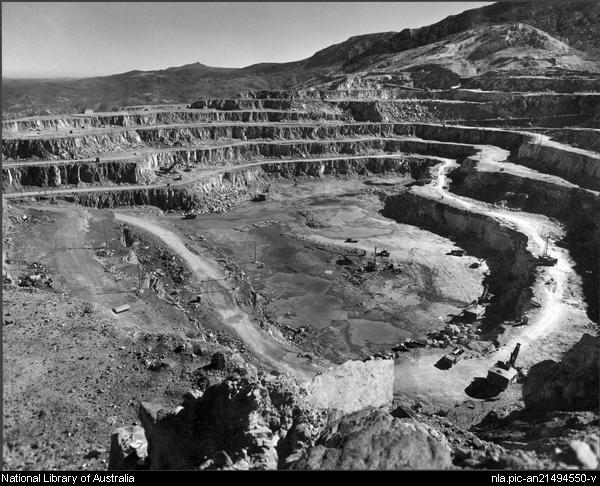
Wolfgang Sievers, Mt Lyell Copper Mine, Western Tasmania, 1959
By 1900 the combination of Sulphur fumes and heavy rainfall had changed the area into this barren moonscape.
Since the smelters closed in 1969 there has been some regrowth on the lower slopes, but it is estimated that the impact will last some four to five hundred years.
Dumping of the mine's tailings in the Queen river occurred until 1994. The acidity of the Queen River is still at extremely high levels, and there is no aquatic life
More photoshere
July 10, 2004
Modernism
Art has slowly placed religion as society's social comforter. So say the sociologists.
Hm.
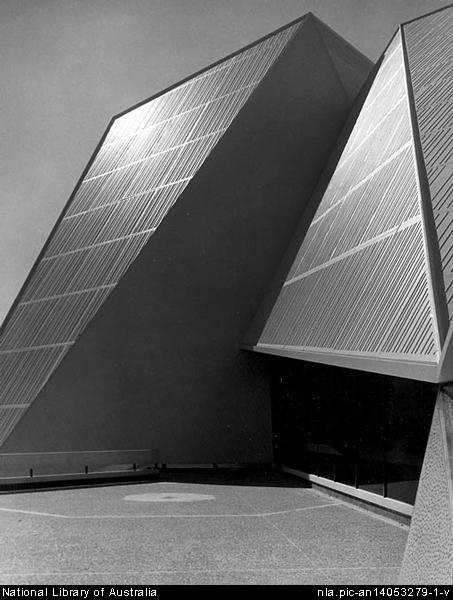
Wolfgang Sievers,
Adelaide Festival Centre, 1973
On the other modernism was meant to be a critique of modernity. So said the avant garde.
That is hard to see with this kind of photography, with its roots in the Bauhaus. It is all about style as form that identifies with, and celebrates modernity.
July 9, 2004
Breillat: Anatomy of Hell
We can now see Catherine Breillat's latest film, Anatonmy of Hell. The attempt to have it banned by the Australian Family Association has failed.
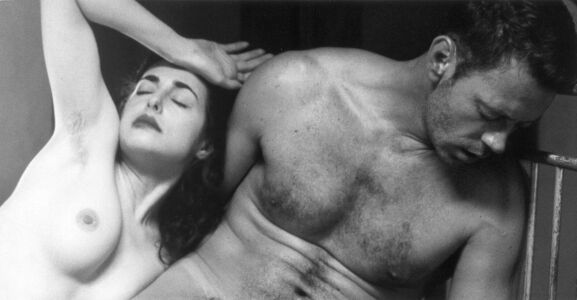
According to this account in Catherine Breillat’s Anatomy of Hell the close-ups are reserved for the anus and vagina of the central female character. The review says:
"In Breillat’s vision it is through these orifices that the truest form of inter-human communication is realized. The narrative has an anonymous woman (representing all women) offering an anonymous man (representing all men) money to come to her house every night and watch her undress, masturbate, etc. Like in Pasolini’s Salo, and Bertolucci’s Last Tango in Paris, a deep connection with another human being is equated with sexual debasement. The man doesn’t only watch, he touches too, sticking fingers and rods and large rocks up her anus and vagina, staring at and smelling and tasting the blood that she secretes, as if it held the secrets of her soul. Anatomy of Hell can be best described as a French existentialist version of Empire of the Senses, Oshima’s study of a claustrophobically possessive relationship which unfolds purely through sexual exploration."
Bataille as well I would have thought, as the film is about blood and vaginal juices, sensation, intensity of emotion (revulsion), transgression and death.
July 8, 2004
pop music
Bruce Elder is celebrating the 1950s in the Sydney Morning Herald. it was more aboutr wild rock and roll than Robert Menzies. Elder says that:
'The zeitgeist of the 1950s was not grey, conservative conformity but technicolour rebellion. It was the decade when the profound changes, that had been created by the massive social, emotional and moral upheaval of World War II really started to take hold...In terms so clearly articulated by the 19th-century German philosopher Friedrich Nietzsche, the old Apollonian world of "order, lawfulness, perfected form, clarity, precision, self-control and individuation" was being challenged by a new Dionysian world of "change, creation, movement, rhythm, ecstasy and oneness"'.
Rock-n-roll was the vanguard of cultural change in an industrial society with a corporate modernist culture:

Wolfgang Sievers, Photo of the Russell Offices, Canberra, architects Buchan, Laird & Buchan, 1962
Here is a good quote that I found here about the 1960s:
"Back when Chuck Berry was in jail, Little Richard back in church and Buddy Holly in heaven, the Rolling Stones and the Beatles were needed to re-introduce Americans to their own music---American musicians imitated British musicians imitating American blues. British Pop bands revived the tradition of the songwriter/singer that had gotten lost between the cotton fields of Mississippi and the corridors of the Brill Building ....The best of the British bands offered a perfect balance of interpretation and innovation, juxtaposing a respect for diverse musical traditions with bursts of true originality (e.g. Sgt. Pepper's Lonely Hearts Club Band---a record that could only have been put together by a band that once played "Bésame Mucho" and "Twist and Shout" in the same set)."
Still rock music has to be located in context of a sterile corporate modernism:

Wolfgang Sievers, AMP St. James Building, Melbourne, 1970, (architects Skidmore Owens [i.e. Owings] & Merrill, USA Bates, and Smart and McCutcheon)
Is the Beatle's St Pepper Lonely Hearts Club Band a good example of the balance of interpretation and innovation that juxtaposes a respect for diverse musical traditions with bursts of true originality? I haven't listen to the album for zonks. Last time I heard some tracks at a coffee shoppping whilst reading the papers I tuned out.
July 7, 2004
theorizing photography
In his The Pinocchio Theory Steven Shaviro makes mention of Vilem Flusser's book, Toward a Philosophy of Photography. I haven't read it.
Steven gives us a few titbits. he says:
'Flusser is less sentimental and melancholy than Roland Barthes (Camera Lucida), and more concise and rigorous than Susan Sontag (On Photography). He argues that photography represents a higher degree of abstraction than the writing which it has to a great degree supplanted, even as writing represents a higher degree of abstraction than the painted and drawn images that it supplanted several thousand years ago. Photographs do not render the real; rather they transform it into a highly codified sort of "information."'
That opens up lots of possibilities for a visual culture. Photographs become signs in an industrial culture.

Wolfgang Sievers, ACI Exhibition stand in unidentified location, 1958
So what does 'Photographs do not render the real; rather they transform it into a highly codified sort of "information" ' mean? Have images have become commodities in the digital age? Steven says:
"A photograph doesn't represent the scene, person, or object being photographed, so much as it represents, and fulfills, the program of the photographic apparatus itself, a program that (like any entity under conditions of Darwinian competition) seeks nothing more than its own perpetuation and extension. Where handmade images promoted magical thinking, and writing promoted conceptual and historical thought, photography and all the technical forms of reproduction that have arisen in its wake actually work to program thought, to anticipate it, and to mimic and contain it in advance. To simulate thought, in sum."
The photographic apparatus actually works to program thought, to anticipate it, to mimic and contain it in advance and to simulate thought.
I'm going to hunt down Toward a Philosophy of Photography.
July 6, 2004
two views
Romanticism:
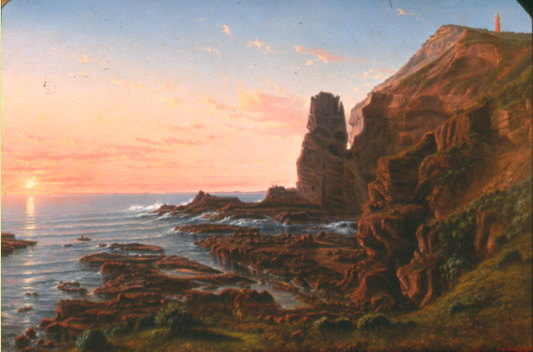
Eugene von Guerard, Cape Schanck, 1865
Cape Schanck lies at the southern extremity of Mornington Peninsula approximately 70 km from Melbourne. The painting is very much a European way of seeing the Australian landscape.
Modernism:
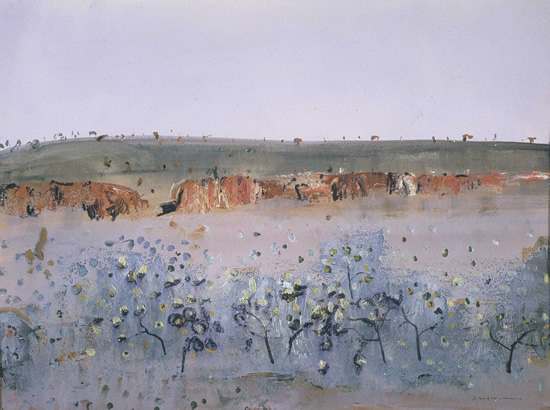
Fred Williams, Hardy River, Mount Turner syncline, 1979
This is a part of a series of representations made by Fred Wiliams of the Pilbara landscape. It is the landscape of gorges, mountains and fascinating flat-topped mesas - as well as wildflowers.
This starts to break away from the European way of seeing nature towards a non European one.
July 5, 2004
it's still raining outside
There are many different images of Australian culture. It promised to light up a world. It's dreams now lie shattered.
The images recreate and reinvent a world that has such few roots.

John Brack, The Bar, 1955
Many do not express the existential depths of Robert Johnson's blues--that sense of a brutal world full of terrors that are hard to endure.

Albert Tucker, City Image 2, 1973
When a woman gets in trouble everybody throws her down
Looking for her good friend none can be found
You better come on in my kitchen
Babe, it's gon' to be rainin' outdoors
Winter time's comin' hit's gon' be slow
You can't make the winter, babe that's dry long so
You better come on in my kitchen
'Cause, it's gon' to be rainin' outdoors.
C'mon in My Kitchen, Robert Johnson
We can no longer see the light on the hill. It's too dark and the rain is too heavy. We run from a terror that we cannot name, and which is always in front of us.
July 4, 2004
winter sunshine
As for me I'm sitting in an almost bare room in a city apartment; a room full of winter sunlight. It is comforting and soothing. It is such a difference from the night before, when I wandered the streets looking for some material on Smile. I could find nothing. But that's Adelaide. It's a funny place to live a nomadic existence.
This is my memory of last night:
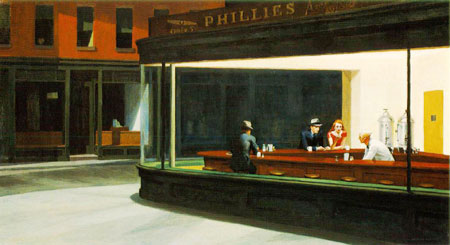
E.Hopper, Nighthawks, 1942
I do believe I heard Eric Clapton playing as a car drove slowly past. It was a bunch of young guys on the prowl for a woman alone.
The city is a place of desolation where one feels out of place amidst the shadows, betrayals and chaos. That is the world of Robert Johnson. His is a world without redemption.
This is this morning:

E. Hopper, Early Sunday Morning
Today, in the winter sun, I've been listening to Robert Johnson play the blues whilst reading Heidegger on death:
I went to the crossroad
Fell down on my knees
I went to the crossroad
Fell down on my knees
Asked the Lord above "Have mercy now,
Save poor Bob, if you please"
"Crossroad Blues" - ROBERT JOHNSON
In rural folklore the intersection of two roads was an evil place, the site of black magic or voodoo. Voodoo was mixed with Christianity. The myth says that Johnson went down to the crossroads and made a pact with Satan. The devil promised to fulfill his dreams. Johnson traded his soul for his musical talent. The devil wouldn't allow him to enjoy his success and Johnson lost his life. He died young.
 Forget the myth about RJ selling his soul at the crossroads. Johnson is tough without the myths. In the darkness at the rural cross roads Johnson confronted the possibility of death.
Today we confront death in the crossroads of the city. It is what makes us feel at home in a desolate Australia that has lost its dreams and forgotten its promises.
July 3, 2004
Edward Hopper: urban life
One of the great visual explorations of urban life was done by the American realist Edward Hopper.
I've always read Hopper in terms of the lived experience of the existential loneliness in the industrial city, or what this article calls lonely hearts in the modern city.

E. Hopper, Room in Brooklyn, 1932
It is not simply a case of being alone in the city eg., the solitary women in the cafe. Existential loneliness also exist within a relationship---a marriage, for instance:

E. Hopper, Room in New York, 1932
The loneliness from the emotional disconnection from other people is there even when sexuality is involved:
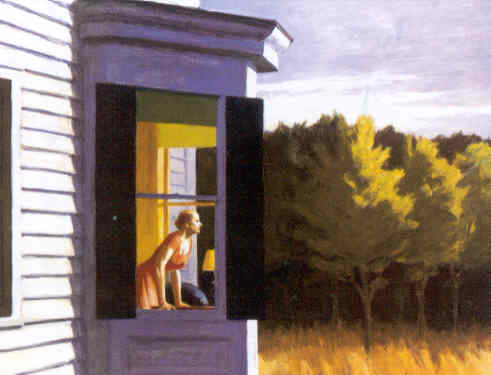
E.Hopper, Cape Cod Morning, 1950
As this review says Hopper "tells us things we already know about ourselves, and about the century we've just left....The way he paints is like plain speaking." A visual language that based on unforgettable visual images.
We have descended and become caught up in our own silences; ours is a subjectivity that is isolated, different and set apart from other bodies.
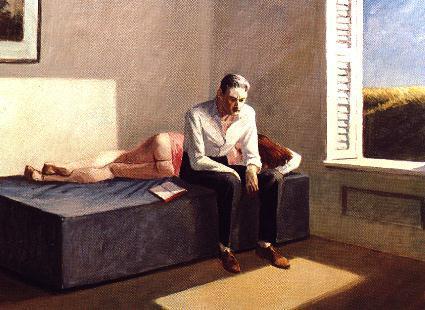
E. Hopper, Excursion into Philosophy, 1959
The silence is imprisoning.
Hopper's work are frozen moments from a narrative that stretches beyond the picture's boundaries.