February 28, 2006
tourism ---Australian style
The tourist campaign background and the link to politics. It's a rehashed thongs-and-blue-singlet image of tourist Australia.
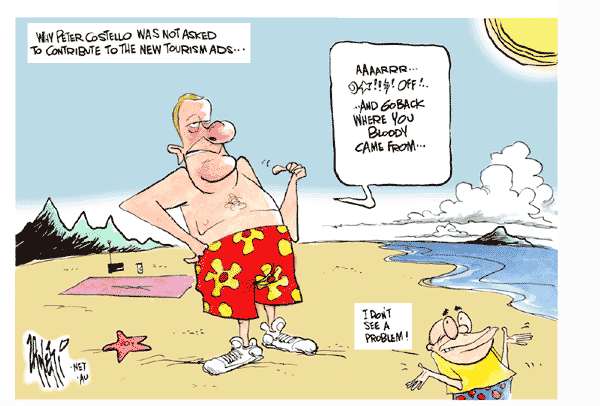
The ads feature scenes from around Australia showing everyday Australians pulling beer, swimming, relaxing in the outback and walking camels. It uses unknown Aussies telling the audience that the beers have been pulled, camels shampooed and sharks cleared out of the pool. The ads finish with a young model on a beach asking tourists: "So where the bloody hell are you?"
Now I'm not argue that a tourist campaign should construct Australia as a sophisticated, culturally enriching, vibrant destination. There has to be product differentiation and wilderness is a good one. But sharks in the pool? Most people want to escape sharks not swim with them, surely. Why would I want to come to Australia to shampoo a camel? Aren't beer, wildlife, food and beaches all available in abundance in Thailand or Malaysia?
February 27, 2006
young conservatives
'The man who is not a socialist at 20 has no heart, but if he is still a socialist at 40 he has no head.' Aristide Briand
And so we have the traditional justification and explanation of conservatism. Why the split? Head and heart can, and do, work together, don't they?
 That accounts for the old conservatives----cold war ones and the neo-cons--- but not the young ones.
But the conservative youth under Howard are different to the older conservatives. They are seen as similar to those the US blogger Andrew Sullivan called the 'South Park Republicans', to describe young iconoclasts who "see through the cant and the piety of the Left and cannot help giggling".
The term comes from the anti-establishment television cartoon series South Park whose heroes are four, foul-mouthed fourth-graders who gleefully lampoon the sacred values of the Left.
South Park lampoons the baby boomers who championed individual happiness over familial responsibility and promoted no-fault divorce. The young conservatives are opposed to the liberal-progressive values, or what is defined as political correctness. Hence the culture wars and the South Park conservative's views of the liberal media's bias and the intellectual exhaustion of the Left in the post-9/11 era.
The South Park conservatives do not adopt the Marxist view that capitalism contains the seeds of its own destruction. They celebrate the fruits of capitalism --- new cars, plasma TVs and trips overseas. They have grown up amidst the prosperity of a vibrant economy has encouraged the young conservatives to create small businesses of their own. So the welfare state appears redundant to these libertarians.
February 26, 2006
about Iraq
The cartoon refers to the video of British troops allegedly abusing Iraqis in the northern town of Amara in 2004.
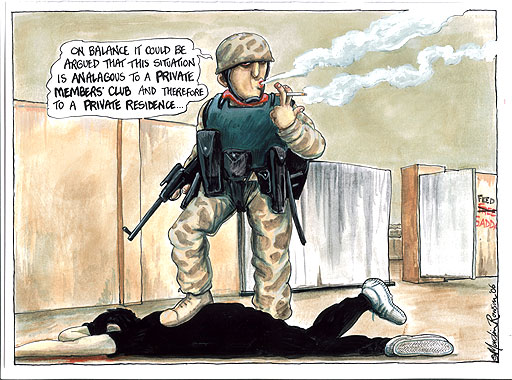
The popular mood in Iraq has been anti-occupation rather than sectarian. The argument is that the US aim of installing a client pro-US regime in Baghdad risks plunging the country into civil a war between a US-backed minority (of all sects and nationalities) against the majority of the Iraqi people.
February 25, 2006
Telstra' internet movie joke
 So Telstra reckons that we consumers are going to rent movies, download them over its limited broadband infrastructure, and then watch them on our computer screens in the study.
Huh? Why would I do that? The PC as a picture palace looks misguided to me. Hardly innovative. Okay I could watch a movie whilst flying between capital cities.
Hang a mo. We consumers cannot even pay an additional amount to keep content indefinitely, we can only do if we have access to Telstra's souped up cable broadband service, and that PC-based movie downloads don't deliver the quality to which consumers were accustomed. That makes it a small customer base.
Sure the bricks and mortar video store is old hat, mail order movies is slow and frustrating, and the next step is definitely the transition from mail-order DVD rental to online movie rental.
What is wanted is high speed ADSL broadband, a wide range of contemporary internet movies, and being able to play them on the TV--in the living room or bedroom. What is currently missing is the wireless link between the computer in the study and TV in the living room.
Telstra is still groping around cyberspace trying to find its role in the emerging digital home picture.
February 23, 2006
conservative Australia
The white picket fence of suburbia in the 1950s has given way to the Mcmansion of today. Both stand for the utilitarian view that economic growth can, and should, be endless and bring ever increasing human happiness.
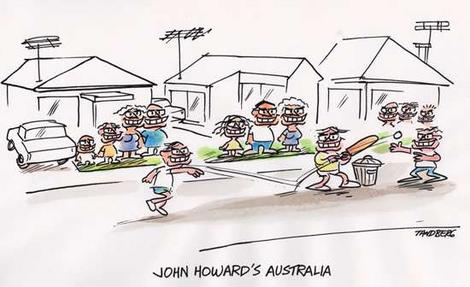
Tandberg
The Australian evokes the conservative ideal of family, a home in the suburbs, the barbecue, and cricket in the back yard. This ideal, or myth, of ordinary lives and values is then counterposed to an inner-city enemy, (variously the culturally elite, the greeny Latte/Chardonnay crowd, or the chattering classes) who sneer at "ordinary" Australians and their ethical life.
The Australian is the paper that virtually created the caricature of the "Howard haters"--- those cultural relativist inner city types who dripp their resentment over their cafe lattes as they read the liberal Fairfax broadsheets.
Gee, how do they account for the rich young professional Liberals and Libertarians who drive fast cars, hang out in our inner city cafes and play with their Blackberries?
February 22, 2006
Is there an exit strategy?
There 's been a bit of a buzz in Australia of late about the lack of debate around Greenhouse emissions and global warming.
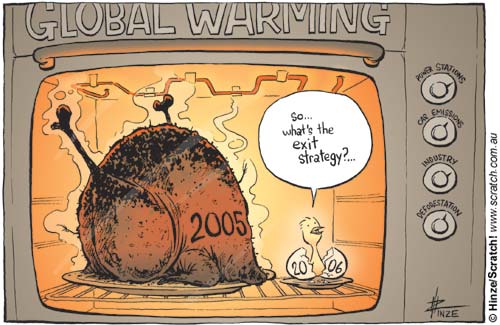
Apparently the problem here is that dissident voices are silenced. That is what people are saying.
Now you might think that means the CSIRO scientists are not allowed to speak out against the Howard Government's Greenhouse policy. Nope, it means that those who disagree with the scientific consensus on global warming are being stifled by political correctness.
I read it in an op.ed. in todays Australian Financial Review. Serious.
It was written by a Garth Paltridge, an emeritus professor at the University of Tasmania,and a former Director of the Antartic Co-operative Research Centre. He hangs out with this crowd. His complaint is hard to take seriously when the CSIRO is to reallocate $11.8 million of its research funds to kick-start a major mining research program, which also aims to boost the social acceptability of uranium mining.
February 21, 2006
Plottings---Ian Roberts
The weekend Australian Financial Review had an article on the landscape photographyof Julian Roberts--images of the tea-tree bracken at Port Lonsdale, a beachside town of Victoria's Bellarine Peninsula
A selection (16) of these Hasselblad images of coastal landscapes around the entrance (The Rip) to Port Phillip Bay, Melbourne have been exhibited in a photographic show called Plottings, which opened this week at 45downstairs in Melbourne's Flinders Lane.
It is good to see intimate black and white studies of a habitat that we exist within as we walk along the coastline pathways:
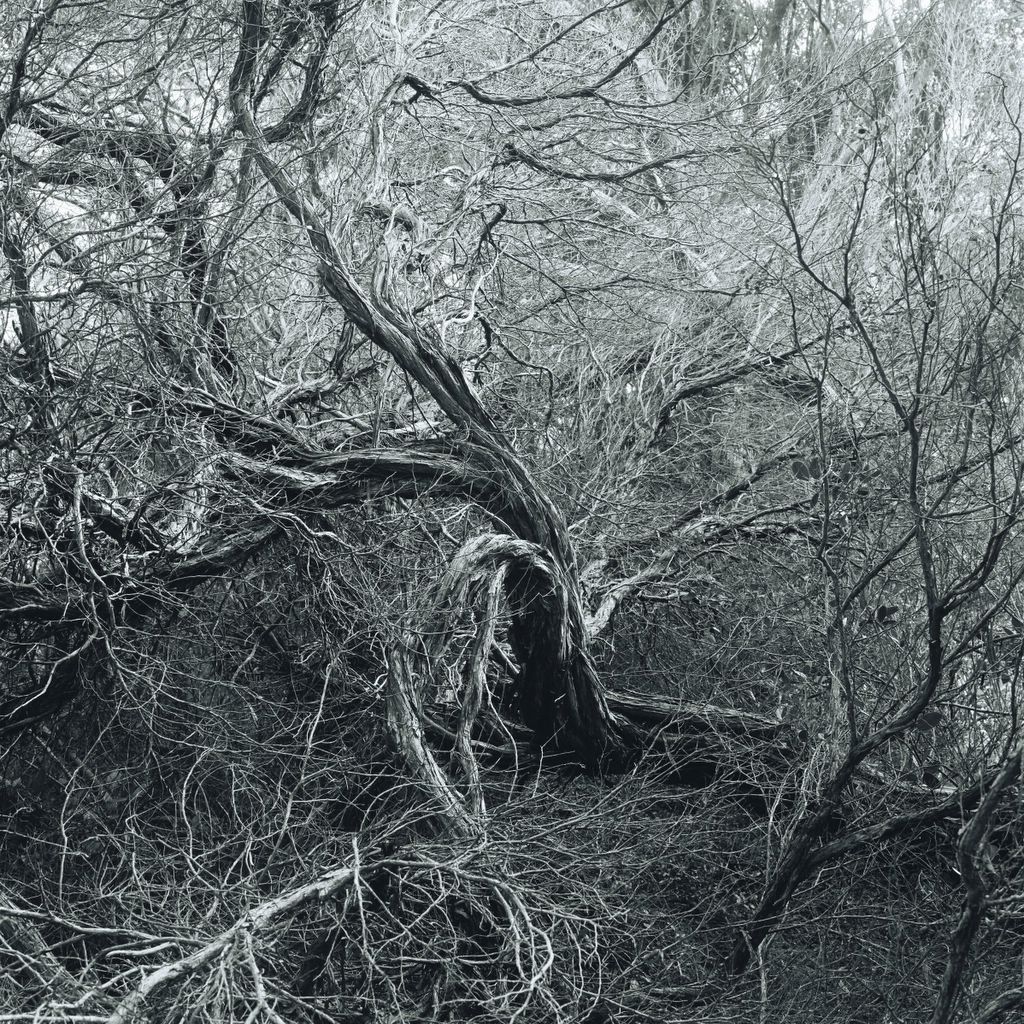
Ian Roberts, Plottings, no.9, 2005
It is a coastline that we usually take for granted as scrub:
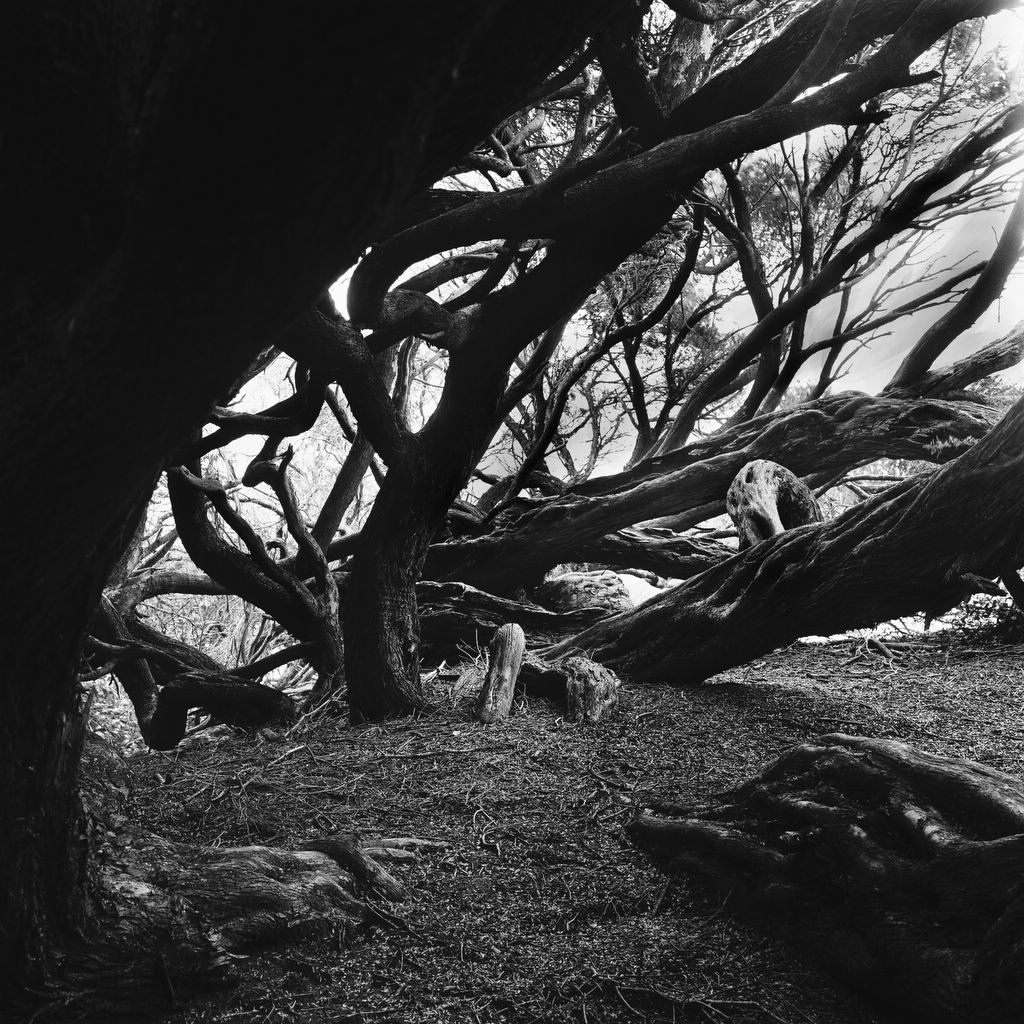
Ian Roberts, Plottings no 10, 2005
Ugly ti-tree scrub, some say.
What we have at Port Lonsdale is an often gentle coastline that is close to the wild and untamed nature of The Rip, which opens a safe Port Philip Bay into the rugged and stormy Bass Strait, and then to Tasmania.
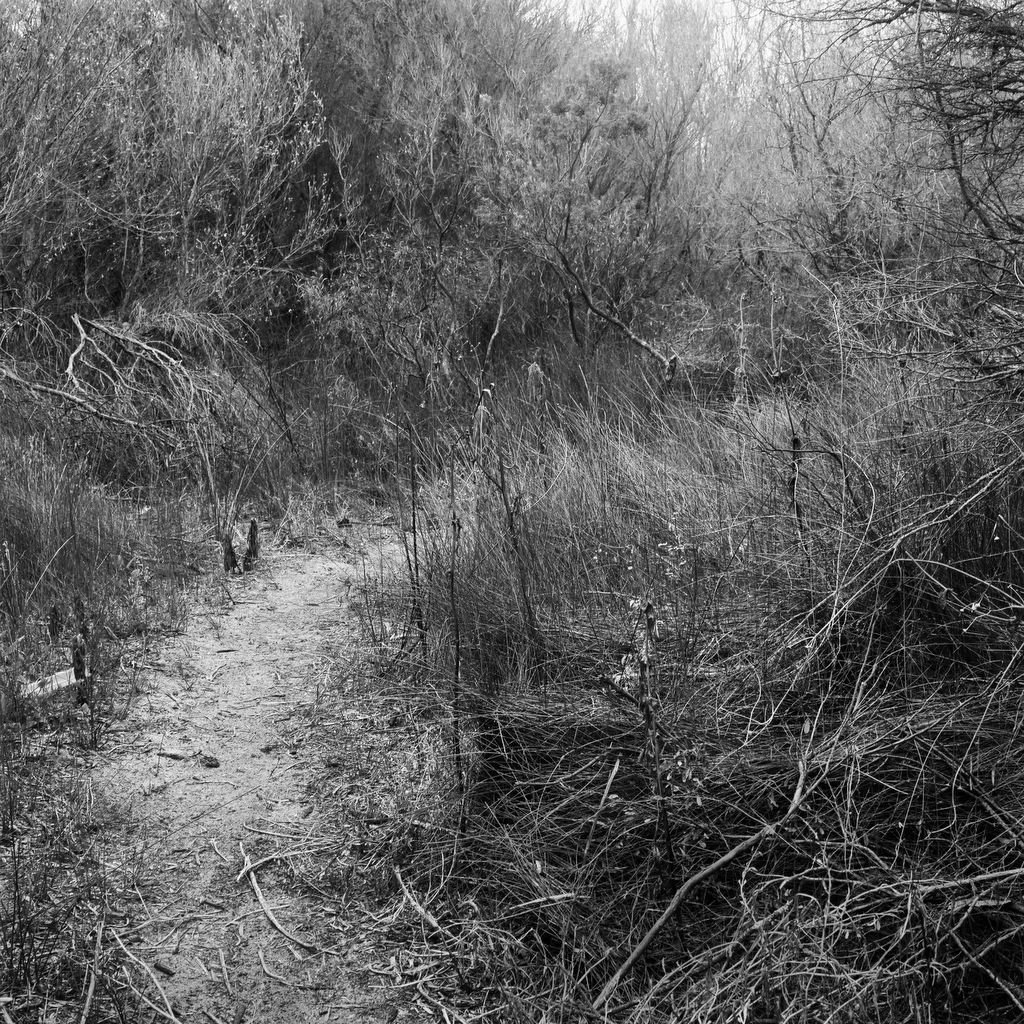
Ian Roberts, Plottings, no 14, 2005
Few stop and look at this coastline. Ian Roberts has. He dwells in the landscape of this place.
February 20, 2006
nifty
I've been on the road in Melbourne over the weekend and I've unable to blog because I've been caught up in meetings and workships. I have been able to catch bits and pieces of a few events that constitute the spectacle that is the Winter Olympics late at night. So this caught my eye:

Hopefully, things will return to normal when I return to Adelaide.
February 17, 2006
Abu Ghraib revisited
Previously unpublished images showing US troops apparently abusing detainees at Iraq's Abu Ghraib prison in 2003 were broadcast on Dateline, the current affairs programme on SBS television.

SBS said the new images were taken in late 2003 at around the same time as the previously publicised photographs, which included a series showing naked detainees arranged in "pyramids".
This image shows a faeces covered detainee arranged in terms of Christian iconography----crucifiction on the cross.
Salon also has a gallery of images on its website. It claims these are unseen anywhere else. There is an introduction that makes a spirited defence of their publication.
The images show that torture and prisoner abuse were simply business as usual for the US military.
February 16, 2006
sustainable living
The Canberra Times reports that:
All new homes built in the ACT will have to be meet higher energy-efficiency standards - through double glazing, improved orientation, better building materials and insulation - and use dramatically less water than before, under a government plan to be revealed today..... Planning Minister Simon Corbell will announce today that every home in the ACT will be obliged to achieve a five-star energy rating under the Building Code of Australia rating system from May 1. He will also unveil a proposal to mandate either rainwater tanks or greywater systems in all new homes to keep water use to about 540litres a day, 40 per cent less than the current Canberra average...Only Victoria already imposes a five-star energy efficiency rating on new homes.
So Canberra leads the way in bcoming a sustainable city whilst Adelaide lags well behind. We can think of the city in terms of the region-----the city-region--- and begin to think of cities spaces in rerms of ecology.
This shift to sustainable cities denotes human development of the earth gone wrong.
February 15, 2006
Like a rolling stone
A A review of Greil Marcus' recent book of music criticism, Like A Rolling Stone: Bob Dylan At the Crossroads. An explosion of vision and humor that forever changed pop music (Public Affairs Books, 2005). That happens to be one of my favourite songs from one of my favorite Dylan albums.

It is one of the most influential of Dylan's songs and I've always found it to be an expression of surrealism in rock music and an example of the commodified chintz of rock becoming art and myth.It was made at a time when young people focused their energies and their aspirations and got much of their identity from popular singers and popular songs. Rock music then was a language between people and a kind of conversationwith a sense of rebellion or revolt.
The reviewer says:
It is, precisely, America that Greil Marcus loves and writes about so well in his many books, especially Mystery Train: Images of America in Rock 'n' Roll Music (1975) and Invisible Republic: Bob Dylan's Basement Tapes (1997). Dylan's "Like a Rolling Stone" isn't simply American, as American as Coca Cola and Mickey Mouse. It is about America and it is literally and figuratively addressed to America. But what is "America"? It is two -- no -- three things: 1) a "promise," a Promised Land, a Heaven-on-Earth; 2) a whore, a betrayal, a Hell-on-Earth; and 3) an invisible republic or an unknown or unmapped country (both a geographical location and a society) in which nothing is settled and everything is up for grabs.
All that's in the music?Sounds like American Studies to me. Marcus hasa seriousness to the critical art form, of rock critiicsm and has displayed a keen foresight for the more widespread effect that rock music was having on mainstream American pop culture. Marcus rightfully places Bob securely in the tradition of American folk songs and tales-with Uncle Remus, Doc Boggs, Leadbelly, and all those hillbillies, gospel singers, and bluesmen who tell the story of America and its diverse lives.
Okay, but we listen, and relate to, the song in Australia as well. We can relate to the historical moment that Marcus captures so well in an earlier book
February 14, 2006
Leunig controversy
This is Leunig's 2002 anti-war cartoon, which The Age editor Michael Gawenda refused to publish as it was deemed to be inappropriate.

The ABC TV Media Watch program supported Leunig and placed his controversial cartoon on its website.
It is also the same cartoon that was submitted to Iran's newspaper, Hamshahri, as the first entry in a controversial contest for cartoons of the Holocaust launched in Iran today by someone pretending to be Leunig. Who would do that?
The neon-cons and Zionists detest Leunig and interpret the content of some of his work as expressing anti-Semitism.
Update:16 Feb.
Someone has owned up posing as cartoonist Michael Leunig and entering one of his unpublished drawings in an Iranian competition for cartoons of the Holocaust as a joke.
Michael Gawenda, who refused to publish the Leunig when he was editor of The Age, weighs into the debate. He says:
<
em>In his public comments, Leunig has said nothing at all about this competition, how vile it is, how racist, how it shocked him that anyone would ever think that he would have anything to do with such an outrageous campaign...not even a moment's reflection on the fact that the competition's organisers thought his cartoon - which is not a hoax - was a perfectly fine entry for this racist exercise.Instead, there is his victimhood, the fact that people have been nasty to him, that "pro-war lobbyists" have made his life miserable and he has had "a gutful of hostility and hate mail all because I have resisted the rise of fascism - the idea of war".
That's a bit rough on Leunig given the way he has been set up.
February 12, 2006
Eno on Miles Davis: context or music
This interpretation of the work of Miles Davis by Brian Eno is courtesy of Josef K over at Different Maps. It was orginally published in The Wire, December/Jan 1993.
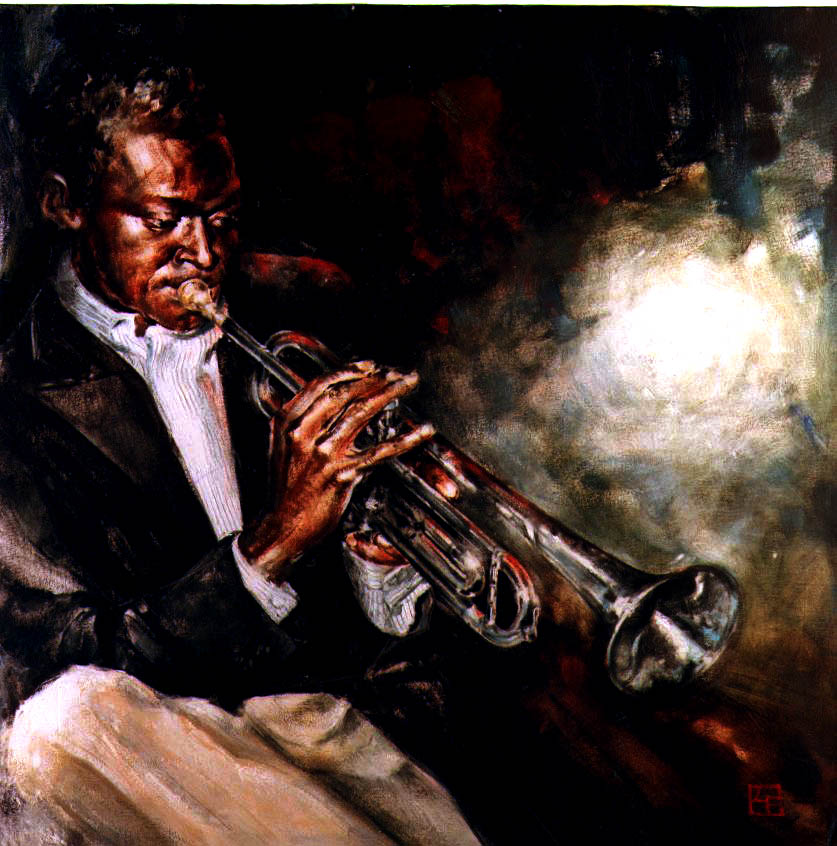
Miles Davis is known, and clebrated as, the great innovator who knew his roots inside out. Some of his ground b reaking music music is interpreted as the 'stuff of legend ' as milestones (eg, Birth of the Cool or Kind of Blue or Bitches Brew). He has been compared to Picasso, in relation to constant musical reinventions---bebop in the 1940's), to cool jazz to so-called modal jazz (abandoning traditional chord changes for improvisations based on modal scales), to the fusion music (jazz-rock and jazz-funk, )to layered recordings built up from edited tracks, to open-ended explorations of roiling, murky sonic textures. Davis is also seen as a wasted talent, selling out to rock and electronics in a pitiful, desperate effort to remain forever young, and a celebratory who engaged in his drug use and pimp posings.
Eno says:
'When you listen to Miles Davis, how much of what you hear is music, and how much is context? Another way of saying that is, 'What would you be hearing if you didn't know you were listening to Miles Davis?' I think of context as everything that isn't physically contained in the grooves of the record, and in his case that seems quite a lot. It includes your knowledge, first of all, that everyone else says he's great: that must modify the way you hear him. But it also includes a host of other strands: that he was a handsome and imposing man, a member of a romantic minority, that he played with Charlie Parker, that he spans generations, that he underwent various addictions, that he married Cicely Tyson, that he dressed well, that Jean-Luc Godard liked him, that he wore shades and was very cool, that he himself said little about his work, and so on. Surely all that affects how you hear him: I mean, could it possibly have felt the same if he'd been an overweight heating engineer from Oslo? When you listen to music, Aren't you also 'listening' to all the stuff around it, too? How important is that to the experience you' re having, and is it differently important with different musics, different artists?
Miles was an intelligent man, by all accounts, and must have become increasingly aware of the power of his personal charisma, especially in the later years as he watched his reputation grow over his declining trumpeting skills. Perhaps he said to himself: 'These people are hearing a lot more context than music, so perhaps I accept that I am now primarily a context maker. My art is not just what comes out of the end of my trumpet or appears on a record, but a larger experience which is intimately connected to who I appear to be, to my life and charisma, to the Miles Davis story." In that scenario, the 'music', the sonic bit, could end up being quite a small part of the whole experience. Developing the context- the package, the delivery system, the buzz, the spin, the story - might itself become the art. Like perfume...
Professional critics in particular find such suggestions objectionable. They have invested heavily in the idea that music itself offers intrinsic, objective, self contained criteria that allow you to make judgments of worthiness. In the pursuit of True Value and other things with capital letters, they reject as immoral the idea that an artist could be 'manipulative' in this way. It seems to them cynical: they want to believe: to be certain that this was The Truth, a pure expression of spirit wrought in sound. They want it to 'out there', 'real', but now they're getting the message that what its worth is sort of connected with how much they're prepared to take part in the fabrication of a story about it. Awful! To discover that you're actually a co-conspirator in the creation of value, caught in the act of make-believe. 'How can it be worth anything if I did it myself?'
I remember seeing a thing on TV years ago. An Indonesian shaman was treating sick people by apparently reaching into their bodies and pulling out bloody rags which he claimed were the cause of their disease. It all took place in dim light, in smoky huts, after intense incantations. A Western team filmed him with infrared cameras and, of course, were able to show that he was performing a conjuring trick. He wasn't taking anything out of their bodies after all. So he was a fake, no? Well, maybe-- but his patients kept getting better. He was healing by context-- making a psychological space where people somehow got themselves well. The rag was just a prop. Was Miles, with a trumpet as a prop, making a place where we, in our collective imaginations, could somehow have great musical experiences? I think so. Thanks, Miles, and thanks everyone else who took part, too. '
This does away with absolute values in art, understandable from a creator of ambient music, which investigated the potential of making music as an integral part of the listener’s aural landscape. Josek K questions the way Eno draws an analogy between Miles Davis and the Shaman.
Could not the figure of the Shaman stand for a non-instrumental coinception of music --an alternative to music as product? I'm thinking of Adorno and Horrjheimers use of the Shaman in their Dialectic of Enlightenment--I don't have the text with me.
February 11, 2006
you can see why
Australia and the US are facing an obesity "epidemic".
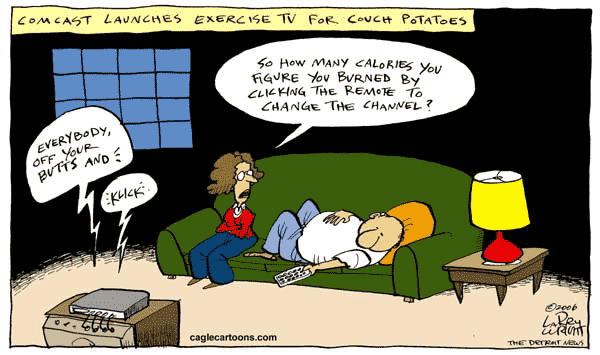
Tis a complex problem with multiple causes, mostly arising from bad food and lack of exercise. iI's a lifestyle illness, not a disease.
February 10, 2006
the other Tasmania
Some claim that you can look through photos at something else.

David Stephenson, Styx Valley, Tasmania, 2004, Type C colour photograph
That thesis presupposes that the photo is a window onto the landscape. Hardly. The photo is culturally encoded. How do we read the above: ecological vandalism or jobs for the timber industry? Do we think about saving the historic Recherche Bay from logging bythe timber giant Gunns Ltd.
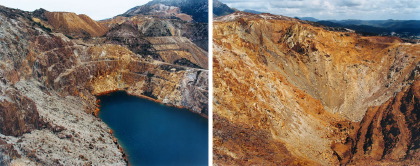
David Stephenson, Mount Lyell I, Tasmania, 2005, Type C colour photograph
The photo as a window makes the camera a darkened room in which we reside or inhabit. Hardly. Well, it could mean that we are sitting in the dark opening our eyes to what the artist sees. If you open your eyes wide enough you can see what the photographer as an artist sees.
On another interpretatation we are sitting in our minds surrounded by objects--piles of Tasmania photographs as representations-- that can be used for increasing our awareness of the world; or articulating various kinds of narratives.
February 9, 2006
Ralph Eugene Meatyard
I just love the theatricality of his staged images of his children and adult friends wearing dime-store Halloween masks in abandoned space. I also respect the evident disdain for the objectivity of photography:

R.E. Meatyard, Romance, From Ambrose Bierce #3, from Portfolio 3, 1964/1974
A self-taught photographer, and an optician by profession, he pursued photography mostly on weekends, taking many of his photographs in or around abandoned and dilapidated buildings in Lexington, Kentucky. He is known for the 1969-72 The Family Album of Lucybelle Crater in which the masks of an old man and woman are worn by Meatyard's wife and usually one other person.

Ralph Eugene Meatyard, Untitled (Michael in front of deteriorating wall), 1960
He has an eye for the uncanniness of ordinary life.
the New York Times on the 12 Muhammad cartoons
Most of the commentary around the 12 cartoons avoids addressing or interpretating them as visual images with powerful effects. What we mostly have is political commentary concerned with violence and free speech. But images have a life of their own, especially tough ones:

Steve Bell, The cartoon furore
Michael Kimmelman writing in the New York Times is condsiders the cartoons as images. He says:
They're callous and feeble cartoons, cooked up as a provocation by a conservative newspaper exploiting the general Muslim prohibition on images of the Prophet Muhammad to score cheap points about freedom of expression. But drawings are drawings, so a question arises. Have any modern works of art provoked as much chaos and violence as the Danish caricatures that first ran in September in the newspaper Jyllands-Posten?
Not that I know of. The current bloodshed has turned the culture war into real war. Kimmelman says:
Educated secular Westerners reared on modernism, with its inclination toward abstraction, its gamesmanship and its knee-jerk baiting of traditional authority, can miss the real force behind certain visual images, particularly religious ones. Trained to see pictures formally, as designs or concepts, we can often overlook the way images may not just symbolize but actually "partake of what they represent," as the art historian David Freedberg has put it.That's certainly how many aggrieved Muslims perceived the cartoons.
'Partake of what they represent' takes us to a different place doesn't it? To the devastations and horrors of history of modernity, or the history of being? Whose history?
Kimmelman continues:
What may be overlooked this time is a deep, abiding fact about visual art, its totemic power: the power of representation. This power transcends logic or aesthetics. Like words, it can cause genuine pain.
Though images are different to texts we can still talk about the truth of cartoons, but maybe not just as truth as representation. Maybe we need to turn to 'wriitng' the disaster'?
February 8, 2006
those 12 cartoons: an old oriental story
We often describe ourselves by explaining how we are different from something else -- the Other. It is ironic that in spite of growing globalization there remains in the world a split between the West and the rest. The Muslim world is seen as a mishmash of religious excess, superstition and despotism whereas the West stands for truth, good and justice.
This kind of description, which is often based on the relationship between power and knowledge in scholarly and popular thinking, is particular evident in European/Western views of the Islamic Arab world being constructed around the fallout from the 12 Muhammad cartoons. What we have is the Muslim Orient and Occident working as oppositional terms, in that the Muslim Orient is constructed as a negative inversion of Western culture.

Edward Said argued that Orientalism can be found in current Western depictions of "Arab" cultures. The depictions of "the Arab" as irrational, menacing, untrustworthy, anti-Western, dishonest, and--perhaps most importantly--prototypical, are ideas into which Orientalism has evolved.
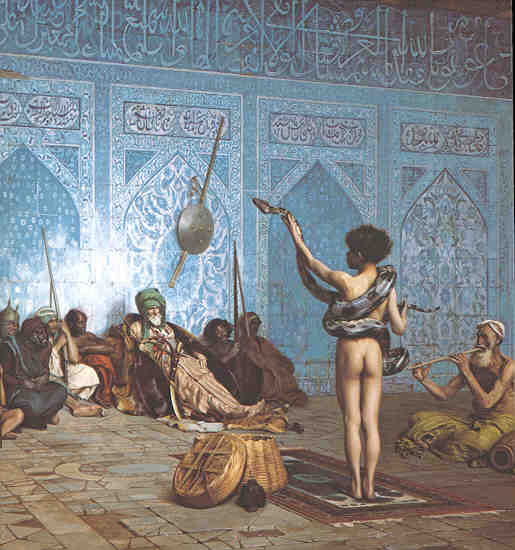
Orientalism arises from the way that the West has created a dichotomy, between the reality of the East and the romantic notion of the "Orient."
The Middle East and Asia are viewed with prejudice and racism in orrientalism. They are backward and unaware of their own history and culture. To fill this void, the West has created a culture, history, and future promise for them. On this framework rests not only the study of the Orient, but also the political imperialism of Europe in the East.
So President Bush, in creating the culture of democracy and freedom in the Middle East, fits into, and is a part of Orientalism.
questioning the conventions of wilderness photography
This is an example of innovation in the tradition of wilderness photography in Tasmania:
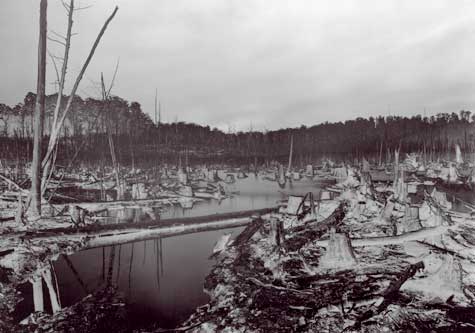
David Stepenson,Drowned, No 194, (Lake Gordon, Tasmania), 2003
This exhibition at the Brett Gallery in Hobart highlights the way that the romantic picturesque tradition is haunted by death (the places it depicts are part of a vanishing world)and it avoids the wild inaccessible places in favor the destruction of wilderness by corporations.
PeterTimms spells this innovation out. He says that:
"....the melancholic black-and-white images in David Stephenson's Drowned series, which adopt all the Picturesque conventions - the moody skies, placid reflecting waters, framing trees, distant hills, and so on - but turn them to quite unexpected purpose. Stephenson chooses as his subject not some wild, inaccessible place but desolate man-made lakes dotted with skeletal black tree-trunks....By expressing the death principle so explicitly, Stephenson strips it of its ecstacy, making its aestheticisation seem an affront. One could almost imagine his pictures as tourist postcards, but not quite, since there is something distressing about their allure. Instead of celebrating the glories of what is in danger of being lost, they show us what that loss entails, even daring to suggest what might also have been gained. In other words, they complicate matters, making it harder for us to settle for easy moral certainties."
These are not tourism images used to reconstruct and brand Tasmania-as-wilderness for tourists. They undermine this wilderness construction of Tasmania:
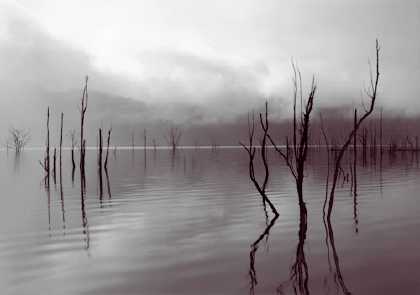
David Stephenson,Drowned, No. 16 (Lake Gordon, Tasmania) 2002
February 6, 2006
the cartoon wars
Cartoons provoke strong feelings don't they. The images kinda get below the belt in a way that words do not; this is especially the case with the more provocative ones that take strong stands on controversial issues.
An example:

The reaction from the US military. Another example is this cartoon of Ariel Sharon, which appeared in the British newspaper, The Independent, on 27 January 2003, depicting the Israeli Prime Minister eating the head of a Palestinian child while saying: "What's wrong? You've never seen a politician kissing babies before?" That provoked a storm of protest.
No one disputes freedom of speech, nor the freedom to publish. To make fun of, and lampoon, politicians, leaders or publishers is fair game. But hiding behind satire and insulting religious icons is playing with fire as it can be seen to denigrate and express an abuse of freedom. In Islam, representations of all prophets are strictly forbidden and so to represent a prophet is a grave transgression. If one adds the insults and denigration that Muslims perceived in the Danish cartoons, then we have the denigration fo freedom of expression.
The ferocious Muslim protests at the publication of the 12 anti-Islam cartoons (see Tim Blair also has the images) in the European press (initially in the Danish newspaper Jyllands-Posten) continues to escalate. Though I personally do not find the12 cartoons to be offensive and not particularly good, they are judged to be offensive cartoons of Muhammad--ie., insulting the prophet--by many Muslims. Consequently, this is becoming a global issue.
The impression I get is that Europeans think that freedom of speech is guaranteed in Europe, and that they are defending it against Islamic pressure within the clash of civilizations. Little is being said about the ethics of the media by the press that published the cartoons. It's a case of rights to express without responsibilities for them.
The tit for tat is escalating into the cartoon wars.
February 5, 2006
architecture in Tasmania's Midlands
This map of Tasmania shows my holiday journey. We flew into Hobart from Adelaide across the north-west corner of the island; travelled up, and stayed in the Midlands; moved onto Launceston and Hawley Beach near Devenport, travelled across the top north coast to Rocky Cap and Stanley, moved down through the west to Strahan, onto Queenstown, back to the Midlands, and then down to Hobart. Quick and short.

The Midlands figured strongly in the week's holiday as we stayed with family in Tunbridge. Suzanne's sister, Barbara Heath, and her husband are spending their holidays restoring a Georgian store in Tunbridge. Tis a 10 year project.
The Midlands reminded me of the South Australian landscape: dry, hot, salt scolds, with a golden afternoon light illuminating dead trees across a yellow landscape. Only the Midlands had more trees than SA, which has been pretty much stripped bare.
Alas, the MIdlands do not have enough trees to save the landscape from the rising salty groundwater. Lots more trees need to be replanted, but there was very little evidence of that. Unlike South Australia, Landcare has not taken deep root in the Midlands. It is seen as a failure rather than something to be built upon. So the old farming practices continue.
The Midlands are dotted with some very gracious Georgian houses beside the Heritage Highway running from Hobart to Launceston. These buildings (shops, manisons, windmills, barns etc) are all in the process of being lovingly restored with a very keen heritage eye.
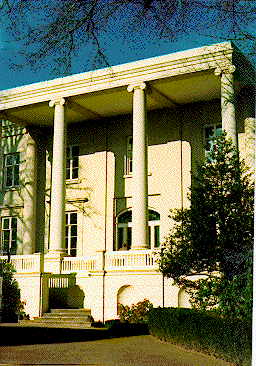
Clarendon House, Nive, 1838
Oatlands, just south of Tunbridge, has the largest collection of sandstone buildings of a village situation in Australia, and is reputed to have the largest collection of pre-1837 buildings in Australia:
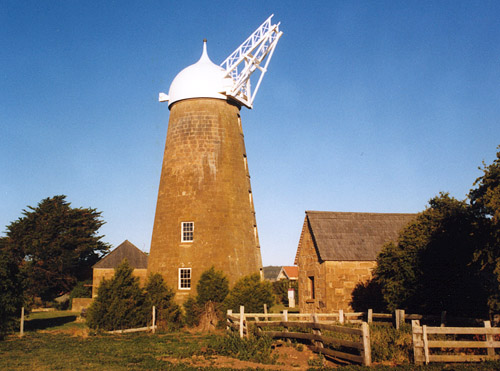
Callington Flour Mill, Oatlands, 1837
As Oatlands was a garrison town I presumed that many of the buildings were convict-built, as is this sandstone bridge over the Macquarie River at Ross, another garrison town, just north of Tunbridge, designed by the Architect- Engineer John Lee Archer.
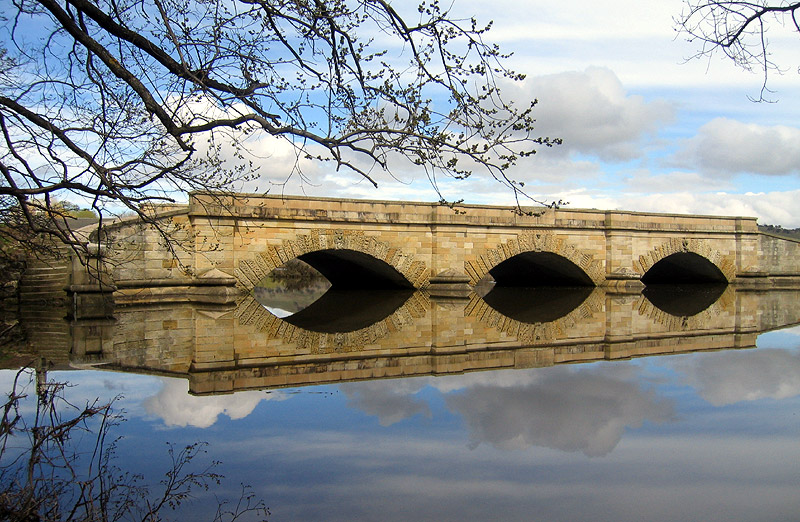
Jennifer Spence, Ross Bridge, built 1832-1836
It's an excellent monument to the artistic convict craftsmanship. The bridge consists of three perfect symmetry arches, all bearing contemporary patterns of colonial sculptured stone.
Tis the beautifully restored architecture in a blighted landscape that stands out. Schizophrenic isn't it. But that's Tasmania. Redneck and cosmopolitan. The old and the new. Traditional resource based economy and the newly forming knowledge economy.
February 4, 2006
Tasmania-as-wilderness
Peter Dombrovskis' name and influence is everywhere in Tasmania. His work, which built on that of Olegas Truchanas by linking to the images of Ansell Adams, Eliot Porter and a number of other mid-twentieth century American landscape photographers, established a tradition of wilderness photography in Australia. This picturesque tradition is mostly ignored by critics and art theorists and spurned by the modernist art institution due to its lack of formal innovation and visual conservatism.
Photography conveys a sense of place for a purpose: to save the wilderness and to prevent it from disappearing.
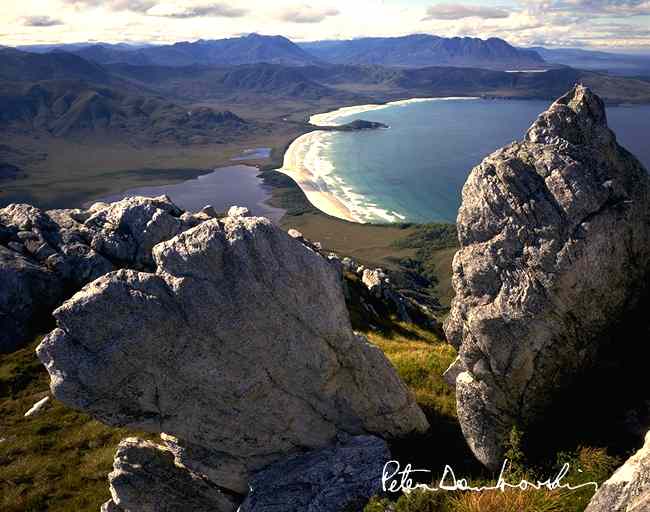
Peter Dombrovskis, Cox Bight, South Coast, Tasmania
The point of Dombrovskis' photography was to save the Franklin River by conveying to suburban Australians the beauty of the Franklin. His Tasmanian landscape is rugged, mysterious, uninhabited and his work gestures to a primeval new-world arcadia innocent of human interference. It resonates with German Romanticism that understood nature to be a redeeming force and sought religious icons in a secular society.
Dombrovskis' name keeps coming up in the various conversations I had around the state, punctuated by the silence about the ongoing logging of the wilderness. There is no escaping this wilderness construction of Tasmania, even as you see the signs of the traditional resource-based Tasmanian economy everywhere and its utilitarian culture of male pioneering and heroism still embodied in Burnie, Queenstown and the hydro towns.
Peter Dombrovskis' posters are on the walls of shops, pubs and and restaurants in all the tourist areas:

Peter Dombrovskis, Lake Oberon, World Heritage Area, Western Tasmania
This is Tasmania the beautiful. This is how we view our environment. This is brand Tasmania. It is the clean and green state. As Stuart Solman writes that:
"...his photographs of the late 1970 and early 1980s, which constructed the wilderness as mythical and pristine, were intended to appeal to the emotion and imagination of suburban voters on mainland Australia. One effect of Dombrovskis’ vision is the conflation of the idea of Tasmania with that of wilderness. A consequence of this is the problematic belief that the wilderness has been saved."
So what of the effects of logging? What of the effects of mining? What of the effects of pastoralism? Forestry Tasmania's logging practices are everywhere behind the strip of "wilderness" along the main roads. That strip hides the extent to which forests are being turned into woodchips.
Dombrovskis still casts a long shadow over contemporary Tasmanian wilderness photography's represention of wild, inaccessible places. The work that I saw was cliched, still caught up in the beautiful conventions of a benign nature. The tradition had stagnated since the 1980s rather than taking n new directions without sacrificing its ancestry or compromising its purpose. Where is the exploration of the nature society interface, the presence of humans in the landscape, and the changes they have wrought?
good news on cities
Some thoughts on urban living arising from my week trip in Tasmania.

Wharf area in Hobart, Tasmania
This story caught my eye when I picked up an old copy of The Age as I came out of the 'wilderness' in Tasmania into Hamilton, a small country village or town in the dry farming/pastoral country of the Midlands. The MIdlands reminded me of the South Australian landscape. Only it had more trees and lots of gracious Georgian houses beside the Heritage Highway running from Hobart to Launceston, which are all in the process of being lovingly restored with a heritage eye.

Under Melbourne City Council's draft transport strategy, commuters would be "weaned" off cars, plans for a multibillion-dollar cross-city tunnel would be abandoned, and speed limits in the CBD reduced from 50 to 40 km/h. The strategy is a recognition that the car can no longer be king in Melbourne and that cities are also about people walking and enjoying themselves.
Are we leaving the 20th century behind? The draft strategy would work only if the State Government invested more in public transport and cycling alternatives. It is not evident that Bracks government would move in this direction.
Poor Adelaide. Flying back to it from Hobart in Tasmania yesterday it quickly became obvious that the car is king in Adelaide. The Adelaide City Council and Rann state government are not willing to make the changes to have car free zones in the CBD. Hobart is way ahead in preventing the car from eating up urban life.
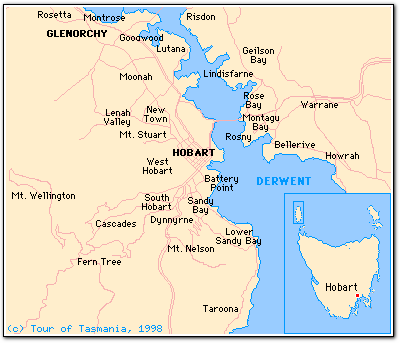 The wharf area (eg., the area around Salamanca Place & Elizabeth Street Wharf) show the way in what can be done in returning a city to people.
Hobart acepts that it is a regional city.Unlike Adelaide it fosters no fantasy to become another Sydney or Melbourne. It is proud of what it is, and it is concerned to create a visually interesting and cosmopolitian regional city that offers a pleasant urban way of life in the inner city.
It does this by fostering and building on its strengths--- geogrpahy, keeping the old Georgian buildings, making creative use of the old warehouses along the wharf, putting all the craft and wood skills to great use inside the buildings and creating an architecture that is appropriate to the climate.
Adelaide comes across as a poor country cousin in contrast. Despite its compactness in being nestled between hills and sea, It looks poor, shabby and visually uninteresting. It is not a nice urban space for people to be in. It has yet to come to terms with its searing summer climate.
February 3, 2006
I'm back from Tasmania
I've been away in Tasmania for a week travelling in the west-central and south-west of the island--a place that some people call wilderness. It is not wilderness per se, as aboriginal people lived there before the European pioneers came and begun to build the corporate state to foster development through conquering the wild nature of Tasmania.
I thought that I could blog from where I was in Queenstown. I was exploring the possibilities of taking photos with a digital camera and then posting them direct to junk for code. It was not possible. There was nothing by way of a fast internet connection for me in the cottages I stayed in. Nor could I find public internet facilities. So I had to make do with roll film and old fashioned Leica and Linhof cameras.
I'm just trying to catch up with what's been happening in the world whilst I've been disconnected from all media for a week. That means reading yesterdays papers and blogs to reconnect. This cartoon caught my eye:

Leunig
Admittedly, the cartoon refers more to the war machine post on philosophy.com but I just like the image. It is very graphic. Leunig has moved away from this kind of work to more text and image.