|
February 04, 2006
Peter Dombrovskis' name and influence is everywhere in Tasmania. His work, which built on that of Olegas Truchanas by linking to the images of Ansell Adams, Eliot Porter and a number of other mid-twentieth century American landscape photographers, established a tradition of wilderness photography in Australia. This picturesque tradition is mostly ignored by critics and art theorists and spurned by the modernist art institution due to its lack of formal innovation and visual conservatism.
Photography conveys a sense of place for a purpose: to save the wilderness and to prevent it from disappearing.
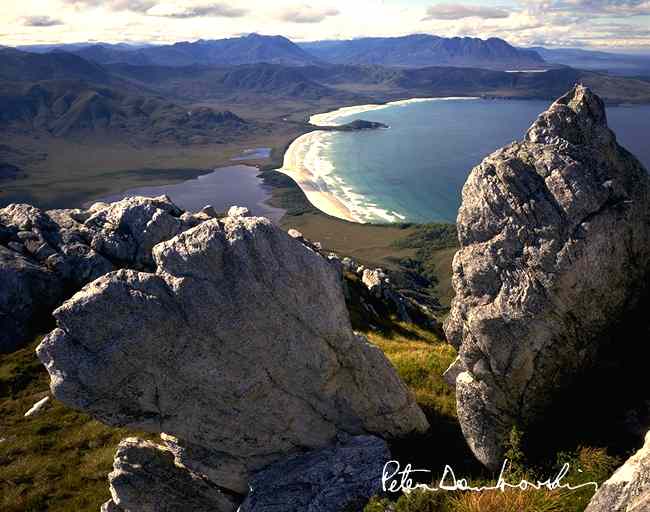
Peter Dombrovskis, Cox Bight, South Coast, Tasmania
The point of Dombrovskis' photography was to save the Franklin River by conveying to suburban Australians the beauty of the Franklin. His Tasmanian landscape is rugged, mysterious, uninhabited and his work gestures to a primeval new-world arcadia innocent of human interference. It resonates with German Romanticism that understood nature to be a redeeming force and sought religious icons in a secular society.
Dombrovskis' name keeps coming up in the various conversations I had around the state, punctuated by the silence about the ongoing logging of the wilderness. There is no escaping this wilderness construction of Tasmania, even as you see the signs of the traditional resource-based Tasmanian economy everywhere and its utilitarian culture of male pioneering and heroism still embodied in Burnie, Queenstown and the hydro towns.
Peter Dombrovskis' posters are on the walls of shops, pubs and and restaurants in all the tourist areas:

Peter Dombrovskis, Lake Oberon, World Heritage Area, Western Tasmania
This is Tasmania the beautiful. This is how we view our environment. This is brand Tasmania. It is the clean and green state. As Stuart Solman writes that:
"...his photographs of the late 1970 and early 1980s, which constructed the wilderness as mythical and pristine, were intended to appeal to the emotion and imagination of suburban voters on mainland Australia. One effect of Dombrovskis’ vision is the conflation of the idea of Tasmania with that of wilderness. A consequence of this is the problematic belief that the wilderness has been saved."
So what of the effects of logging? What of the effects of mining? What of the effects of pastoralism? Forestry Tasmania's logging practices are everywhere behind the strip of "wilderness" along the main roads. That strip hides the extent to which forests are being turned into woodchips.
Dombrovskis still casts a long shadow over contemporary Tasmanian wilderness photography's represention of wild, inaccessible places. The work that I saw was cliched, still caught up in the beautiful conventions of a benign nature. The tradition had stagnated since the 1980s rather than taking n new directions without sacrificing its ancestry or compromising its purpose. Where is the exploration of the nature society interface, the presence of humans in the landscape, and the changes they have wrought?
previous
|


Hi Gary! Peter Dombrovkis is (was) fabulous and I always have his photographs in mind when I fumble along with my own. Lovely to see other people recognising his work!