|
February 08, 2006
This is an example of innovation in the tradition of wilderness photography in Tasmania:
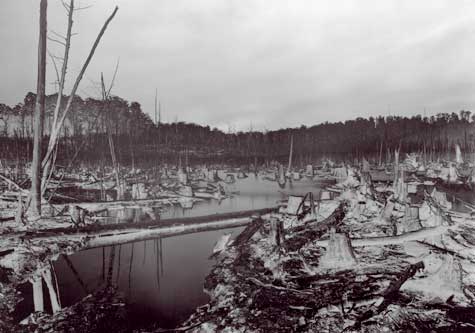
David Stepenson,Drowned, No 194, (Lake Gordon, Tasmania), 2003
This exhibition at the Brett Gallery in Hobart highlights the way that the romantic picturesque tradition is haunted by death (the places it depicts are part of a vanishing world)and it avoids the wild inaccessible places in favor the destruction of wilderness by corporations.
PeterTimms spells this innovation out. He says that:
"....the melancholic black-and-white images in David Stephenson's Drowned series, which adopt all the Picturesque conventions - the moody skies, placid reflecting waters, framing trees, distant hills, and so on - but turn them to quite unexpected purpose. Stephenson chooses as his subject not some wild, inaccessible place but desolate man-made lakes dotted with skeletal black tree-trunks....By expressing the death principle so explicitly, Stephenson strips it of its ecstacy, making its aestheticisation seem an affront. One could almost imagine his pictures as tourist postcards, but not quite, since there is something distressing about their allure. Instead of celebrating the glories of what is in danger of being lost, they show us what that loss entails, even daring to suggest what might also have been gained. In other words, they complicate matters, making it harder for us to settle for easy moral certainties."
These are not tourism images used to reconstruct and brand Tasmania-as-wilderness for tourists. They undermine this wilderness construction of Tasmania:
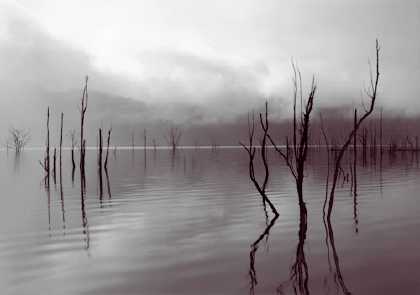
David Stephenson,Drowned, No. 16 (Lake Gordon, Tasmania) 2002
|


