April 30, 2006
Rolling Stone, Neil Young, Living with War
I used to read Rolling Stone in the late 1960s and 1970s when it expressed sixties counter-culture. Rolling Stone was a guide, an identification marker based around music, culture and politics, and an education.
 During that period this San Francisco based journal of music, culture and politics had some excellent and very influential journalism minds of that period of the 20th century.
Hunter S Thompson wrote Fear and Loathing in Las Vega; Tom Wolfe wrote The Right Stuff for it; Annie Leibovitz, the staff photographer from 1970 to 1983, contributed good reportage work; the magazine covered Nixon's election campaign in 1972, the Manson murders, the kidnapping of Patty Hearst, and the whistle blowing of Karen Silkwood.
Articles were of 20,000 words and they contained an interesting and creative mix of culture and politics.
Then I stopped reading it after the end of the Vietnam war, when the liberal left's culture and politics fractured and the culture and the politics went different ways.
Rolling Stone was slow to champion new musical movements in the mid-Seventies --eg., punk or Nirvana -- as it preferred middle-of-the-road acts such as The Eagles and Fleetwood Mac. It became conservative as there was little on feminism, or the civil rights movment; it looked increasingly like a modish verision of Entertainment Weekly; and, during the 1980s it supported Ronald Reagan's Republicans and corporate values.
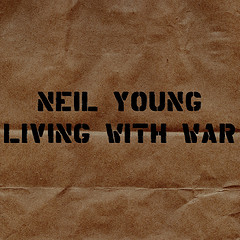
've started dipping into the online site of Rolling Stone --I'm currently listening to Neil Young's recent Living With War---a musical critique of U.S. President George W. Bush and his conduct of the war in Iraq. (review here; also Thrasher's Wheat) It's a powerful garage band album that reconnects with the sixties.
And, judging by this article in its recent issue, Rolling Stone is tacking with the antiwar/anti-Bush winds blowing. The article by Sean Wilentz starts thus:
George W. Bush's presidency appears headed for colossal historical disgrace. Barring a cataclysmic event on the order of the terrorist attacks of September 11th, after which the public might rally around the White House once again, there seems to be little the administration can do to avoid being ranked on the lowest tier of U.S. presidents. And that may be the best-case scenario. Many historians are now wondering whether Bush, in fact, will be remembered as the very worst president in all of American history.
A powerful opening.
April 29, 2006
images and postmodern times
I was reading Other Voices, an e-journal of cultural criticism and I chanced upon the work of Paul Romano:

Paul Romano, Conviction
I was looking for material about us living in a society dominated by pictures,visual simulations and media images and thge way these constitute a common culture. Our era is a postmodern is one in which the postmodern mode of representation is represses language and absorbs it into image. The picture embodys a complex interplay of visuality, apparatus, institutions, discourse, bodies, and figurality.
April 28, 2006
Hotel California
The quote below is by Frank Zappa and it is on the California singer songwriters of the 1970s. It is taken from in Barney Hoskyns, Hotel California: Singer-Songwriters and Cocaine Cowboys in the LA Canyons, 1967-1976. Barney Hoskyns is a music journalist and editor of the awesome archival site Rock’s Back Pages.
Zappa says characterises this network as:
"the horrible fake-sensitive type artist/singer/ songwriter/suffering person, posed against a wooden fence provided by the Warner Bros Records art department, graciously rented to all the other record companies who needed it for their version of the same crap."
The West Coast sound is composed of a network of self-regarding troubadours (including Joni Mitchell, Jackson Browne, Neil Young, Linda Ronstadt and Gram Parsons), squabbling groups (the Byrds, the Eagles, Crosby, Stills & Nash, the Mamas and the Papas, Fleetwood Mac) and ruthless businessmen (David Geffen, Elliot Roberts), who between them turned California, for a while, into the centre of the pop universe.
April 27, 2006
Fashion week
It's Mercedes Australian Fashion Week once again.
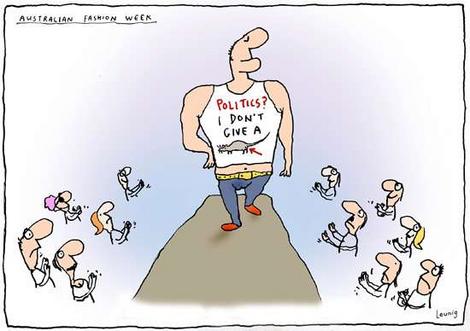
Leunig
It's a celebration of Australian design and manufacturing in a global market. But garment manufacturing is increasingly going offshore to China.
April 26, 2006
Simon Reynolds: noise
Simon Reynolds says that if music communicates some kind of emotional message, then noise is best defined as interference, as something which blocks transmission, jams the code, prevents sense being made. I would write 'expresses' rather than 'communicates' and avoid 'transmission' but we will leave to that one side for another time.
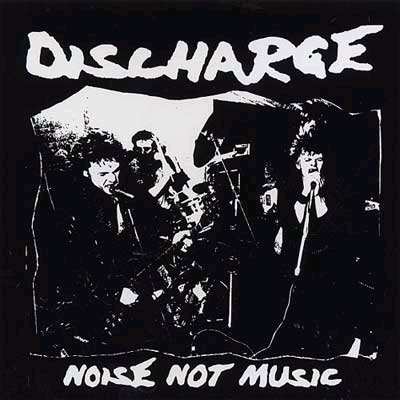
In an early text Blissed Out Reynolds says:
The subliminal message of most music is that the universe is essentially bengin, that if there is sadness or tragedy, this is resolved at the levlel of some higher harmony. Noise troubles this world view. This is why noise groups, invariably deal with subject matter thati s anti-jhumanist---extremes of abjection, obsession, trauma, atrocity, posession---all of which undermine humanism's confidence that through individual consciousness and will, we can become subjects of our lives, and work together for the general progress of the commonwealth.
He says that noise occurs when language breaks down and that the pleasure of noise lies in the fact that the obliteration of meaning and identity is ecstasy (as being out-of-oneself). He then says that to speak of noise, to give it attitibutes --the site of pleasure and the unspeakble-- is to shackle noise with meaning and make it part of culture.
Does not a culture's musical conventions define the distinction between music and noise? Are not the boundaries between the two ever changing?
The Who smashing their instruments on stage---noise? The feedback sections of the Grateful Dead circa 1968--garage band dead of Anthem of the Sun and Live/Dead---ie free-form use of everything on stage (in this case the speakers), noise? The noise eventually evolved into Space. A description of feedback on Anthem of the Sun:
...another electric feedback build, all frenzied strumming and howling amps at top volume…it’s a noise most Deadheads could do without, and it ends with controlled feedback via guitar volume knobs expertly manipulated by Garcia and Weir, as Lesh pokes his fingers in his ears and sways in front of the amp to make ghostly groans bombard out of all their amps. It takes two minutes or so for the fade at the end to finally finish as the constanly-struck gongs and hissing amps, already shrieking their cones out for long enough, dissipate into stunning silence.
April 25, 2006
Sidney Nolan: Gallipoli+ Anzacs
A commentary about the Anzac tradition as the birth of the nation. Gallipoli was Australia's first major action in warfare and, although a military failure, it has been interpreted as a triumph for the spirit of man. The slaughter at Gallipoli scarred a generation and an entire nation.
Sidney Nolan's series of paintings on Gallipoli in the 1960s are a post war commentary just like Peter Weir's 1981 film:

Sidney Nolan, Gallipoli,
Nolan saw Gallipoli as Hell and the soldiers in terms of the dark torment of the lost souls of war:

Sidney Nolan, A Fashionable Man, (Gallipoli 1969)
Nolan helped establish Gallipoli in Australian mythology in the 1960s and he saw the Gallipoli campaign as a "legend of failure".
By ‘myths’ I mean sustaining images or narratives which not only enabled Australia’s participation in the conflict as a kind of coping strategy for individuals and the nation alike, but which also shaped Australia’s post-war self-image and place in the world.

Sidney Nolan, Gallipoli Soldier
This is a long way from the myth of the digger as the independent, ‘larrikin’ backwoodsman on the Western Front, taking delight in his status as a volunteer citizen-soldier and finding grim humour in the circumstances of trench warfare.
What we have inherited is Gallipoli as a heroic-romantic myth based firmly on the ANZAC legend as well as romance. Its name represents a kind of tragic failure of epic proportions. So we marvel at the personal vicissitudes of those involved. The remembrance of Gallipoli totally eclipses the reality of the campaign itself and it even eclipses much of the First World War.
April 24, 2006
obesity
The Advertiser reports that more than half of South Australian adults are now overweight or obese, enough to fill AAMI Stadium seven times over, a new study has revealed.
 More than half of the adults in the state!
A special report from the SA Health Omnibus Survey has mapped the shocking rise in obesity levels across South Australia since the survey started in 1993.
It shows the number of people who are now grossly overweight has almost doubled from 11.6 per cent to 20 per cent. A further 33 per cent are overweight and at risk of Type 2 diabetes, cancer, heart disease and stroke.
And obesity is rising amongst kids.
Over-eating is a main culprit, and this throws the spotlight on the promotion of fast food and snacks. However, the federal government has consistently resisted pressure to restrict food advertising to children.
Guy over at Polemica says that:
I tend to think that the most effective salve for this issue is for parents to more actively encourage their kids to limit their soft drink consumption. No school is an island, and while limitation regimes may prove beneficial, outright prohibiting the sales of soft drinks in schools is not going to solve this particular problem.
What if the parents are obese and don't see that there is a problem? Working class men with beer guts for instance?
April 22, 2006
increasing petrol prices mean...
It's getting tougher owning a car isn't it. Chocked roads in the cities, accidents on the freeways, rising petrol prices and the increasing use of tollways.

The impact of rising petrol prices is also in being felt in the reduction in discretionary family spending, most particularly men clamping down on buying new clothes. According to an article in the Australian Financial Review the priority of discretionary family spending is: the kids, the wife, the dog, then if there is any money left, then the husband.
It was meant as a joke by the retailers, but one that has a grain of truth.
I reckon that there's a substantial segment of the population that spends a very big chunk of their income on gasoline, and in the past 12 months they've seen gasoline prices increase by 50%. Is it the same population segement whose household income has been decreasing and their household debt rising I wonder?
April 20, 2006
Sydney harbour prawns
Sydney's commercial fishing fleet lost their businesses in January when the NSW Government shut down fishing in the harbour after announcing the fish were too toxic to eat.
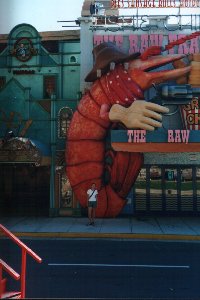 According to the 7.30 Report Homebush Bay in the upper reaches of Sydney Harbour is Sydney Harbour's dioxin Ground Zero. Homebush Bay is often described as one of the most contaminated sites in the world.
The hope has long been the contamination here in the soil, the water and the river bed would stay in this small bay. That hope is misplaced as the toxicity from the products made by Union Carbide on the banks of Homebush Bay is spreading through the harbour was made clear in January.
Fish and prawns from the harbour were found to have dangerously high levels of dioxins - the legacy of decades of industrial pollution upstream. Dioxins are a group of toxic long-lasting organic compounds that accumulate in the body through the main pathway of food. Most toxic forms are known to be harmful in the tiniest amounts. Mothers pass dioxin on to their children in the womb and via breast milk.
However, recreational anglers can still catch and eat fish from the harbour even though Sydneysiders who regularly eat harbour seafood have been found with sky-high levels of toxic dioxin chemicals in their blood.The the chemical cocktail in their system contains a very high proportion of the most dangerous dioxin - TCDD or tetrachlorodibenzo-para-dioxin.
The NSW Health Department initially refused to give the families of all 44 fishermen who had been licensed to fish commercially in the harbour a blood test. The NSW Government then reversed an earlier decision and now says that free blood testing will be available to those commercial fishermen and their families who want them.
April 19, 2006
trashing postmodernism
I've been trying to find the Australian's editorial (17/4) that railed against postmodernism and literature, but I cannot find it. It has disappeared into the archives already.

Bill Leak
A pity. The argument was incoherent.The editorial was about a question on a private girls school Year 11 English exam, which asked the students to examine the play Othello from the perspective of the "dreary postmodern trinity" of race, gender or class issues. The editorial went on to say that the sky is falling in terms of english literature because of the postmodernists. The reason? Analysing the play through the prisms of racism, sexism, and feminism supposedly destroys our love for great writing, dumbs down the curriculum, and destroys the transcendant themes of human existence.
The Australian's heavy handed intervention into literary theory failed to understand that there are different ways of reading a text, and that reading from different perspectives gives us different interpretations. The Australian is saying that there is only one way to read a text--the conservative one it advocates.
Update: 20 April
Gee, the PM is wading into the debate now. He says:
I feel very, very strongly about the criticism that many people are making that we are dumbing down the English syllabus...I think there's evidence of that in different parts of the country ... when the, what I might call the traditional texts, are treated no differently from pop cultural commentary, as appears to be the case in some syllabuses....I share the views of many people about the so-called postmodernism ... I just wish that independent education authority didn't succumb on occasions to the political correctness that it appears to succumb to...We all understand that it's necessary to be able to be literate and coherent in the English language, we understand that it's necessary to be numerate and we also understand that there's high-quality literature and there's rubbish...We need a curriculum that encourages an understanding of the high-quality literature and not the rubbish.
I'm real sure the PM is well in Derrida's texts.
Not to be outdone--or is it just jumping on the cultural conservative bandwagon?---Christian Kerr of Crikey concurs, saying that ' postmodernism....shuns our intellectual inheritance and offers nothing but vapid verbology in its place. Vapid verbology only understood by a few self proclaimed and self-perpetuating high priests of the movement....Conservatism often has cultural common sense on its side – and this is one of those occasions. Our natural, inbuilt bullsh*t detectors tell us something is shonky. We just latch onto it and express our concerns differently. Hence the varied ways in which John Howard, Camille Paglia and Michael Palin in drag give us the same message: crap is crap.'
I'm sure Kerr is well versedin Deleuze's texts.
April 18, 2006
an answer
An answer to this question. In the light of this President Mahmoud Ahmadi, the current President of Iran, is being represented as a demonic, gruesome figure complete with monstrous fangs made of nuclear missiles.

I used to be on the email list of the New Republic once. No more. Then read this
April 16, 2006
A question
Can anti-Muslim bigotry can be understood properly as "racist" ?
Is it, as Jean-Paul Sartre in Anti-semite and Jew [1943/46], and Frantz Fanon,following him In Black Skin, White Masks [1952], put it, a matter of the Other being constructed as such by the dominant social and cultural categories? Sartre asserted that Jewish identity (in a country like France) was inextricably bound to, and really the product of, enduring anti-Semitism; Fanon followed him in asserting that blackness is the product of white racism, of no intrinsic value in itself, and that the only future for the Black Man was "white."
Can we understand the basis and significance of Muslim identity along similar lines? That Muslim identity (in a country like Australia ) after 9/11 is inextricably bound to, and really the product of, enduring anti-Muslim racism and it has no intrinsic value in itself and that the only future for Muslims is to become "white"?
I don't know. I know the shrills reckon as that the Iraqi war and the overall war on terror is, apparently is really a war against Islam, so lets declare ourselves at war with Islam. That means mocking and ridiculing Islam.
April 15, 2006
Walter Benjamin & photography
Walter Benjamin's essay "The Work of Art in the Age of Mechanical Reproduction" holds up the popular cultural object of industrial capitalism against the art object. The industrially produced object of mass consumption is popular, egalitarian and, hence, potentially democratic. Moreover the object of mass consumption accords with a mode of life in which distraction has taken the place of contemplation, displacing the reflective apprehension that the aura of the art object demands.

Eugene Atget, Mannequin, 1927
As photographs, being mechanically reproduced, cannot be said to have a unique or original existence, so a photograph cannot have an aura. The photograph is a print made from the same negative.
For Adorno, modern art cannot be understood apart from commodified popular culture: Adorno writes that the modern art object and the commodified popular cultural object are like two "torn halves" that do not amount to a whole. What is disclosed by photography is the identity the modernist art object in terms of originality and authenticity.
Adorno writes in AestheticTheory:
The simple antithesis between the auratic and the mass-produced work, which for the sake of simplicity neglected the dialectic of the two types, became the booty of a view of art that takes photography as its model and is no less barbaric than the view of the artist as creator. It is of interest that initially, in his "Small History of Photography," Benjamin in no way pronounced this antithesis as undialectically as he did five years later in his essay on reproduction. Whereas the later work adopted the definition of aura word for word from the earlier one, the early study praises the aura of early photographs, which they lost only with the critique of their commercial exploitation by Atget. This may come much closer to the actual situation than does the simplification that made the essay on reproduction so popular.
The role of the photographic object is linked to the historical development of modern art. Often this relationship is interpreted as the overthrow of art by photography in the sense that the arrival of photograph frees painting from an increasing demand for "photo-realistic" representation whilst photography is freed from being merely a better representation than painting.
April 14, 2006
Easter
I'm down at Victor Harbor for the Easter break. I'm currently in a down mood today as someone had crashed into my old Kombi van (1973) and destroyed it. It's the only motor vehicle I've owned since I've been in Australia after immigrating from New Zealand in the 1970s. I was really cut up.
Then, whilst gardening, I fell off a ladder onto steel stake that went into the thigh of my left leg. So this cartoon appeals:

Tomorrow is another day, is it not. If I can make it I will plant some trees and shrubs to disguise the way the old beach and community ethos of Victor Harbour has become another suburbia with its paranoia and obsession with private property.The whole sea change phenomena that has enveloped Victor Harbor sure has its downside.
Happy easter folks.
April 12, 2006
rolling on in a groove
A fans view based on the back catalogue of classic songs being a soundtrack to fans' lives.

Leunig
The group is on a roll with a great new album says Patrick Donovan in The Age. As Miranda Devine says they have 'preserved their music, their looks and their rock sensibilities for more than four decades, if not in aspic then in the gel that moulds their still shaggy rock hair.' Eternal youth?
What was offered in the concert's setlist was a nostalgia-hued night that prudently managed to ignore their career post-1980, apart from a few appearances by material from their album of last year, A Bigger Bang. The crowd got what they had come to receive --- a golden oldies set performed by the originators. If nostalgia sells corporate rock, then the performance needs to be good. It was great----- 'You can't beat these guys: their song catalogue, their muscianship, their experience, their production resources. Long may they live, for we'll never see their like again. '
April 10, 2006
writing from within
Walter Benjamin in 'A Berlin Childhood.'
"One knew of places in ancient Greece where the way led down into the underworld. Our waking existence likewise is a land which, at certain hidden points, leads down into the underworld - land full of inconspicuous places from which dreams arise. All day long, suspecting nothing, we pass them by, but no sooner has sleep come than we are groping our way back to lose ourselves in the dark corridors. By day, the labyrinth of urban dwelling resembles consciousness; the arcades issue unremarked onto the streets. At night, however, under the tenebrous mass of the houses, their denser darkness protrudes like a threat, and the nocturnal pedestrian hurries past - unless, that is, we have emboldened him to turn into a narrow lane."
Tis a kind of writing that leads to history from below to awaken us from our dream.
April 9, 2006

April 8, 2006
leisure
Apparently climbing on icebergs is a really bad idea as icebergs often roll over, break into smaller pieces and are extremely dangerous to get anywhere near, never mind to climb on.

Still, it's a different form of leisure, such as shopping adn resort holidays which, as Adorno remarked are an after-images of the work process---a compensation for alienated labour. That kind of free time is still occupied by work, still shackled to it. . There is no genuine freedom in work or in free time, no autonomy-- it is still being shaped. Increased productivity should increase our free time, but this will still be in the realm of unfreedom.
Adorno remarks:
The man with leisure has to accept what the culture manufacturers offer him. Kant’s formalism still expected a contribution from the individual, who was thought to relate the varied experiences of the senses to fundamental concepts; but industry robs the individual of his function. Its prime service to the customer is to do his schematising for him.
April 6, 2006
We should not forget the bribery, fraud, greed and the abrogation of the democratic process, should we?

April 5, 2006

April 4, 2006
business
Need we say more?

Bill Leak
The background. Nothing should get in the way of doing business.
April 2, 2006
an i-pod world
Here's what we know about the changes in music towards a digital world according to Alan Kohler:
Music and video are going entirely digital. It won't be long before CDs and DVDs are obsolete as storage. The new device of choice is the iPod, which is in the midst of an incredible global boom that is enriching Apple and its shareholders. The only place you can easily buy material for your iPod, as opposed to stealing it, is the iTunes online store.
I have yet to buy an iPod, even though I find the platform quite seductive and very desirable.
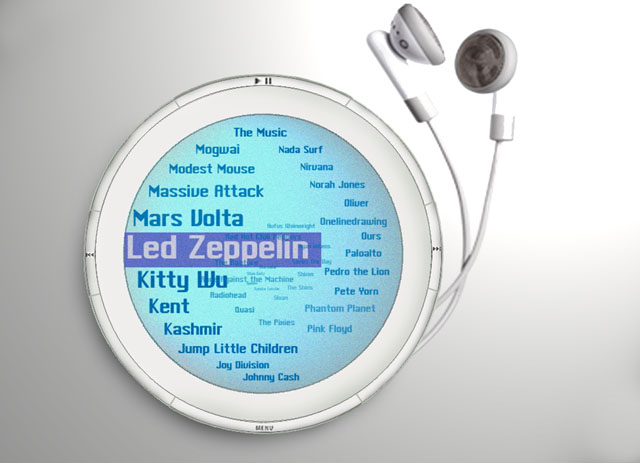
I'm holding off, though I''m not sure why. I suspect that it is because Steve Jobs has again stuck with closed architecture and total control , given the vertical monopoly to lock iPod users into using the iTunes Music Store exclusively. Or maybe it is because I was burned badly with the early and very expensive Apple computers that crashed on me. Or maybe it is because we Australians cannot buy TV shows on iTunes as Americans do. For the moment I will stay with my CD's and stereo and watch what happens.
Kohler captures the attractivness of the platform, when he says:
With iPods and iTunes, Steve Jobs and his team at Apple have created a beautifully functional closed system for selling and consuming digital music and video that looks to be heading for total dominance...The record labels have to deal with iTunes or face oblivion as the iPod population grows...iTunes is efficient and seductive. You register with Apple and provide your credit card details. Then you browse the store or search for the song or artist you want. One song is $1.69, albums $16.99 or $17.99. You click it, and --- zip ---you've bought it, credit card debited. Plug your iPod into your computer and the music is automatically loaded.
Kohler says that he no longer uses a stereo that plays CDs as I still do. He just sticks his iPod in the top of a box of speakers that he bought from Apple's iTunes Music Store. He says that the sound quality is great and his entire record collection is now in the iPod.
Hmm. I'm still not convinced., despite the great marketing campaign by Apple. Kohler then adds:
I might be wrong, but it seems to me the ability to easily buy a single, new episode of a TV show (and repeats), as well as single songs, albums, movies and music videos in a form that is easy to watch or listen, will change everything.
I reckon he's right there. I cannot wait for it to happen.
April 1, 2006
After 9/11 the new social and patriotic conservatives see those who disagree with their view of the world as subversive. These subversives-- the intellectuals--- are diseased and their elite values are pathogens in the body politic. Their cancer is anti-Americanism, which is a mixture of envy, self-loathing and mortification has its roots in the 1960s.