|
April 30, 2006
I used to read Rolling Stone in the late 1960s and 1970s when it expressed sixties counter-culture. Rolling Stone was a guide, an identification marker based around music, culture and politics, and an education.
 During that period this San Francisco based journal of music, culture and politics had some excellent and very influential journalism minds of that period of the 20th century. During that period this San Francisco based journal of music, culture and politics had some excellent and very influential journalism minds of that period of the 20th century.
Hunter S Thompson wrote Fear and Loathing in Las Vega; Tom Wolfe wrote The Right Stuff for it; Annie Leibovitz, the staff photographer from 1970 to 1983, contributed good reportage work; the magazine covered Nixon's election campaign in 1972, the Manson murders, the kidnapping of Patty Hearst, and the whistle blowing of Karen Silkwood.
Articles were of 20,000 words and they contained an interesting and creative mix of culture and politics.
Then I stopped reading it after the end of the Vietnam war, when the liberal left's culture and politics fractured and the culture and the politics went different ways.
Rolling Stone was slow to champion new musical movements in the mid-Seventies --eg., punk or Nirvana -- as it preferred middle-of-the-road acts such as The Eagles and Fleetwood Mac. It became conservative as there was little on feminism, or the civil rights movment; it looked increasingly like a modish verision of Entertainment Weekly; and, during the 1980s it supported Ronald Reagan's Republicans and corporate values.
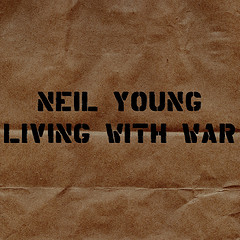
've started dipping into the online site of Rolling Stone --I'm currently listening to Neil Young's recent Living With War---a musical critique of U.S. President George W. Bush and his conduct of the war in Iraq. (review here; also Thrasher's Wheat) It's a powerful garage band album that reconnects with the sixties.
And, judging by this article in its recent issue, Rolling Stone is tacking with the antiwar/anti-Bush winds blowing. The article by Sean Wilentz starts thus:
George W. Bush's presidency appears headed for colossal historical disgrace. Barring a cataclysmic event on the order of the terrorist attacks of September 11th, after which the public might rally around the White House once again, there seems to be little the administration can do to avoid being ranked on the lowest tier of U.S. presidents. And that may be the best-case scenario. Many historians are now wondering whether Bush, in fact, will be remembered as the very worst president in all of American history.
A powerful opening.
|


Gary:
I subscribe to RS - and my kids are now picking it up. The current issue is only the most recent example of a long list of cover stories that have focused negatively on Bush, the Iraq War and Oil.
Though often pandering to fans of music that I find distasteful (Nick Lachey) and other areas of American pop culture (American Idol) that are best left to the weekly crap-rags, RS seems back on its old footings as an agency for (regime) change.
Dave