November 30, 2011
photographic nostalgia
In the new digital era we are again asking whether photography and photojournalism is dead. Screen grabs from TV, fuzzy phone camera images from the citizen journalist take the front page slot of a demonstration. Laws prohibiting the taking of pictures of police on the street, terrorism legislation and the fear of paedophilia all inhibit photographers from their daily pursuit of making pictures. And yet we live in a world that is more full of images than ever, and photography is celebrated as an art form by the art institution.
Can we say that as one world passes we are entering a new one? A part of me is turning back to the past-- the realm of the studio---which the digital world is leaving for a world of dynamic high-speed, high-sensitivity, high-quality imagery with a fleeting, cinematographic representation.
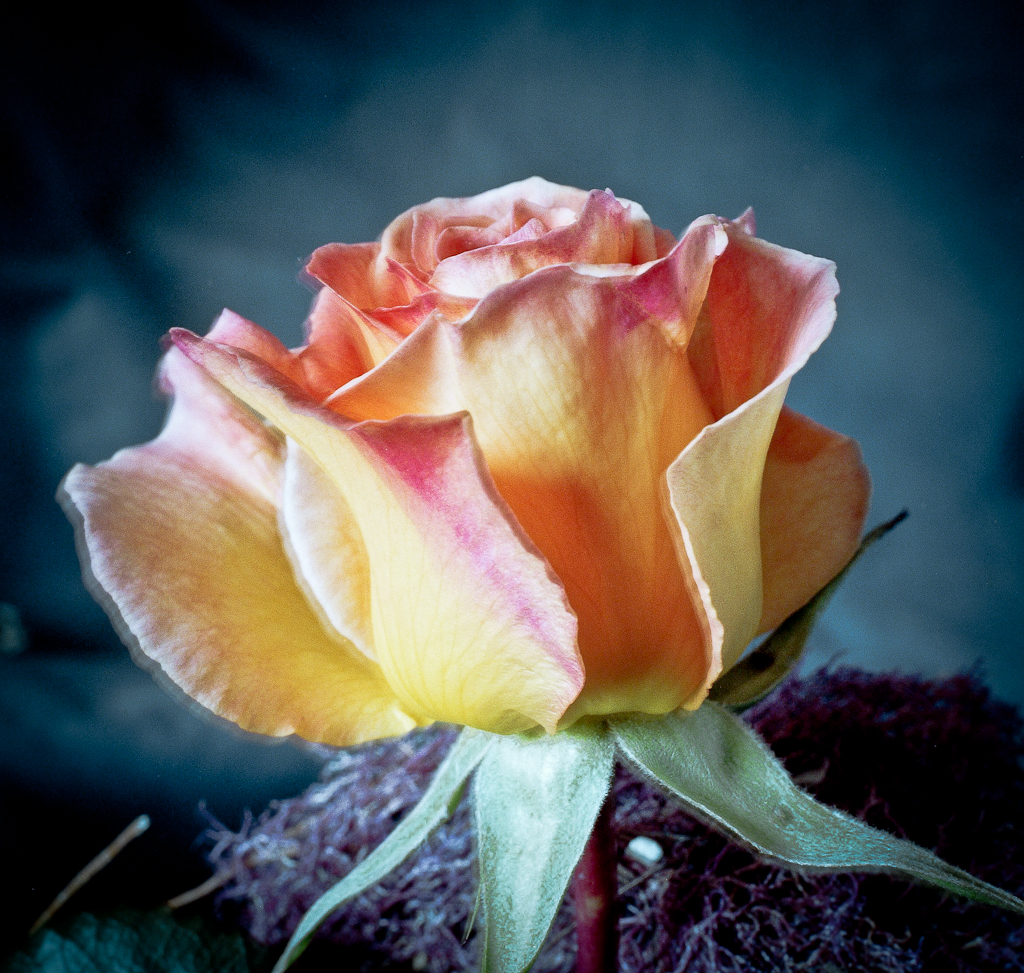 Gary Sauer-Thompson, fuzzy rose, Encounter Studio, 2010
I've noticed a turn to experimenting with early nineteenth century handmade traditional print technology, the re-making of Polaroid film with the Impossible Project, and the new class of high-quality retro-designed compact cameras.
The new iPhone 4s with its 8Mp sensor is the snapshot camera of today, because it is easy and accessible. It also has a totally new processing (In-camera software filters) and distributing system (wireless internet and social media), which has a disruptive potential for the technique and and craft of photographic image making. Ours is now a world of consumer digital imaging with its automation of the craft.
The classical style of photography is no longer a desirable goal for some of the digital camera designers and the current technological progress in digital image processing and the explosion of imagery will have a profound impact on the visual culture. The new paradigm for the visual arts has h yet to be constructed, and we still are tied to the classical view of what an image should be.
November 28, 2011
Australian documentary photography
Whilst I was in Melbourne I visited the Centre of Contemporary Photography and their documentary photography exhibition, which is a biennial showcase of contemporary Australian documentary photography.
I was impressed by Thomas Breakwell’s suburban-fringe Squats. People are absent from the frame, but the plastic chairs, car tyres, junk food packets, clothing and other detritus they have left in small clearings beneath the trees form a strange, allusive portrait of sorts.
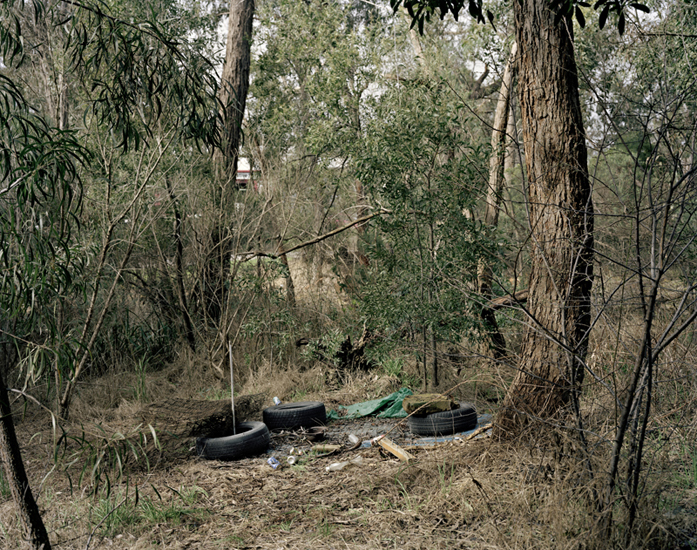 Thomas Breakwell, untitled, Squats
Breakwell is a Melbourne based photographer who came out of RMIT . the work was done on a Toya Field 45AII large-format field camera. He has published some books.
Thomas Breakwell, untitled, Squats
Breakwell is a Melbourne based photographer who came out of RMIT . the work was done on a Toya Field 45AII large-format field camera. He has published some books.
November 26, 2011
Bill Cunningham: street fashion
Bill Cunningham is a New York based street photographer with an eye for street fashion:
For decades, Cunningham has documented the styles on the streets far more than he has documented the catwalk. He sees himself as a journalist documenting the street, but he knows clothes, and his photos are documents of fashion’s history. He has the whole street fashion history of the last 40 or 50 years of New York.
Richard Press’s documentary film Bill Cunningham New York is now showing around Australia.
November 23, 2011
Paris Photo 2011
Paris Photo 2011 is from November 15-18 and its a photographic fair of exhibitions of world wide photography (23 countries), 18 publishers and Offprint, a platform dedicated to contemporary photography and image making. The importance of the photographic book and that of the publishing profession is highlighted, with many of the books on sale/display being self-published, printed in very limited editions, or even home made.
In the exhibition section the Tate Modern (London) unveiled a set of 30 photographs by Daido Moriyama, from the rediscovered negatives of his major book, Farewell Photography (1972), that form part of a forthcoming exhibition.
November 21, 2011
Bill Henson in Adelaide
The Anne and Gordon Samstag Museum at the University of South Australia is exhibiting the early work of Bill Henson ie., work made between 1977 and 1992, and hosting Bill Henson in conversation with Paul Grabowsky.
There were some latter landscapes structured around the evening light, when the last direct rays are about to dissipate over the horizon. These are in the high Romantic sublime tradition--dark and melancholic landscapes of rocky outcrops, monoliths rising dramatically from the ocean:
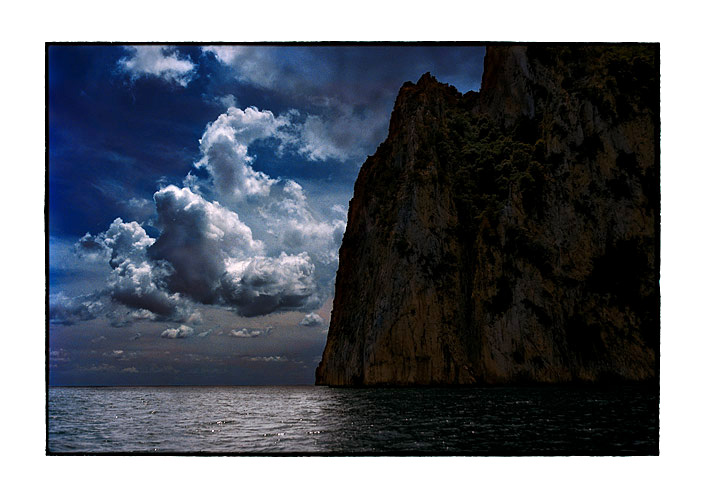 Bill Henson, untitled Untitled #1, 2009/2010,archival inkjet pigment print
In the conversation with Grabowsky Henson argued that the public sphere had become compressed into black and white with all the shades of grey emptied out--just like modern digital photography.
Art photography's response is to find the spaces to be quiet and contemplative about the object.
November 20, 2011
Soho Photo Gallery
I came across Soho Photo Gallery New York courtesy of the Facebook page of The Centre for Creative Photography, Adelaide. The blurb says that it exists:
as an alternative to commercial galleries. It is now the only non-profit cooperative photography gallery in New York City, with over 110 members. Soho Photo is completely run by its members who direct, operate and financially support the Gallery.
One exhibition that caught my eye was Raphael Senzamici's Earthly Gift --still life studies of vegetables from a garden he planted with tomatoes, potatoes, cabbages and courgettes:
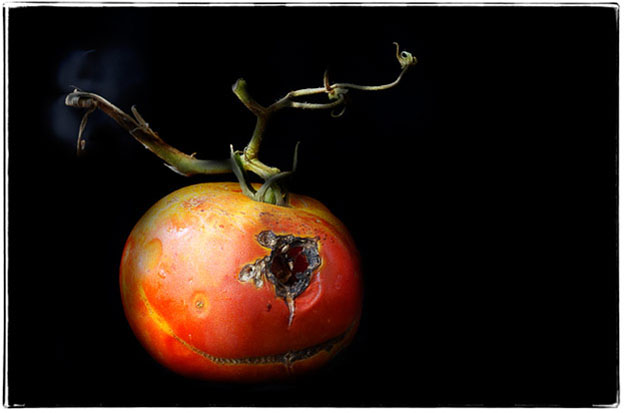 Raphael Senzamici, untitled, from the series Earthly Gift
The concept is simple but the results are stunning. I suspect there is a lot of digital image making involved. to get the richness of colour.
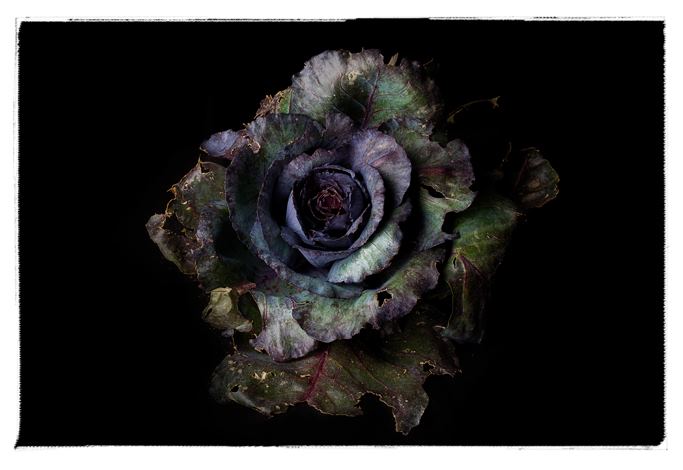 Raphael Senzamici, untitled, from the series Earthly Gift
I love this.
November 17, 2011
Olegas Truchanas
In Pedder Dreaming: Olegas Truchanas and a Lost Tasmanian Wilderness by Dr Natasha Cica, the Director of the Inglis Clark Centre for Civil Society at the University of Tasmania, highlights the values underpinning the art and activism of Olegas and his friends around Lake Pedder. Their voice of protest was one of beauty and nature and the text is a portal into a gallery of cameos and panoramas both actual and metaphorical depicting Tasmania as a place and a society.
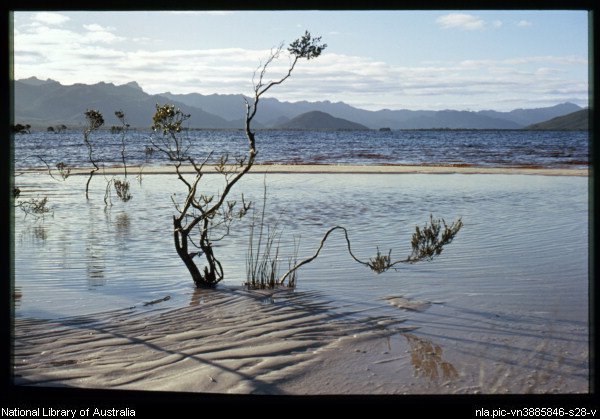
Olegas Truchanas, keletal trees throw shadows on the rippling waters of Lake Pedder, Tasmania, ca. 1968
For Tasmanians, the name of Olegas Truchanas is synonymous with the loss of Lake Pedder. As is well known Olegas spent many years exploring and photographing the wilds of Tasmania and was the first non-indigenous person to traverse many parts of the rugged interior of the island. The 1967 bushfires destroyed his home and with it virtually his entire collection of images. He set out to retrace his exploration and recording of the wilderness, but in 1972, while photographing the Gordon River as part of his mission to replace his lost slides, he was tragically drowned
He had just been offered a job teaching photography, canoeing and bush skills at the new Tasmanian College of Advanced Education, and it meant that he was able to leave Hydro Electric Commission's employment.
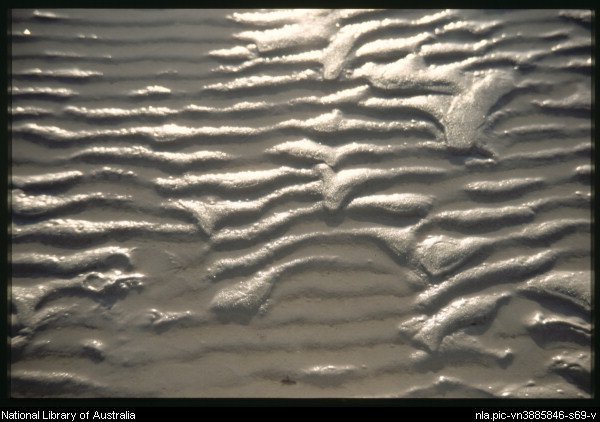 Olegas Truchanas, Changing sand patterns on the Lake Pedder beach in the early morning, Tasmania, ca. 1969
Truchanas’s artistic legacy is pioneering wilderness photography and publishing in Australia. This was then was taken up by Truchanas’ friend and protégé Peter Dombrovskis. Truchanas was a member of the ">Sunday Salon---whose roots lay in the salons of the European Enlightenment tradition which have actively promoted education, the arts, science, exploration and intellectual life generally in Tasmania. Cica recalls Truchanas’s speech at a Lake Pedder rally:
If we can revise some of our attitudes towards the land under our feet; if we can accept the role of a steward, and depart from the role of the conqueror; if we can accept the view that man and nature are inseparable parts of the unified whole – then Tasmania that is truly beautiful can be a shining beacon in the dull, uniform and largely artificial world.
That encapsulates the ecological Enlightenment
November 15, 2011
Adelaide Street Art: Peter Drews + Adelaide's Forgotten Outlaws
Peter Drews latest street art project is 'Adelaide's Forgotten Outlaws!, which is based on paste ups of 1920's criminal’s mug shots. The Adelaide City Council has allowed the images---42 individual mug shots (21 sets of 2)--- to stay on the street long enough to be seen by the public for whom they were intended.
I've been wandering the streets of the CBD these last couple of days looking for them and then photographing them. Some have already disappeared.
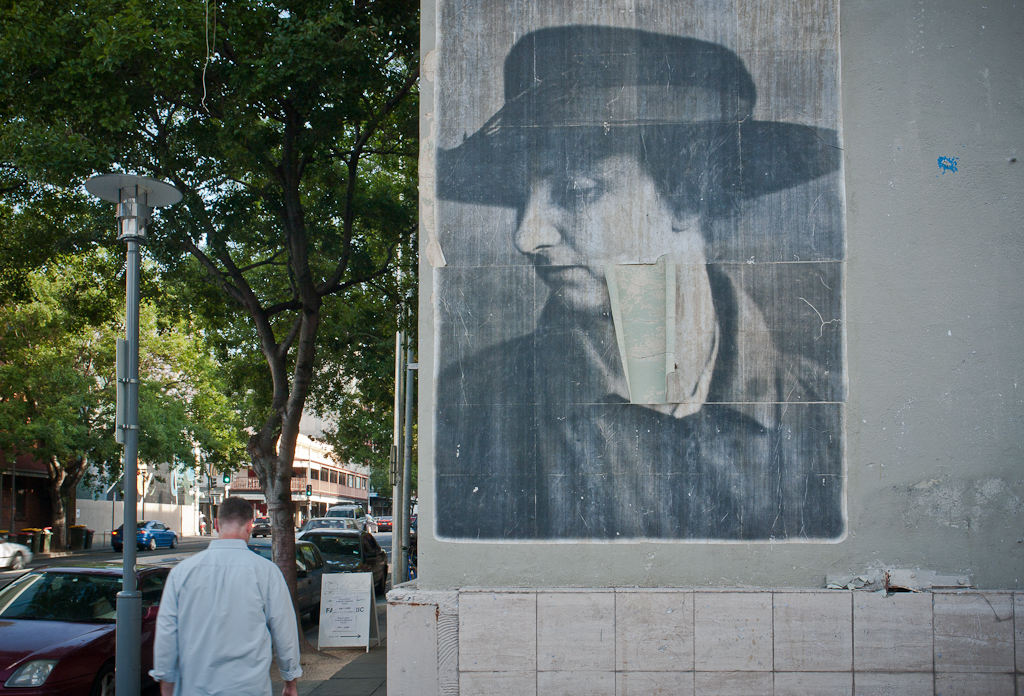 Gary Sauer-Thompson, DrewsP, Adelaide's Outlaws, 2011
Then I realized that I was using the search for the pasteups to explore the city, as the search too me down alleyways that I don't really know.
November 14, 2011
NZ photography: Greg Semu
As I mentioned in an earlier post one part of the core programme of FotoFreo12 includes a group exhibition of New Zealand photographers that is curated by Zara Stanhope, a curator, writer and PhD candidate at the Australian National University. It will include Mark Adams, Joyce Campbell, James Lowe, Richard Orjis and Greg Semu who featured in Unnerved: the New Zealand Project
Greg Semu is a highly regarded New Zealand-born Samoan contemporary artist, now resident in Sydney:
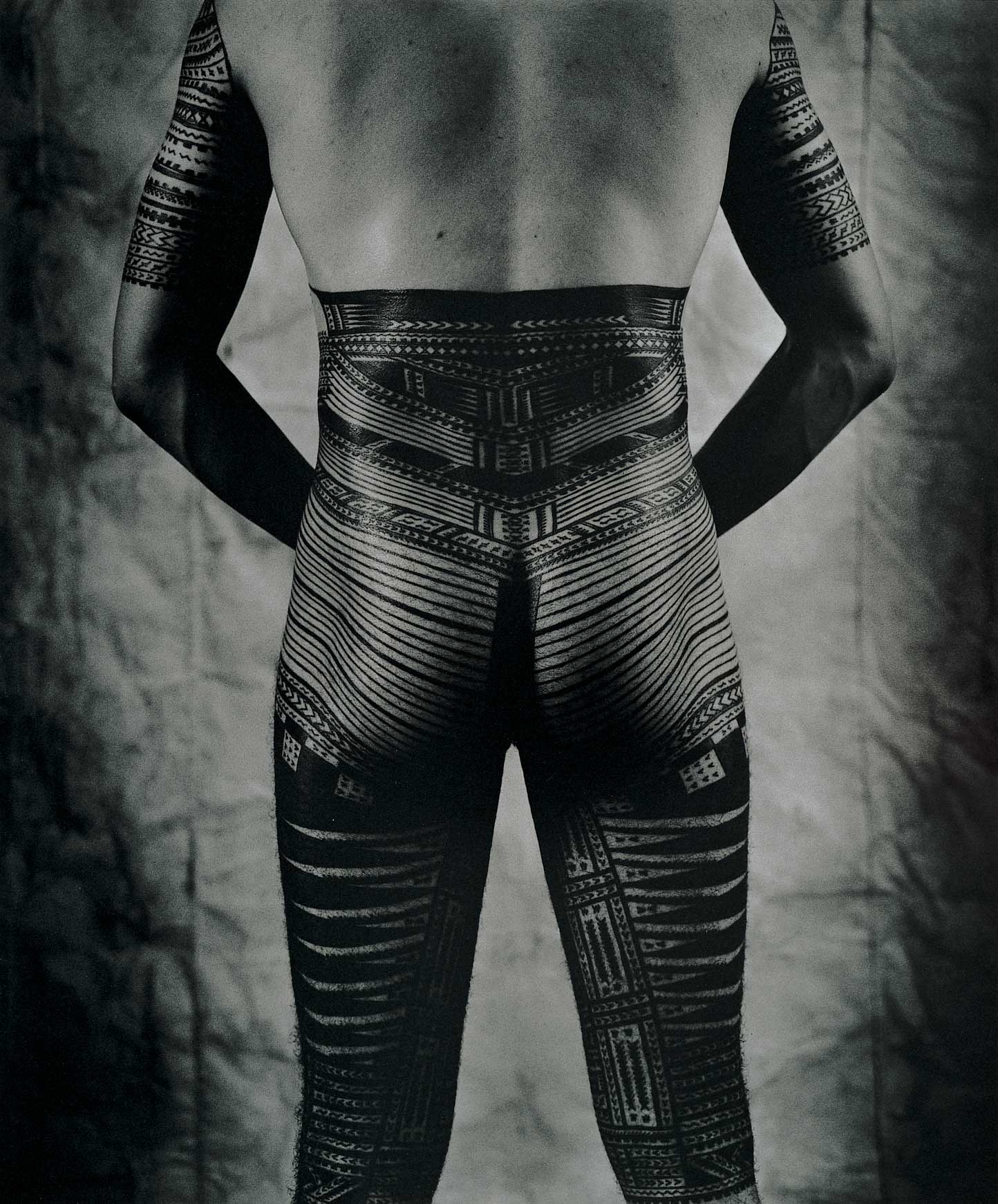 Greg Semu Self portrait with pe'a (side view), 1995, printed 2004 , Gelatin silver photograph on paper
This image was created as a tribute to master Samoan tattooist Tufuga tatatau Su’a Sulu’ape Paulo II and features four different views of the pe’a (full-body tattoo) that Sulu’ape inscribed on Semu’s skin.
November 13, 2011
Victor Harbor book
Blogging has been light on at junk for code because I have been working on the Victor Harbor book Though it is forcing me to think about what I'm trying to do with this project, it is time consuming as I'm starting from the ground up.
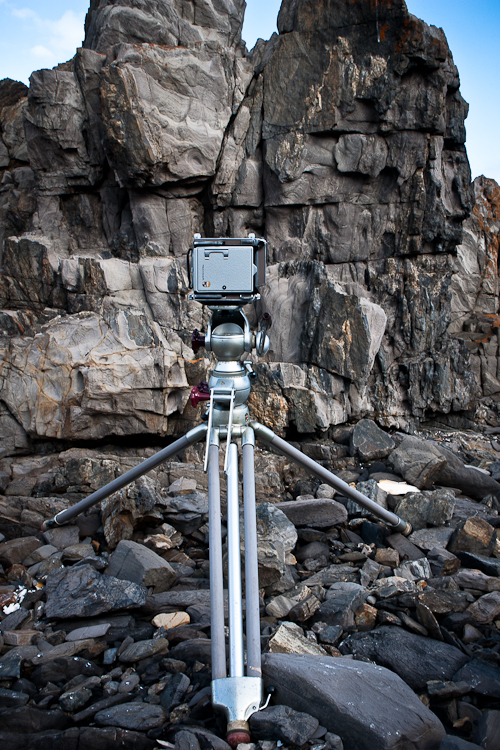 Gary Sauer-Thompson, at Kings Head, Victor Harbor, 2011
For instance, this afternoon was a three hour shoot. Writing a bit of text take me a similar amount of time.
November 10, 2011
UNSENSORED11
The Melbourne Silver Mine presents UNSENSORED11
an exhibition of analogue photography:
 Invitation photograph: Katherine White Piha, New Zealand, Polaroid
The opening night is Friday 25th November 2011 at the Collingwood Gallery 292 Smith Street, Collingwood, Melbourne. The exhibition features the work of 47 film based photographers who form a Melbourne based film collective and a Flickr group.
I shall be exhibiting this photo:
 Gary Sauer-Thompson, rock form, near Petrel Cove, Victor Harbor, South Australia
I hope you can make it to the show.
You can grab the large version of this invite here, please feel free to circulate it. This event is also listed on Facebook

Joyce Campbell: daguerreotypes at Te Reinga
Joyce Campbell has recently been working onsite in a field darkroom to produce ambrotypes and daguerreotypes at Te Reinga, home of the Taniwha Hinekörako. She says that:
Contemporary cameras do not lend themselves to the depiction of mystery. Digital cameras have made photography an increasingly descriptive medium and also one that is open to greater manipulation than ever before. By contrast, the nineteenth century techniques of ambrotype and daguerreotype provide the photographer with extraordinarily detail, depth and richness while also having an innate tendency to produce artifacts from silver and ether that are spontaneous, open to interpretation and often extraordinarily beautiful.
Campbell has taken photographs of caves, gullies, pools and cascades at Te Reinga and she hopes that in the silver we might catch a glimpse of the Taniwha as well.
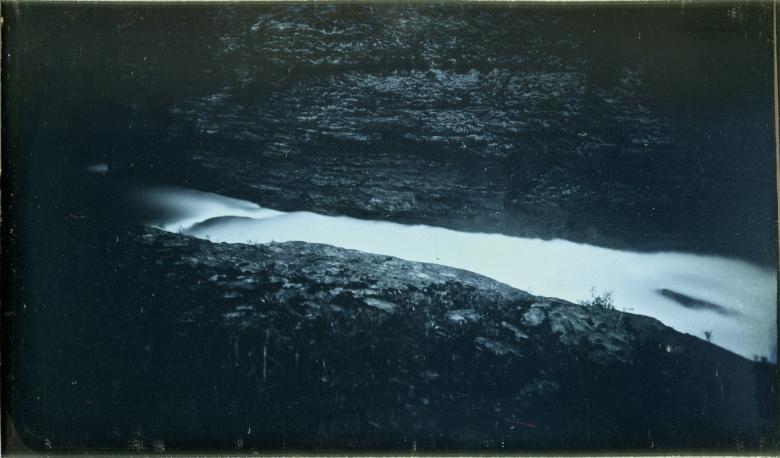 Joyce Campbell, (look at her basking) variant #2, Te Taniwha
Campbell's reference to the Taniwha is to a mythical creature reputed to inhabit dangerous areas in New Zealand, especially waterways such as river bends, deep ponds, swamps and treacherous coastlines. The taniwha seems to take on diverse forms, but is most commonly depicted as a large water-dwelling creature with a lizard or dragon-like form.
November 8, 2011
NZ photography: Joyce Campbell
One part of the core programme of FotoFreo12 will include a group exhibition of New Zealand photographers curated by Zara Stanhope, a curator, writer and PhD candidate at the Australian National University. It will include Mark Adams, Joyce Campbell, James Lowe, Richard Orjis and Greg Semu. It will be shown at the Freemantle Prison.
Joyce Campbell's photographic work is intriguing, especially the work that was done in the Ross Sea region of Antarctica with the Artists to Antarctica program that was sponsored by Creative New Zealand and Antarctica New Zealand.
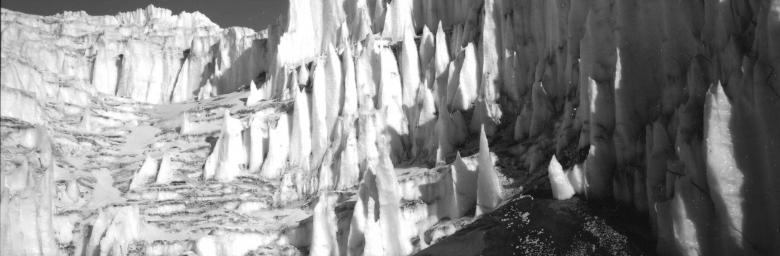 Joyce Campbell, Barne Glacier, Antarctica, 2006, Last Light
Campbell says that the work “Last Light” is a series of massive vertical photographic scrolls, panoramic photographic murals, 5x7 inch daguerreotypes and digital video loops that dwell on the Antarctica of gothic imagination: primordial, untamable and largely untouched.
She adds that the work:
was driven by my own burgeoning horror at the effects of climate change on the earths polar icecaps and it invites viewers to experience Antarctica in a volatile and precarious state: as its massive ice shelves begin to warm and melt...There is a dark irony to the growing consensus that while efforts at colonizing Antarctica throughout the twentieth century barely dented its icy surface, our collective addiction to fossil fuels, acting incrementally and from afar has gnawed deeply into the ice structures that cover the continent. The resulting unintended effect is antiheroic, grimy, disintegrative and potentially cataclysmic.
The Antarctic landscape is depicted as an alien icescape completely devoid of human objects, huge and oblivious but also replete with signs of fragility, stress and potential collapse.
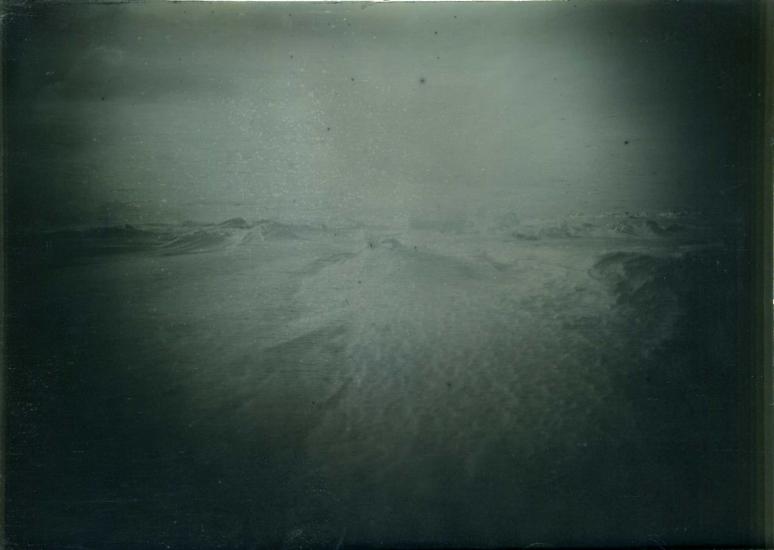 Joyce Campbell, Last Light 6 - Pressure Ridges, Antarctica, 2006,5"x7" Daguerreotype
Campbell says that the daguerreotype is an exquisite photographic technique that was essentially outmoded by the mid-nineteenth century invention of silver halide emulsion.
I have used this technique to document signs in the ice: fissures, flaws, pressure ridges and a screaming ice ghoul that emerged high in an ice fall as we descended though a white out. Because the daguerreotype’s decline preceded Antarctic exploration, it is a mode of representation that has never been practiced on that continent. In doing so now I hope to draw my audience into a conversation about modernity and obsolescence, the relationship of individual action to collective conditions and the evidentiary role of photography.
She adds that the visual references for these works are drawn from nineteenth century and early twentieth century science and exploration photography (Frank Hurley, Anna Aitken’s botanical cyanotypes, Etienne Jules Marey’s pre-cinematic time-lapses, John Adams Whipple’s daguerreotype moonscape of 1851), Romantic painting (Caspar David Friedrich and Frederic Edwin Church) and from the art, architecture and literature of the 1960’s and 1970’s, including minimalism and earth art (Michael Heizer’s geometrical earth pits, Robert Smithson’s monuments to entropy and Walter De Maria’s and Donald Judd’s expansive metallic desert installations); the optimistic modernism of Buckminster Fuller’s faceted domes, the proliferative logic of Italo Calvino’s invisible cities and JG Ballard’s drowned cities and crystal worlds.
at FotoFreo12
There is a possibility that a number of photographers in Adelaide will join together for a group show in the Fringe Festival in FotoFreo12, which runs from March to April next year. Expressions of interest have been called under the auspices of Atkins Technicolour.
I do know what the work will be ---given that the grounds for photographic practice today clearly stretch beyond art, and encompass the encroachments of cinema, photojournalism and advertising. I will submit work--probably some kind of urban documentary. The current revival of interest in documentary photography is probably a reaction to the sensationalising reportage of the media — a concern by the public to see significant events 'for themselves' .
This documentary photography doesn't replicate the visual language of these corporate or private media, as it is interested in the way photography circulates reflections of contemporary life. It acknowledges the contexts beyond the cultural arena, the reality of their work lies between the traditional legacy of photography (its transparency or relationship to psychological conditions and time and memory, and meaning for collective history and social knowledge) and the question of how to distinguish its role in current reality.
November 6, 2011
Grateful Dead: Franklin's Tower 1977-05-09
5/8/77 Barton Hall, Cornell University, Ithaca, NY is often heralded as the best Grateful Dead show of all time. Probably the most famous element to this show is the invisibly smooth transition from Scarlet Begonias into Fire On The Mountain. May ’77 is simply blessed as a pinnacle tour for the Grateful Dead. Much like the Fillmore run of February 1969, or the string of shows from June 1974,
This version of Franklins Tower is from the next night in Buffalo, New York and the energy is still there. And the music just flows. The musical flow is Help On The Way > Slipknot! > Franklin's Tower that is woven from the night before at Cornell University, Ithaca, NY.
The audio is available in streaming format. The music sparkles. Some prefer the show to the Cornell one.
November 5, 2011
art institution: catching up
Contact sheets were once a core part of the work flow of of film photography. They belong to the days when rolls of film were printed in the chemical darkroom on contact sheets to be reviewed and edited in order to select the image worth printing. Now the images are scanned into digital file on a computer and the chemical darkroom has become a digital suite of computers and software.
Film is now an outdated technology and for a long time photography was on the margins of the art world, rejected until the 1970s because it was too instant, mechanical and effortless to be real art. The culture around photography – festivals, book publishing and selling, workshops, websites and prizes – has grown slowly as the old distinctions between art photography and conceptual art become increasingly hard to maintain. The battle to legitimise photography as an artform has, to a great degree, already been won at the moment when the nature of photography, as well as curatorship, is being questioned by a digital culture on the internet.
The democratisation of photography and distribution of photos via social networks has changed everything, and as curators are still standing back and ignoring the shift. They still think in terms of a photography gallery per se, even though we now live in a visual world in which visual art is produced by many kinds of media.
November 2, 2011
wilderness photography in the Blue Mountains
Interest in the landscape amongst photographers has increased in the last few years as a result of heightened environmental awareness. What does the turn to the natural world as a site for critical practice and inspiration encompass today?
On answer is provided by the exhibition entitled "Slow Photography: Visions from the Real World" at the Braemer Galley in the village of Springwood i n the Blue Mountains of NSW. This exhibition consists of photographs of nature by Ian Brown, Mike Stacey and Len Metcalf that have been made with large format cameras.
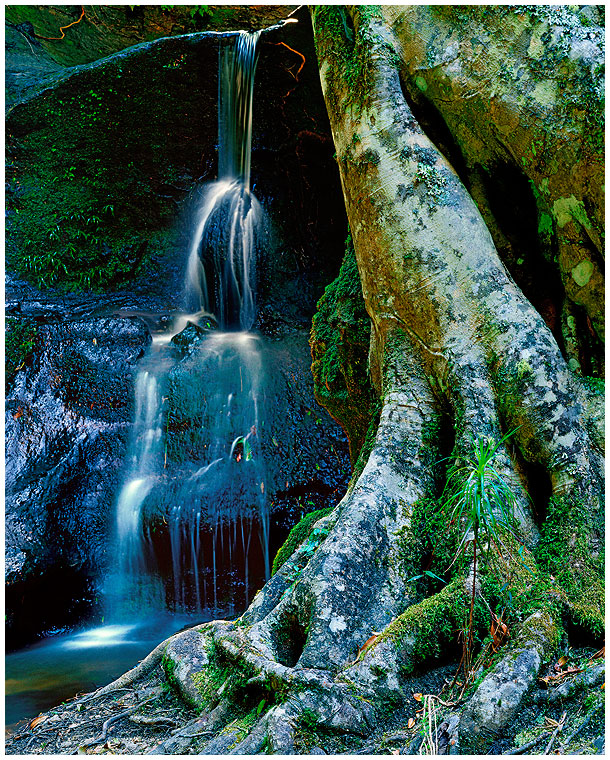 Len Metcalf, Twister Canyon, Greater Blue Mountains World Heritage Area
It is wilderness photography in that their images are grounded in an intimacy with nature that emerges through long experience, up close and slow with the bush, the birds, the rocks, the wind, and the water.
In a collective statement the Blue Mountain photographers say they aim to use their photography to:
capture the grandeur and nuance of nature by selecting subjects of power and subtlety from what, at first glance can be an overwhelming abundance of subject matter. By immersing themselves calmly in a place, they seek the spiritual in nature; extending the notion of beauty into the ethereal; the true essence of what surrounds us.
So it is a form of wilderness photography that goes beyond natural beauty and unique artistic vision to the transcendental---the spiritual and the ethereal as the essence of natural beauty and natural being. Romanticism is alive and well.
Metcalf, for instance, says that:
As a conservationist I believe that mother nature is the creative and controlling primary force in the universe. While creating my art in magical locations I am reminded of the interconnectedness of our world. Society is dependent on the natural environment for peace and well-being.....Currently the direction of my work strives to move away from the current ‘landscape photographer’ status quo, in an attempt to discover a Modern Australian Landscape Style. One where the artwork is timeless, unique and the photographs illustrate the spiritual within nature. I search for a unique vision in my search for significant form.
I'm not sure what a modern Australian landscape style is compared to a pre-modern one; or how a photographic one here one in this exhibition differs from the Australian landscape tradition in Australian painting.
November 1, 2011
Monash Gallery of Art
One of the galleries that I wanted to see when I was in Melbourne was the Monash Gallery of Art (MGA) at Wheelers Hill --but I ran out of time. I was interested because I understood that they had been excavating the history of 1970s’ photography in Australia throughout 2011.
There had been exhibitions on Paul Cox, on Sue Ford, the different ways that performance artists have used photography to document their temporal activities, and Brummels in South Yarra which was the first Australian art gallery dedicated to exhibiting the work of art photographers.
The current exhibition at the MGA is Tim Handfield's: deep skin, which tracks Handfield’s photography alongside the significant changes in colour photography over the past three decades:
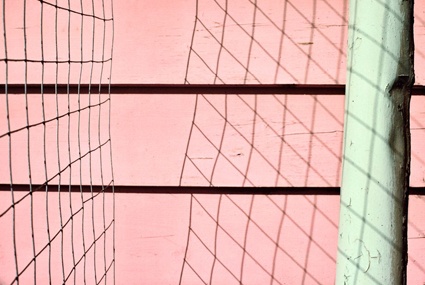 Tim Handfield, wall and wire, Fitzroy , Colour Photographs, 1977-78
Handfield is known for engaging in cutting-edge technological innovation, for his photographs from the 1970s & 80s revealing a poetic beauty in the urban setting, and for making some of the most beautiful, colour prints produced by an Australian photographer.
Handfield is an acknowledged master printer (analogue and digital)--he has printed for many of Australia’s leading fine art and commercial photographers--and has a book published entitled In Camera