January 31, 2011
conceptual art and its aftermath
My understanding of the conceptual art movement in the mid-1960s to the early 1970s is that it critiqued the art institution assumption that art's principal aim is to produce something beautiful or aesthetically pleasing. Most artistic institutions are not conducive to reflection and continue to promote a consumerist conception of art and artists based on beauty and technical skill. So we have the basic opposition of concept and aesthetic.
The works of conceptual art encourage us to think about the kind of things that may be considered to be art, and about exactly what the role of the artist should be. It does so, on the one hand, by postulating ever more complex objects as candidates for the status of ‘artwork’, and, on the other hand, by distancing the task of the artist from the actual making and manipulating of the artistic material.
In American art criticism Rosalind Krauss argued that conceptual art in fact could be understood to have irrevocably severed the connection between art and its medium. She interpreted the arguments produced by Conceptual Art at the end of the 1960s as refuting once and for all the 'High Modernist' theory (as articulated by Clement Greenberg) that true art must be conceived and executed in medium-specific terms. The doctrine proposed by Clement Greenberg is that art, by necessity, concentrates on a thorough exploration of the laws of the given medium, in particular painting.
Conceptual art dismisses the relevance of medium-specific art practice in favour of a general and fundamental inquiry into the nature of art - in whatever medium. The inference is that those who continue to work in media-immanent terms, for example in painting, not only condemn their practice to historical insignificance, but also risk direct appropriation by the institutions and the market.
The conclusion is then that only a form of art that through conceptual gestures articulates a critical position with regard to the institution of art is capable of resisting the historical devaluation of artistic media and the subjugation of production to the laws of the art-system.
From the perspective of photography conceptual art meant a reduction to language and a sidelining of pictorial form and the picture making by the depictive arts; or at least to a counterpoint to neo-realism and documentary photography. So how can photography link up with or a linguistic work of art in conceptual art? What would photography after conceptual art look like, as distinct from artist's use of photography?
Is one pathway provided by the California painter Ed Ruscha's use of this principle to create the book Twentysix Gasoline Stations, in which he first came up with the title, then proceeded to photograph the subject on one of his road trips from Oklahoma City (his hometown) to Los Angeles, his adopted city. The work of art was to be the book itself, simply but carefully designed, whereas the photographs inside showed no traces of aesthetic decision making at all, as if the artist had merely pointed the camera out the car window in order to fulfill the requirements of the textual phrase.
Could this be a starting point? Is another the work of Bernd and Hilla Becher?
January 30, 2011
the democratic interpretation of images
In his review of Tate Modern's Exposed: Voyeurism, Surveillance & the Camera Gerry Badger says that he was neither was neither shocked nor provoked. He explains:
No wonder I found Exposed a little tame. Out on the Web lurk sickening images of sexual practices and violence that are probably too graphic to show in any museum, which prompts another question. And that first wall label makes another interesting point – has this proliferation of electronic imagery anaesthetised us in another way, not only inuring us to all kinds of voyeurism, but bringing us to a situation where we meekly allow cameras to watch every move we make, 24/7?
He adds that the issue that hangs over Exposed, just outside the galleries, like the seven-eighths of an iceberg that lies underwater – the ubiquity, and incredible proliferation of photographic images in our society thanks (if that is the right word) to the internet. Not just in terms of numbers, but in terms of the almost total lack of control regarding their content.
We become voyeurs in the new media landscape in which we all live that is defined the Internet. The implication is that are numb and indifferent to suffering. The anxiety is expressed in terms of the proliferation of images, the lack of control over their content, and the inevitable dulling of our moral senses.
This kind of photographic criticism with its roots in Sontag's On Photography misses out on the democratic interpretation of images. This is where the viewer is no longer the passive, grateful student, the photographer no longer the all-knowing, all-seeing teacher who chooses which decisive moments will live or die. in this post modern culture the photographer is no longer a voice of authority, with univocal images created from above.
So we have to say goodbye to the notion of the creator of images as a modernist demi-god.
January 27, 2011
on location
I'm still trying to find the source of the light leaks whilst using the Cambo 5x7 monorail view camera. The possibilities of wrong lab processing and fogged film caused by loading the film holders in a leaky "darkroom" have been eliminated. The bellows is also fine. That leaves the camera body as the source.
I suspect that the lens board, which has a loose fit when slotted into the camera body, may well be the cause of the problem. I stumbled on that possible option when I was changing lens boards down at the rocks this morning.
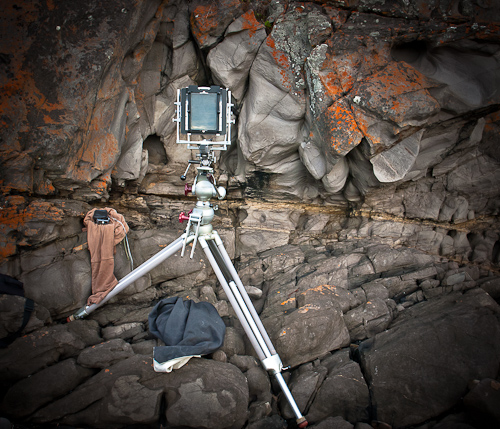 Gary Sauer-Thompson, on location, Kings Beach, Victor Harbor, 2011
Both lens boards moved slightly---too much I thought. Could this be the cause of the light leaks? I used the dark cloth over the bellows for the first shot of the rocks, then over the bellows and around the lens board for the second shot. So we will see when the films are developed by the lab.
This is the corner of the shoreline that I have been working in using the 5x7 Cambo to construct images of the detail of the landscape:

Gary Sauer-Thompson, near Kings Beach, Victor Harbor, 2011
I have to admit that lugging all the gear--camera in one hand tripod in the other, computer bag with film holders etc and a digital camera--down the cliff face via a little stream that cuts it way down the cliff face is a bit of a trudge. The "trudge" feels more like a workout.
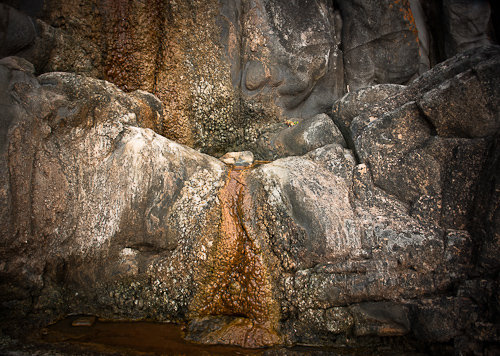 Gary Sauer-Thompson, stream, near Kings Beach, Victor Harbor, 2011
Thank goodness for the daily workouts in the gym. There is just no way that I could get the 8x10 Cambo and its heavy duty tripod down to the shore to photograph the broader seascape--eg., the middle image. Maybe it could be done if I made several trips up and down the cliffs.
Digital is so much easier and far more convenient. I long for the day when digital medium format will become both a square format and financially accessible. I can dream on, when I'm doing the trudge.
January 26, 2011
Dutch photography: Frank van der Salm
If Frank van der Salm's roots are in the New Topographics movement of the 1970s, then he has moved beyond its boundaries into urban landscape/architectural photography:
 Frank van der Salm, Arcade, China, 2006
The interest appears to be the glossy surfaces of the non places modern metropolis that is open 24 hours per day---arcades transfer hubs, tollgates, station halls and metro corridors, agglomerations of flats.
 Frank van der Salm, Panorama, China, 2004
What is disturbing is the way that these non places are disconnected from local life and become uniform, international, the same. A lot of time is spent in the arcade shopping and this consumer experience becomes a leisure activity away from home and work.
January 24, 2011
Pentti Sammallahti
Pentti Sammallahti is one of Finland's best known photographers.From 1974 to 1991 Sammallahti taught photography at the University of Art and Design in Helsinki, where he and his workgroups created there a culture of high quality photographic printing and printing using photomechanical processes. His work tends to explore the relationship between humans, animals and nature. He manages to somehow combine a rather formal Finnish aesthetic with a wry Scandinavian sense of humor.
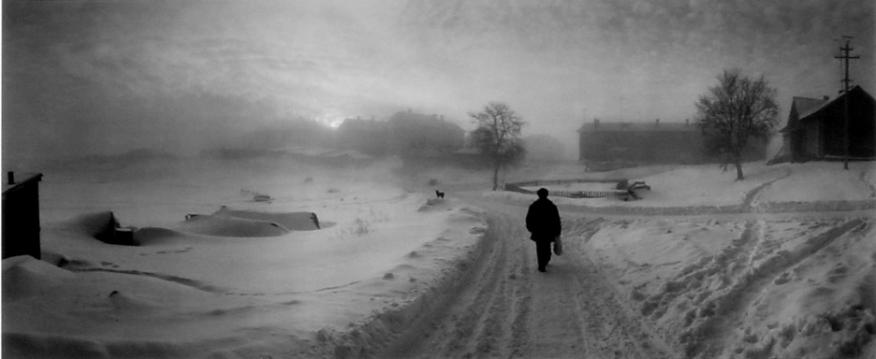 Pentti Sammallahti, Solovki, White Sea, Russia, 1992
Sammallahti is also one of those photographers who want to be engaged in the entire photographic process. Not just the taking of the photograph, but the developing and printing as well. With his art books, which are necessarily printed in small number limited editions, Sammallahti takes the photographs, makes the prints, designs the layout, selects the typography, and has even been known to operate the rotogravure printing presses.
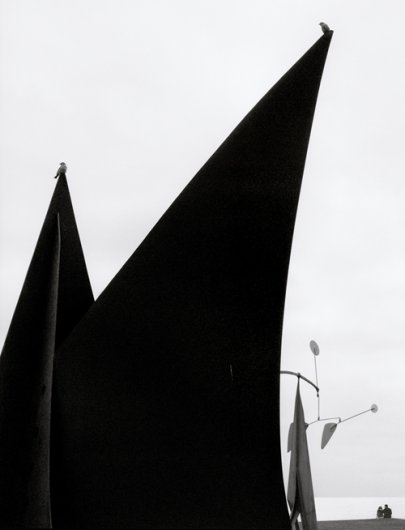 Pentti Sammallahti, Humlebaek, Denmark, 1999
His works depict nature eroded and broken down by civilization, but he does not put humanbeings and the environment in opposite camps.
January 23, 2011
German Photography: Kai Wiedenhöfer
The Book of Destruction is a new exhibition at the Mosaic Rooms in west London by the award-winning German photographer,Kai Wiedenhöfer, which witnesses and interprets the destruction of Gaza’s buildings and the injuries inflicted on its inhabitants during the Israeli offensive in 2009, known as Operation Cast Lead.
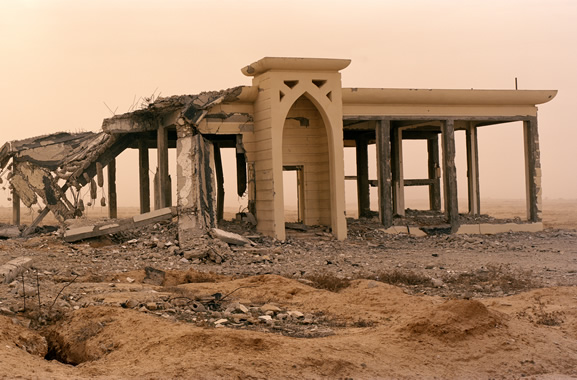
For over a decade Kai Wiedenhöfer has documented the Israeli-Palestinian conflict. Every six months, he has been returning to the territories to document the construction of the 650 kilometers of walls, fences, ditches and earth mounds, which form the border between the State of Israel and a future Palestinian entity.
Wiedenhöfer's pictures are controversial because they focus almost exclusively on the Palestinian experience. Self-employed and funded often by grants, he is free from the requirement of television and print media to tell both sides of the story with equal weight, instead photographing what interests him. This has rankled deeply with some of Israel's supporters.
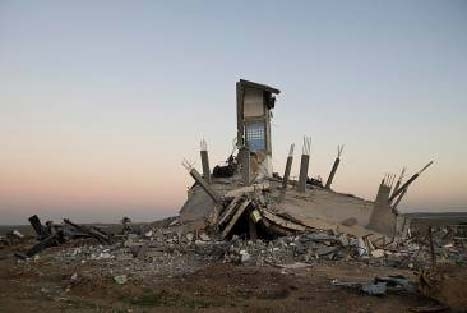
Peter Beaumont in The Observer says that the exhibition and book funded by the Fondation Carmignac Gestion, is unquestionably about violence, documenting in almost unbearable detail the damage left after Israel's assault on Gaza in 2009:
Unpeopled images of ruined buildings, photographed with an architectural precision, are contrasted with portraits of equally ruined people with truncated limbs and scarred bodies. His human subjects look into the camera, seated in their own homes: women and children; the family of fighters and civilians – all displaying bewildering variations of traumatic amputation and burns.
The result is a body of work that is anti-sensational but shocking in the directness with which it engages with violence.

When the photographs were shown in Paris many French Jews groups asked for its closure and pressured Museum officials and the city council.
January 22, 2011
pathos
It's over a decade after the Grateful Dead's demise as a band. This version of Black Muddy River @Oakland Coliseum Arena Oakland, CA December 28th, 1990 features Vince Welnick and Bruce Hornsby on keyboards.
The ballad is rough, ragged and loose but it expresses a feeling of localized sense of place. It has almost an existential feel to it----you sense Garcia's fragility: he is dying. The drugs were taking their toll on his health. He had a diabetic relapse in 1989 and 1991. I cannot really listen to Grateful Dead music recorded after 1980 without becoming uncomfortable.
In the autumn of 1992 Garcia was again hospitalized with diabetes and an enlarged heart. He eventually returned to action looking more fit than he had in years. He’d regain health enough to tour again in 1993 and 1994, but srarted to ail significantly. On August 9, 1995 Garcia was found dead in his room at a substance abuse treatment facility in Forest Knolls, CA; the 53 year old's death was attributed to a heart attack.
The Grateful Dead was not just a bar band--- the experimental side of the Grateful Dead was still there in the 1990s eg., the second part of Drums/Space. I increasingly prefer the experimental section of their latter concerts --there is more depth and space in this music than their songs.
In Free Culture, Lawrence Lessig argues that the notion of a mutable public domain -- the kind unconsciously embraced by Deadheads for decades -- lies at the heart of American tradition. It is a national methodology free to rely on appropriation, mutation, and unfettered word of mouth. Draconian copyright laws, Lessig says, are eroding the free tradition.
iPhone photography
My name is down on a list for an iPhone 4 at a local Optus Store in Adelaide. It has been there since June 2010. I expect another 6 months. In the meantime I do without a mobile phone.
I have to admit that I am rather taken with the hipstamatic application for the iPhone. It is a toy camera app that is styled to actually look like a toy camera. It transforms the digital camera on the iPhone to a fully fledged analogue art box. You can interchange both the lens and film type with a quick flip of your finger
It can produce some interesting low -fi images:
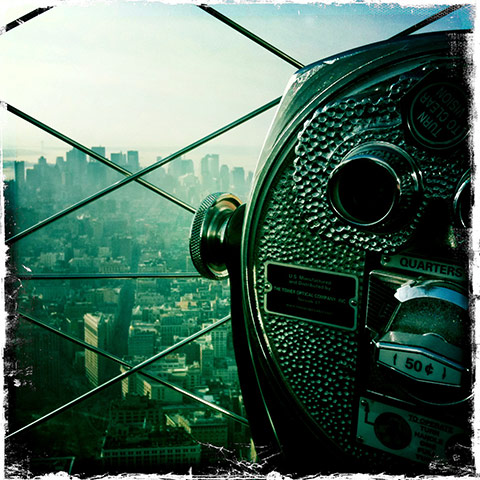
The Hipstamatic blog is very active. There is a Flickr pool with interesting work. The Hipstamatic app produces some nice analog film effects and it does a great job recreating the imperfections of a toy camera or lo -fi photography.
January 21, 2011
German Photography: Axel Hütte
Hütte is part of a generation of German photographers that includes Thomas Struth, Thomas Ruff, and Andreas Gursky (now in their 40s), all of whom have been students of Bernd Becher, who over three decades has been an influential figure in the creation of a unique photographic aesthetic known as the Düsseldorf school.
Contrary to the humanist strand that dominated European photography until the 1950s, the Becher's systematic documentary-like photographs of industrial structures have been immensely influential in defining a new ideal in photography. In much the same vein, Hütte became known for his sober, clinical look at post-war German architecture, and later for his photographs that examined the uneasy interaction of buildings within the natural environment.
 Axel Hütte, Audubon Swamp
If Hutte is known as the "landscape painter" among contemporary photographers, then the construction of visual space in his photographs makes us look into them as we might look at a stage set; they draw us in, stimulating our thoughts.
January 20, 2011
German photography: Roland Fischer
Roland Fischer photographs sections of buildings’ façades in such a way as to flatten their geometry and create two-dimensional abstract compositions that are simple and starkly beautiful. Closely cropped buildings allude to abstract colour field painting, and purposefully conceal the context and size of large buildings in order emphasize their unique decorative and geometric patterns.
 Roland Fischer
Fischer bases his practice in some form of abstraction. What interests Fischer is the flat planar quality of the modern office building as a purely visual effect associated with the glass curtain wall, its imposing height and reflective surfaces.
 Roland Fischer
In From Gothic to Modern: the Faces/Facades of Roland Fischer in vol 8 of PART, the Journal of the CUNY PhD program in Art History, Sarah Stanley says:
The planarity of the façade also refers to the flatness of the photographic image. In certain photos, Fischer goes further by cropping to the boundaries of the building’s façade so that only the vertical and horizontal lines of the windows and structure remains framed. The overall visual effect of this rectilinear treatment recalls the linear enclosures of Mondrian, an artist who was both inspired by and responsive to the architecture of the city.
She adds that Fischer’s photographs of the modern office building come close to releasing the photographic subject through the color and line of pure abstraction. He uses the digital imaging process to transform the photographic image into a starkly abstract image, in order to “correct’ the waviness that results from the steep viewing angles required to photograph tall buildings.
January 19, 2011
James Cochran: Adelaide street scenes
A forthcoming exhibition at the Flinders University Art Gallery is Intangibles in Terra Australis. This brings together contemporary works by Indigenous and non-Indigenous South Australians to explore the idea of place. The project offers urban, rural and remote perspectives giving shape and form to the elusive qualities of where we live. Most of the works are not online.
Included in the exhibition is a work by James Cochran, who is best known for his urban realist narrative painting' with a focus on the marginalised human subject. The work is an Adelaide scene does in using an Aerosol Pointillist technique-- a technique of building an image from multiple aerosol-sprayed dots, each about as large as a 20c coin It is part of a body of work on streetscapes such as Hindley St and Rundle Mall and the parklands.
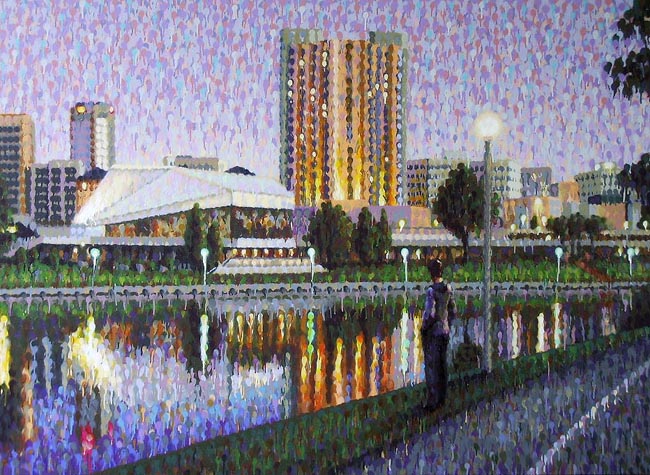 James Cochran, Adelaide scene, circa 2004, Aerosol enamel on canvas
The use of industrial spray paint, which comes in cans, links back to graffiti and street art--Cochran's community based spray can art murals---whilst the Pointillist technique refers back to the Post Impressionists---eg., pointillism of Seurat.
I much prefer the earlier and tougher images of Adelaide--eg., the seedy underside of Adelaide--for an exploration of the idea of place:
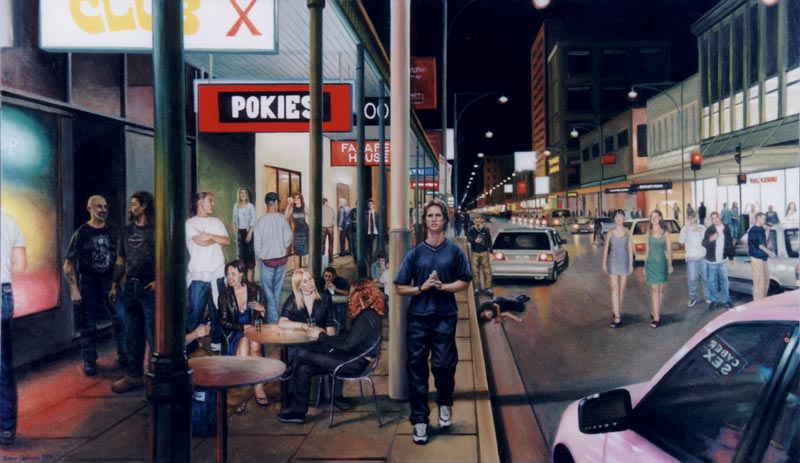 James Cochran, Hindley Street and the Temptation of Anthony 1999, Oil on Canvas.
This is Hindley Street late at night--Saturday night--- with religious references to highlight the nihilism. The religious meaning is clear---moral decline. Yet Christianity is outmoded:
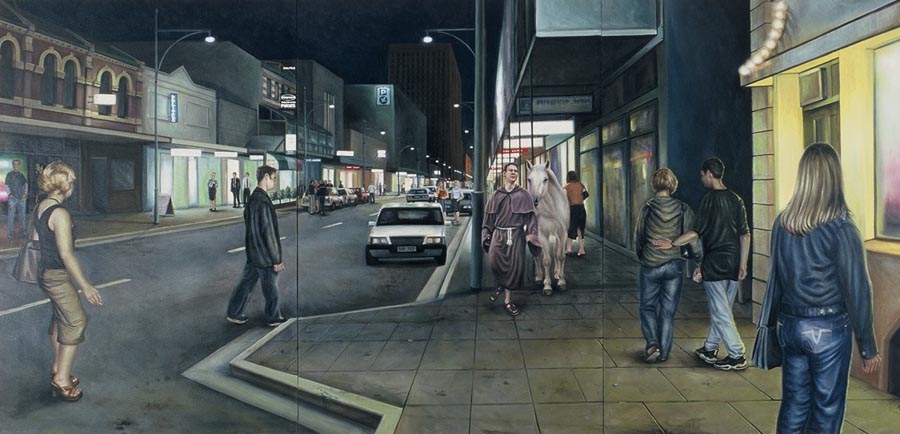 James Cochran, Francis in Hindley Street 2001, Oil on Canvas.
Adelaide appears to be a city of lost souls, drifting through an urbanscape, in search for some meaning for their lives. I recall the early Marx’s depiction of religion: it was hardly a mere affirmation of the status quo, as it encompasses an embedded critique of things as they are as well as a demand for a better life.
January 18, 2011
waiting, waiting
I've been down at Victor Harbor these last couple of days exploring some locations for large format photography other than rocks whilst waiting for the weather to moderate---waiting for a bit of cloud cover and little wind. This is my last day and I'm waiting.
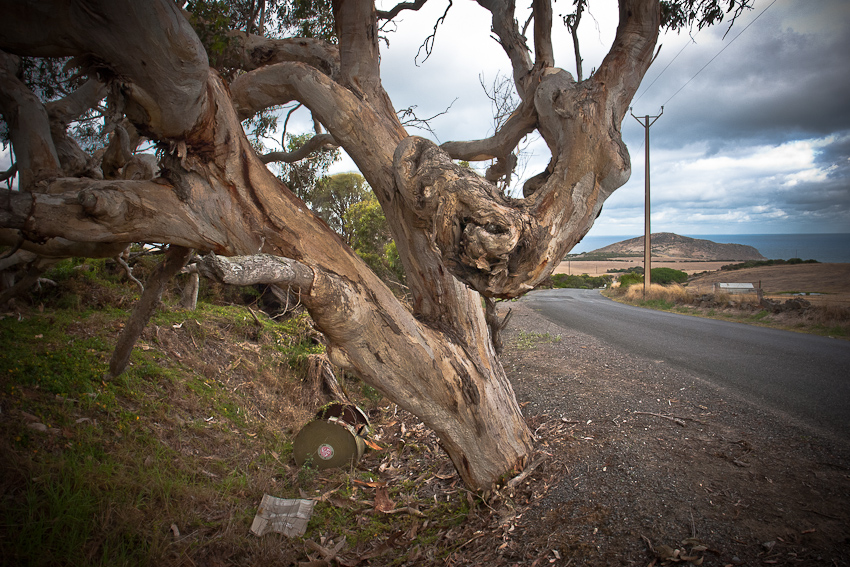 Gary Sauer-Thompson, Victor Harbor, 2010
I read this essay on medium format photography in the context of digital photography. Mark Dubovoy had shifted from 8x10 to medium format digital for landscape work and was happy with his results using a ALPA SWA with a PhaseOne P65+ back and was able to produce prints of good enough quality to satisfy his clients.
The weather changed: clouds came over and the wind drop so I was able to do a black and white 8x10 of the above scene.
January 16, 2011
photos of old London
the Bishopsgate Institute has a collection of pictures taken by the Society for Photographing the Relics of Old London in its archive. Photographers Alfred Henry Bool, John Bool, Henry Dixon and William Strudwick were commissioned by the Society for Photographing Relics of Old London to record historic buildings that were being threatened with demolition.
The Society for Photographing Relics of Old London originated in the wish of a few friends to preserve a record of the 'Oxford Arms' Inn, threatened with destruction in 1875, and actually demolished a few years later. The project was so well received, that it enabled the Society to follow up the first issue, and later on to double the annual number of photographs. By the twelfth years issue, published in April 1886, it was considered the project had reached its completion.
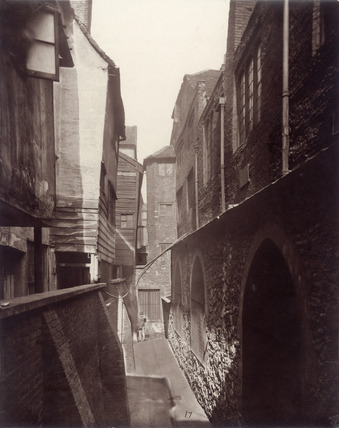 The entrance of The Oxford Arms Inn, which was demolished in 1878.
The archive can be accessed online at PhotoLondon and then at the Museum of London. I love the look of this old photographs produced by the old view cameras.
January 15, 2011
American photography: Ezra Stoller
Ezra Stoller, the American architectural photographer, was modernist to his bootstraps. He made some iconic images that helped establish the hegemony of the modern movement during his heyday, which lasted from the 1930s into the 1970s.
 Ezra Stoller: Kitt Peak (Myron Goldsmith/SOM), 1962. Gelatin silver print
Stoller, who died in 2004 at age 89, was the foremost chronicler of Modernist architecture, using his large-format camera to record seminal 20th-century works like Mies van der Rohe’s Seagram Building, Frank Lloyd Wright’s Fallingwater and Guggenheim Museum, and Eero Saarinen’s TWA Terminal at Idlewild Airport (now Kennedy).
He had the ability to capture the building according to the architect's vision and to lock it into the architectural canon. His photographs convey a three-dimensional experience of architectural space through a two-dimensional medium, with careful attention to vantage point and lighting conditions, as well as to line, color, form and texture.
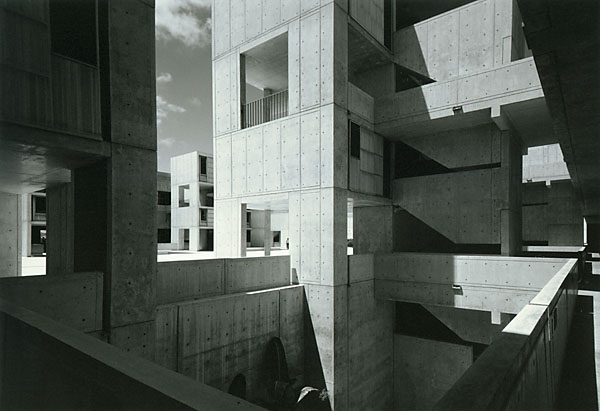 Ezra Stoller: Salk Institute (Louis I. Kahn), 1977, Gelatin silver print
Stoller was the seminal figure in a group of talented American photographers who first emerged about 1930. They were devoted modernists and their images were crucial in introducing modern architecture to the larger culture. Architects, in turn, were influenced by the photographers, and designed in the hope of inspiring a great image from Stoller, Julius Shulman, Balthazar Korab, Hedrich Blessing, Joseph Molitor, Morley Baer, or Cervin Robinson.
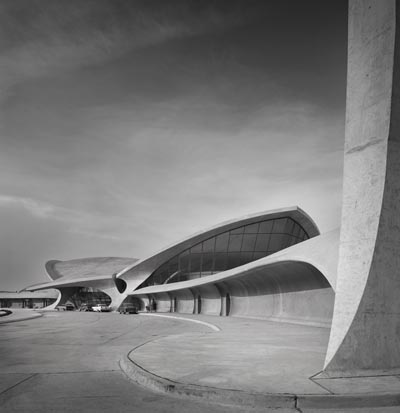 TWA Terminal at Idlewild (now JFK) Airport, Eero Saarinen, New York, NY
Stoller's usual procedure was to walk the structure with a rough floor plan in hand. He would mark on the plan the best vantage points, and note the moment of the day when light would be optimal for each shot. He was a master of chiaroscuro, the abstract patterning of shadow and light, in a manner that sometimes evokes Hollywood films of the noir era. He almost always worked in very deep focus, with every detail from the foreground to the horizon pin-sharp.
January 14, 2011
American Photography: J. Henry Fair
J. Henry Fair's environmental work entitled Industrial Scars series is an environmental photography project that explores the detritus of our consumer society, through large-scale aerial photo shoots and accompanying documentary research.
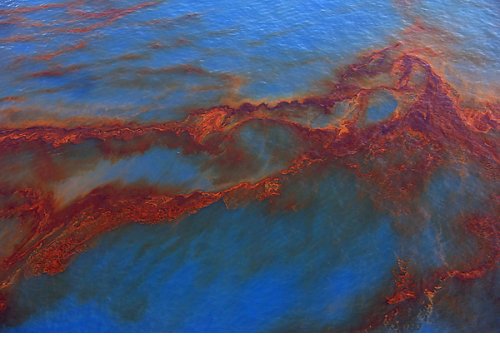 J.Heny Fair, Crime and Punishment, Gulf of Mexico , 2010 Oil from BP Deepwater Horizon spill on the Gulf of Mexico
The images taken from the air are great as colour abstractions, but they also highlight the effects of industrial processes on the environment.
He ">says:
I see our culture as being addicted to petroleum and the unsustainable consumption of other natural resources, which seems to portend a future of scarcity. My vision is of a different possibility, arrived at through careful husbandry of resources and adjustment of our desires and consumption patterns toward a future of health and plenty. To gear our civilization toward sustainability does not necessitate sacrifice today, as many naysayers would argue, but simply adjustment.
The images plus text are published as The Day After Tomorrow: Images of Our Earth in Crisis.
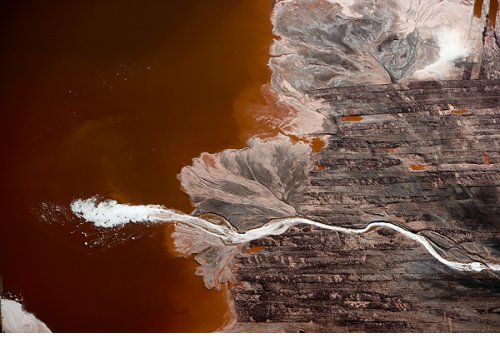 J.Heny Fair, Expectoration, Darrow, LA, 2005 A plume of foam in bauxite waste at an aluminum manufacturing plant
Without the text and captions the images would be interpreted by the art institution as continuing the painterly strategies of Abstract Expressionists like Barnett Newman and Clyfford Still and reworks the ground turned over by photographers like Harry Callahan and Aaron Siskind.
January 13, 2011
Brisbane floods
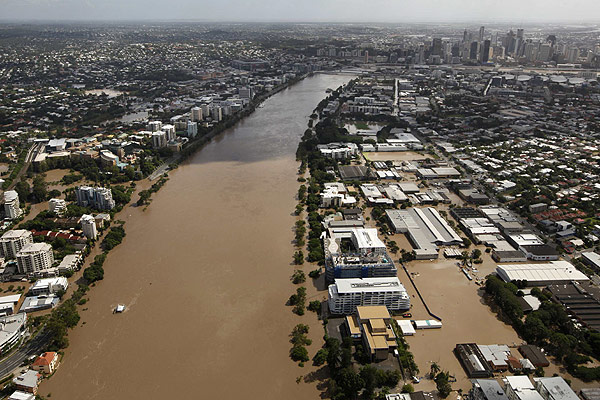
This photograph gives a birds eye view of the current floods in Queensland that are now impacting on Brisbane:
 Tim Wimborne, Brisbane River, Reuters, 2011
At this stage the death toll now officially stands at 15, whilst the number of missing people is around 74. The flood levels peaked this morning lower than expected and below that of the1974 flood. For many people the flood's taken everything and they've got nothing left.
The riverside based Queensland Art Gallery, the renovated State Library next door and the adjacent performing arts centre are all flooded. You can see the extent of the flooding in the low-lying areas along the Brisbane River from this aerial picture:
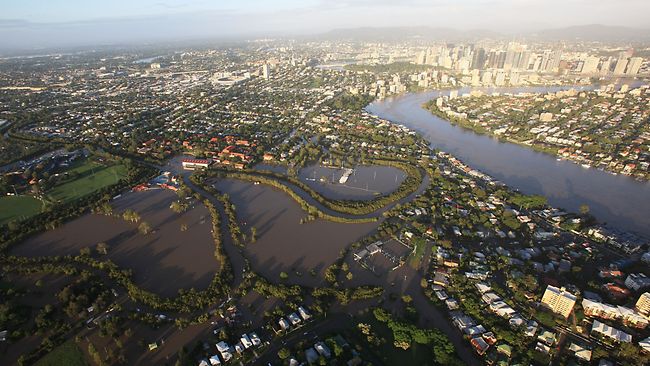 Getty images
The devastating floods across much of northern and eastern Australia is a pattern typical of a strong La Niña event.
January 11, 2011
Cambo 5x7: problems
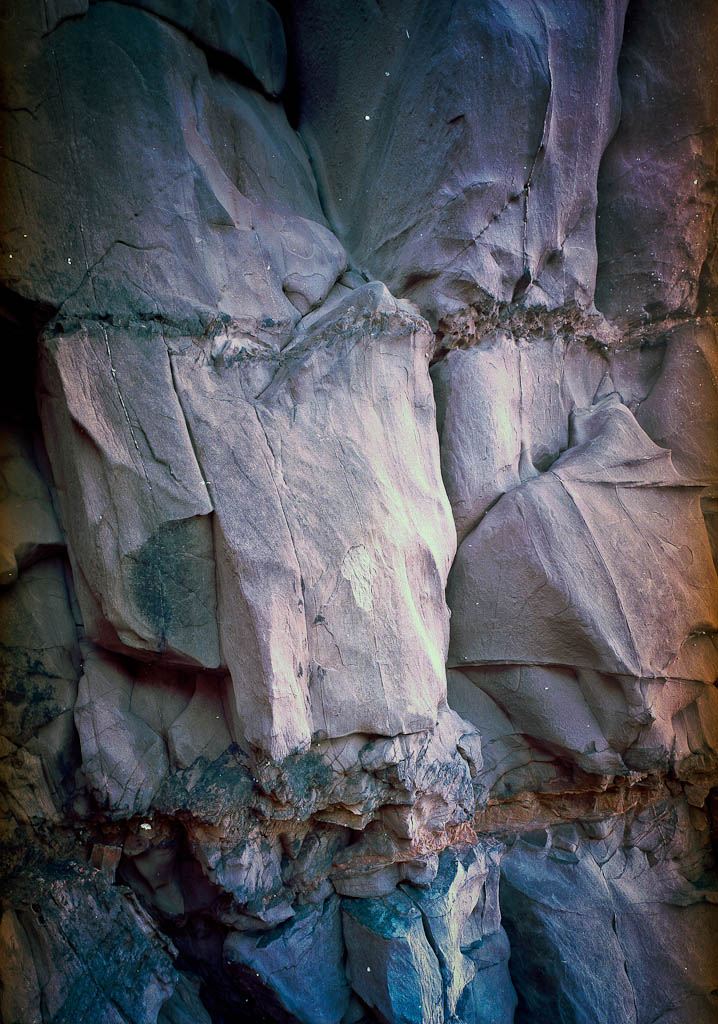
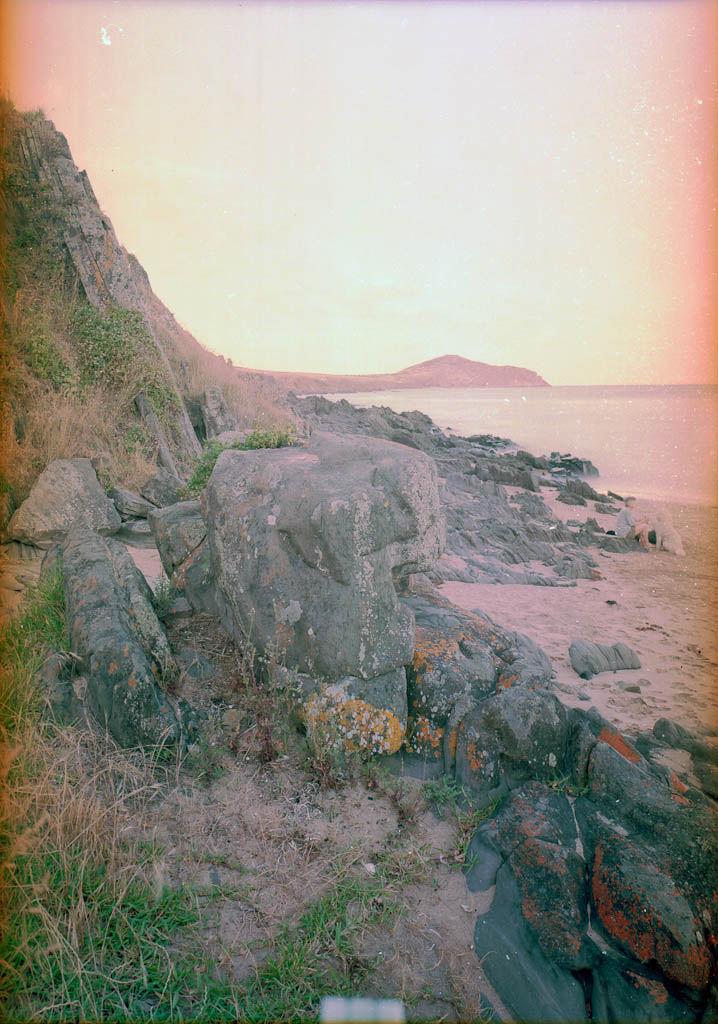
I've got problems with the Cambo 5x7 from the last shoot at Victor Harbor. There is either something wrong with the camera or the film holders --light leaks of some sort---or the film is fogged. I'm a bit annoyed as I'm not sure what is wrong at this stage, other than the camera has a new custom made bellows.
 Gary Sauer-Thompson, Kings Beach, Victor Harbor, 2010
I converted the colour images into black and white using the Silver Efex Pro and Lightroom software and they turned out okay. But that still leaves me with the problem.
I initially thought that the pro lab may have processed the film wrongly--as E-6 instead of C-41--- but they assured me that this was not the case. I've definitely got problems judging from this:
 Gary Sauer-Thompson, Kings Beach, Victor Harbor, 2010
So I am going to have to do some tests when I return to Victor Harbor this weekend. I'll need to check the camera in the darkroom with a torch, process some unexposed film, and process some exposed film to begin to eliminate the possibilities.
January 10, 2011
British Photography: Fay Godwin
Fay Godwin (1931 – 2005) was one of Britain’s well known landscape photographers. In 1985 she achieved both popular and critical success with her exhibition and accompanying book Land – a celebration of the British landscape and wilderness.
 Fay Godwin, Rotting car, Cliffe Lagoon, 1982
I prefer that part of Godwin's work that was concerned with our relationship with the earth and our assaults on it, by the way British rivers and canals, shores and embankments had been messed up.
I see her less as a romantic photographer of the landscape ( ie., picturesque or mysterious views of the landscape) or a documentary photography and more as a topographer ---one who went into the landscape to interpret by means of sketches, charts, and written accounts of what they had encountered and seen.
 Fay Godwin, River Aire, near Shipley, 1987.
Godwin is interested in the history of the British landscape, particularly its usage over the centuries. She explores how human action has changed the land using images of the coastline, ancient roadways and stone circles, in which she takes familiar features from the past and present inviting us to look more closely. She was critical of the 'country cult', an idealised view of rural England and its place in the national myth, given her interest in what humans do to the landscape.
The other strand of her work is the colour photography of the urbanscape of Bradford that were done around 1986/87:
 Fay Godwin, Sunset, Baildon bridge, Shipley, 1987
Her colour work is less well known as she is primarily seen as a black and white photographer of the 'country cult', an idealised view of rural England and its place in the national myth. This Bradford work was later followed by a series of colour abstract images focusing on shape, texture and form in still-life setups of foliage. Godwin was unable to find a publisher for the latter project and it was eventually privately published under the title Glassworks & Secret Lives (1998).
Our Forbidden Land (1990) is an critique of the destruction of the countryside and the increasing restrictions on the right to roam. It showed how large areas of countryside were being torn up for development, how pollution was affecting rivers and forests, and the ways in which public rights of access to land was being denied by landowners.
January 9, 2011
photographic culture: techno-spasm and creative freedom
The whole idea of a professional photographer is becoming obsolete as now almost every digital camera can create high quality imagery and so the difference between a professional and an amateur (quite important in Kodachrome days) is dwindling. Even picture agencies are now using amateur pictures who sell their images for a fraction of the cost of a professionally made image.
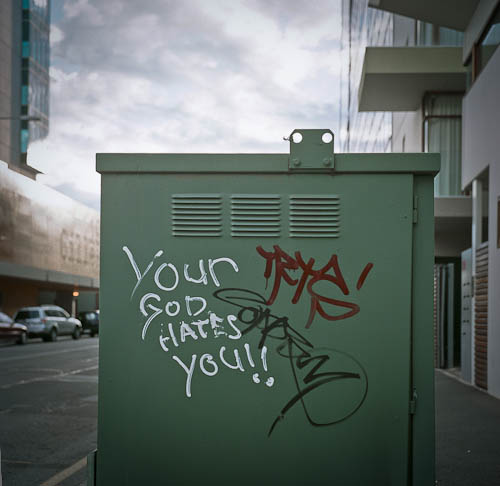 Gary Sauer-Thompson, Your God, 2010
Erwin Puts in his blog post on Photokina 2010 says that in the past a camera was a tool to implement a photographic vision. Now a camera is a consumer end product that happens to generate images that can be uploaded to Facebook or Flickr.
In another post---Socrates and Photography --he says:
Even when photography is an integral part of our visual culture and a major force in shaping our views and opinions of world events, most reviewers of photographic equipment still adopt the boy’s toy approach. The maximum number of pixels, the maximum number of lines per image height, the maximum contrast, the maximum speed of a lens, the maximum zoom range, the maximum shrinking size of a camera, the maximum number of features - the list is endless - define the stature and worth of a camera.
He says that perhaps it is time to put technique where it belongs: as a device for picture taking and not as an end in itself. This uses one's technical skills to create the picture we envisage or can capture intuitively. So we have a duality of techno-spasm of the the new-featuritis ideology and creative freedom.
He adds that modern digital photography is rapidly becoming a totally different medium to classical film photography that results in result a crafted unique copy of an image for use in a book or magazine or for art exhibition purposes. With digital photography the camera, once the major part in the imaging chain, is rapidly becoming one of many equally important links in the imaging process. In the culture of digital photography the single photograph is no longer the goal, but photography is converging to a mixed media show, where sound, still images, and moving images (video) are becoming combined to convey the message.
Even though most modern cameras support the multimedial approach you can still use either film or digital cameras to produce a crafted unique copy of an image for use in a book or magazine or for art exhibition based on working within the limits of the camera and the medium.
January 8, 2011
Anselm Kiefer
Anselm Kiefer is a German painter and sculptor who makes use of photography as an output surface. His works are made from a range of materials: glass, straw, wood, oil, soil, paint, a typical canvas containing a combination of the above.
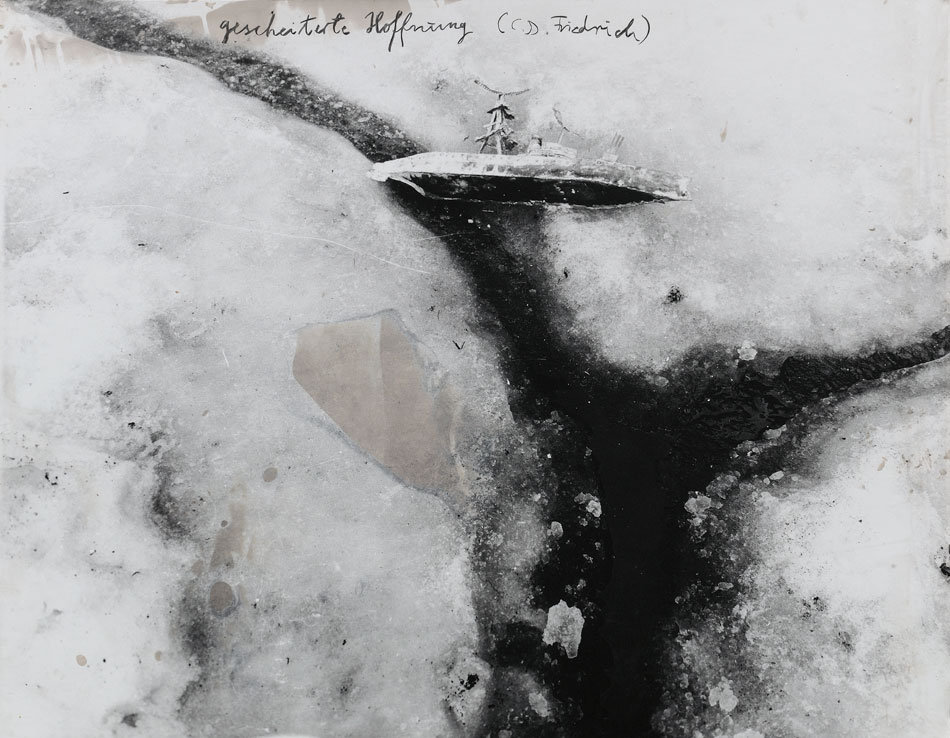 Anselm Kiefer, A, Gescheiterte Hoffnung (C.D. Friedrich)," 2010, Charcoal on photographic paper. Courtesy Text on the work is translated as follows: "Wreck of Hope.
Kiefer is known for reflecting upon and critiques the myths and chauvinism which eventually propelled the German Third Reich to power. His paintings depict his generation's ambivalence toward the grandiose impulse of German nationalism and its impact on history.
January 7, 2011
British photography: Frank Watson
I've stumbled across a project similar to my Port Adelaide one--it is by Frank Watson, and it is entitled Thames Gateway.
It is about the Thames Estuary, which is a marginalised site threatened not only by urban expansion----its transformation from marshland to new town as the Thames Gateway development --- but also rising sea levels. The Thames Estuary is a relatively flat landscape, lacking the traditional attributes of the picturesque.
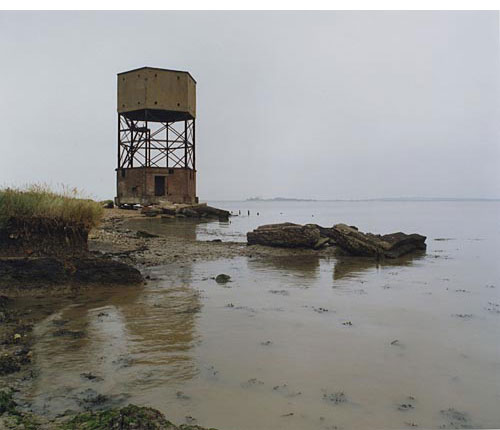 Frank Watson, military tower, 2008
This body of work forms part of Soundings From The Estuary, which is an ongoing project that is inspired by the Estuary's industrial, architectural, and maritime traces as well as the present threat to the existing terrain.
Watson's reference point is both the Modernist project, which he says corresponded with a period of radical change and looked towards the possibility and realisation of Utopia, and postmodernism which did much to kill off the idea of utopia as the modernist project. He adds:
Part of that hope has been superseded by fear, as the fallout of 19th and 20th century industrialisation is recognised and the repressed aspects of technological progress are confronted and the reparation of a rather damaged planet begins. A more pessimistic view acknowledges the impotence of this predicament and that we are already living in a world that resembles a 1960’s science fiction film.
He adds that the photographs in this exhibition articulate a sense of melancholy and abandonment that resonates at present in many areas of the estuary whilst at the same time also evoking uncanny predictions for the future of this part of England in light of climate threat.
January 6, 2011
when nudity = pornography
The Sydney Children's Hospital Foundation took exception to the image by Archibald prize winner Del Kathryn Barton of her six-year-old son, Kell that was part of a charity of works of Australian artists. Del Kathryn Barton won the Archibald prize in 2008 with You Are What Is Most Beautiful About Me, A Self Portrait With Kell And Arella her son and daughter.
The reason given is that the image does not comply with the hospital's strict rules on images of children---its visual protocols.
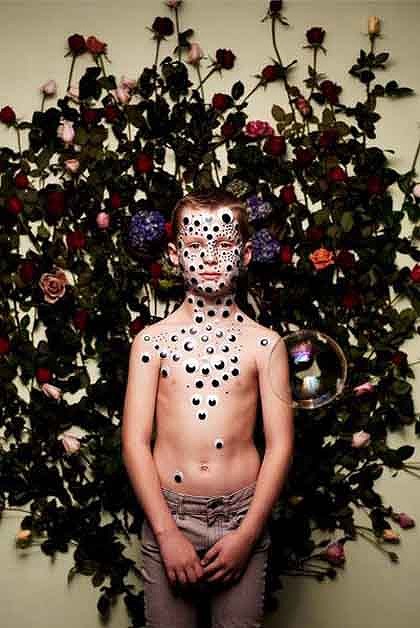 Del Kathryn Barton, Eye Land of Kell, 2010
Is this another instance of nudity being conflated with pornography--based on conservative concerns about the sexualization of children's innocence and images for pedophiles? The photograph is clearly not pornographic---it looks appropriate for a charity trying to raise money for the hospital. The googly eyes are plastered over the skin like ocular measles.
Robert Nelson says that after the Bill Henson affair children in art are to be regulated by protocols devised by the Australia Council to organise to ensure, first, that artists obey the law and, second, that children not be exploited in art.
He says that the problem is 'exploitation' as the government and its instrumentalities:
don't have to name or prove any ill-consequence that results from an artwork. They can obstruct creative work on the basis of "preventing exploitation" without ever feeling a need to show how someone might be exploited...The Sydney hospital won't be able to produce a sheet that indicates in one column what damage Barton's picture could possibly do, with the chances of that event happening entered in the other column.
Cultural conservatives see the harm in terms of pedophilia-is-everywhere and sexual exploitation and an occasion to denounce contemporary art. Their narrative is one of moral decline and sex is their bete noire.
January 5, 2011
surrealism + photography
The image below is one example of surrealism in American photography in the mid 20th century. It links back to Buñuel’s sliced eye.
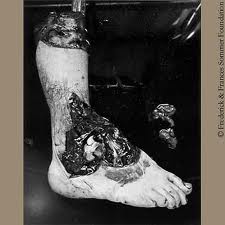 Frederick Sommer, Untitled (Amputated Foot), 1939, Gelatin silver print.
The ‘Amputated Foot’ was brought to Frederick Sommer by his physician. Doctor Born was an amateur photographer, who had seen Sommer’s pictures of chicken parts and promised to, ‘one day bring something worth photographing.’ The irrepairable foot was amputated from a young hobo who had fallen asleep while riding the rails near Askfork, Arizona.
January 4, 2011
Frederick Sommer: Arizona Landscape
The horizonless landscape is the characteristic of Frederick Sommers' Arizona landscapes that were made between 1941 and 1947. In the image below the surface of the land rise to the edge of the photograph and there is no sky. Though the pictures’ textures are crisp and hard, the overall tone is a mid-grey, no single form dominates any other, and the land is a uniform flat surface.
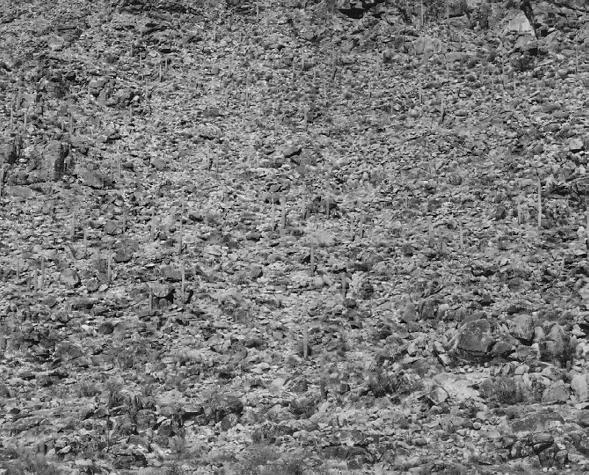 Frederick Sommer, Arizona Landscape, 1943, Gelatin silver print.
In this landscape there isn’t anything worth featuring with very little distinction between the plants and the rocks. This landscape just is. Yet Sommer is seen at standing at the crossroads of Surrealism and the photography of the American West—between Max Ernst and Edward Weston. Sommer's interpretation of the landscape that is at odds with the fundamentally positive view of the American West in that Sommer’s work represents the dark underbelly of American landscape photography ---a dry, dead and dying landscape.
How is this body of work related to European surrealism as opposed to formalism? Why is it so related?
Rosalind Krauss had opposed the concept of the “straight” photograph that had ruled the photography of certain American photographers of the thirties--- Edward Weston, Paul Strand and Ansel Adams—who emphasized authenticity and truth to materials to surrealism. Surrealist photography, wrote Krauss, was “a betrayal of photography’s vocation to constitute a faithful document”; it was contrived to the highest degree;” and that contrivance is what scandalizes ‘straight photography’.
In ‘As if one’s eyelids had been cut away’: Frederick Sommer’s Arizona Landscapes in the Journal of Surrealism and the Americas (2:2 2008) Ian Walker argues against this either or. He says:
Surrealism in Paris had been very securely sited within the city. But at the same time, there was a persistent fascination with the city’s “other”: nature at its most extreme— desert, forest and jungle. The only images of landscape created in Paris that begin to approach the unyielding vision of Sommer’s work are those originating in Spain— above all, the rocks of the Spanish coast at Cadaqués, as they appear in Salvador Dalí’s painting. However, even these landscapes cannot attain the starkness of the Arizona landscape as depicted by Sommer. Rather, in the search for an excessive and convulsive landscape, the Surrealists turned more often to the forest and to the jungle, sites of overgrowth rather than undernourishment.
This was seen as an escape from the restrictions of culture and civilization—into nature, the exotic and the unconscious---a linking back to the tradition of German Romanticism.
The image in Sommer’s Arizona Landscapes series is just what it is—a landscape in Arizona—and it has no other imposed meaning given by the text:
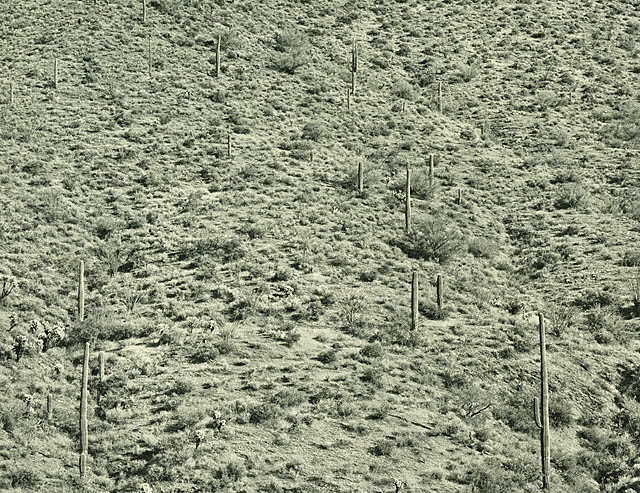 Frederick Sommer, Arizona Landscape 1945, Gelatin silver print
Sommer’s interpretation of the landscape that is at odds with the fundamentally positive view of the American West of many other photographers in that it represents the dark underbelly of American landscape photography--a land if dry, dead and dying.
January 3, 2011
Yves Marchand + Romain Meffre
Yves Marchand and Romain Meffre, have traveled across Europe and the U.S. to portray vanishing architectural icons, concert halls where music has been forgotten, industrial buildings that saw better times, buildings reduced to the skeleton of concrete and metal.
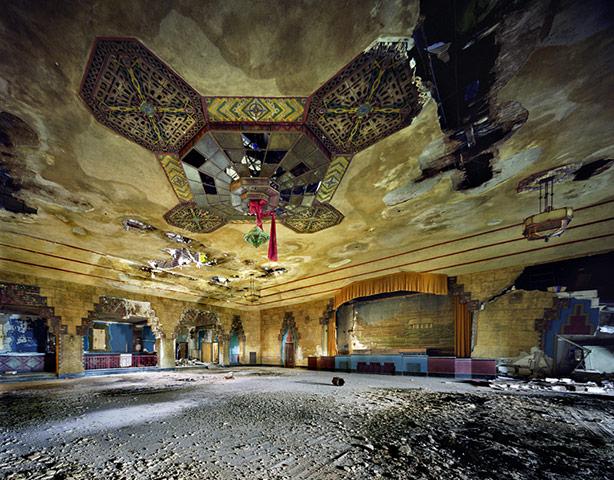 Yves Marchand+Romain Meffre, Detroit’s Vanity Ballroom, from The ruins of Detroit
While Detroit rose to prosperity on the back of industrial progress, these pictures show the ruins of thr motor capital of US industrial capitalism after the city sank into a depression of cultural and economic bankruptcy.
January 2, 2011
creating a people-friendly city
Fred Hansen, a current thinker-in-residence in Adelaide, argues that public transport is a key to creating walkable, liveable, urban neighbourhoods in car obsessed Adelaide. It has been a long fight just to extend the tram line though the CBD. Adelaide is not pedestrian friendly.
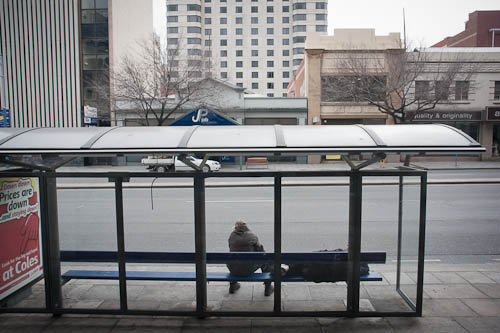 Gary Sauer-Thompson, bus stop, Currie St, 2010
Hansen is from Portland, which has an excellent public transport system. In this interview in the Adelaide Review he says:
In the Oregon region, about 12 percent of our workers are commuting by bike and that’s in less than hospitable weather. Many young people move to Portland because they can get around without a car, and I think those same opportunities exist here in Adelaide. Every transit trip starts or ends with a pedestrian trip and if you don’t have comfortable, safe places to walk and you can’t cross intersections safely or easily – for example, a light changes and you have three seconds to step off of that curb before it goes against you – it isn’t very pedestrian friendly.
In Adelaide there is often no shade from the summer sun or winter rain for those waiting to catch the tram in the CBD. The public transport facilities are minimal, crude and primitive and they have little connection to the digital world that is in formation.
Hansen spells out an alternative:
It’s not just about a crossing on a street, it’s a setting in which people can linger, look in windows, stop for a cup of coffee or a glass of wine or a bite to eat, it is all those things coming together which make it a pedestrian friendly place. If you have a public transport system that appears to work, but you don’t have a friendly pedestrian environment, no matter how much public transport you put out there, it really won’t work very well.
The “permeability” of the city, the ease with which people can move from one area to another, either on foot, by bike or with public transport, is one element that is crucial to creating a truly people-friendly city.
Such a city is one that is facilitated by people taking public transport and who are more likely to walk and ride their bike than use the car. it is a city in which we leave the car at home--which is possible to do if you live in the CBD. What needs to happen is that in the greater Adelaide, there needs to be little communities and real neighbourhoods where people are proud to live, where they know their neighbours and are able to walk and bike and use public transport for many of their daily activities.
January 1, 2011
modernism
Modernism, like the modernity, is a category of historical consciousness; a category of historical totalization of cultural experience. It is a periodizing category that designates a shift in the configuration of past, present, and future that gives “history” its content and character at a given moment. It is a category that marks a topographical shift. It is a way of slicing into the past.
In the 20th century modernism's conceptualization of art affirms art’s autonomy while denying its heteronomy. Modernism is a defensive reaction against the “confusions” of art and non-art, of art’s heteronomy, as it delineates the propriety and autonomy of particular arts. So we have a quiet policing of the frontiers of art and non-art.
The strength of modernism is that its proponents grasped what was at stake in the aesthetic regime of art in that they decided to intervene on behalf of securing a proper place of art, against a politicizing of art and the vicissitudes of the market. If the aesthetic regime of art operates through the constant transformation of the line between art and non-art, forms of life, and forms of art, then it is also of form of dissensus.
The association of Modernism with conservatism, high culture and the status quo was made in the 1960s and the judgment made by those on the left was that Modernism no longer speak to us. Art can no longer fulfill its promise. The rescue operation performed by Adorno’s Aesthetic Theory (1970) did not begin properly until at least 1984, when the first English translation of the book was published by Routledge.
As Marjorie Perloff states in The Aura of Modernism in Modernist Cultures (Vol.1 no1.)
For Adorno, Modernist art is characterized by its resistance to capitalist commodification, a resistance characterized by its opposition to a society that it nevertheless brings back into the artwork by means of indirect critique. The true Modernist artwork, Adorno posits, refuses to engage in direct reflection of social surface; it does not “want to duplicate the façade of reality,” but “makes an uncompromising reprint of reality while at the same time avoiding being contaminated by it.” This dialectic process is characterized by Adorno as negative mimesis. Kafka’s work, for example, is great in its “negative sense of reality”; his image of bureaucracy is “the cryptogram of capitalism’s highly polished, glittering late phase, which he excludes in order to define it all the more precisely in its negative.”9 Accordingly, fragmentation, dislocation, and difficulty are essential to Modernist art, which rigidly excludes the banalities of everyday life and rejects the specious productions of mass culture.
Adorno’s characterization of Modernism insisted on “the autonomy of the art work, its obsessive hostility to mass culture, its radical separation from the culture of everyday life, and its programmatic distance from political, economic, social concerns.”