June 27, 2012
Australian postmodernism
In No More Provincialism: Art & Text in the Electronic Melbourne Art Journal Heather Barker and Charles Green argue that it was Paul Taylor and Art and Text that broke with the centre-periphery or dependency model of Australian art in the 1970s that had been developed in opposition to modernist formalism.
He relocated the visual art inside the field of mass cultural production, then with subcultures (the fashion, music, and art of the New Wave), and the New Wave artist placing signs in new relationships, re-interpreting the history of Modernist art ‘as a series of signs and as a style that can be quoted. The artist was not a creator or a visionary but a ‘producer’ or a ‘mixer’ who ‘originated nothing but tinkered furiously with pieces—pieces of thought or “theory” as much as aesthetic forms and mass cultural signs.
June 26, 2012
David Stephenson: cities at night
I have started photographing cities in Australia--Adelaide, Melbourne and Hobart---and in the process I've became interested in David Stephenson's cities at night work.
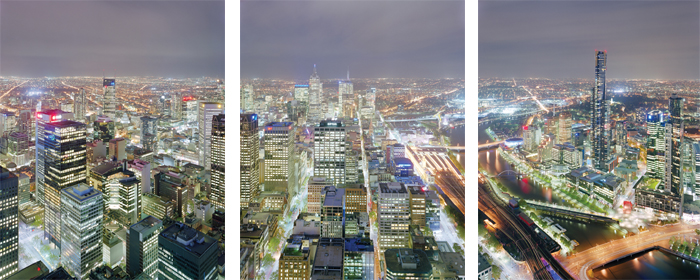 David Stephenson, Melbourne, from Light Cities
Stephenson photographs night scenes of the major cities of the world with long exposures and conveys the luminous quality of the urban environment at night and highlights the skyscraper as an emblem of modern architecture.
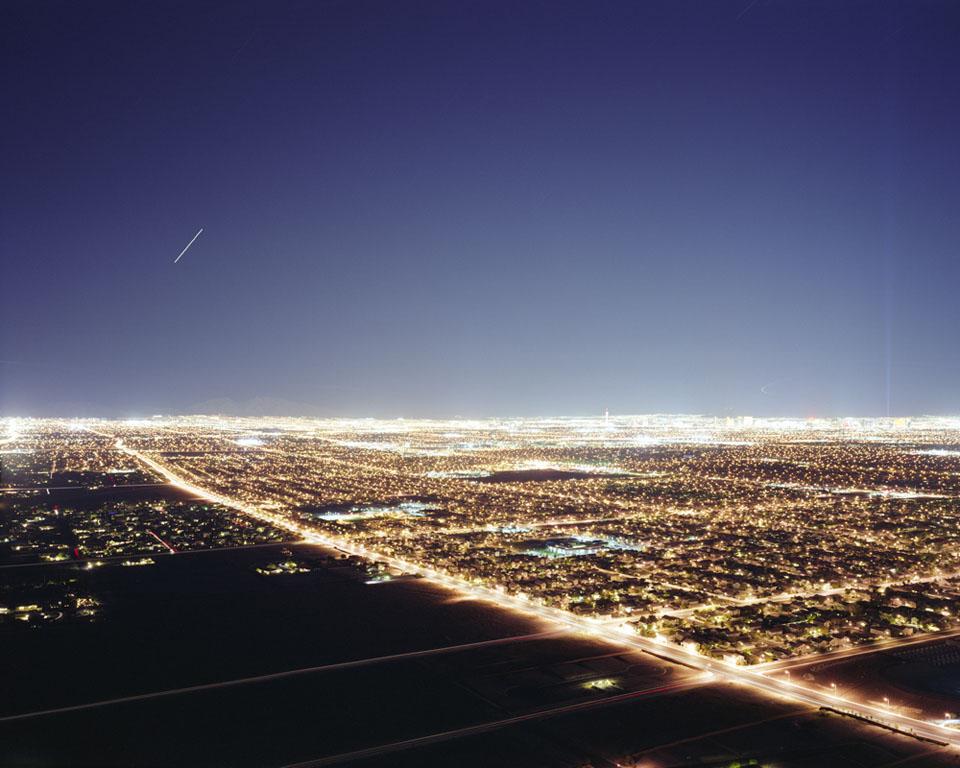 David Stephenson, Vegas, from Light Cities
There is also the suggestion of the sublime in this body of work as it is reflection upon the unsustainability of our urban way of life. They cannot just keep on expanding. Every global city contains a downtown area of high buildings, with urban sprawl often extending for hundreds of square kilometres, and all those buildings glowing with electric light from sundown through to the early hours.
With the vast majority of this electric power generated by coal-fired thermal power stations, it is not difficult to see that this situation has a finite timeframe, due to global warming. This requires requiring major changes to take place in the energy infrastructure of our modern industrialized culture.
June 22, 2012
Leica Oskar Barnack Award
The entries. The winner is US photographer Frank Hallam Day for his portfolio entitled ‘Alumascapes’.
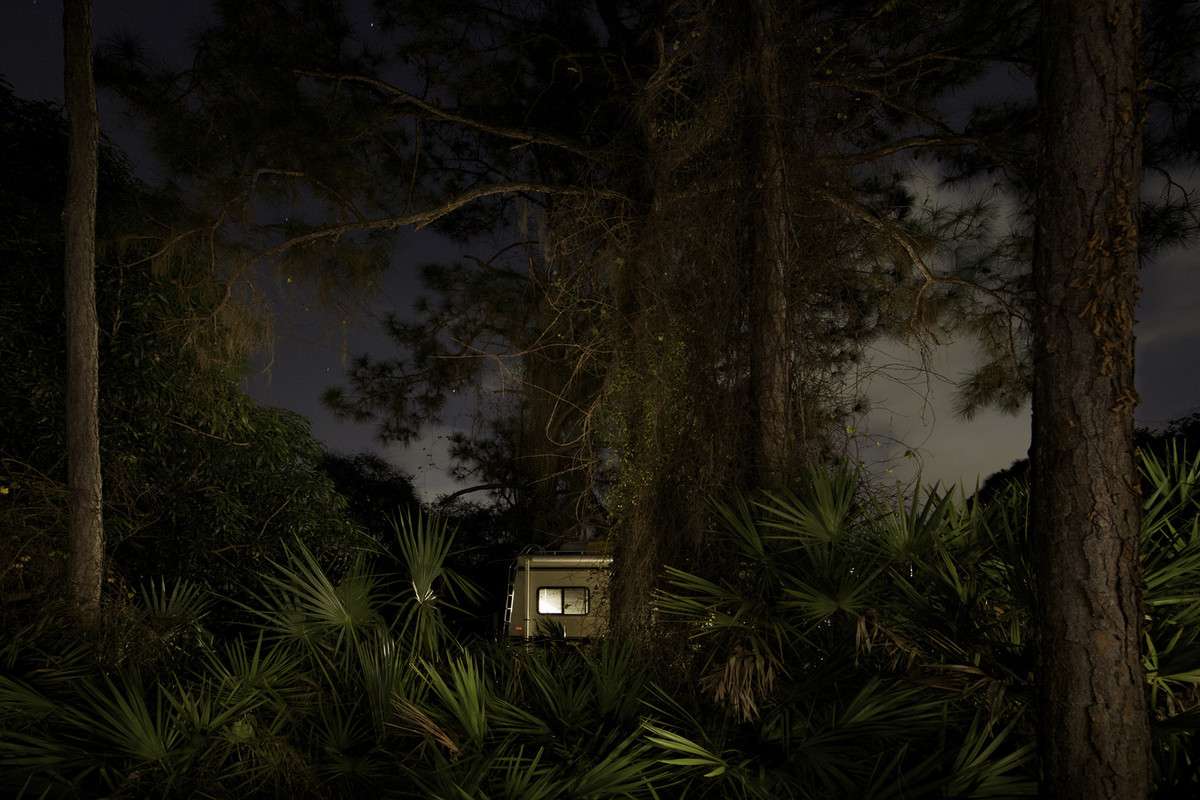 F Day, Alumascapes, #6
This photographic project shows the results of a month-long journey through Florida. In his images, Frank Hallam Day depicts the phenomenon of man and his environment in a unique manner and makes recreational vehicles (RV’s) – ultra-modern, high-tech and luxury homes on wheels – the brightly lit and dazzling stars of his pictures.
They seem to be inextricably entwined in the jungle landscapes of Florida at night and appear as essential islands of security in a dark and hostile environment. The RV’s protect their owners with a feeling of safety and comfort in the lap of luxury. Of course, this form of escape no longer has much to do with the love of nature, relinquishing everyday luxuries or winding down.
The residents of the vehicles are never seen – they knew nothing of the presence of the photographer. This is because they sit safely and securely, generally watching TV in the bright and air-conditioned security of their luxurious homes away from home.
June 16, 2012
Head On Photographic festival: Angie Turnbull
The Deardorff Project - a photographic exhibition is part of the Head On Photographic festival. The Deardorff Project is an exhibition of Angie Turnbull's silver gelatin hand-made photographs of science-related collection material at the Powerhouse Museum using her 8x10” large format film, Deardorff camera.
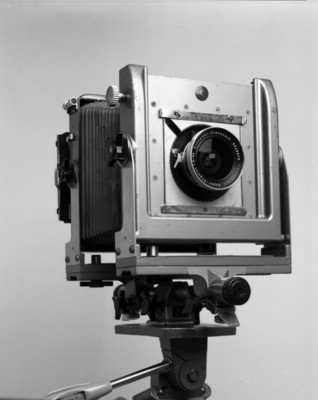 Angie Turnbull, Wolfgang Sievers Calumet Large format Camera
She photographs selected objects the Powerhouse Museum's science collection to both demonstrate the scope of the collection as well as exploring the form and material of the objects.
June 14, 2012
Joerg Colberg: photography's existential crisis
Joerg Colberg's post in Conscientious entitled Photography After Photography? (A Provocation) claims that photography has finally arrived at its own existential crisis. He defines it thus:
photography has long been running in a circle. Over the past ten years, it has increasingly become dominated by nostalgia and conservatism...Even the idea that we now need editors or curators to create meaning out of the flood of photographs ultimately is conservative, looking backwards when we could, no we should be looking forward. Who - or what - can move photography forward, looking forward?
His explanation for this crisis is that it is digital photography that has resulted in the current stasis of the medium running in circles. He refers to digital pictures created on “smart” phones, using “apps” - fake analog images. He adds that the digital world falls crucially short here, for more reasons than one.
First, there really is nothing at stake. There is no artistry here other than the application of some software filter that in a very deterministic way makes your new digital photograph look old. So there is no chance. Art without a trace of chance, a trace of an accident isn’t art. No artistic risk, not art (just ask William Wegman’s dog). What is more, it’s deeply reactionary, but in an uncommitted way. You could, for example, buy a real old camera and stuff film into it, to create your genuine old-timey photographs, but that effort isn’t even made. It’s a pointless nostalgia, where you’re yearning for just that one aspect of the past without all the rest. In contrast, Breuer and Brandt really break down their images. It’s real, there is no going back.
Colberg's account of photography's existential crisis is that its practitioners for the most part are incredibly conservative as far as the medium is concerned. He says that to use jazz again, with its current wave of nostalgia photography is at risk of becoming the Dixieland of the visual arts.
Photography as an art form needs to evolve, otherwise, there’s stasis, and stasis in art is death. So the question is: will photography survive the conservatism the vast majority of its own practitioners have come to embrace?
I concur with Colberg's argument that there is a strong current of conservatism in contemporary photographic culture. His account highlights photographers using archives, photographers using google street view, and photographers using nostalgic filters on their phones. However, we need to include both the fetish on digital technology, camera and lenses at the expense of the picture itself, the marked unwillingness in photographic culture to address aesthetic issues, and the way the traditional publishing, curating and gallery level. This is especially the case in Australia where these institutions have basically turned their back on the work being published on the web, even when it is of high quality. They are content to exhibit the same old people year in and out.
One pathway out of the institutional stasis is the Flak Photo Collection which is a digital archive of contemporary photography and the 100 Portraits exhibition that was selected from the digital archive of Flak Photo. The pathway is digital media, which is transforming photography so that it can flourish outside the constraints of traditional publication and exhibition. This pathway recognizes that photography is no longer restricted to the gallery wall or the printed page and that photography now regularly—and sometimes exclusively—appears onscreen.
June 13, 2012
Lost Places: Sarah Schönfeld
The blurb to the Lost Places. Sites of Photography exhibition at the Hamburger Kunsthalle art museum says that artists have adopted different approaches by which to present the subject-matter of "space" and "place" in an era of historic change and social crises.
One of the photographers exhibiting is Sarah Schönfeld and the work being exhibited is from the Wende Gelände project.
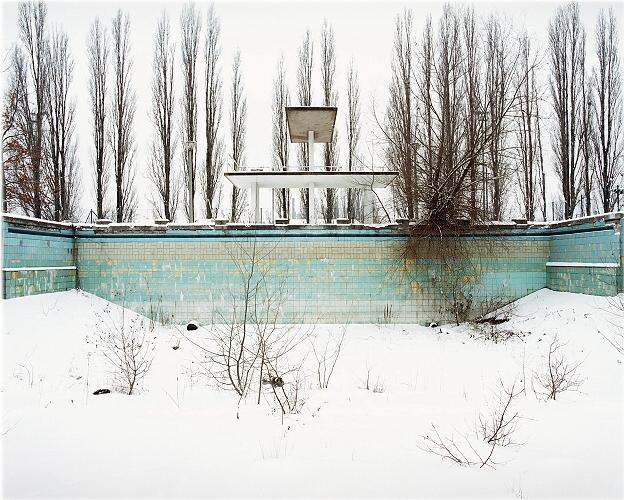 Sarah Schönfeld, Wende Gelände 01, 2006
This project is a photographic interpretation of important places from Schönfeld childhood that fell into decay as a result of the Wende [the collapse of communist East Germany and the creation of a unified German state] and the subsequent structural changes. Fifteen years after the Wall came down I revisited these places in what used to be East Berlin: my school, my kindergarten, the local swimming pool, the amusement park, the Kreiskulturhaus (cultural centre) and the Palast der Republik (Palace of the Republic). One-point perspective and symmetry are used in a vain attempt to hold the disintegrating sites together.
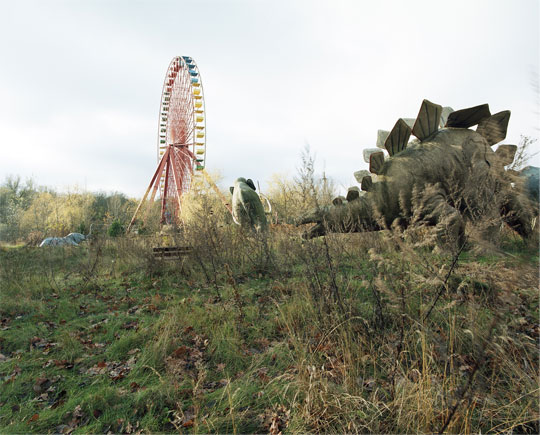 Sarah Schönfeld, Wende Gelände 05, 2006
Fifteen years after the Wall came down she revisited these places in what used to be East Berlin: her school, kindergarten, local swimming pool, amusement park, the Kreiskulturhaus (cultural centre) and the Palast der Republik (Palace of the Republic).
One-point perspective and symmetry are used in a vain attempt to hold the disintegrating sites together.
June 12, 2012
The 1970's provincialism problem
Anne Sanders in Minefield: revisiting the historical document that is "the provincialism problemin CACSA Broadsheet no 40.2 Un Certain Regard returns to Terry Smith’s 1974 article ‘The Provincialism Problem’ that was published in ArtForum, then the most influential art magazine in the world.
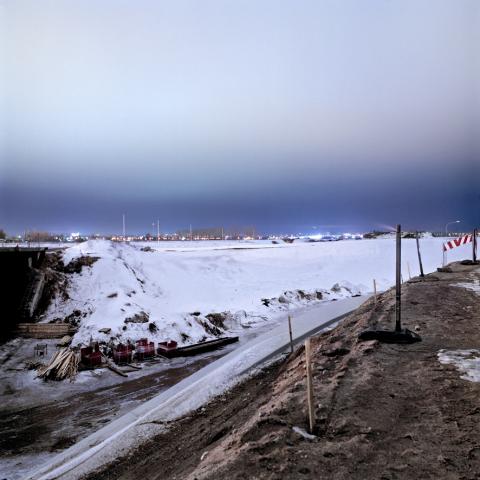
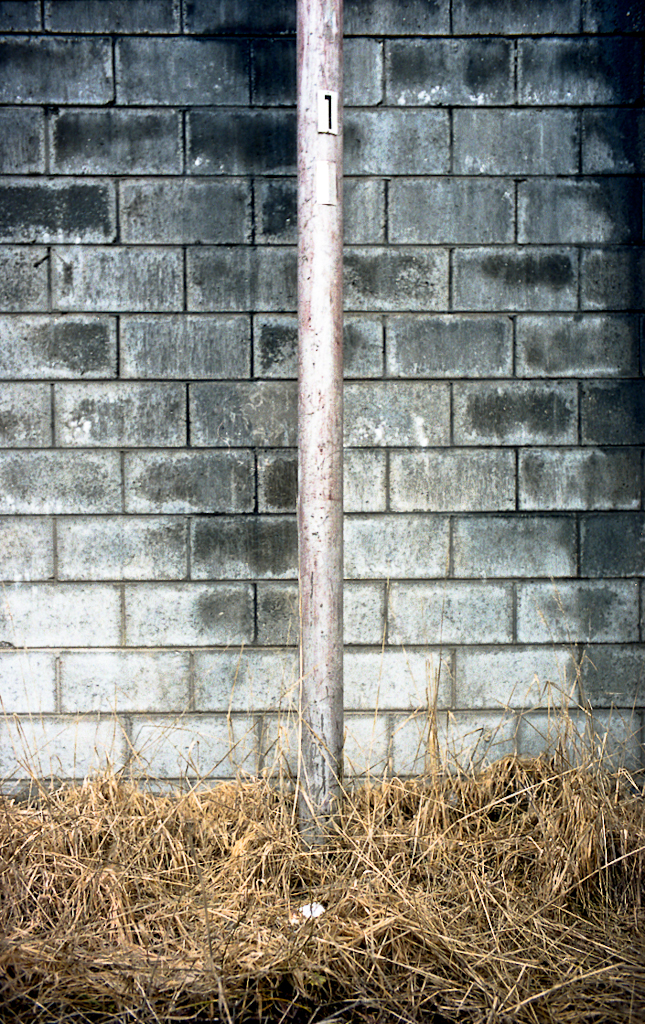 Gary Sauer-Thompson, Queenstown, 2012
This problem is structured around centre and periphery, dependence and its opposite, and the core tenet that acceptance of the metropolitan culture without question is the essence of provincialism. For Smith in 1974 the “metropolitan center for the visual arts”, was New York and that cultural transmission is one-way... outside the hegemonic metropolitan center. The provincial artist must break into this game to be internationally successful, but the most the provincial artist can aspire to is to be considered second-rate’.
Those Australian artists who, by definition, could not be part of the dominant centre were subject to the centre’s externally imposed hierarchy of cultural values” and they withdrew into, and were bounded by, a regionalism, which provided them with a kind of security in a society that was yet to develop a genuine avant garde.
Australian artists have no choice but to be provincial in a global culture's biennale circuitry, in which the North Atlantic is central. Provincial artists were condemned to provinciality. Smith defined provincialism as ‘an attitude of subservience to an externally imposed hierarchy of cultural values’--- New York retained tits hegemony by ‘writing the rules of the game in avant-gardist terms’, remaining ‘the sole judge of who gets to play, of how one plays, and of who wins.’
The model of centre versus periphery is an account of the power relationships between art institutions, especially galleries and artists during the period of formalist hegemony, including formalist approach to art criticism that lasted, until the 1970s.
It was the period of constantly looking for a national narrative that could be classified as distinctively Australian, and for whom the manifestation of place in art was part of the wider postcolonial search for an Australian identity, one irrevocably marked by post-war history. What often resulted from this search was an outdated Australian Antipodeanism--a national art with its attendant, insular regionalism.
June 9, 2012
Belgium's summer of photography: Alnis Stakle
The FotoMuseum Antwerp in Belgium says that every day FoMu is swamped with portfolios, websites, blogs and photobooks, all desperately in search of a platform: which is why FoMu has decided to create one… .tiff is a future-oriented, annual showcase of young Belgian talent. Alas, it is not online.
FotoMuseum Antwerp is also involved in Summer of Photography - in which 20 partners have joined forces to create a unique international platform for photography in Belgium. This year---the fourth-- is devoted this year to landscape, which is understood in terms of a series of reflections on the often complex relationships between humanity and its environment. This festival appears to be structured around a sense of place.
One photographer exhibiting is Alnis Stakle, who explores the urban areas are joined by the non-places in our cities (ie., ones that do not perform any significant functions in the urban environment) at night in artificial light.
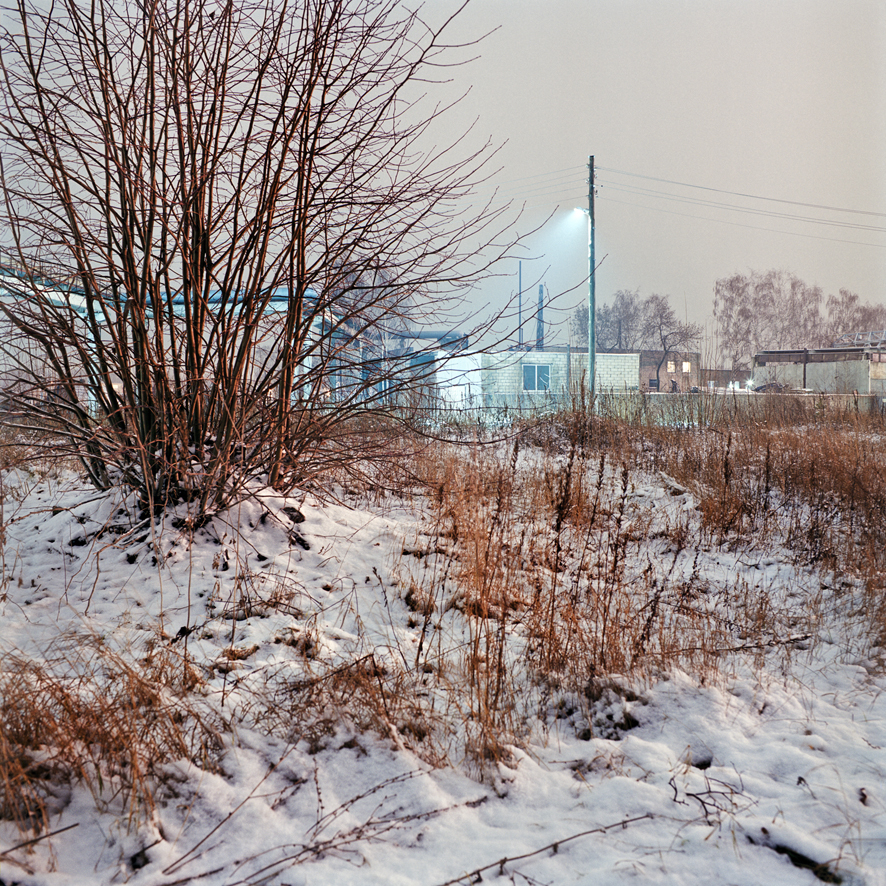 Alnis Stakle -from the series Not Even Something
Stakle is a photography-based artist from Daugavpils, Latvia. He holds PhD in art education from Daugavpils University and since 2011 year he has worked on a project “Not Even Something” that is a research on the interstices in the city environment.
No places are always intended for traversing rather than staying. No one wishes to linger there, because they are an intermediate between home and work, between one living space and another. These spaces are located between the meaningful and the meaningful, and themselves remain in the field of the insignificant and inessential.
 Alnis Stakle from the series Not Even Something
One characteristic of photography and art from the old ex-Soviet Union bloc is that it did not have to go through Western modernism. This gives the work that comes from this part of Europe a distinctly different 'feel' in spite of the early experiments of the Russian Formalists in the 1910s & 1920s where the concept of 'making strange' aimed to slow down the process of reception of art. Thus, photographs would not be objects to be 'consumed', but rather a means to the process of thinking.
June 7, 2012
Auckland Festival of Photography
Daniel Crook's exhibition at the Two Rooms gallery is part of the Auckland Festival of Photography
June 3, 2012
Fairport Convention: Unhalfbricking
I first heard Sandy Dennis' Who Knows Where the Time Goes on Fairport Convention's 1969 album Unhalfbricking. It is a work of transition in which the group shed its closest ties to its American folk-rock influences and started to edge toward a more traditional British folk-slanted sound.
The album had a strange cover of an older couple standing outside a gate, the group in the distance in the garden and a walled suburban garden.The clear signpost to the future was the groups 11-minute take on the traditional folk song A Sailor's Life:
This song foreshadowed the more overtly folk-rock album Liege & Lief, often considered a classic of its kind.
June 1, 2012
political cartoons: David Rowe
When I was away in Tasmania on a photo shoot in Queenstown my MacBook computer developed a corrupted file and I wasn't able to boot it up. So I lost contact with what was happening in the world of political cartoons. I've just been catching up since I've been back in Adelaide:
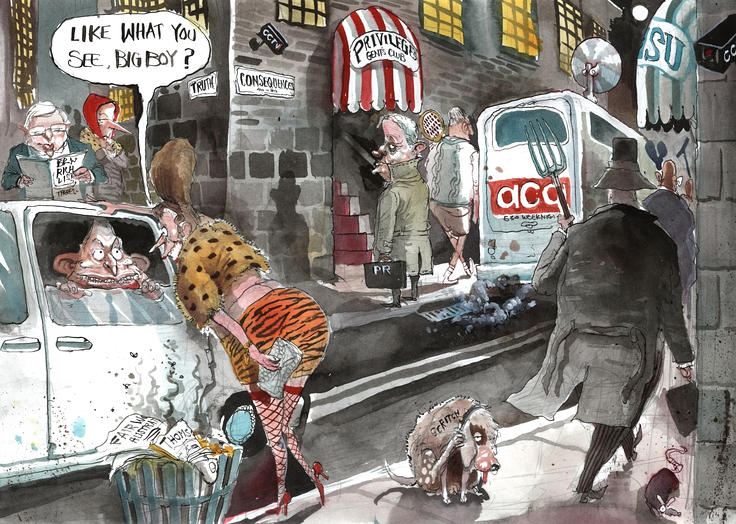 David Rowe
David Rowe is a favourite of mine as he is able to represent the seedy side of politics without falling into one dimensionality.