|
June 9, 2012
The FotoMuseum Antwerp in Belgium says that every day FoMu is swamped with portfolios, websites, blogs and photobooks, all desperately in search of a platform: which is why FoMu has decided to create one… .tiff is a future-oriented, annual showcase of young Belgian talent. Alas, it is not online.
FotoMuseum Antwerp is also involved in Summer of Photography - in which 20 partners have joined forces to create a unique international platform for photography in Belgium. This year---the fourth-- is devoted this year to landscape, which is understood in terms of a series of reflections on the often complex relationships between humanity and its environment. This festival appears to be structured around a sense of place.
One photographer exhibiting is Alnis Stakle, who explores the urban areas are joined by the non-places in our cities (ie., ones that do not perform any significant functions in the urban environment) at night in artificial light.
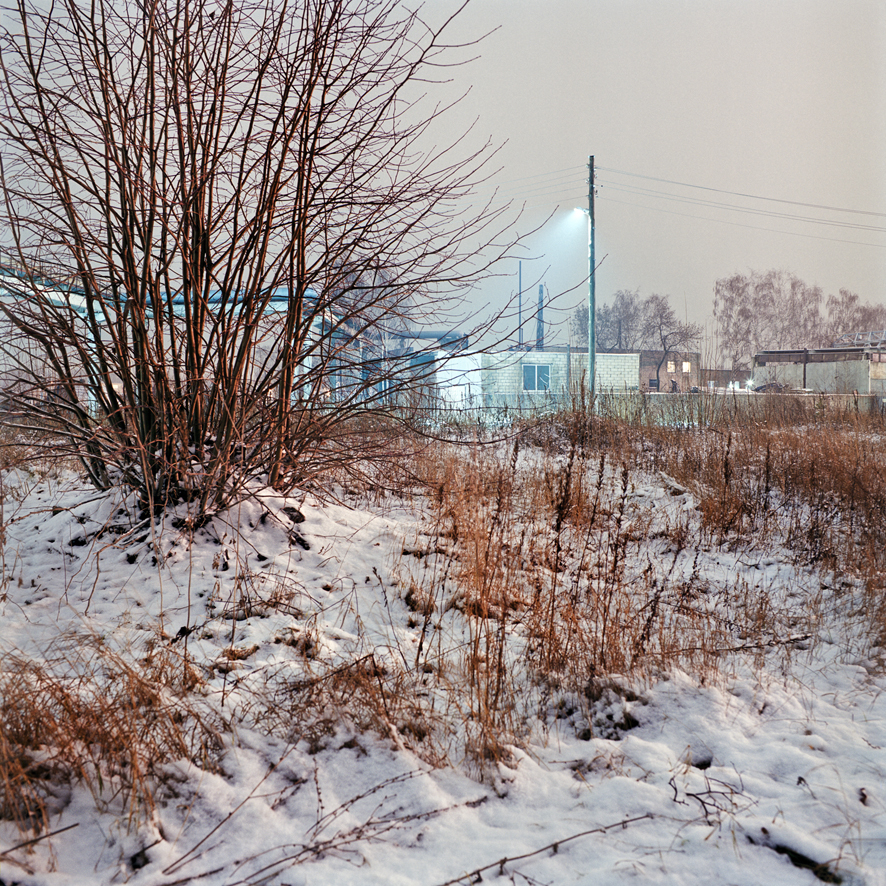 Alnis Stakle -from the series Not Even Something
Stakle is a photography-based artist from Daugavpils, Latvia. He holds PhD in art education from Daugavpils University and since 2011 year he has worked on a project “Not Even Something” that is a research on the interstices in the city environment.
No places are always intended for traversing rather than staying. No one wishes to linger there, because they are an intermediate between home and work, between one living space and another. These spaces are located between the meaningful and the meaningful, and themselves remain in the field of the insignificant and inessential.
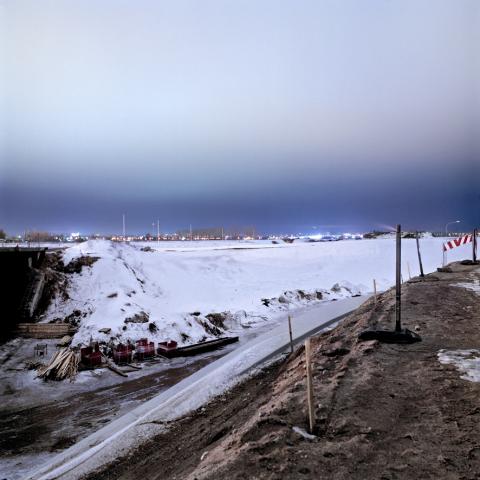 Alnis Stakle from the series Not Even Something
One characteristic of photography and art from the old ex-Soviet Union bloc is that it did not have to go through Western modernism. This gives the work that comes from this part of Europe a distinctly different 'feel' in spite of the early experiments of the Russian Formalists in the 1910s & 1920s where the concept of 'making strange' aimed to slow down the process of reception of art. Thus, photographs would not be objects to be 'consumed', but rather a means to the process of thinking.
|


