August 31, 2011
Andrew Bush: Drive
Andrew Bush’s book, Drive, is a book of photographs made while traveling 50 to 70 mph in Los Angeles and other parts of the Southwestern United States.
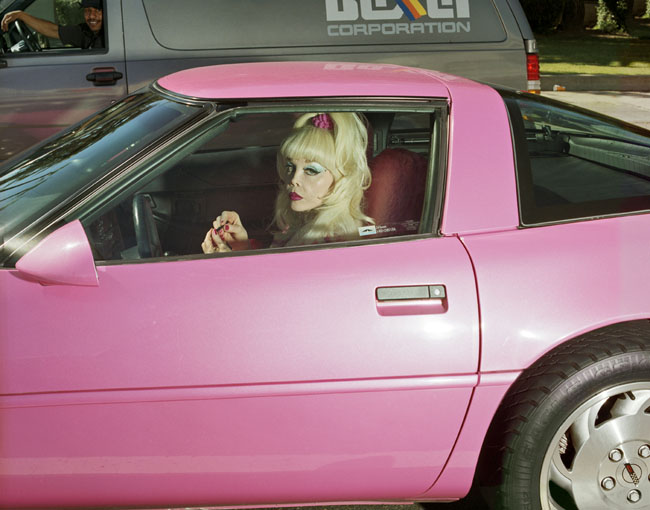 Woman waiting to proceed south at Sunset and Highland boulevards, Los Angeles, at approximately 11:59 a.m. one day in February 1997
The culture of cars is an inseparable part of American and Australia life. Whether used for functional purposes or recreation, automobiles are expressions of our personality. They also represent the American and Australian ideals of freedom, mobility, and independence, providing a unique personal space that is at once private and public.
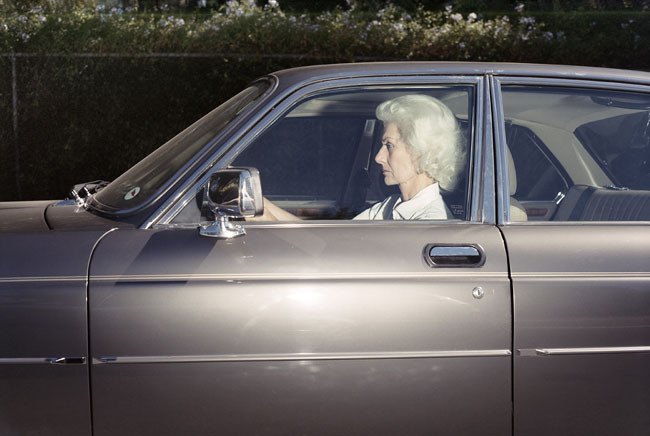 Woman caught in traffic while heading southwest on U.S. Route 101 near the Topanga Canyon Boulevard exit, Woodland Hills, California, at 5:38 in the summer of 1989
Bush attached a camera to the passenger side window and made these pictures while driving alongside his subjects—often traveling at 60 mph. Taking notes on the speed and direction he was going, Bush created extended captions for the images and called the series Vector Portraits.
August 30, 2011
Australian photography: Bronek Kozka
Bronek Kozka, the Melbourne-based photographer and a lecturer at the Royal Melbourne Institute of Technology (university), has been confirmed for the Turner Galleries in North Perth during FotoFreo 2012 as part of the core programme of the Festival.
His photography also explore the notion of suburbia using as reference points ‘suburbian’ imagery from movies, commercials and advertising. He is interested in the disparity between how suburbia is shown through these mediums and to people’s own memory of growing up in suburbia.
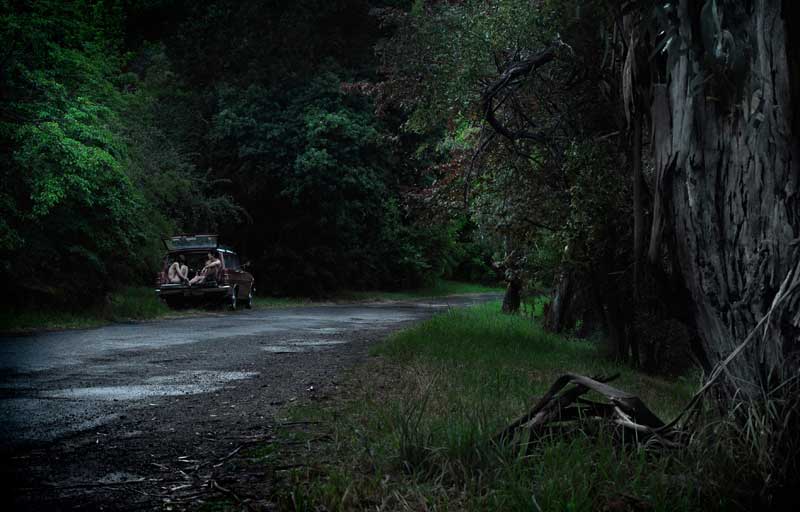 Bronek Kozka, EH Holden, from Memory: Pandora's Hippocampus, 2008, digital print on paper,
The suburban landscape, be it outdoors or interiors, is the staging ground for the “re-enactments” that often appear to be cinema based in that they are carefully constructed tableaus, cast with actors playing their various roles, propped and lit, with every detail considered and controlled.
Kozka says the EH Holden image:
appears on the surface to be a very natural scene when in fact, it is a little too perfect, like a dream. The way the light falls and the green foliage. A perfect mood surrounds the couple in the car, parked on the steely grey of the wet road... it is, of course a recollection, it is a memory. EH Holden draws on my memory and the collective memory of the freedom my first car gave me. It is a freedom, out of sight and control of parents. On one level, this image celebrates freedom, on another level; there is a sense of melancholy and regret, both inescapable outcomes of freedom.
He adds that the idea of holding on to memories is also of great interest to me. In our lives we often attempt to document all aspects of our lives, snapping photos, recording videos and now, endlessly posting our activities and whereabouts on Facebook and the like. The thought of losing our memories and our history terrifies us. In losing these memories, we fear losing who we are.
August 29, 2011
Australian photography: Rebecca Dagnall
Rebecca Dagnall, the Perth-based art photographer and lecturer in photography at Curtin University, has been confirmed for the Turner Galleries in North Perth during FotoFreo 2012 as part of the core programme of the Festival.
The work to be exhibited is the series Paradise in Suburbia, which is an exploration of the relationships that people develop with places in their suburbs. The images are taken in small areas of bush – tranquil pieces of paradise – that are in reality surrounded by houses and shopping centres.
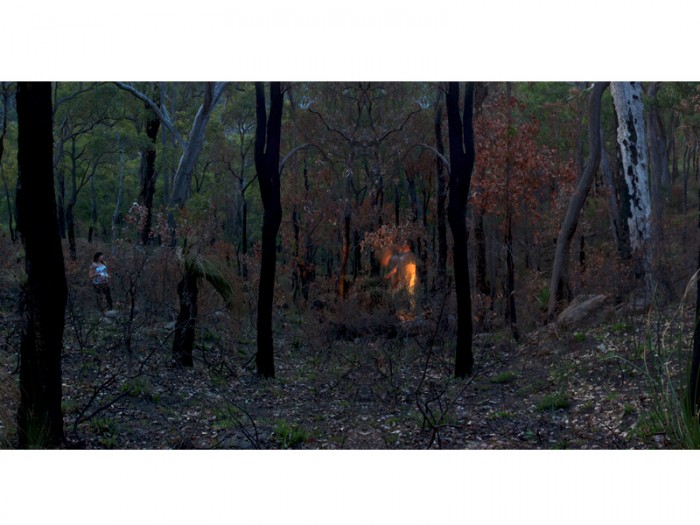 Rebeca Dagnall, Paradise Lost #4, 2009-10 pigment print
These landscapes appear to enclose the people standing, sitting, walking, talking, picknicking or canoeing within them. The imagery could refer to European Impressionist paintings of people spending their leisure time strolling, picnicking or boating in scenes of ordered nature or to Melbourne’s Heidelberg School of painters dealt with similar themes in their depictions of ‘the Australian way of life’.
Dagnall says that:
There is an element of documentary work in this series as all of the places photographed are in actual suburbs; however, the work is more about our perceptions than it is about the space actually depicted in the work. In the areas where the image overlaps there are layers of icons and images that allude to the iconography of heavy metal culture. It is in these mirrored patterns that the skulls and creatures dwell, here the faces and totemic images give the work a depth that goes beyond an analysis of the physical and into the realm of our experience.
Dagnall’s Paradise Lost series depicts another form of suburban escapism, but as if in opposition to the peaceful, leisurely activities depicted in her Paradise in Suburbia series these images explore teenage angst and the identification of this demographic with the loud, aggressive and often angry expression that is associated with Heavy Metal music
August 28, 2011
junk food: Super Size Me
I watched a DVD of Super Size Me last night. It is a documentary by Morgan Spurlock of a 30-day period from February 1 to March 2, 2003 during which he eats only McDonald's food and becomes very sick. It's a docudrama in the form of Michael Moore's Bowling For Columbine (2002) in which the political candidness and accessibility to a wide readership allows the independent features to enter the commercial market, rather than being sidelined as art house productions that receive minimal public exposure.

Spurlock claimed he was trying to imitate what an average diet for a regular eater at McDonald's—a person who would get little to no exercise—would do to them. The film's raison d'être resides in why the demand for such fast food outlets continues despite the well known health warnings about fast food high in fat content, and the associations between fast food intake and increased body mass index (BMI) and weight gain.
The result of eating unhealthy foods--those that are high in fat, high in sugar and high in salt--- is grossly protruding stomachs, saddle-bag thighs and an elevated risk for diabetes. Obesity is the second leading cause of preventable death in the US. Hence the discourse around the obesity epidemic, the governing of bodies, moral panic and public health campaigns to educate us about risk, lifestyles and individual responsibility and instruct us about how we should live.
The film suggested that overeating might not be a simple matter of self-control. Lovers of burgers, fries, fizzy drinks and sugary snacks could be addicted to fast food. The feeling is famiar: you pop a candy in your mouth and you’re off and running on a binge. You can’t have just one chip or a serving of ice cream. One taste and you eat a mountain of it. You just keep on coming back for more refined sugars, high fats as well as processed foods that result in feelings of shame and guilt.
August 25, 2011
Australian Photography: two books
Terry Lane reviews books of photographs by Wolfgang Sievers by Helen Ennis and the Melbourne-based Many Australian Photographers (MAP) group's Beyond Reasonable Drought.
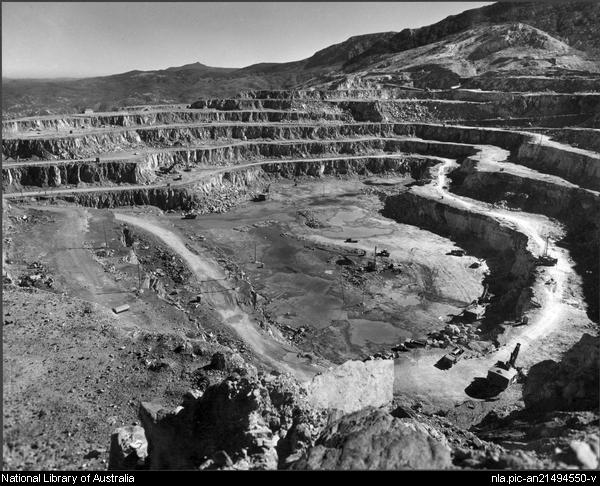 Wolfgang Sievers, Abandoned copper mine at Mt. Lyall {i.e. Lyell}, Western Tasmania, 1959, gelatin silver, NLA
Lane highlights the differences in technologies--- Siever's black and white images produced by a view camera and darkroom and the colour images produced by modern DSLR's and then links these technologies to different photographic aesthetics.
He then says:
Every photo in Beyond Reasonable Drought is a story to be “read” – quite different from the work of Wolfgang Sievers, who has done all the reading for us. And if we presume to read Sievers’ pictures we are likely to be deceived because they are artful arrangements intended to astonish, rather than reveal the truth.
Not all of Sievers' work can be read as a modernist celebration of industry and its architecture that are designed to astonish. Some are classic examples of Australian photographic modernism:
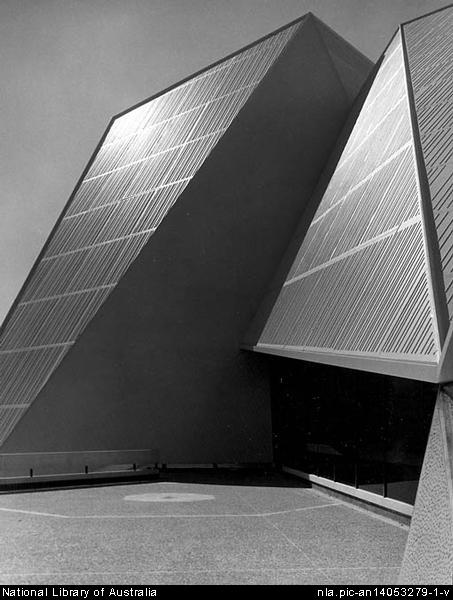
Wolfgang, Sievers, Adelaide Festival Centre, 1973 gelatin silver, NLA
This is an iconic modernist image as it's primary concern is with form, tone and texture; is an example of the self-contained and self-sufficient art form; and forms part of the canon of Australian modernist art photography.
Newhall's illustrated histories of photography, published by the Museum of Modern Art in 1937 and 1938, were seen by art historians as groundbreaking works shaped the canon for photography in the fine arts tradition. In choosing illustrations—most prominently from the work of 'straight' photographers Alfred Stieglitz, Ansel Adams, Edward Weston, and Walker Evans—Newhall embraced the vision of Museum of Modern Art director Alfred Barr, whose aesthetic theory privileged cubism, straight photography, and the Bauhaus notion of the camera as a machine.
The Australian National Gallery followed the lines of the established modernist aesthetics that had been laid down by MOMA when it constructed the Australia canon in the 1970s in spite of the emergence of Conceptual art in the 1960s, which highlighted modernist art’s loss of critical ability due to it representing a corporate enterprise compliant with official institutions.
August 23, 2011
Melbourne Silver Mine Inc.
I was able to check out a few photographic shows in the core and fringe programmes whilst in Ballarat for the Blurb workshops on DIY publishing and Portfolio Reviews at the Ballarat International Foto Biennale 2011
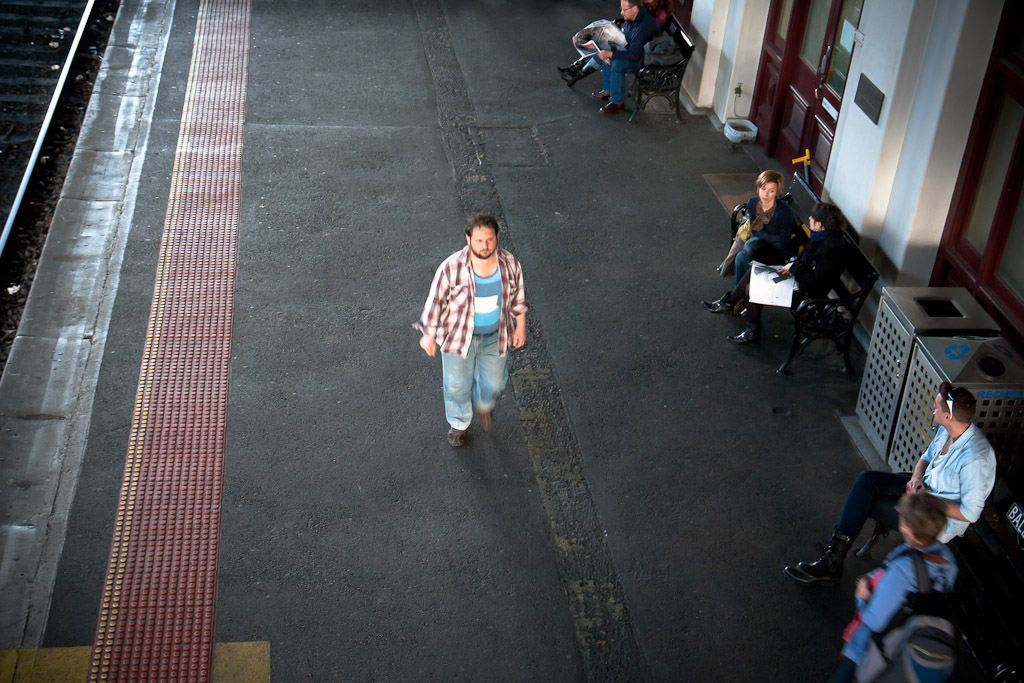 Gary Sauer-Thompson, Ballarat Railway Station, 2011
The show that I saw first were the two by the Melbourne Silver Mine Inc. collective in the Fringe programme. These were the Just Don't Call it Street and the sets show. I participated in both.
Melbourne Silver Mine Inc. is a film based photography collective in Melbourne. The Just Don't Call it Street was the more cohesive show as it was based around multiple perspectives exploring what street photography means today. It provides a building block to submit to future festivals or biennials such as the Auckland Festival of Photography in 2010.
This option is not possible with the sets show, as the work was too diverse to have any coherence. The individual practitioners in the show have to develop their own group of photos in to a body of work for an exhibition or a book. That means developing their own portfolios into a tightly edited project. That requires being clear on what the project is.
August 18, 2011
Ballarat International Foto Biennale 2011: Osamu James Nakagawa
Another photographer in the core programme of the Ballarat International Foto Biennale 2011 is Osamu James Nakagawa, currently an associate professor at Indiana University in Bloomington, Indiana.
His Banta project explores the precipitous cliffs in Okinawa that fall hundreds of feet to the ocean below. These cliffs are called banta:
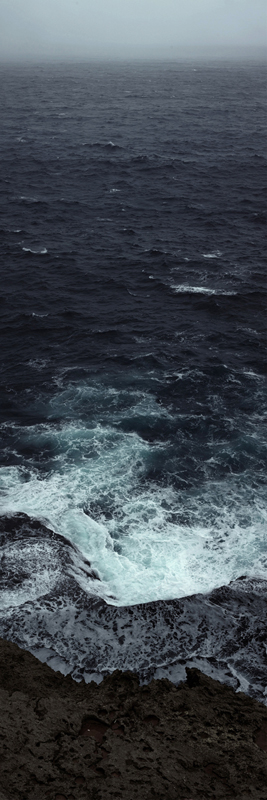 Osamu James Nakagawa, untitled, from Banta series, 2008
This body of work interests me because of the cliffs around the Fleurieu Peninsula that I am photographing---mostly closeups of the rocks rather than the cliffs themselves.
The reason for that is because I find the cliffs difficult to photograph. Hence my respect for Nakagawa's work:
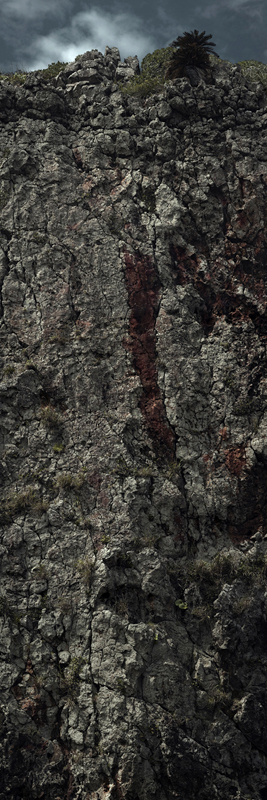 Osamu James Nakagawa, untitled, from Banta series, 2008
These seemingly classic landscape photographs have been “digitally-manipulated”. Aesthetically, the reference the sharply focussed and highly detailed images of photography’s past. But Nakagawa’s digitally manipulated images are laden with a heavy historical and emotional weight.
The post-war history of Okinawa has left the island situated between America and Japan. For over 25 years the island was controlled by the United States. In 1972 it was returned to Japan, but Okinawa is still home to 75 percent of U.S. military bases in Japan. Okinawa's civilians, caught in the midst of the battle between American and Japanese troops and subject to war propaganda, took their lives on the cliffs.
Australian photography: Claire Martin
Though we have left the golden days of photojournalism and documentary photography behind, Claire Martin, a Perth based photographer and a member of Oculi, has found a place for herself in the international documentary and photo reportage scene with her ongoing documentation of marginalized communities in Vancouver's Downtown district, the poorest in Canada.
An recent example is Slab City, which lies near the Salton Sea, and has been created by a small but committed community of squatters in the Colorado Desert of South Eastern California, USA:
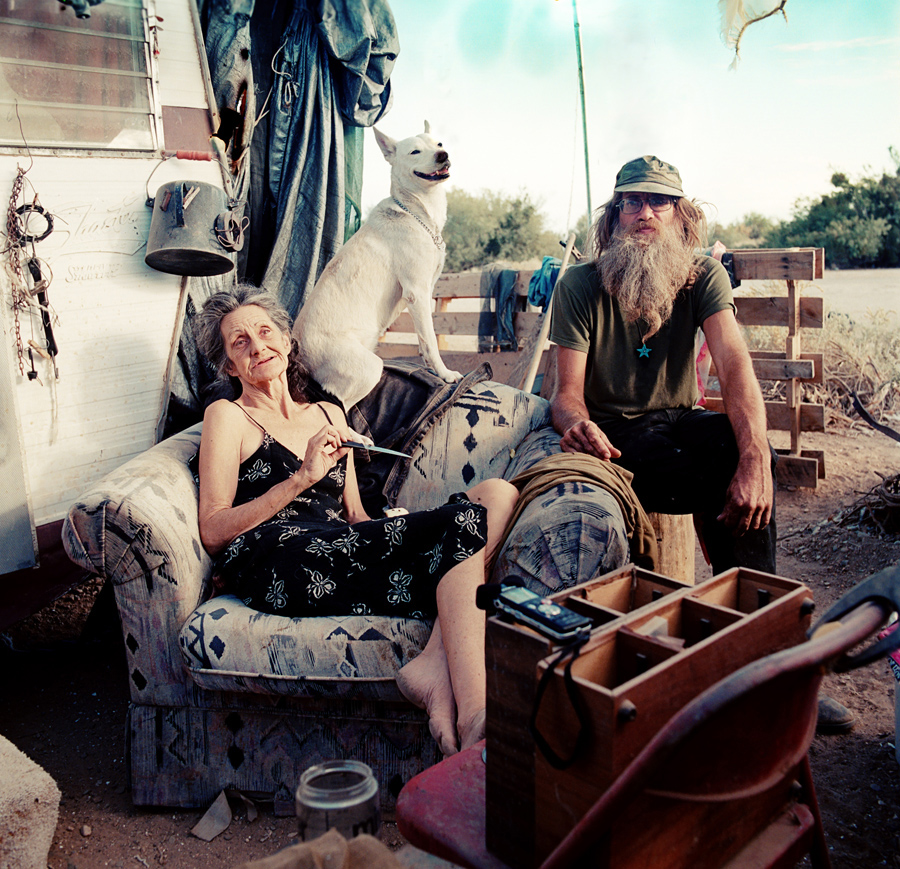 Claire Martin, untitled, from Slab City
Slab City is a refuge for what society may ordinarily perceive as misfits or outcasts and Martin adopts an anthropological approach to documenting quirky cultures and the people who inhabit them.
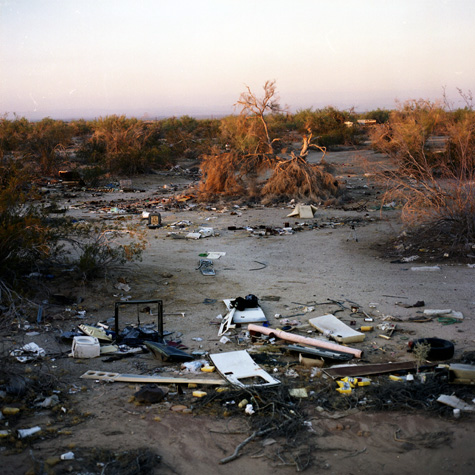 Claire Martin, untitled, from Slab City
Slab City is a place for the broken and desperate and for the fierce defenders of individual freedom who desire to love outside the norms and rules of mainstream American society.
Martin says:
Documentary photography is a tool for bringing awareness to a subject that is usually misunderstood or under-represented. There is a significant cross section between reportage and documentary work and I believe documentary photography should endeavour to place a strong emphasis on the visual aesthetic of the picture and in retaining a more neutral perspective. This is where it differs from reportage and spot news photography that seeks to capture the moment as it plays out and is often more politically charged. It is also about creating your own impression of a story or situation, and in this way, it can be more of an individual and artistic pursuit because as a photographer, you have to find your own voice. Ultimately when I photograph in a documentary style, I try to use a combination of photographic techniques that can help to visually express the mood and sentiment of the “story” in the hope that I can convey this to the viewer. If it’s sad, joyous, unusual, or unfair, I want to convey these overall feelings to get an emotional response from the viewer. I want to create understanding and awareness and a sense of humanity.
Martin uses a Hassleblad 501CM and 50 and 80mm prime lenses for her documentary work.
August 17, 2011
Kodak Salon
Australia’s largest open-entry, photo-media exhibition and competition, the 2011 Kodak Salon is an annual event celebrating the latest developments in photo-media practice around the country. It presents an exciting and diverse snapshot of contemporary, Australian photo-media practice.
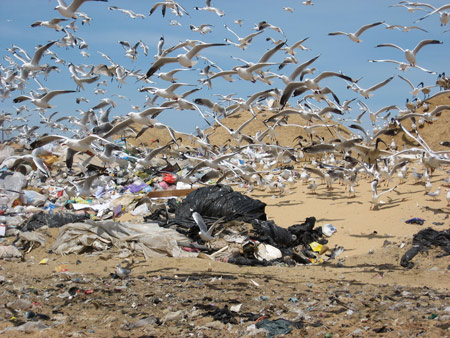 Emilie Wright, Flock, 2008
This photo was considered the best work on an environmental theme.
My understanding is that the Kodak Salon is open to everyone and it has a wonderful democratic feel about it. Every year there is an extraordinary range of styles, formats and talent. It also also has a a variety of categories-- best use of light, excellence in conceptual photography, most adventurous artwork etc.
August 15, 2011
light posting
Postings have been light here as I have been caught up in preparing material for the Ballarat International Photo Biennale 2011---as part of two exhibitions with the Melbourne Silver Mine Group. These are a street show---Just Don't Call it Street--- and a sets show.

I'm also preparing material for a portfolio review; the material is taken from both the Port Adelaide and Tasmanian projects.
August 14, 2011
Ballarat International Foto Biennale 2011: John Gollings
An Australian photographer featured in in the core programme of the Ballarat International Foto Biennale 2011 is John Gollings, a photographer specialising in the built environment and architectural photography.
The work being exhibited is ‘Bushfire Aerials’--which are representations of landscapes burnt by fire:
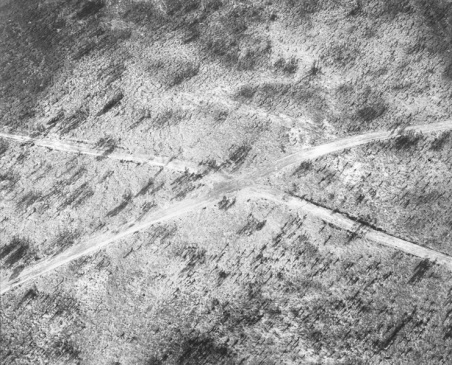 John Gollings, Untitled, Victoria, 2009
These works are an abstract yet real depiction of the devastation that the Victorian bushfires in 2009, known as Black Saturday. Taken from a helicopter they represent a forest re-composed to arid dots and strokes, the exposed tracks and roads of the footprint of human beings.
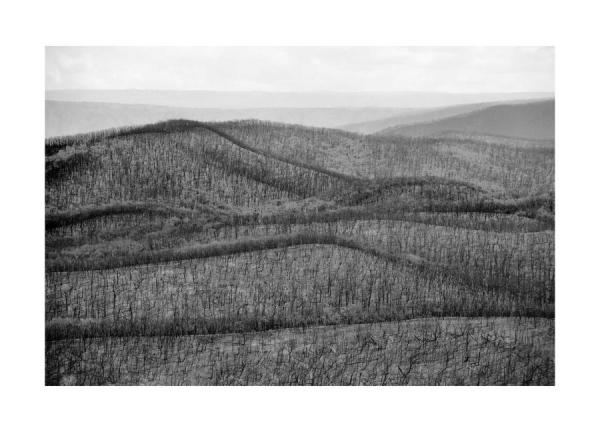 John Gollings, Untitled, Victoria, 2009
He has taught the use of large format cameras, and lectured on architecture and advertising photography at Prahran College, Melbourne and Sydney universities and Philip Institute amongst others. Recently more time has been spent on longer term projects with academic or cultural significance for books, exhibitions and fine prints.
Now and When Australian Urbanism consists of Now, a 3D photographic study from a helicopter of the existing Australian urban condition by Gollings and When, a speculation into the evolution of this unique continent’s cities in the future by various architects.
August 13, 2011
Ballarat International Foto Biennale 2011: Roger Donaldson
Roger Donaldson features in the core programme of the Ballarat International Foto Biennale 2011 with work from his All Dogs Shot book.
Though born in Ballarat, Australia, Donaldson is a New Zealander now residing in Hollywood. He is more known for his films (eg., Smash Palace, The World’s Fastest Indian, The Bank Job) than his still photography.
 Roger Donaldson, Ratana Church, Raetihi, North Island, New Zealand, 1994
Since his first twenty years worth of negatives and prints were lost in a fire some years ago so most of the images in the exhibition would be from the last two decades.
 Roger Donaldson, untitled
It is hard for me to judge the work as I have not been able to see much of Donaldson's work online. I did come across a review of his book in The Lumière Reader--- New Zealand’s only online journal dedicated to film criticism and the arts review.
August 12, 2011
Ballarat International Foto Biennale 2011: Judith Crispin
One the photographers in the core programme of the Ballarat International Foto Biennale 2011 is Judith Crispin, an Australian photographer, poet and composer who lives and works in Berlin, Germany.
Crispin was a coordinator of music at the School of Creative Arts, University of Southern Queensland where she lectured in composition, musicology and orchestration, and is now an Alexander von Humboldt postdoctoral fellow she researches early electronic music and electro-acoustic music and their basis in the pataphysical.
 Judith Crispin, haiku
Her series The Cartogrophers Illusion, in which her photography is paired with her poetry, aims to:
represent memory as record and simulacrum without abstraction or objectivity, the emotional spaces where memory becomes signifier and symbol- a representational territory transformed by light to function as a mirror of being.
I don't really understand that paragraph.
I understand that pataphors extend reality, by way of imagining and treating the imagined as real, thus inducing the senses to inhabit the atmosphere of the creatively described reality. The pataphor seeks to describe a new and separate world, in which an idea or aspect of a concept has taken on a life of its own.
As an Alexander von Humboldt postdoctoral fellow Crispin is conducting research for a book on the encryption of esoteric ideas in the music of Ferruccio Busoni, Pierre Schaeffer and the 2nd Viennese School. The focus of my research, past and present, has been the transmission of the western esoteric tradition via musical cryptology, particularly in the work of Ferruccio Busoni and Larry Sitsky.
August 9, 2011
copycat
David Cameron, the British Prime Minister, has said that the problem behind the urban disorder is a 'complete lack of responsibility'. Something to do with bad parenting and the welfare state apparently. The trouble is he and his fellow conservatives only pointing to those on the margins of society whom the Victorians called the criminal class.
 Martin Rowson copycat
The bankers, who caused the global financial crisis that has lead to an economic recession are left free to do as they please. They demand big cuts in the welfare state to pay back the public debt that occurred from the state saving the banks from collapse and say that an entitlement culture is morally wrong.
It's not the bankers who are immoral, sick or nihilistic. Only the destitute teenagers deemed sociopathic by Britain's tabloid press. It's all due to allowing the welfare system to prop up immoral lifestyles based on no personal responsibility and parents being allowed to abdicate responsibility for the behaviour of their children.
August 8, 2011
Ballarat International Foto Biennale 2011: Lisa M Robinson
For the last five winters Lisa M. Robinson has been photographing snowbound landscapes with her 4×5 view camera. We don't see these landscapes in Australia other than the Victorian high country, the Snowy Mountains and Kosciuszko National Park.
In these white landscapes are traces of human existence: lonely hammock, a trampoline or a swimming pool. The images are layered in time: what went before before the snow, the now of winter, and what will come once the snow melts.
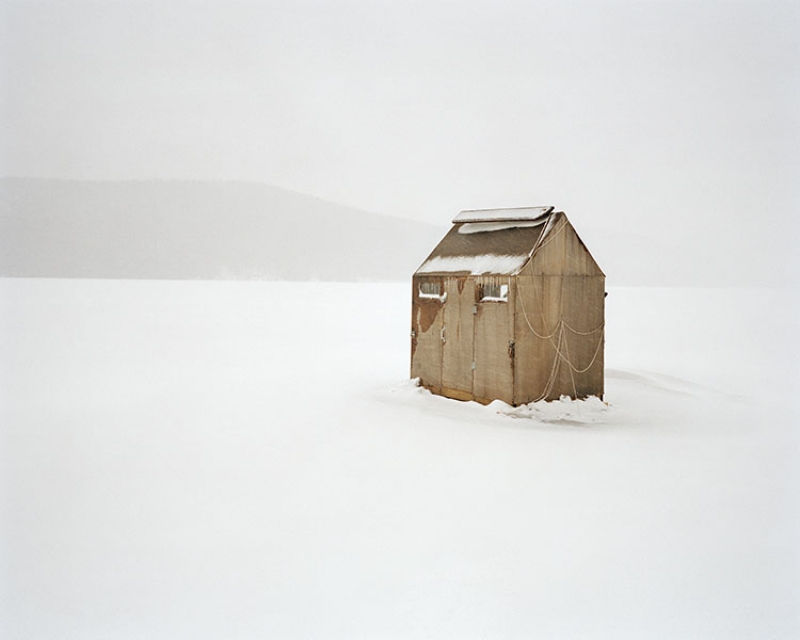 Lisa M. Robinson, Old Soul, from the Snowbound series
The work looks American in that it is rooted in a combined tradition of the New Color photographers of the 1970s and the New Topographics.
In this interview she says:
In the winter of 2002, I decided to take a road trip to Ohio.....Somewhere along a highway in Pennsylvania, I encountered snow. And immediately, I felt the rush of something new, something I had never quite seen before, or at least not in this way. It was just so beautiful… no other word could quite capture it for me. But it was not a beauty of nature that I was drawn to… trees and mountains and sky. I was drawn to our very human world. I made the same kinds of pictures I’ve always made, depicting a human presence even in the absence of humans. I was in a constant state of awe… I remember simply gasping in wonder. For the first time in a very long time, I was experiencing something pure and beautiful in the world, something very new and hopeful.
On the other hand going into wilderness alone without a guide is stepping into seeming emptiness, an unknown space, and then confronting oneself.
August 7, 2011
photography, seriality, archive
There is a rejection of the decisive moment that is spontaneously “captured” by the documentary photographer, and a comparable distrust in the notion of singular, authentic or original photographic meanings. In its place has arisen ideas about the instability and malleability of photographic meaning.
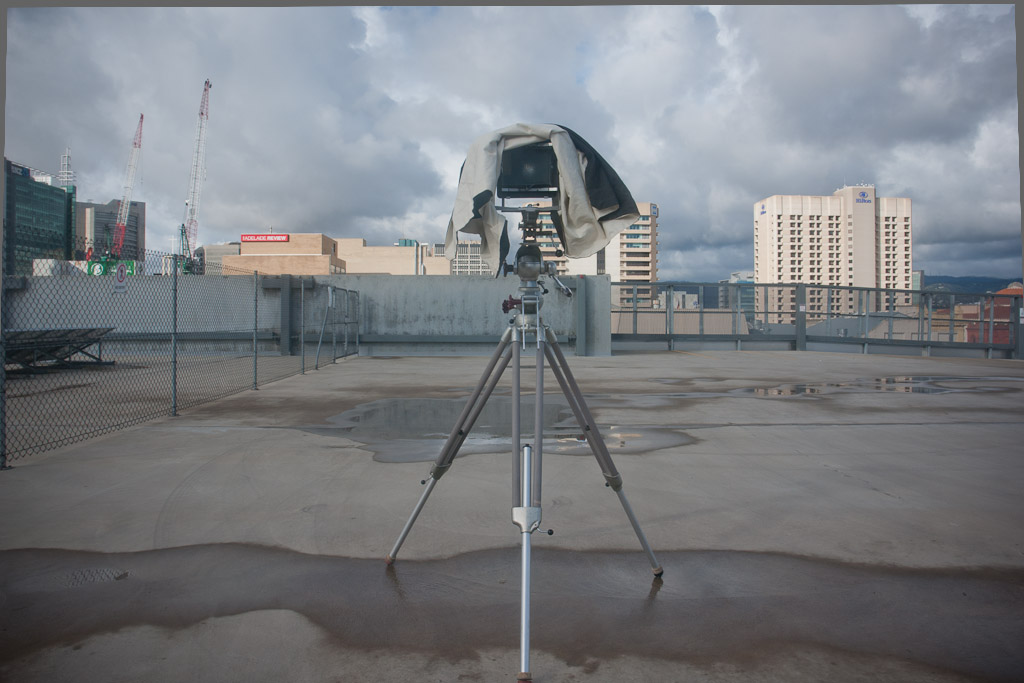 Gary Sauer-Thompson, Adelaide Council Car Park, Franklin St, Adelaide 2011
This is associated with a shift to series that explores a single, often banal idea from many different angles in which processes of repetition and categorization are central. Its aesthetic is based on careful selection, repetition and classification and it can be seen as expression of the larger “archival impulse” that pervades contemporary culture.
August 4, 2011
conceptual documentary
The term conceptual documentary has been used increasingly in recent years in response to certain shifts in documentary photography. An exponent of conceptual documentary is Stephen Gill.
His pictures show billboards from the back. According to the brief captions, the unseen images advertise corsets, health drinks, Gordon’s Gin, the BBC, Elton John’s greatest hits, and L’Oréal – “Because You’re Worth It”. What we see are not the bright, seductive confections of adland, but the rough timber poles and frames that support these messages.
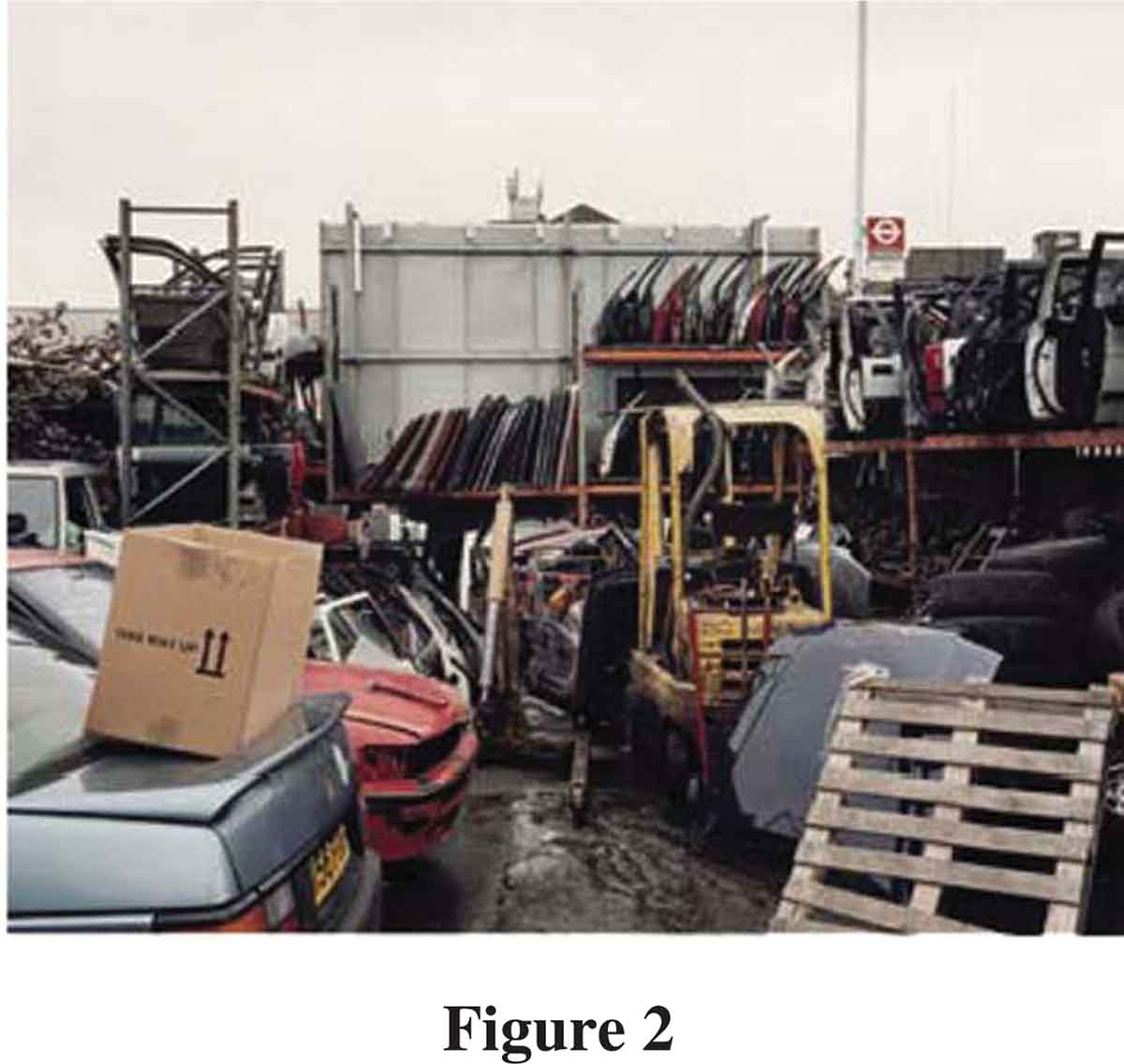 Stephen Gill, Your money should work harder, not you. Make more of your money – DWS Investments from the series “Billboards” (2002–04), Crystal C-type print.
What we see are piles of rubbish – old tyres, breeze blocks, oil drums, and skips full of trash. It’s a world of raw, recalcitrant matter, of things in a state of chaos and ugliness that stands in marked contrast advertising’s immaculate illusions and beauty.
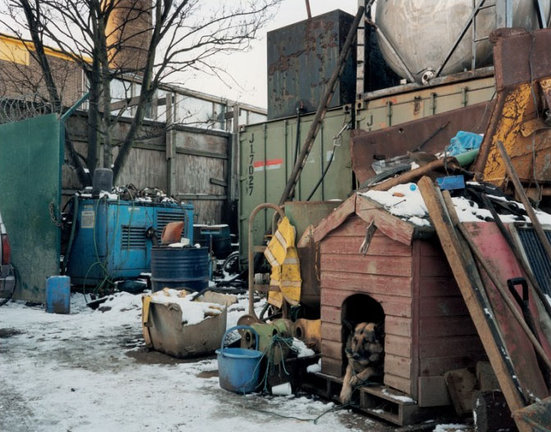 Stephen Gill, from the series “Billboards” (2002–04), Crystal C-type print.
Melissa Miles in The Drive to Archive: Conceptual Documentary Photobook Design in Photographies (no. 3, Issue 1, 2010) outlines the critique of traditional documentary photography. She says:
Over the last thirty years, documentary photographers' claims for objectivity and neutrality have been challenged as the product of power, discourse and ideology, and the emotive qualities of humanist documentary photography have been reread in terms of a double violence in which the victims of traumatic events also become the victims of the photographers' and spectators' voyeuristic gaze. The institutionalization of photography in museums, universities and book publishing, and the aestheticization of documentary photography as an expressive practice have also contributed to what Stephen Dawber refers to as a “profound crisis in documentary photography's conditions of possibility”
Conceptual documentary photography is a response, in part, to this apparent “crisis” in a positivist construction of documentary photography as a mirror of or a window on the social world. It also marks a conscious effort to shift documentary photography away from the very emotive humanism that dominated much of the twentieth century; a rejection of the black and white photography that in the mid-twentieth century became code for heroic modernist documentary whose naturalism expressed a visual truth.
The focus on the everyday and the cool, distanced aesthetic that characterizes Conceptual documentary (eg., the 1930s FSA Documentary project in the US) are symptoms of this shift away from humanist or moralist documentary traditions (eg., the Family of Man) that builds pathos or sympathy into the image in an era of compassion fatigue (eg., human suffering in African famines).
August 3, 2011
Ballarat International Foto Biennale 2011: Tony Whincup
The Ballarat International Foto Biennale 2011 runs from 20th August to 18th September 2011. A photographer in the Core Programme is Tony Whincup from Waikato New Zealand. An Associate Professor and Head of School, Visual and Material Culture at Massey University.
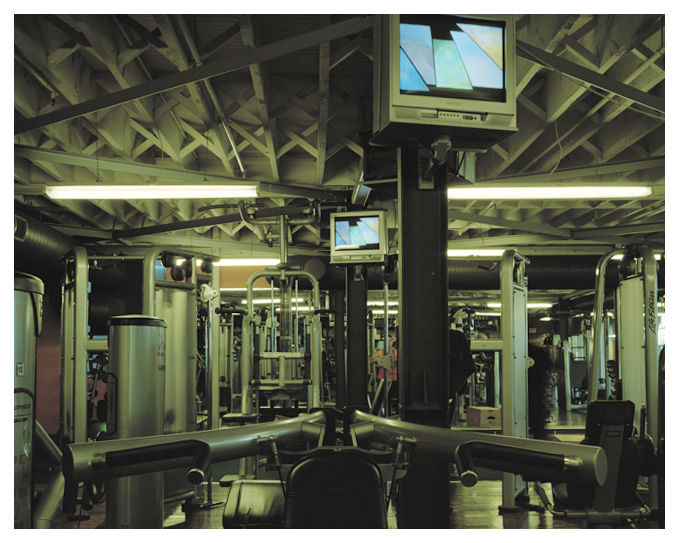 Tony Whincup, trainers, from Play Grounds
It appears from the BIFB website that the work to be shown at the Biennale is his Play grounds series rather than from his more academic ethnographic work. The latter is part of the shift (reflexive turn) in social science that both pictures the social landscape, visualizes the social world, and incorporates visual images in texts that interpret our social world.
My own interest is with his water on water series:
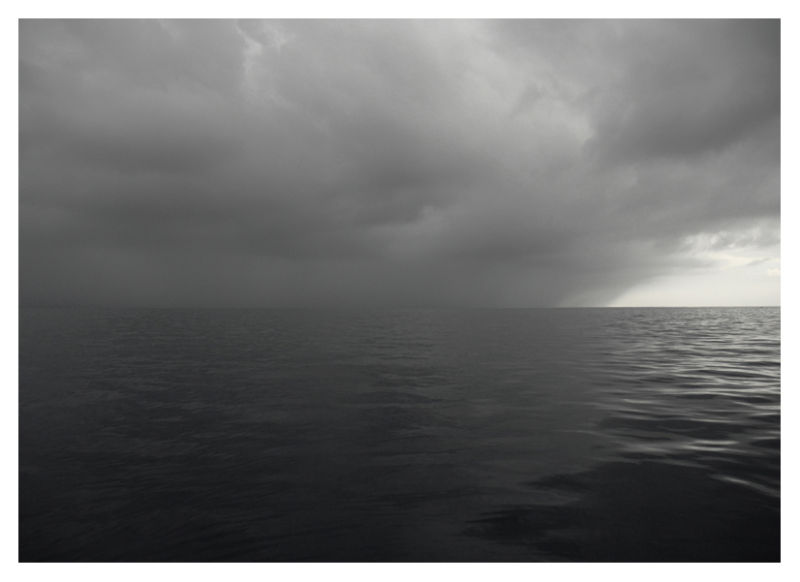 Tony Whincup, storm, from the water on water series
i relate to this work, not just because of my work at Victor Harbor, but because it recognizes that we are sighted beings and that seeing comes before words. It is seeing that establishes our embodied place in the world
August 1, 2011
the culture of large format photography
The world of large format world photography is a strange one. One of its attractive qualities is the craft ethos of using old equipment and repairing the gear rather than forever desiring the new and tossing away the old. I am very sympathetic to this ethos, even though I am not a craft person who can make things.
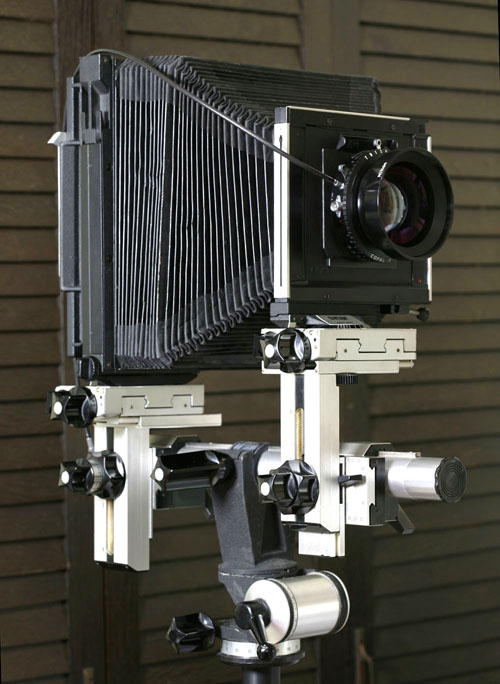
On the other hand, this culture is often marked by rigid boundaries: film is superior to digital; large format film is serious not 35m amateur; black and white is better than colour; the darkroom is better than the computer; the fine print is better than the digital image; it is heroic masculine as opposed to the playful feminine.
These kind of boundaries act to box this photographic culture into a very small corner characterized by a defensiveness and a self image of superiority to the culture around it. Often when these photographers get together in an informal social setting they generally begin by saying the equipment is just a tool for taking photos and that photos are what it is about. That is the essence of large format photography. They are the real thing--the j keepers of the fame in a consumer world addicted to digital cameras.
Then they proceed to spend an entire evening talking about their technology---camera, lenses, darkroom, chemicals, exposure systems and camera movements. More often than not their comportment is that of a collector not a photographer working on projects; nor a photographer interested in art and aesthetics.
What is usually being recycled from this craft niche with its rigid boundaries is the American art photography of the 1930--1960s---prior to the turn to colour in the 1970s; a turn that often referred back to 19th century photography.