|
August 18, 2011
Though we have left the golden days of photojournalism and documentary photography behind, Claire Martin, a Perth based photographer and a member of Oculi, has found a place for herself in the international documentary and photo reportage scene with her ongoing documentation of marginalized communities in Vancouver's Downtown district, the poorest in Canada.
An recent example is Slab City, which lies near the Salton Sea, and has been created by a small but committed community of squatters in the Colorado Desert of South Eastern California, USA:
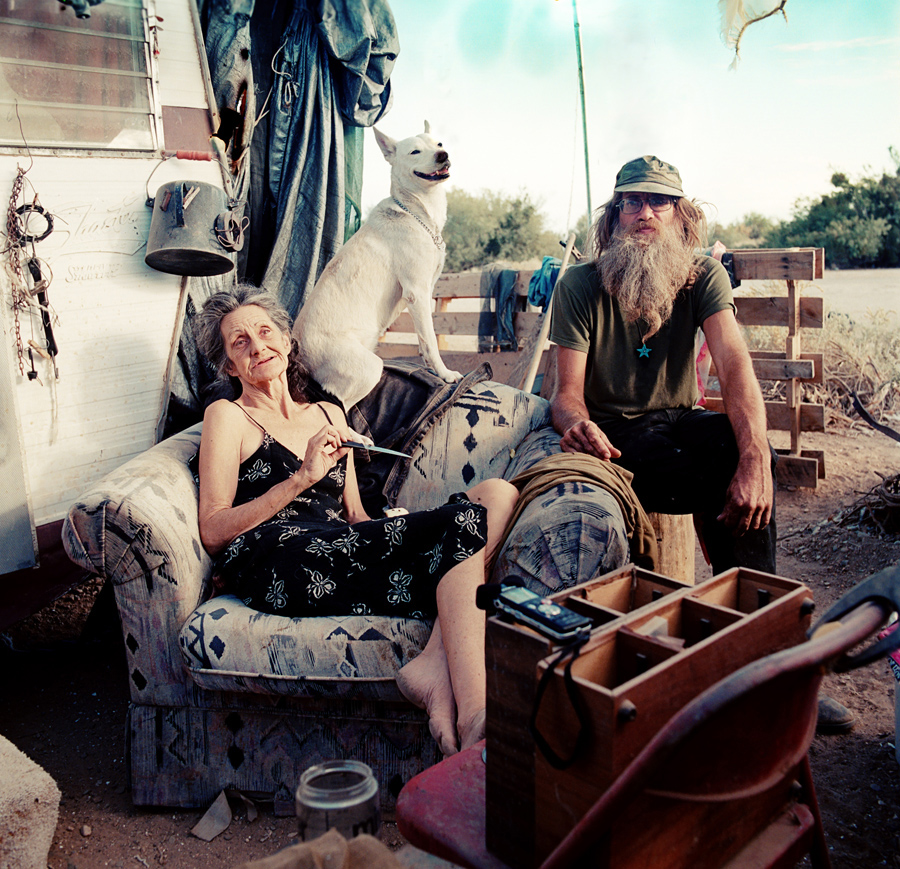 Claire Martin, untitled, from Slab City
Slab City is a refuge for what society may ordinarily perceive as misfits or outcasts and Martin adopts an anthropological approach to documenting quirky cultures and the people who inhabit them.
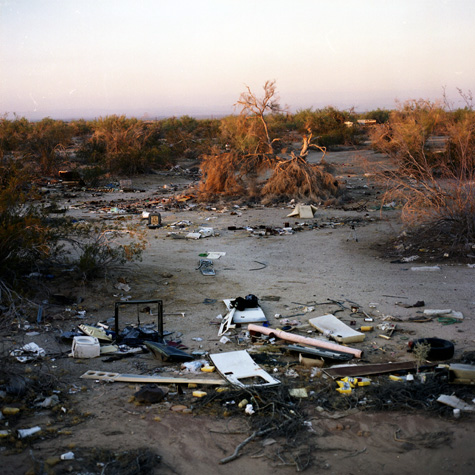 Claire Martin, untitled, from Slab City
Slab City is a place for the broken and desperate and for the fierce defenders of individual freedom who desire to love outside the norms and rules of mainstream American society.
Martin says:
Documentary photography is a tool for bringing awareness to a subject that is usually misunderstood or under-represented. There is a significant cross section between reportage and documentary work and I believe documentary photography should endeavour to place a strong emphasis on the visual aesthetic of the picture and in retaining a more neutral perspective. This is where it differs from reportage and spot news photography that seeks to capture the moment as it plays out and is often more politically charged. It is also about creating your own impression of a story or situation, and in this way, it can be more of an individual and artistic pursuit because as a photographer, you have to find your own voice. Ultimately when I photograph in a documentary style, I try to use a combination of photographic techniques that can help to visually express the mood and sentiment of the “story” in the hope that I can convey this to the viewer. If it’s sad, joyous, unusual, or unfair, I want to convey these overall feelings to get an emotional response from the viewer. I want to create understanding and awareness and a sense of humanity.
Martin uses a Hassleblad 501CM and 50 and 80mm prime lenses for her documentary work.
|


