July 31, 2007
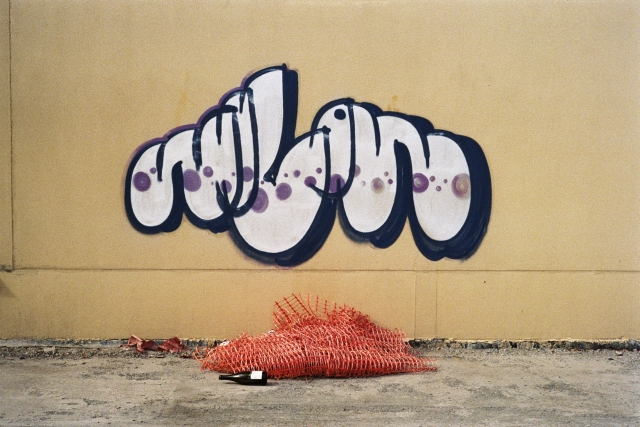
July 30, 2007
Suburban Aesthetics
The suburbs would not exist without the road and car. One an expression of central public good, the other a self-contained box of individualism and personal space. The colourless banality of asphalt is often rendered in contrast to the bright colours and consistent industrial shapes of the automobile. Jeffrey Smart would be pleased with these compositions.

Roushraven's Z06 via corvetteforum.
July 29, 2007
Culture shock
The Grateful Dead meet Hugh Hefner on TV circa 1969. Culture shock or cultural debris?
It's a little fragment of pop culture history. What are we to make of these fragments? How are we to interpret them? How do we make sense of this collision of different worlds?
Another cultural fragment:
Neil Young busking in Glasgow Central Station, Scotland back in 1976-- performing The Old Laughing Lady on the banjo.
July 28, 2007
photography, Benjamin, flaneur
Does street photography revive the old notion of the flaneur, the amateur but always interested stroller of the streets of Paris, celebrated by Baudelaire and, a century later, by Walter Benjamin?
Baudelaire understood this in the following terms: “And so away he goes, hurrying, searching. But searching for what? He is looking for that quality which you must allow me to call Modernity.”
But we are no longer searching for the quality of modernity. Rather we are concerned more with understanding our history:
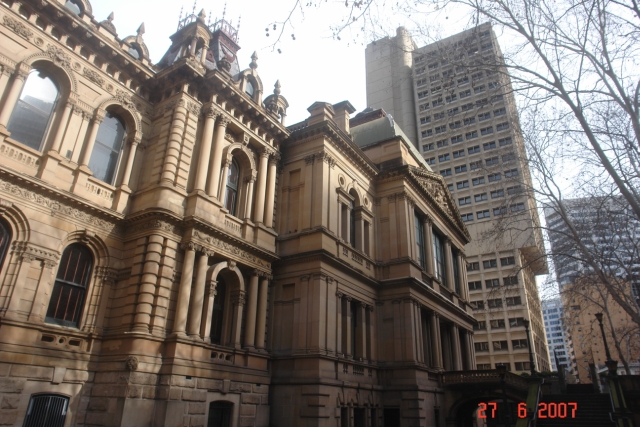
Gary Sauer-Thompson, Town Hall, Sydney, 2007
The whole Walter Benjamin flaneur thing has always made a lot of sense to me. The collage, the standing around on street corners, the notion of losing one's self in cities, and what he describes as the 'shock of the crowd'. All that makes sense to me. And looking closely at the remnants of commerce, and at places like shopping malls.
Adelaide is still a city that hasn't (yet) been subjected to a corporate makeover that expresses the triumphalist view of urban history as an upward trajectory toward the paradise of capitalism. Darling Harbour in Sydney is an example.
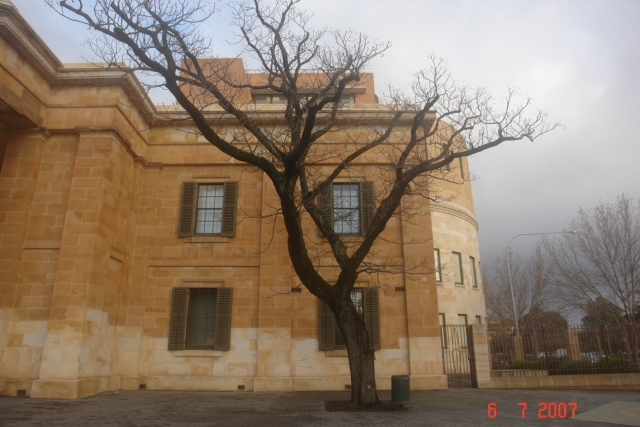
Gary Sauer-Thompson, magistrates Court, Adelaide, 2007
So Adelaide provides us with the space for a complex, subjective, Benjaminian evocation of the layers of urban life, without viewing the fabric of everyday urban life through the oily haze of a deadening nostalgia celebrated by National Trust.
July 27, 2007
Friday dog blogging #4
part of a continuing but intermitent series:
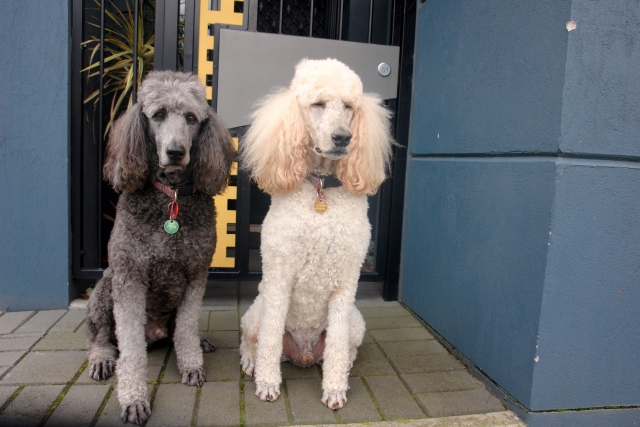
Gary Sauer-Thompson, Agtet & Ari, Sturt Street, 2007
The previous post in the series.
July 26, 2007
blogging + Walter Benjamin
I had coffee with the two other 2007 Adelaide Festival of Ideas bloggers (Tim Dunlop and Kerryn Goldsworthy) today at the SA Art Gallery coffee shop. It was like meeting old friends who enjoyed being in one another's company and talking about politics and art (literature).
This is a capital city that has yet to fully embrace blogging or an online world including, sad to say, the Arts Festival crowd. This piece by Sophie Cunningham in The Age stands in marked contrast to the indifference and hostility to blogging and the internet.
On the walk into the SA Art Gallery I took a few photos of old graceful Adelaide--pre-internet Adelaide if you like---from within the shadows:
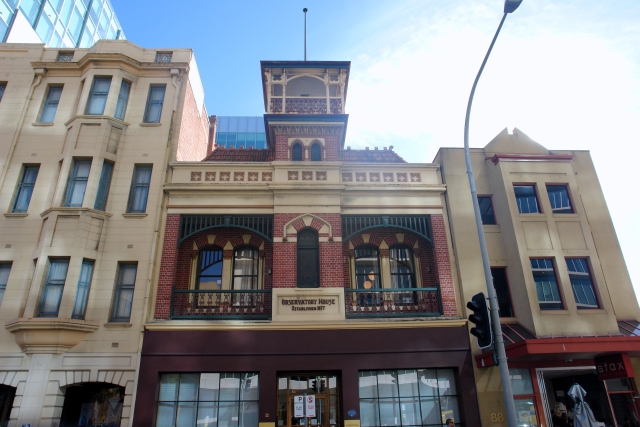
Gary Sauer -Thompson, Observatory House, Adelaide CBD, 2007
I do not understand the resistance to blogging --somehow it appears to threatens people's identity even though it opens up spaces for people's creativity. Photography is an example. My explorations of the urban life I live can be shared with readers and viewers.
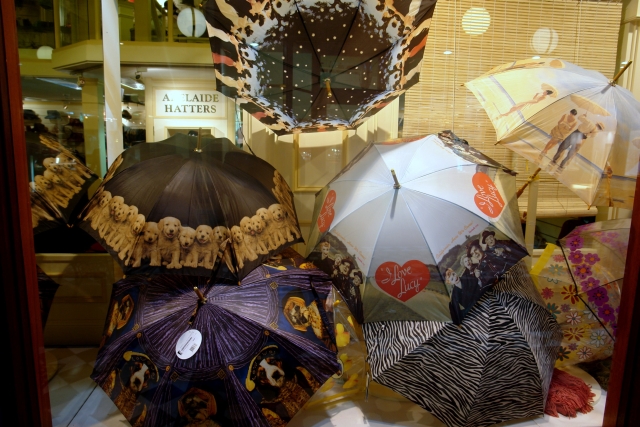
Gary Sauer -Thompson, Umbrella's, Adelaide Arcade, 2007
I don't pretend that this is autonomous modernist art that stands in opposition to the cultural industry. It offers up a new way of working to that of publishing in a book or exhibiting in an art gallery.
As I walked into the cafe I kept on thinking of Walter Benjamin, his Arcades Project and being a flâneur in a provincial city in the 21st century. I recalled this passage:
The street becomes a dwelling for the flâneur; he is as much at home among the facades of houses as a citizen is in his four walls. To him the shiny, enameled signs of businesses are at least as good a wall ornament as an oil painting is to the bourgeois in his salon. The walls are the desk against which he presses his notebooks; news-stands are his libraries and the terraces of cafés are the balconies from which he looks down on his household after his work is done.
The street would include festivals as well as arcades. Benjamin expressed himself in a literary form whilst Eugene Atget's experience of the street was expressed in a visual form.
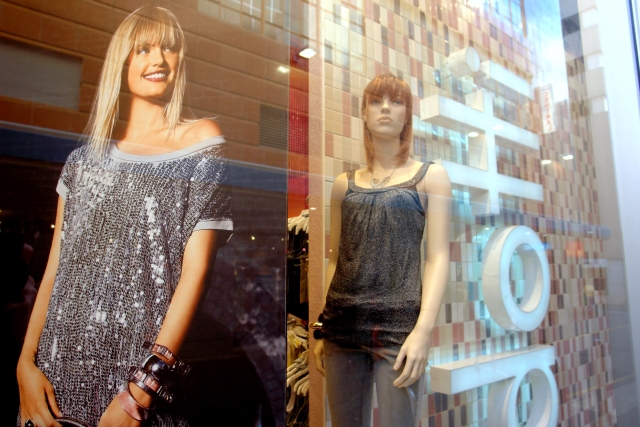
Gary Sauer-Thompson, David Jones models, Adelaide, 2007
As a street photographer, who is a flâneur leisurely exploring city streets where inhabitants of different classes mix, I' m experiencing a provincial city beginning to come to grips with a global economic world and its digital highways. Though this is a not city that is a great concrete jungle---barbaric and wild, reverting to a state of savagery, for such an observer-participant it is full of surprises and distractions.
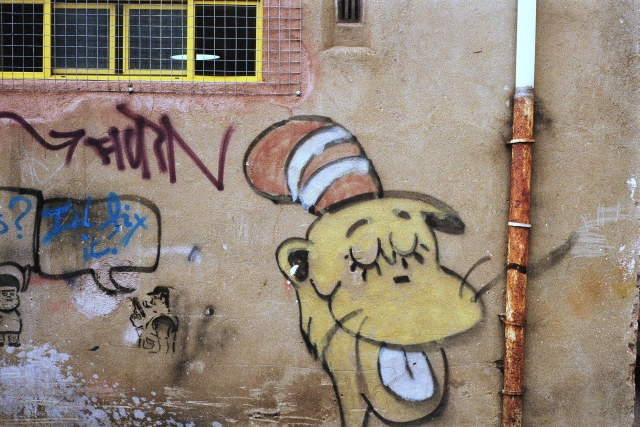
Gary Sauer-Thompson, rusty pipe, Adelaide, 2007
The literature of modernity, describing the fleeting, anonymous, ephemeral encounters of life in the metropolis, mainly accounts for the experiences of men. It ignores the concomitant separation of public and private spheres from the mid-nineteenth century, and the increasing segregation of the sexes around that separation. The influential writings of Baudelaire, Simmel, Benjamin and, more recently, Richard Sennett and Marshall Berman, by equating the modern with the public, thus fail to describe women's experience of modernity. The central figure of the flâneur in the literature of modernity can only be male. This has changed in postmoderbity.
July 25, 2007
Adelaide snaps: indigenous mural
It's urban art from an excluded people suffering in a deformed social life in the city, and it is quite different from this kind of work that starts from the aboriginal tradition.
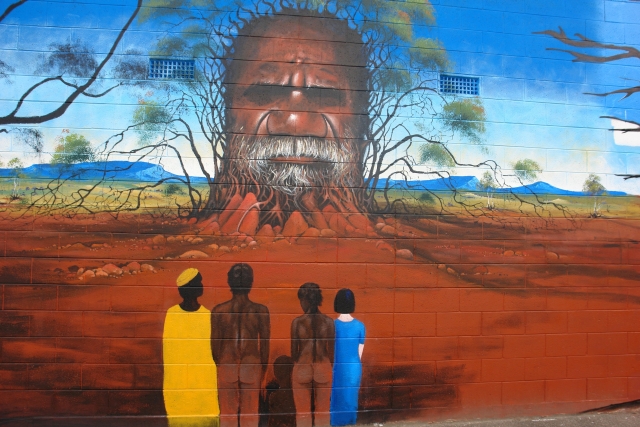
Gary Sauer-Thompson, indigenous mural, Adelaide, 2007
It's powerful piece, and one that works within the spaces between the dichotomy of autonomous high art and the low mass art of the culture industry. It is able to self-consciously provide a space for critique of the suffering of indigenous people and the historical silencing of indigenous voices.
It gives expression to desires and needs that have been made speechless in modernity; speechless in the sense that our particular needs, desires and wants have been assigned, and restricted, to the private realm so that happiness and the good life become a private affair. Art gives expression to our speechless needs, desires.
Update:26 July
I do not know much about this particular work apart from it being in a lane way opposite this building :
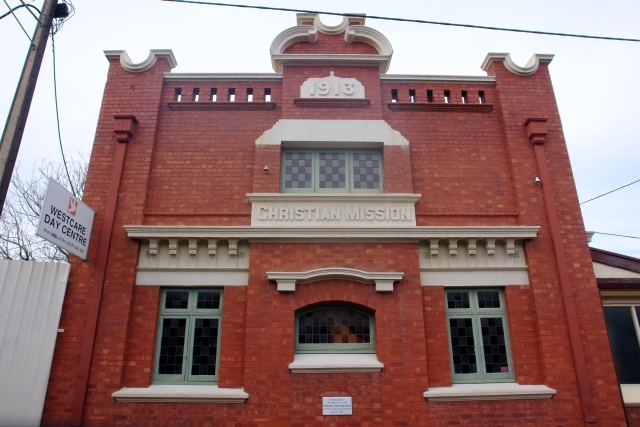
Gary Sauer-Thompson, Westcare, Adelaide CBD 2007
As the building runs a day care centre we have the transformation of evangelism into welfare by the Baptist Church . I do not think that there is any move to Westcare into an "agency of evangelism" as is beginning to happening elsewhere.
July 24, 2007
Clifford Possum: an art star
The centre of the nascent Western Desert art movement, Papunya Tula gave rise to one of the country's most gifted Aboriginal artists — the late Clifford Possum Tjapaltjarri. Like Albert Namatjira before him, Clifford Possum blazed a trail for future generations of Indigenous artists, bridging the gap between Aboriginal art and contemporary Australian art.
He is widely acknowledged as the first recognised star of the Western Desert artists and one of Australia’s most distinguished painters of the late twentieth century. By February 1999 when Clifford Possum was flown to Sydney to identify a wide range of suspect paintings exhibited under his name he was 66 years of age and universally recognised as the most famous living Aboriginal painter.
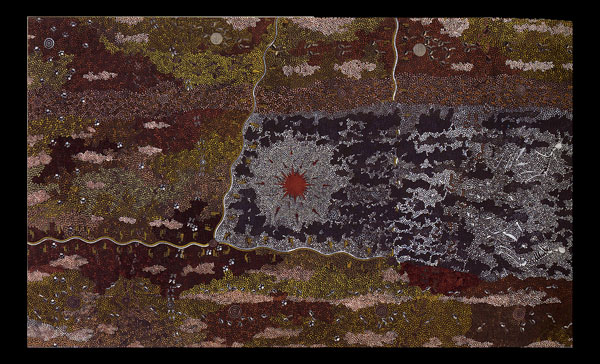
Clifford Possum Japaltjarri, Warlugulong, 1977
This is not the painting, which represents the ancestral Fire Dreaming, that will be auctioned in Melbourne, 24 July by Sothebys. That other painting is expected to fetch between $1.8 million and $2.5 million.
Clifford Possum was the first Indigenous Australian artist to be recognised by the international art world. When his major work, 'Man’s Love Story 1978' was purchased by the Art Gallery of South Australia in 1980 it became the first ‘dot’ painting to enter a major public art collection. The art institution set a trend by displaying the painting alongside contemporary Australian art, there by transgressing the ethnocentrism which had allowed Australian art experts to operate as though High Art and Aboriginal Art are mutually exclusive categories.
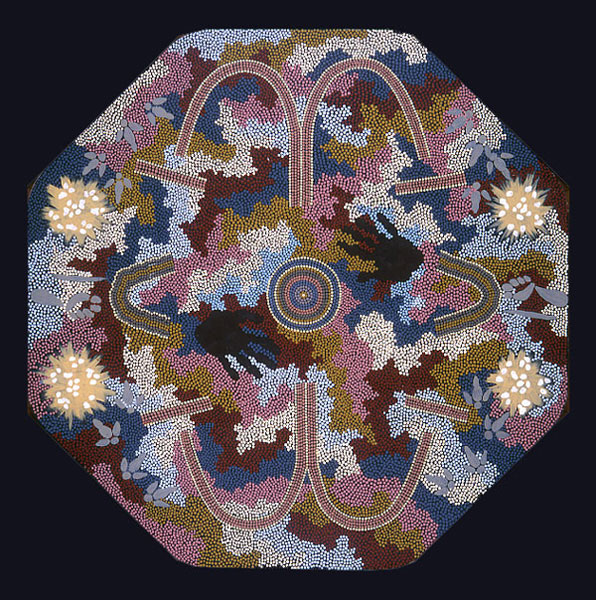
Clifford Possum Japaltjarri, Men's Dreaming, Acrylic on laminex tabletop, 1992
The art of Clifford Possum is notable for its brilliant manipulation of three-dimensional space. Many of his canvasses have strong figurative elements which stand out from the highly descriptive background dotting. In the late 70’s he expanded the scope of Papunya Tula painting by placing the trails of several ancestors on the same canvas in the fashion of a road map. Within this framework, he depicted the geographical features of the country by employing traditional Aboriginal iconography.
Andrew McNamara argues that Clifford Possum's work needs to be read in two different ways as there is a double-headed quality in the most elegantly composed of Clifford Possum’s work.
For this means staying alert to its productively unassimilable quality at the very same time that his great formal and compositional dexterity makes traditional knowledge and expression palpable for a non-traditional audience. As each innovative divergence in his work treaded precariously, their force was to negotiate overlapping, but disjunctive arenas without guarantee. To say these things, to make these qualifications about the critical framework for the evaluation of indigenous art, does not mean disparaging a genuine achievement. It is to herald Clifford Possum’s art as a genuine feat of engaged critical-cultural experimentation—the achievement of dealing with dislocating effects, and even producing them, in negotiating cultural re-assertion—rather than a superhuman achievement of self-definition.
There is a bi-cultural process happening here between the experimental modern paintings and traditional ceremonial forms.
Update: 25 July
Warlugulong, which is one of the 20th century's most important Australian paintings, went for $2.4 million and it stays in AustraliaL
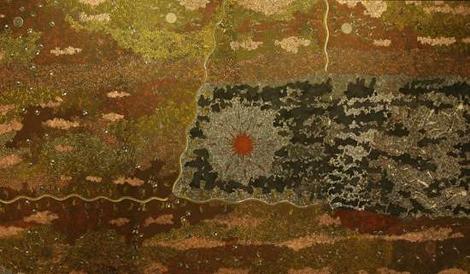
Clifford Possum Japaltjarri, Warlugulong, 1977
It was purchased by the National Gallery of Australia. A great result. It's Australia's version of Blue Poles.
Adelaide snaps: CBD
There is some new, low key architecture in the south east corner of Adelaide's CBD that is visually attractive:
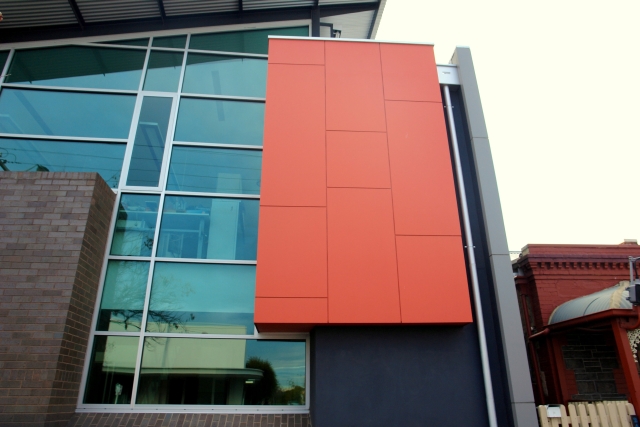
Gary Sauer-Thompson, architect's office, Adelaide, 2007
The new makes a contrast with the old buildings that are hard to feel nostalgic about.
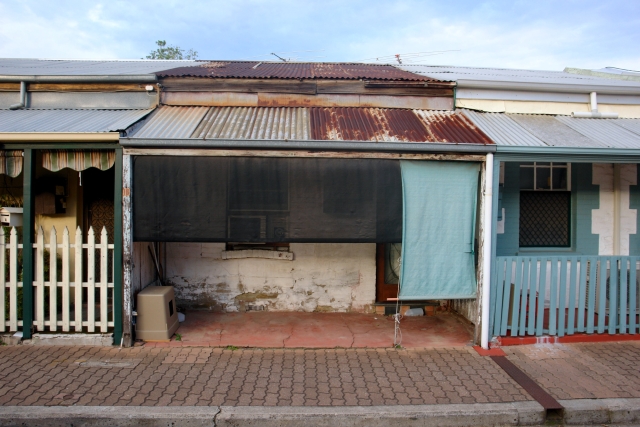
Gary Sauer-Thompson, working class cottages, 2007
I find these depressing as spaces to live in: they are dark and damp. Many however, see them as architectural heritage.
July 23, 2007
Harry Potter, the light of God & the oracle of Capital
It's a huge cultural phenomenon. J.K. Rowling's Harry Potter that is, not the colourful theatre of our federal politics.
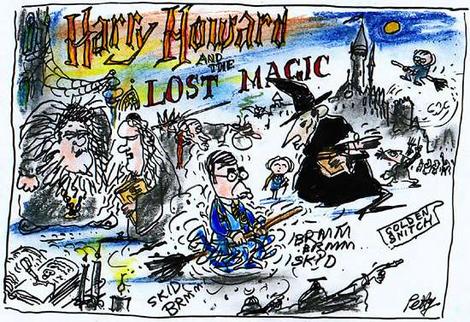
Bruce Petty
Potter is literary/culture phenomenon that is part of the late-capitalist culture industry judging by all the past fuss and hype amongst kids and adults, and the books selling millions of copies before they even hit the shelves.
The Adelaide response is described by Kerryn Goldsworthy at the delightful Pavlov's Cat ; the Canberra response by Ampersand Duck.
The Harry Potter series are fantasy books about wizard and witches learning the arts of sorcery and witchcraft. Judging from the two films I've seen, the texts are mostly set at Hogwarts School of Witchcraft and Wizardry, a school for young wizards and witches. They focus on Harry Potter's fight against the evil wizard Lord Voldemort, who killed Harry's parents as part of his plan to take over the wizarding world.
It's the magic stuff that is culturally interesting.
Though good and bad are clearly delineated with moral certainty, I wonder what Christians make of a series of children books centred on the occult? Isn't sorcery and witchcraft based in paganism? What does the light of God say about that? If Christianity condemns the occult, then why should Christian parents lightly accept books that endorse what God has so seriously forbidden as the deeds of darkness? Or are our Christian and literary cultures disconnected?
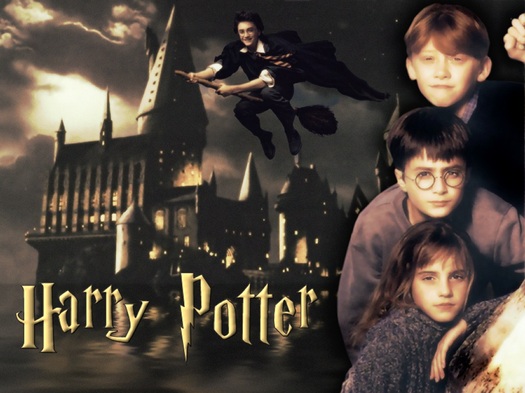
The Potter texts do encourage readers to believe that there is an underlying order to the world, that following simple rules was always the right thing to do, and that behaving in the “right” fashion would always have the right results. The real world is a complicated, ambiguous and uncertain place creates intolerable stress, and the defensive reaction to this stress is a retreat to somewhere safer and more predictable; a magic world in which the unpleasant facts of the matter are simply denied and their occasional intrusions explained away as being most likely the result of some shadowy magic.
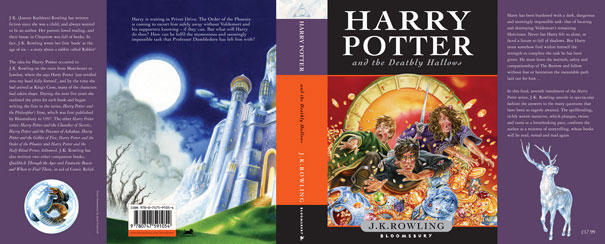
Is the Potter phenomenon a current example of Adorno's argument about late capitalism, irrationalism, and weak, dependent, fascism-prone personalities in need of the authority of astrology — lying at the very heart of so-called enlightened modernity?
Adorno argues in The Stars Down to Earth, and Other Essays on the Irrational in Culture that those who embrace the occult are people who have gone beyond the naive acceptance of the authority of science, but who don’t know enough, or who have not sufficiently developed “the power of critical thinking,” that they can replace science (quantum mechanics) with anything better: “Does the occult, like astrology bring it all down to earth?
He argues that astrology does not supply a new sort of religion; but that it makes the alienated individual more at home in the world of consumerism and the “drabness of a commodity society.” In this respect more than in any other, “astrology resembles . . . other mass media such as movies: its messages appear to be something metaphysically meaningful, something where the spontaneity of life is being restored while actually reflecting the very same reified conditions which seem to be dispensed with through an appeal to the ‘absolute’.”
We sure have a lot of irrationalism on the political and culture right these days with the rejection of the science behind global warming, the embrace of creationism. This right wing politics is authoritarian and it is engaged in a war on science. This is not just a case of Christian fundamentalists making the authority and prestige of science is a chief cultural enemy. We also have the long corporate war against the environmental sciences (broadly speaking: eg., the epidemiology that exposed the tobacco-cancer link as a kind of environmental science). Hence the alliance between big capital on the one hand and a party of cultural authoritarians on the other.
Irrationalism does lie at the very heart of so-called enlightened modernity. The classic example is the strong belief in oracles in modern economics-----the most important of current oracles in the West is surely the chairman of the United States Federal Reserve Bank. Greenspan used to speak in riddles and his statements were full of ambiguous speech. This did not conceal truths that have yet be revealed, but instead conceal the fact that the oracle is revealing nothing, because the future is unknown.
Though I accept Adorno's thesis that irrationality lies at the heart of an enlightened modernity, I'm not persuaded that Harry Potter fans are weak, dependent, fascism-prone personalities in need of the authority of the occult.
solar flight
NASA's Helios aircraft is an example of solar-powered flight:

Essentially an ultralight flying wing with 14 electric motors, the aircraft's impressive 247 foot wide wing is covered with solar cells, and is able to reach an altitude just short of 100,000 feet.
July 22, 2007
walking Adelaide: an urban sublime?
I took the dogs for a bit of a burn around the city streets whilst I took some photographs of the funkiness of the urban world of the south east corner of the CBD that I live in:
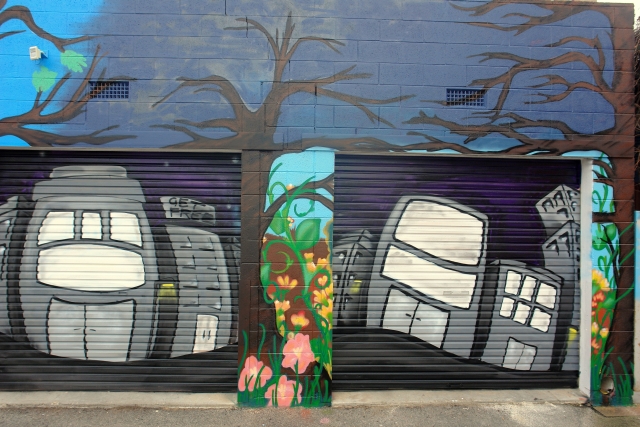
Gary Sauer-Thompson, garage door, Adelaide CBD, 2007
However, I'm looking for the urban sublime even though I'm not sure what it would mean. In its classic Kantian formulation the sublime is used primarily in relation to the aesthetic experience of the awesomeness of nature. Can we not experimentally extend the category to encompass the scale of human artefacts in the landscape such as machines, buildings and vast industrial installations.
It could be said that the sublime, when contrasted to the category of the beautiful becomes an aesthetic of immensity, excess and disproportion, whilst the beautiful is an aesthetic of harmony and proportion.
However, I'm thinking that the contemporary resonance of the sublime arises from the intellectual disjuncture between our aesthetic and cognitive abilities to read these kinds of unfamiliar landscapes. This part of Adelaide is not the city beautiful:
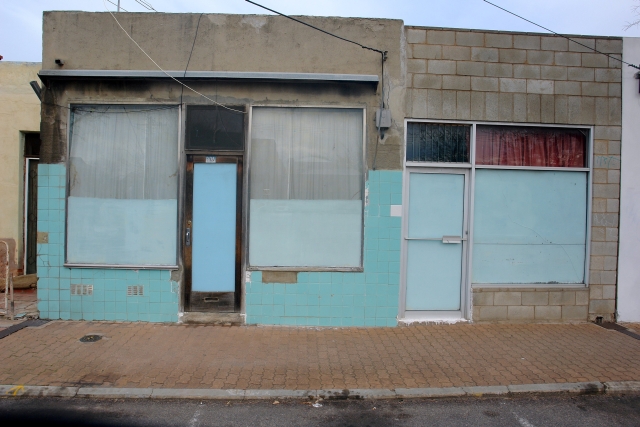
Gary Sauer-Thompson, House, Adelaide CBD, 2007
Can we not read these urban and industrial landscapes — both real and imagined — in terms of their mysterious qualities in which the realm of a sublime aesthetic lies at the boundary of human conceptual comprehension.That gestures towards Lyotard, who positions the sublime as that which invokes the unpresentable.
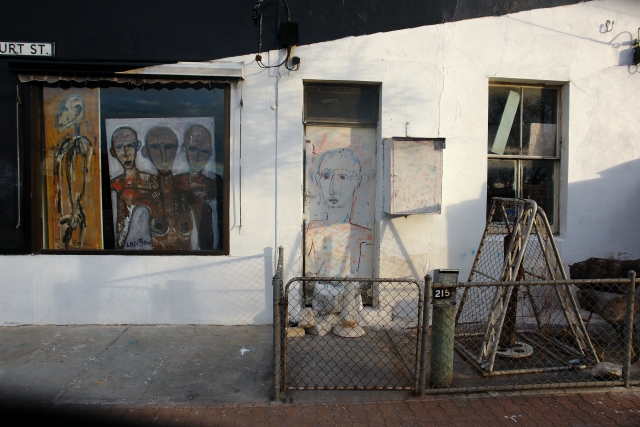
Gary Sauer-Thompson, 5 figures, Adelaide CBD, 2007
Lyotard suggests that the postmodern sublime invokes the unpresentable in presentation, that which refuses the consolation of correct forms, refuses the consensus of taste, permitting a common experience of nostalgia for the impossible, and inquiries into new presentations – not to take pleasure in them but to better produce the feeling that there is something unpresentable.
July 21, 2007
Paddy Bedford
I was sad to read about Paddy Bedford's death when I was glancing through the newspapers in a packed Qantas lounge waiting to return to Adelaide from Hobart.
He had a major retrospective at the Sydney Museum of Contemporary Art's 2006 survey exhibition, which traced his brief but productive body of work that transgressed the familiar boundaries of white and black cultures in Australia.
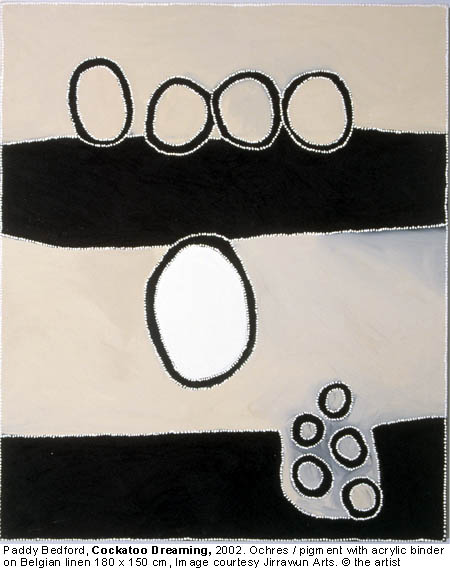
Bedford continued and developed the distinctive 'Turkey Creek' or 'East Kimberley' style of painting. His expanses of plain ochre with a few well chosen shapes and sparse lines marked by white dots recall the minimal approach of artists such as Rover Thomas and the strong lines and rounded forms of artists such as Queenie McKenzie and Jack Britten.
Bedford only began painting on canvas for exhibition about a decade ago (1997/98) when he was around 76 years old after fellow artist Freddy Timms set up the Jirrawun Aboriginal Art group at Rugun (Crocodile Hole) in 1997.
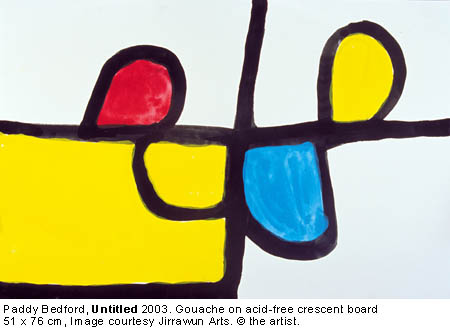
Paddy Bedford's striking, austere style, his "walking line" and stark colour contrasts created a new era in Kimberley art; one that filled the void left by the deaths of Rover Thomas and Paddy Jaminji who had opened up new possibilities for Aboriginal men in Turkey Creek.
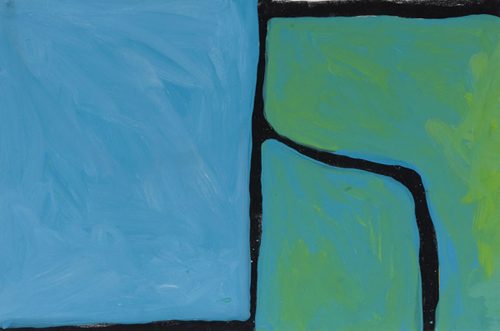
Paddy Bedford, Untitled, 2006, Gouache on artists board
The breakthrough exhibition, both for Bedford and Jirrawun, was the bold, politically untramelled Blood on the Spinifex show, staged in 2002 by the Ian Potter Museum of Art at the University of Melbourne. Bedford's unsparing depiction of massacre sites in his country formed the heart of the show. Works such as Emu Dreaming and Bedford Downs Massacre, which he painted in 2001, and Two Women Looking at the Bedford Downs Massacre Burning Place, from 2002, memorialised the horrors his people had faced.
July 19, 2007
on the road: in Hobart
I've finally managed to get the internet working in my boutique hotel room in Hobart.Tasmanians in Launceston had been marching against the Gunns Pulp Mill, and the taxi drivers weren't taking my suggestion that Gunns ran the state too kindly. They mostly responded by saying that situation was preferable to the Greens running the state. Humour was in short supply.
In the evening we put on our tourist faces to explore 373 in North Hobart and Maldini's in Salamanca Place. Hobart has transformed itself from being a sleepy culinary backwater to a place of trendy restaurants and bars that have their European roots in a regional cuisine that services the Greater Hobart Southern Region including the tourists who visit the Southern Region of Tasmania.
I managed to take the odd photo by leaving the conference early and wandering around Constitution Docks:

Gary Sauer-Thompson, Constitution Dock, Hobart, 2007
The light fades fast around the wharf areas in the late afternoon as the sun disappears behind a snow tipped Mt Wellington that sparkles in the early morning sun. It's the cold in the early morning and in the late afternoon that gets to me.
As I am not dressed for the cold I did not wander far. I just explored the Hobart Waterfront, which is rich in heritage: it is a working port, cultural asset, recreational area, and a major tourist destination. After all, I was another tourist as well as being there on business.
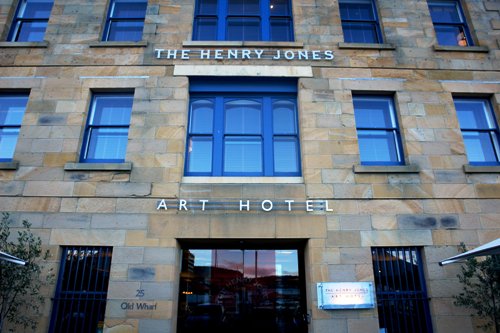
Gary Sauer-Thompson, Henry Jones Hotel, 2007
The waterfront appeared to be disconnected from the city centre. find Hobart very beautiful, especially around the Constitution Dock, Salamanca Place, Battery Point, Sandy Bay area. The heritage ethos is very strong and the excellent old buildings have been saved and restored, some beautifully.
The hotel's next-door neighbour is the Tasmanian University's Art School. It is an example of the way that the historic warehouses in a colonial outpost have been transformed into high quality lodgings, whilst retaining the old feel of adventurers, seafarers, whalers and traders.

Gary Sauer-Thompson, Tasmanian School of Art, 2007
I wish that I had more time to make contact with the local bloggers. I realized that I knew little about the Hobart blogging scene, apart from Rodney Croome, Frank Strie and Tamar Pulp Mill Talk. I knew next to nothing about the arts scene or who was publishing work online.
Photography is very strong judging from the gallery of the University of Tasmania School of Art. I had a quick look in the window of the Brett Gallery but just missed this exhibition by Philip Wolfhagen to see how he is rethinking the traditions of Australian landscape art.
July 17, 2007
on the road again
I'm on the road--to Hobart via Melbourne--this afternoon for a couple of days. It's for work but I will sneak moments to take some photos. Qantas does not fly direct to Hobart from Adelaide so it has to be via Melbourne and hanging out in the Qantas Club.
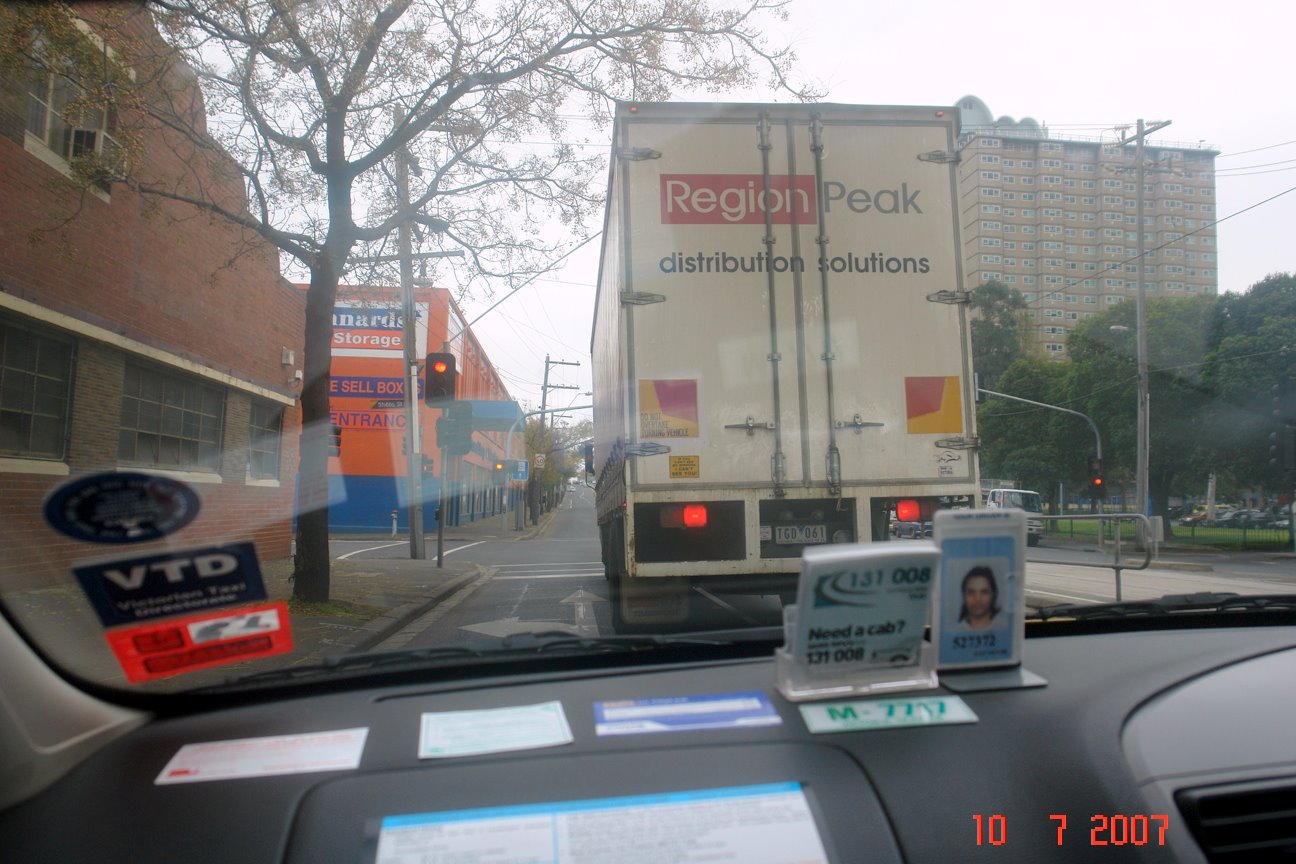
Gary Sauer-Thompson, Melbourne cab, 2007
it is a gritty urban landscape in which we live; one that messes with your head. The bright light fades into a bland greyness that signifies isolation and depression. It's hard to get beyond blue in Melbourne in the winter. It's a place of suffering and despair for many. That is embodied in some of the inner city architecture.
constructing a tourist site
You can see how the lighthouse has been turned into a tourist object.
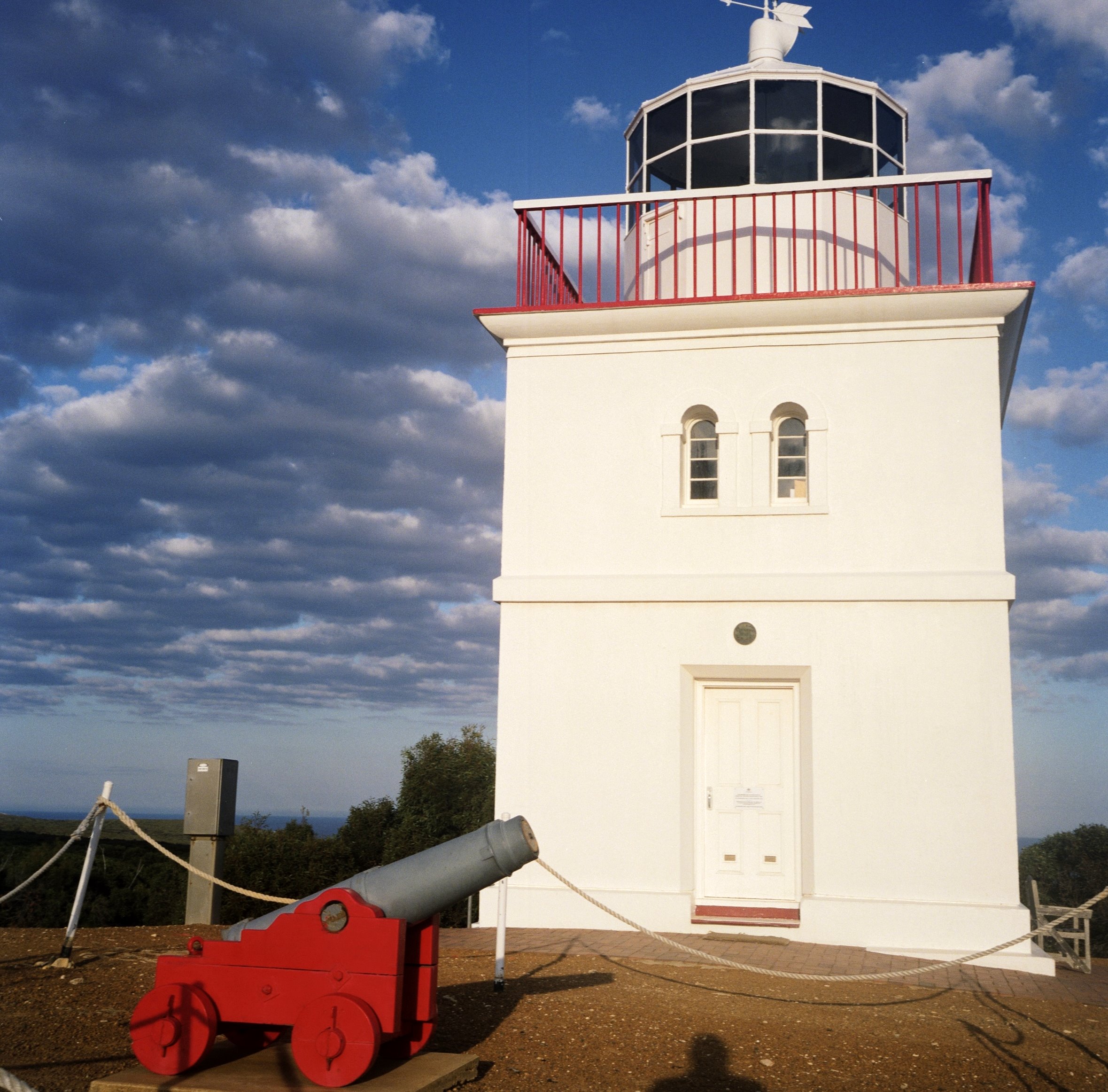
Gary Sauer-Thompson, a tourist site, Cape Borda, Kangaroo Island 2007
It's the toy canon isn't it.
Brisbane: an urban moment:
This photo links back to an earlier Brisbane post:
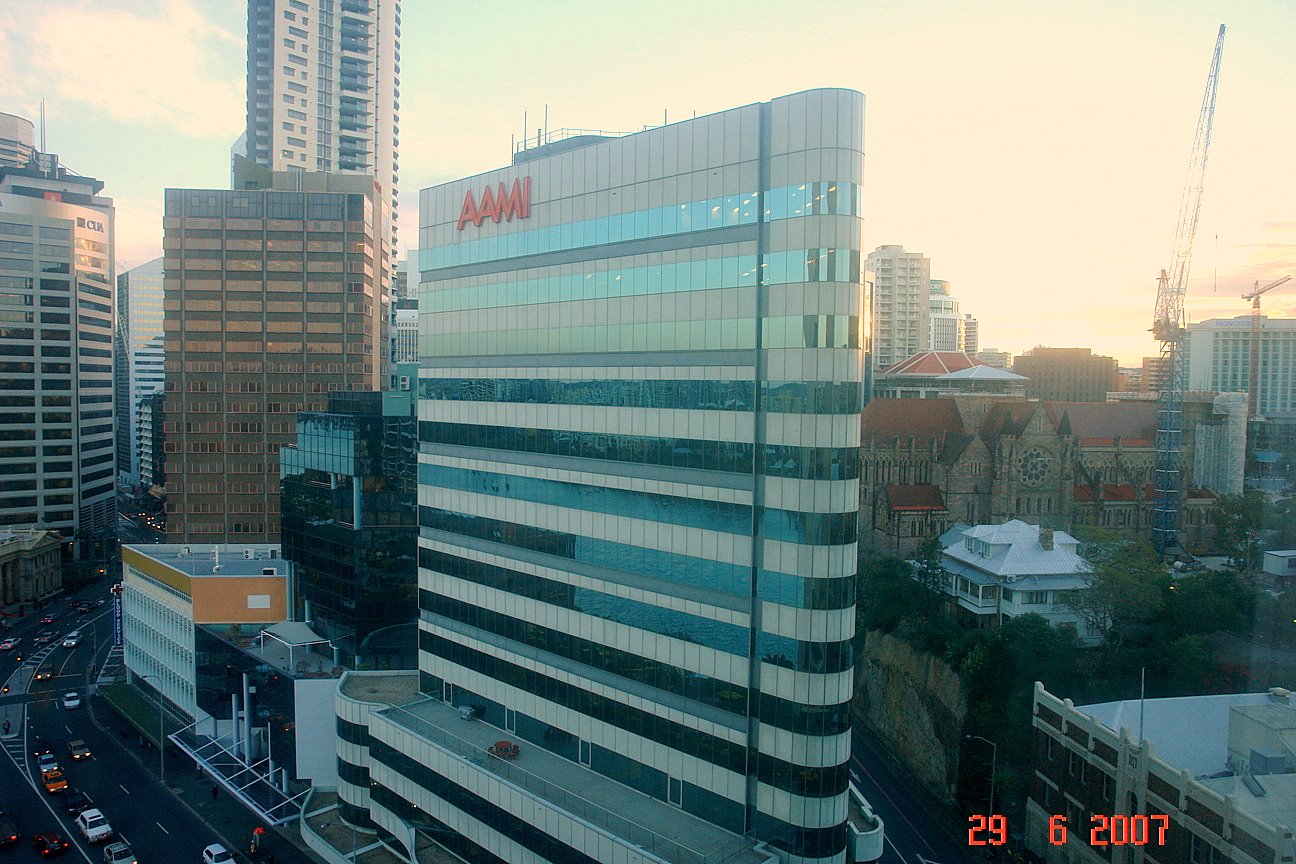
Gary Sauer-Thompson, AAMI, Brisbane, 2007
So many cranes touching the skyline. Brisbane is booming. What I find interesting is the way the old---nineteenth century Brisbane--- being squeezed. It does not appear to be valued--unlike say Hobart, where the urban is centred on the old colonial outpost.
A human moment:
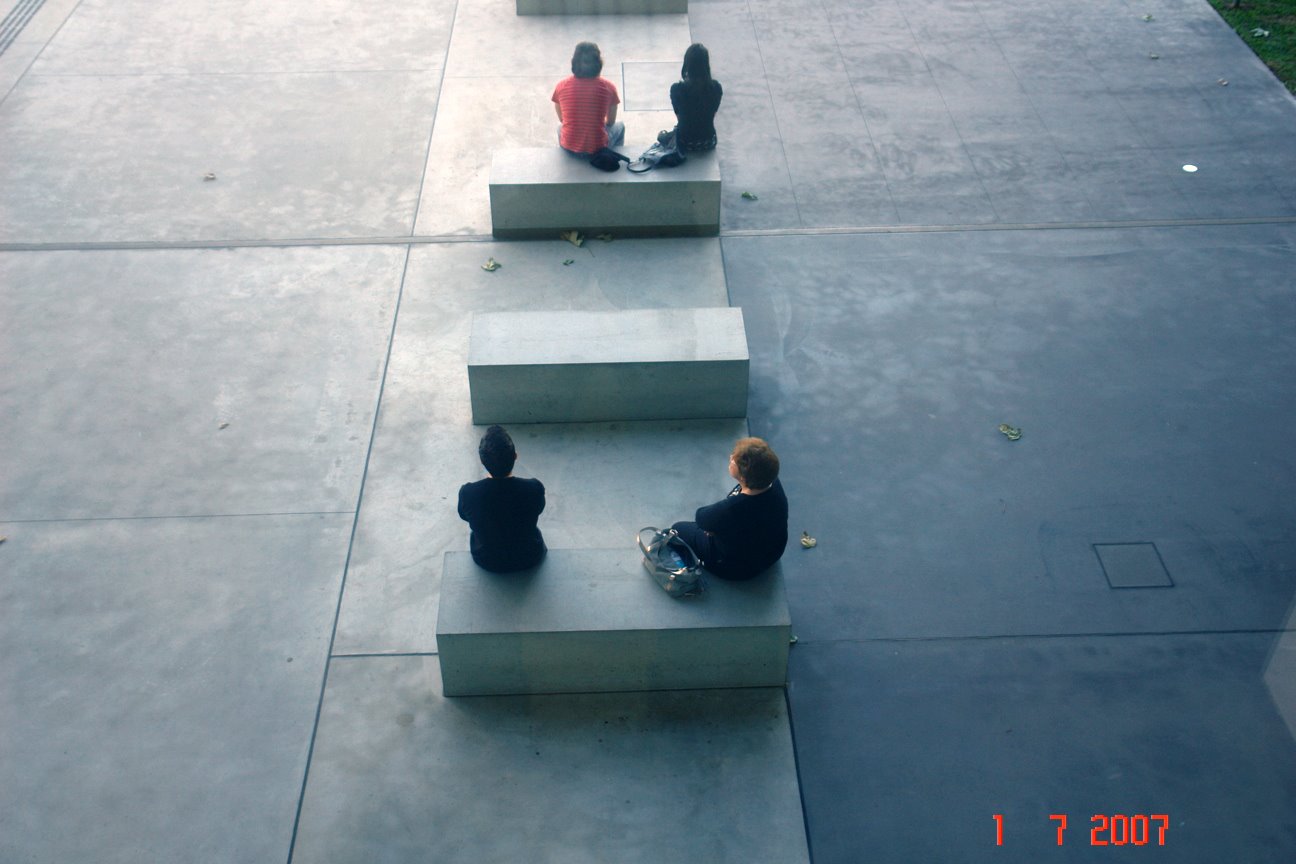
Gary Sauer-Thompson, Queensland Contemporary Art Gallery, Brisbane 2007
It could be any city anywhere couldn't it. We need to stand back and change our perspective to see more of the city in which the urban moment happens.
July 16, 2007
broadband blues
The broadband speed chart is courtesy of The Australian. Rather sobering isn't it, that Australia is slower than Mexico and Turkey. It's kinda humbling. And broadband in Australia is very expensive --3 times more than in the US. Even more sobering considering we are talking about the infrastructure of the 21st century.
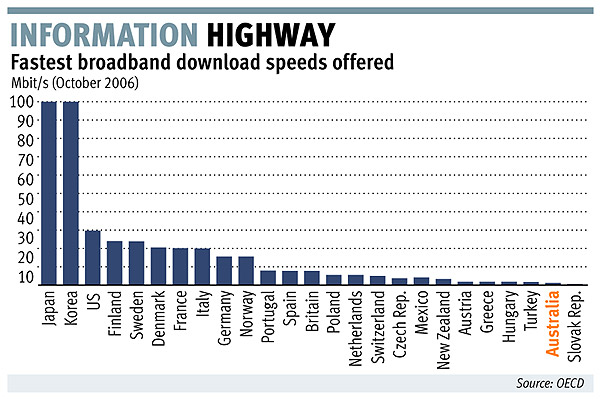
I've noticed that ADSL2+ has slowed down---it appears that the flow of data in Australia hits blockage points---becomes clogged up as it were. So we have severe slowdowns due to Telstra? Or is the slow data flow the result of the limited capacity of the cables from Australia to the US and Europe? The international transit capacity of the ISP 's are increasing due to a boom in data-intensive online services such as BitTorrent and YouTube.
Something is definitely amiss. If speeds increase, this will only increase demand for overseas traffic, as there is hardly anything 'data intensive' in Australia worth getting outside of the ABC.
July 15, 2007
packaging history for tourists
There are dramatic shifts in touristic fashion. Lighthouses are off beat and out of fashion whilst seals are in. Tourism is an industry that has arisen in response to the convergence of people on recognised routes and resorts.
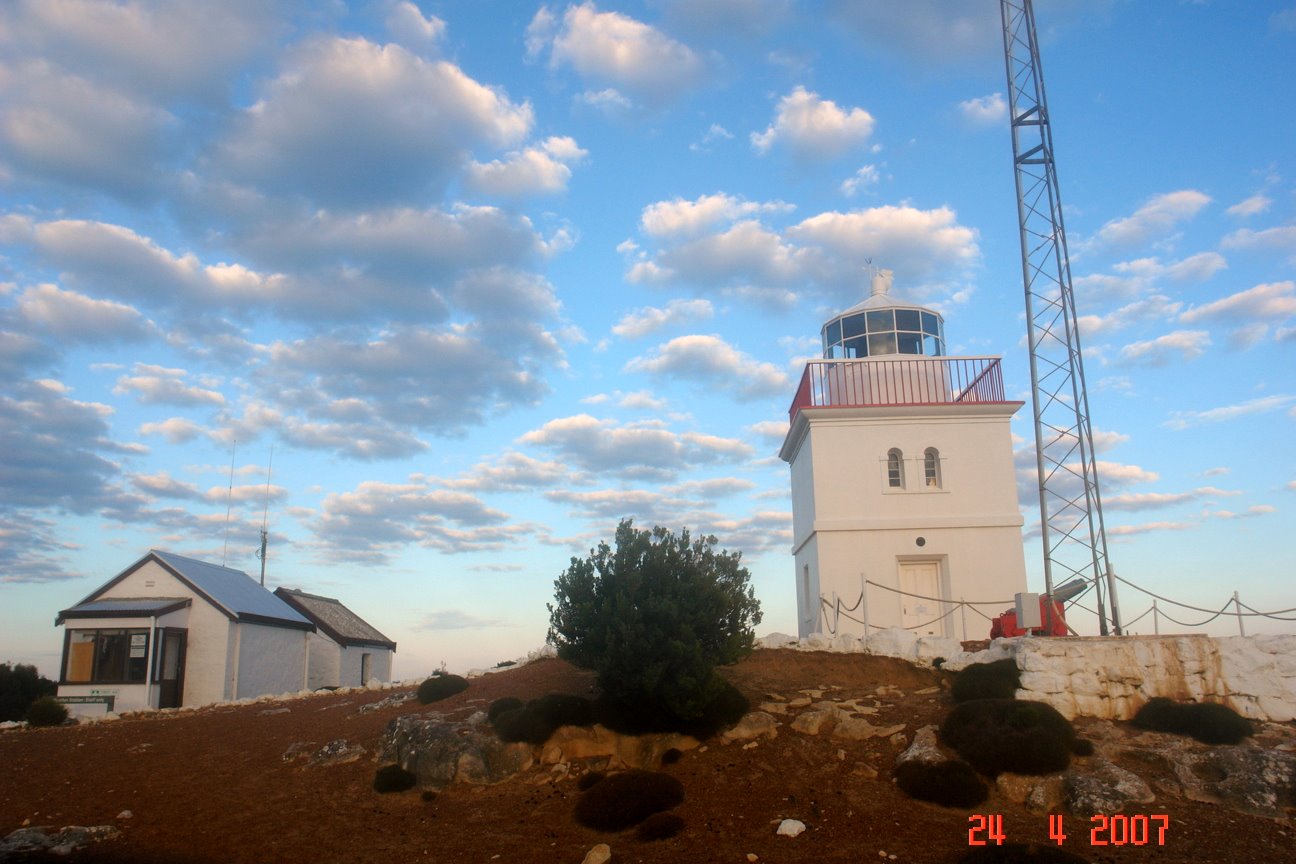
Gary Sauer-Thompson, Cape Borda, Kangaroo Island, 2007
What we have here is tourism as colonial history. Flinders Chase National Park is selecting appropriate sites and then packaging it for touristic consumption. Though not many tourists come to Cape Borda, as it is off the beaten track, it is still packaged for tourist consumption as a special or significant site.
The bounded site is deemed worthy of preservation and privileged. It is then framed and elevated phase in the sense the chosen object being displayed or featured. Most tourists are similarly framed by the amenities that the ranger guides provide.
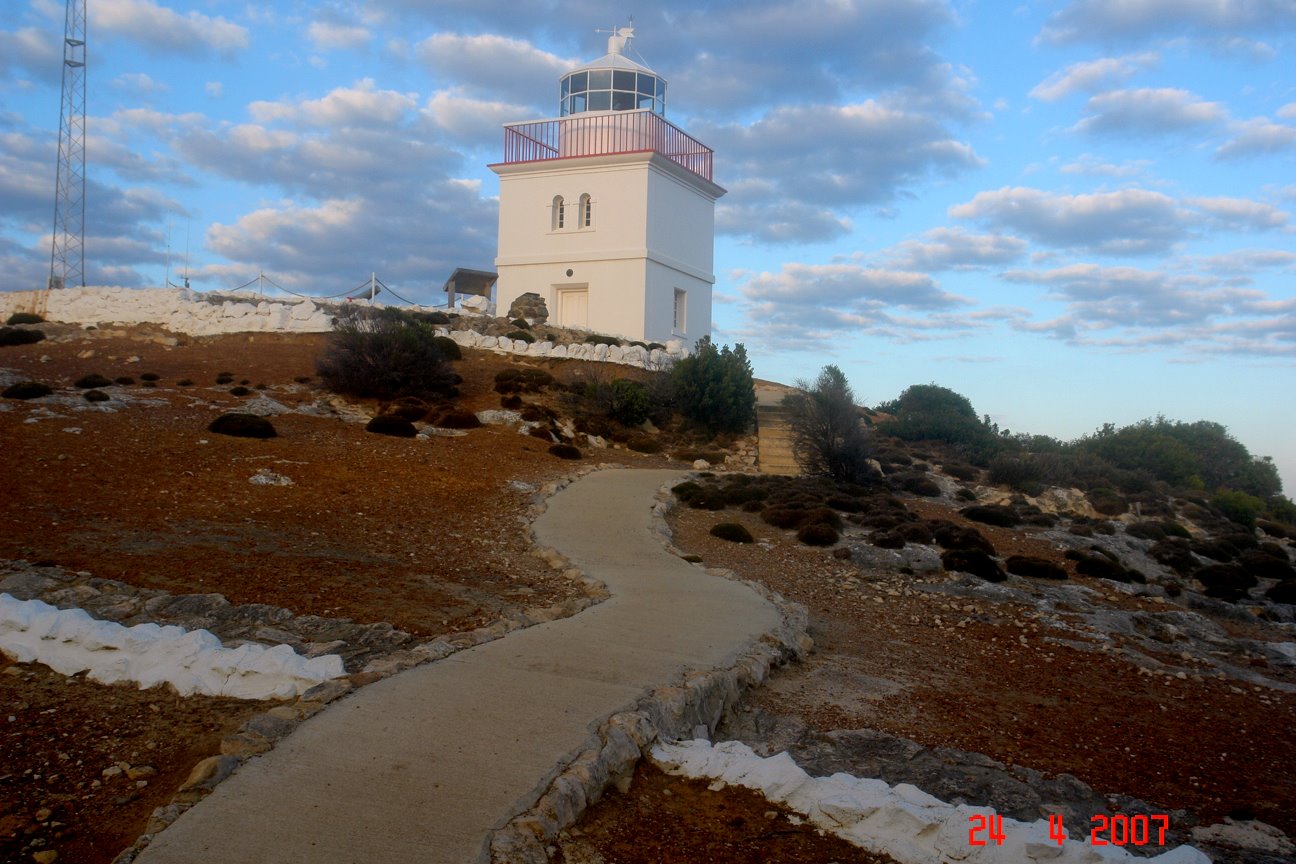
Gary Sauer-Thompson, Cape Borda, Kangaroo Island, 2007
Everywhere I travelled in Flinders Chase National Park I encountered site enhancement brought about by mechanical reproduction of the picturesque via such things as prints, postcards and replicas of Cape Borda.
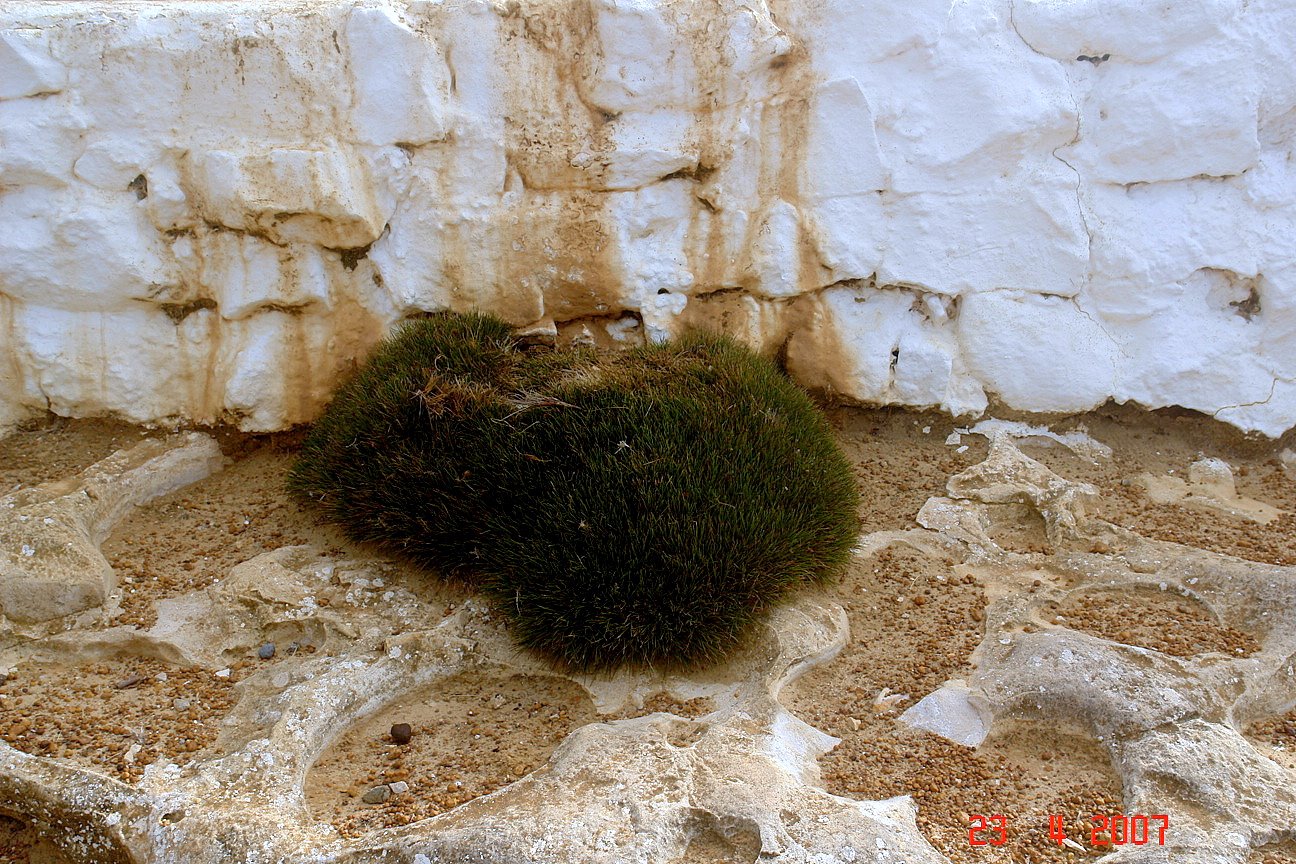
Gary Sauer-Thompson, Rust, Cape Borda, Kangaroo Island, 2007
In this history one is standing on the rim of the British empire inside a colonial Australia that exhibited a dominant "Anglo" culture in which Anglo-Australian is the major signifier of Australian nationality and cultural unity.
July 14, 2007
Happy feet
I've just watched the DVD version of Happy Feet` animation by George Miller of the punk-rock action classic, "Mad Max" fame. I did not see talking-pig movies, "Babe" or the darker follow-up, "Babe: Pig in the City." It was masterful animal whimsy and very close to March of the Penguins. Happy Feet is an animated film - but it’s not a cartoon.
It is cutting edge computer-animation that utilizes the art skills of Animal Logic based at Fox Studios in Sydney, Australia and Venice, California that is placed into a conventional narrative.

It is a class show. The visuals of the Antarctic landscapes and the zoom-outs of Earth hanging in space are stunning, the use of the music is often inspired (eg., the use of the Beach Boys 'Do It Again'), whilst the environmental message is the need to regulate the overfishing of the Antarctic oceans. All of this is structured around tap dancing. It's too dark for some US conservatives who see environmental propaganda designed to indoctrinate children. They see it as an animated 'Inconvenient Truth'. Maybe they don't like the way that the penguin elders run the colony as if they were a fundamentalist religious community.
Well penguins may actually die if humans starve them to death through overfishing the Antarctic oceans. The conservatives think that it’s mean to children to make a movie that admit the environmental damage could kill off the penguins. When they are wound up they see it as anti-human propaganda. Presumably they hanker for the the good ol’ days of Disney when humans always had some moral superiority over animals in the movies, and were never, ever shown as a force of destruction in the innocent lives of animals.
It's whacky. Its as if they Enmperor Penguins had been listening to U.S. radio for decades. We started with a penguin Marilyn Monroe [voice of Nicole Kidman] singing a Prince song being serenaded by a penguin Elvis Presley [voice of Hugh Jackman]).
salad days
Living according to the ethos of the market depresses me. You buy X on the card, then pay if off with great effort, only to buy something else. It''s never ending and it feels like a bottomless pit.
It's much better being in the wilderness, even if it means being constructed as a tourist:
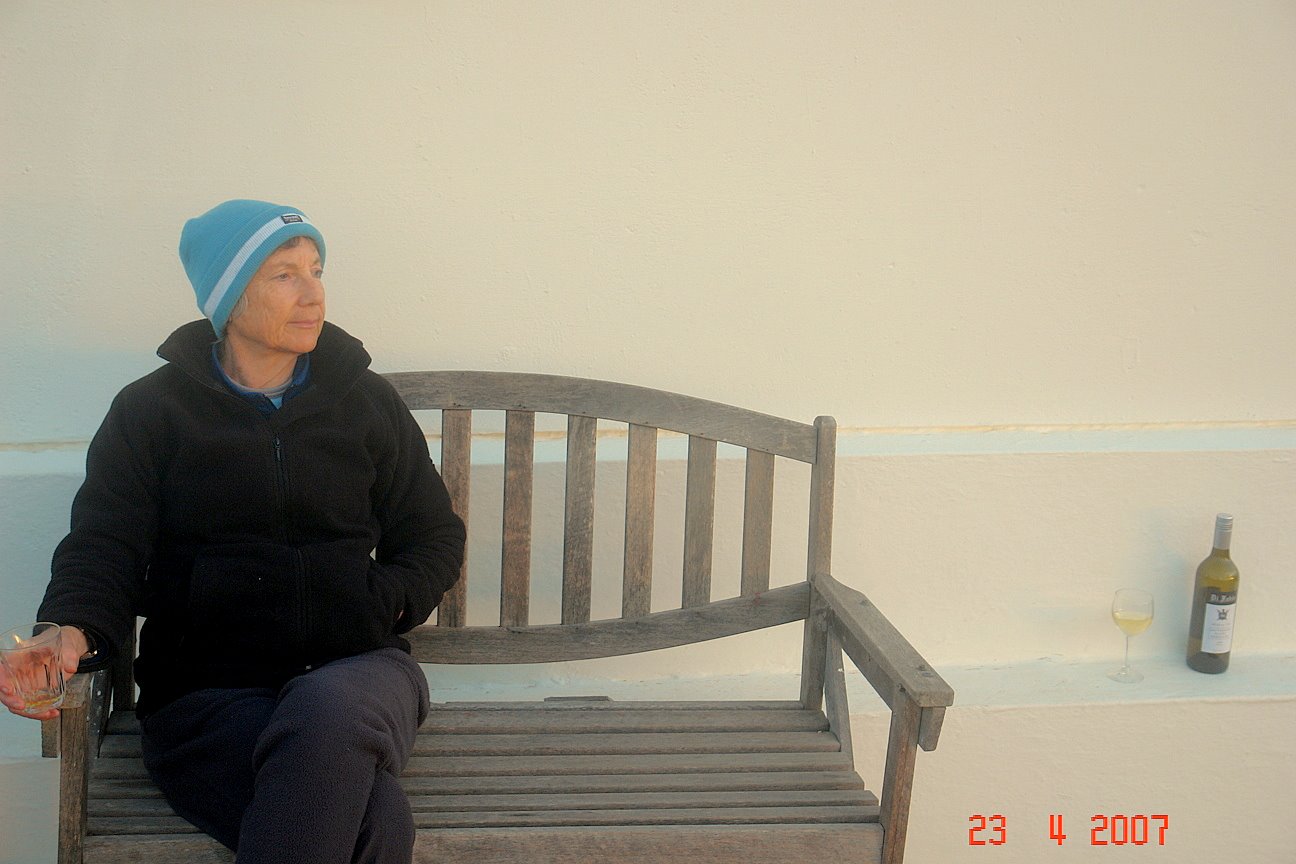
Gary Sauer-Thompson, Suzanne Cape Borda, Kangaroo Island, 2007
I feel grounded in nature. It keeps me sane. It prevents me from going crazy whilst living in, and by, the market.
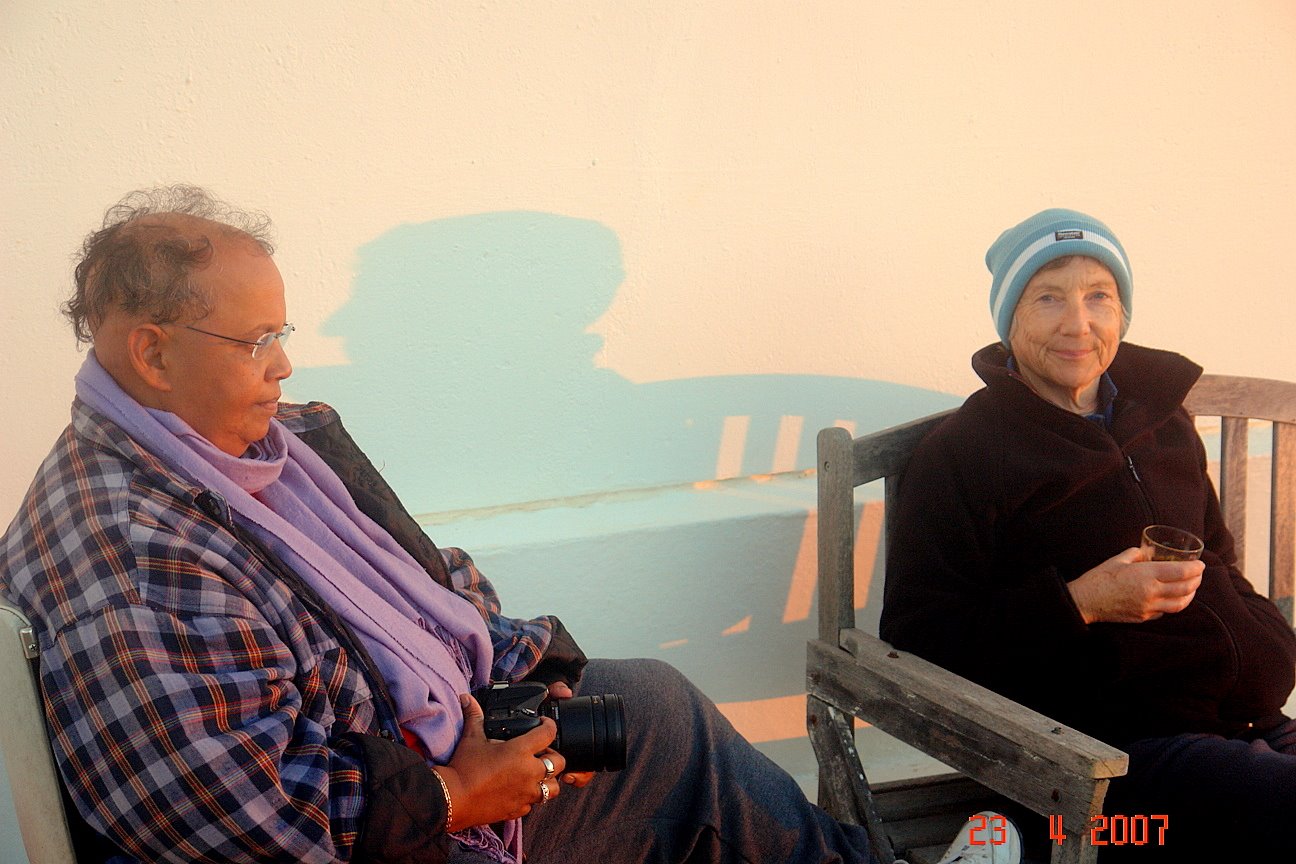
Lariane + Suzanne, Cape Borda, Kangaroo Island, 2007
I have to escape to Victor Harbor and go for walks along the clifftops with the poodles to recover my sense of self. It's been lost living in the market and needs to be recovered.
So I remember my brief time in Kangaroo Island with great warmth and nostalgia.
July 13, 2007
homeless
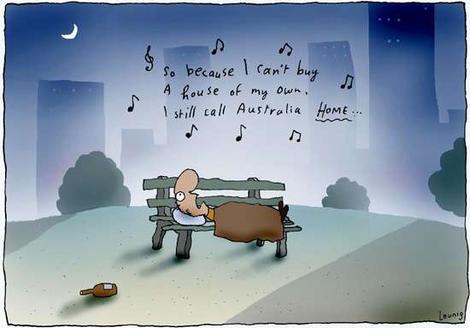
The background on public opinion:
Leunig
Honestly, I do not know how people are coping. I appreciate that the economy is booming but mortgage repayments are so high in the capitol cities that people must be just surviving. As the costs of living (vegetables and groceries) just keep on increasing so people with young families must have little by way of spare cash, and they must be strugglng.
Are we all living on the credit credit during the year and paying off bankcard with our tax returns?
July 12, 2007
from graffiti to mural art
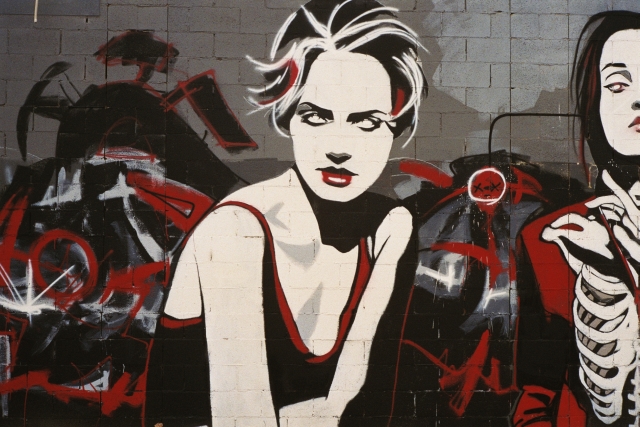
This represents a shift from graffiti to mural:
Gary Sauer-Thompson, Adelaide, 2007
So we have street art that becomes a public art. I'm not sure who has done the mural, but I wish that there was more of this kind of work being done in Adelaide, and it received more support.
July 11, 2007
Cape Borda, Kangaroo Island
Back to some images from my trip to Kangaroo Island in April in Flinders Chase National Park. These images are from the north west corner of the Island.
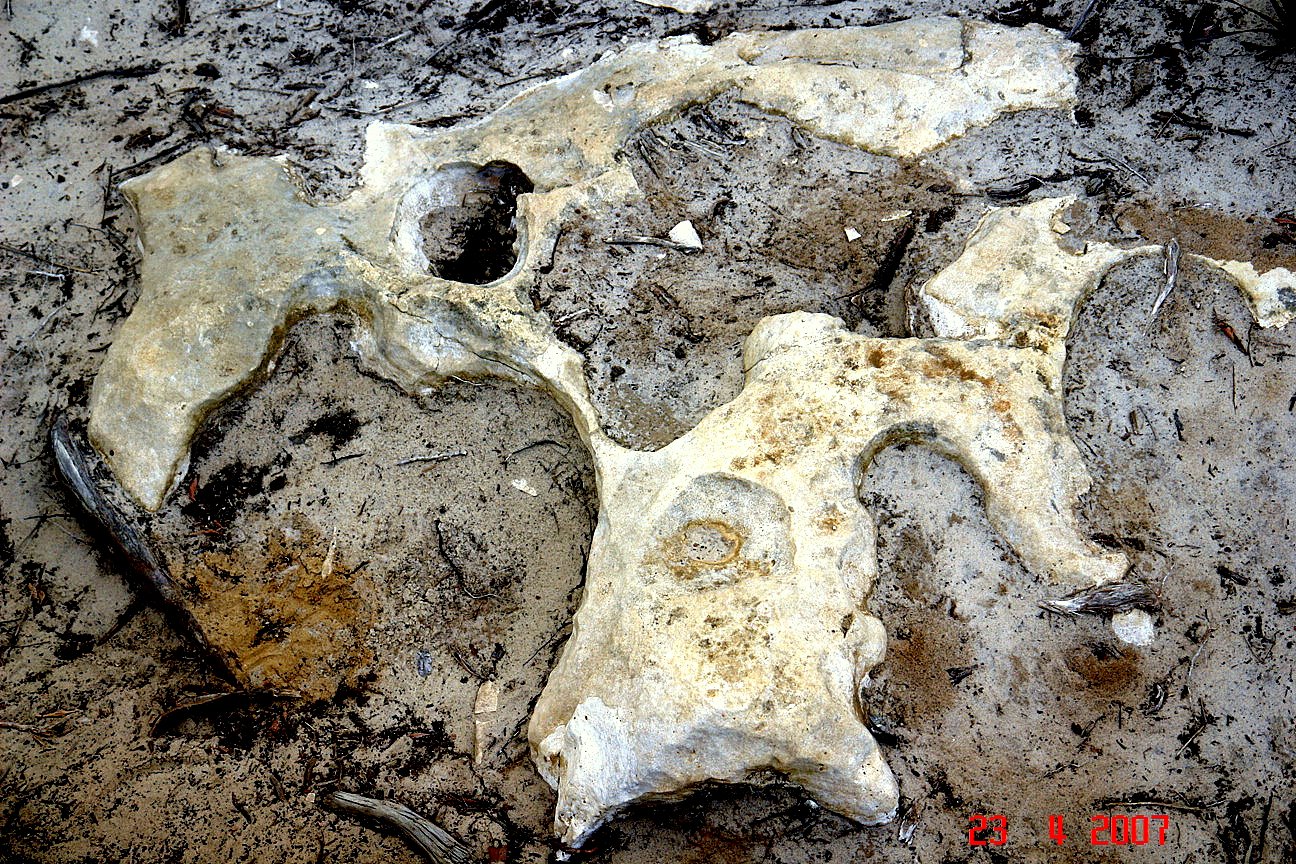
Gary Sauer-Thompson, path, Cape Borda Kangaroo Island, 2007
Cape Borda is mostly known for the lighthouse.
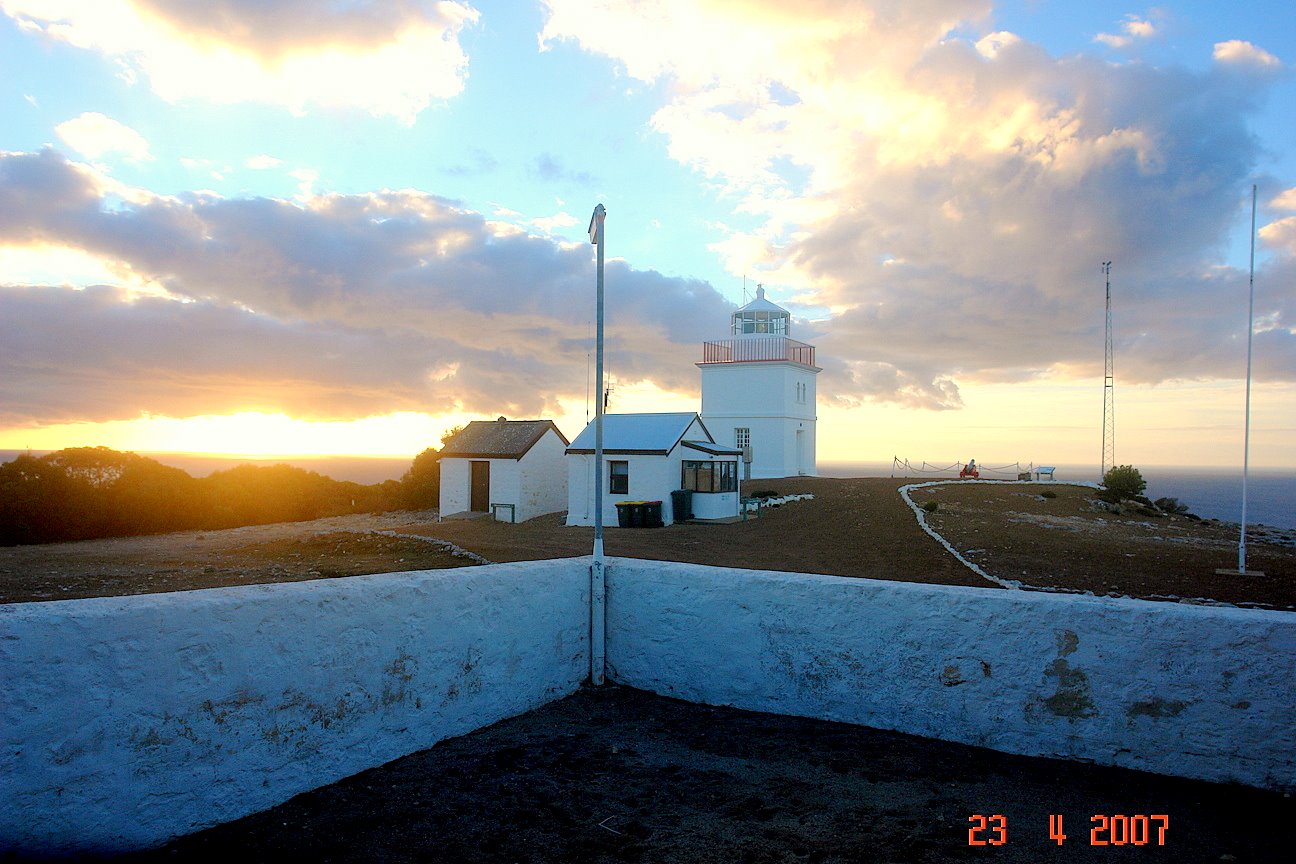
Gary Sauer-Thompson, Cape Borda, Kangaroo Island, 2007
July 10, 2007
The Most Distant Sun
I'm on the road to Melbourne for meetings today, returning to Adelaide tomorrow morning. Blogging may be light depending on my internet access. A change of perspective from walking the city:
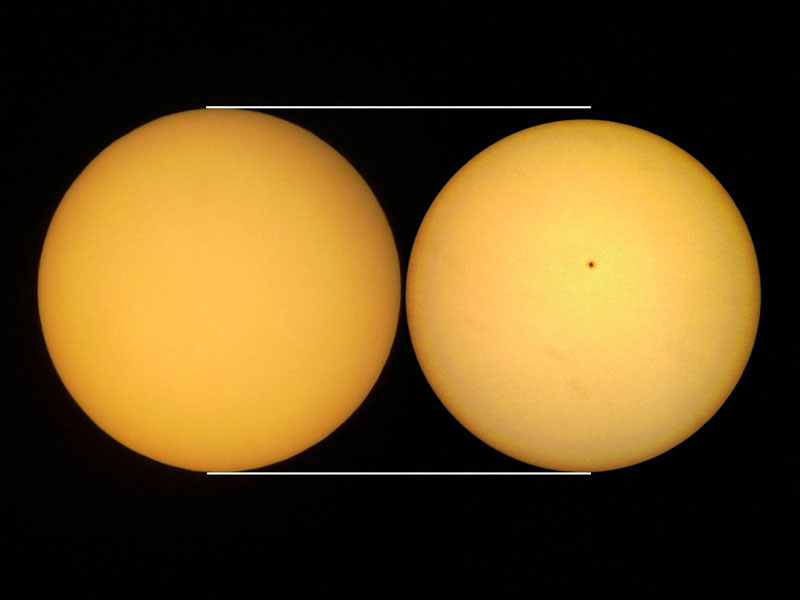
The plane has been held up for a couple of hours. It is unclear whether it is fog, bad weather or terrorists. The Wall Tv's are tuned to Sky News and all I see are Muslim faces contextualized in terms of the "war on terror."
July 9, 2007
exploring Festivals, cities, apocalyptic moods
An interesting look at Adelaide from Kerryn Goldsworthy at Pavlov's Cat that explores the cities we live in from a different angle to the way I've been exploring it here, or Mark Bahnisch's historical approach to Brisbane at Larvatus Prodeo.
The different ways of mapping our experiences of urban life are often derived from, or shaped by, dualities in our thinking. A classic example: Art:
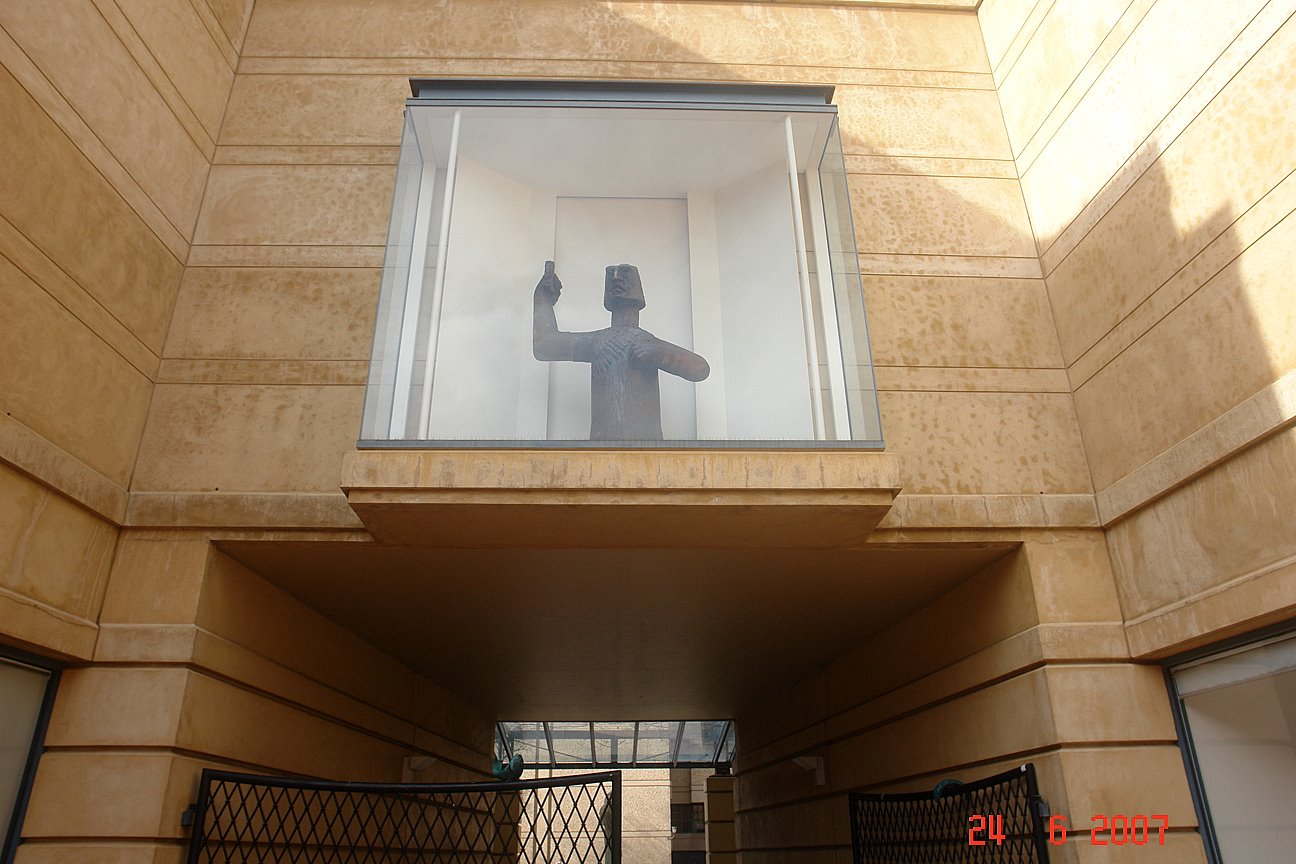
Gary Sauer-Thompson, Adelaide Art Gallery, 2007
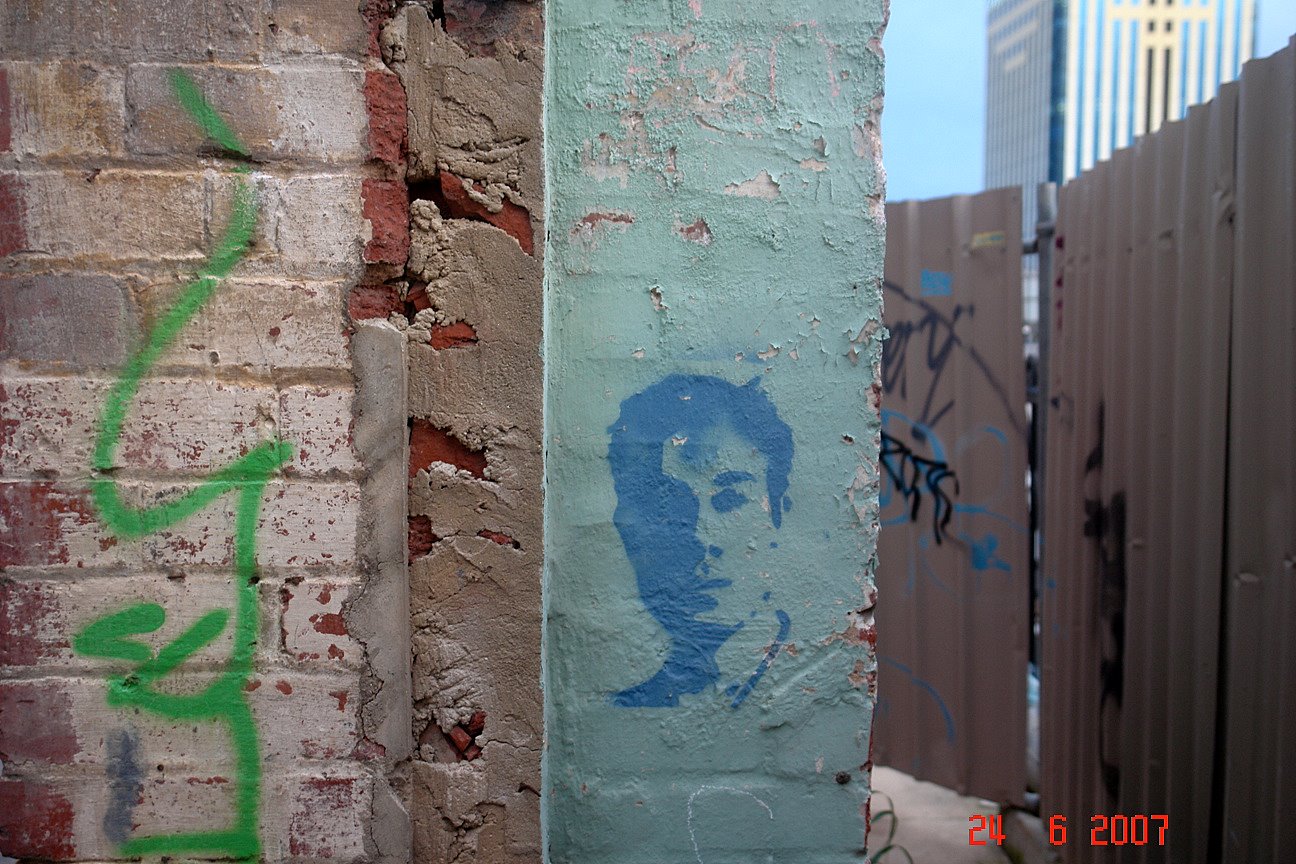
Not Art:
 />
/>
Gary Sauer-Thompson, stencil graffiti, Adelaide, 2007
These dualities provide our reference points of the maps we use to get round the city and shape the way we feel about our lived experiences. What is interesting is that, unlike a lot of indigenous painting, we do not provide representations of the maps of the urban world we inhabit.
Another unconscious mentality is the apocalyptic one, which is very widespread in Adelaide, due to at the bottom end of the River Murray. The apocalyptic unconscious surfaced in the Festival of Ideas in the 'After the binge... the apocalypse?'session. Apocalyptic dread was alive and well in the form of we'll all be ruined by global warming. The opposing position is an optimism in science and technology to solve our problems in an uncertain future.
The latter was represented by http://www.adelaidefestivalofideas.com.au/speakers_baltuck.html">Miriam Baltuck, who received polite applause for saying this optimism in science and technology was justified by the response to Rachal Carson's Silent Spring. So new technologies wil be developed to ensure clean energy and greater efficiencies in energy. Suprisingly, the economic and political power to resist this kind of change was not explored.
Peter Cullen talked in terms of the binge in water usage as all of Australia's capital cites were in a race to run out of water.
walking to the Adelaide Festival of Ideas 2007
Over the weekend, as I walked to and from Adelaide Festival of Idea, I took a few photos as if I were a visitor from elsewhere attending the Festival. What caught my eye about the CBD was the contrast between the postmodern new:
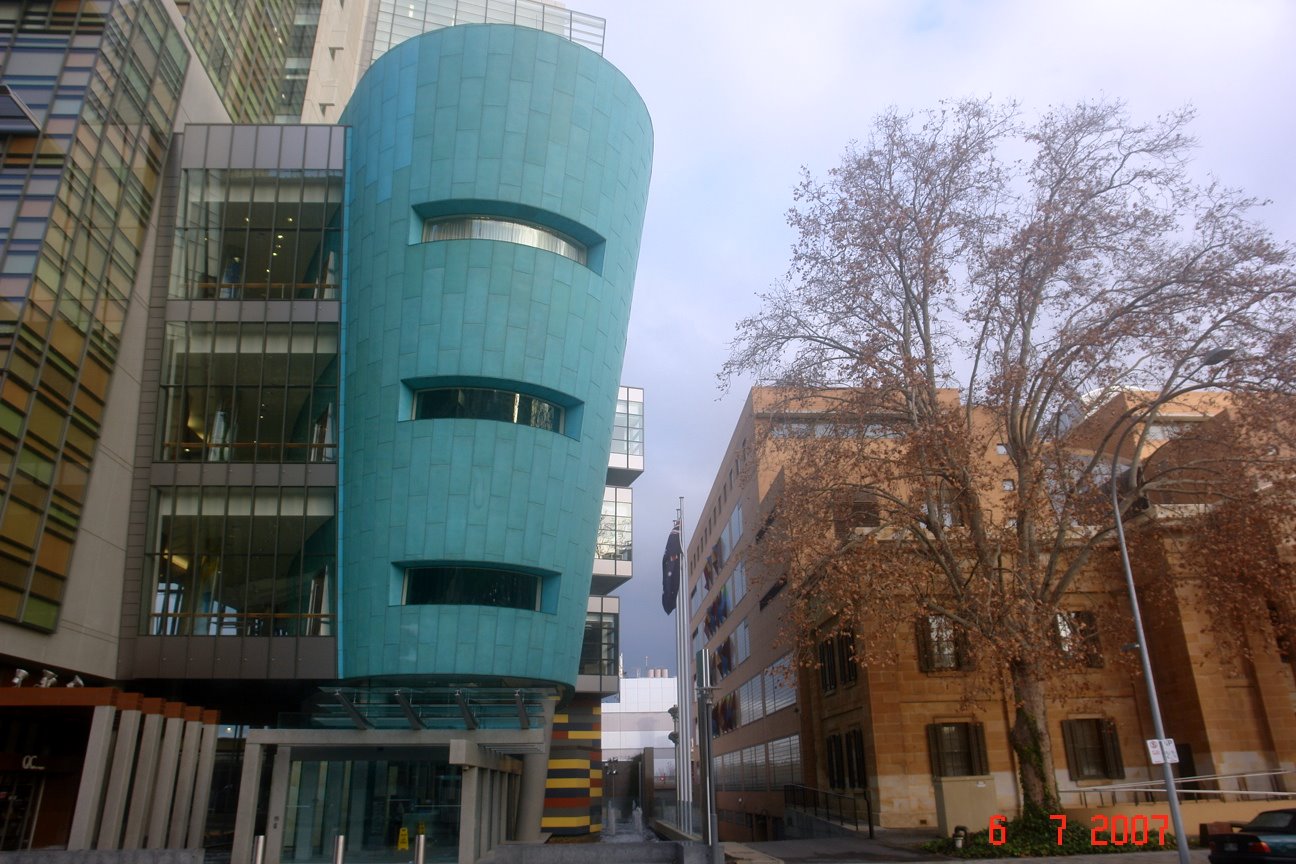
Gary Sauer-Thompson, Federal Court, Adelaide, 2007
and the late 19th colonial old:
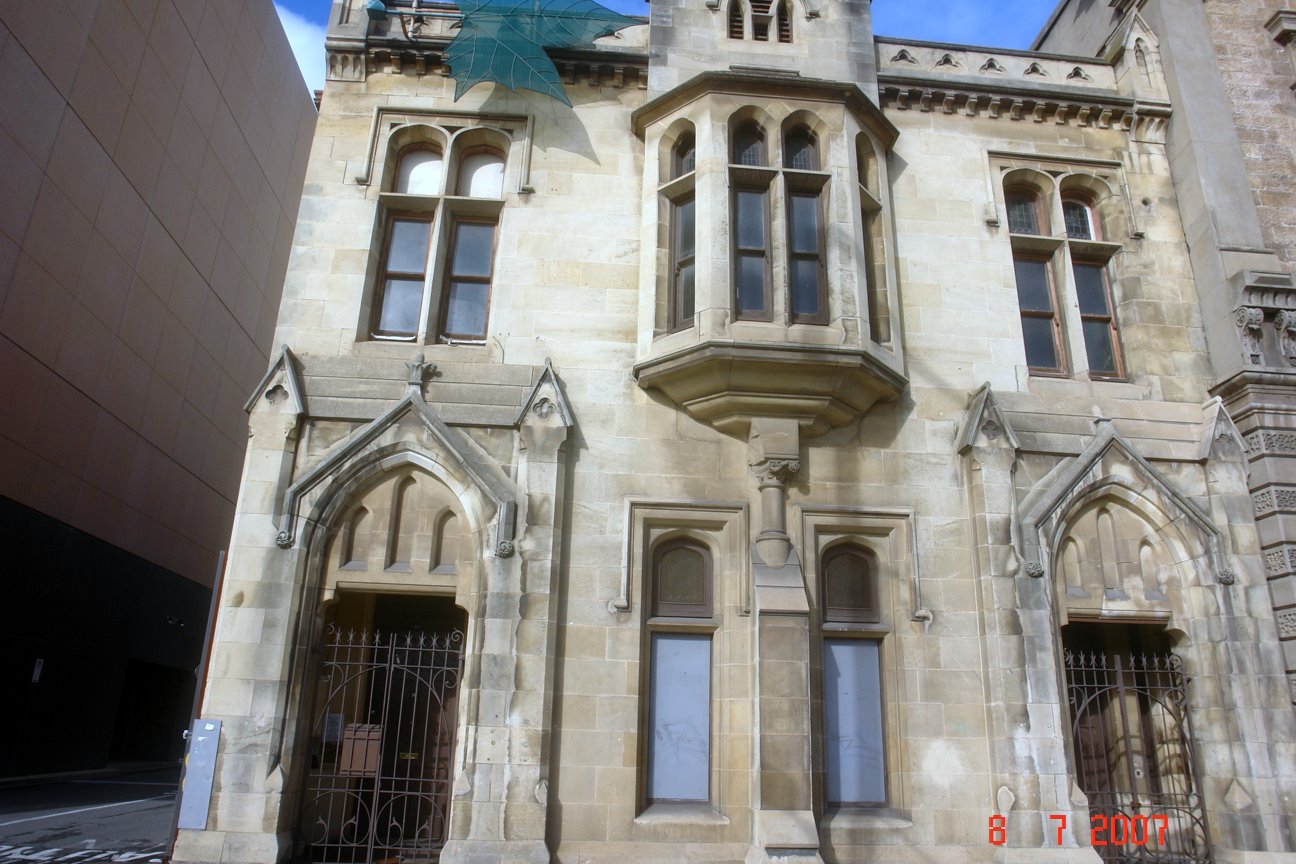
Gary Sauer-Thompson, along North Terrace, Adelaide, 2007
The old and the new surfaced in the Festival in the form of witty attacks on postmodernism by die hardened aged modernists, whose wit covered over an appalling ignorance of the philosophical issues involved.
The person in question was Francis Wheen who was presenting material from his recent How Mumbo-Jumbo Conquered the World: A Short History of Modern Delusions Wheen argued that the inverted commas which postmodernists invariably place round the word "reality" means that they see everything from history to quantum physics as a text, subject to the "infinite play of signification". There is no reality outside the text. No names were mentioned.
Wheen stated that if all notions of truth and falsity cease to have any validity, how can one combat bogus ideas - or indeed outright lies? He argued that there is a mass of carefully empirical research on the Nazi extermination of the Jews. As Professor Richard Evans points out, "To regard it as fictional, unreal or no nearer to historical reality than, say, the work of the 'revisionists' who deny that Auschwitz ever happened at all, is simply wrong. Here is an issue where evidence really counts, and can be used to establish the essential facts. Auschwitz was not a discourse."
What Wheen ignored was the postmodern view that Auschwitz happened but there is a discourse about Auschwitz. What Wheen never mentioned was that the thrust of the postmodern critique of the modernist assumptions about language addressed its mirror assumption: language mirrors the real and that we have unmediated access to the reality.
Wheen refuted postmodernism by saying tell a postmodernist to jump out of the window. It was shocking to hear this cultural wars junk being presented at a Festival where most of the presentations and discussions were of high quality. It was so bad that I could only presume that were were being presented with satire about old modernists struggling to come to grips with the new. It was Sunday morning entertainment.
July 8, 2007
At the Adelaide Festival of Ideas 2007
We usually have about half an hour or so between the sessions at the Adelaide Festival of Ideas to catch our breath, have some food, grab a coffee, chat with friends and take in the air. I try and do a bit of photography when I can:
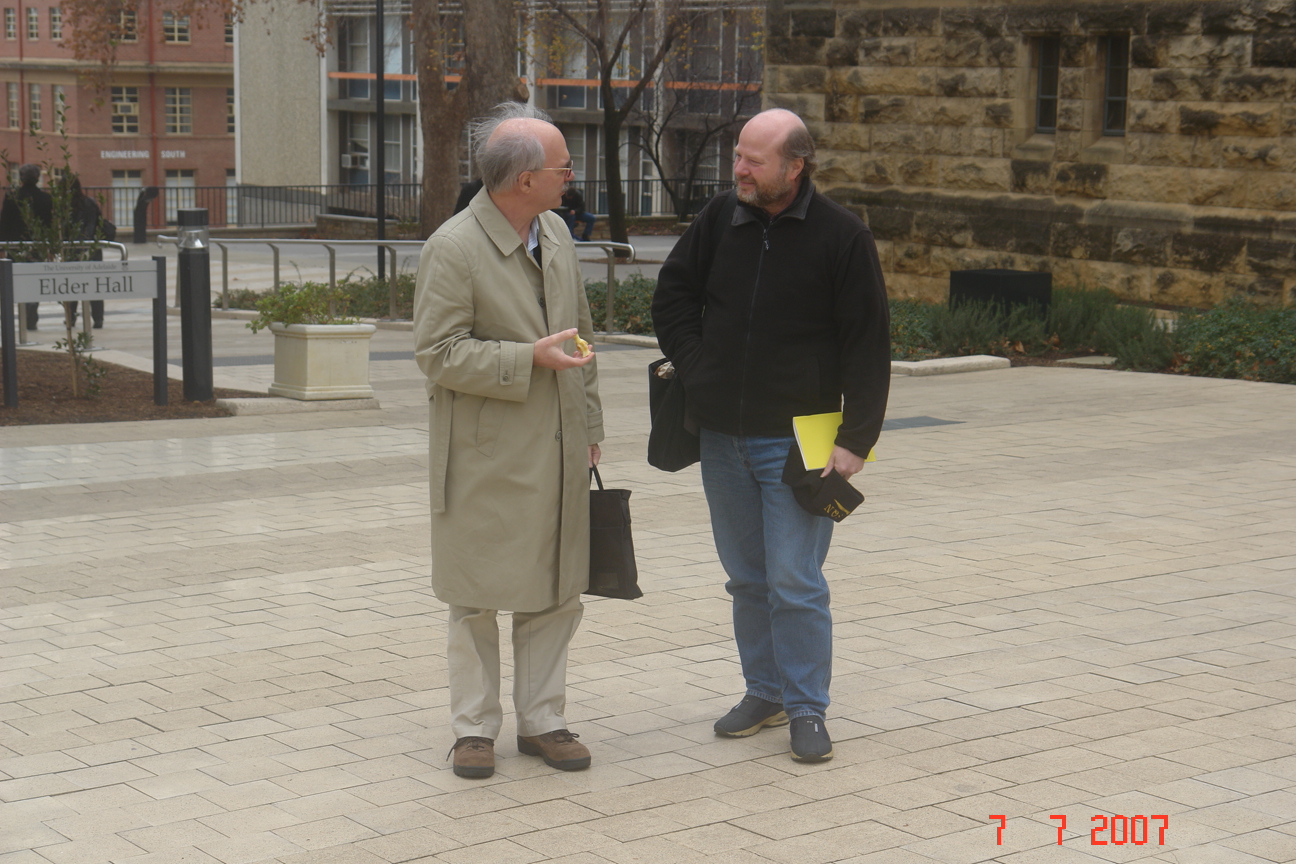
Gary Sauer-Thompson, Adelaide Festival of Ideas, 2007
The discussions are intense as people are really engaging with the ideas on public issues that matter a lot to them. Many of the questions are sharp and to the point. This is largely an older, ABC Radio National audience that reckons John Howard has outlived his welcome, and its time for him to go if the country is to become a better place.
What will happen to the Festival when the older retired generation leaves the good earth? There are not that many young people in the audience.
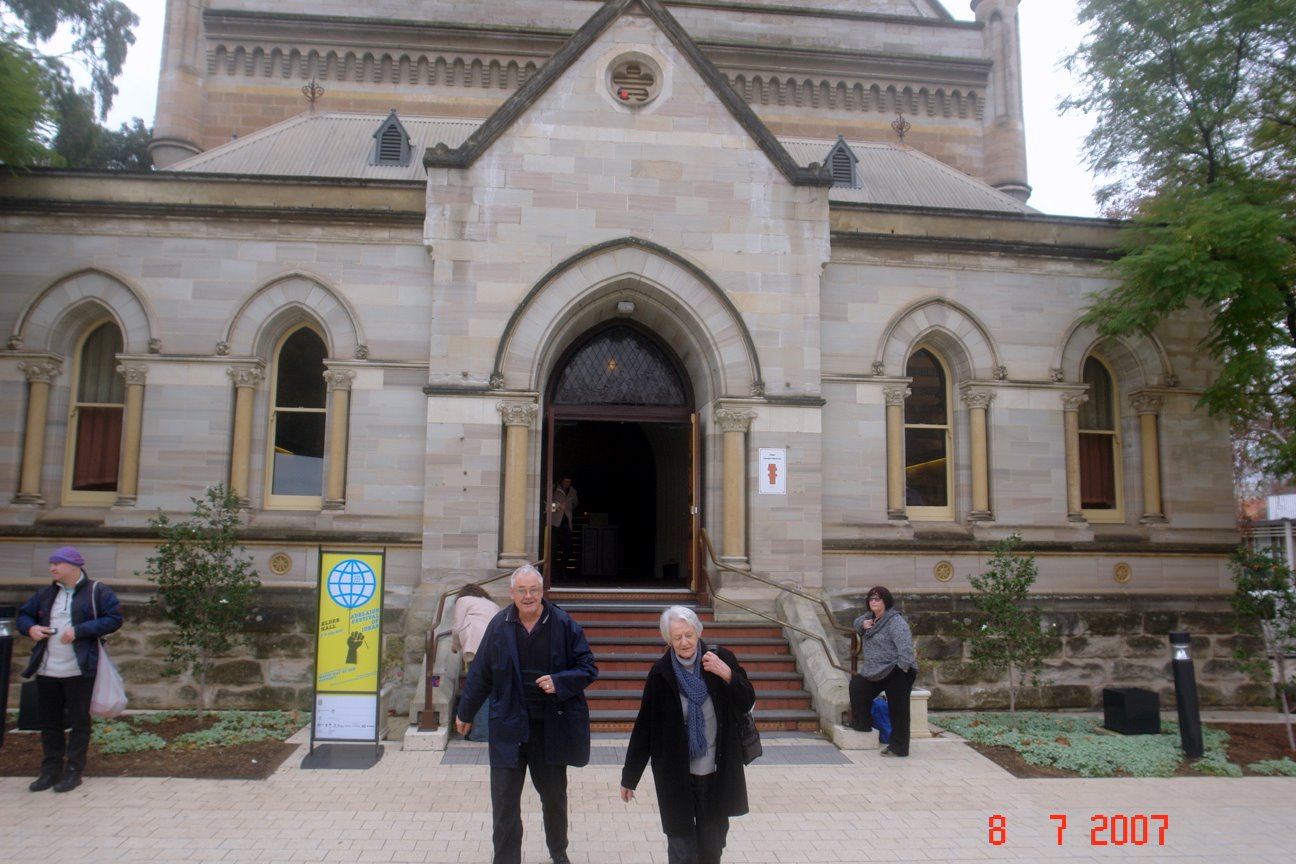
Gary Sauer-Thompson, Adelaide Festival of Ideas #1, 2007
Old they may be, but they are angry at what has happened to Australia in the last decade. An enlightened Australia has been trashed by bigotry and prejudice and John Howard is responsible.
July 7, 2007
festivaling: Adelaide Festival of Ideas 2007
Many of the sessions I've been attending at the fabulous Adelaide Festival of Arts happen to be at the Bonython Hall:
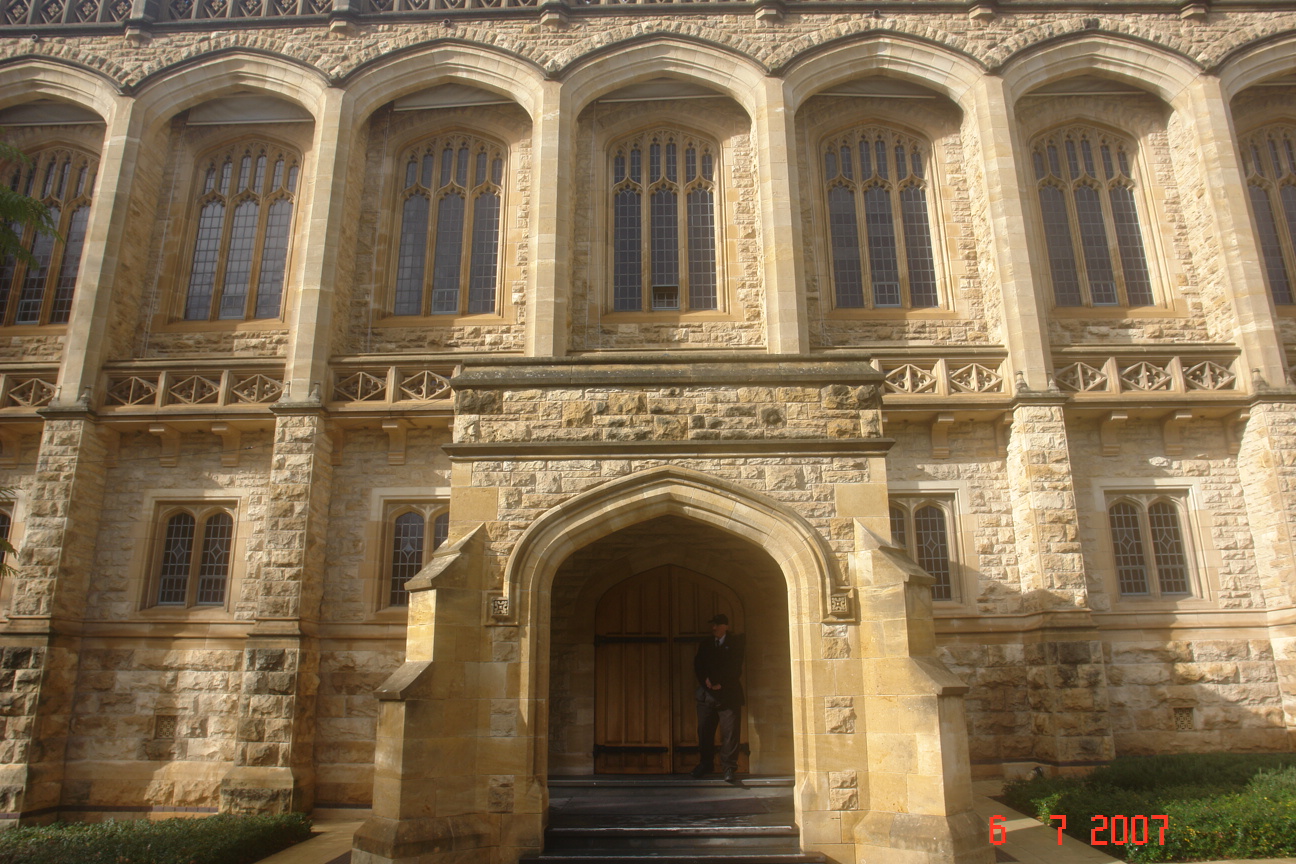
Gary Sauer-Thompson, Bonython Hall, University of Adelaide, 2007
It is a delightful 19th century sandstone building --a very fine example of heritage Adelaide that gives North Terrace such an interesting character.
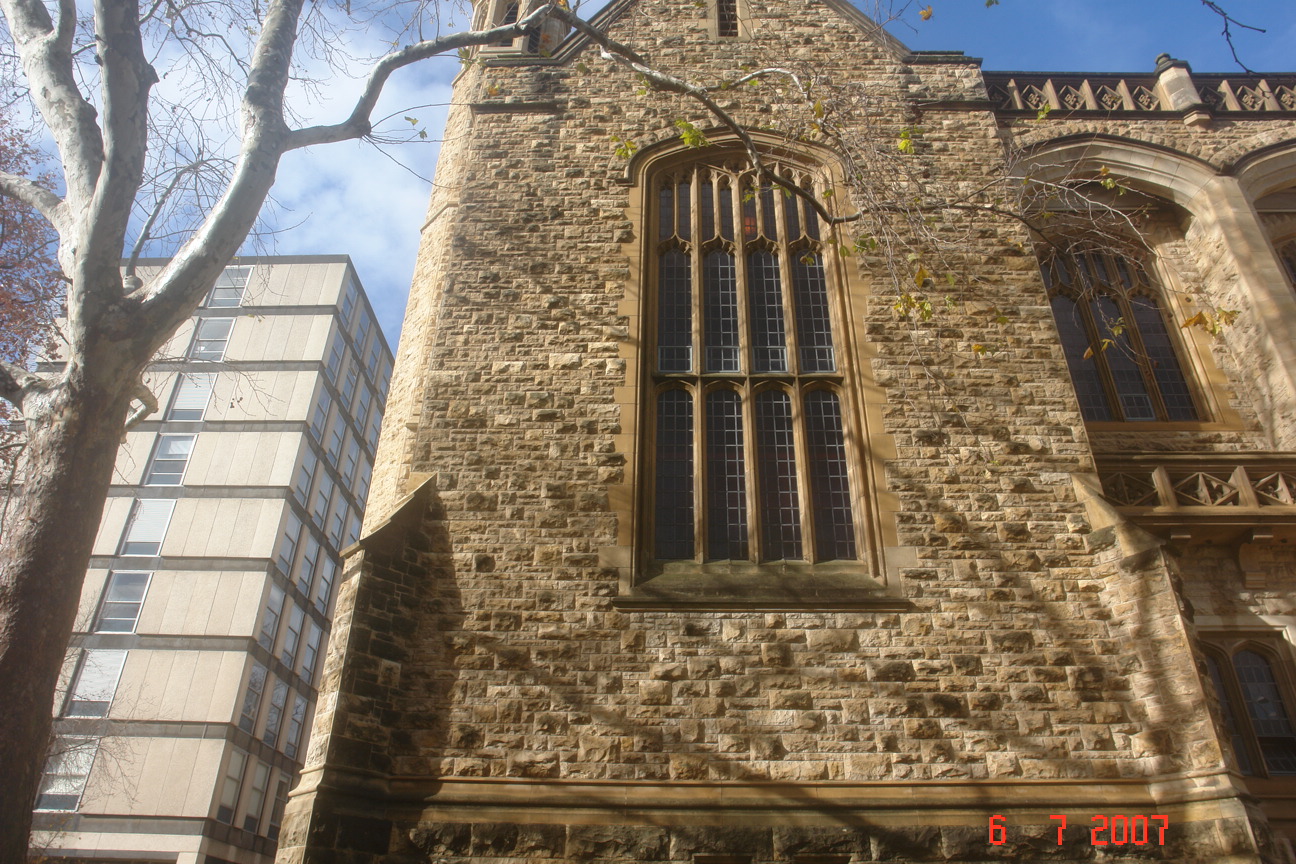
Gary Sauer-Thompson, Bonython Hall, University of Adelaide, 2007
The insight space is filled with natural light as Kerryn Goldsworthy at Pavlov's Cat highlights Sitting there listening the speakers, watching the play of light within the building and hearing the rain fall on the roof is very pleasant aesthetic experience.
Aesthetics, of course is not mentioned. These are serious politicos and for them the politics has nought to do with aesthetics even though the place rocks to the historical shudders and the social sublime surfaces in many of the conversations and discussions.
The Kinks' nostalgic Village Green Preservation Society, which I've recently downloaded from Mininova, kept on playing in my ear.
walking Adelaide city
I walked into the city today to attend the Adelaide Festival of Ideas to attend a few sessions. I took a few photos on my walk there and back. This is where the opening party was held last night:

Gary Sauer-Thompson, State Library SA, 2007
It's looking at the old from the perspective of the new. Adelaide is mostly about the old--heritage Adelaide in other words. This is not a postmodern world. I'm half expecting to stumble into some crude modernist rant against postmodernism full of witty jokes. Where will it come from? From whom?
July 6, 2007
Friday dog blogging #3
I'm busy blogging the 2007 Adelaide Festival of Ideas today and the weekend. So blogging will be light.
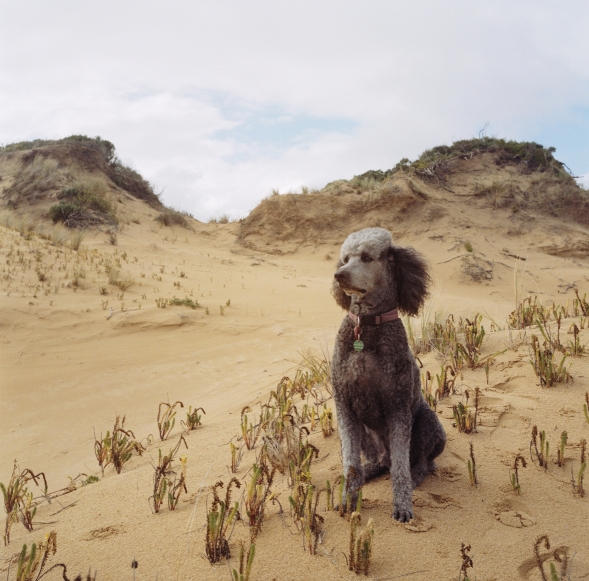
Gary Sauer-Thompson, Agtet, Kangaroo Island, 2007
So an old convention is being appealed to---a continuing series.
July 5, 2007
urban textures
It is very garish but that is pop culture
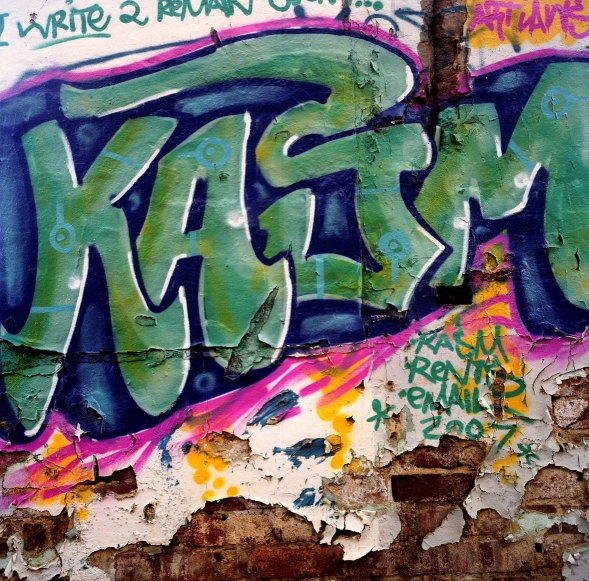
Gary Sauer-Thomspon, I write, Adelaide, 2007
The neon lights of the city and the omnipresent advertising in public places. They sizzle our mind with currents of electrical energy, zapping us. The graffiti is softer isn't it.
July 4, 2007
Adelaide's empty heart
A hole in the ground in Gouger Street near the Central Market, which has stood empty for 25 years---ie., since the boom of the 1980s--is currently having remedial site work. A new building is going to be built. What sort? Another faceless anonymous office block in a decayed modernist style? Or something postmodern?
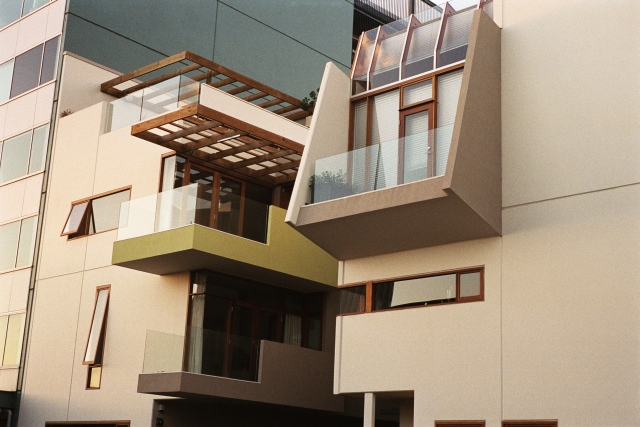
Gary Sauer-Thompson, apartments, Adelaide, 2007
Or will it be something innovative and visually interesting that promises a regional urban architecture? Or a cutting edge sustainable building in terms of water and energy use?
Development is now happening in Adelaide. Does that mean there will there be some public art introduced into Gouger Street as there is all around Brisbane?
The building currently being constructed in the south east corner of Victoria Square as a green star rating, so it is designed to be energy efficient and reduce CO2 emissions. It is heralded as beginning the move to pull the centre of gravity back up from the Torrens to Victoria Square, which is the natural heart of the city. The Square has been so carved up by east west north south traffic that it is unlikely a building will activate the centre and have it thronging with people. The traffic has to go to achieve that.
Meanwhile Adelaide has a empty heart.
National Gallery of Australia: extensions
I wasn't able to attend the talk on June 28 by Andrew Andersons, Principal Architect, PTW Architects, where the plans for the first stage of the National Gallery of Australia's building enhancement project were presented and discussed the issues involved in designing a building around the art it displays.
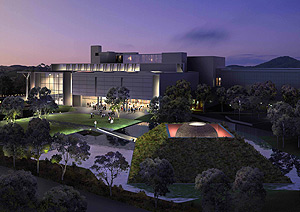 As I understand it from the media release, after financial approval from the Federal Government was given, the new extensions will include new Australian Indigenous galleries and a new home for the famous and popular Ned Kelly series by Sidney Nolan. They will also feature a multi-purpose space for educational activities and events.
The function room will open onto a new Australian Garden. Stage 1 also includes a street level entrance, shop and facilities. The improved visitors' facilities were especially welcome, they said. In another new feature the Aboriginal Memorial Poles will be on display in a new purpose built display area inside the Gallery's main entrance.
Will it soften Colin Madigan's modernist brutalism?
There is a strong sculptural look to the façade of the building:
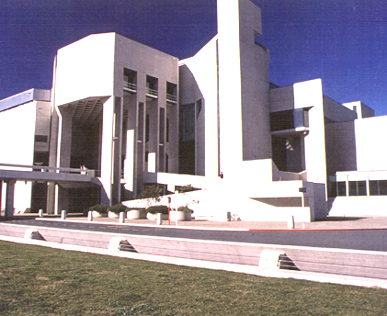 I cannot tell from the PTW flash show---what I see is lots of glass, concrete and light and a great big shimmering glass wall/thingy across the front.
I presume that it is another modernist block so loved, and celebrated, by the art institution. I don't know why. Elitism? Opposed to dumbing down?
Madigan himself sees the leaky building as a most important work of modernist art and sees changes to it---including altering the internal disposition of spaces-- as desecrating it.
However, as Betty Churcher points out:
The big, main hall of the gallery was vast, and had really been designed with its concrete walls and its great, you know, cathedral spaces, for large American painting.'m, I'm convinced of that. It was designed as if that was going to be the art of the future, and of course it turned out that it wasn't.... Because on the cement, the grey cement, the cement was very light absorbent. The light was coming from that huge height. By the time it got down to the picture, it was exhausted.
The Gallery does not even have a proper space for people to congregate--apart from the coffee shop--- and it's an uncomfortable labyrinth to be in.
haunted in Adelaide & Lucinda Williams
See what I mean? It's another world. This is right in the CBD of Adelaide near the Central Market. It shows the decay of a city that has lost its way. It's place where the people bite and bleed, then they walk away. They're hurt, and sometimes they want more damage---the experiences that Lucinda Williams sings about in her songs of modern romance in a violent world.

Gary Sauer-Thompson, shed, Adelaide, 2007
Being immersed in the grit of a bleak experience sometimes means being unable to see beyond it. 'What's left is the dream of the broken hearted--finding love in hell. Hell is the seamy underworld hidden beneath the veneer of the idealised Adeliade in middle Australia, whose visual manifestation is roses, white-picket fenced homes and happy suburban families.
Adelaide CBD, with its dark underbelly and repressed desires is the place to play Lucinda Williams' heart wrenching, and emotionally bleak World Without Tears. It's about suffering: a life filled with booze, frustrated love affairs and violence in a world where the black storm clouds have covered up the winter sun again. It's about being haunted by the past--deindustrialization.
In the evening the broken hearted watch the early series of David Lynch's Twin Peaks television series. One of f the defining shows of the 1990s, it explores the seedy underside of "Small Town U.S.A" (Twin Peaks) for its surreal, nightmarish and dreamlike images, the focus on unconscious desires instead of traditional narration, and meticulously crafted sound design by Angelo Badalamenti.
July 3, 2007
stranded in Brisbane
I was in Brisbane on the weekend for work, but I managed to take the odd photo or two I was fortunate to stay at the Marriott hotel in a room that had a river view. A vista some would say. There was no need to listen to Lucinda William's expressing her suffering in World of Tears on the ipod.
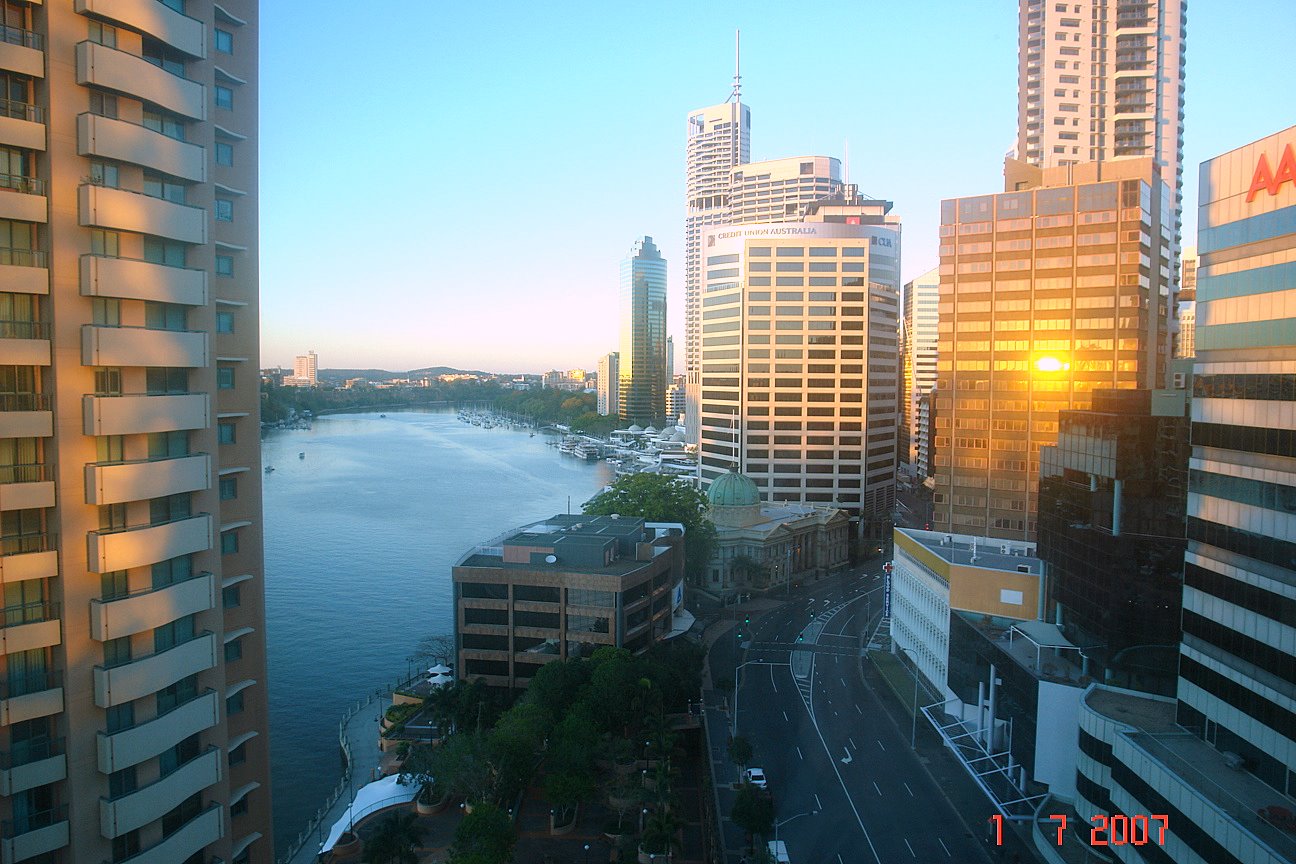
Gary Sauer-Thompson, Brisbane from hotel window, 2007
I awoke on Saturday morning to the sun rising across the river. The picturesque beckoned. 30 seconds latter the moment had gone. In the Marriott Hotel one plays Mark Knopfler and Emmylou Harris' All the Road Running whilst reading the Financial Review and thinking about investment properties, before going for a walk along the river boardwalk to New Farm.
Brisbane is a lovely city despite the f gungho development ethos and the boring high rise apartment towers scattered along the river. Brisbane's growth highlights just how much Adelaide has become a regional city; one that is surviving, rather than thriving like Bendigo or Ballarat in Victoria, which are feeding off a booming Melbourne and its export hubs.
It's a provincial life in Adelaide whereas Brisbane's CBD, which is plugged into the global economy, presents a cosmopolitan life. There 's confidence in the air. The future is full of promise. The money is easy. The river has the yachts and riverside mansions of corporate Australia. It is modern.
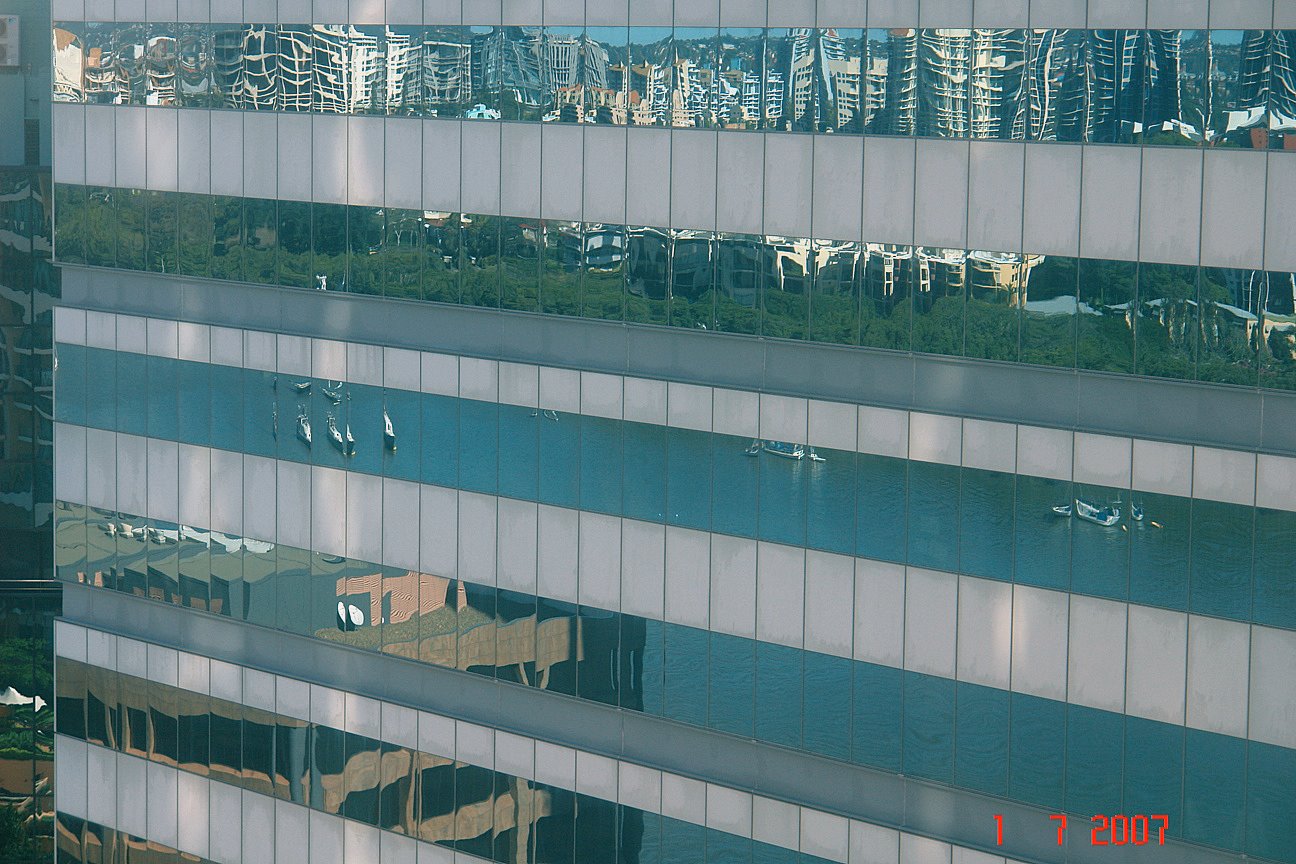
Gary Sauer-Thompson, high rise reflections, 2007
Ten years ago Adelaide had a real sense of loss, no direction and few options. It was reeling, and it has just managed to stop losing people to the other capital cities in the last year. This is the place to listen to Lucinda Williams and her roots-rock music out of Los Angeles about isolation, failed relationships, depression, drug abuse, suicide, and child abuse. This is the place for a moment of catharsis, as it is where the historical shudders are most deeply felt as we live downstream.
The urban message from Brisbane is clear: a stranded Adelaide has to establish a connection to the global economy, if it is to survive. That's the promise of uranium mining at Roxby Downs isn't it. On the other hand Adelaide, can do well to avoid the awful development of the ghastly high rise apartments amdist som beautiful heritage buildings (eg., the beautiful Customs House) The area as a place has little urban life as it has been a carved up by traffic and high rise and so is a space to pass through.
July 2, 2007
the customary and the market
It's often presented as an either or isn't it.
The country has two choices with respect to the relationship between Aboriginal people and the Australian State. Indigenous public policy can be based on self-determination principles and rely on good governance arrangements or it can be continue to be assimilationist and suffer the consequences and burden that comes with dependency.
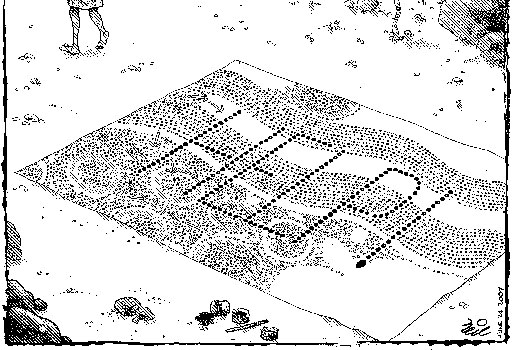
There is a huge problem in the capacity of Aboriginal people emerging from a colonised relationship to take on the responsibility of asserting self-determination through self-governance structures. This emphasizes capacity building, partnerships and re-engineering programs at the local level.
However, the customary (kinship) is interpreted as ‘preserving a traditional hunter-gatherer economy inside a modern capitalist one’ and that such economies ‘are so prevalent because of the destructive separatist notions foisted on Aborigines [human beings without agency] by the chattering classes’. Communalism is equated with socialism by conservative neo-liberal commentators.
However, customary activity is contemporary and integrated with the modern capitalist economy. Aboriginal art, which is based on activities in the customary sector and on-country living, but which is marketed both in Australia and overseas and is underwritten by some state support. Arguably, this activity is contingent on state marketing support because of market failure linked to extreme remoteness, but it is often a community-controlled arts production.
July 1, 2007
Brisbane Square: a green building ?
This building caught my eye when I was walking to the Queensland ArtGallery to see the Indigneous Art Collection.
It is called Brisbane Square It was the four brightly coloured horizontal elements, which strike a counterpoint to the verticality of the office tower, that caught my eye.
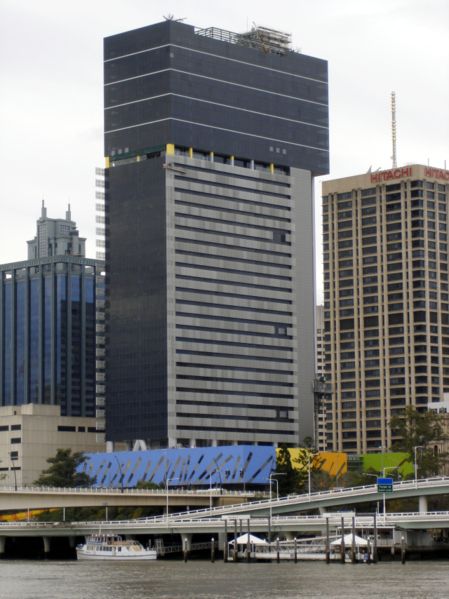
It stood out from the low-grade, high-rise dumb buildings of the CBD that leach the city of architectural diversity as they inject bland homogeneity of glass towers. I remember it as a city block site that had stood vacant for many years as a dusty patch of withered grass.
Brisbane Square is not a square. Like Australia Square in Sydney and City Square in Melbourne, it is a residual commercial space with civic aspirations rather than a significant civic monument. As a building it expresses neither interest in the civic realm nor leadership in contributing to a vision of the city. I could see very little experimentation to develop alternative building forms in the CBD.
If Brisbane Square is more a standard commercial building rather than an experimentation to develop alternative building forms, the the architects Denton Corker Marshall designed the building as a glass box with state-of-the-art curtain wall glazing technology that achieves a five-greenstar rating. It has additional sun-screening with the sun-screen panels on the east and west facades, with pressed metal tapered struts which hold the panels off the building to accommodate window-cleaning apparatus and to enhance the environmental efficiency of the council tenancy zone.