|
July 9, 2007
Over the weekend, as I walked to and from Adelaide Festival of Idea, I took a few photos as if I were a visitor from elsewhere attending the Festival. What caught my eye about the CBD was the contrast between the postmodern new:
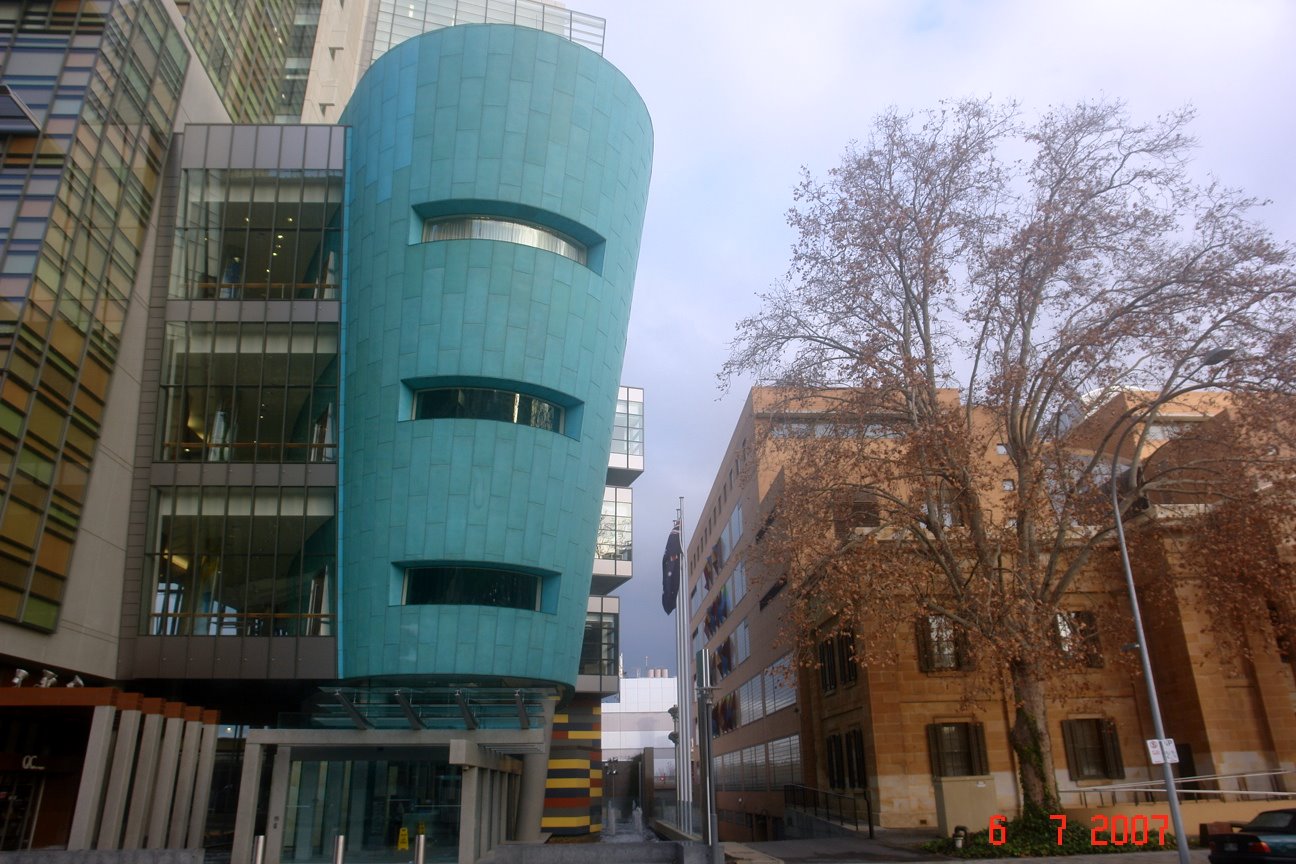
Gary Sauer-Thompson, Federal Court, Adelaide, 2007
and the late 19th colonial old:
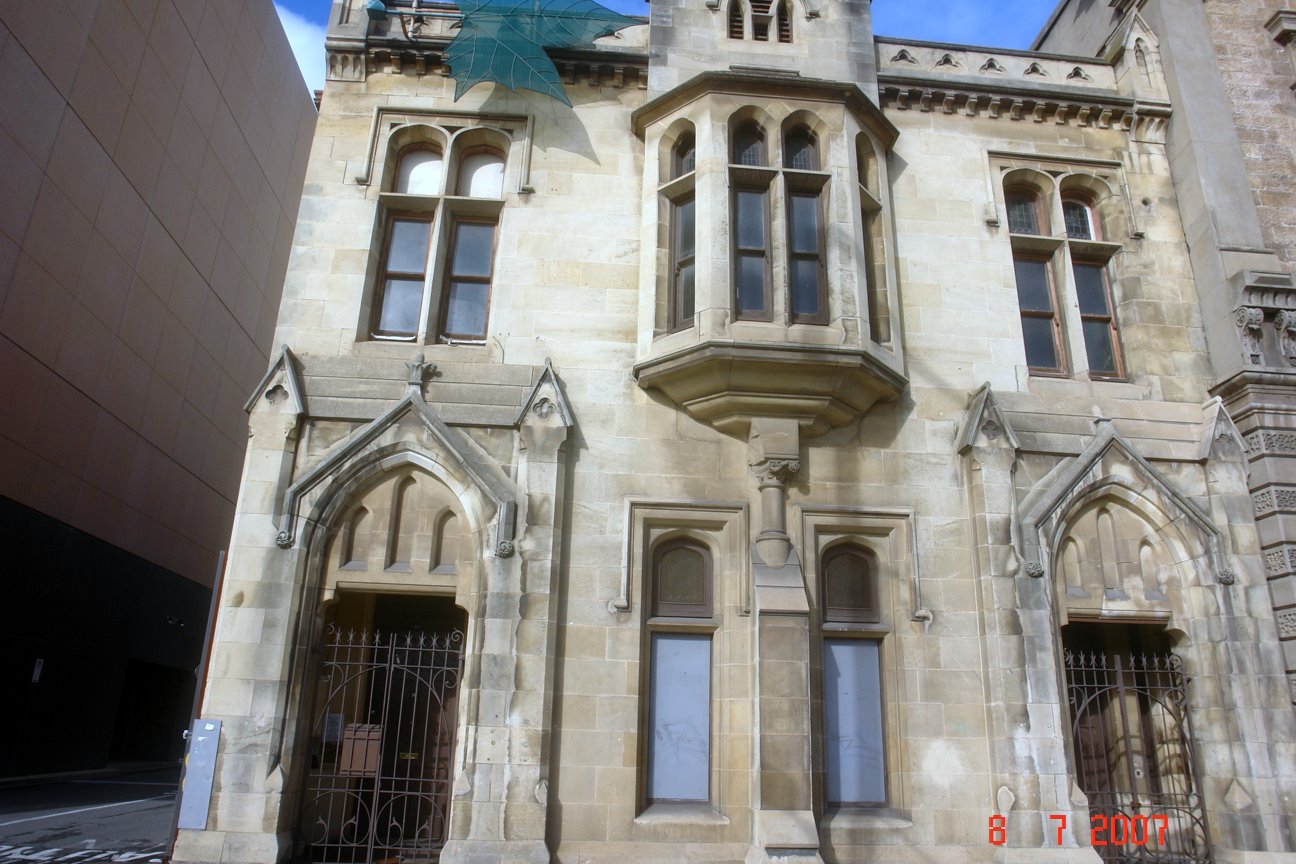
Gary Sauer-Thompson, along North Terrace, Adelaide, 2007
The old and the new surfaced in the Festival in the form of witty attacks on postmodernism by die hardened aged modernists, whose wit covered over an appalling ignorance of the philosophical issues involved.
The person in question was Francis Wheen who was presenting material from his recent How Mumbo-Jumbo Conquered the World: A Short History of Modern Delusions Wheen argued that the inverted commas which postmodernists invariably place round the word "reality" means that they see everything from history to quantum physics as a text, subject to the "infinite play of signification". There is no reality outside the text. No names were mentioned.
Wheen stated that if all notions of truth and falsity cease to have any validity, how can one combat bogus ideas - or indeed outright lies? He argued that there is a mass of carefully empirical research on the Nazi extermination of the Jews. As Professor Richard Evans points out, "To regard it as fictional, unreal or no nearer to historical reality than, say, the work of the 'revisionists' who deny that Auschwitz ever happened at all, is simply wrong. Here is an issue where evidence really counts, and can be used to establish the essential facts. Auschwitz was not a discourse."
What Wheen ignored was the postmodern view that Auschwitz happened but there is a discourse about Auschwitz. What Wheen never mentioned was that the thrust of the postmodern critique of the modernist assumptions about language addressed its mirror assumption: language mirrors the real and that we have unmediated access to the reality.
Wheen refuted postmodernism by saying tell a postmodernist to jump out of the window. It was shocking to hear this cultural wars junk being presented at a Festival where most of the presentations and discussions were of high quality. It was so bad that I could only presume that were were being presented with satire about old modernists struggling to come to grips with the new. It was Sunday morning entertainment.
|


Trackback:
http://larvatusprodeo.net/2007/07/09/urbanism-and-ideas-and-blogging/