August 31, 2005
Graffiti & public spaces
This website showcases graffiti photos from Scotland (especially Glasgow and Edinburgh graffiti):

Edinburgh
Graffiti is usually seen as vandalism of public spaces. But it can be seen as a valid artistic expression.
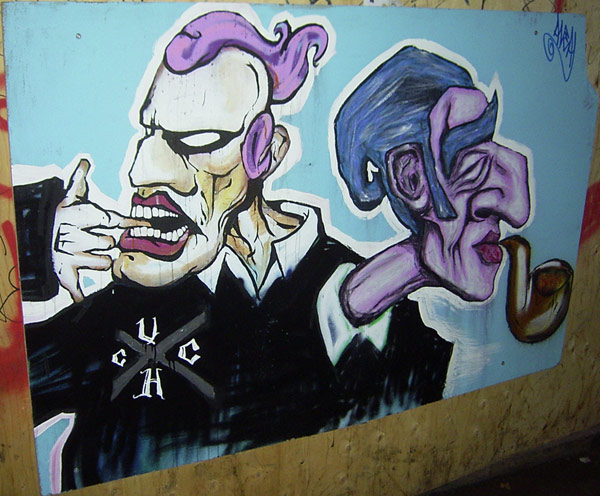
More here on graffiti as street art.
August 30, 2005
Hurricane Katrina, global warming, New Orleans
Hurricane Katrina, which was a Category 5 storm with winds up to 280km/h that roared towards the city of New Orleans in the southern US state of Louisiana in the Gulf of New Mexico, has been downgraded to a category three tropical storm with strong winds and heavy rains.
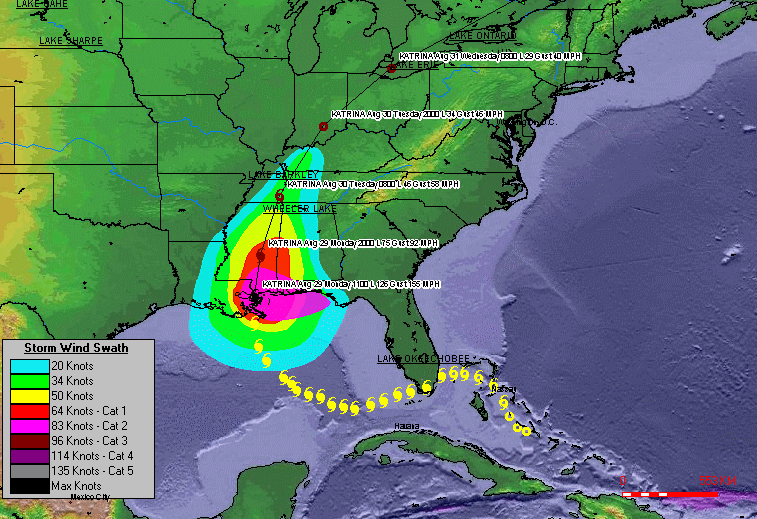
HurricaneKatrina blog. BY all accounts New Orleans is a disaster waiting to happen. The city lies below sea level, in a bowl bordered by levees that fend off Lake Pontchartrain to the north and the Mississippi River to the south and west. Because of draining the Mississippi River delta for agriculture the city is sinking further. This puts it at increasing flood risk from storms. Many of the Louisiana city's 500,000 residents live between 1.8 and 2.4 metres below sea level.They are surrounded by the waters of the Mississippi River, Lake Pontchartrain, and several bays that are n higher than the city.
New Orleans was spared the worst when the Category 4 storm turned at the last moment as it hit the Gulf of Mexico coast. However, New Orlean's network of levees, canals and pumps are likely to be overwhelmed if the forecasts of a 28-foot storm surge and 15 inches of rain proved accurate. It is highly likely that the levees will break, and most of the city could be under water up to 30 feet deep.
Is this hurricane more than just wild weather? Just simply the fury of an untamed nature? Is it a natural environmental cycle is responsible rather than any human-induced change?
Can we think that way about nature anymore at a time of global warming caused by human intervention? Soem studies suggest that hurricanes have become significantly stronger in the past few decades during the same period that global average temperatures have increased. The link is not that global warming causes hurriances, rather global warming increases the intensity of hurricanes.
That is not good news for the cities along the Gulf of Mexico Coast.
Update: 31 August
Barista is keeping a good eye on what is happening in New Orleans.
What happened is that New Orleans gradually filled with water after the worst of the danger had appeared to pass. Billion desscribes what is happening in graphic terms as streets are transformed into canals;
Add in the raw waste from a hundred backed-up sewer lines, the rotting food from a hundred thousand kitchen refrigerators and the industrial filth of one of the country's largest ports and petrochemical centers, plus the corpses, dead animals, debris and the mosquito eggs -- many of them no doubt already hatching -- and you've got the makings of a first-class public health nightmare. Stew in the sun and the heat of a Louisiana September for a week or two, and watch the nightmare become a reality.
New Orleans as a living, functioning city has ceased to exist.
August 29, 2005
Deleuze, Bacon, abstraction
I have just come across some interesting comments by K-Punk on Gilles Deleuze and Francis Bacon, whilst commenting on a philosopher's forum Centre for Research in Modern European Philosophy at Middlesex University earlier this year.
In the Bacon text--Francis Bacon: The Logic of Sensation--Deleuze attempts to construct a logic of sensations from the artist's work. While the idea of figuration in painting has largely been representational Deleuze sees Bacon, (and Cezanne before him) collapsing the Figure into the world of forces, placing it in a new relation to force. Deluze's idea of 'color-force' is an attempt to understand how color can be expressive of force rather than representative.
K-Punk says that in The Logic of Sensation, Deleuze's encounter with Bacon, Bacon is seen to be an artist of abstraction. Bacon isolates figures from their everyday background:
"...before subjecting them to processes of deformation, dissipation, shadowing and smudging so that they end up as abstract streaks. Bacon's abstraction is a kind of middle way between pure abstraction, which buries the creative spark in geometric formalism, and abstract expressionism, which surrenders form to chaos."
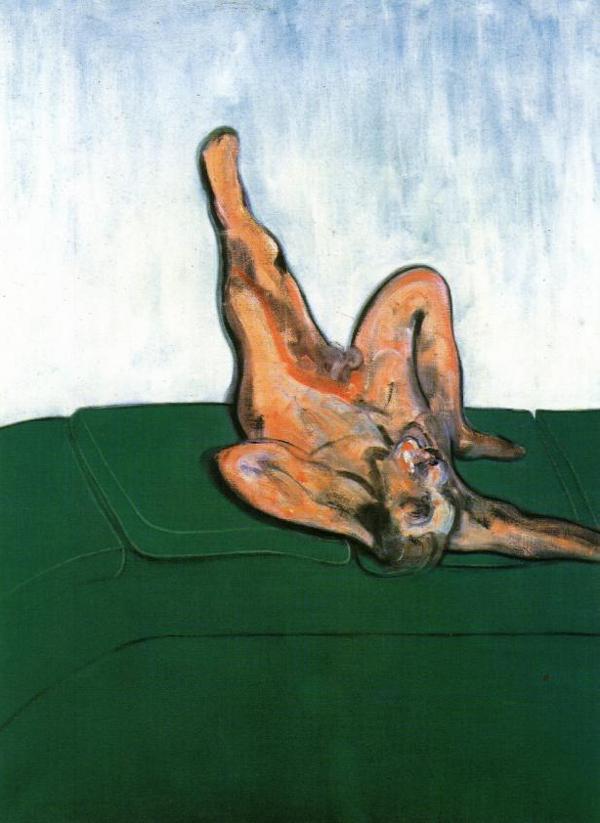
Francis Bacon, Reclining Figure, 1959
On could argue that the increasing prominence of a cosmopolitanized, professionalized abstract art in the 1960s was the art of an emerging class, a new cultural bourgeoisie in industrial Fordist capitalism. It was opposed by the cultural conservatives (the art historian Kenneth Clarke) who deployed a 'humanistic' vocabulary of aesthetic grandeur and figuration.
K-punk usefully describes this process of abstraction by linking it back to Wilhelm Worringer in 'Abstraction and Empathy' and 'Form in Gothic':
The earliest art, Worringer maintained, was an attempt to subdue the forces of chaotic Nature with rectilinear forms. As humanity becomes more settled, it develops an 'organic' representational art which centres on the human figure. The Gothic line interrupts this representational repose with an unsettling new form of abstraction, which is neither purely mechanical as in primitive abstraction nor organic as in Greek and Roman representationalism: this barbaric line is uncanny, zigzagging; a 'vitalized geometry'. For Deleuze, is in this line, and in the germinal pulse that animates it, that we are to locate those figures that arouse horror in us through their occupation of an interzone between life and death, animate and inanimate. Nonorganic Life is the throbbing energy formation Deleuze follows through nomad art, Gothic cathedrals, German expressionist cinema and Bacon.
This strikes me as being on the money, even though I'm not yet sure how it connects with Deluze's argument that sensation as the primary modality of art.
August 28, 2005
bad urban development
A quick note for those wired professionals on the go who have an aesthetic sense and care about good design.

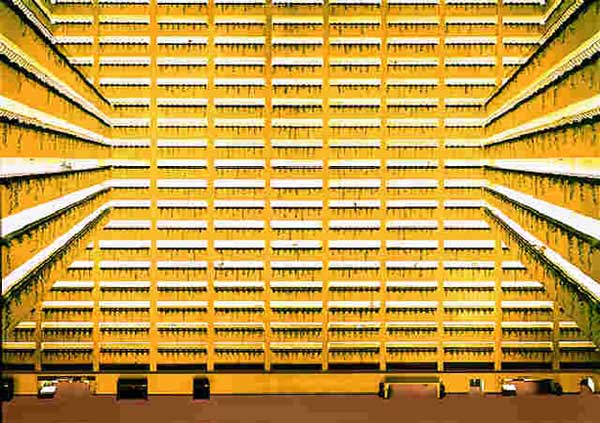
From an exhibition at the Melbourne Centre for Contemporary Photography. There is little online.
It's an upbeart image to juxtapose to my sour note about the high density development--blocks of units and apartments---that are popping up everywhere in our cities. This high density housing is a future mode of urban living, but most of them are poorly sited, badly built, compartmentalised blocks for those on limited incomes.
It need not be that way. What we are not seeing much of in Australia is the European model of 4-6 story blocks with courtyards, different sizes of flats/apartments and mix of people.
A poorly regulated development industry is throwing up poorly designed buildings that jam people together without any sense of community or urban village like ethos.
There is little urban planning because state and local government's lack the expertise to facilitate change to a better mode of urban life.
August 27, 2005
Lost Highway
I managed to watch an episode of Lost Highway: The Story Of Country Music called 'The Road to Nashville' on ABC free-to-air. Lost Highway is a four-part series made by the BBC with archival footage, which explores the big shifts in style in country music the last century. It has no connection with the David Lynch film of the same name.
I missed the earlier episode, "Down from the Mountain", which was about The Carter Family, the music halls radio, the depression of the 30s and the rise of bluegrass. I presume that is the old weird Americia music Greil Marcus refers to in his book on Dylan's Basement Tapes.
I watched 'The Road to Nashville' primarily because it was about Hank Williams, with its roots in the regional honkey tonk bars of the 1930s, with its ethos of live fast, love hard, and die young.
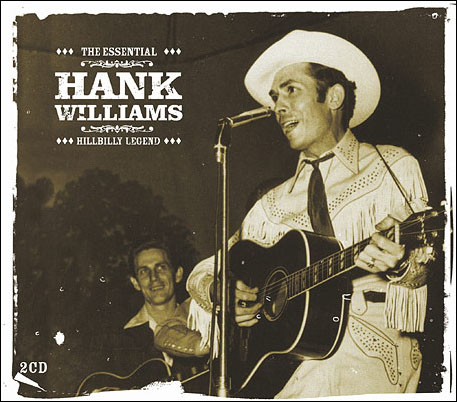
I had no time or interest for the smooth schmaaltz of the Nashville Sound. I concur with the program's argument: that country music lost its way through squandering the heritage of Hank Williams with the conservative Nashville hegemony. "Nashville" has become synonymous with syrupy strings and backing vocals through the '60s and into the early '70s that signified putrefaction and commodification of a rich tradition of folk artistry.
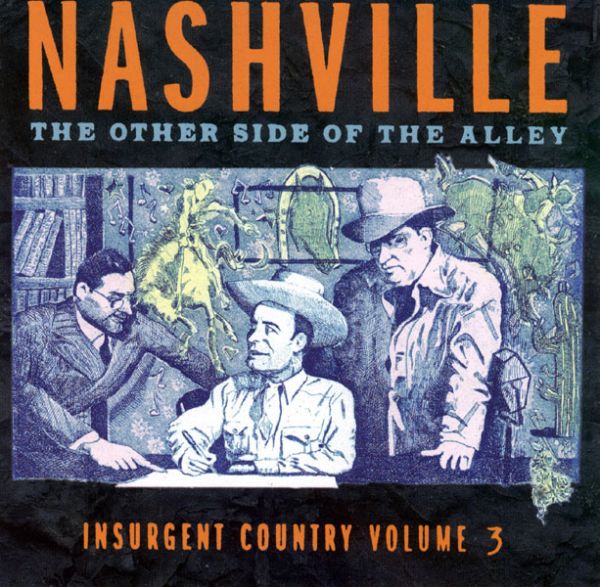
William's music is about loss, heartbreak, despair, cutting pathos from the perspective of a rambling man with agony in his voice.
August 25, 2005
towards silence?
In romanticism and modernism there is an undercurrent that tries to reach toward the "unthought," or the "inexpressible." This kind of thinking presupposes that language is an imperfect tool; that our received vocabularies and categories are inadequate; that there is an experienced gap between the categories supplied by language and felt reality; and that the inadequacy of our categories need to be signaled even as we use the words we have inherited.
A Celan poem expresses this:
"Should
should a man
should a man come into the world, today, with
the shining beard of the
patriarchs: he could,
if he spoke of this
time, he
could
only babble and babble
over, over
againagain"
(Trans: Michael Hamburger)
August 24, 2005
"Lest We Forget"
Conservatives are engaged in using their political power to militarise Australian historical memory.
This cartoon deflates that use of power to reinforce the military tradition,inculcate its virtues, commemorate war, rework and transmit the national narratives.
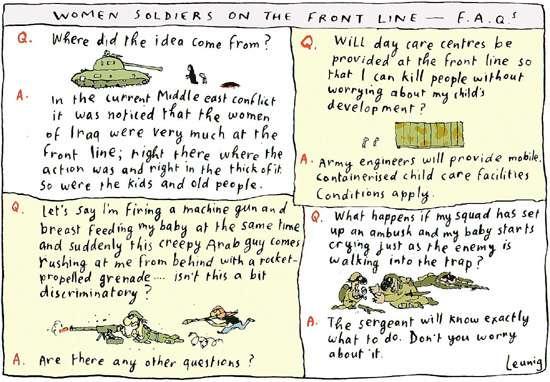
On the conservative reshaping of our historical memory, real Australian history begins with Gallipoli, when Australian men joined the first Australian Imperial Force to fight overseas for modern Australian freedom. Today we join the military force of the US empire to fight in Iraq and Afghanistan for Australian freedom.
August 23, 2005
Francis Bacon
Francis Bacon's paintings are disturbing.They present us with images of unremitting human pain and suffering.
"The human beings in Bacon's pictures seem half-animal, or half-reptilian. Sometimes they have the whiteness of death; sometimes they are white and red, like joints of meat...He wants to make the animal come through the human being; and he wants the paint itself to carry its own implications..."
Francis Bacon: The Observer Profile, The Observer Weekend Review, Sunday, 27th May, 1962.
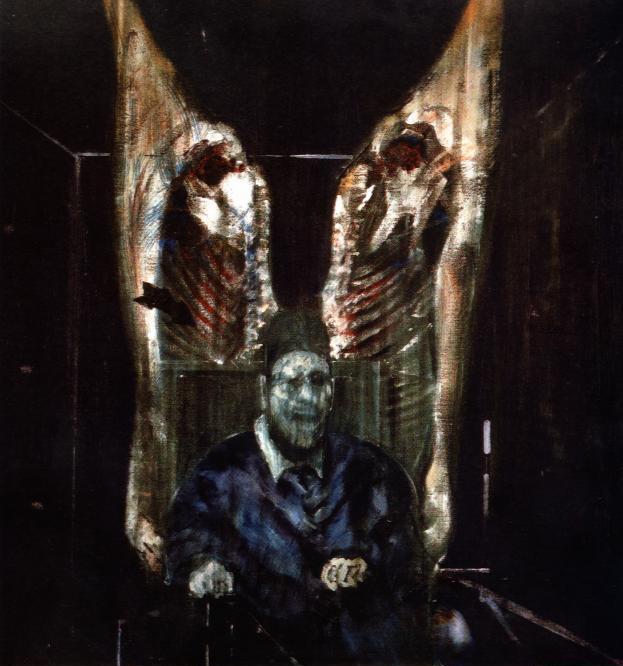
Francis Bacon, Figure with Meat, 1954
You can understand why critics, film makers and philosophers analyze the sensational affect of Bacon's images.
August 22, 2005
Melbourne: Spencer Street Redevelopment
An iconic public building?
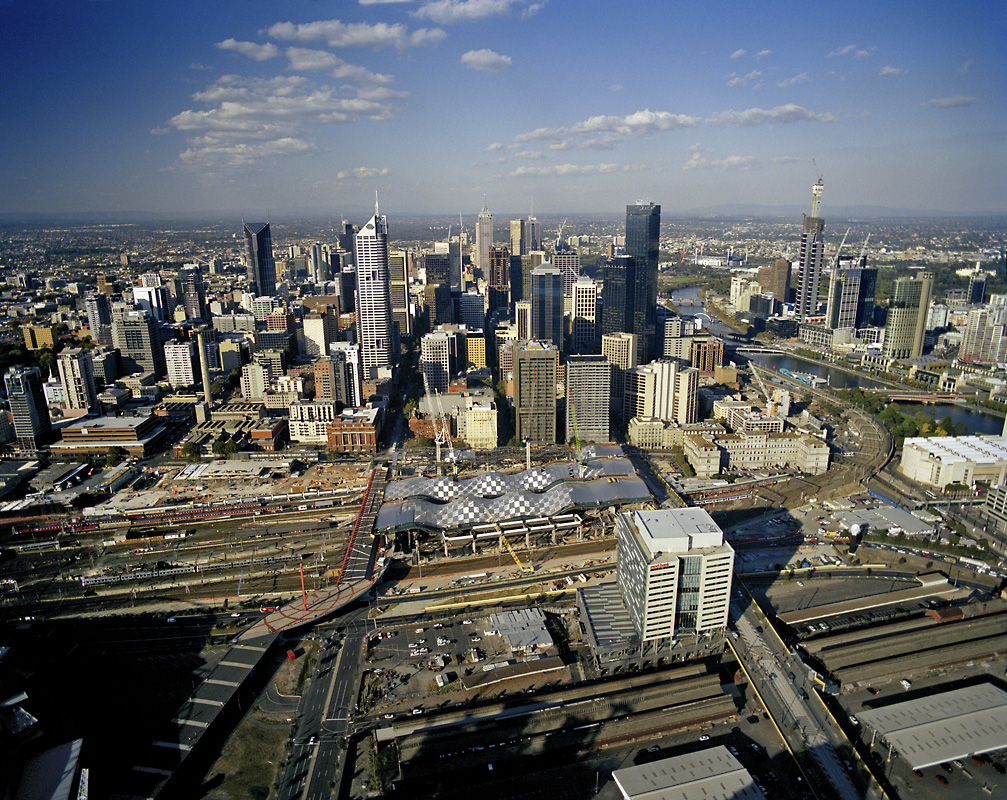
Melbourne's new Spencer Street Railway Station. Is it more iconic than Federation Square?
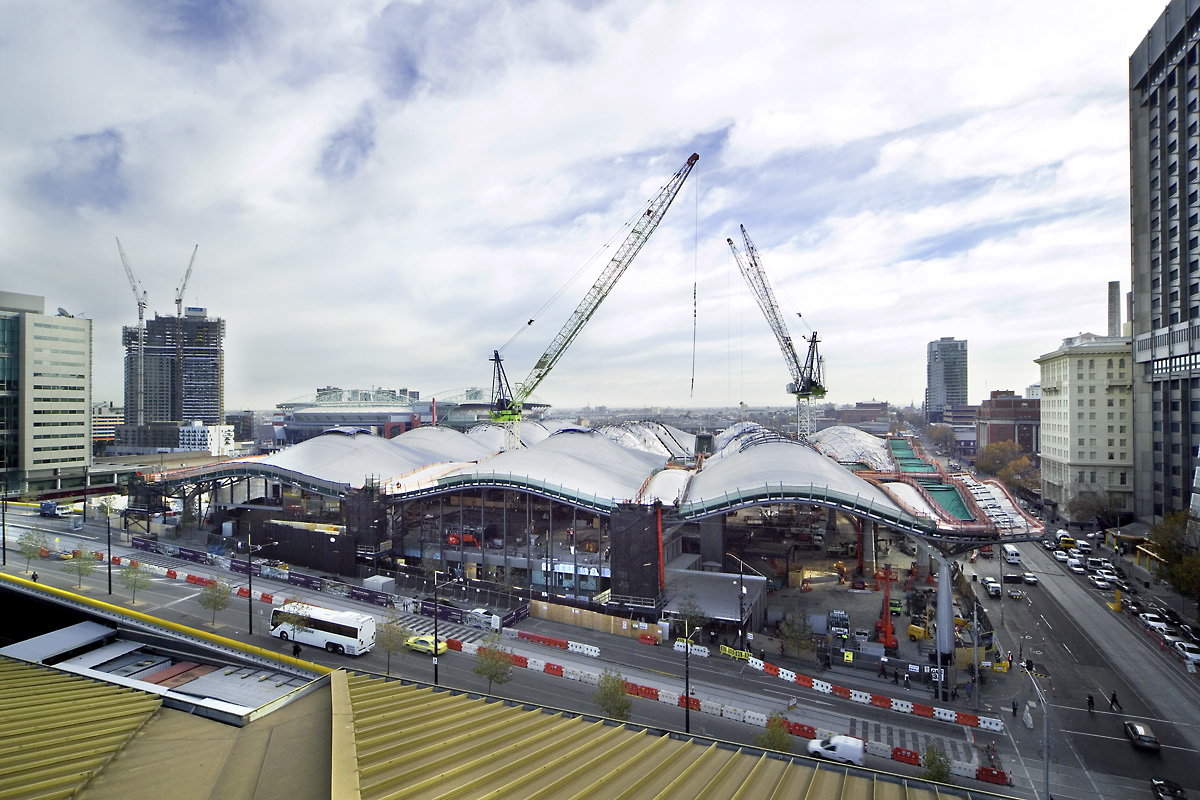
The complex curve-on-curve is a rupture with a rectangular modernism.
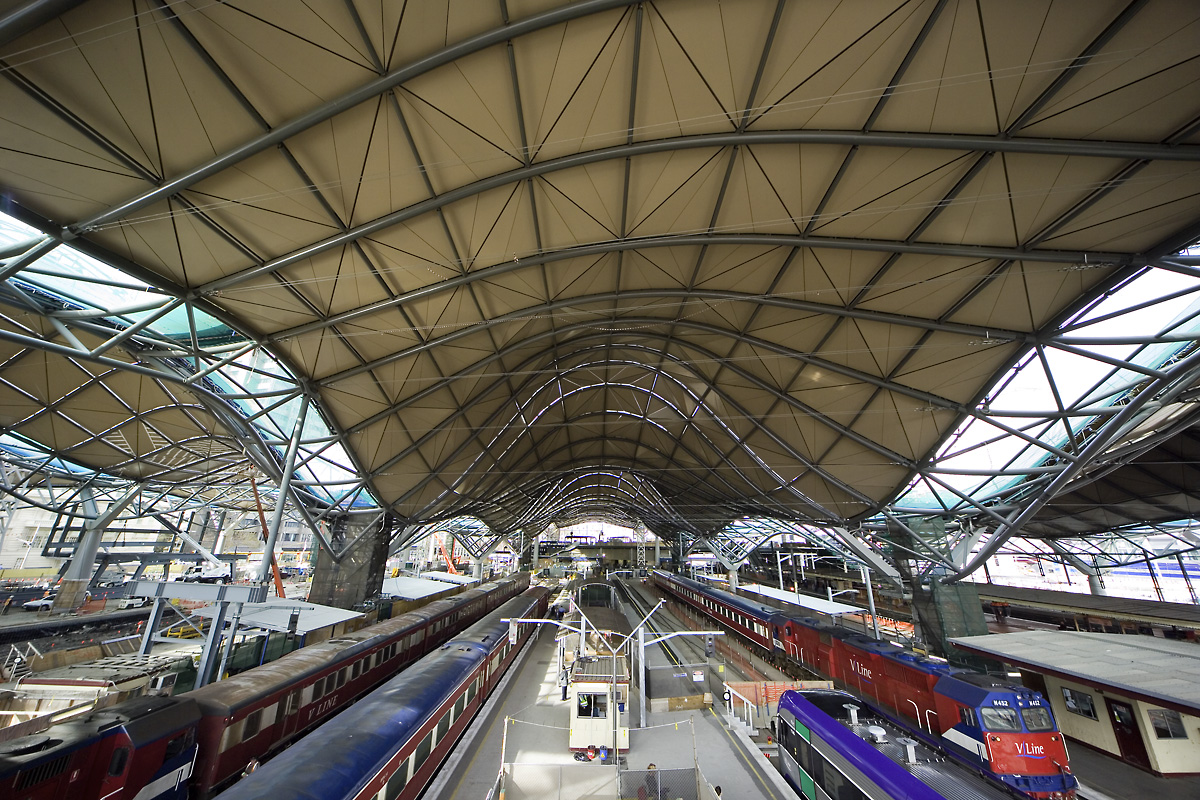
Nicholas Grimshaw, Redevelopment of Spencer Street Station into Southern Cross Station based on a contemporary reinterpretation of the great roof sheds of the nineteenth century.
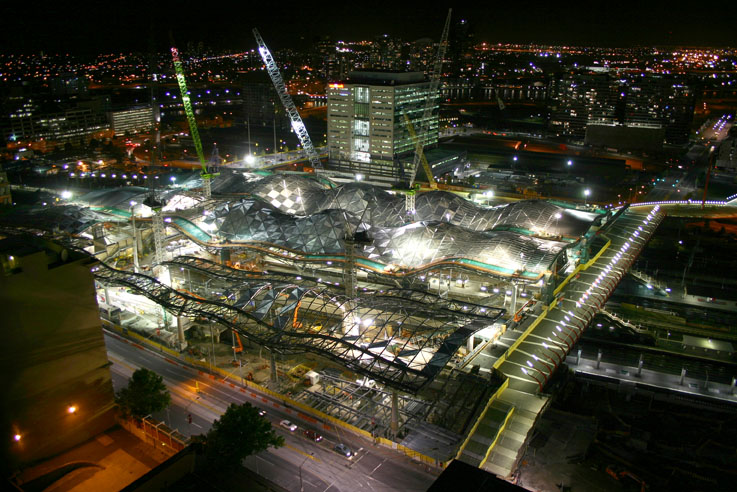
The innovative design will allow the station to become a central transport nodal hub that services regional and interstate rail and bus connections.
August 21, 2005
decline of public spaces
I've often remarked that in Adelaide the public spaces in the inner city are frequently empty with people walking about and that they are dominated by the car. Similarly in Canberra. Both stand in contrast to the reinvigorated urban life in Copenhagen.
Adelaide, for instance, is making no attempt to reduce car parking places and restoring pedestrian zones to reinvigorate a decaying urban core. The car rules, period. It does not have congenional public places apart from the parklands. For our conservative city fathers the car=business=commerce. The city space is about commerce period.
The urban mode of life in the Gold Coast in south eastern Queensland is even worse, judging by these two cartoons:
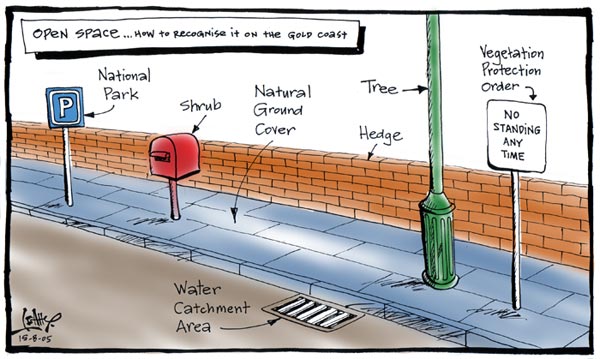
Leahy, Gold Coast City Council definitions
And:
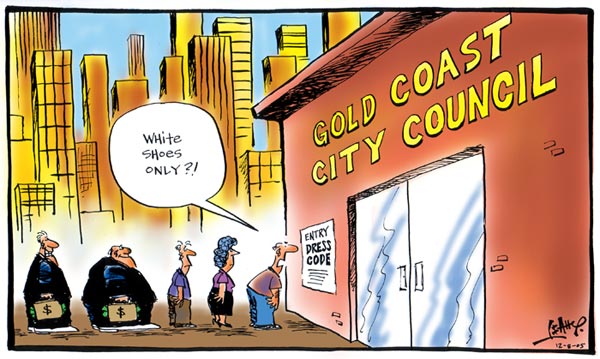
Leahy, If the shoe fits...
The decline of public spaces is not just a question of cars dominating our cities. We have heightened security measures and camera surveillance, and the indifference to the public by those who think that the internet and their families provide all the social interaction they need to live flourishing lives.
Canberra has gone--it was designed in the early 20th century for the car, not for walking. The best that Canberra can hope for is the ongoing revitalization of the inner suburbs of Manuka and Kingston.
But as Adelaide was a nineteenth century city it can still re-invent itself like Barcelona and Lyons, and so become a great people-friendly Australian city. Same with Hobart in Tasmania.
August 20, 2005
something strange is happening
We all notice it. Some call the emphasis on security and law and order the politics of fear.

Australia has a strong tradition of cartoons, especially political ones. Cartooning as an art form has grown with the print media.
An exhibition of this graphic medium at the National Museum of Australia.
August 18, 2005
a wry joke
I just came across this:
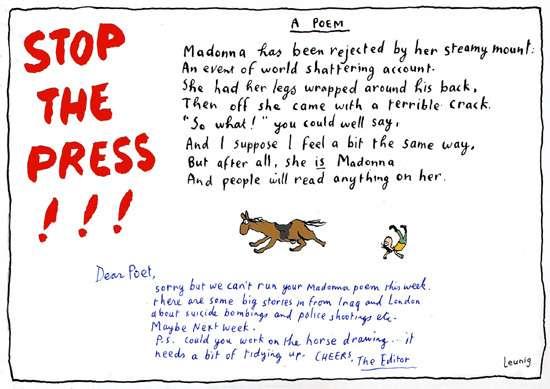
Leunig
Lovely isn't it?
It bought a smile to my face and it lightened my mood on a dark, cold and wet winter's day.
August 17, 2005
Harold Cazneaux
I've been exploring the National Library's archives of online exhibitions.
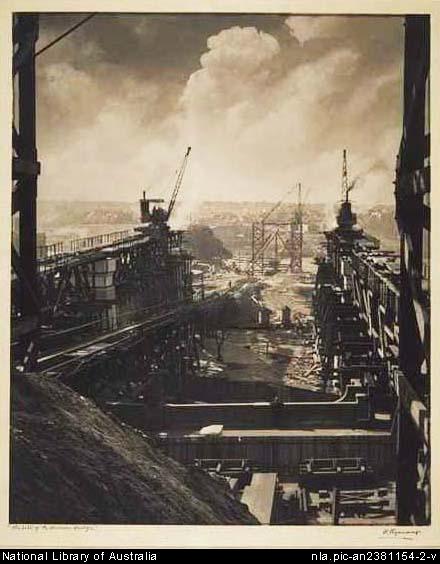
Harold Cazneaux, Sydney Harbour Bridge
He is seen as important in the development of Australian photography because as a pictorialist photographer he broke from the constrained formalism of studio photography, stepped outside and produced a body of influential and enduring images of Australian life.
August 16, 2005
Dale Frank #2
Every critical analysis of a good painting is a critic analysed says Dale Frank.
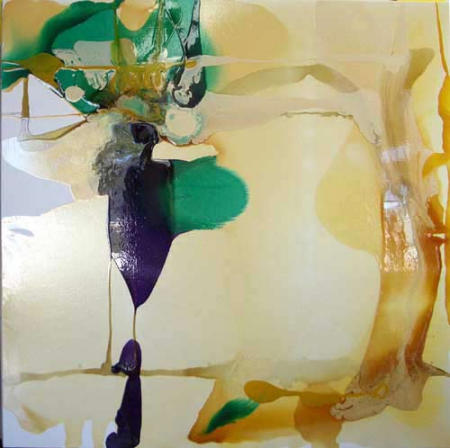
Dale Frank Remember Fortune Cookie Road 13
Maybe these paintings are about the act of painting, beauty and abstraction, rather than the painter analysed.
Whatever.
I do recall that the orginal fortune cookie road was fraught with danger.
reality and representation
Interesting:
People refuse to accept the fact that reality is becoming indistinguishable from representation. This is a hard idea to accept, although the "virtual world" is certainly everywhere.
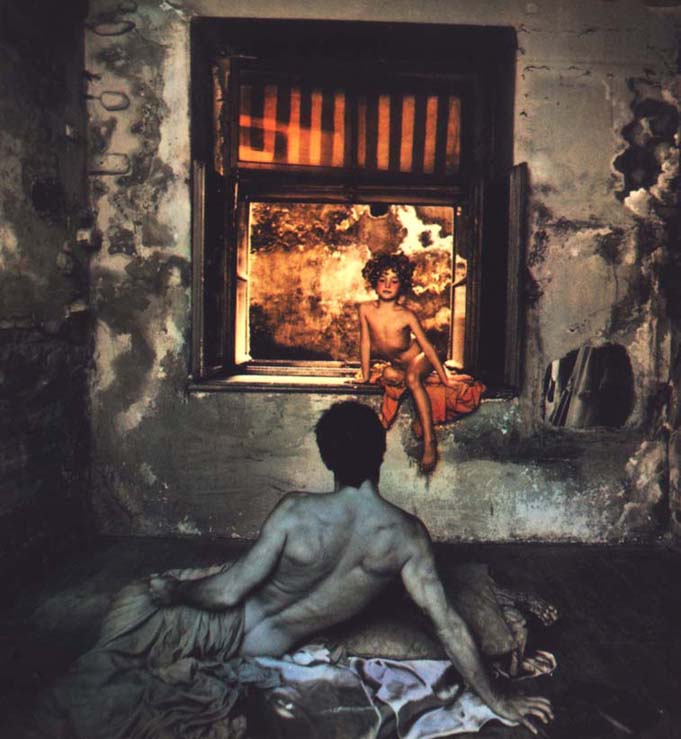
Jan Saudek, The Kitsch, 1991
Is it difficult to accept that we view the world through our visual culture; one that is so shaped by publicity, media and advertising?
August 15, 2005
regionalism revisited
As you may have noticed I've not been posting since Thursday. I've been offline.
I took a few days off as the household is still not connected to ADSL-2. I'm still awaiting on the wireless modem to be delivered.
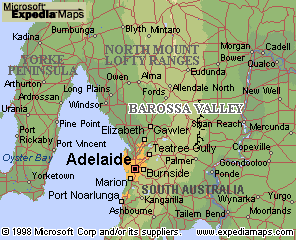
I spent the last few days cruising the Eden Valley in South Australia checking out the riesling and other wines. I missed Henschke, which was a pity in the light of this.
There was no internet cafe in any of the small towns in the Eden Valley region. So that was that for my plan to posting my little exploration of South Australian regionalism as I travelled along.
What was interesting on the trip was the regionalism of the Barossa Valley: those Aussie wines and foods that reflect the diversity of style and flavour to be found in this particular region of South Australia.
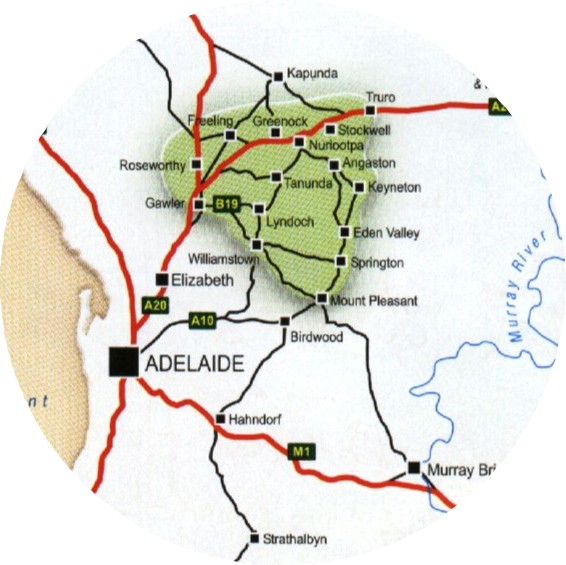
The fullest expression of this regionalism was Maggie Beer as found in her history the cookbook and the products.
I guess the regional food supplements and builds on the wine
August 11, 2005
Philip Hunter: layered landscapes
It is going to be difficult to post as I fly back to Adelaide from Canberra this afternoon to a household with no internet access---ADSL-2 is in the process of being put on.
So a quick image of a layered landscape that refers to the flat, far-stretching landscape of the Wimmera in Victoria:
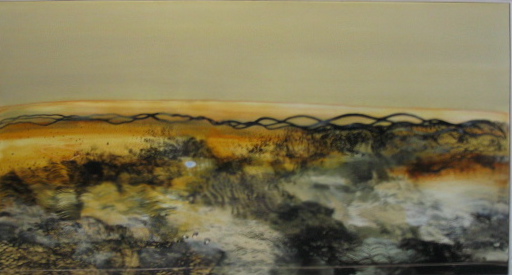
Philip Hunter, Long Paddock, no 3, 2005
A layered landscape questions the conception of the landcape as a void, an emptiness or blackhole.
August 10, 2005
Philip Hunter #2
Posting is a bit of hit and miss affair at the moment as I'm struggling to gain computer and internet access in Canberra, until the office is properly set up. That will be next week, hopefully.
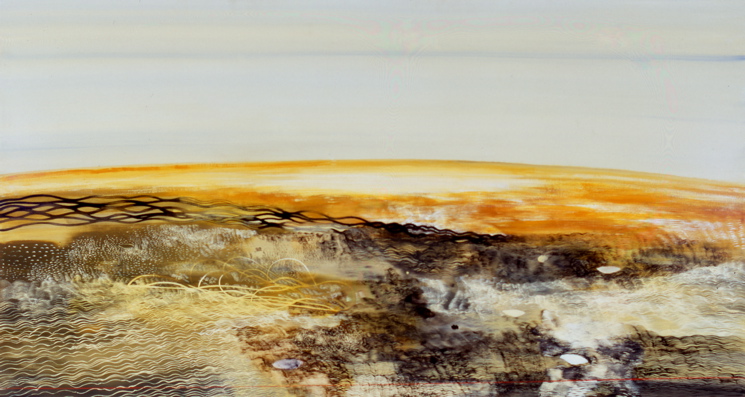
Philip Hunter, Long Paddock, no 2, 2005
We have come across Philip Hunter's layered landscapes at junk for code before.
August 7, 2005
on the road
I'm in Sydney for the weekend.I haven't had that much time in Sydney to weblog as I am caught up in meetings. At the moment I have little time to read newspapers and I have little access to a computer. I can only access dialup in the Novotel in Brighton le Sands over looking Botany Bay.
I overheard a conversation about Dale Franks in a fish restaurant last night. His name floated above the general din for a brief moment.
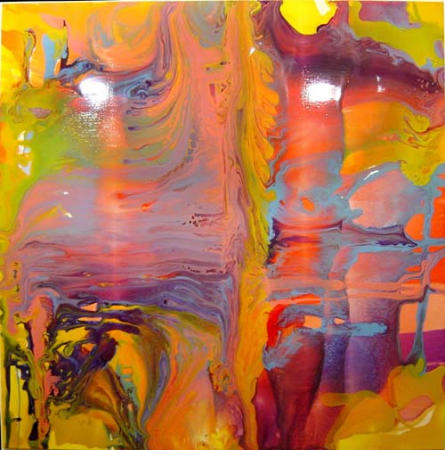
Dale Frank, Remember Fortune Cookie Road no 3
Brighton-le-Sands is squeezed between the air port and the bay.It is a bustling Greek suburb with lots of 1960s redbrick rectangular blocks of flats with white lacey grills on the balconeys.
I'm just here at the Novotel for the weekend and I drive to Canberra on Monday morning to an empty building to begin to set up an office. Access to broadband will be difficult in Canberra for several days.
August 4, 2005
spam
 Spam is often defined as any email we don't want and didn't ask for--junk email. But it borders onto intrusive advertising.
The economics of email spam are seductive. It is relatively easy and incredibly cheap for anyone to send out millions of messages to anyone with an email account. Unlike any other form of marketing in history, most of the delivery costs are borne by the recipients: by the Internet-service providers (ISPs) and corporations that maintain our mail servers and then by us.
That is why the flood of junk email offers for low mortgage rates, printer toner cartridges, penile implants, money-laundering deals with wives of deposed African dictators, and much, much more is swelling by 20% each month, according to some ISPs. In the United States and Europe, spam accounts for between 40% and 70% of all email traffic, depending on whom you ask.

In their attempt to keep spam out of their systems, ISPs and big corporations are also blocking about 15% of all legitimate marketing messages. They use software that filters out messages whose content raises red flags. But spammers can, and do, fool the filters.

Many of the products advertised in spam are fraudulent in nature, such as quack medications and get-rich-quick schemes. Spam is frequently used to advertise scams, such as diploma mills, advance fee fraud, pyramid schemes, stock pump-and-dump schemes, and password phishing and pornography.
I'm just not okay with me having to to pay for the ads of spammers whose work is based on the theft of legitimate email adresses. I see spammers as criminals as they often falsely claim that the message was solicited, or hide their identity, or make unsubstantiated or false claims, and at a minimum commit trespass to chattels.
I cannot see the system changing.
August 3, 2005
Dr. Death?
Medicine has been in the news lately and it has not been good news.
I was reminded of Frank Miller's Sin City
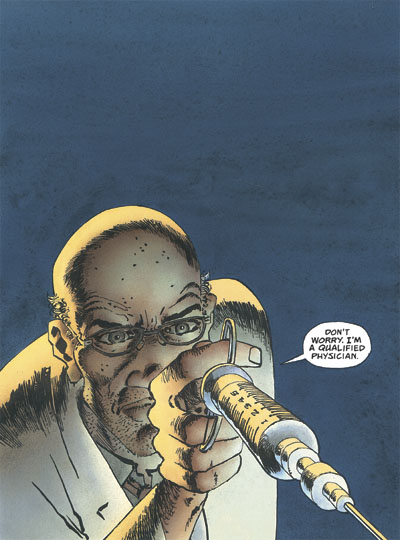
It is a representation of the doctors who kill people.
August 2, 2005
global culture
The Murdochs have been in the news lately with Lachlan Murdoch spitting the dummy and leaving the New York court of the media Sun King.
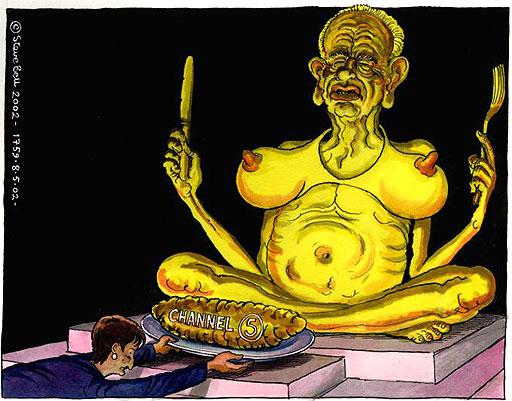
News Corporation wants to expand its British television and radio interests; and its Australian media interests. Deregulating the commercial media and communication markets means newspapers getting together with radio and TV ownership.
It is one way to represent the formation of global culture.
We usually regard global culture and American culture as synonymous---global culture is a monolithic entity foisted on the world by the American media.
It's defenders say that American popular culture less imperialistic than cosmopolitan. Instead of American mass culture transforminmg the world into a replica of the United States America's dependence on foreign cultures has made the United States a replica of the world.