September 30, 2005
Little need to comment
There is little need to comment, is there?
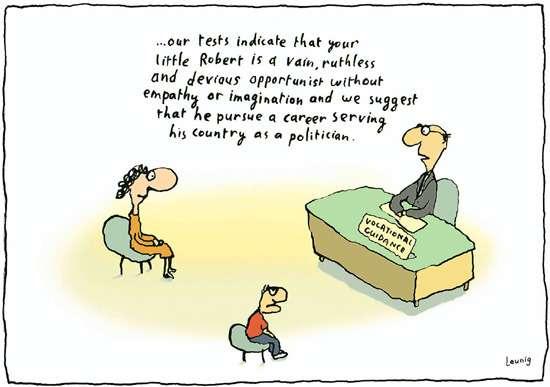
All I would add is that it misses out on the way that politicians are slick manipulators of unspecified fear and anxieties to gain and retain power, and to bolster their own political careers.
In a recent speech to Melbourne University students Mark Latham, the former opposition leader of the federal ALP party, warned young people to keep out of politics.he argued that 'the system is fundamentally sick and broken, and there are other more productive and satisfying ways you can contribute to society.'
September 29, 2005
Queenstown
That is Queenstown Tasmania, not Queenstown New Zealand. It is an old mining town in the north west of Tasmania.
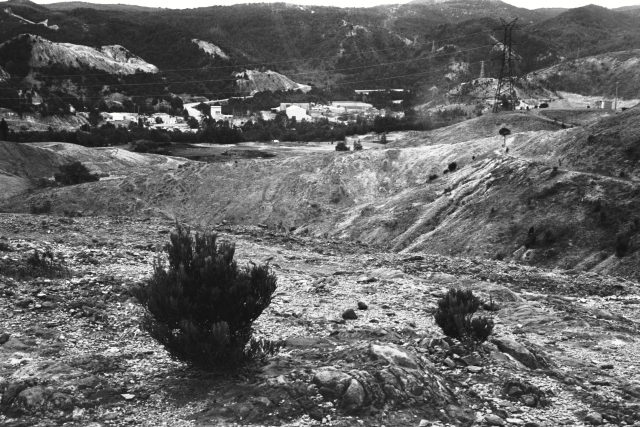
The photo is by Dr Gwyneth R Daniel [gwynethrdaniel@ntlworld.com].
He sent me some of his wonderful images to post on junk for code. Like others have done.
The ecological devastation caused by the region's copper mines have given rise to a lunar-like environment:
While the Queenstown region is outwardly barren, the link between man and the environment can be seen everywhere. All the trees were cleared to feed smelters which extracted copper from ore. Sulfur is a by-product of mining operations and when this is mixed with rain water it becomes acid run-off which accumulates in kilometer deep pits.
See here
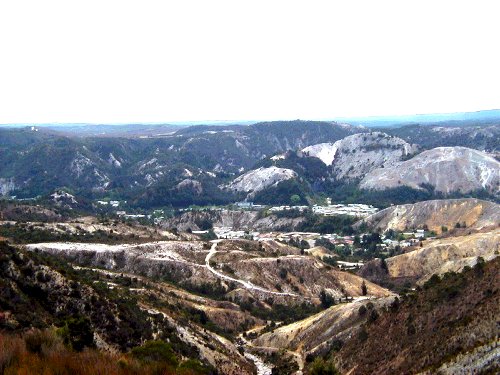
Dr Gwyneth R Daniel
You can see why the lunar landscapes of Queenstown have a fascinatation for photographers.
September 27, 2005
global village & Web2
I've always thought the old talk about the global village was a bit suss.
 In postmodernity creating a global village means that everything and everyone is online all the time. The implication is that geography (place) no longer matters.
Now we do live in a network society. Though I'm online most of the time I don't live in the global village as such.
I live in Adelaide and Canberra--spaces that some call local in contrast to global, but which I understand as particular places. We do need to break out of the old global village model favoured by the cosmopolitans.
In commenting on the Web2 conference Zephoria over at apophenia says it well:
On an economic level, globalization has both positive and negative implications. But on a personal level, no one actually wants to live in a global village. You can't actually be emotionally connected to everyone in the world. While the global village provides innumerable resources and the possibility to connect to anyone, people narrow their attention to only focus on the things that matter. What matters is conceptually "local." In business, the local part of glocalization mostly refers to geography. Yet, the critical "local" in digital glocalization concerns culture and social networks. You care about the people that are like you and the cultural elements that resonate with you. In the most extreme sense, the local is simply you alone. There is certain a geographical component to the local because the people in your region probably share more cultural factors with you and are more likely connected to you in network terms, but this is not a given. In fact, the folks who were most geographically alienated were the first on the digital bandwagon ---they wanted the global so that they could find others like them regardless of physical location.
Glocalization is such an ugly world. I much prefer place. I never understood the local as being alone. Place is the regional.
What then is Web2? What does it signify?
William Blaze at Abstract Dynamics has a go. He says Web2 refers to a
"... real feeling among some that there is something going on that makes the web of today different then the web of a few years ago. Blogs, open standards, long tails and the like... Which of course doesn't sound that different then say the goes of the plain old unnumbered "web", back ten years ago. But the Web 2.0 are right, the web is different now....What really separates the "Web 2.0" from the "web" is the professionalism, the striation between the insiders and the users. When the web first started any motivated individual with an internet connection could join in the building. HTML took an hour or two to learn, and anyone could build. In the Web 2.0 they don't talk about anyone building sites, they talk about anyone publishing content. What's left unsaid is that when doing so they'll probably be using someone else's software. Blogger, TypePad, or if they are bit more technical maybe WordPress or Movable Type. It might be getting easier to publish, but its getting harder and harder to build the publishing tools. What's emerging is a power relationship, the insiders who build the technology and the outsiders who just use it.
Well that's right. This weblog depends on professional support. I had no choice. It was a necessity. William mentions another difference. He says that 'the world of RSS feeds, abundant APIs and open source code really is a major departure from the "own and control" approaches of an earlier generation of companies [Microsoft] and something I'm personally in favor of.' However, he quickly qualifies this. He adds:
Privilege is what the Web 2.0 is really about. What separates the Web 2.0 from that plain old "web" is the establishment and entrenchment of a hierarchy of power and control. This is not the same control that Microsoft, AOL and other closed system / walled garden companies tried unsuccessfully to push upon internet users. Power in the Web 2.0 comes not from controlling the whole system, but in controlling the connections in a larger network of systems. It is the power of those who create not open systems, but semi-open systems, the power of API writers, network builders and standards definers.
This is the networked world of Amazon, Ebay and Google.
September 26, 2005
clouds
A bit of cut and paste.
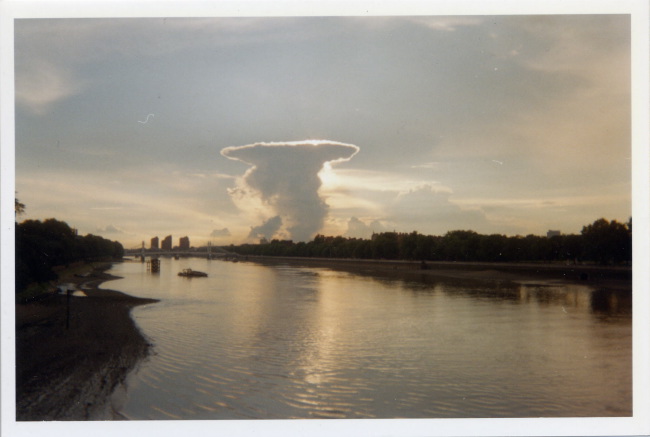
I just dropped it in to remind you about the romantic conception of beauty.
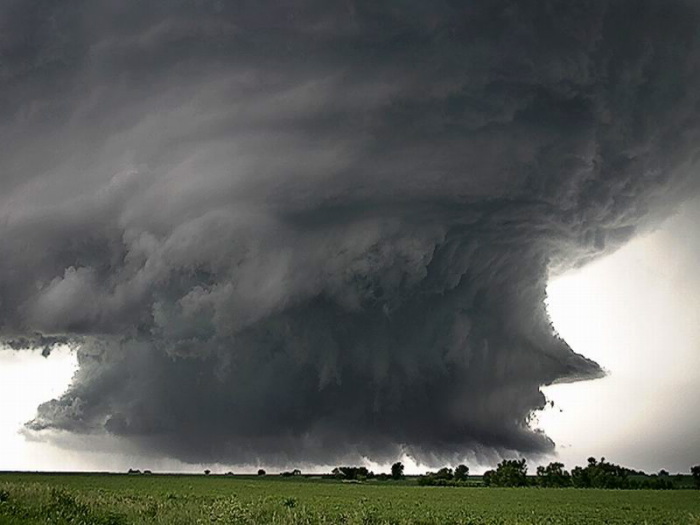
There is a story here about this image.
September 25, 2005
revisiting Wilson's Smile
I've just came across Greil Marcus' (ed.) Stranded: Rock & Roll for a Desert Island from 1979. I'm suprised that Smile, the most famous unreleased album in rock 'n' roll history, does not appear to be considered. This republished text(1996) is a collection of 20 essays on the topic, 'What album would you want to have with you if you were shipwrecked on a desert isle"?', by the creme of the '70s rock critics (including Robert Christgau, Lester Bangs, Dave Marsh, Ellen Willis, Ariel Swartley and Kit Rachlis). Why not Smile instead of the Eagles ' "Desperado"?
An extended account of Brian Wilson's album Smile can be found at the New York Review of Books. Written by Scott Staton it is concerned with Wilson as a composer and with his music.
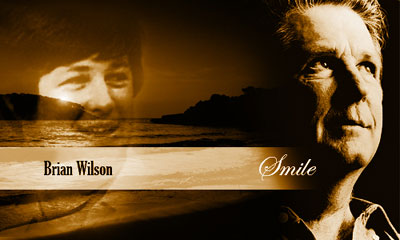
Staton says that Wilson had envisioned the album
"...as an affectionate critique of America's mythic past, a cartoonish representation of Manifest Destiny from Plymouth Rock to Hawaii. Like the American composer Charles Ives, whose unconventionally impressionistic work sometimes seemed to attempt to include and interpret all of American culture, Wilson made wide reference to American history and music, from the folk songs of Woody Guthrie and the familiar "You Are My Sunshine" to pop standards like "I Wanna Be Around." A work unified by recurring musical motifs, Smile was imagined as a collection of three suites composed of discrete musical segments that would evoke themes of frontier Americana and childhood, as well as the four natural elements---the movement of air could be heard, for example, in the song "Wind Chimes." Wilson intended the album to be the preeminent psychedelic pop-art statement."
Pet Sounds was still a collection of discrete songs.
The next step was a true suite. Smile is less a rock symphony and more a rock cantata in three movements.
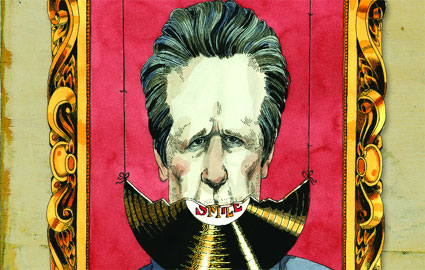
None of the original recordings were used for this version. Staton briefly talks about the composition of this lushly symphonic and polytonal melodies music with its polytonal melodies:
As one of the many who have tried to edit fragments and incomplete mixes of Smile songs into an approximation of what the album might have been, I greatly admire how the material is interpreted on the Nonesuch recording. The treatment by Wilson and his collaborators of the original recordings as a musical score (albeit in pieces) affirms the flexible method of studio production he realized on "Good Vibrations" and sought to apply on Smile.A principal innovation of Wilson's was his extensive use of the studio as a compositional element, layering vocals and instruments in unusual combinations, coloring them with echo and reverberation, and piecing different tape sources together into individual songs, a technique he called "modular" recording. Wilson and the Wondermints replicate Smile's whimsical fragments with uncanny precision, but they map them out in a dramatic and thematically coherent sequence. The result is a display of vividly imaginative music by one of pop music's best composers.
Staton gives us a form of rock criticism.
Hurricane Rita
It's happening to the Gulf of Mexico again:

Thankfully, Hurricane Rita weakened from category three to a category one storm.
This is a region that has been devastated by Hurricane Katrina. An already devastated New Orleans is suffering renewed flooding as weakened levees give way as the edges of hurricane Rita began pummelling the US Gulf Coast.
Some areas will have no electricity for months. Highways, streets, bridges, treatment plants, docks, ports have disappeared. The schools, churches, libraries and offices lucky enough to be standing can't open for weeks. Those not standing will be scooped up in the rubble, then rebuilt. But where, and at what cost?
The reality undercuts the political talk of a glorious future ahead.
September 24, 2005
Melbourne's fever
A fever has gripped Melbourne. Grand Final Fever. Manning Clark famously put it on grand final morning 1981:
"many of the inhabitants of Melbourne, and indeed of the whole of Australia . . . are stricken with a strange infirmity".
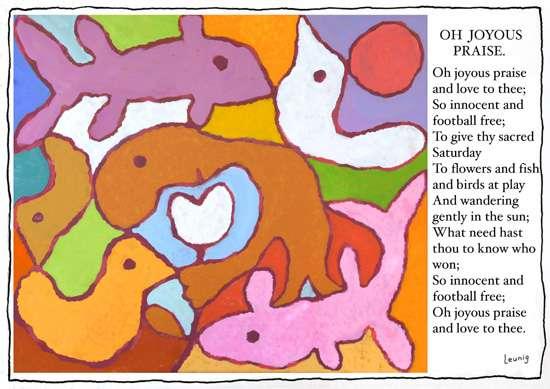
Leunig
Max Piggott once wrote that:
"football made life bearable. "On one day a week football broke down class barriers . . . Football gave hope; winning WAS possible."
That was written a long time ago.The class barriers are still there with.They have reappeared with the corporate boxes for the movers and shakers in the business and political worlds.
September 23, 2005
kissing the great modernist divide goodbye
This image was sent to me via email:
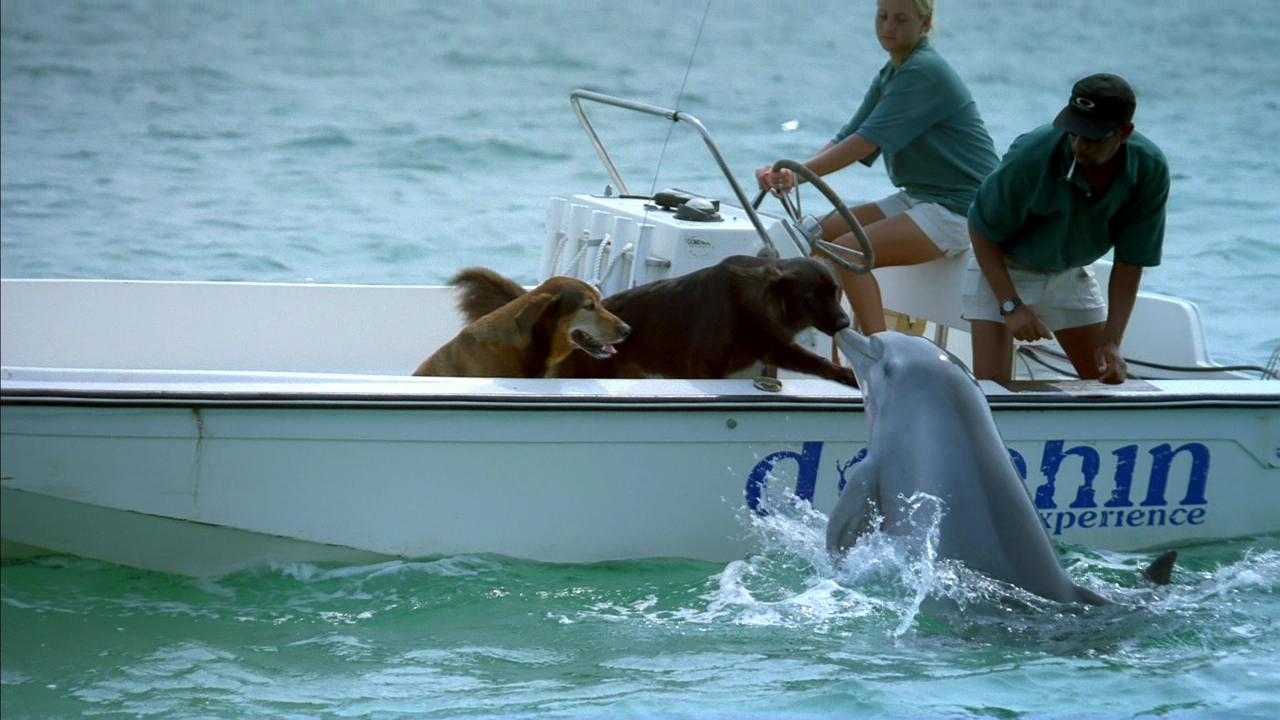
Neat huh. Effectively blows apart the old modernist divide between animals and humans doesn't it. Since we are so closely related to dogs, and since we have successful social interactions with them and act like them in so many respects, - the notion that we share consciousness with them has surely more initial plausibility than the idea that it is a human monopoly, a unique achievement.
The great divide between animals and humans was delineated by Rene Descartes (1596-1650), the so-called "father of modern philosophy". He famously argued that humans are distinctly different from other animals and the rest of the natural world. In his view, language and reason are the features that set humans apart from all other species. Descartes argues that the observed behaviors of all nonhuman creatures can be explained without ascribing minds and consciousness to them. He concludes that nonhuman animals can be viewed as no more than machines with parts assembled in intricate ways. Based on Descartes' rationale, humans have little responsibility to other animals or the natural world unless the treatment of them affects other humans.
Today we find people writing books arguing that animals are conscious? Those who still doubt this are those wh had been put through the kind of behaviourist-inspired training that students of biology and psychology received during much of the 20th century. Then academic prestige in many professions depended on abjuring all thought and all talk of consciousness. Only exceptionally determined academics put up any resistance to the behaviourism that ruled that human thought had no effect on action, and that therefore only human behaviour could be studied. Consciousness, in both humans and animals, was treated as a suspect supernatural entity, equivalent tot he existence of angels.
Though psychologists officially abandoned behaviourist doctrines some 20 years back, the attitudes that went with those doctrines do not automatically change. Modernist philosophers with a bias for mechanism are more resistant to change. They take the whole position seriously. They have dumped Descarte's dualism and embraced a physicalist materialism that takes its starting point Descartes key argument.
Descartes had argued that, although an animal or machine may be capable of performing any one activity as well as (or even better than) we can, each human being is capable of a greater variety of different activities than could be performed by anything lacking a soul. In a special instance of this general point, Descartes held that although an animal or machine might be made to utter sounds resembling human speech in response to specific stimuli, only an immaterial thinking substance could engage in the creative use of language required for responding appropriately to any unexpected circumstances. My dog may be a loyal companion, and my computer is a powerful instrument, but neither of them can engage in a decent conversation.
Modernist philosophers challenge that argument in terms of machines but not animals. Machines are seen as self- regulating.
September 21, 2005
venting the spleen
The tabloid title says it all in its response to Mark Latham's political performance around the publication of his Diaries.
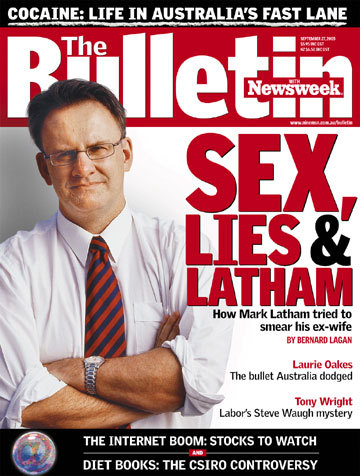 The article inside by Bernard Lagan rakes over the coals of Mark Latham's long gone first marriage in a one sided manner.
It is done without ever mentioning that Latham's former wife, Gabrielle Gwyther, was on the payroll of the NSW ALP when she tried to damage Latham in the lead-up to the 2004 election. Latham was the federal ALP opposition leader at the time. 'Tis nasty personal stuff that leaves a taste of bitterness.
Sex sells. And The Bulletin needs sales to lift its declining circulation. The trouble is that there is not that much hanky panky sex by the Latham, suburban lad. No matter, what is there can be stirred. Or fictions invented.
This tabloid response goes beyond the media being defensive and closing ranks in the face of criticism. Packer wants his pound of flesh. He wants to see some blood flowing. That is what matters.
Digging further inside The Bulletin we find this op.ed by Laurie Oakes. It is full of tabloid vitriol:
The weird and ugly mind that penned The Latham Diaries would be running the country. The anger, viciousness and near-paranoia evident in the attacks on just about everyone who matters in the Labor Party would have been let loose upon the land. The responsibility for dealing with a terrorist attack or other emergency would be in the hands of a man whose temperament, it now transpires, could not stand up to an election loss or even a bit of intra-party argy-bargy. Our most important alliance, that with the United States, would be in jeopardy under an Australian leader holding the private belief –---one which he kept from the electorate –---that it is a form of neo-colonialism and should be ditched. It does not bear thinking about.
And then there is this rant:
There are, in the ALP and the media, people who have tried to set aside the vitriol, the vulgarity, the personal abuse, the blame-shifting, the self-justification, the narcissism and the nastiness of the diaries and the interviews Latham has given to help market his book.
This is an example of demonization that addresses none of the issues about the corruption of the Canberra Press Gallery.
It is sad to see a good Canberra journalist lose it by being overwhelmed by tabloid emotions.Tis the dark political unconscious surfacing. Maybe The Bulletin can reinvent itself as celebrity magazine and peddle the pictures and gossip about celebrities to an ever-expanding market?
September 20, 2005
Bill Henson #4
This is not a picture of a landcape. It is an image of an interior landscape of the modern subject. The camera stands for vision (seeing) as opposed to sound or word.
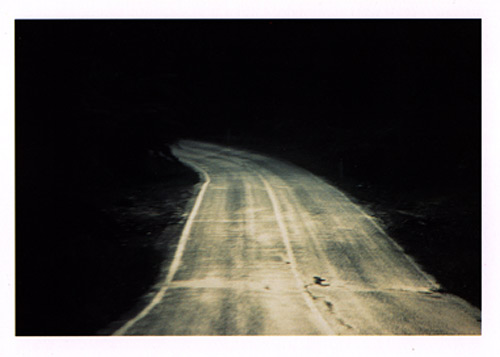
Bill Henson, Untitled #6, Untitled, 1998 - 2000
So who or what is doing the gazing. My interpretation is that we are looking into the unconscious----the dark continent. We are travelling on the highway into our unconscious that is ruled by uncontrollable forces.
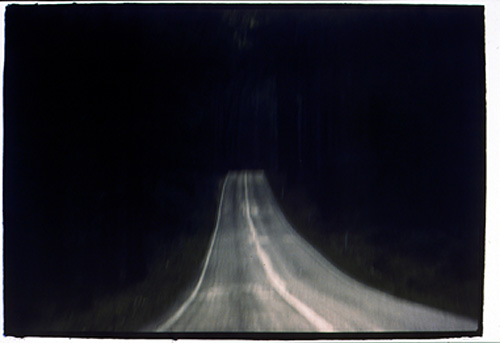
Bill Henson, Untitled #17, Untitled, 1998 - 2000
The images suggest that we are travelling into the darkness of a constellation of intense emotions of a damaged life. The darkness threatens to overwhelm us:--ie., our ego or consciousness will be overwhelmed by the violent and dark forces of the unconscious.
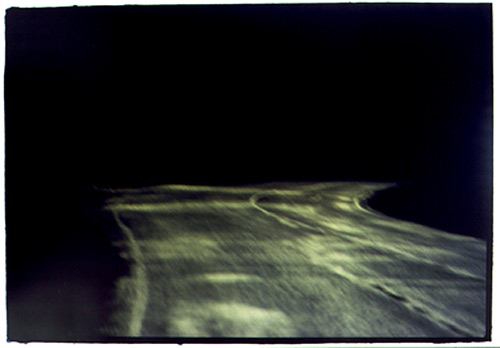
Bill Henson, Untitled #23, Untitled, 1998 - 2000
Of course, not everybody accepts the idea of the unconscious, let alone the idea that it is structured like a language. They see those ideas as examples of blindness. Others see 'vision' as the root of the problem.
What should we do then? Keep our eyes shut?
September 19, 2005
The tabloid gaze in politics
The image below is how Mark Latham, a former leader of the federal parliamentary ALP and so Labor's alternative prime minister, is now portrayed in the media, after extracts of his diaries were made public on the weekend.
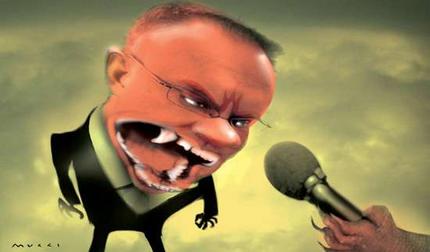
The Latham Diaries, which describe a toxic political culture inside the ALP, went on sale today. They are represented as the work of an aggressive and paranoic ego that seeks domination.
The older image of the mongrel streak of a political head-kicker from the Sydney suburbs has gone. Latham is not just seen as being out to settle old political scores. He has now become the mad dog full of poisonous bile who will infect people with his vitriol and cause great damage. He must be put down.
This demonisaton of a political figure shows the extent to which a tabloid media culture has penetrated our political culture. It has become tabloid in that it works in terms of crude, highly charged images. The visual and the rhetorical have fused.
At a more sophisticated level Mark Latham is described as having a narcissistic personality disorder. Latham exhibits all the classic signs of clinical narcissism, a condition 'marked by a hard-wired lack of empathy for other points of view and inability to see the world beyond the filter of self-reference.'
What is being dismissed by this kind of visual rhetoric is Latham's arguments about the endemic sickness, poison and backstabbing in our political culture, and the way the media works in collusion with politicians.
What is interesting in the reponse to the Lathman Diaries is the way that reality has become the image. The image has been become adrft from its referent--the real Mark Lathm as an homedadcarign for hsi two boys who wrote an account of his time in politics.
This tabloid image is not a distorting mirror as many claim. We stare in fascination at the circulating images of Latham as we become aware that they reflect nothing outside them.
September 18, 2005
water crystals
I'm back on deck after a break from being on the road---in Melbourne for several days. I was working and I had little time to post. But I did come across this:

It is an image of a water crystal. Since water is a network of hydrogen-bonded molecules it can form numerous structures, depending on how individual molecules bond together:

Who would have thought that water looked like that?
September 15, 2005
sexuality and disability
Photographer Belinda Mason-Lovering travelled around Australia over two years collecting images that examine the relationship between sexuality and people with disabilities. Mason-Lovering has created images that reflect the personal emotional journey of people with disabilities by choosing to photograph the intangible----our emotions.

Belinda Mason-LoveringDancing on Broken Glass
The text to the photo says that:
Julia grew up in Oregon and California. She was hit by a truck when she was 11 years old and spent many years recuperating in hospital during which time she had 18 major operations. She went to Antioch College in Ohio then worked as a performance artist and community activist in San Francisco. Julia has been in Australia since 1999 and has recently finished an Arts Management course at the Victorian College of the Arts. She dances every day and highly recommends it.
Julia is the author of 'Body Talk = Survival'. She is a Performance Artist and Arts Administrator... Julia has left side hemiparesis with multiple orthopaedic fractures.
Saturn, Mars, deserts
A great site: It has a picture of the day:

Fresh Tiger Stripes on Saturn's Enceladus
I really like this one:

The View from Husband Hill on Mars
This recalls this earlier post that suggested Mars looks so like the Australian desert.
September 14, 2005
Graffiti
This is courtesy of aprendiz de todo, maestro de nada who mentions two recent books on graffiti: Stencil Graffiti and Street Logos. Both sites have plenty of links.
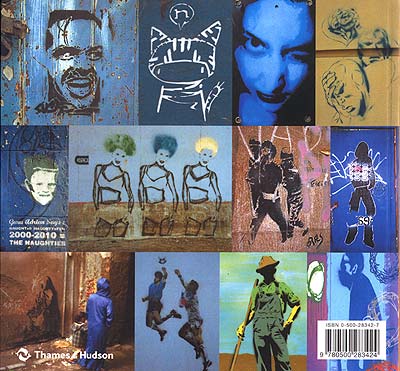
There is some good work at Graffiti Archaeology It is a wonderful site.
September 13, 2005
cartoon's critical edge
This superb cartoon is another example of visual cultural critique:

It's bite captures this kind of response noted by Wealth Bondage
Rowson's cartoon is an interpretive reworking of a iconic American image from the American Revolutionary War and, more specifically, George Washington's stealthy midnight crossing:
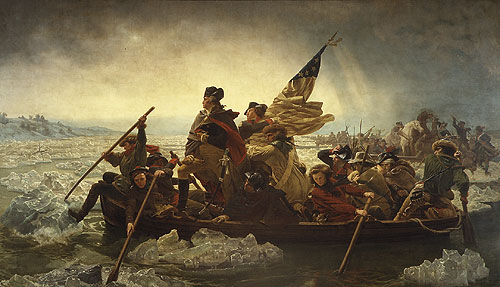
Emanuel Gottlieb Leutze, George Washington Crossing the Delaware, 1851,Oil on Canvas.
This in turn is a gesture back to a classic art image:
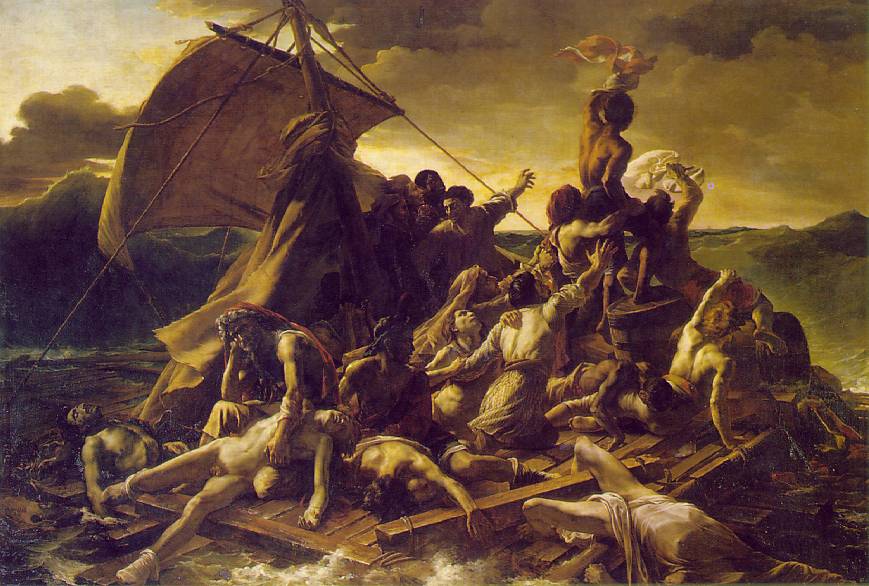
Theodore Gericault, Raft of Medusa, 1819, Oil on canvas
The inter-textuality gives the Rowson cartoon more depth, does it not?
September 12, 2005
a war on nature
The Republican noise machine is still spinning furiously around the lethally inept response to Hurricane Katrina by the Federal Emergency Management Agency (FEMA) in New Orleans. FEMA's budget has been cut and inept political hacks have been put in key positions.
This insight discloses the way the federal bureaucracy is in a sorry state because the current Republican administration doesn't treat governing seriously.

Some satire on the war on nature can be found over at Billmon
New Orleans was built onkeeping the water out.The city has long been crouched behind poorly maintained levees in a river delta. Louisiana has been loosing its fragile coastal landscape as it has not been maintaining the dunes and mud flats or protecting salt marshes and barrier islands.
Maybe they need to learn to live with the water in a more ecological way, if we are to live with global warming and rising sea levels?
September 11, 2005
politics as theatre
The ongoing saga around sale of Telstra last week was commonly seen a circus or pantomime by the media. That was meant to be taken as a negative judgement--a put down---with Senator Barnaby Joyce cast as the dumb clown from Queensland.
The public policy background on the prrivatisation of Telstra can be found here. The judgement about the quality of the media commentary can be found here.
Consider this excellent Matt Golding cartoon of Telstra as a pantomime:

What the cartoon expresses is the performance model of politics as a form of theatre.
This understanding of politics is one that emphasizes the embeddness of action in the already existing web of human relationships. It assumes that a life without action and speech in a public space is dead to the world because it is through deeds, speech and meaning that individuals disclose who they are.
In this model the political actors create meaning, new relationships, unforseen constellations and so transcend instrumentality and the reduction of meaning to utility by economics.
September 10, 2005
Mississippi Odyssey?
The Coen brothers' film O Brother Where Art Thou, introduced old time country music to an American population that had lost contact with their musical heritage.
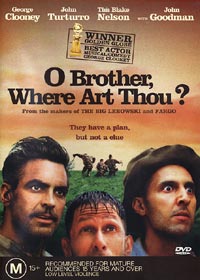 The film's form is a loosely adapted Odyssey in the Depression-era American South.
The escaped convicts run into a variety of characters, from a one-eyed Bible salesman, a corrupt Mississippi governor running for re-election, a blind radio station owner (Steven Root) who records the three convicts singing "Man of Constant Sorrow"; meet the manic/depressive Baby Face Nelson, run into three larcenous sirens and an wife, who is preparing to marry a man she considers "bona fide".
This is a road movie whose storytelling wrapped with eccentric humor.
The episodic travels are used to explore both the music and mythology of the South---bluegrass Mississippi. Bluegrass music, Babyface Nelson and Homer. Interesting huh?
The film is steeped in music---beautiful renditions of country, gospel, folk, and blues under the charge of T Bone Burnett, with some tunes in original versions, others newly recorded. O Brother, Where Art Thou? is like the music video for the Harry Smith-edited Anthology of American Folk Music.
The film is practically a musical, with a fine selection of songs from "the old weird America," as critic Greil Marcus has put it.
September 9, 2005
Jerry Garcia
in rememberance of a great musician. Robert Hunter's elegy. David Gans' tribute.
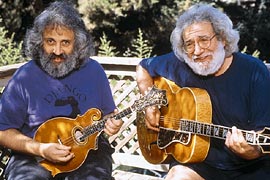 Garcia, the late guitarist/singer, was an American musical icon in his own right, as well as a good interpreter of the wealth of material in the archives of American music. Garcia had the ability to play two entirely different styles of music without a hint of musical overlap (rock 'n' roll/blues and country/bluegrass).This capacity opened up a number of side projects.
One of Garcia's side projects was the collaborative the work with David Grisman, with his quintet and other bluegrass pursuits. This began with the old bluegrass tunes of Old and In The Way in 1973, and was rekindled in the 1990s.
Some audio streaming can be found Dawgnet and Acoustic Disc. The improvised interpretations of the old timey music can be found on Shady Groove. This is the musical roots of the Grateful Dead, and it is interesting to hear Garcia revisit, and explore, this music with David Grisman. It lead to the Garcia/Grisman Band playing traditional acoustic music in the 90s. Apparently, Garcia's happiest times in the latter part of his life, were those that he shared with David Grisman, playing and singing this music.
I find the jazzy improvisations of bluegrass on So What to be far more interesting piece of music Listen to the extended bluegrass interpretation involved in the Grisman composition 16/16. What we have is jazz music with bluegrass influences and overtone in the form of a jam session.
September 8, 2005
accountability
This image shows the way that visual critique can work as a form of cultural criticism:
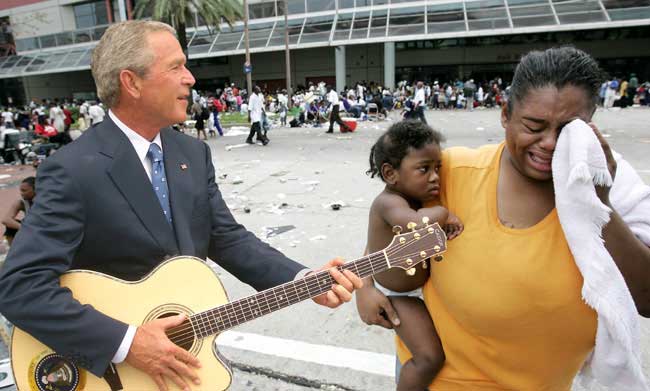
via Boeing Boeing
Bush was fully briefed about the severity of the storm. He knew what was coming. The Onion decodes the image:
WASHINGTON, DC:--In an emergency White House address Sunday, President Bush urged all people dying from several days without food and water in New Orleans to "tap into the American entrepreneurial spirit" and gnaw on their own bootstraps for sustenance. "Government handouts are not the answer," Bush said. "I believe in smaller government, which is why I have drastically cut welfare and levee upkeep. I encourage you poor folks to fill yourself up on your own bootstraps. Buckle down, and tear at them like a starving animal." Responding to reports that many Katrina survivors have lost everything in the disaster, Bush said, "Only when you work hard and chew desperately on your own footwear can you live the American dream.
More on the folly and surreality in New Orleans can be found here.
September 7, 2005
Kandinsky
The National Gallery of Australia (NGA) says the gallery was offered the expressionist painting below for a $35 million, but that it would not be buying it as the price tag was too high.
Kandinsky's Sketch for Deluge II is from the Hester Diamond Collection, which was acquired by Sotheby's, who were unable to sell it at auction last year. Bidding for the Kandinsky started at $15 million, ending at $17.5 million, with Sotheby's assigning a low estimate of $20 million.

Wassily Kandinsky, Sketch for Deluge II, 1912
The National Gallery would sure love to own the Kandinsky. There are no major works by Kandinsky in Australia and the National Gallery has only a small international collection. The Kandinsky is about color and form though this painting is on the cusp of leaving the the representational image and going completely abstract.
That is a big concern for art history--hence the NGA's interest. Still, $A35 million is rather steep when it was passed in at $US 17.5 million less than a year ago.
September 6, 2005
Lost Highway#4: country music and photography
The detractors of country music often claim that it is "primitive" and "mindless." It is the music of ignorance and racial bigotry of the poor working-class whites isn't it? Has not Nashville fostered a conveyer-belt production method that keeps the music sanitized, the artists generically processed, and the prospects of diversity, innovation, and creativity slim-to-none?
Is not corporate country a lost highway?
This highly popular form of musical expression has a tradition which extends from Appalachian balladeers, to Black and white railroad workers, to choirs of country churches, to the Carter Family, Gene Autry, Hank Williams, Merle Haggard, Willie Nelson and Randy Travis.
When I watched the Lost Highway documentary on Saturday night, I could not help but think of music, working class, community and the 1930s Depression:

Margaret Bourke-White
Merle Haggard's music recalled the great rural migration from the Midwest dustbowl to California in the 1930s:

Arthur Rothstein"Farmer and sons walking in the face of a dust storm. Cimarron County, Oklahoma." April 1936
The migrants arrived in in resettlement camps in California from the Midwest every month, driven by unemployment, drought, and the loss of farm tenancy.They settled mainly in the agricultural valleys of California, and during the Second World War many moved nearer the defense plants, particularly around Los Angeles, to work. During the 1950s and 1960s they became populist Reaganite conservatives--rednecks.
Randy Travis' music made reference to an autonomous, authentic working-class culture of the forties and fifties coal miners of Kentucky. The experiences of this culture is the wellspring of musical and cultural meaning of country music. Country music then helps form and express the experiences of poverty, loneliness, and hard times of a particular working-class form of life marked by limited mobility within the economic and social prison of American society.
Update: 7 September
I see that Tim Dunlop of Road to Surfdom, who is now in his home town of Adelaide after spending time in Washington, watched the first episode of Endless Highway.
He does not appear to have watched any of the latter epsisodes. Few in the Oz blogosphere have by the looks of it. Not even FXH over at From a LAN Downunder or Amanda at Flop Eared Mule.
September 5, 2005
response to Katrina
The Katrina cartoons in the Washington Post are suprisingly tame. Consider these two:

And:
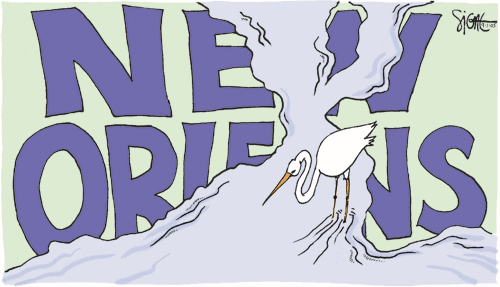
See what I mean?
The authorities knew Hurricane Katrina would happen. They had been warned and they knew the consequences for the city if the levees gave way:
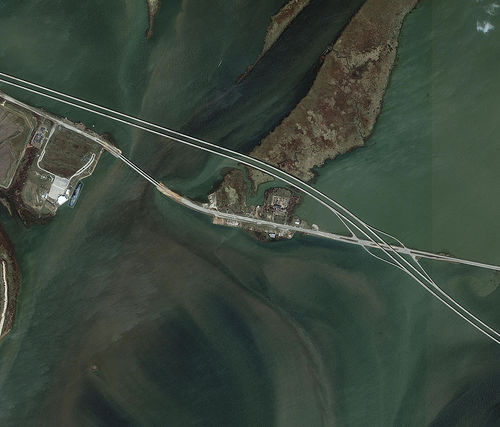
Yet little actually happened in terms of emergency response for days.
So why are the cartoons so soft?
Maybe the situation is too difficult for the American mainstream press to handle?
A list of Katrina blogs
September 4, 2005
Lost Highway#3
This image captures my way of seeing country music--it is morally conservative, republican in its politics, deeply religious, full of rural nostalgia of white rural Americans.
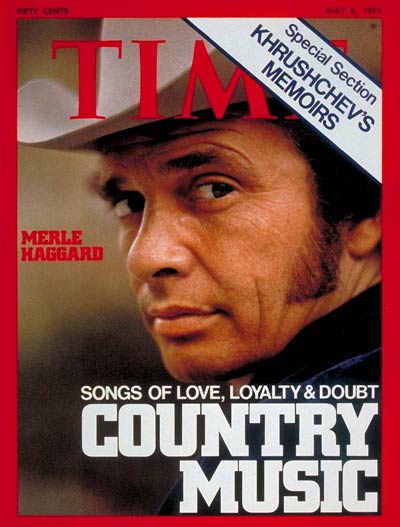
I see country music this way despite my fondness for the Grateful Dead's country roots-influenced music of the blue-collar 1970 Workingman's Dead. It was overlaid with references to the "hard travelling'/hard times ethos, populist sentiments about prison, running from the law and honorable outlaws and the troubles, trials, and tribulations of Southern poor and working-class white people. 'Workingman's Dead' return to their musical roots ignored the poor white's racism, xenophobia and support for the culture of imperialism.
I would acknowledge that southern white working people's single greatest contribution to American popular culture is their country music. From its humble beginnings as the music of a marginalized people, it has risen to become a multi-billion dollar global industry. Country dominates American popular music, and at its best the music expresses the experiences, sorrows, hopes, dreams, failures, love affairs in the dust and grit of ordinary rural life. Much of country music, despite its unreflective patriotism, really mourns the death of the American Dream.
My cliched view of country music---it's more unchanging musical tradition than experimentation--was challenged by this episode of the Lost Highway documentary, that I watched last night. The documentary covered country music I knew very little about apart from the names:--Buck Owens, Merle Haggard, Waylon Jennings Willie Nelson and Garth Brooks; and it mentioned some that I did know---eg., the cross over artists, such as Gram Parsons and Emmylou Harris.
What came through was the diversity of country music which was traced as it emerged in places such as Bakersfield, California and Austin, Texas. The counter tendencies to the Nashville country-pop style re- connected with, and developed, the honky-tonk heritage of Hank Williams, which was the first urban form of country music. This heritage is about travelling on a strange stretch of highway, songs about the poverty, loneliness, and anxiety of the poor man who has had a lot of bad luck and who lives with the blues. He sings of the hard times he has known in which everything goes wrong from love to work and which persists without any hope or solution.
The country and western music industry built in Bakersfield by Okie artists and entrepreneurs, especially Buck Owen and Merle Haggard had a "workingman's blues" take on country music and it challenged the supremacy of Nashville as the country music capitol. They expressed the sentiments, experiences and values of the Depression-era rural working class in an industrialized America in the 1950s and 1960s around alcohol, finances, death, fidelity, faith, broken hearts, trains, desire and the highway.
I know next to nothing about the musical work produced in the 80s by Steve Earle, Randy Travis, Dwight Yoakam, Ryan Adams and bands like Wilco, who are pushing country music into new areas.
What puzzled me was that no mention was made of Woody Guthrie in this tracing of the different voices of country music. Why is he excluded?
September 3, 2005
New Orleans: a descent into chaos
The news reports indicate that the federal and state governments, failed to prepare for a catastrophe that many scientists had warned bout for years. The failure of the levees had been forecast for years, as they were only designed to protect New Orleans from a category 3 storm.
The news reports are saying that New Orleans has become a nightmare landscape of chaos,lawlessness, roaming gangs and random rapes. The tales from inside the Superdome say that the inside was a mass of stinking, hungry, frightened humanity without water, sewerage, food or air. Strangers were crammed against others who robbed them, beat them and raped them while armed guards stood oblivious.
How come the authorities did not airlift basic supplies to the convention centre and the nearby Superdome, where more than 40,000 people gathered in the aftermath of the devastating Hurricane Katrina?
Meanwhile, the economy is affected as Hurricane Katrina has made half a million people homeless, damaged the energy infrastructure by shutting down Gulf output, devastated transportation networks and trashed the electricity grids. So energy prices soar:
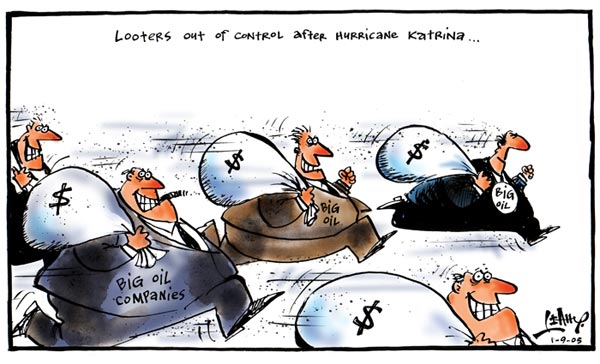
Armed gangs have all but gained control of the city. It is the disabled, the poor who cannot afford cars, the sick and the elderly who have been left behind in the inner city. And most of those left behind are the poor and the black.
New Orleans does seem to be vulnerable to rising sea levels caused by global warming.
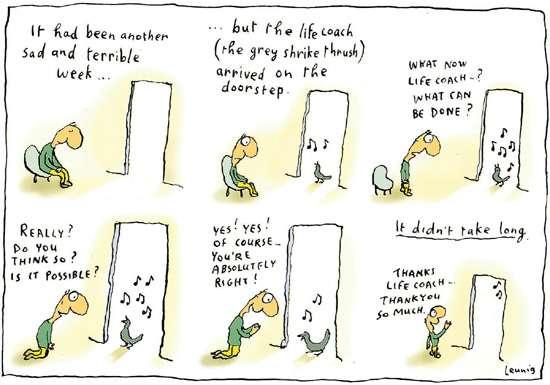
Leunig
This cartoon makes me smile as I struggle with the
flu.
I've come down to the weekender at Victor Harbor to look at the flowering wattle trees, smell the sea and listen to the surf.
September 2, 2005
Davida Allen
Davida Allen has won the Archibald Prize, the premier Australian award for portraiture and regularly exhibits in the international Biennale (modernist and expressionist art).

Davida Allen, Troll lover, Oil on Canvas
A Talk, some commentary
A series of paintings were openly a series of fantasies centring round the actor, Sam Neil, which expressed sexual desire:

Davida Allen, Fantasy of Sam Neil,1980, mixed canvas
Often the traditional impastoed technique--thick paint, scraped back and scratched into--is used to depict frustration, angst, grief.

Davida Allen, Death of my father, 1981-82
Allen's visual skills well deployed to construct a short film (c 50 mins) of a Queensland painter struggling with the conflictual demands of bohemia and suburbia.
September 1, 2005
political satire
This post is courtesy of---hell, I cannot remember. Oh yes, it is Ashley Benigno's excellent Notes from somewhere bizarre, who got it via Conscientious
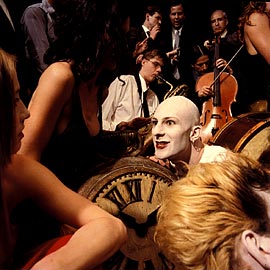
Larry Fink, Homage to Max Beckmann
It is from an exhibition entitled The Forbidden Pictures at the Lehigh University Art Galleries earlier this year.
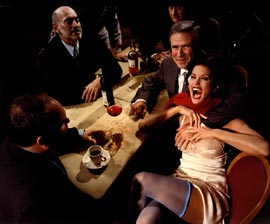
Larry Fink, Homage to George Grosz
It is a political tableaux of satirical images of America’s current leaders, referencing the decadence and style of Weimar artists:
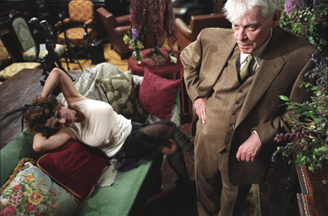
Larry Fink, Homage to George Grosz
This body of work marks a break with Larry Fink's previous "snapshot aesthetic" that located Fink in the tradition of Diane Arbus, Robert Frank and Garry Winogrand.