|
September 25, 2005
I've just came across Greil Marcus' (ed.) Stranded: Rock & Roll for a Desert Island from 1979. I'm suprised that Smile, the most famous unreleased album in rock 'n' roll history, does not appear to be considered. This republished text(1996) is a collection of 20 essays on the topic, 'What album would you want to have with you if you were shipwrecked on a desert isle"?', by the creme of the '70s rock critics (including Robert Christgau, Lester Bangs, Dave Marsh, Ellen Willis, Ariel Swartley and Kit Rachlis). Why not Smile instead of the Eagles ' "Desperado"?
An extended account of Brian Wilson's album Smile can be found at the New York Review of Books. Written by Scott Staton it is concerned with Wilson as a composer and with his music.
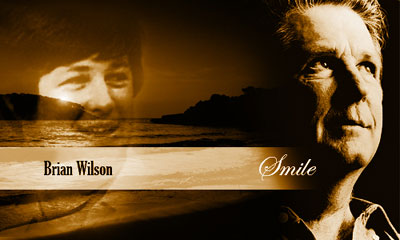
Staton says that Wilson had envisioned the album
"...as an affectionate critique of America's mythic past, a cartoonish representation of Manifest Destiny from Plymouth Rock to Hawaii. Like the American composer Charles Ives, whose unconventionally impressionistic work sometimes seemed to attempt to include and interpret all of American culture, Wilson made wide reference to American history and music, from the folk songs of Woody Guthrie and the familiar "You Are My Sunshine" to pop standards like "I Wanna Be Around." A work unified by recurring musical motifs, Smile was imagined as a collection of three suites composed of discrete musical segments that would evoke themes of frontier Americana and childhood, as well as the four natural elements---the movement of air could be heard, for example, in the song "Wind Chimes." Wilson intended the album to be the preeminent psychedelic pop-art statement."
Pet Sounds was still a collection of discrete songs.
The next step was a true suite. Smile is less a rock symphony and more a rock cantata in three movements.
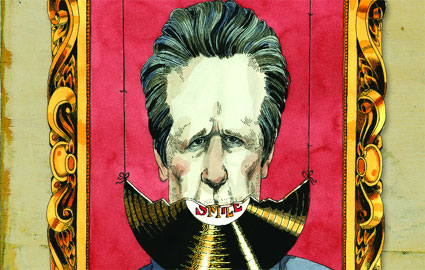
Paste Magazine
None of the original recordings were used for this version. Staton briefly talks about the composition of this lushly symphonic and polytonal melodies music with its polytonal melodies:
As one of the many who have tried to edit fragments and incomplete mixes of Smile songs into an approximation of what the album might have been, I greatly admire how the material is interpreted on the Nonesuch recording. The treatment by Wilson and his collaborators of the original recordings as a musical score (albeit in pieces) affirms the flexible method of studio production he realized on "Good Vibrations" and sought to apply on Smile.
A principal innovation of Wilson's was his extensive use of the studio as a compositional element, layering vocals and instruments in unusual combinations, coloring them with echo and reverberation, and piecing different tape sources together into individual songs, a technique he called "modular" recording. Wilson and the Wondermints replicate Smile's whimsical fragments with uncanny precision, but they map them out in a dramatic and thematically coherent sequence. The result is a display of vividly imaginative music by one of pop music's best composers.
Staton gives us a form of rock criticism.
|


