June 29, 2006
goodbye to Australian culture?
An article on Australian culture--or lack of it in New Matilda (subscription required) by Stephen Orr. It is a lament. Orr says:
I grew up in the 1970s and 80s hearing about how Australia used to have a sense of inferiority. How we used to favour English and American culture, saved our whole lives for a trip back to the 'Mother Country,' how our artists and intellectuals fled our shores at the first opportunity. But things had improved. We'd learnt to believe in ourselves, to support our rock bands, read books by our authors and see films such as Picnic at Hanging Rock and Breaker Morant. The ABC was playing Sculthorpe and Meale, Williamson was populating our stages with recognisable Australians, and Don Dunstan was teaching us to cook with chickpeas. We were visiting Bali instead of Birmingham, proudly wearing barbecue aprons with cartoon breasts, laughing at Paul Hogan and, at last, coming to like who we were.
Alas things have changed again.
It seems a lot of people have given up on the idea of delving into our national character---of trying to find out who we are, how we tick, what we value, and what we find funny.So, the good news is, we've become what we always wanted to be -- part of the USA. The lucky country gets lackey. Not that we'll notice the difference. We're mostly American anyway.
And:
You can see it in our music, too. What’s happened to all the Australian acts? In the 1980s, Oz music was all the go --AC/DC, The Angels, Midnight Oil, Men at Work and Cold Chisel, to name a few. The music was on the radio and we had programs like Countdown to give it a push (until Molly eventually became an honorary Yank, flying to the US to interview the likes of Madonna, who'd pat him on the head, Dubya style). Now it’s 50 Cent and the rest of the crew presenting a cleaned up version of life on the streets of LA, or our own Australian Idols---fresh-faced, white-teethed, God-loving drongos that couldn’t play an instrument or write a song if their life depended on it.
June 28, 2006
rock & authenticity
Authenticity is still the touchstone of rock music isn't it despite the pervasive effect of postmodernism on rock.
Kurt Cobain, the lead singer, songwriter, and guitarist of the Seattle rock band Nirvana, had authenticity in spades. Authenticity is tied to appeals to truth and artistry.
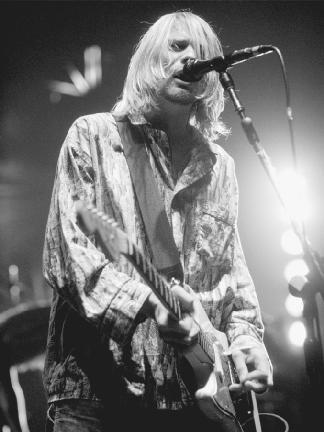
So rock is not just about style ---Bowie or Madonna's yearly inventions as a temporary investment in the sense of style for the sake of style. This is rock as postmodernism---which casts off modernism's impossible demands for authenticity and embraces the self-ironizing, random play the surface of styles.
Nirvana and Cobain are celebrated for authenticity--'Cobain's anguished wail offered a refuge of authentic despair.' Authenticity--as raw anguish--- is tied to the intense expressions of the real self; a self that has to fight the industry, the cynicism of the press, and the indifference of the public in order to express their music and connect it to their audience.
The music contains within itself a pre-existing truth, and that it is the task of both performer and audience to rediscover and re-express that truth.
June 27, 2006
rock aesthetics
Many who listen to rock music denounce the very idea of the aesthetics of rock as elitist nonsense. They do so whilst simultaneously pronouncing that 'rock' music is the 'expression' of emotion, grounding their ' judgement 'on what is 'good' musical 'work' or 'performance 'on personal' taste,' rework 'genius' as the rock god's unique 'expression ' and 'authenticity' and 'evaluate' different works that constitute the rock 'tradition.'

Jimi Hendrix, Woodstock Performance, 1969.
Aesthetics is denounced whilst making use of its categories. The contradiction is usually resolved by saying that no categoeies are used. It's just about the effect of the 'music' on the individual body. That the category music' is used instead of 'noise' is routinely overlooked. Nothing must disturb the entrenched 'romantic aesthetic' of rock culture.
It is true that aesthetic theory has, largely under the influence of Kant, become alienated from the actual experience of art -- the response to art had become abstracted and 'aestheticised' -- and, at the same time, aesthetic judgment had become purely a matter of taste and so a subjective response that collapses into romantic caprice and skeptical subjectivity.This bind's the meanings of a text, music, or performance to subjectivity--to personal emotion for rock music.
In Truth and Method, Gadamer seeks to rehabilitate the notion of 'taste' in order to show that rational judgements are not contingent upon publicly accessible rules for their rationality. For Gadamer, "taste knows something - though admittedly in a way that cannot be...reduced to rules and concepts" (38). A judgement of taste is not only in the realm of beauty, but of truth, but the judgement is facilitated by the tradition shaping a particular kind of person to make the judgement, rather than a discreet logical or psychological process.
So what we have are literary texts that are indeterminate and inexhaustible (prohibits replacing the work of art with critical commentaries on it); and criticism's collective and determining role belongs to a shared community of commentary whose history and thought is a record of the changing interpretations and understandings of the meanings of literary texts' or a particular piece of music'.
June 26, 2006
Fellowship of the Ring
I have scarcely been to the cinema for years. It coincided with the collapse of Australian national cinema and its outdated conceptions of what the Australian people and nation are.
I watched a DVD of Peter Jackson's Fellowship of the Ring over the weekend. It is the first of the three books (and films) in J.R.R. Tolkien's classic Lord of the Rings trilogy. I'd seen bits of Fellowship on television before and I'd read Tolkien long ago--but I couldn't remember much of the fantasy's Manichean narrative. I have yet to see the other films in the trilogy ---The Two Towers or The Return of the King-- and have no knowledge of Jackson's earlier splatter movies or his Heavenly Creatures.

It's an impressive film in spite of the flawed romance of the elf princess, and the wooden the elf queen scenes in the light filled elf land of Rivendell that suggests overlit theme-park tackiness. The boys and men are constantly gazing at each other longingly and holding each other in their arms.
The film visually works best with the darkness --eg. the stripping of Isengard---and it becomes cinematic and intellectually engaging with the journey through the Mines of Moria, the giant-sized trolls and armies of orcs and the traversal of the Bridge of Khazad-Dum is pumped up onto a far grander cinematic scale
It is up there in epic-scale with the blockbuster Star Wars but it is not as good a film as Crouching Tiger, Hidden Dragon. But then it is only introducing us to the world of Middle-Earth and its denizens and creating the quest that gives coherence to the episodic adventures. The visual effects trickery (CGI) was not at the expense of the film, even if the emphasis was more on the spectacle and its effects to express the narrative.
June 25, 2006
coastal development
A central conflict in seachange in Australia is the need for coastal settlement boundaries around the coastal towns to prevent an ongoing sprawl that would destroy the attractions and beauty that drew people to them in the first place. Many local councils, especially along the Fleuerieu Peninsula in South Australia, do a poor job of this in that they have done little to constrain the suburban development on the edge of town.
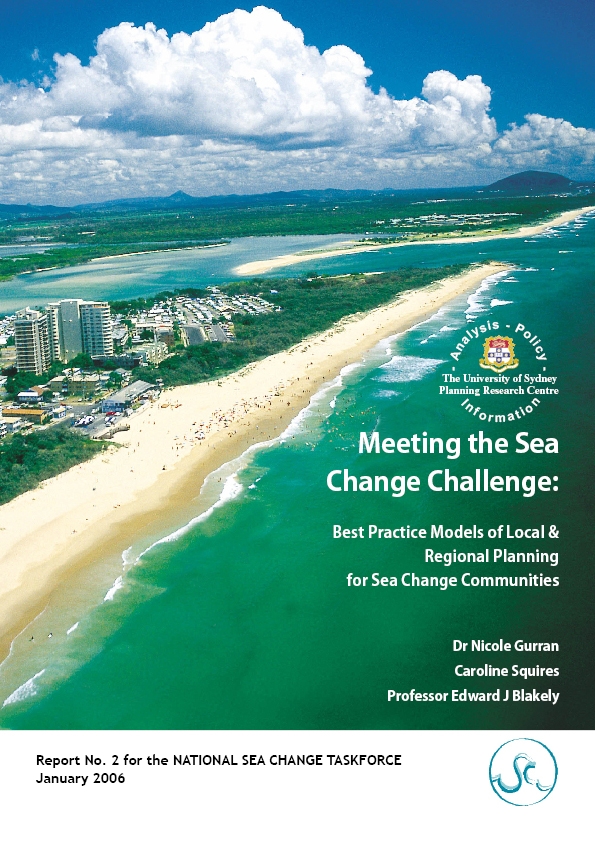
Hence we have sprawl with little by way of green strips inbetween. Rampart development, not rational planning, is still the model favoured by the local councils in Western Australia. Hence state governments step in to contain growth along protected coastal cities. Many of these towns have fragile local economies based on tourism and provide little in the way of services and infrastructure.
If coastal towns cannot spread for all those who want their property near the beach, then urban consolidation in the form of high rise appears next to beachside holiday houses. If that is disallowed then fencing off the coastal regions entrenches the lifestyle of the incumbents and the price of buying into seachange/retirement along the coast increase. Many people who work in the key tourist towns ---eg., Lorne or Apollo Bay alaong the Great Ocean Road in Victoria-- are commuters who cannot afford to live in the town. Many will not be able to buy a house with waterfront views an hours drive from a capital city.
the insurgency grows
It is good to see the enthusiasm for soccer in Australia and I hope that the insurgency continues to grow on the back of the successes in the World Cup.
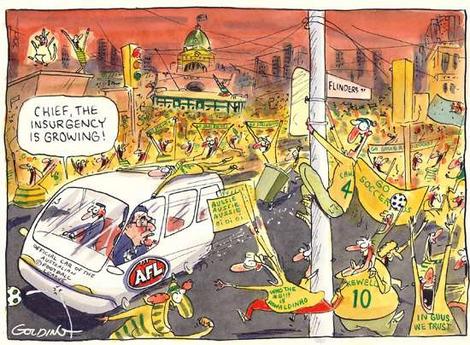
Matt Golding
It's a more interesting game is it not? I hope that the insurgency highlights just how much Australian Rules is barely even a national game. I hope that it pushes the two narrowly based international games --rugby league and rugby union--to the sidelines by showing how boring a game they are.
June 23, 2006
SE Queensland's water crisis
I was in Brisbane for several days earlier this week. Despite the rain on Tuesday, everywhere I looked I saw signs of a looming water crisis. Like Sydney, the rains were few and it rained on the city and not in the catchments areas where the dams were. Consequently, water levels in the dams were dropping --around 29% full at the moment. The result of climate change and population increases over the next two decades means that southeast Queensland will require new water sources to ensure adequate supplies to the region.

The extra water supplies can come from only three main sources -- desalination, more dams or indirect potable recycling , including better demand management and rainwater tanks in new and even older residential districts.
If the rains are less and falling in the wrong places then there is little point in building dams.Desalinisation is expensive.That leaves recycling. However, I saw little evidence for trapping and recycling Brisbane's storm water, let alone its grey water. People seem to be waiting for the big rains to come.
junk food and class
The latest National Health Survey tells us that 62 per cent of men and 45 per cent of women are overweight or obese, and the survey has previously declared the same of more than 25 per cent of Australian kids.And medical authorities warn us about a host of new medical disorders appearing in obese adolescents, including type-two diabetes, blood pressure, fatty liver, sleep apnoea and asthma. In 2003, the National Obesity Taskforce estimated the cost of obesity to be about $1.3 billion annually and "rising fast".
Welcome to the world of the junk food industry:

Spooner
Tony Cutcliffe, writing in The Age, connects the junk food industry to disadvantaged urban suburbs via the US chain of Krispy Kreme doughnut shops.
He says:
Studies of communities with high levels of disadvantage reveal a whole range of influences that render them ideal targets for a junk food fix. For example, limited private transport options and poor public transport services in disadvantaged areas directly correlate with low access to fresh food and grocery outlets. It's no coincidence that fast food outlets cluster at expensive and highly convenient transport centres, even now beckoning with the promise of 24/7 drive-through service.
He says that the commercial reality is that the disadvantage index and its causal companions of lower education, income and skills clearly identify communities that are far less likely to hear or heed these dire health warnings. This makes it abundantly clear that the obesity issue cannot be left at the door of the health departments: the onus also falls on planning instrumentalities that shape this "obesogenic" environment.
June 22, 2006
Ruddy's portrait of David Gulpilil
This is Craig Ruddy's 2004 Archibald winning portrait of actor David Gulpilil, which also won the people's choice award in 2004. It predominantly used charcoal fellow artist and Tony Johansen claimed this made it ineligible for the painting category. Suprisingly, he took his argument, that Ruddy's picture is a drawing, not a painting, all the way to the NSW Supreme Court.
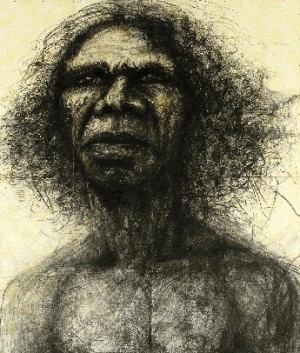
Craig Ruddy, portrait of actor David Gulpilil, 2004
Surely, when a drawing may consist of cotton threads drawn through parchment or experiments printed from the computer, the old certainties of what constitutes a painting, a drawing or a print have unravelled? No matter, a bevy of barristers were required to ponder the distinction between a painting and a drawing, and how the former should be defined. What happened to the art philosophers? Were they called to help the barristers judge whether black was a colour. The NSW Supreme Court threw out the challenge.
Sotheby's has announced the work will be auctioned on 28 August and it has an estimate of between $150,000 and $200,000 on Ruddy's portrait of David Gulpilil. Such are the ways of the art world. Perhaps the right to auction Ruddy's picture, Sotheby represents a publicity coup for its August auction.
June 21, 2006
black humour
Tis a political fantasy I know:
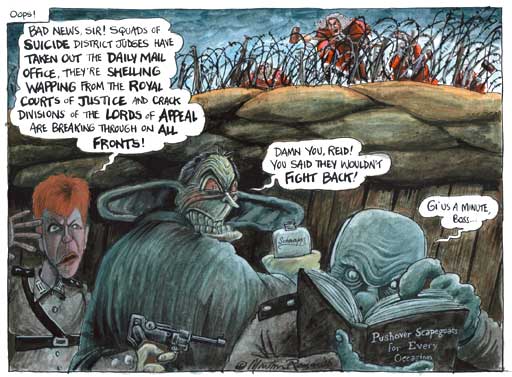
But it raises a smile, doesn't it about the way Law and Order is handled these days. Only a strong father can save us in a paranoid, dangerous and fearful world. Only a strong father can teach us right from wrong and make us good with stern, caring discipline. Only a strong father can whip the liberal judges into shape.
June 20, 2006
revisiting modernism
An article on modernism in The Guardian. It says that:
gradually the meaning of "modernism" settled down to its present form, based on utopian fancies, standardisation, industrial materials like chrome and plate glass, abstraction and a vehement ambition to make a new world, not just a new art. Design - the rethinking from zero on up of everything from teapots to whole cities - was imagined as potentially all-powerful
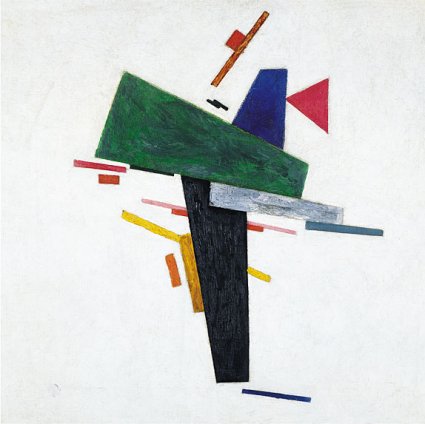
Malevich,Untitled, 1916
The new looks old doesn't it.
If you didn't believe in progress, you couldn't call yourself a modernist.....The prime building material of progress, of the longingly desired postwar utopia, was glass. Glass had several symbolic qualities to recommend it. First, its fragility. People remembered the gaping window frames, the shattered and empty openings, left in the wake of the great war. A society with intact glass buildings, manifestly, was a society at peace. Then, not only was glass fragile: with the correct framing, it could be very strong (though not in bending) and amazing feats of structural daring could be executed in it.....Glass was the very opposite to heavy stone and opaque brick. Light streamed through it, the light of heaven itself. This offered social redemption. Glass forms, crystalline and suggestive of weightlessness, seemed to be the stuff of transcendence. Glass carried implications of myth, of other, soon-to-be-built Crystal Palaces
June 18, 2006
biopolitics
Mary Shelly's Frankeinstein is an early and classic example of biopolitics:

The quote below is from Life in the Fast Lane by Michael Tyshenko and William Leiss. They say that the modern science of genetics:
...focuses on improving human health, the quality of life and life spans, a predicted panacea of treatments for many human diseases in the near future. Every day in the media we read or hear about the next astonishing health or scientific breakthrough that promises to provide revolutionary cures for various diseases derived from the study of our genetic material. This rapid pace of new breakthroughs and promised cures in the near future provides a meaningful context that, as a society, we can feel that we have chosen the correct path exploiting what we know about science, innovation and biotechnology for the greater societal good. However, at the same time, what remains in the shadows, hidden and not discussed, is a fear that we are gaining too much power through the rapid acquisition of knowledge about science and at the same time a reduced choice over random destiny and an imposed alteration of our humanity. While this claim of enslaving ourselves with our own technology may seem fantastical at first it doesn't take long to realize that we have already altered the genetics of other species (hybrid plant varieties) on the planet so profoundly that they have become unable to reproduce successfully without our help
They say that we have placing scientific innovation as a technical exercise apart from any ethical concerns. As a result the ethics of science takes a quiet back seat or even worse it becomes completely irrelevant to the fast pace of innovative research.
June 16, 2006
living in a consumer culture
Markets are now one of the formative constituents of our personal life. We are at ease with making and spending money whilst our imaginings are formed by a consumer culture:

We feel at home in a consumer culture even if we also feel anxious, depressed, empty. Is the pathway to happiness more consumption? Is wellness to be achieved with a higher standard of living?
Of course there is more to life than money. If money is not the key to happiness, then why do we want more of it?
affluence
Should we think of shifting our politics from a concern about growth and deprivation--- because around 5-25% of Australians live in poverty--- to a politics concerned about the social and environmental effects of affluence?
Markets are now dominant aren't they? And we are such good consumers. It is almost a way of life as well as a mode of self-expression, isn't it. Don't we also find consumer culture empty even as we embrace the market and consumption and say to ourselves 'I shop, therefore I am'?

Isn't a lot of our progressive politics still based in the heartland of scarcity and austerity whilst we live amidst prosperity?
June 14, 2006
flags
An article on the US flag.

Jasper Johns, Two Flags
Aren't flags meant to be about patriotism? The site of conservative nationalism?
June 12, 2006
a moment of humour
From the Washington Post I find its op. ed. commentary rather bland.
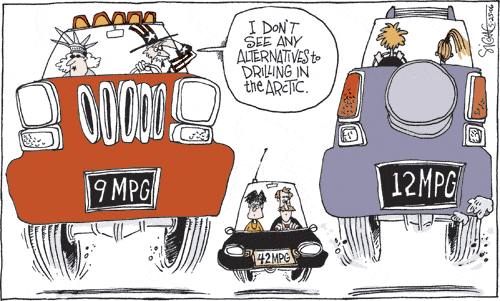
Not so the cartoons.
Backflip on sustainable living
Builders of high-rise units have been exempted from more stringent energy-efficiency targets after the NSW Government accepted that its scheme would add thousands of dollars to the cost of a unit. It has nothing to do with sustainable living--rather it is affordability.
True a traditional high-rise block of units uses more energy than the benchmark home in NSW, since high-rise blocks need energy to run lifts, ventilation in carparks, lighting in common areas and pool filters. So Sydney will continue to have a continuation of its 10 years of grossly inefficient high-rise building.
June 11, 2006
I fall in this dark unknown
I'm not convinced by Golding's interpretation of the spirit of the ALP opposition defending their goal (position) from the strike (wedge). Despite the crippled look, they do seem to have more resilence and spring in their stride than this:
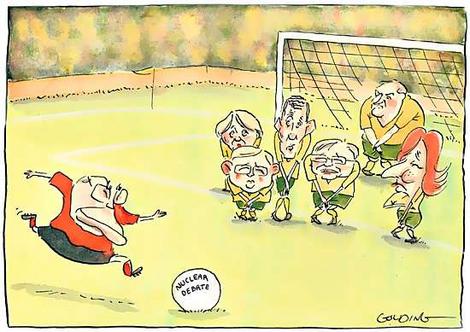
Matt Golding
Sure, a Trinidad & Tobago performance it ain't, that's for sure. That performance was sheers guts and grit. Heart in the mouth do or die stuff. A 'joy before death' that represented a going beyond the limits. A global narrative or myth will arise from that performance. Instead of tenacious defensive performance the ALP performance, though it is trench warfare, still has an emptiness about it.
And, unlike the burlesque Trinidad & Tobago supporters, who were in a delerious, joyous mood--exctasy Bataille would have called it---the ALP supporters are certainly not in the carnival mood. They are not affirming life with a tragic jubilation. They still seem to fear tomorrow. Everything for them seems to be profoundly cracked.
June 10, 2006
postmodern revisited sensibly
Margaret Sankey, who works in the Department of French Studies at the University of Sydney, gives a more reasonable account of postmodernism than that of the cultural conservatives at The Australian caught up in hysterics.
Sankey says:
Postmodernism is first of all a category to describe critiques and reactions, cultural, political and social, against the central tenets of monolithic modernism.....The shaking of the modernist foundations of our culture and society paved the way for postmodern criticism in the arts and literature and brought into question the dichotomies of high and low culture, high and popular literature, classical and pop art. Overall, "postmodern" is a term to describe the crisis in representation which has characterised the modern world with increasing urgency since the World War II.
That is pretty right. Along with Lyotard's rejection of grand narratives the crisis of representation, which is associated with the picturing (correspondence) of the propositional view of language is a key to understanding postmodernism. That crisis of representation would also include the expressionist theory of language.
Sankey adds:
Likewise deconstruction, associated with the names of Jacques Derrida and Paul de Man, acutely focusses on the crisis in representation, the loss of confidence in the triumphal Enlightment discourse. Language, rather than being referential, can be seen as an infinite regression of the sign, creating a deferral and fragmentation of meaning. Representation becomes, then, a space where other voices can be heard, the black as well as the white, the colonised as well as the coloniser, women as well as men. All languages become legitimate in this pluralised and politicised space of representation.Whatever we think of it, the fragmented, fractured world of postmodernism with its post-colonialism and poststructuralism, the polyphony of its voices, is the one in which we live.
Rafe Champion interprets this 'as anything goes' by relying on the judgement of Friedman and Miller:
Language, rather than being referential, can be seen as an infinite regression of the sign, creating a deferral and fragmentation of meaning. Representation becomes, then, a space where other voices can be heard, the black as well as the white, the colonised as well as the coloniser, women as well as men. All languages become legitimate in this pluralised and politicised space of representation.
That plurality does not prevent some interpretations of some texts and images (whether high or low culture) as being better than others.
June 9, 2006
the 1960s-inspired culture wars
What were the culture wars? They had long been symbolized by the debate about preserving Western civilization or purge it of the nasties.Theory was the big bear--- the politics of race and sex, reliant on theory instead of evidence--- in the 1960s-inspired culture wars.
Here's Murdock's Australian working itself up into what can only be called hysteria:
What do a perforated shipping container, a medical student who can't tell the difference between a heart and a liver and a poster advertising the movie Gandhi have in common? No, they are not all exhibits in the current Sydney Biennale – only the shipping container made it in this year. Rather, they are all symptoms of a postmodern rot at the core of Australian academic and cultural life that seeks to divorce art from beauty, replace skills-based excellence with warmed-over sociology and inject a politicised, deterministic view of the world in which identity groups trump individuals into virtually every sphere of life.
And the rot goes back to the rebellious youth in the 1960s.
The editorial says:
Australia was spared much of the turbulence that hit the US and Europe in the late 1960s. The fallout, in the form of academic obsession with politics and postmodernism, didn't hit the country's campuses until the 1970s. But this new movement was made particularly powerful by the fact that when the drama of adolescent rebellion, driven by vast numbers of youth raised in previously unimaginable privilege and luxury, played itself out writ large in the streets and on the campuses of cities such as Paris, Chicago and Berkeley, the culture's guardians didn't fight back but instead rolled over. An entire generation of students were essentially told that their youthful worldview was correct and superior to that of their professors. As a result, the rising generation never matured or learned to value the things they never stopped rebelling against. Thus the reflexive antipathy to all things Western that infects so many state curriculums: witness science courses that teach that Western science "is only one form among the sciences" (as occurs in South Australia), music classes where turntables are treated on a par with classical instruments (as was proposed in WA), and the "black armband" school of history which treats Australian history as nothing more than a tale of racism and colonialism.
The reflexive antipathy to all things Western? There lies the hysteria. It's hysteria because it is such a exaggerated distortion of reality. The 1960s rebellion was about the search for indiivdual happiness, freedom as self-realization and self-fulfilment that threw off the contraints that traditional (religious) morality placed upon individual desires. That rebellion from a puritanical morality is part of the ongoing secularization of liberal society. The conservatives want to re-establish the constraints on the "destructive" (sexual) desires.
June 8, 2006
education in a multicultural society
From Amartya Sen's Identity and Violence: The Illusion of Destiny (Issues of Our Time)
Education is not just about getting children, even very young ones, immersed in an old, inherited ethos. It is also about helping children to develop the ability to reason about new decisions any grown-up person will have to take. The important goal is not some formulaic "parity" in relation to old Brits with their old faith schools but what would best enhance the capability of the children to live "examined lives" as they grow up in an integrated country.
Very Socratic isn't it?
If identity matters in the sense that people need roots in some cultural soil or other, even if they should not be so rooted that they cannot migrate physically, linguistically, socially, and culturally, then we should acknowledge that we all possess multiple identities--ie., we are sexed, religious or not so, a worker and a Croatian.
Yet identity politics so often rest on hatreds that do as much damage to the aggressors as to their victims? 'Tis a puzzle isn't it.
June 7, 2006
every picture tells a story
The so called energy debate to deal with climate change and global warming is up and away:

Bill Leak
The ALP has good reason to take this stand:

These kind of consequences are never mentioned when the nuclear advocates talk about nuclear power being clean and green. That is why it is not really a debate. It seems that while nuclear proponents call for a debate, any opponent is immediately damned as irrational.
June 6, 2006
urban expansion
An interesting quote:
The much relied on South East Queensland regional plan is supposed to save us from haphazard development, but despite its protestations of being green, hardly a dollar is being spent by the State Government on new greenspace acquisition. They are hoping, magically, that farmers will keep farming, and other rural landholders will respect the urban footprint and postpone their ambitions to become multi-millionaires by a year or two.
That is Peter Spearritt. The comments apply to all parts of coastal Australia undergoing a seachange style development. Little is being set aside for greenbelts. So we have suburbian sprawl.
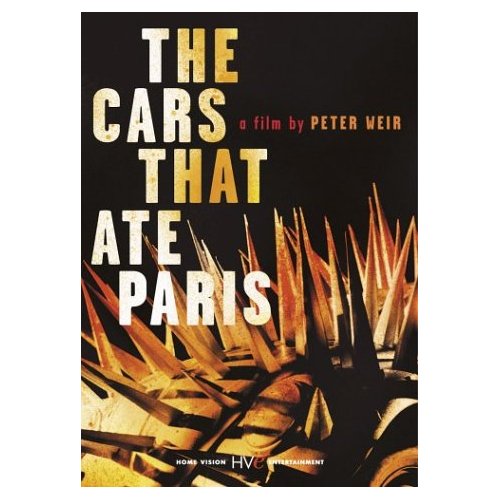
The cars that ate Paris
This early film by Peter Weir turned up in the mail from Quickflix the other day. I'd seen it before, many years ago, and wanted to see it again. I thought it odd and macabre then, and I wanted to have another look as I had presumed it had become an underground cult classic.
I'd seen Picnic at Hanging Rock, Dead Poets Society and The Truman Show.
It's an odd and quirky satire (plus comedy and horror) about rural Australia. It had lots of promise, and though it ended lamely, it is still impressive. It would be seen as bordering on the absurd, but I read it as cultural critique. It reminded me of David Lynch even though the visuals were often mundane.
June 4, 2006
Lambasting PoMo?
I've just stumbled across MercatorNet a liberal humanist culture magazine. I found this article entitled PoMo's unteachable suspicion by Philip Elias. 'Unteachable suspicion'--it's quite catchy.
 It is an account of a seminar in which academics from three Australian universities took the chance of a forum to lamblast the postmodern position. But why lamblast rather than engage?
The usual charges are relativism and nihilism.
Is this forum any different from the standard charges?
If not, are the standard charges argued for?
One of the papers is Your pocket guide to PoMo's history by Martin Fitzgerald. It's a mish mash of the history of modern philosophy that leads to postmodernism. If it's a historical sketch then how does that history inform postmodernism as a philosophy?
What then is postmodernism?
Fitzgerald says:
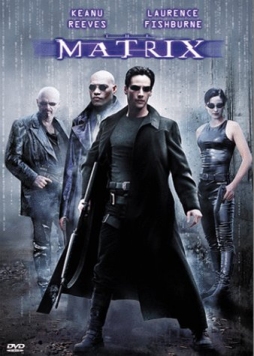
Postmodernism is a set of ideas to be studied at university. But it is also an attitude to life. People not only think postmodern thoughts, they also live postmodern lives. They live without ideals, or ideas; their morality is homemade relativism; their commitments are fleeting; they distrust authority and "canonical" texts; they are sceptical about assertions of truth and falsehood. Films are a useful way of capturing this. The Truman Show and Bladerunner are two thought-provoking examples, but there is one which sums them all up, The Matrix. See that and you'll understand more or less what postmoderism is all about.
I've seen The Matrix but I'm none the wiser. I've also seen The Truman Show and Bladerunner. I'm still none the wiser apart from it being something to do with appearances/reality with appearances as illusions and about power. That hardly engages with Nietzsche's overturning of Platonism does it.
The assertion that postmodernists 'live without ideals, or ideas' is close to nonsense. How can you live without ideas in everyday life? Presumbly that means postmodernists are empty headed. Does that mean postmodernists do not argue, but only justify themselves in terms of primitive moral responses, resentment and indignation?
And the assertion that postmodernists 'morality is homemade relativism; their commitments are fleeting' does make much sense of Nietzsche's revaluation of values and his criteria of commiting to those values that affirm life as a way of overcoming nihilism. Given Nietzsche's criticism of Christianity as the negation of life that makes us miserable, you would expect some philosophical response to his 'God is dead' argument wouldn't you.
W\hy not distrust authority? There may be good reason to do so. The appeal to authority indicates the cultural conservatism.
June 3, 2006
'In the Mood for Love'
I've just watched this on video---Wong Kar-wai's 'In the Mood for Love' (2000). It is very minimalist---tis mood and atmosphere without much of a narrative that is bathed in the evocations of popular musical culture.
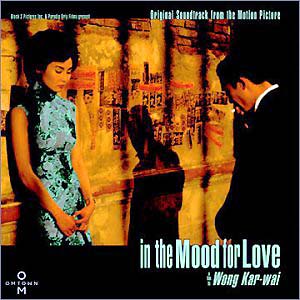
It left me puzzled: was it a film about sexual desire or alternatively, a film about moral restraint? Moral restraint and internalized repression in Hong Kong in the 1960s is my guess. I've seen no other Wong Kar-wai film.
June 2, 2006
Robert Johnson
Mississippi has given the world is a genre of music that has been called America's only truly original music - the blues. Born among the sharecroppers and plantations of the Mississippi Delta, performed and developed in the segregated bars and juke joints, by musicans anxious to be independent from farm salary; migrating with of many blacks from the agricultural south to the industrial north; it also spawned rock and roll, soul, and other styles.
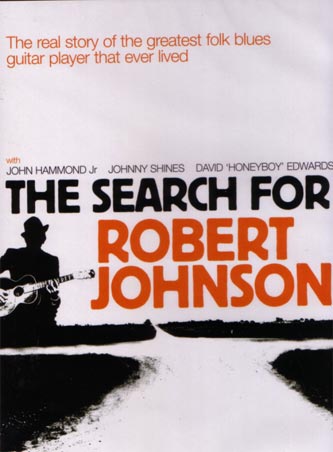 It was a documentary that aimed to uncover the truth about Robert Johnson whose life of a wandering minstrel of a musician in the 1920s and '30s was shrouded in mystery.
The documentary was boring. However, it showed that the Mississippi Delta area is one of the most impoverished regions in the US and put some context around Johnson.
Yet Robert Johnson is probably the most famous delta blues singer and guitarist in history, and the one who has been the most mythologized.
This is a country bluesman pictured as a hunched and shadowy figure shouldering his guitar down a lonesome road on the outskirts of town giving expression to the dark side of America, where there was no redemption, salvation or joy.
Though he recorded fewer than 30 songs over a single seven-month period in the 1930s, he has had an enormous impact. Johnson's blues are the innovative distillation of what came before him--- a synthesis of earlier music of Charlie Patton, Skip James and Son House, and a part of a much broader black music culture in the first half of the 20 th century.
Delta blues strike the ear as being stripped down to the essentials. There is very little ornamentation and the vocals are often harsh and raspy, like field hollers. The songs are generally very serious in nature. The instruments often have a powerful, driving rhythm that accelerates as the song progresses.
June 1, 2006
another way of looking
Rover Thomas had a profound impact on the Indigenous art of the Kimberely area in both social and economic terms. The modern history of the Kimberleys is marked by several significant events including the confrontations between white and black, often resulting in massacres of Aborigines, forced migrations of peoples, and the flooding of vast areas of country. Thomas' work re-interprets this history from the indigenous perspective - unlike the 'official' history found in school books.
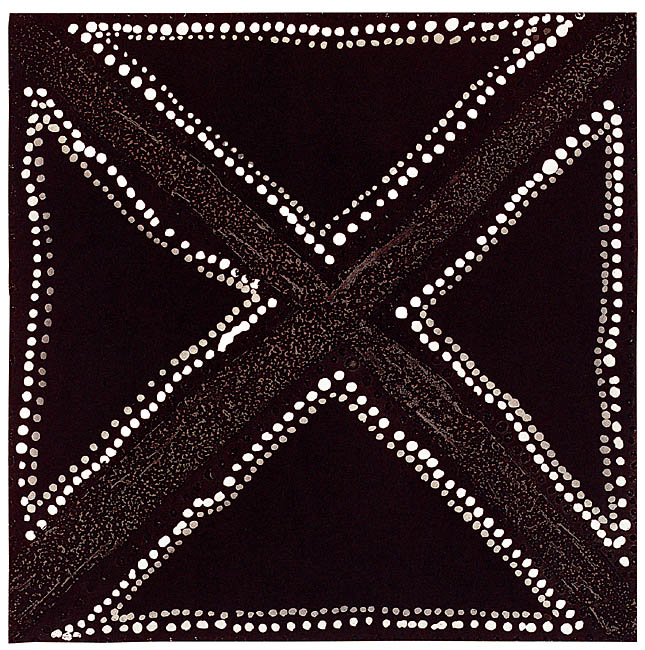
Rover Thomas, Crossroads, 1997, Etching
Rover Thomas has forced non-Indigenous Australians to re-evaluate their own perspectives of the Australian landscape, its people and its history. Instead of the common Eurocentric view of Aboriginal art that is often applied to indigenous paintings we can adopt an Aboriginal-centric perception of Western art.
A catalogue of interest.