May 31, 2007
a puzzle
People don't like politicians much, do they.They are seen as grubs and they are deeply distrusted. They are usually seen as the lowest of the low--generally down there on the trust list with real estate and car salesmen and financial advisers spuiking investments in Gold Coast properties.
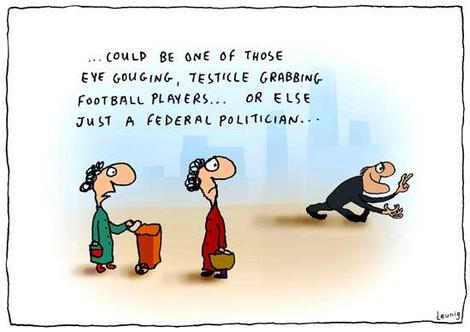
Leunig
On occasion our unconscious hopes and desires for a better live are projected onto a particular political figure --eg., a Whitlam, Dunstan, or Hawke ---only to have them dashed on the rocks of economic reality of capital flows. The economy and business gets in the way of our dreams and utopian desires.
The dashing of our dreams, we come to realize, is the consequence of living in a capitalist economy in which instrumental reason rules in the name of profit and wealth creation. It becomes a case of hanging onto our desires for love, romance and wellbeing in a tabloid world entertainment world of manufactured beauty, mass deception, high levels of violence and strong law and order.
May 30, 2007
about pictures
W.T.J.Mitchell says that many of the modernist master-narratives (say of Marxism, psychoanalysis, or of modern art and philosophy) were iconoclastic in very fundamental ways. They tended to treat images as the object of destructive critique, of critical operations that would dispel their power, eliminate them from consciousness, and smash them once and for all. Ideology critique, for instance, was consistently portrayed as a practice of emancipation from a false consciousness depicted as a repertoire of seductive and false images. Ditto for psychoanalysis and its relation to imagination and fantasy.
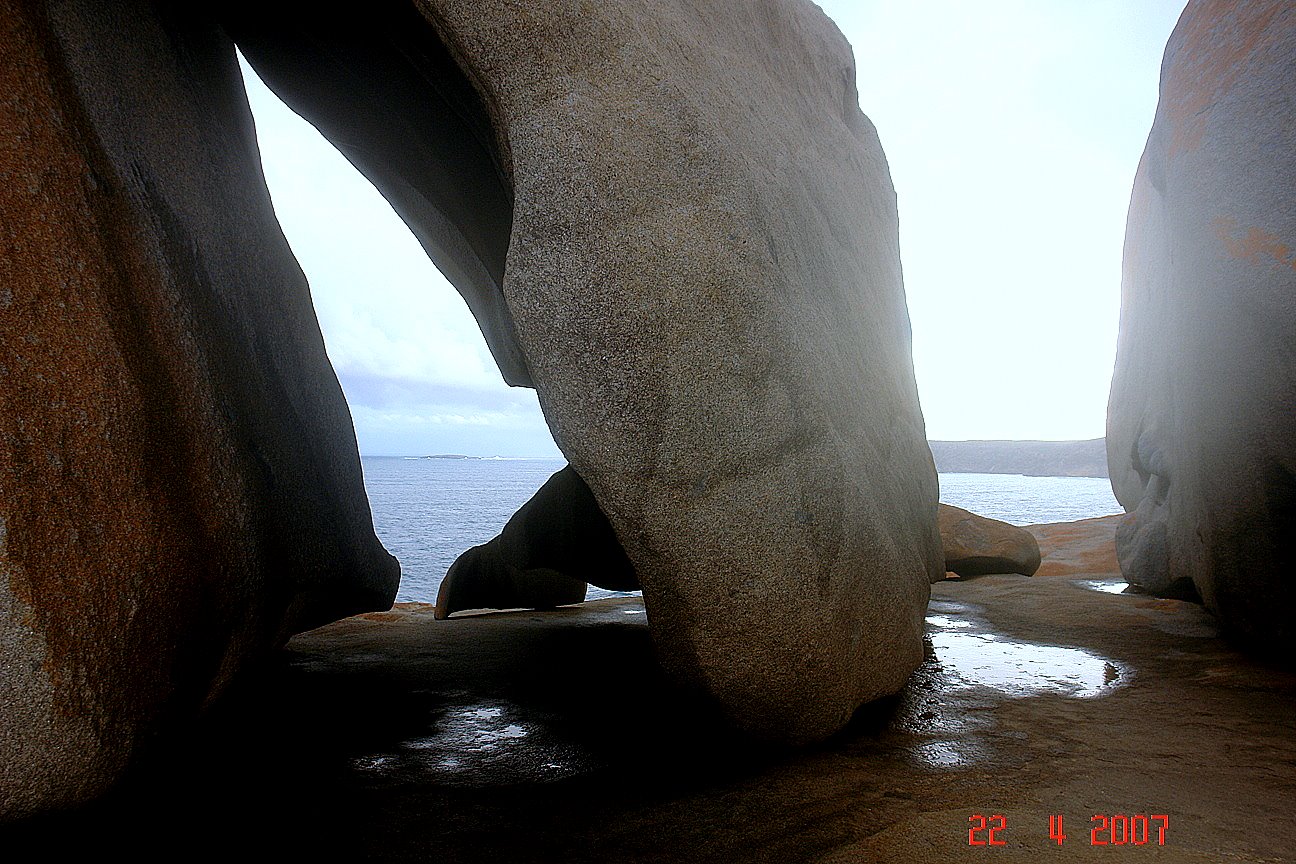
Gary Sauer-Thompson, Remarkable rocks #3, 2007
The history of philosophy, from Plato's banishment of the artist to Richard Rorty's “linguistic turn,” resolutely set its face against the image. As Wittgenstein put it, “a picture held us captive, and we could not get outside of it.” Heidegger thought that modernity had trapped humanity in an “age of the world picture,” and that philosophy (or poetry) might find a way out of it.
the pictorial turn,” the treatment of the attack on images, not as an automatically reliable strategy, but as itself a cultural phenomenon that needs critical reflection and theorizing.
May 29, 2007
sex + politics
Another way that gender criss-crosses party politics:
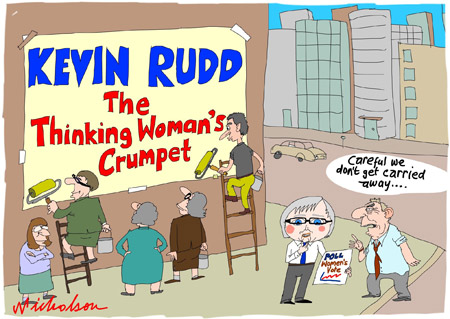
Nicholson
It's not often that white men in politics are seen as sexy. It is usually women politicians who are given a very hard time. But Rudd has the support of the feminists.
This way of looking at politics is often seen as a distraction. I'm not so sure that it is. Politics is far more than IR or economic management run by the hard faced men of politics with stony hearts. It resonates when it touches the deep issues in our every day lives such as the work/family one that we live everyday.
a note on taste
The aesthetic experience of nature is different from the aesthetic experience of art, as the former are not designed and we are immersed in them. Many adopt an approach that centres on the subjectivity of the individual.
In contrast to formalist accounts of beauty subjective accounts commonly hold that beauty is the object of what Kant called ‘judgements of taste’, or what we would call ‘judgements of aesthetic value’. One feature of these judgements is that they are made on the basis of a response of pleasure and displeasure. Aesthetic judgements share this with judgements of the taste about food and drink.
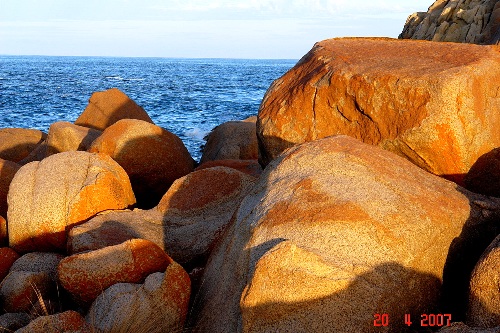
Gary Sauer-Thompson, rocks + sea 2007
The other distinctive feature is that these judgements lay claim to correctness. Aesthetic judgements share this with empirical judgements. Though we cannot command that others find the same things beautiful that we ourselves do---eg., coloured rocks--- we are always commending what we find beautiful to each other.
This is not something we can responsibly do without having some well-grounded expectation that those to whom we commend the objects we have found beautiful may also do so. Hence are judgements of taste are ground in some form of intersubjectivity or sensus communis. .Each person has basically the same "common sense" for recognizing beauty in objects.
So we have the subjective accounts of beauty which focus on taste, on the attenders or audience members (1) exercising their ability to judge correctly from an aesthetic point of view and (2) finding enjoyment in attending to those aesthetic qualities that properly should ground such enjoyment.
May 28, 2007
tourist snaps
It is not the scene or vista that is central it is the photo of the scene.The image is quickly checked to see if it is okay.
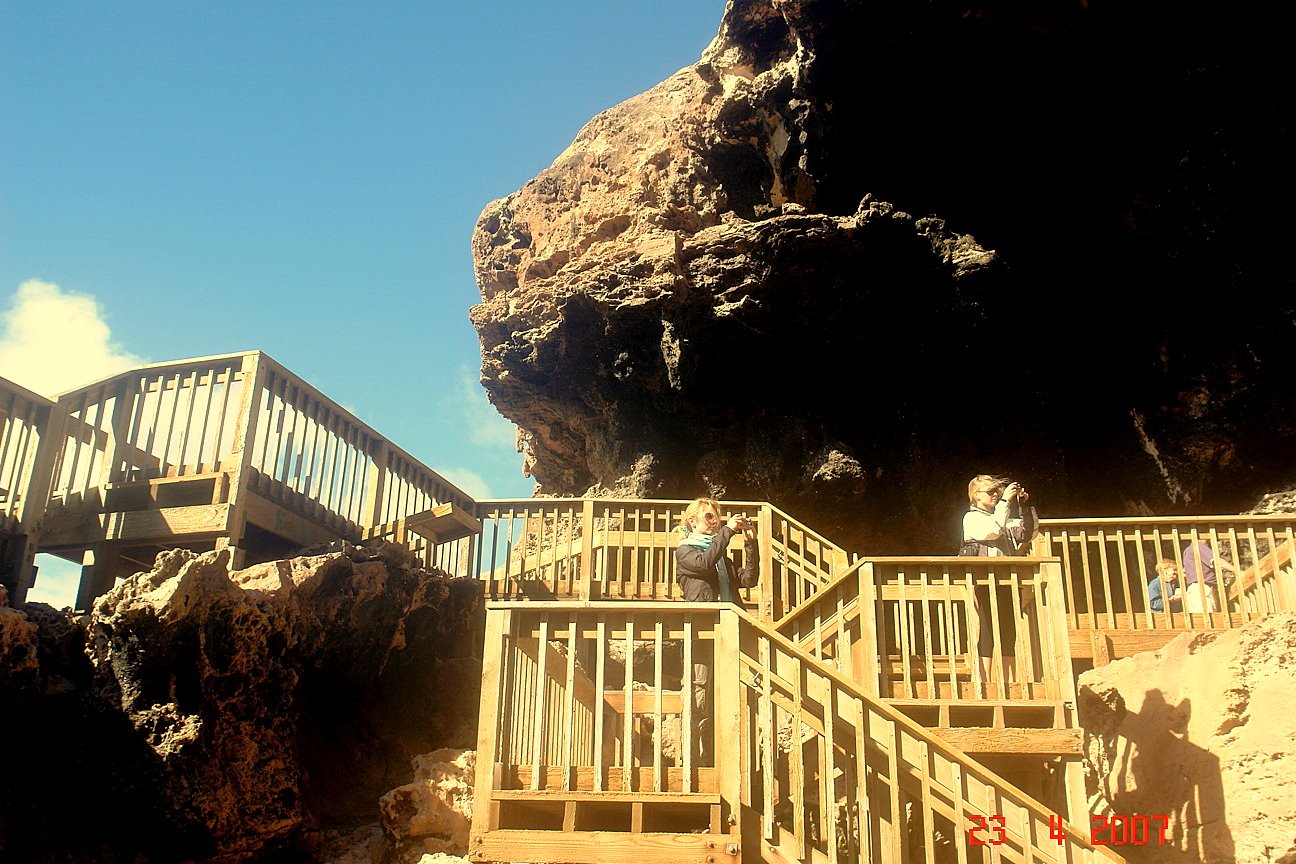
Gary Sauer-Thompson, tourists, Admiralty Arch, Cape de Couedic, 2007
What is also important is the person within the scene or vista. Someone takes a photo of the person in front of Admiralty Arch at Cape de Couedic. This expresses how we now live in a society dominated by pictures and visual simulations. The current preoccupation with media images goes so far as to constitute a "common culture" which defines our era. Despite we live in a culture dominated by pictorial image, yet we remain unable to understand the power of the picture.
Mitchell argues that the picture embodys a complex interplay of visuality, apparatus, institutions, discourse, bodies, and figurality. It involves the realization that spectatorship may manifest the same deep problems which have been argued for reading, but that models of textuality may not be appropriate for theories of visual experience. However, the idea that there are two distinct and discrete forms of communication -- the image and the text -- can be seen as prejudicial.
May 27, 2007
Remarkable rocks: tourist snaps
The tourist is the autonomous modern subject at its logical end point of modernity: where the autonomy dimension of individual freedom triumphs over, and eclipses, the nomos element---the ties that bind together as a people, community or group.
The free tourist, as a spectator looking for the incredible experience at at spectacular vista, is free from any particular ties.They are free floating.
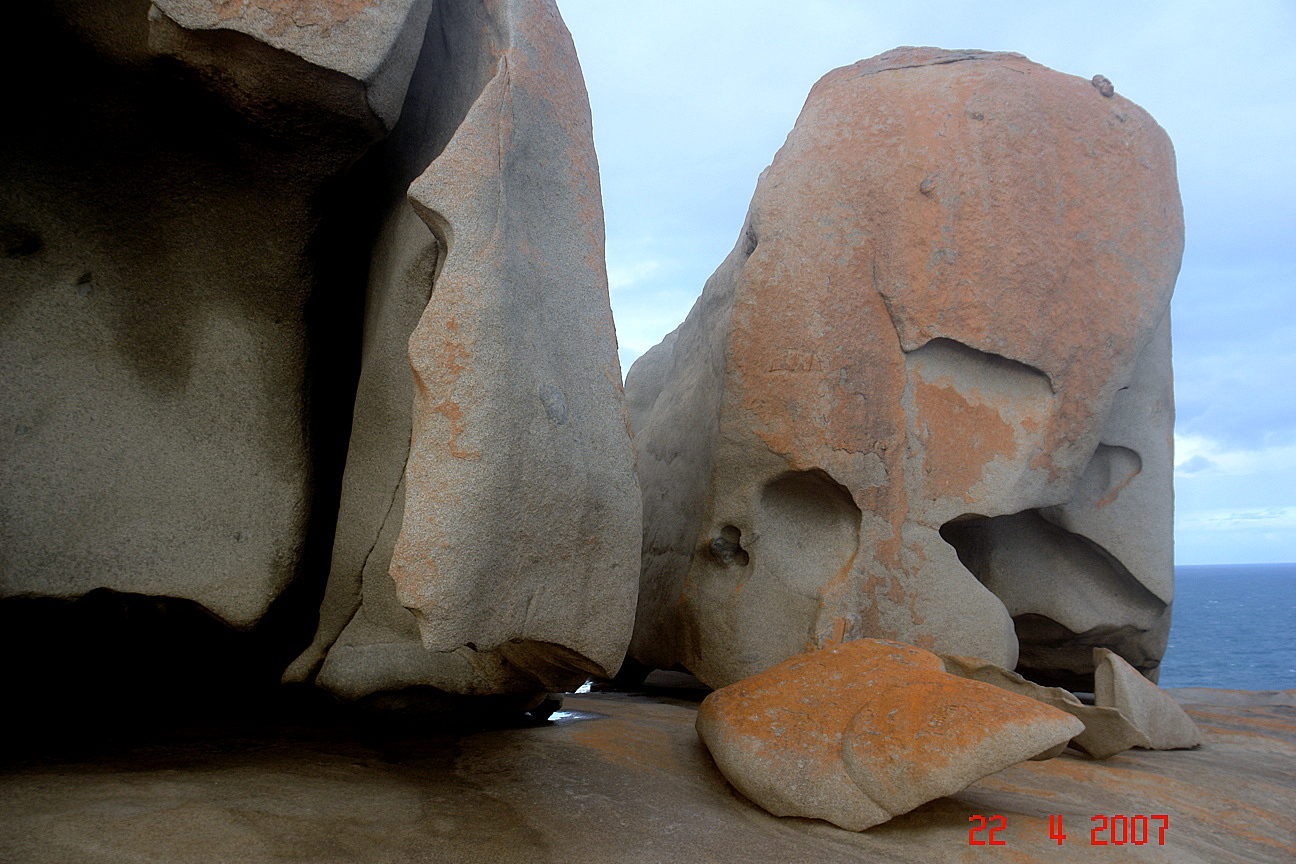
Gary Sauer-Thompson, Remarkable Rocks 2, Kangaroo Island, 2007
Being a tourist is the emptiest of all of modes of subjectivity --and the flattest soul. The world the tourist travels though is one of old (19th century) pioneering customs bankrupted by the new global mores of the 21st century, but re-floated by tourism as nostalgia and heritage.
conflict
I'm having trouble uploading my photographic images at the moment, so this is more of a test to see what is going on, than a post.

There is background information by David Levi at TPMCafe for those interested in finding out what is happening in Lebanon. I don’t understand the irrationality of Middle Eastern politics.
May 26, 2007
e-porn surfing
Adele Horin in The Age reports that record numbers of Australians are visiting pornographic websites on the internet, including sexually explicit dating sites — and one in three of them is a woman. She says that new figures show more than a third of internet users visited an porn website at least once in the first three months of this year, and that women in general are considered the new consumer growth market in e-porn surfing.
The web, as we know is a medium made for porn. It's private, anonymous and interactive. By migrating to the web, porn tapped an enormous pool of consumers. It is the seedy currency that is the heartbeat of the new economy.
Is this growth in e-porn a problem? The Howard Government thinks so given the turn to providing free porn filters to block offensive material on home. Some say that even Parliament peddles porn
In another article Horn says that some women have suffered from their male partner's internet porn obsession, that borders on addiction.

Michael Learmouth at Metroactive says that
The unwavering demand for porn on the web drives demand for increased bandwidth, more robust servers, faster desktop computers and new software that can deliver images and video quickly and efficiently. ..As ISPs upgrade their equipment to accommodate the vast amount of bandwidth porn requires, they buy routers from Cisco Systems and 3Com. Porn webmasters pick up superfast servers from Sun Microsystems and Silicon Graphics. Search engines like Yahoo and Altavista reap ad revenue from banner ads and collect hits by providing easy access to porn. Porn surfers buy DSL lines or cable modems from Excite@Home, Covad Communications, Northpoint Communications and Pac Bell. Perhaps most directly profiting from porn traffic are Silicon Valley's huge ISPs that provide server space, connectivity and bandwidth to the most visited porn sites on the web.
The web is moving so that video is the mainstream offering whilst pictures are secondary.
gender perspectives
The events are briefly referred to here at public opinion. More background can be found here in Shaun Carney's op-ed in The Age:

Alan Moir
Interesting isn't it. We go from the conservative patriarchal family where the man is the boss to the reverse-- the modern marriage is where the woman wears the pants. What is excluded is a marriage based on equality --two people professional with their own careers working as a partnership.
May 25, 2007
Cape du Couedic tourist snaps
Finally we made it to Cape du Couedic in the south west corner of the extensive Flinders Chase National Park, to stay overnight in one of the lighthouse cottages. There were no grand views like Cape Willoughby as the cottages were settled amongst the bushes as protection from the biting south easterly wind.
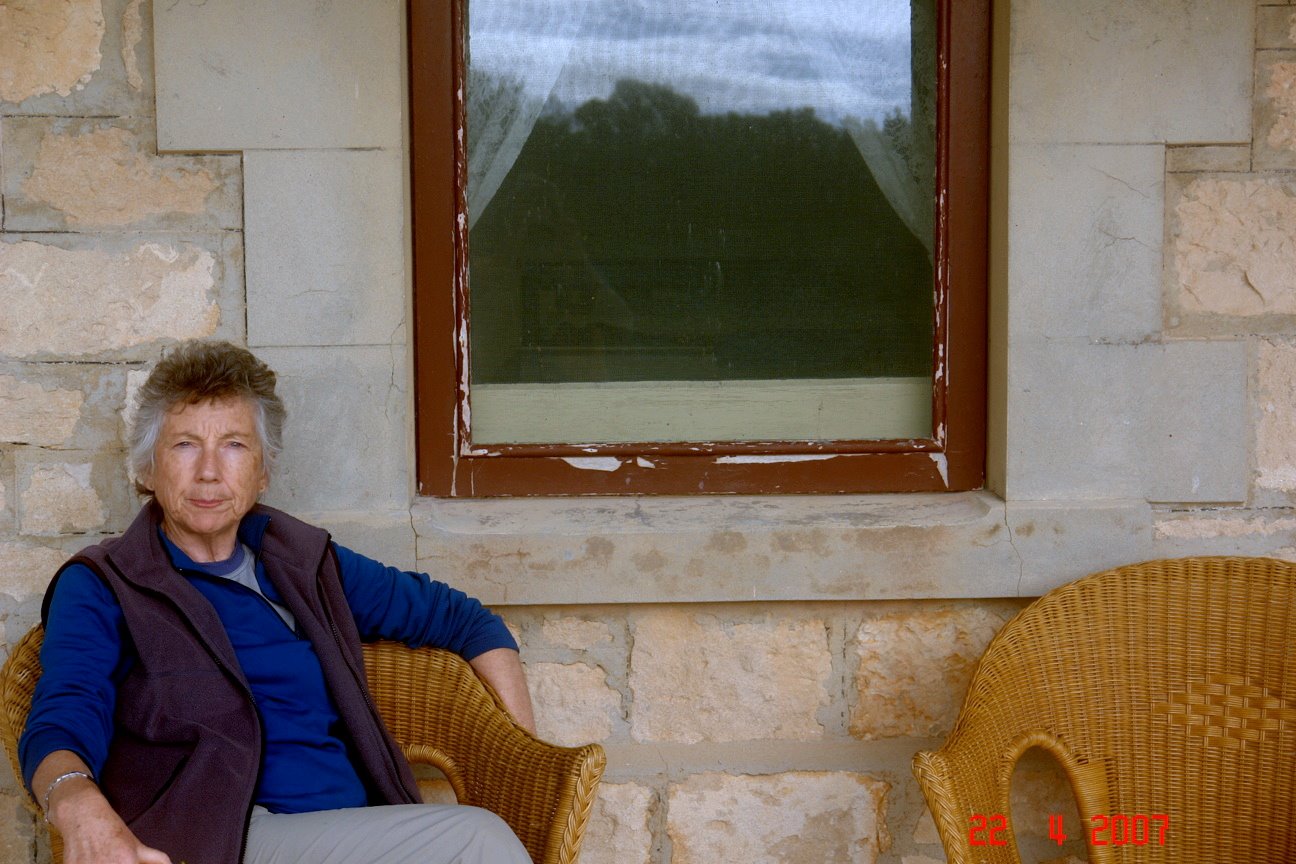
Gary Sauer-Thompson, Suzanne, Karatta Lodge, Cape du Couedic, Kangaroo Island, 2007
This was a mass tourist area due to the colony of New Zealand Fur Seals, Admiralty Arch and Remarkable Rocks. It was impossible to escape from being a tourist. We were bang in the middle of it.
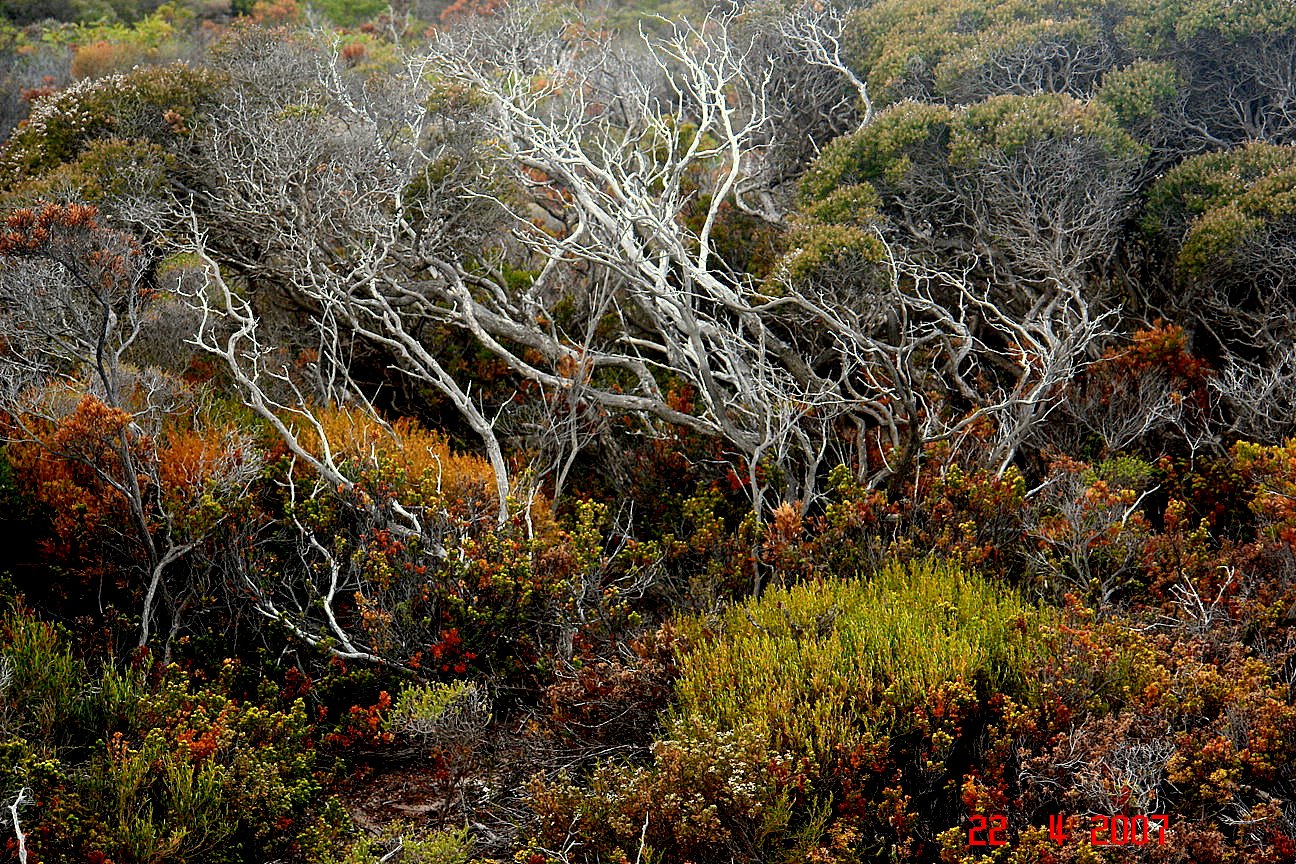
Gary Sauer-Thompson, Malaleuca, Cape du Couedic, Kangaroo Island, 2007
Then a quick scoot down to Remarkable Rocks just like all the other tourists we'd seen on the road that day to take a photo before the light went:
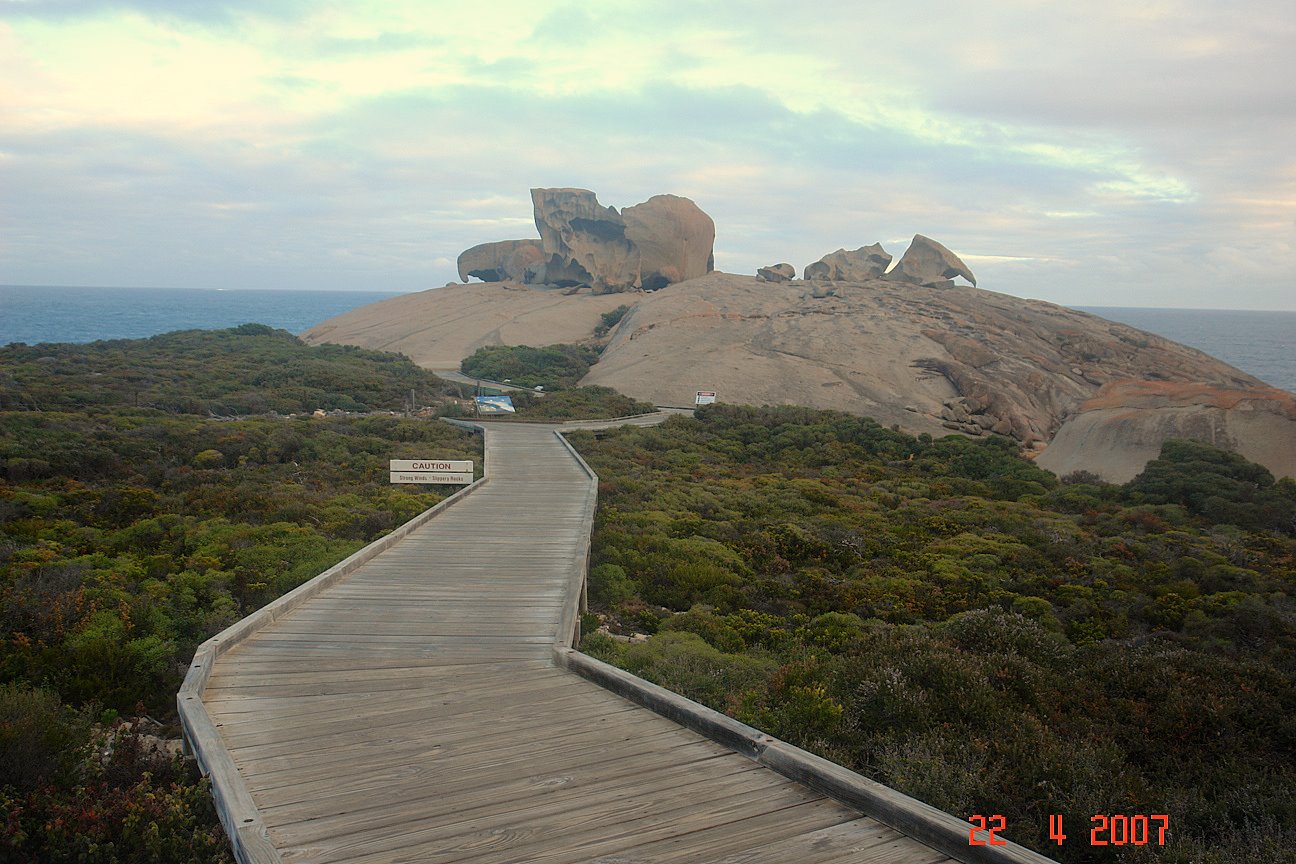
Gary Sauer-Thompson, Remarkable Rocks, Cape du Couedic, Kangaroo Island, 2007
The hope was that the cloud cover would break and the sun would come out and lighten up the scene, just liek the picture postcards that we'd seen being sold in the tourist shops in Kingscote:
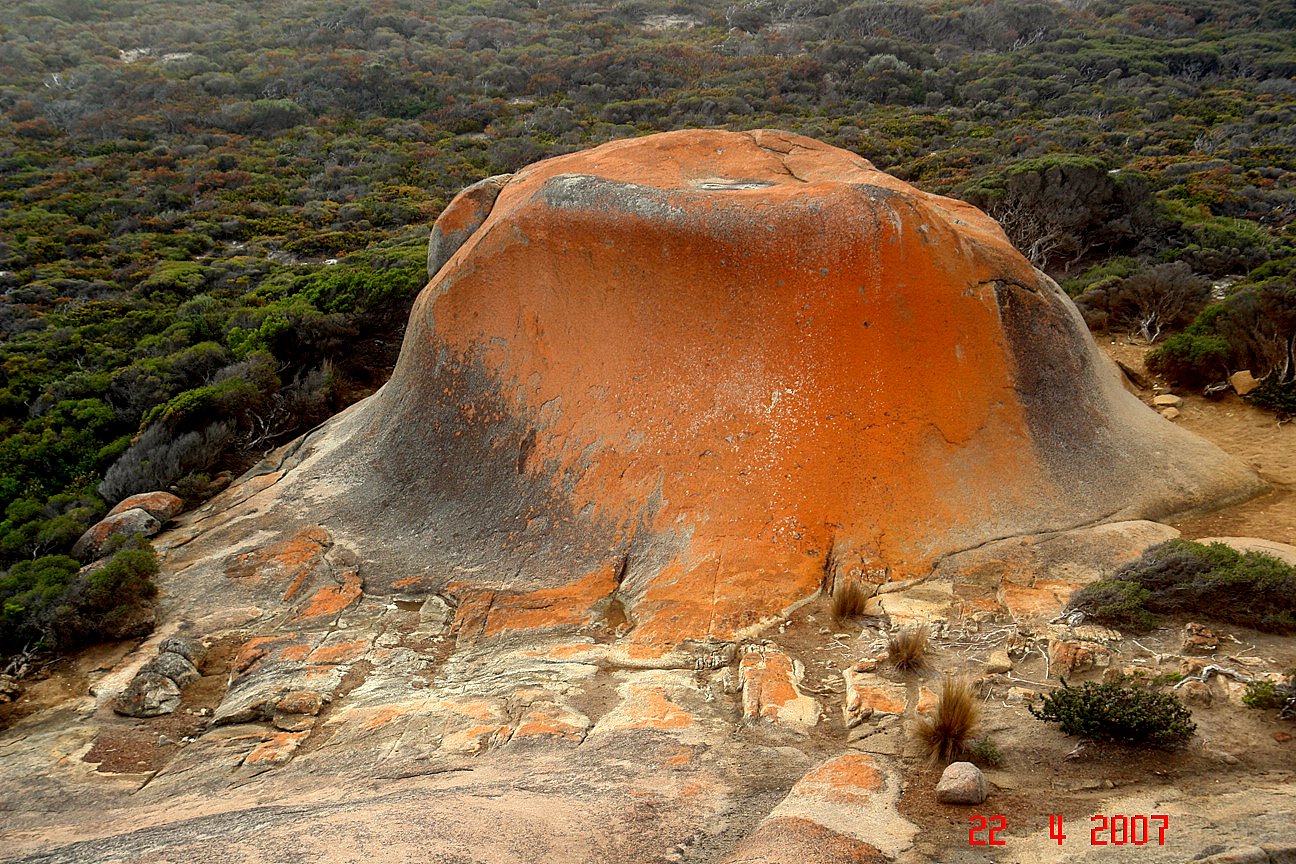
Gary Sauer-Thompson, Remarkable Rocks 1, Cape du Couedic, Kangaroo Island, 2007
It was not to be. I had to make do with the colour.
Edges and Software Technology
One of Bill Mollison's insights with Permaculture was that the edges are the most dynamic point. Consequently he designed his permacultural systems to maximise the edges and give the greatest dynamicism. Technology is no different.

I am no rails fanboy specifically; I ended up enjoying the productivity that Turbogears, its python equivalent, gave me. But that is six of this and half a dozen of that. This new generation of frameworks knocks the socks off the late 90s and early aughts attempt to increase productivity - and that includes frameworks on Sun's Java and Microsoft's dotNet.
In the mid-1990s every software shop was rolling their own framework, which was a pain to maintain, took untold hours to complete, etc. So companies and opensource projects stepped in to take that pain away. Software shops started developing and deploying on big heavyweight platforms like websphere or opensource projects like struts. But they were a pain to configure, deploy and maintain - really painful. They were fat and complex solutions, that, while superior to the roll your own framework era, still cost too much in effort. Then Ruby on Rails came along and raised the bar on what it meant to be immediately productive.
A website I check regularly is Elliote Rusty Harold's cafeaulait.org which has a quote of the day - usually on technology, sometimes politics. Today he has a quote from Joel Spolsky about the performance issues of Ruby on Rails. I do not know why Spolsky is so well respected as a technology commentator; he did project manage (IIRC) a version of Excel. But technologically he is at least five years behind and he is in permanent 'dig the heels' in mode. He has to be dragged kicking and screaming as each new edge intrudes into mainstream technology. In 2004 I wrote an article: Welcome to 1997 Joel which captures his not wanting to surf the edges and stick with what he knows or is comfortable with.
I remember when Java appeared the tech world was inundated with article after article on how Java was slower and more heavyweight than C/C++. Java was derided for its effeminance and not being 'close to the metal'. The fact was though; removing pointers, adding garbage collection and distributing a rich standard API wrapped in c-like semantics was hugely productive.
The Rails era is the next step in productivity; yes if you do something complex rails doesn't offer the same simplicity, which has always been true of any platform. But thanks to Ruby on Rails as a second generation framework - and its imitators - what used to take three months to do, now takes three weeks.
Joel Spolsky writes:
I'm sure you'll have a lot of fun, but for Serious Business Stuff you really must recognize that there just isn't a lot of experience in the world building big mission critical web systems in Ruby on Rails, and I'm really not sure that you won't hit scaling problems, or problems interfacing with some old legacy thingamabob, or problems finding programmers who can understand the code, or whatnot.
Java's productivity and security meant that more hardware could be thrown at the problem while still remaining cost competitive, and now, once the JVM is up and running it is faster than C in many instances. Ruby is not a new technology, it has been around for a while now, longer than the dotNet virtual machine IIRC.
In the early aughts Microsoft played catchup to the Java/JVM phenomenon with its dotNet bundle. Joel was dragged kicking and screaming from the desktop world into the web world. It appears he will have to be dragged kicking and screaming into the Rails edge as well. But the fact is, it is amazing how low the overhead is in getting a project up and running in Rails and just how productive that environment is - developers will always choose to get something to market first and then, if there are issues, throw hardware and tech at the problem later - and that doesn't hurt.
May 24, 2007
National Gallery: modernist brutalism
The National Gallery of Australia is a good modernist building that has a particular approach to the presentation of artworks within its concrete walls. Colin Madigan designed the Gallery as a brutalist, heroic fortress. Just like his High Court. That too stands in splendid isolation beside the lake.
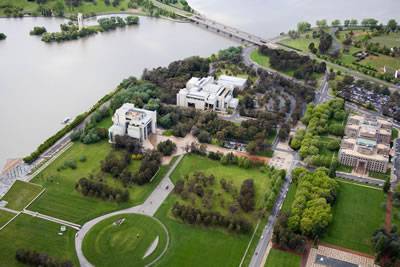
John Gollings, National Gallery + High Court, Canberra
This is the area I work and live when I'm in Canberra. I often walk around the edge the Lake from Kingston to Parkes and explore the sculpture gardens at the back of the National Gallery. I never enter through in the front door. The back end is softer than the front, as the building is partially obscured by the native trees. I often sit in the garden and wonder about Walter Burley Griffin's urban utopia, and how it is evolving.
The Gallery has a troubled history and is currently caught up in controvery that is ongoing.
The National Gallery, now a heritage-listed building, does have its problems as its history discloses the fraught relationship between 20th-century architecture, city design and museology. For one, it is not a good art gallery. Elizabeth Farrelly, in an op.ed in the Sydney Morning Herald highlights the key problem for museology. She says:
Brutalism, at its best, combined bold forms, high contrast and breathtaking subtlety; rhythmic, textural and assured. At worst, admittedly, it was just brutal... Can you hang art in spaces 15 metres high? Here, and perhaps only here, successive directors - James Mollison, Betty Churcher, Brian Kennedy, Radford - agree. No. Impossible. Even works as confronting as Jackson Pollock's Blue Poles or David Hockney's A Bigger Grand Canyon shrink and quake in such caverns.
Although the ideology of modernism says that the NGA is a neutral space —a space that defers to art instead of visually competing with it-- this is undercut by the canvernous spaces themselves. Space is more important than the art for high modernism. The architecture is about itself.
Farrelly highlights another problem--the linkages between the National Gallery, public space and the movement of people:
The national gallery, comparably handsome, has an undeniable orifice problem. And it's not like there's pedestrian flow to speak of. Out on the lakefront, only metres - worlds - away, walkers, cyclists and Korean weddings stream past. South, on the parkway, Canberra's thrusting metropolis roars on. But around the parliamentary triangle itself, which Burley Griffin would have crammed with bustle, you can walk half a day and not set eyes on another living soul. Here in their lonely lakeside paddock sit Madigan's two great, heroic fortresses, the gallery and the High Court. Gloriously disdainful, fabulously vast (yet dwarfed by the still vaster spaces around them) and radiantly alone, they are totem buildings in a token town. It's the great Australian metaphor; emptiness within emptiness within emptiness.
The phrase 'great Australian metaphor; emptiness within emptiness within emptiness' is a bit tired. The problem is what sort of national gallery should the National Gallery of Australia be? Should it seek to emulate the great national galleries of Europe and the Americas? Should it complement - the well-established state galleries? Should it serve both the Canberra region and the nation? Can it afford any longer to mount the blockbuster exhibitions of works lent from other countries that drew the crowds during the 80s and 90s?
Thirdly, what we have is a national gallery with a $3 billion collection in a building designed for 1000 works, when it now has 140,000 works.
I would have though that the gallery's first priority is Australian art then collecting the art of our neighbours in the Pacific Rim region. The Gallery just does not have the $20 million-plus it would cost to continue to buy works by a Kandinsky or a Mondrian, and there are limits to the blockbuster shows sourced from overseas.
May 23, 2007
Hanson Bay: is wild nature seen as if it were art?
This is looking towards Flinders Chase National Park in the south west of Kangaroo Island. It is mid morning around 9.00am. This landscape is wild and rugged, and a far cry from the natural beauty folded within the petals of a rose. It is an ideal spot to be developed in terms of eco-tourism and the aesthetic appreciation of nature as nature for middle class international tourists.
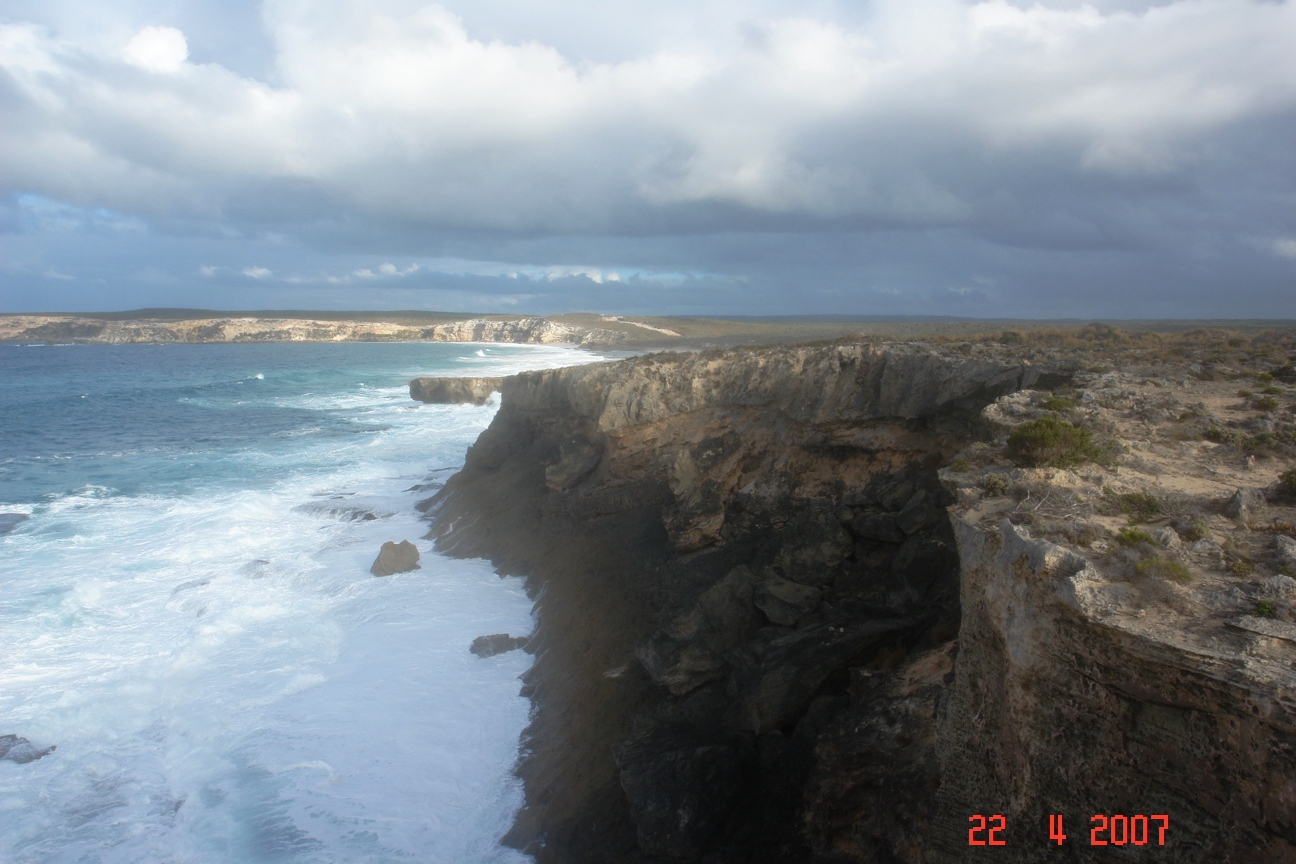
Gary Sauer-Thompson, sandstone cliffs, Hanson Bay, 2007
It is what aestheticians call an aesthetically pleasing natural object. Kant argued in Critique of Judgment that aesthetic judgment was different from cognition and morality, even if they are formally linked. I accept that knowledge can enhance our aesthetic appreciation of the sublime (eg., our recognizing how the various fauna and living species are ecologically and evolutionally interdependent). I also accept that aesthetic judgment is linked to ethics as we both desire and have ethical obligation to preserve wilderness because of its intrinsic value.
However, Kant went on to suggest that the natural thing recognized as natural---the above scene--- is beautiful in so far as it mimics art. Kant held that a things being natural is not sufficient for it to count as aesthetic. If it is to qualify as such, it must be recognized as nature and yet at the same time mimic art. By 'mimic' is meant something like nature is seen as if it were art; a framed picture as it were.
This is the tourist approach to natural vistas. The managers of tourism presuppose that natural vistas should be evaluated in terms of design features such as “form, contrast, distance, color, light and angle of view” ---as “scenic view”.This is cut out at various roadside lookouts and which form so much a part of the popular or common sense conception of natural appreciation. It is a classic example of projecting onto a natural setting such formalist values as balanced overall composition, dramatic focal point (embodied, say, in a centrally positioned waterfall or granite formation), and adequate distance separating viewer and scene (allowing the spectator to take in the entire prospect).
Kant's suggestion--- that nature is seen as if it were art --- is what I struggle with, and my reaction is to reject it, even though I appreciate that many go back to Kant because Hegel had placed natural beauty under a dark star. For Hegel beauty reflects intentional creation (or free choice for Schiller), not the incidental results of blind, natural forces. Benedetto Croce similarly states that the sense of natural beauty is a derivative of artistic beauty. Beauty of nature cannot be explained unless one regards it as the work of a divine creator. Beauty, according to Croce, is a synonym of intuition and expression, and these refer to the artistic form. The content of the work is beautiful only when wrought into form. Given the exclusive focus of twentieth-century philosophical aesthetics on art, we have the back to Kant movement.
I would argue that Hanson Bay's natural environment of sandstone cliffs is beautiful in itself; and not because it mimics a colonial landscape, or a reworking of the uninhabited panoramas of Salvator Rosa, whose wild (untamed) landscapes express the tendency towards the romantic and picturesque.
Some artists, such as Mandy Martin, judge what is important about the landscape as the spiritual recognition of place as expressed by Indigenous people. I was simply overawed by the power of the sea, wind and light in this space in the stormy morning when I was in this place.
So I would argue against Kant's idea that the aesthetic appreciation of nature involves seeing the latter as art. Rather we struggle to express the beauty or sublimity of the place by taking photographs by shaping the content into form. Secondly, if nature is not an human artefact, it cannot be judged by the criteria appropriate to the critique of artworks in galleries and museums. However, we do view natural environments from a humanly constructed framed viewpoint. An example of this is would be my viewing Hanson Bay through a cabin window: the environment acquires the appearance of balance and unity it would miss were it viewed either from outside the cabin or from a point inside the cabin where the window frame obstructs a view of the clouds and cliffs in the setting.
What this experience of Hanson Bay discloses is the need for an aesthetics of natural environments, or more particularly an environmental aesthetics.
May 22, 2007
Schickel, film criticism, blogging
I was going to comment on Swedish director Lukas Moodysson's Lilya 4-ever (2002), which I watched on DVD before flying to Canberra. This desolate film about sexual slavery and spatial representation (bleak landscapes) explores the white slave trade from Estonia to Sweden, as seen from the perspective of a vulnerable girl forced into prostitution, and then trapped trapped in an economy of sex.

Then I came across Richard Schickel, a full time professional film critic and book reviewer for Time magazine, op-ed on bloggers writing film reviews in Not everybody’s a critic in the Los Angeles Times. I was taken back by what I read, given this background. I was taken back because the man goes bezerk.
Schickel states his dislike of blogger critics openly and forthrightly, and it reads like a declaration of war:
Let me put this bluntly, in language even a busy blogger can understand: Criticism — and its humble cousin, reviewing — is not a democratic activity. It is, or should be, an elite enterprise, ideally undertaken by individuals who bring something to the party beyond their hasty, instinctive opinions of a book (or any other cultural object). It is work that requires disciplined taste, historical and theoretical knowledge and a fairly deep sense of the author's (or filmmaker's or painter's) entire body of work, among other qualities.Opinion — thumbs up, thumbs down — is the least important aspect of reviewing. Very often, in the best reviews, opinion is conveyed without a judgmental word being spoken, because the review's highest business is to initiate intelligent dialogue about the work in question, beginning a discussion that, in some cases, will persist down the years, even down the centuries.
Though Schickel doesn't think it's impossible for bloggers to write intelligent reviews, his comparison of bloggers with George Orwell and Edmund Wilson indicates otherwise. Blogging is a form of speech, not of writing.
Schickel, who represents a position of 'recognition' and 'authority' in an established magazine, holds that the work of reviewers is something more than idle opinion-mongering... something other than flash, egotism and self-importance:
We need to see their credentials. And they need to prove, not merely assert, their right to an opinion. Otherwise it is mere mere yammering and cocktail-party chat. A purely "democratic literary landscape" is truly a wasteland, without standards, without maps, without oases of intelligence or delight.
The inference is that logically reasoned discourse that invites serious engagement is not to be found in the blogosphere, as blogs, which are a method of publicly expressing oneself, are mired in prejudice and stupidity. Since writing critically is an “elite enterprise,” we bloggers need to show our credentials to be taken seriously. Show our credentials to whom, though? Who does the credentialing?
A 'logically reasoned discourse that invites serious engagement' is not be found in Schickel's opinion piece either. Nor do we find this reasoned discourse in newspaper reviews of films-- pure Hollywood product for the most part-- or the film shows on television. That's entertainment. Or in Time magazine, which has gone down market. Doesn't this indicate a modern debasement of everything we find culturally significant by the culture industry, and its mass consumption reviewers whose opinions are as tasteless and insubstantial as fast food?
Schickel 's response is to talk about what reviewing ought to be. That is where Charles-Augustin Sainte-Beuve, Edmund Wilson and George Orwell appear. They wrote against deadlines and under economic pressure, without succumbing to the temptation of merely popping off or showing off. That's the ideal.
Where then do we find today's logically reasoned discourse that invites serious engagement, given the digital reinvention of the cinema, numerous alternative delivery systems and conventional film production in the process of becoming a thing of the past, a museum format?
so good
A contrast with this cartoon is Steve Bell's reworking of Tony Blair as Sid Vicious doing Frank Sinatra's My Way:
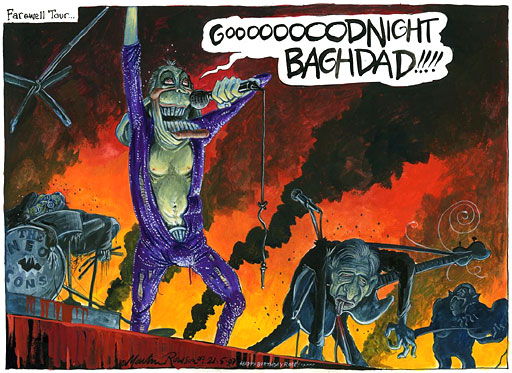
The neo-cons, like most rock n roll bands, have gone out of fashion. They had a great backdrop for their shows though.
May 21, 2007
natural beauty
Often people presuppose that they have immediate access to natural beauty unmediated by history. However, wilderness is a human construct that is placed in opposition to industrial civilization. We travel by roads to view this scene and we live in cabins powered by electricity generated by coal-fired power stations.
In the aftermath of Kant, that is, with Schelling and Hegel, the natural beautiful is no longer a major concern of aesthetic theory. According to Adorno, an evil star hangs over the theory of natural beauty. For Hegel natural beauty is of less significance than the beautiful in art because it is less thoroughly mediated by spirit.
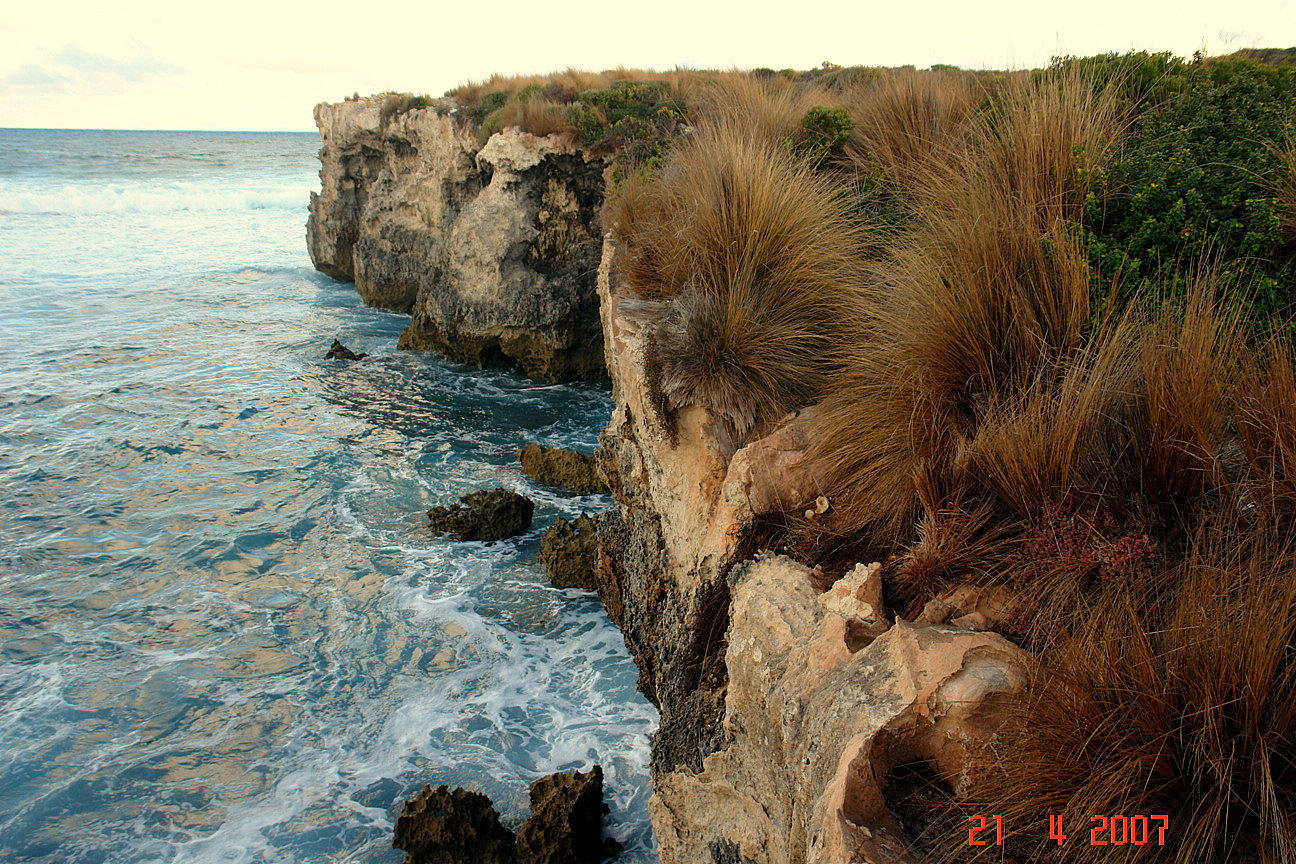
Gary Sauer-Thompson, grasses, Hanson Bay, Kangaroo Island 2007
Was this a simple bias in Hegel? Or does it express the intensification of the domination of nature to ensure human self-preservstion as discussed by Adorno and Horkheimer in the Dialectic of Enlightenment?
Does the beautiful in nature looks as if it were art? Should we reject those positions that regard artworks as paradigmatic for our aesthetic appreciation of natural objects?
Power Engineering and Global Warming

The modern world of digital abundance is reliant upon the massive data factories storing, churning and reallocating bits and bytes. We call these datacentres. These are the big unsexy buildings, or the cramped spaces fed by the equally unsexy systems of air conditioning and power. As time goes on the power demands and heat leakage of bigger and more capable systems increase, the support equipment increases in sympathy, while the physical spaces get smaller and smaller. The engineering that goes around a modern datacentre is highly specialised, highly technological and an art unto itself.
I was at a driving range today swinging golf clubs with a mate of mine who is an engineer in the industry. He was telling me how he was at a Datacentre Conference when a fellow from the EPA [US Environmental Protection Agency] made a presentation. He said there was two things that made his ears prick up. One, the EPA fellow said that the demands datacentres are making are more than the infrastructure can provide, so use low power using systems where you can to reduce the load on the power infrastructure.
The second thing that surprised him was that the EPA fellow produced a couple of slides on global warming. It basically covered the science, and the EPA fellow said, we recognize it as real, we expect that there will be legislation and regulation in the future on this issue, so this is a heads up from the EPA.
Anecdotal but interesting.
May 20, 2007
aesthetics of decay
This post on the aesthetics of decay has arisen out of this this at philosophical conversations on anxiety and space. It's a space where philosophy meets photography.
I feel ambivalent towards urban decay--- the architectural ruin of derelict buildings and empty building sites. The ideology of progress holds that derelict sites are symbols of regression or failure, and they are quickly dismissed on account of them expressing an industrial city becoming a basketcase.

Gary Sauer-Thompson, decay, Adelaide, 2007
Yet some of the old abandoned pre-modernist buildings have a charm and beauty beneath the grime and dirt, whilst some of the new modernist buildings we live and work are phony and awful. They're expensive junk. The old are views as structures to be removed in the interest of renewal and urban planning, whilst the new building soon became objects of decay.
So cannot the modern ruin redefine progress by embodying decline? Could not the ruin or remnant embodies a mode of ‘critical memory’ at odds with the celebration of official monuments and sites of newness?
What needs to be avoided is the over-romanticized view that the relics of the industrial past should be respected, honoured, even saved for future generations, based not on their value as examples of architecture, but as mementos to long-dead workers and the tasks they performed. These are eerie spaces and the urban flaneur, contained in the alone-ness of these now-alien landscapes, is caught up in emotional shudders of anxiety and pleasure.
May 19, 2007
phenomenology of space
We can think of Hanson Bay on Kangaroo island as a "place world" in terms of a phenomenology of place; a phenomenology that begins with Husserl’s lifeworld, passes through Heidegger’s existential emphasis on space, then incorporates Merleau-Ponty’s body-centric account of world. Edward Casey’s work Getting Back into Place (1993) and The Fate of Place (1998) are guiding texts, with the former primarily defining place against time, whilst the latter defines place against space. Spirit and Soul (2004) provides a history of Casey’s thinking on place.
Online resources include Bruce Janz’s Research on Place and Space website and David Seamon’s Environmental and Architectural Phenomenology site.
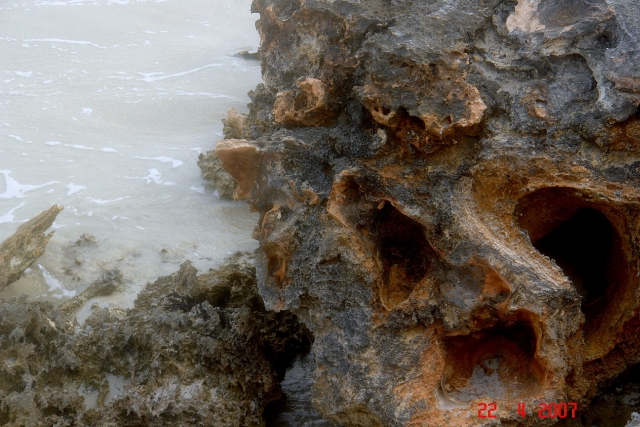
Gary Sauer-Thompson, seashore, Hanson Bay, Kangaroo Island, 2007
The experience of a place such as Hanson Bay is different from the standard understanding of a regional built urban industrial place (eg., Adelaide) as a movement of a logic of loss, and its impetus toward a resistance, that is based on place -memory and personal identity, against those strands of modernity, such as mass communication, global capitalism, and mass culture that engender the production of homogenous and atemporal "flatscapes".
In opposition to international shopping malls, airports MacDonalds and Starbucks we have a defining embeddedness in the density of history and locality.
Hanson Bay was not a sheer spatial site detached, abstract and entirely devoid of intimacy. It is a memorable wild place---wilderness is understood as that place where one loses one's way, becoming bewildered in a starkly "alien world". On the other hand, the very concept of wilderness is a human construct, meaningful only in relation to people.
May 18, 2007
living with Radiohead
aaah Radiohead. I've been listening to Kid A and Amnesiac. It's the music I would played on my ipod if I'd been in this situation --alone in an international hotel in Tokyo. It's an emotional response rather than an aesthetic one.
Or being on my own in Canberra doing the standard fortnight gig when Parliament is sitting, wandering around lost in, and alienated from, Walter Burley Griffin's utopia. I search for little pockets to feel at home in.

It's the austerity of the electronic music and the emotional bleakness that expresses the trauma of living in this life in the political machine, searching for some emotional connection, and some affirmation being human whilst experiencing Heidegger's Nothing. All that I have is memory.
Friday cartoon
Tis very whimiscal isn't it:
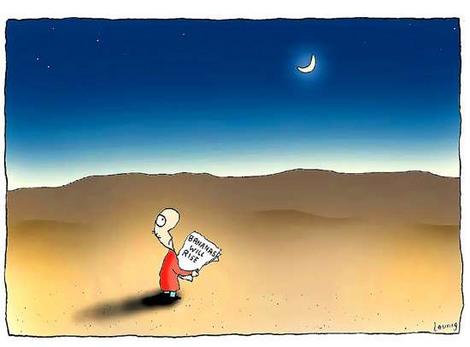
Leuning
It's effect is to cause a smile and lighten the load of daily living amidst urban ruins.
May 17, 2007
Sofia Coppla's Lost in Translation
I watched a DVD of Sofia Coppola's Lost in Translation the other night, after struggling through Bastard Boys on ABC television. I haven't seen Coppola's previous Virgin Suicides.
It is an intimate modest movie, albeit an interesting one as it explores dislocation, loneliness and emotional estrangement of nomadic westerners (Americans) whilst on business in the postmodern urban world of Tokyo.that stands for the global market place.
The loneliness of staying in international hotels whilst on business is accentuated with the channel clicking in the room, feeling disconnected in the bar and fighting the sense of being undead and being strange to ourselves.
A lot of the film is shot in the Park Hyatt hotel, which becomes a strange space high above the streets with its seductive views of Tokyo urbanscape. If romantic melancholy is everywhere, then the sublime is backgrounded in the dazzling neon world of the spectacle. Tokyo is an example of Guy Debord's society of the spectacle--"the spectacle is not a collection of images, but a social relation among people, mediated by images". We've lost our way in the society of the spectacle where mass marketing reduces actors to spokesmen and music becomes karaoke. Is it trash that the postmodern culture industry creates?
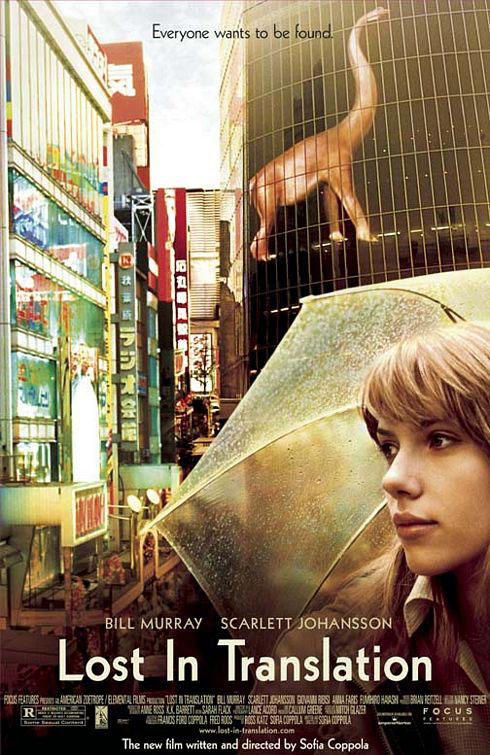
Coppola's film explores the disconnection from both Japan that Bob, a middle-aged actor shooting whisky commercials in Tokyo, and Charlotte, a Yale graduate accompanying her fashion photographer husband, are visiting, and from their spouses. They find some comfort in one another through a series of restrained, tentative encounters.
For all its ambiguity, the film is more about friendship, or rather companionship, than romance--in spite of the money shot in the opening sequence. The relationship is fleeting--an 'of the moment flirtation' that unfolds, but, as they're just friends, the touches are erotic but non-sexual. This is no love story in the conventional sense.
Kiku Day in an op-ed in The Guardian is critical of the not so subtle negative stereotyping of the Japanese by Sofia Coppola:
While shoe-horning every possible caricature of modern Japan into her movie, Coppola is respectful of ancient Japan. It is depicted approvingly, though ancient traditions have very little to do with the contemporary Japanese. The good Japan, according to this director, is Buddhist monks chanting, ancient temples, flower arrangement; meanwhile she portrays the contemporary Japanese as ridiculous people who have lost contact with their own culture.
The gaps in meaning between dialogue and its translation, which give rise to misunderstandings, also result in silences and stillness. Yet it is also about vision; but I cannot put my finger on it apart from the soft, low contrast look and the focus on appearances. We are lost in urban and interpersonal spaces that often intersect in a superficial sense. Beneath that enclosed space is the unfolding of a connection within an emotional world in a postmodern space.
G.B. Piranesi: prison series
Piranesi, who studied architecture, engineering, and stage design in the 18th century, is best known for his Carceri (Prisons) series. This consisted of 14 plates depicting stage prisons that he himself described as "capricious inventions".The spatial and architectural ambiguities, as well as the dramatic use of light and form, are characteristic of this series.
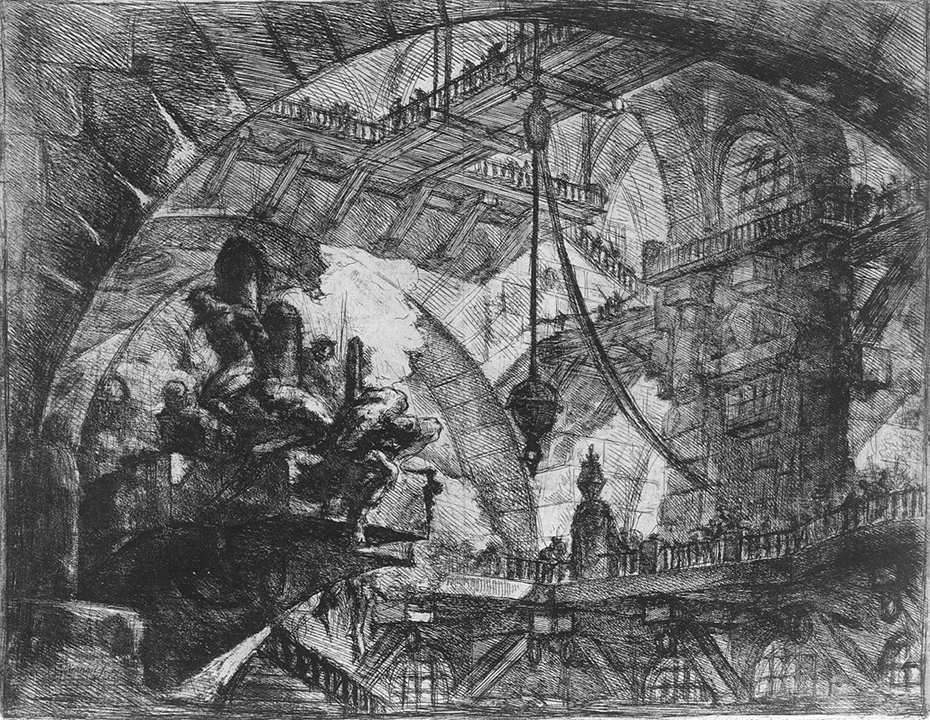
G.B. Piranesi, Plate X, Untitled (Prisoners on a Projecting Platform),
An interesting exhibition.
May 16, 2007
Hanson Bay Snaps: about beauty
There is a review of Alexander Nehamas' Only a Promise of Happiness: The Place of Beauty in a World of Art by John Armstrong in the Australian Literary Review. The Nehamas text had its origins in the Tanner Lectures on Human Values in 2001.
The subjective nature of beauty, which was mentioned in this post about Cape Willoughby, is addressed explicitly by Nehamas. We know that beauty, as a topic in aesthetics, has been downplayed in academia. Why so? Nehamas says that the cause of this neglect is that beauty is about passion, and the 20th century was suspicious of passion. It's not cool to say that you found x beautiful.
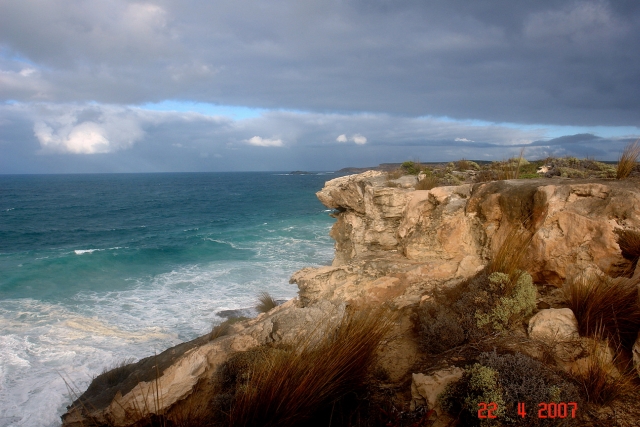
Gary Sauer-Thompson, sea cliff sky, Hanson Bay, 2007
John Armstrong, who is on the staff at the University of Melbourne and has written about beauty says that:
A longstanding anxiety about beauty is to do with the personal nature of taste. It is as individuals that we find things beautiful or not, and our individuality seems to be at work in those preferences; taste is a manifestation of personality.This has seemed, however, to undermine the idea that beauty is important, or worth talking about. "Beauty lies in the eye of the beholder" generally ends conversations; it implies that there's nothing else to say. There's a tendency to be very generous to disagreement: "Everyone has their own taste."
Armstrong says that the biggest hurdle faced by the idea of beauty is the basic thought that it is a subjective matter. It might be thought of as little more than a pretentious translation of nice or picturesque. So the only way to continue the conversation is to confront the subjective account of beauty.
Armstrong observes that Nehamas brings the right strategy to this problem. He realises that the big task is to reconcile the subjective character of the response to beauty with the importance of the experience. He distinguishes between moral claims and matters of taste. Moral claims demand wide agreement and at best draw us towards a universal human community. The role of taste is distinction or, in more modest terms, individuality. Though Armstrong is impressed, he is surprised when Nehamas asserts not merely tolerance of aesthetic diversity but an appetite for it.
However, Armstrong says that Nehamas shudders at the thought of any one of his opinions about what is beautiful being universally shared. Armstrong, unlike Nehamas wants universality.
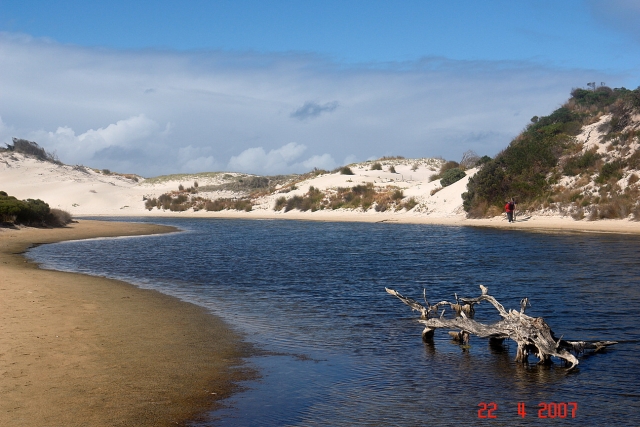
Gary Sauer-Thompson, river scene, Hanson Bay, 2007
Armstrong argues that the neglect of beauty in academia and the arts in the 20th century is not a simple matter.
It's obviously not true that people in general disdained beauty; it's not that talking about what you love was thought silly by most people. It's not the 20th century that neglected beauty. It is, rather, leading university academics in the humanities and leading art critics who have ignored beauty. These are not ordinary people, mirrors of the disenchantment of the age. These are more like spreaders, agents of disenchantment. The question isn't why did the world as a whole turn against beauty, it is why did certain academics and art theorists do so and why did they have such sway?
These academics--eg., Naomi Wolfe and John Berger--- have argued that beauty was a myth, a social construct. This is the right approach given that beauty is a human value, even when we are talking about natural beauty and not moral beauty. These are not the same kind of things. Modernists deemed the 'form' of building to be beautiful, which is quite different from a human face being deemed beautiful because it expresses serenity, intelligence, graciousness, generosity and depth of spirit etc.
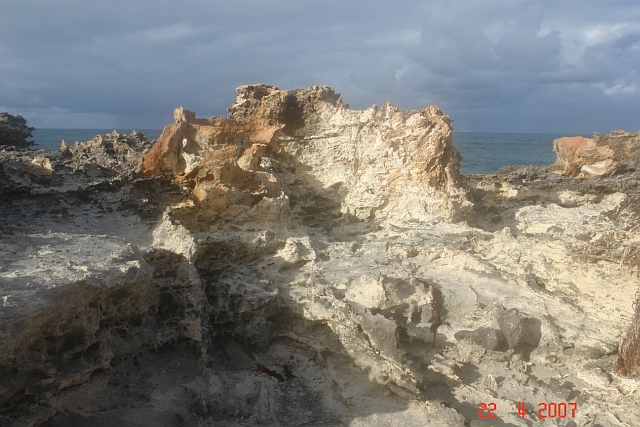
Gary Sauer-Thompson, sandstone cliff top, Hanson Bay, 2007
Armstrong argues his case by saying that:
The idea that beauty is a construct designed to please the rich or sell drinks is the sort of thing that someone could conceivably believe in a seminar room; but could they believe it while they look at the evening clouds, or admire the delicate architecture of their lover's ear? It is as if intellectual ideas are not to be measured against anything so humble or so real as one's own experience. For scepticism about beauty is really scepticism about oneself. It is a mode of anxiety.
Well, not really. We can distinquish between a beautiful image selling cosmetic or clothes for the fashion industry and natural beauty, I don't see that the scepticism about beauty is really scepticism about oneself. Sometimes the beautiful can turn into the sublime.
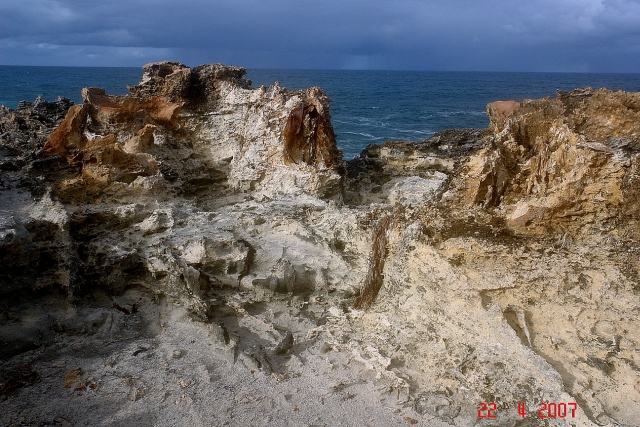
Gary Sauer-Thompson, sandstone cliff top #1, Hanson Bay, 2007
My state of anxiety relates to the sublime not beauty. Moreover, it is not just beauty that makes art more than mere entertainment or distraction. It can also be the sublime.
Armstrong explains the link between beauty and anxiety thus:
In trying to explain what we find beautiful we are laying open our souls, we are exposing the most tender and delicate of our intimate convictions. But quite often we can't let ourselves do this; we fall back on attitudes and preferences we are confident will be acceptable to others. Our taste doesn't get the chance to develop...But bringing such responses [he most tender and delicate of our intimate convictions] to the surface is a process that is easily disturbed and easily distorted. I think that for a large number of people there is a fear of being above themselves that casts its shadow upon their experience of beauty.
May 15, 2007
Smiling Eyes

Via R_Mutt, emoticons reflect the cultural differences in how people read faces. The Japanese use the eyes to gauge emotions, while Americans tend to use the mouth.
when Yuki entered graduate school and began communicating with American scholars over e-mail, he was often confused by their use of emoticons such as smiley faces :) and sad faces, or :(."It took some time before I finally understood that they were faces," he wrote in an e-mail. In Japan, emoticons tend to emphasize the eyes, such as the happy face (^_^) and the sad face (;_;). "After seeing the difference between American and Japanese emoticons, it dawned on me that the faces looked exactly like typical American and Japanese smiles," he said.
More japanese emoticons.
from tagging to graffiti
The fourth Melbourne Stencil Festival is currently happening in Victoria. This stencil form ---outlines cut into paper to be quickly sprayed with aerosol cans---of street culture--- is more aesthetically appealing than your average tagging kind of graffiti. The latter is unpopular and is usually seen as a meaningless and pointless marking of territory. Melbourne's Hosier Lane or Centre Place in the CBD, or Canada Lane in Carlton, and other public laneways, walkways and segueways, have been transformed into unofficial art galleries by stenciling.

Gary Sauer-Thompson, Tagging, Adelaide, 2007
Adelaide is yet to have a stencil festival that showcases the thought and effort put into this street art. Though there is no need to cover the city covered in stencil graffiti, there is a need for specific places to be designated for street art. Stenciling turns an urban wasteland into something whimsical or thought provoking places. Tagging cannot, and should not, negate good street art.
Juliette Hughes has an op-ed inThe Age entitled Remember when graffitists used to have something to tell us? She argues that the political graffiti of the 1970s and '80s has gone to be replaced by tagging.
everywhere I see tagging, the stunted by-blow of graffiti. Tags don't invite us to consider political or artistic statements. Taggers are the bottom-feeders of street art, spraying solipsistic signatures without politics or art to justify them. Tags express nothing but ego; their very illegibility is a symptom of their irrelevance to anyone else. Yet they force themselves on our sight like a flasher or a hedge-burner, subjecting us to the personal addictive compulsions of the perpetrator. Political graffiti assumes a community that can respond to arguments; a street full of tags is like a house that's been trashed.
She says that tagging can be interpreted as a creative impulse that was frustrated by lack of skills. Deprived of skills they deface buildings. Maybe schemes are needed to help taggers acquire the skills to become street artists and graffitists.

Gary Sauer-Thompson, wall + drawing, Adelaide, 2007
Doesn't Hughes see the other forms of street culture such as stencils and pasting---glueing painted paper images to a wall? These are currently being celebrated by the Stencil Festival. So why is this ignored? What do these images about politics today?
Update: 16 May
Chris Johnston conrtests to Juliette Hughe's declinist argument in an op-ed The Age. He points out that:
Stencil art, and the vivid canvas that somewhere like Hosier Lane represents, is why Melbourne, like it or not, is regarded as the street-art capital of the world. This has been recognised by the City of Melbourne and the City of Yarra, which sanction stencilling in some of their lanes. The National Gallery of Australia has bought examples of it. The National Gallery of Victoria has exhibited it. This is not some underground Cave Clan type criminality. This is mainstream art now, right under our noses. And once you actually walk through these places, it becomes clear that far from being benign or apathetic (or any of the other presumptions forced on the younger generation by the older), it is actually deeply, cleverly political.
Johnston says that to walk through Hosier Lane, between Flinders Street and Flinders Lane behind The Forum, is to go straight into the modern nexus between politics and art. It's as if the ruling conservatism in politics and Australian society - and the lack of political invective in young people's rock music at the expense of corporate balladeering - has found an outlet in the very foundations of the city. In these laneways Johnston says:
The topics covered are an encyclopedia of current themes. The rise of military culture; the Americanisation of Australian foreign policy; the mysterious weapons of mass destruction; the faces of Saddam, bin Laden, Howard, Bush and Blair as symbols of our troubled times. Petrol, oil, the Twin Towers and bombs over Iraq. Hughes pines, rather, for the graffiti of her day; "Out Menzies" written in one colour on a wall, or "Chappell, you stink worse than your underarm". Maybe it's just me, or maybe it's the generation gap in full effect, but the beautiful barrage of neon-coloured stencil art in Hosier Lane - where popular culture, media culture, terror-culture and a new protest culture sit brilliantly rendered - seems far more effective. It says more. It looks better.
I agree. The street culture of today is innovative, expressive than that of the 1970s, and it is visually interesting.
May 14, 2007
US: Joshua Tree
I watched a DVD of U2's career-making 1987 album Joshua Tree in the classic album series over the weekend. I more or less have seen the arena rock band as the social conscience of rock music; one that became a mediocre arena-rock band. If they are emblematic figures of the corporate rock of the 90’s; then they are one that did amalgam music, personality and message.
I'm largely unaware of their flirtation with dance clubs, techno and postmodernism in the 1990s that began with Achtung Baby's experimenting and reinvention of their style and and sound.
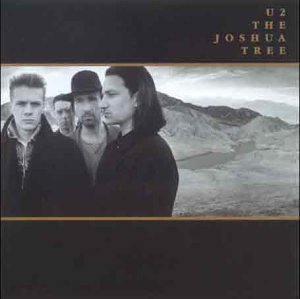 Joshua Tree, produced by Brian Eno and Daniel Lanois, gave the band the status as "rock's most important band", and is seen as one of the most important albums of the 80s, thereby sealing their place in rock history. The songs ' Where The Streets Have No Name", "I Still Haven't Found What I'm Looking For", and "With Or Without You", are well known from airplay.
The main way we're exposed to new songs is via commercial radio, and commercial radio has only gotten progressively worse over the past two decades. These songs highlight that music sales are down because the music that is seriously marketed by major labels, or played on commercial radio or the handful of music television outlets is pretty low quality.
The black-and-white photo is of the band at Death Valley National Park in the desert of California whilst the title refers to the Joshua Tree of the Mojave Desert. The band talk about their idea of America and what it means--it recalled the 30’s moods and themes (from Frank Capra to Ernest Hemmingway) of America rather than Reagan's America.
The band also talked in detail with producer Brian Eno about the idea of music as cinematic - that music can evoke a location in the listener's mind. However, it wasn't clear to me from the DVD that the musical explorations on this album are to be located in America's desert southwest. Maybe it is the "ambience", the textured or sonic soundscapes, or the musical journey.
But where does that journey go? Starting at the top and slip-sliding down to the bottom?
Hanson Bay snaps
Hanson Bay on the south-west of Kangaroo Island was a wild and rugged place. The environ is largely undisturbed native vegetation of a relatively intact nature and is a rich habitat for a variety of birds and animals.
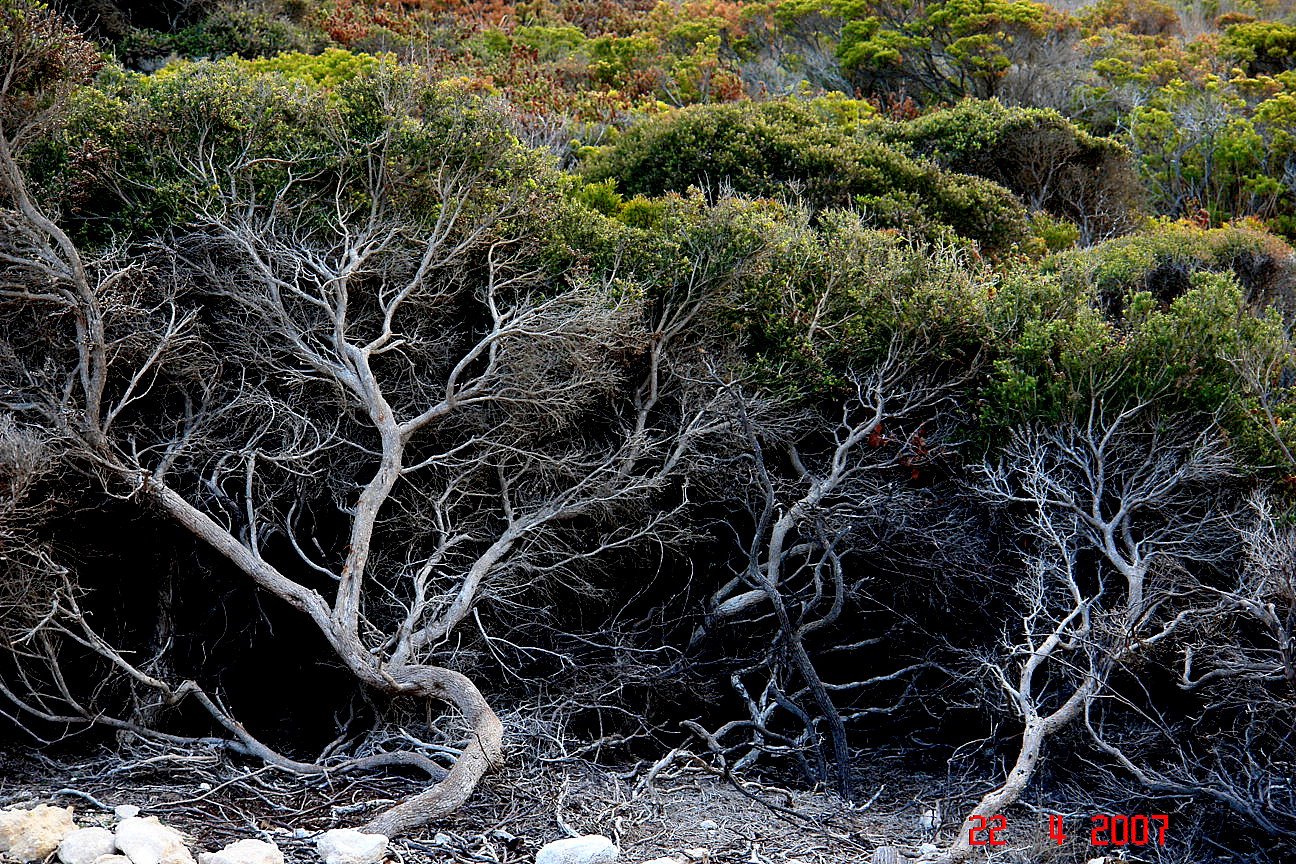
Gary Sauer-Thompson, Melaleuca, 2007
Those who have a holiday house at the Hanson Bay are very fortunate.
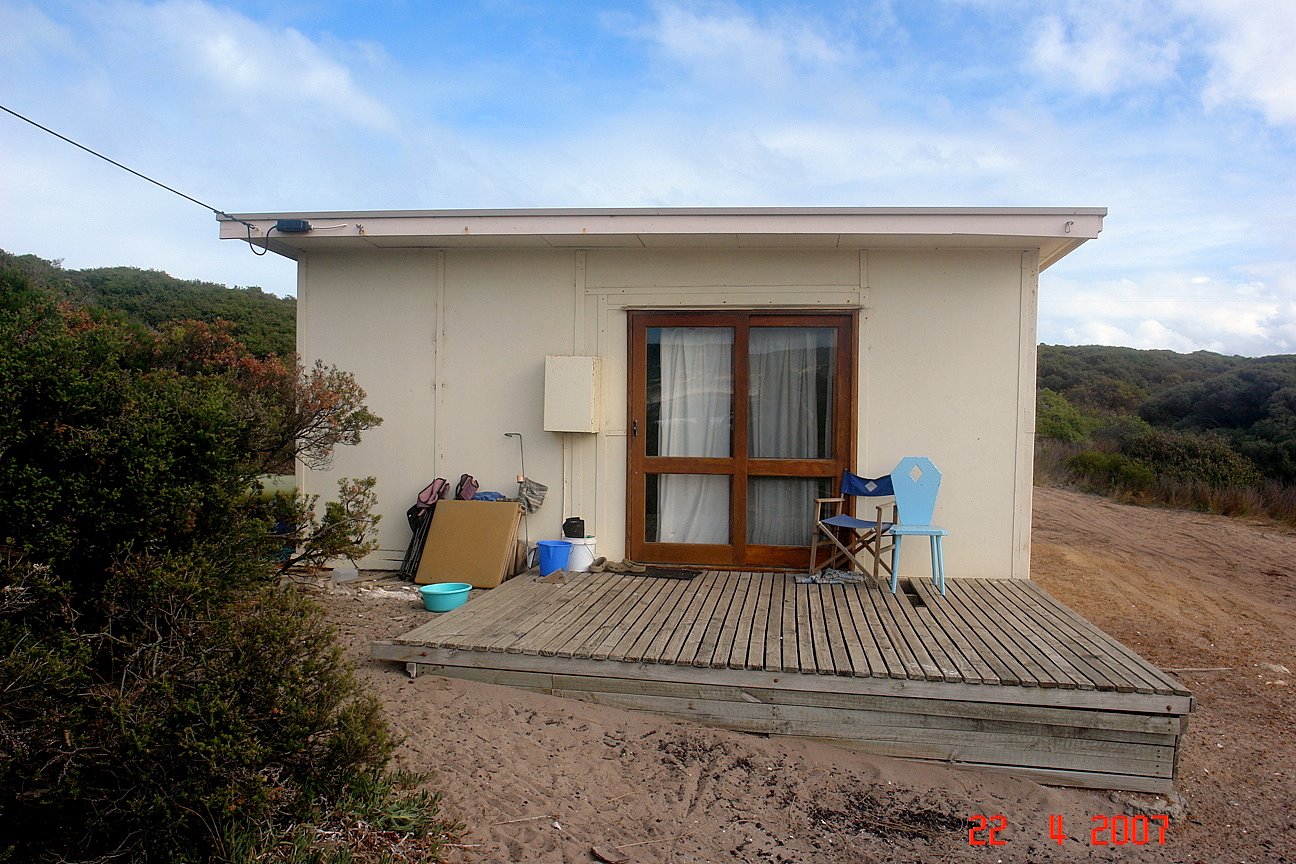
Gary Sauer-Thompson, shack, 2007
I can understand the significant tourism and employment benefits likely to be generated by new resort developments, such as the Southern Ocean Lodge proposal, which has been given provisional go-ahead by the state government.
A brief walk along the cliff tops indicates the natural beauty of the place. What many would call pristine wilderness:
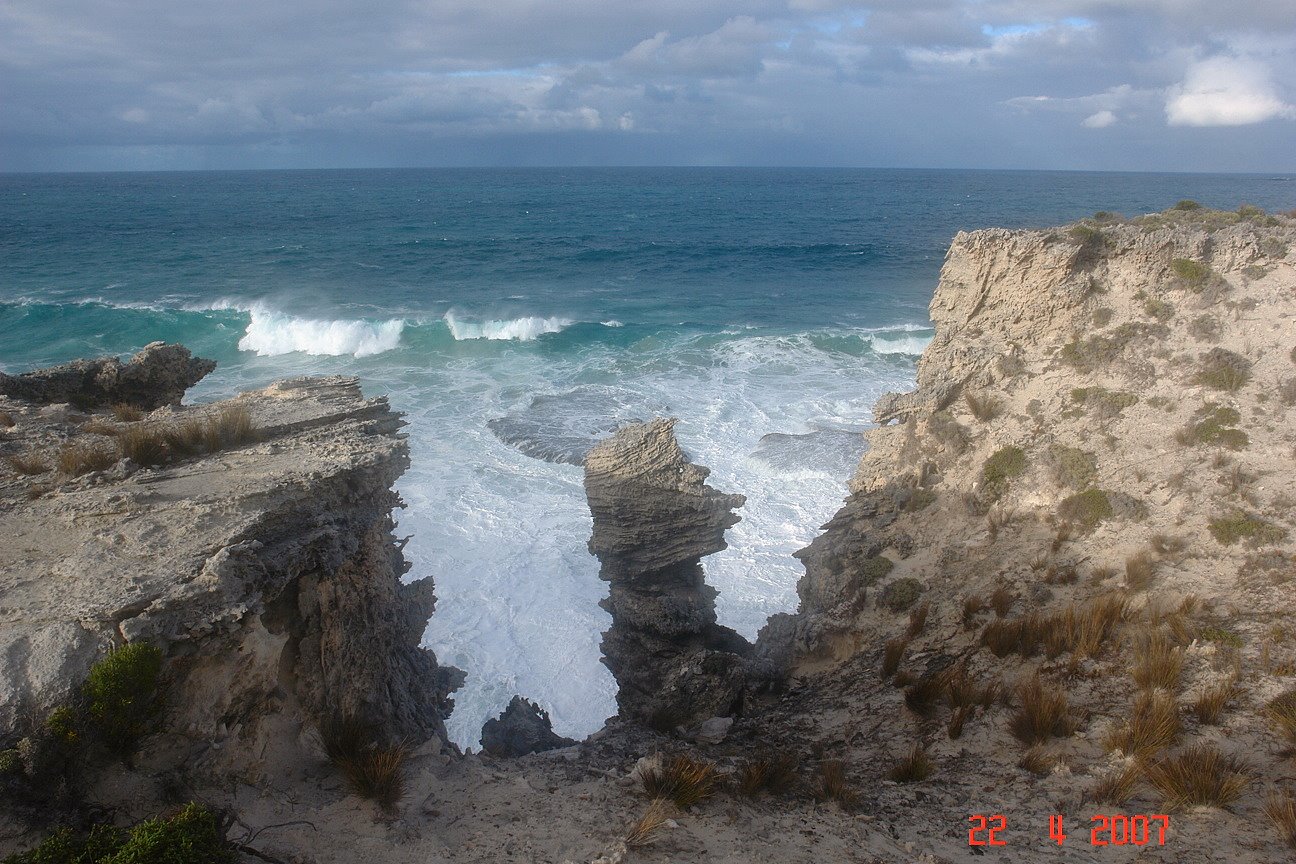
Gary Sauer-Thompson, pencil rock, 2007
May 13, 2007
Samantha Hobson: ‘Bust ‘im up!’ + Modern Day Life
Domestic violence and alcoholism are very real conditions in the Lockhart community. Samantha Hobson’s ‘Bust ‘im up!’ series is about drinking-binge violence in indigenous communities, done about several years ago. The images from the ‘Bust ‘im up!’ community violence series have a brilliant red ground slashed through with bleeding jags of deepest blue-black, around which explosions of yellow play.
I have not seen Samantha Hobson’s ‘Bust ‘im up!’ series. One of the paintings from the series is owned by the National Gallery of Victoria. However, there are very few images from the ‘Bust ‘im up!’ series online.
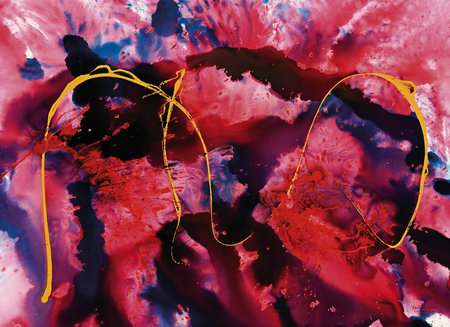
Samantha Hobson, Bust im up again, 2001
This series built on the earlier series of paintings called Stressed Out, which bought together violence and abuse with specific reference to the high incidence of youth suicide in indigenous communities.
What we have is a new exhibition at the Vivian Anderson in Melbourne entitled Modern Day Life
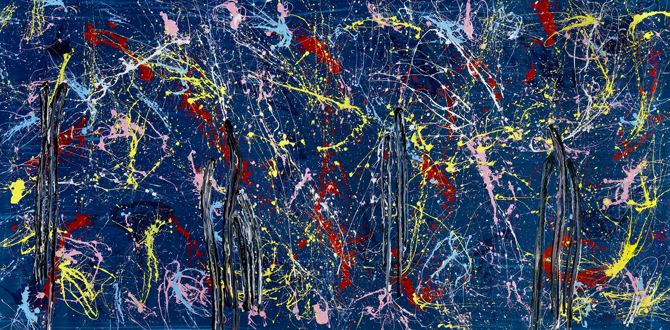
Samantha Hobson, Young People Follow 2007, synthetic polymer paint on canvas,
the madonna whore code
We still live with the old madonna-whore cultural code , a black-and-white mentality that paints women as either motherly saints or impure prostitutes. The gender code says "take your pick: you can either be Mother Teresa, or Paris Hilton. Don't try anything else that makes us nervous".

Matt Davidson
As Meg Mundell observes
Women in the public eye are caricatured into one of three cliches: the Freaky She-man, scorned for not being feminine or pretty enough — her armpits are too hairy, her clothes too frumpy, her eggs too unfertilised; the Good Mother, who must tone down her sexuality or risk the venom of colleagues and commentators — and don't even think about breastfeeding in parliament; or the Hot Babe whose success is due to her looks, so shouldn't be taken seriously.
She observes that Julie Gillard doesn't dress like a Hilton, but nor does she seem hell-bent on becoming a mother, symbolic or otherwise. So what is wrong with this woman?
Mundell says that this kind of reaction:
...is a deep anxiety about power, and who is permitted to hold it. Some delicate souls remain freaked out by the idea of women being leaders. ... Politicians and fruit-bowlers have a handy fall-back position: if a female adversary is rising too high in the political pecking order, they just throw another hoop for her to jump through — childlessness, hairstyle, dress sense, love life. Set up enough obstacles and she might lose focus and stumble — or better still, accidentally flash her knickers, the wanton hussy!
We also have underlying paranoia and prejudice from the cultural conservatives who continue to think of white Australia in terms of a a breed-or-perish dictum because saying low birth rates and high immigration could trigger social dislocation and violence.
May 12, 2007
Hanson Bay Snaps
I've returned to this post about arriving at Hanson Bay on Kangaroo Island. I was able to do some photography in the morning after we arrived:

Gary Sauer-Thompson, Suzanne, Hanson Bay, Kangaroo Island, 2007
I then wandered along the cliff tops where earth, sky and sea met on a stormy morning:
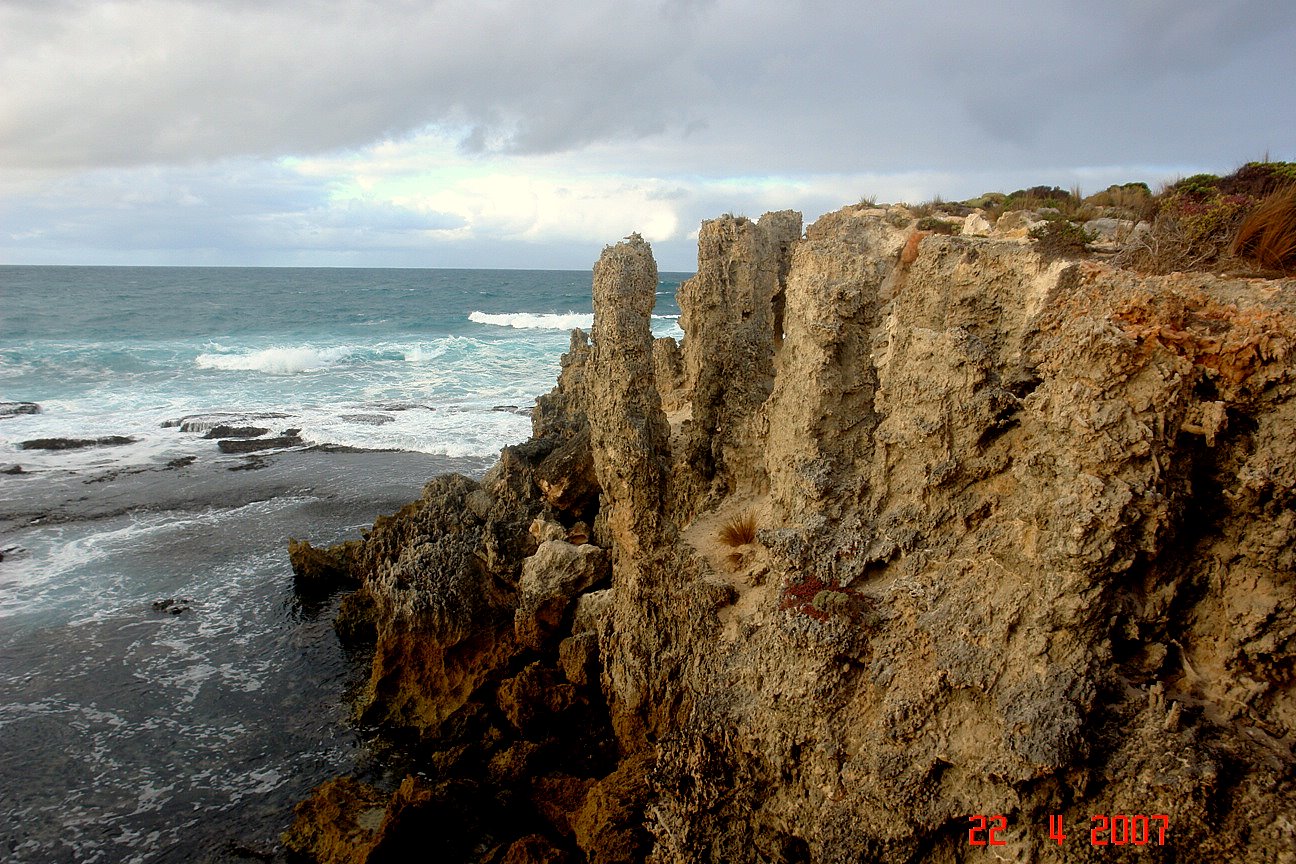
Gary Sauer-Thompson, Cliffs, Hanson Bay, Kangaroo Island, 2007
May 11, 2007
doing it George's way
He understood rhetoric and he was a great practitioner of it, with his well honed speeches about noble values that oozed optimism.
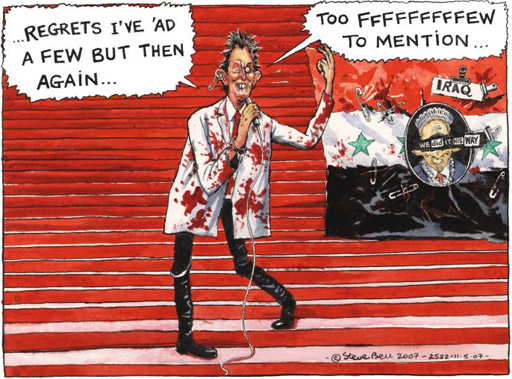
But he meet a man called George Bush , who wanted to be emperor of the world. Tony ended up trashing his fine values and, in his final years, lived a tragic life.
Budget goodies
It feels like Xmas time---it's been raining money this week.

Leunig
This is how the voters are being "wooed. " Seducing voters is understood in terms of tax cuts and spending money. If its raining money, then how does this relate to global warming?
May 10, 2007
Lockhart River Art Gang
I see that the Art Museum at the University of Queensland currently has an exhibition of the Lockhart River Artists entitled Our Way, Contemporary Aboriginal Art from Lockhart River. This is the first exhibition to survey the work of the Lockhart River Art Gang.
Some of the artists in the exhibition include those we have seen before on junk for code: namely, Rosella Namok, Samantha Hobson and Fiona Omeenyo.
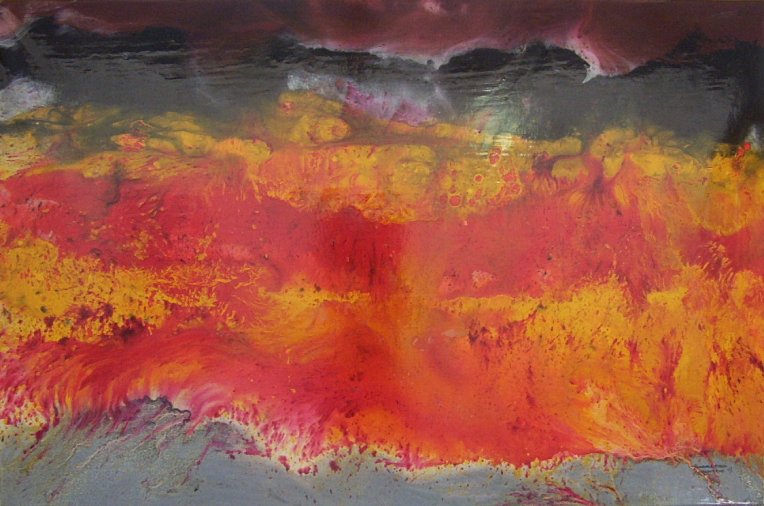
Samantha Hobson, Burning Flat at Tozers Gap, 2003, pigment, synthetic polymer and glaze on canvas
The Art Gang have developed their own forms of expression which are very different from the art of central Australia and other parts of Australia. Many of the expressionistic and abstract paintings depict the landscape around Lockhart River while still paying heed to cultural traditions of the past.
An example of work straddling the ground between modern and traditional is that by Rosella Namok:
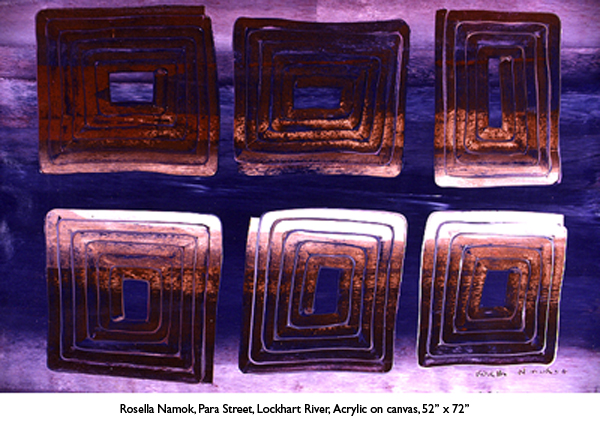
Rosella Namok, Para Street, Lockhart River, acrylic on canvas
Her abstractions remain referential to the shapes and weathers of her locale.Her art is conceptual, making it unique within the Cape York region, where tradition and ceremony dictate a more figurative style of artistic expression.
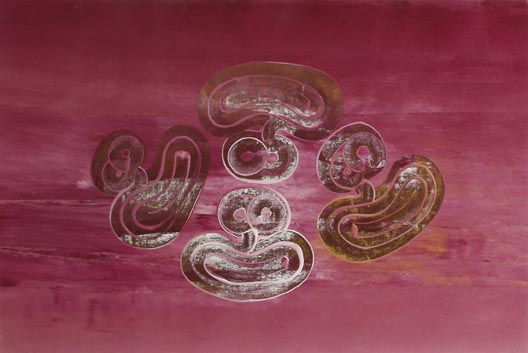
Fiona Omeenyo, Strong, 2004, acrylic on canvas
Fiona Omeenyo's paintings are based on the story of her home country given to her by her Uncle Blade.
These paintings do not simply address or provoke a viewer, they demand and entail an interpreter since history, memory and tradition can no longer be thought within representation and mimesis;
May 7, 2007
The Corporation
I watched a DVD of The Corporation documentary last night because of these kind of events. I was curious about the history of legal understanding of a corporation as a class of person, and the evaluation of its behaviour towards society and the world at large as a psychologist might evaluate an ordinary person. Since a corporation only acts in its own best interest (profits) its behaviour can be seen as pathological.
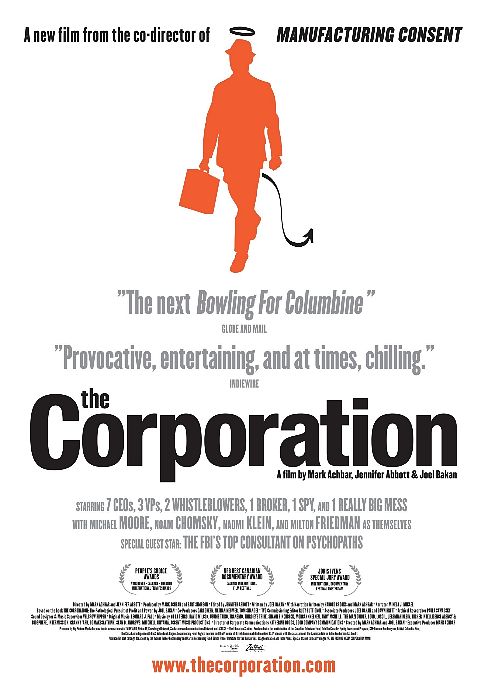
Well most of it. I got bored after a while. It was too heavy handed. Where was the fun of being a player in a private equity firm?
I didn't mind the anti-capitalist political agenda so much, as the "externalities" of the corporation's profit making are well known with respect to the environment. It was more that there was no room for individual desire--say for buying a digital camera. I was not force feed, nor was my consent manufactured. It was in my own interest to make the shift to digital from film.
May 6, 2007
Kangaroo Island Snaps: Hanson Bay
After leaving Cape Willoughby on the north east of Kangaroo Island we travelled to the south west, stopping off at Hanson Bay for the night. It's a wilderness area just outside Flinders Chase National Park with minimal accommodation.
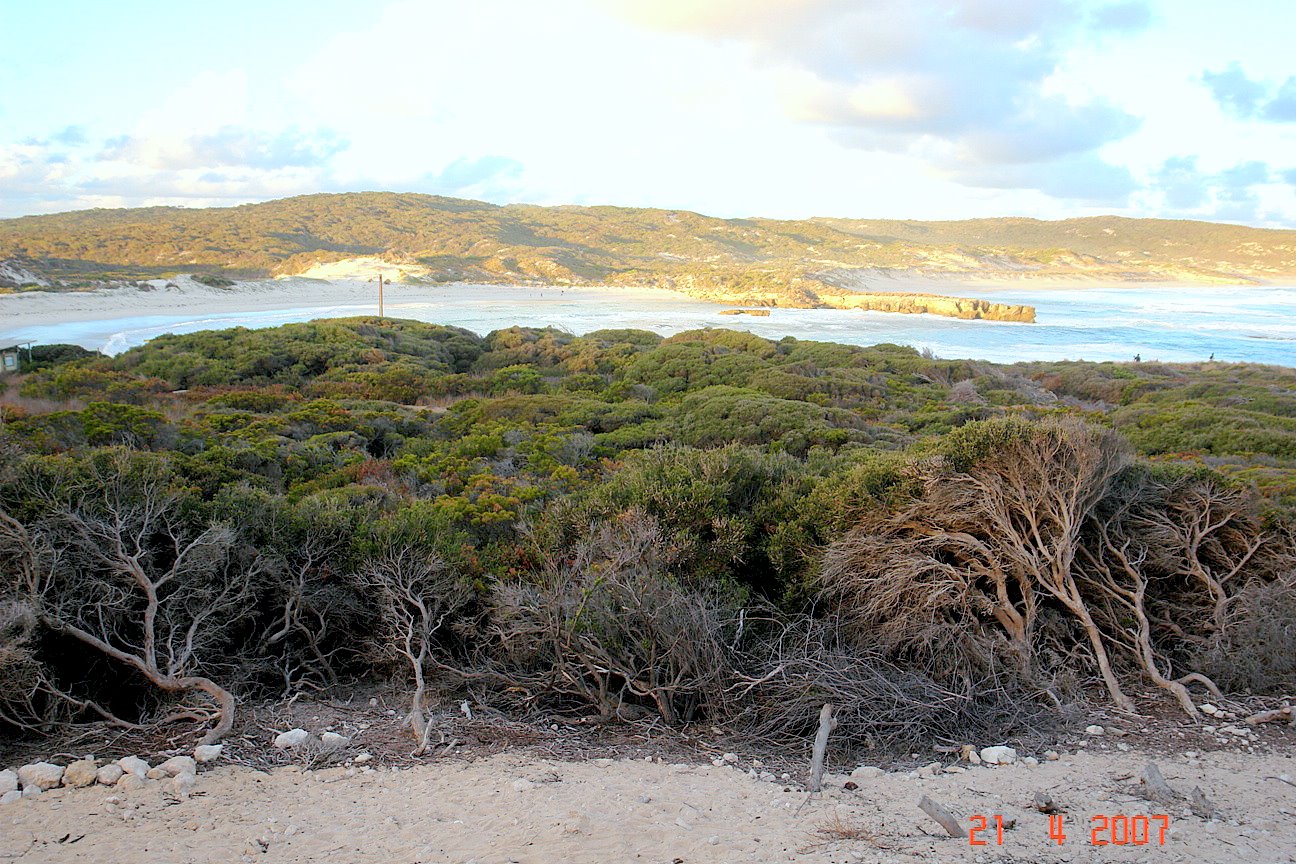
Gary Sauer-Thompson, Hanson Bay, Kangaroo Island, 2007
But tourism beckons, in a form that some consider inappropriate to this place.
The ecology of the coastal area is sandstone rocks, small plants and malaleucas and it is fragile:
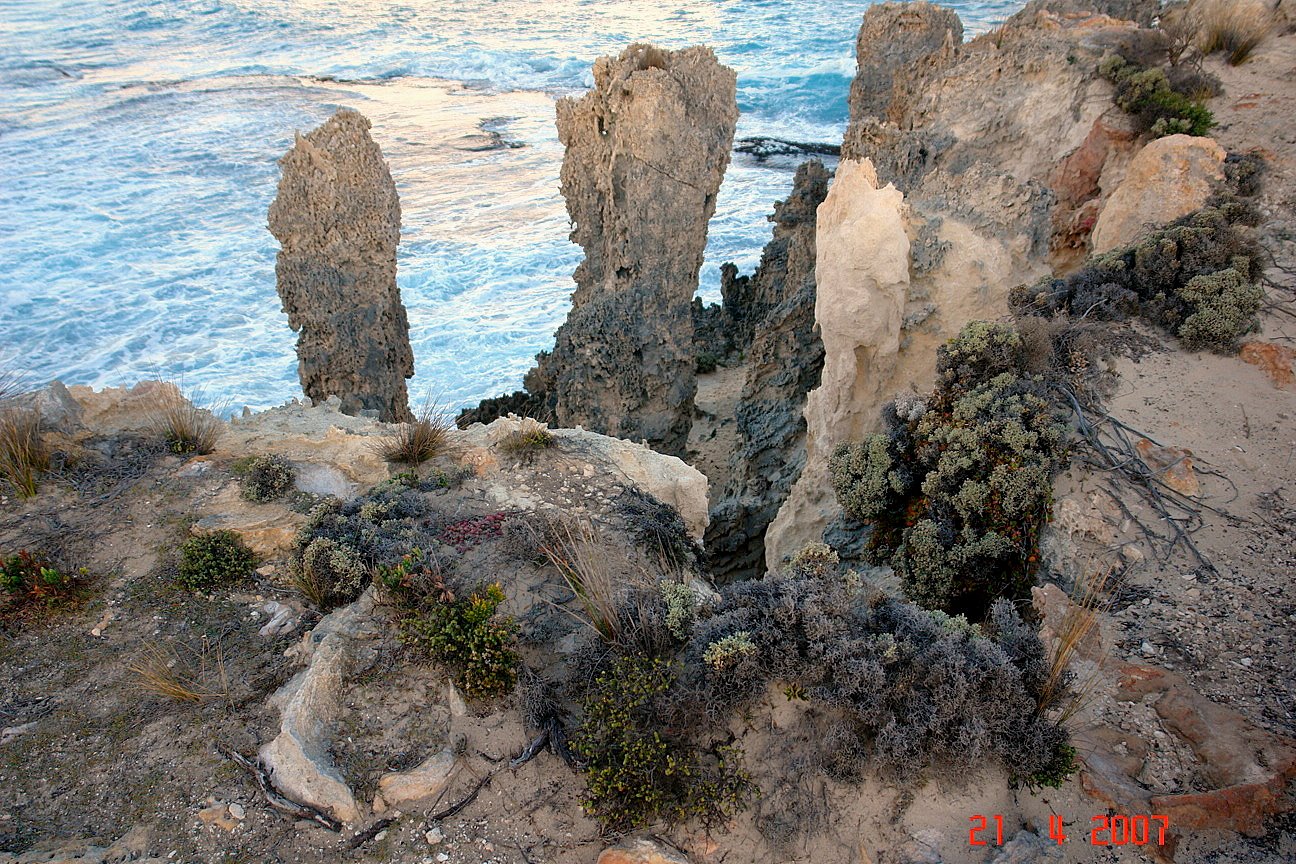
Gary Sauer-Thompson, sandstone cliffs, Hanson Bay, 2007
the old uglies
I see that the attacks on Julia Gillard, the Deputy Leader of the ALP, continue. Not content with attacking this high-achieving professional woman because she is single, the ugly old male politicians are now attacking her because of her appearance: her hairstyle and jewellery.
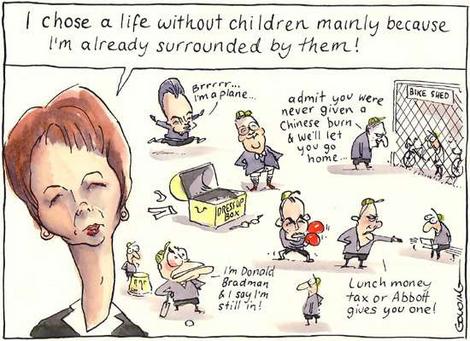
Matt Golding
These old uglies don't even see this gender politics as personal attacks. It's the violent conservative unconscious surfacing in reaction to female political authority.This authority is either ridiculed or undermined as interfering - it is never legitimate.
Rumors: between rock and pop
I'm continuing to work my way through the classic albums series. I've just watched the DVD on Fleetwood Mac's Rumors. Suprisingly, it was one of the poorer DVD's in the classic album series. Suprisingly, because Rumours is stylised pop music, which expressed the emotional turmoil of broken relationships experienced in the band at that time, and is well known from the constant radio overexposure.
Since Fleetwood Mac stand for 1970s rock lifestyle excess why not look at the formation of rock culture at the point just prior to the new conservatives begin to regulate the possibilities of pleasure and identity as the basis of cultural opposition and they begin their cultural war to dismantle the cultural and political field constructed in the 1960s.
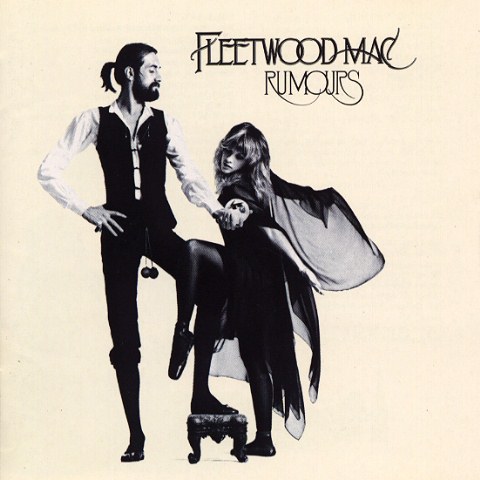
This is the highpoint of the Lindsey Buckingham/Stevie Nicks/Christine McVie-incarnation of Fleetwood Mac. Buckingham is the primary architect of the post-'75 Fleetwood Mac sound. Though the band was named after Fleetwood and McVie they were rarely more than just a solid but trusty rhythm section. What was produced was different from, and effectively deconstructed, cock rock but had nothing to do with the noise aesthetic--- the clamor of the everyday as a form of musicality. There is little consideration given to exploring the contested boundaries of music and noise here.
If Rumors is slick and commercial, the raw emotion gives it a core that sparkles. Commercial and artistic accomplishment coincide. So we have a classic album that defined and directed the mainstream and made Fleetwood Mac a significant musical presence. We have pop sensibility whose melodic expression of feelings, fill in and defin the cracks in our everyday lives.
The commercial and artistic success of Rumors melts the hard edged division between rock and pop that is often seen in the views that 'rock is not pop' and 'rock rebels against pop'; views that are used to express the desire for "authentic" music. Thus rock is authentic pop is not--eg., Eric Clapton's playing is 'authentic', an attribute which transferred to his membership of the first 'super-group' Cream.
Thus Dave Marsh, the American music critic, writes in his first biography of Bruce Springsteen (Born to Run, 1979) that:
...over the past decade, rock has betrayed itself. It gnaws at my marrow to recall a hundred sellouts, from the rock opera movies that were all glamour and no heart, to the photos of rock celebrities with international jet-set fugitives. The inevitable result was records that were made not with feeling but because there was a market demanding product, and concerts performed with an eye only toward the profit margin. Rock became just another hierarchical system in which consumers took what was offered without question. Asking who was fake and who was for real used to be half the joy of the thing. (p. 6)
For Marsh, as for many rock fans, it is the idea of "feeling" that is at the heart of experiencing rock music. What we have is a division between rock as folk music (live performance) and rock (recording/reproduction) as commercial mass culture. The old folk ethos stands for making music with conscience and meaning.The implication here is that any listener hearing the voice of Bruce Springsteen, let us say, will immediately perceive the truth of his expression. Moreover, the authenticity of experience occurs when a Springsteen performance succeeds in conveying the impression to a listener that that listener's experience of life is being validated, that the music is 'telling it like it is' for them.
On this authenticity critieria Fleetwood Mac are just a glamorous pop band writing pop tunes - but with a refined, exquisite, personal, intimate, and occasionally mildly experimental touch? Isn't the dominant musical order popular music-- the music of television, of radio, of advertising -- the music of everyday life that is constantly technologized and easy, non-confrontational listening? So shouldn't we think in terms of rock and roll as an umbrella term (rock formation) for a wide variety of popular music as opposed to the rock equals rebellion and commerce kills rock ethos?
Aren't we living in a world of changing technology; a world where standard categories of listener and presenter of music are breaking down, where consumers of music can become their own producers. Listeners are no longer passive, repressed consumers, held in thrall by an alienating technology, but instead have become active participants in the creation and dissemination of modern popular culture thanks to file sharing technologies
May 4, 2007
urban design
From the excellent Carefree Cities
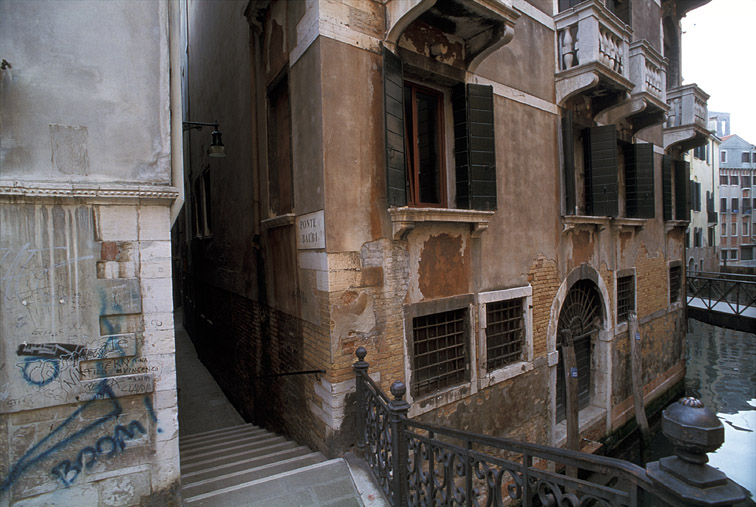
J.H. Crawford, Venice: San Bartolomeo
The site makes a useful distinction between urban design and urban planning.
Urban design is a subset of urban planning, concerned with the direct arrangement of the physical space. Urban planning must consider other important issues, including demographics, ecology, water supply, sewage treatment, transport, energy supply, and so forth. Urban design deals with what we can see; urban planning is effort undertaken to assure that the entire city actually functions once built.
We hear a lot about urban planning in Australia (something developers all over the country really detest) and very little about urban design--- the art of making places. Urban design in our cities pretty much boils down to providing spaces for the movement of ever more cars.
True, people in Adelaide and Canberra talk about -the urban designs of Colonel Light and Walter Burly Griffin respectively, but this is in terms of the urban design of the past not the present. True, in both cities there are intense conflicts around the way badly designed development shapes the places where we live. And there is an urban design centre in Western Australia, which is the first of its kind in Australia.
However, both of these designed cities are entrapped in the way that the car has resulted in major unanticipated consequences for urban life, and have largely given up critically dealing with the way the car has become a serious cause of environmental, social, and aesthetic problems. Their public squares are urban wastelands. Apart from the odd pocket the quality of public urban life in both cities is poor.
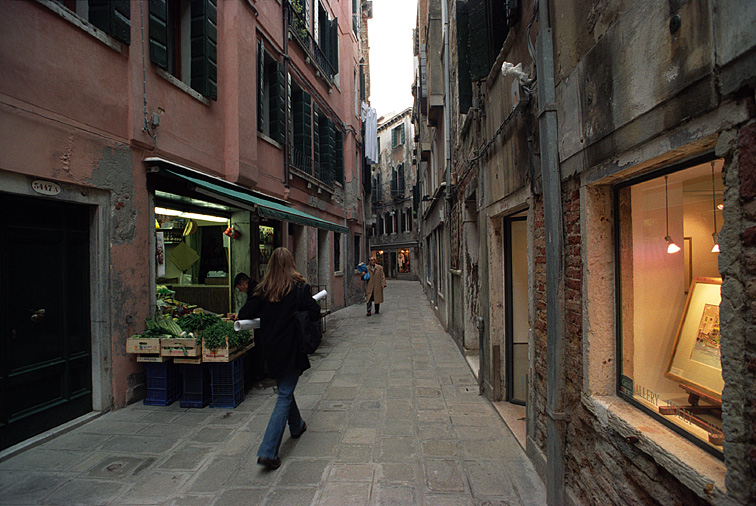
J.H. Crawford, Venice: San Samuele
Neither city is interested in becoming a carfree cities.That is why Venice, the largest existing example, is loved by almost everyone and is an oasis of peace despite being one of the densest urban areas on earth.
May 3, 2007
voices from the past
The cartoon refers to a jibe by Liberal senator Bill Heffernan about the fitness for office of a childless Julia Gillard, the Deputy Leader of the ALP, was unfit because she was "deliberately barren", and that Ms Gillard could not understand the community because she had chosen to remain childless.
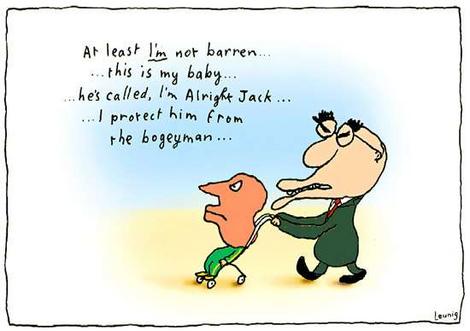
Leunig
The Liberal senator, who is well known for his attack on gay High Court judge Michael Kirby under parliamentary privilege, eventually backed off and apologized under pressure from the PM As he had previously done with Justice Kirby.
Gillard challenges the socially conservative values of the Prime Minister and Senator Heffernan. "Family", for them mean a man, his wife and a couple of kids. The father is the breadwinner whilst the mother stays at home dealing with Heffernan's "buckets of nappies". They are defenders of traditional family values and see the diversity in family life----divorced parents, single-parent families, blended-families, de facto marriages, homosexual couples with adopted children, foster parents----as undermining the moral fabric of society.
Of course, Howard's position is a contradictory one. As a neo-liberal he needs women in the workforce and many of his policy choices are deeply anti-family and anti-women, not least WorkChoices. The two positions, social conservatism and economic rationalism, are fundamentally irreconcilable. Women are both expected to stay at home raising babies and entering the workforce for the good of the economy.
May 2, 2007
Cape Willoughby snaps: place + Heidegger
Cape Willoughby was about place in Heidegger's sense of a presencing of being , or happening of a world. What that means is hard to articulate, and I lose my way.
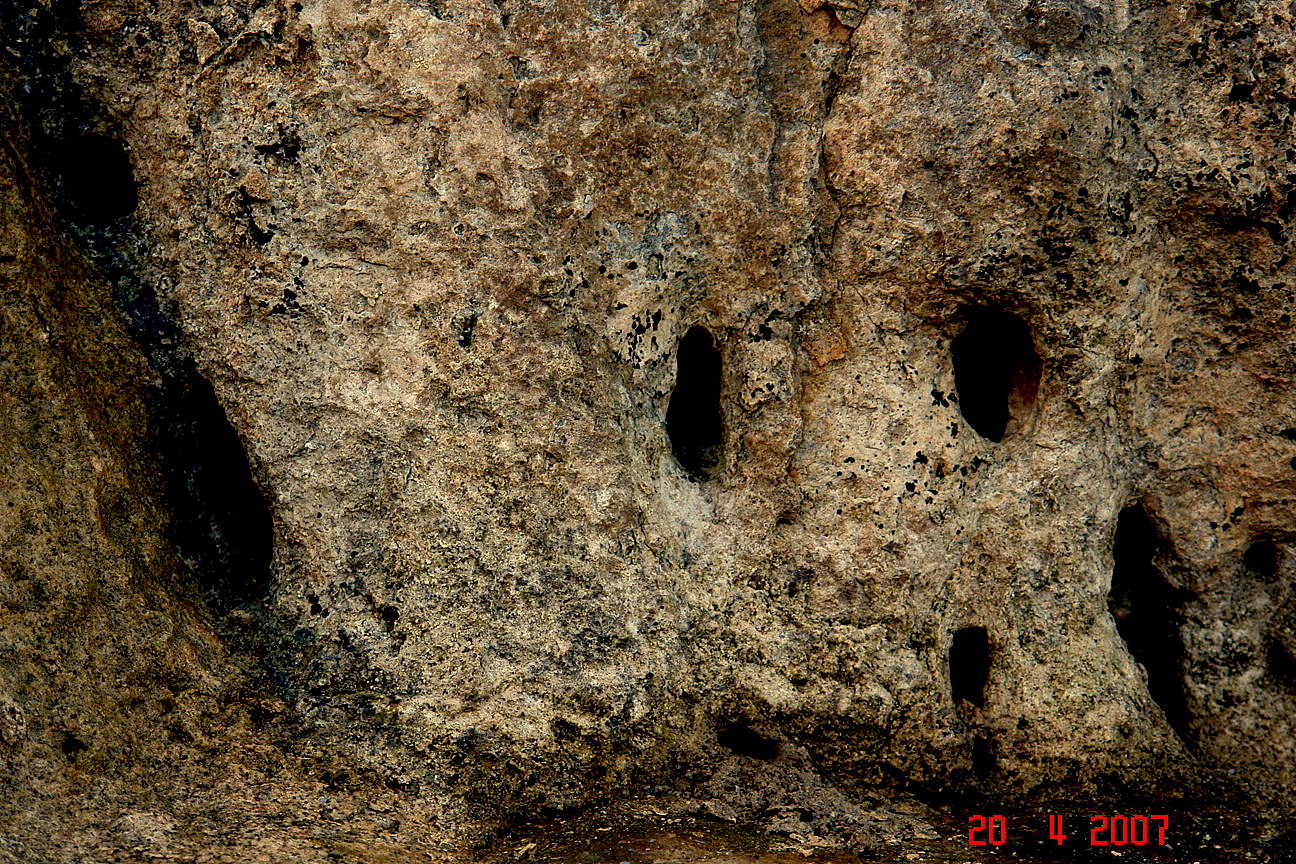
Gary Sauer-Thompson, rock face, Cape Willoughby, 2007
Place is often understood as a function of human responsiveness or conduct, as a social or cultural “construction, ora sort of neutral “site” (a more or less arbitrary region of physical space) that draws any qualities it might have from that which is located within it, such as the cottages, lighthouse and National Park rangers.
What was significant about Cape Willoughby was not the human construction in that space but the wildness. It was grounded in itself. To put it in Heidegger's terms for somethingto be what it is, is for the thing to stand forth in a certain fashion— to stand forth so that its own being is disclosed.
It is at this point that things get difficult. We usually understand being in thesense of 'to stand forth' in terms of a certain mode of temporality, namely the present. So we understood the being of things in terms of the “presence” or “presencing” of things in the present—in terms of the way they “stand fast” here and now. If being and presence go together for Heidegger, then the conventional understanding of being as presence in the present (.e., being in relation to temporality) is what is being displaced in favour of being as presence as disclosedness.
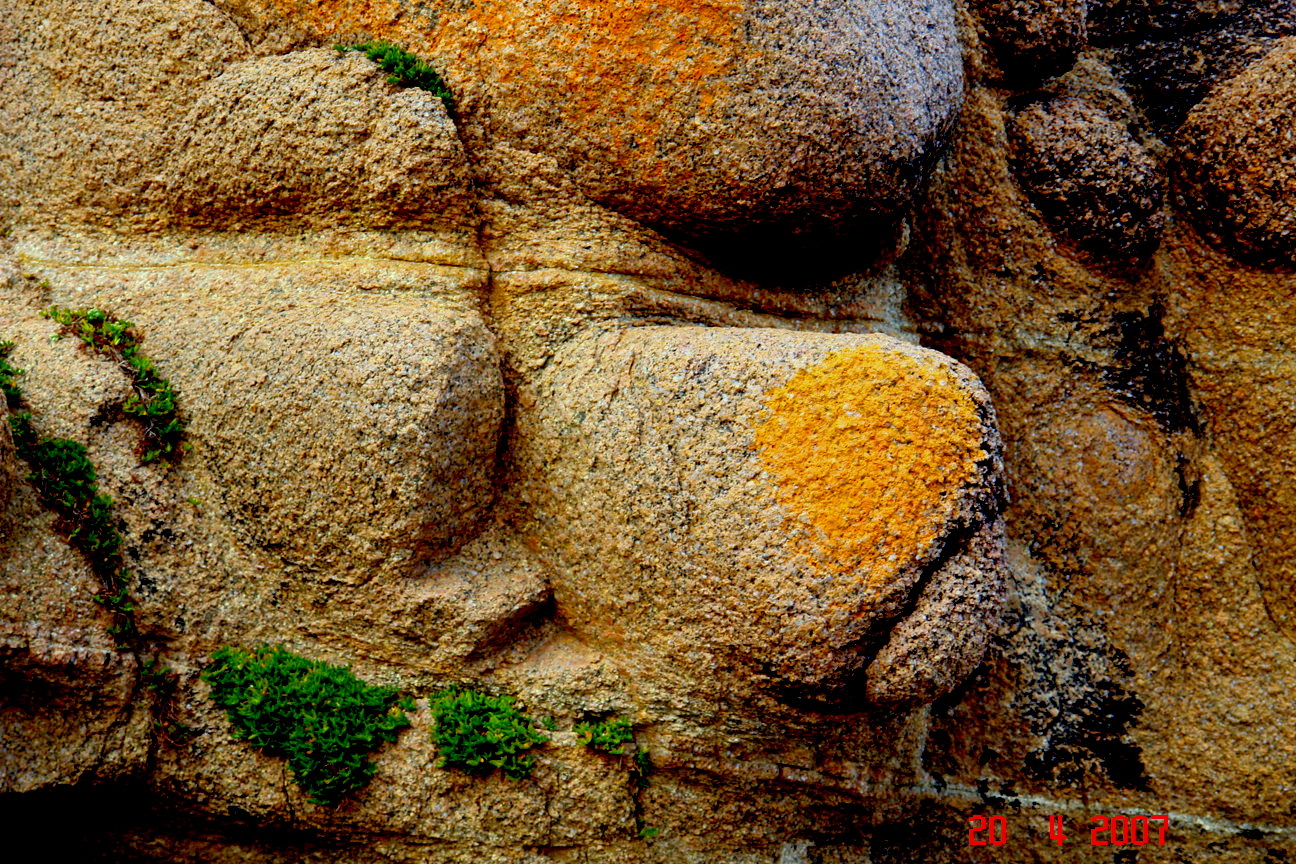
Gary Sauer-Thompson, colours, Cape Willoughby, 2007
This is never a matter simply of the coming to presence of a single being —as if presence was something that could attach to a single self-sufficient entity such as rocks. The presencing or disclosedness of a being is always
a matter of its coming to presence in relation to other beings----earth, sky, sea--- and so, for Heidegger, presencing or disclosedness is inseparable from the happening of a world. The happening of presence or disclosedness is the “happening” of the very things that we encounter in our concrete and immediate experience of the world.
This happening of presence or disclosedness is always the happening of a certain open realm in which, not only things but we ourselves are disclosed and come to presence—in which we are gathered together with the things around us.
May 1, 2007
Simon Reynolds: Bring the Noise + rockism
Simon Reynolds, the author of Blissed Out and Rip It Up And Start Again, and creator of Blissblog, has a new book entitled Bring the Noise: Twenty Years of writing about Hip Rock and Hip Hop. It brings together Reynolds’ writings since Rip it Up and Start Again, which looked at f the post-punk sound that developed at the end of the seventies.
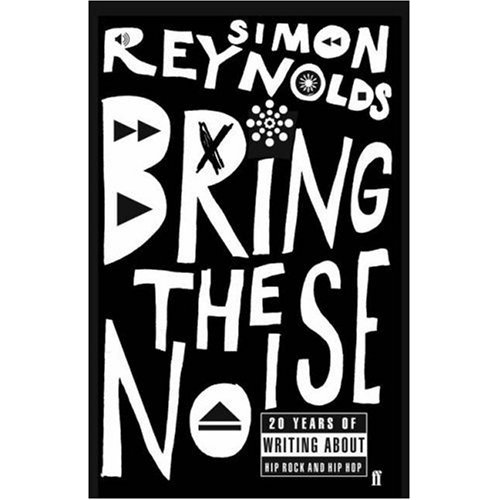
The book has just been published and so I have yet to read it. What we do have is an interesting interview with Reynolds at Fact Magazine by Mark, who runs K-Punk. I've picked out the section on 'rockism.'
K-punk observes that Reynolds situates the book as picking up the story where Rip it Up left off, but the attack on 'rockism' originated with post-punk, and then asks: Is the reclaiming of 'rockism' an unlearning of post-punk orthodoxy, or can your take on rockism be seen as in some ways continuous with post-punk? Reynolds responds:
Obviously, the idea of rockism as a bad thing, a blinkered mindset, was a really useful initiative when first mooted in post-punk days, and it carried on being salient and productive for some time after that. There are many aspects of rockism that remain worth attacking - privileging of the electric guitar; any approach that fixates on the song and sees rock as form of surrogate literature, the songwriter as story teller; limiting notions of authenticity, et al. I would agree with those who argue that rockism actually limits one’s understanding of rock music itself, of where its power lies.
Fair enough. Guitar rock certainly ran out of innovation and the music became pretty uninteresting. Reynolds interprets anti-rockism as a self-correcting move within rock discourse, a way of restoring a kind of suppleness and open-ness to an ideology that had become calcified and restrictive. However, the music of the late 1960s and early 1970s also created an alternative tradition that saw rock’n’roll as Dionysian, chaotic, intense and as an unsettling of empty mainstream music. It was a way--an historical way--- of experiencing music as intoxicatiing and rapturous. That was a period when music was driving center of the culture, rock and roll understood itself to be part of the modernist avant garde and the fans were blissed out and celebrated excess.
Reynolds qualifies his embrace of anti-rockism. He says that the anti-rockist polemic, which resurged this decade, seems to have developed a kind of runaway momentum, a malign logic that some people followed through to absurd places. He spells this out:
There seems to be a drive towards eliminating all axes of judgement beyond pure pleasure, the supposed purity of the consumer’s unmediated experience of the pop commodity. The distinction between “urgent” and “trivial” is obviously a no-no for these heroic anti-rockists, but you even get people seriously debating whether distinctions based on quality - good/bad - are rockist and should be jettisoned..So I began to realize a few years ago that it had moved beyond an attack on the idea that guitar rock alone had a special claim on seriousness, art status, rebellion, etc to the rejection of those ideals altogether—the whole complex of values to do with innovation, edge, danger, difficulty, subversion, disruption, notions of music as underground or oppositional, as either “art” (vision, expression, etc) or “folk” (social energy, collectivity, the real). This is all stuff we’re supposed to jettison, not just as something no longer applicable to the current situation, our scaled-down expectations,but as something that was never valid, was always fraudulent
Reynolds adds that he started to feel quite comfortable with the idea of being a rockist, because all the eras and genres of music that have meant the most to me - Sixties psychedelia, post-punk, rap, rave, grime - are riddled to the core with those values. They might not have electric guitars or husky-voiced vocalists but they are all based around what are apparently irredeemably rockist ideals. So rockism, in this larger sense, means the whole apparatus of importance, relevance, seriousness, music as a force for change, significance, authenticity and subversion.