|
May 4, 2007
From the excellent Carefree Cities
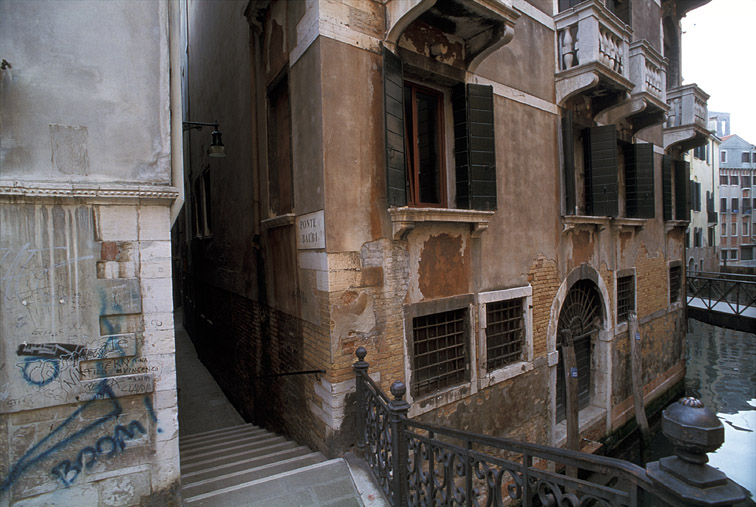
J.H. Crawford, Venice: San Bartolomeo
The site makes a useful distinction between urban design and urban planning.
Urban design is a subset of urban planning, concerned with the direct arrangement of the physical space. Urban planning must consider other important issues, including demographics, ecology, water supply, sewage treatment, transport, energy supply, and so forth. Urban design deals with what we can see; urban planning is effort undertaken to assure that the entire city actually functions once built.
We hear a lot about urban planning in Australia (something developers all over the country really detest) and very little about urban design--- the art of making places. Urban design in our cities pretty much boils down to providing spaces for the movement of ever more cars.
True, people in Adelaide and Canberra talk about -the urban designs of Colonel Light and Walter Burly Griffin respectively, but this is in terms of the urban design of the past not the present. True, in both cities there are intense conflicts around the way badly designed development shapes the places where we live. And there is an urban design centre in Western Australia, which is the first of its kind in Australia.
However, both of these designed cities are entrapped in the way that the car has resulted in major unanticipated consequences for urban life, and have largely given up critically dealing with the way the car has become a serious cause of environmental, social, and aesthetic problems. Their public squares are urban wastelands. Apart from the odd pocket the quality of public urban life in both cities is poor.
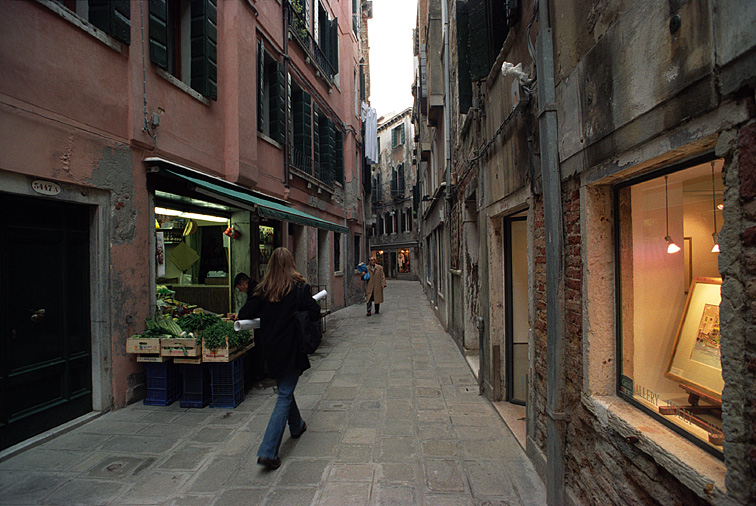
J.H. Crawford, Venice: San Samuele
Neither city is interested in becoming a carfree cities.That is why Venice, the largest existing example, is loved by almost everyone and is an oasis of peace despite being one of the densest urban areas on earth.
|


