January 31, 2012
Thomas Demand: modernist
Thomas Demand is known for his large scale photographs that question the medium as a faithful record of reality in that he makes photographs of three-dimensional models that look like real images of rooms and other spaces.
A residency at the Getty Research Institute in Los Angeles where he discovered the archive of the Californian architect John Lautner (1911 – 1994). He photographed 12 architectural models he discovered in the Lautner archive:
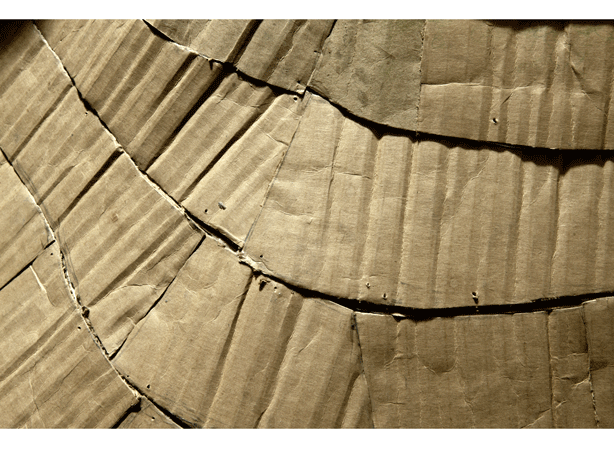 Thomas Demand, Wood 89, Pigment Print, 2011.
The lines, planes, textures and colours Demand composes from Lautner's models recall modernist painting and sculpture, including Picasso’s reliefs and fragments of cubist bricolage, as well as mid-20th century abstract painting.
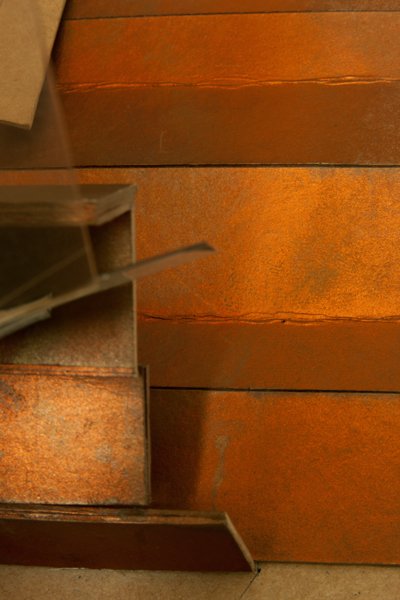 Thomas Demand, untitled, Lautner model studies, 2011
The representation of battered old models from different angles is independent of the buildings to which they refer:
 Thomas Demand, untitled, Lautner model studies, 2011
They are abstractions that refer back to the some of the early modernist work ofPaul Outerbridge from 1921 – 1933 that explored cubism.
January 30, 2012
Bill Leak's deception
The cartoon below is Bil Leak's interpretation of Aboriginal protests on Australia Day in Canberra in News Ltd's The Australian. It is part of an article by Henry Ergas entitled Enforcing one rule of law for all.
Ergas argues that if conduct violates the law, we should expect those responsible to be held to account. The law ought to apply to the protesters at the Aboriginal tent embassy exactly as as it applies to everyone else, including the Cronulla rioters.

Leak's cartoon depicts The Left as populist, confused, ugly and angry. They--the ugly Australian--- look very much like the right wing anti-carbon legislation rioters and the truckies circling parliament house.
What is obscured by the cartoon is what the Aboriginal Tent Embassy in Canberra was about --a protest about the dispossession of indigenous people from their traditional land in settler Australia, the use of English law to legitimate that violence and the ongoing racism by white Australians towards aboriginal Australians.
For Leak it is the Left that is the problem, not the dead hand of White Australia. For Indigenous Australians the January 26 –understood as Invasion Day or Survival Day – is viewed as a day of mourning for the land that was taken and the ensuing two centuries of social alienation, racism, discrimination and oppression.
The Aboriginal Tent Embassy on the lawn opposite (Old) Parliament House is a powerful symbol. Strangers in their own country, the aboriginal people established diplomatic representation to negotiate with the federal government about their land rights.
January 28, 2012
Adelaide modernism
My knowledge of Adelaide modernism is patchy, I regret to say.
According to the art historians Kathleen Sauerbier was one of the first artists to respond to the southern coastal area in the Fleurieu Peninsula in a Modernist style. Her landscapes, with their limited use of colour, fluid line-work and simplified forms, exemplify her influence on fellow Australian painter Horace Trenerry.
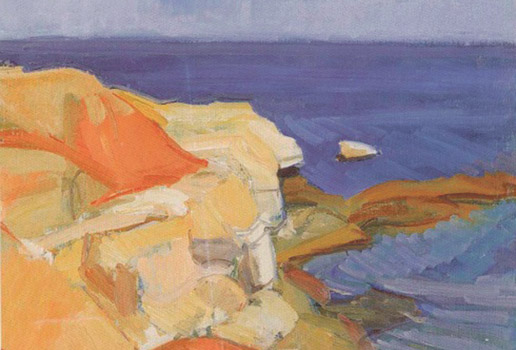 Kathleen Sauerbier, Ochre Cliffs and Gull Rock looking south from Maslin's Beach, 1935
As I I haven't read Jane Hylton''s The painted coast: Views of the Fleurieu Peninsula south of Adelaide I cannot put Sauerbier's Willunga work into this South Australian regional (Normanville, Second Valley, Port Willunga, Aldinga, Maslins, Victor Harbor, Goolwa, the Coorong) landscape tradition.
January 27, 2012
Dutkiewicz x 3 at Willunga
Suzanne and I drove up to Willunga from Victor Harbor late this afternoon to attend the opening of an exhibition of recent paintings by the Dutkiewicz family: Wladyslaw Dutkiewicz, Ludwik Dutkiewicz and Adam Dutkiewicz. Recent meaning done in the last 20 years.
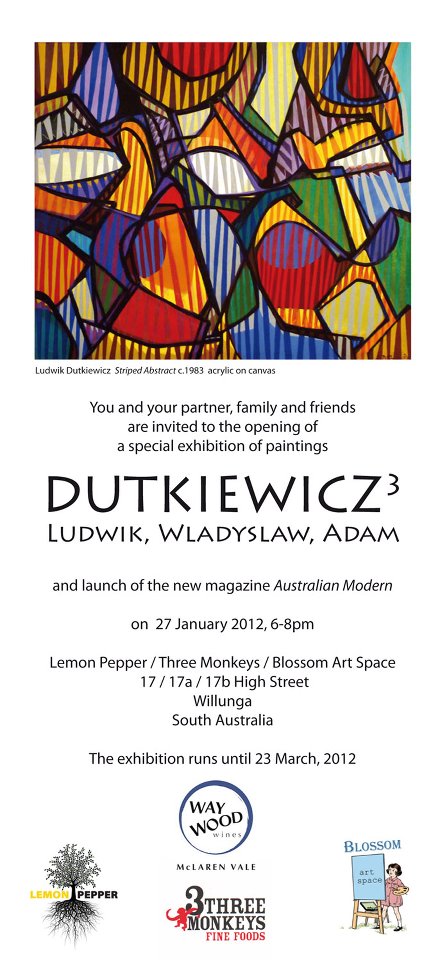
There was also the launch of the first issue of Australian Modern, a magazine about 1950s modernism in Oz. It was a glorious summer evening, people were going out to eat, and it was a fascinating exhibition.
I'm ashamed to admit that I just didn't know this Adelaide abstract modernist work at all--not even that of Wladyslaw Dutkiewicz, who was an expressionist, constructivist, abstract and semi-abstract painter and occasional sculptor who was also involved in theatrical design, directing and acting. He appears to have faded off the screen of conventional art history that constructs Adelaide modernism in terms of Dorrit Black, Dora Chapman, James Cant and Kathleen Sauerbier.
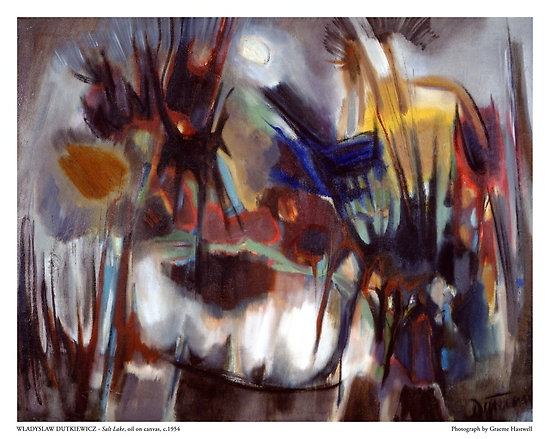 Wladyslaw Dutkiewicz,, Salt Lake, oil on canvas, c.1954
Wlad and his younger brother Ludwik were part of the influx of migrant artists who arrived in Australia after the Second World War. They settled in South Australia and soon became two of Adelaide's leading modernist painters in the 1950s and 1960s. At the exhibition opening Adam mentioned that the Dutkiewicz family hosted regular salons and parties and their home was the hub of creative life in Adelaide.
The exhibition highlighted how sketchy my understanding of South Australian modernism was. Despite abstraction becoming mainstream in a modernist culture after the 1950s I thought that this form barely existed in Adelaide. My vague understanding was that there had been a strong Surrealist undercurrent in Adelaide modernism.
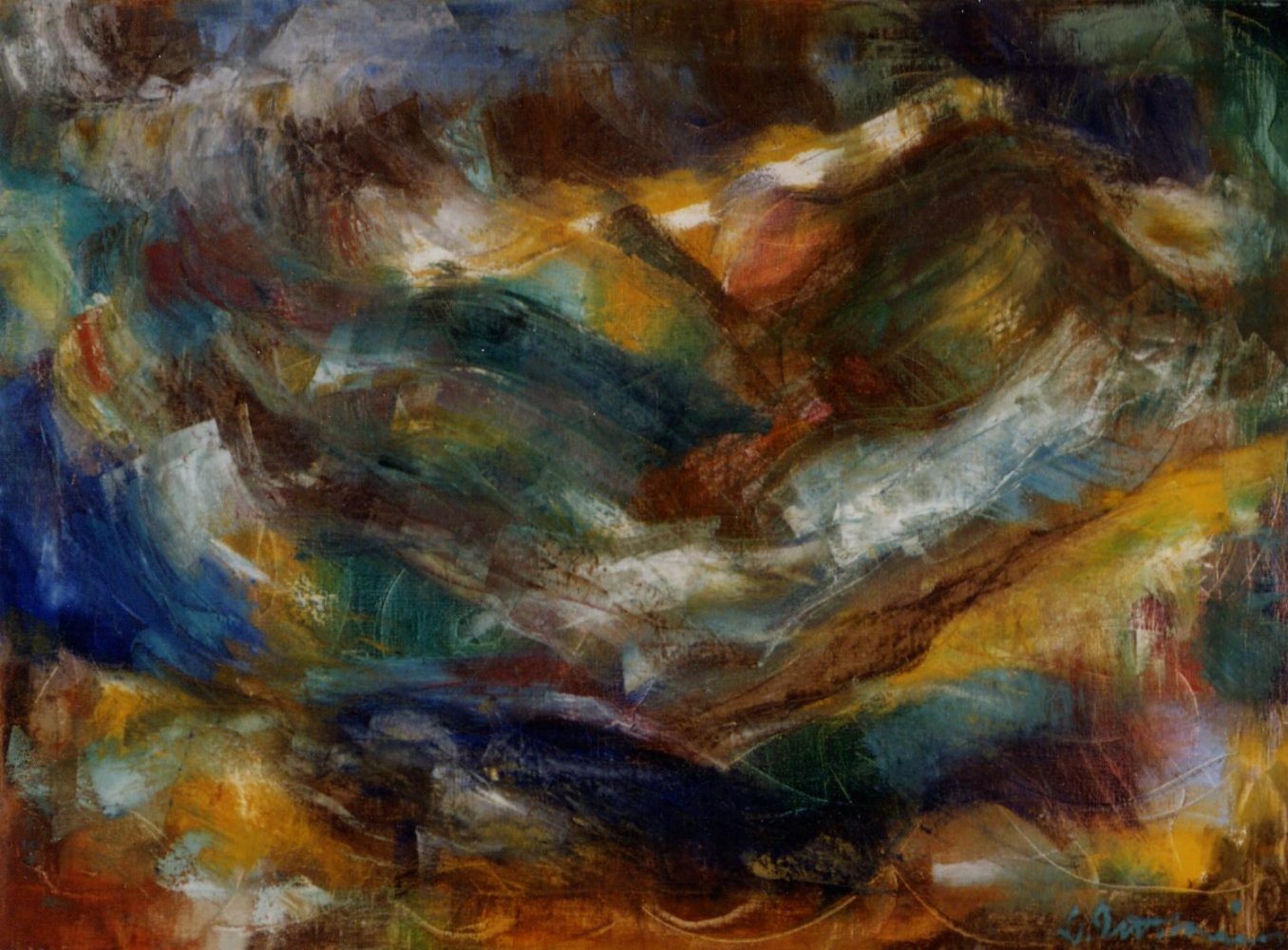 Ludwik Dutkiewicz, Waves, oil on canvas, 1954
Ludwik Dutkiewicz worked as a botanical illustrator for the Adelaide Botanic Gardens and State Herbarium. He became the state’s first official botanic illustrator, a position he held for 30 years before retiring in 1983.
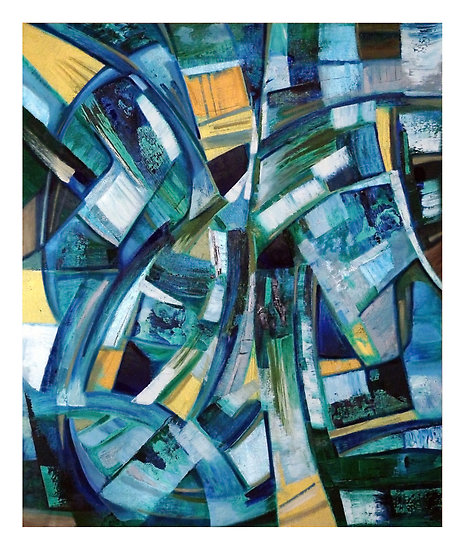 Adam Dutkiewicz, Faction Painting, oil on canvas, 2006
Adam is an art critic and art historian as well as a painter. He published a “quarterly” arts magazine, Words And Visions (WAV), issues 1-17 in the 1980s and currently runs the interesting Moon Arrow Press. He remains a resolute modernist --art is experimental and aims for masterpieces---in opposition to the corruption and commercialization of the art institution's gallery system.
January 25, 2012
digital snaps
I've started a Tumblr blog solely for my digital photographs. After dipping my toes into digital photography 3 years ago and using it consistently, I've come to the conclusion that not only are the results of digital photography as good as 35mm film, but that the ever improving digital technology has given rise to a different style and type of photography.

Gary Sauer-Thompson, from a window in Oaks on Market, Melbourne, 2011
In the history of photography huge home-made wet glass plates led to store-bought dry plates which led to 8 x 10" sheet film which led to 4 x 5" sheet film which led to 2-1/4" roll film which led to 35mm which led to digital. Digital imaging is the technological winner these days. Today's digital SLRs replace 35mm, no big deal.
So we need to accept the difference between the two technologies and then work with the characteristics and concepts created by digital imaging technology---information, data, interface, bandwidth, stream, storage, rip, compress, copy, paste, morph, interpolate, filter, composite, etc. The term “software”, for instance, shifts the emphasis from media/text to the user and we need to insert into the information model of author – text – reader the software used by both the author and the reader.
What should be avoided is holding onto the assumption that identifies the pictorial tradition of realism with the essence of photographic technology and the tradition of montage and collage with the essence of digital imaging. The reason is that what is taken to be the essence of photographic and digital imaging technology are two traditions of visual culture. Both existed before photography, and both span different visual technologies and mediums. Just as its counterpart, the realistic tradition extends beyond photography per se and at the same time accounts for just one of many photographic practices.
January 23, 2012
David Hockney: recent landscapes
The latest works in David Hockey: A Bigger Picture were made in the last eight years in the East Yorkshire Wolds near Hockney's Bridlington home. It is Hockney reinventing himself as a full-blooded landscape artist who highlights the importance of seeing and of observing and studying change.
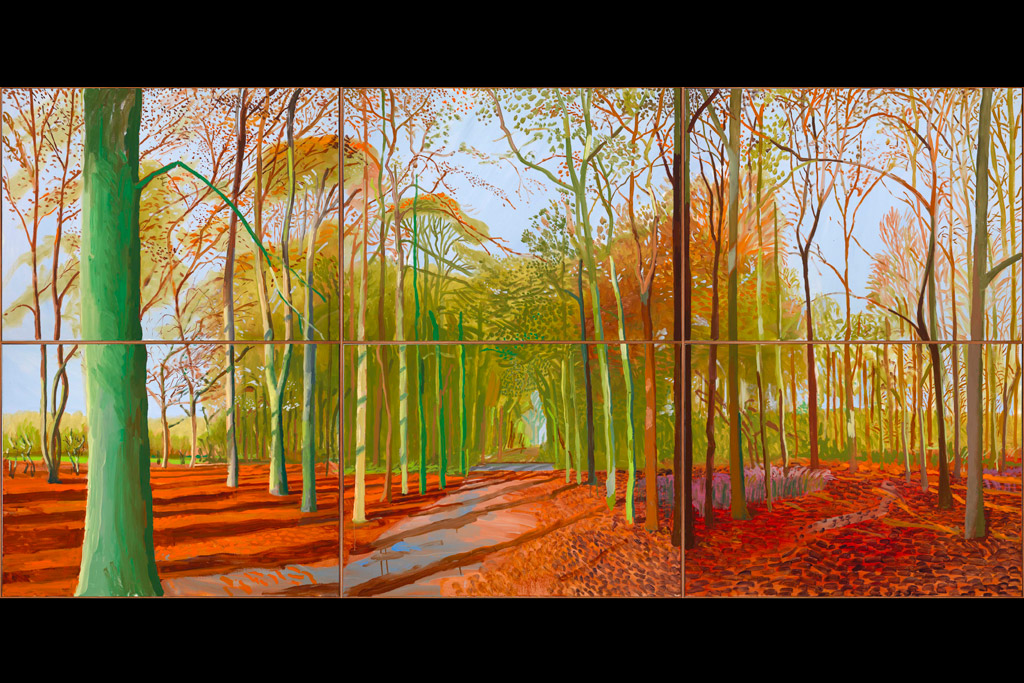 David Hockney, Woldgate Woods, 21, 23 & 29 November 2006.
He paints big canvases --walling filling, eg., the Closer Grand Canyon painting of 1998 ---and in bright, often discordant and gaudy colours. Digital video stills, the simultaneous operation of nine cameras, and the iPhone and iPad are now his instruments of drawing.
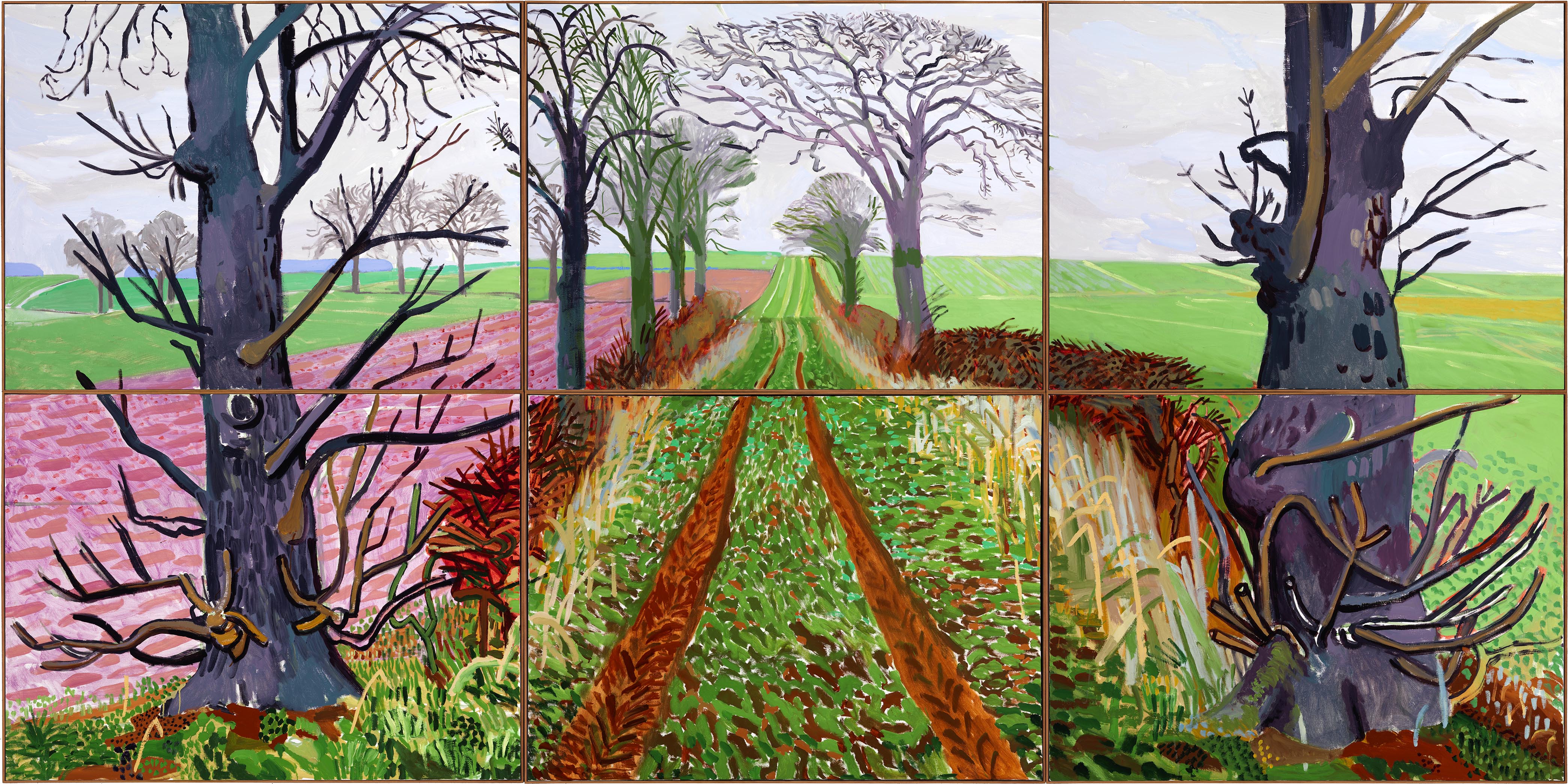 David Hockney, A Closer Winter Tunnel, February-March 2006, oil on six canvases.
One of the final rooms in the exhibition presents a bank of screens – multi-camera footage of Yorkshire mixed with interior films and motifs from Hockney’s paintings. The videos have been filmed simultaneously using nine and eighteen cameras, fitted on customised cars, providing a spell-binding, immersive experience.
January 22, 2012
Captain Beefheart: Ice Cream for Crow
A video of Captain Beefheart and the Magic Band (Gary Lucas (guitar), Jeff Tepper (guitar), Rick Snyder (bass), Cliff Martinez (drums);) performing 'Ice Cream for Crow' from the album of the same name (1982). The clip was rejected by MTV USA as "too weird" upon release, now it is in the Permanent Film and Video Collection of the Museum of Modern Art, NYC.
The video features some of Don Van Vliet's abstract abstract expressionist paintings. By 1985 Van Vliet's work was showing in the most prestigious galleries of Soho. Don Van Vliet died in december 2010 at 69 of multiple sclerosis.
Of all the bands that launched alternative rock, the Magic Band was the one truly opposite to the music of the regime of surf, Merseybeat, and teen idols.
January 21, 2012
a Kodak culture
Kodak's decline has culminated in it recently filing for Chapter 11 protection; a decline many say resulted from Eastman Kodak Co's failure to reinvent itself in the digital age. Looking back from our digital world we can see how Kodak was able to define the mass market photography as the Kodak moment:
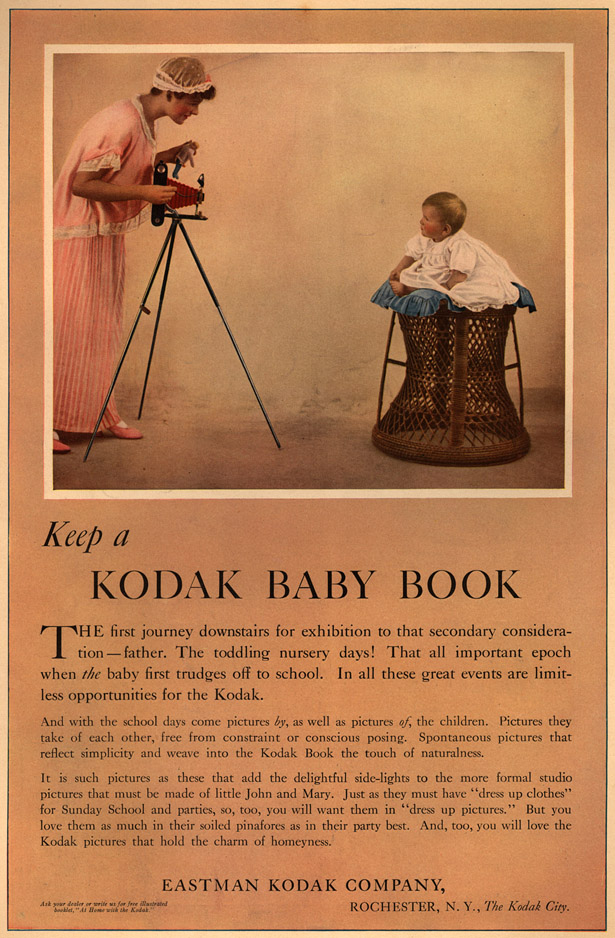
Photographs came to represent something more than a portrait or a recordiong of family life. They became extensions of our minds; they replaced our memories. They remind their makers of a person, place, or event with special meaning or importance to their lives. The Kodak prints of the snapshots were generally kept with their negatives, in boxes and drawers to await a definitive culling that rarely came.
Nancy West in Kodak and the Lens of Nostalgia says that Kodak's marketing around the “You press the button, we do the rest” slogan created a new kind of desire for photography in the late nineteenth and early twentieth centuries ---to apprehend our experiences and memories as objects of nostalgia.
Kodak has been replaced by Apple's iPhone and Facebook--the latter's marketing says that its Timeline help us to tell the story of our life" as it would allow us to "highlight and curate all your stories so you can express who you really are."
January 19, 2012
Australian colonial photographers: Francis J. Gillen
I've started to read Philip Jones' Images of the Interior: Seven Central Australian Photographers Jones had previously published The Policeman's Eye, The Frontier Photography of Paul Foelsche (2005) The seven photographers discussed by Philip Jones in his Images of the Interior are Francis J. Gillen, Captain Samuel Albert White, George Aiston, Ernest Eugene Kramer, Cecil John Hackett, William Delano Walker and Rex Battarbee.
None of the photographers presented by Philip Jones were professionals, they were there to do a job, be it policing the district, in the case of Aiston, or telegraph operator, as Gillen was for many years at Alice Springs and Charlotte Waters. There was also a medical scientist, an artist, a doctor and a missionary. Often these men had a fair amount of spare time and used it to collect and record information for the South Australian and other Museums or to publish their research or journals. Most of White’s bird specimens were sent to John Gould in England.
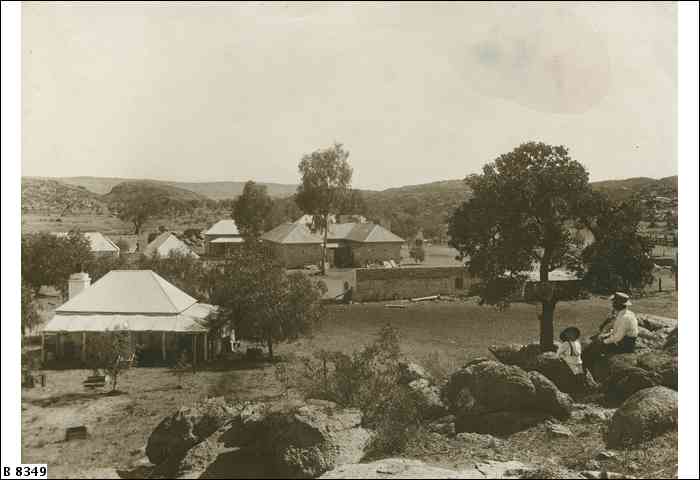 Francis J. Gillen, Telegraph Station at Alice Springs. F.J. Gillen sits right with his son Brian, 1896
Gillen was a station master at the Alice Springs Telegraph Station from 1891 to 1899 and the local magistrate in Alice Springs. He mostly photographed aboriginal people using a large dry-plate tripod mounted camera between 1894 and 1897. He produced some 400 glass negatives, and some of this work appeared in Gillen and Baldwin Spencer's text Native Tribes in Central Australia.
This is frontier photography and most of Gillen's photographs were of aboriginal ceremonies and rituals. Anthropology averted its gaze from the destruction of the aboriginal tribes of Central Australia by the pastoralists, the power of British colonialism and settler capitalism.
January 16, 2012
closing down the internet?
The stop the piracy bills before the US (eg., the PROTECT IP Act in the Senate and the Stop Online Piracy Act, or SOPA, in the House) would do more harm than good to cybersecurity, the Internet economy, and online free expression.

SOPA aims to empower the Justice Department to go after websites that allegedly infringe on copyright, and doing it on the Internet’s domain name layer. Consequently, under these bills even general-purpose social-media sites such as Flickr with no bad intent could be tagged as theft sites "facilitating" infringement -- simply by providing the platforms for users' content. If passed the US government could do such things as shut down YouTube if it contained "pirated video"; or force Google to not link to sites that may allow one to download illegal content.
There are two visions of the future in conflict here. In the corporate scenario of Hollywood and the music industry the top-down order and control are restored, and the disruptive chaos of the Internet is repressed. In another, society accepts some messiness in return for unleashing the amazing collective power of the digitally networked pod users.
Adelaide photography: Greg Ackland
I missed the Full Spectrum show that was held late last year at the Adelaide College of the Arts, TafeSA late last year. It featured 3 photographic artists from South Australia: Gregory Ackland (Flickr stream), Joe Felber and Will Nolan. The catalogue is online.
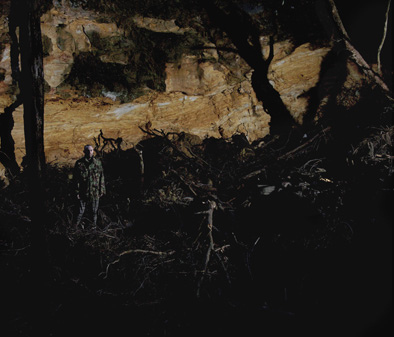 Gregory Ackland, Gift for the Darkness, from Lord of the Flies series, 2008
These three form the core of the Photography Department at the Adelaide College of the Arts, whilst Ackland and Nolan are part of the Undercurrent collective, which consists of nine emerging photo-media practitioners currently based in, or originating from South Australia.
The collective says that it aims to contribute to the continuing development of critical and aesthetic debate concerning contemporary photo-media practice, by engaging with photo-media artists, curators, writers and other creative practitioners through ongoing exhibitions and photographic showcase contexts.
The catalogue of the Spectrum show is online and it states that the emphasis is on conceptual work, the integrity of the image and the mode of viewing.
In some ways the Spectrum show and the formation of Undercurrent can be interpreted as a response to the cultural hegemony of the eastern states. These photographers do not explicitly address the issue of whether or not there is an Adelaide art practice, or what localism in a global world currently means for photographers working and residing in Adelaide.
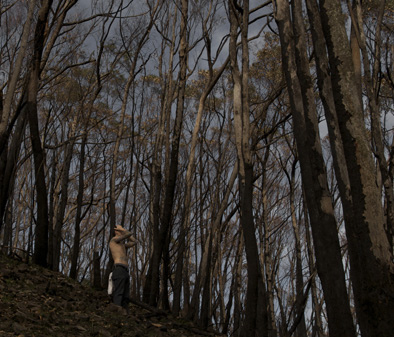 Gregory Ackland, Fire On the Mountain, from the series Lord of the Flies, 2008.
There is a sense of unease, foreboding and threat in the Lord of the Flies series: young men are lurking in the shadow lands of gullies and trees and the images suggest a form of haunting about bad things that have happened or may happen in the near future.
January 14, 2012
WA photography: Kevin Ballantine
The 2009 Transient States exhibition at the Lawrence Wilson Art Gallery at the University of Western Australia in Perth was curated by Sally Quinn and it presented a range of creative photographic responses to the urban landscape of Perth. Quinn says that the work of the eleven photographers reflects a sustained meditation on place, memory, and collective and individual identity.
One of the photographers in the show was Kevin Ballantine who is on the staff of the School of Communications and Arts at the Edith Cowan University.
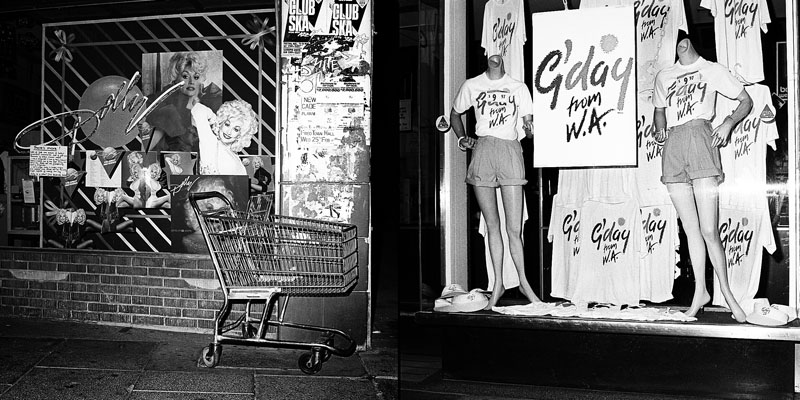 Kevin Ballantine, untitled, from the series Greetings from Cup City, 1989
February 2012 is the 25th anniversary of Australia and Fremantle losing The America’s Cup, previously heralded as Australia’s greatest sporting triumph. Cup City is a series of black and white photographs picturing the terrain of the Royal Perth Yacht Club’s defense of the international yacht race.
Many of the images work with strong contrasty light and dark shadows. The shadows are almost black and the people on the street are highlighted by the intense urban light. Others, the night shots, are light by flash. The style is a mixture of street photography and new topographics and there's not a yacht to be seen.
Though the pictures appear to be shot with a twin lens Rolleiflex with a flash attached, there is a sense of strangeness in which the familiar becomes unfamiliar.
January 12, 2012
Australian photography: Ed Douglas
Ed Douglas used to be a Senior Lecturer in Photography at the South Australian School of Art circa 1977 -1980 when it was a part of the CAE at the Underdale campus. He retired in 2001.
I recall seeing some work from the Gypsum Mine on Kangaroo Island in South Australia as part of the CSR Photography Project:
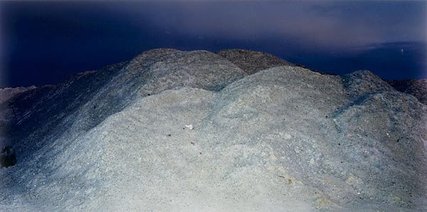 ED Douglas, Gypsum pile at old mine site 2, CSR Photography Project, circa 1983
In 2007 he had month- long residency with Ken Orchard in Hill End, central western New South Wales where they explored with camera and brush the historic goldmining landscapes of Hill End and Ophir. These are both sites of national importance in the history of gold-mining and visual art from the 19th century.
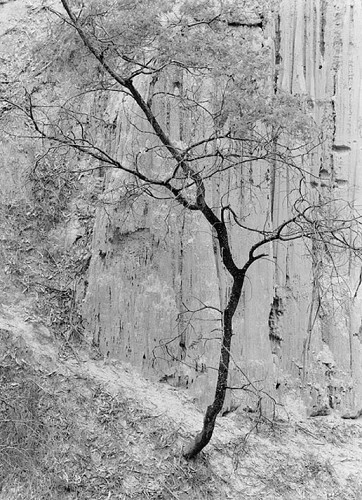 Ed Douglas, Acacia with a Chinese Memory, 200, from Re-imaging gold country at Ophir and Hill End
Landscape is Douglas' interest---eg., the Flinders Ranges, Petrel Cove, and Aldgate Valley. He uses a traditional view camera and does his own darkroom work to produce the prints.
January 11, 2012
Helen Ennis on belonging + connection to the land
Helen Ennis concludes the “Land and Landscape” chapter in her Photography and Australia thus:
And, finally, what of the vexed, interrelated matter of non-Aboriginal Australians’ sense of belonging? While the Australian historian Manning Clark speculated that European settlers were eternal outsiders who could never know ‘heart’s ease in a foreign land, because … there live foreign ancestral spirits’, it now seems plausible that non-Aboriginal Australians are developing their own form of attachment, not to land as such, but to place. Indeed, it has recently been argued that for contemporary non-Aboriginal Australians, belonging may have no connection with land at all. Perhaps this is one of the reasons why art photographs of the natural landscape have lost their currency and are now far outnumbered by photographs of urban and suburban environments - after all, it is ‘here’ that most Australians live and ‘there’ that the tourist industry beckons them to escape.”
I have been looking into though Julia Robinson and Maria Zagala's A Century in Focus: South Australian Photography 1840's -1940s which I've borrowed from the Adelaide City Library.
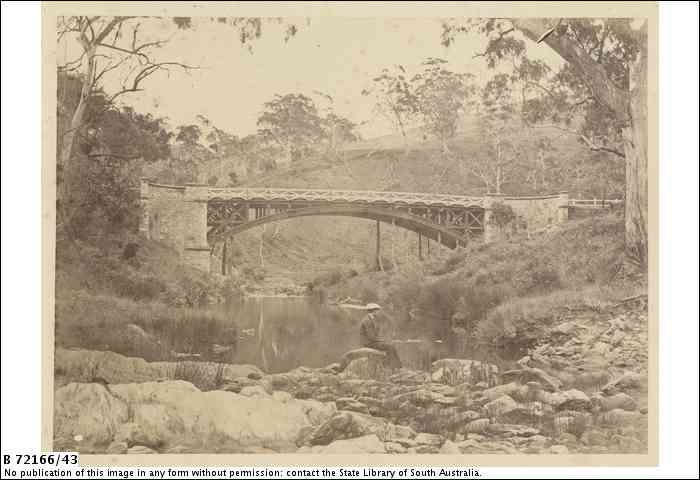 Townsend Duryea, Bridge, Gumeracha, ca.1870-1875, sepia print
Today most Australian's live in the city, but they also holiday in the bush and on the coast. Many have retired to the cost whilst some have become grey nomads exploring the Australian landscape for months at a time. Many of them would feel at home in their coastal places---as I do with respect to the Fleurieu Peninsula in South Australia.
Ennis would respond by saying that this confirms her thesis that non-Aboriginal Australians are developing their own form of attachment, not to land as such, but to place.
Settler capitalism and the sense of dislocation and the colonisation process is the past--we are talking about pre industrial capitalism that emerged in the 1950s with its modernist culture. This form, in turn, is now giving way to digital or informational capitalism. We now live in a global digital visual culture and so we look back on the colonial culture of settler capitalism in Australia as history ---its the period of from the 1840s to the 1940s in South Australia---along with its interpretation of photographic realism as a mirroring or copying. This really is the world of yesteryear.
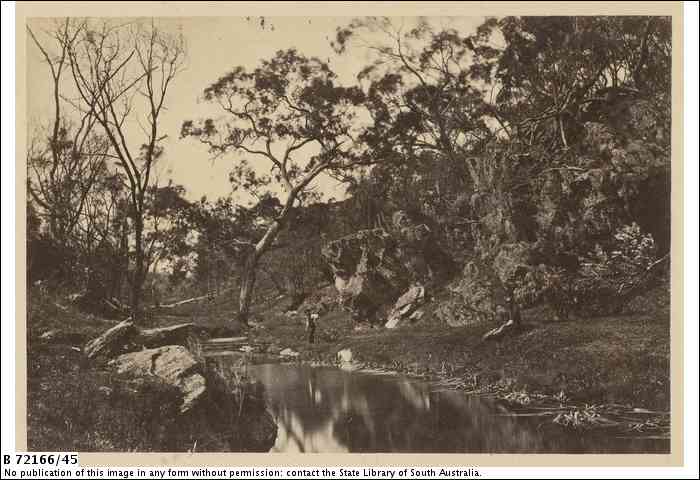 Townsend Duryea, Chain of Ponds, ca.1870-1875 , sepia print
However, land is part of place, especially along the coast. of the Fleurieu Peninsula. This is where the day tourists come to escape the heat of Adelaide during the summer.
January 10, 2012
an ethical photography?
In Statements Les Walkling writes about the dominant movements in contemporary art in the last couple of decades and then raises some questions about contemporary art practice now. He says:
I was born into a culture where modernism and formalism were tied to the universal claims implied in aesthetic judgements, where works of art were considered the embodiment of aesthetics, and presented as signs of social distinction and superior taste. Today we understand such claims as an abuse of Western power prevailing in the name of a universal humanity that glosses over local difference, contradiction and conflict. If the reaction of the 1980s was the embodiment of the anti-aesthetic, and the 1990s a return to representation, then the first decade of the 21st century has questioned our allegiance to the past and responsibility in the present.
"..the first decade of the 21st century has questioned our allegiance to the past and responsibility in the present" is an interesting idea. How are photographers questioning their allegiance to the past? Or questioned their responsibility in the present? How would this relate to the shift to landscape?

Gary Sauer-Thompson, sand + rocks, Petrel Cove, Victor Harbor, 2011
Walking comments that his perspective is one of hindsight: what can we make of art practice in the first decade of the 21st century? His answer is that as contemporary artists we need to find ways to embed an ethical practice deep in our work.
This touches on my work is about the and I'm trying to write about what I'm doing with this work. The past context in Australia that I have constructed and in which locate my work within has been pulled together from the following stands:
(1) the issues of the landscape raised at the Melbourne Festival of Ideas 2011.
(2) the empty space within settler capitalism mentioned here
(3) the StormyWeather exhibition at the Ian Potter Gallery in 2010.
(4) the Photography and Place exhibition at the Art Gallery of NSW in 2010
(5) Helen Ennis text Photography and Australia, which I've referred to here and here.
What I've inferred from these threads is that the landscape embodies our history, and so being in a landscape is also being in our history and in a place. It is part of our identity as Australians.
So the question raised by Walking becomes How would contemporary artists find ways to embed an ethical practice deep in our work with respect to the landscape. Maybe the pathway lies in Walking's reflections with respect to his involvement in the Pilbara project.
January 9, 2012
Australian photography: John Austin
I recently took my Schneider Symmar 210mm lens (circa 1970) that I use with the Cambo 8x10 to Charles Bridgwood in Adelaide to have both the fungus in the lens removed and a non-functional electronic shutter replaced by a working mechanical one.
Charles mentioned an ex-South Australian photographer working with an 8x10 in the south west corner of WA. It was John Austin, who works with a Sinar Norma monorail view camera to represent the swamps, forests, rivers and beaches of the local landscape:
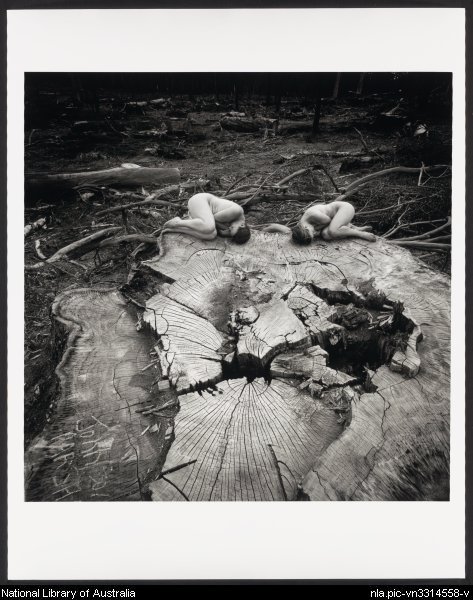 John Austin, Peta Sargison and Debbie Ludlam on the "Megastump", Gardner 08 State Forest, Chesapeake Road, Northcliffe, Western Australia, 1999, NLA
There cannot be many Australian photographers working with an 8x10 in black and white and a chemical darkroom. Despite a rich tradition of fine black and white photography that is linked to Minor White and Edward Weston in the USA, you could probably count these traditionalists in Australia on one hand. The high digital end of the medium format is definitely taking over.
Austin is based in the south-west forest of WA (in Quinninup), and he works exclusively with fine silver-gelatine black and white prints, normally from large format cameras. A large body of his work documents the destruction and defence of the last of the southern tall karri and jarrah forests in WA. As there are very few of his b+w pictures online in the public domain you have to look at his website.
Though Austin's work is in the tradition of nineteenth century Australian landscape photography it has a critical edge. Whereas the former's trade views these professionals practised photography as a trade in the market place) celebrated the pioneering conquest of a nature to create farming properties, Austin highlights the destruction of the karri and jarrah forests by a short sighted forestry industry that has little understanding of sustainable forestry.
Austin's photography is ethically based practice in that he is interested is protecting ecosystems and cultural heritage that is of value, is fragile and is continually threatened by a resource based industry and a pro-development state. Austin would be one example of Les Walkling's exploration for an ethical practice embedded deep in our work and that can be the foundation for a contemporary art practice.
January 4, 2012
Film and digital technologies
Levi Wedel, a Canadian photographer, runs an interesting post on digital and film photography on his Images Seen blog. I turned to it after seeing a second hand Hasselbald HD4D 40Film and digital technologies medium format digital camera system with a comprehensive set of lenses for $25,000.
There lies the future of photography I thought, when I held it in my hand, before putting it back. Wedel argues that film and digital technologies are not interchangeable terms when discussing photography even though both can produce an image. He says that Every medium is distinguished by a unique set of properties which in turn affects the meaning of work produced within that medium. Digital cameras are built to mimic the function and ergonomics of film camera.
Digital cameras simulate the results of photography but generate image information only and not physical photographic information. Digital sensors measure light and are not affected or altered in any way by light. The mimicry of film technologies by digital cameras is detrimental both to the progression of digital technologies and to the practice of photography in which film and other photographic technologies are at risk of becoming displaced and lost in favour of a technology incapable of performing the same function, a technology ultimately destined for other largely unexplored functions. Such unexplored functions are very interesting and it should in no way be taken as a negative that digital cameras are not a photography but rather something new.
The photograph is a physical artifact of a physical event, while the digital image is entirely abstract and semiotic at its core. Digital images are data-- sets of linguistic data whereas the film based image is a physical object-- a physical artifact of how light affected a bunch of silver.
January 2, 2012
Lee Friedlander's trees
This is a portrait of Lee Friedlander with his Hasselblad Superwide by Richard Avedon from this session.
 Richard Avedon, Lee Friedlander, 2002
I've been digging around in Friedlander's bush and tree series. These are complex compositions of tangled brush and tree branches — often at the front of the picture plane. The image has some kind of blocked view, often with some specimen shrub right in front, poking its twiggy fingers right in your eye. The view is constantly frustrated, obstructed, obfuscated, to the point that we feel hemmed in, trapped by the forest, attacked at every angle by layers of trees and underbrush;

Lee Friedlander, New Landscape - Cochise Stronghold, 2000
In this body of work Friedlander has deconstructed the landscape, reconnected to the perspective from the ground, and found satisfaction in the first-hand experience of being altogether insignificant.