|
April 24, 2011
Foam in WA has organized The Pilbara Project Exhibition featuring images from the work of four photographers Tony Hewitt, Peter Eastway, Christian Fletcher and Les Walkling.
The body of work is entitled 52 Weeks On and it was produced from several journeys into the Pilbara. On this year long collaboration they travelled with a group of students throughout the altered landscapes of northern Pilbara, including Port Hedland, Dampier Archipelago, Pardoo Station, and Marble Bar. This is mining country and they had been bought together to photograph it by Christian Fletcher.
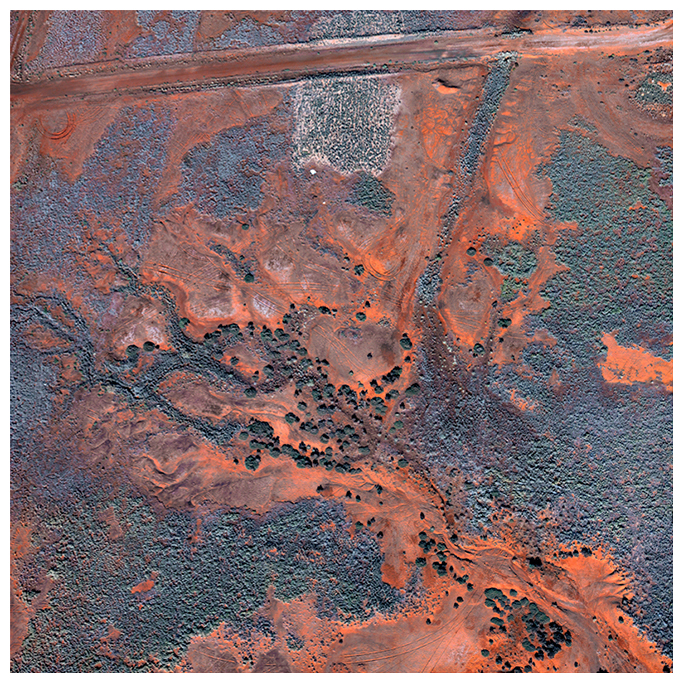 Les Walkling untitled, 2011
Walkling has moved from making photographic images via 8×10 silver gelatin contact prints in the 1970s to their enlargements in the 1980s, a transition to digital processing in the 1990s, and then digital capture in the 2000s. His PIlbara series was done with a Hasselblad H4D -200MS camera that is connected to a computer on site.
I've only got to the stage of digital processing my negatives and relearning how to use large format cameras. Walkling, in, working in the post-film-era medium format world, is definitely someone ‘of his time’. Digital medium format is the technological future of photography:
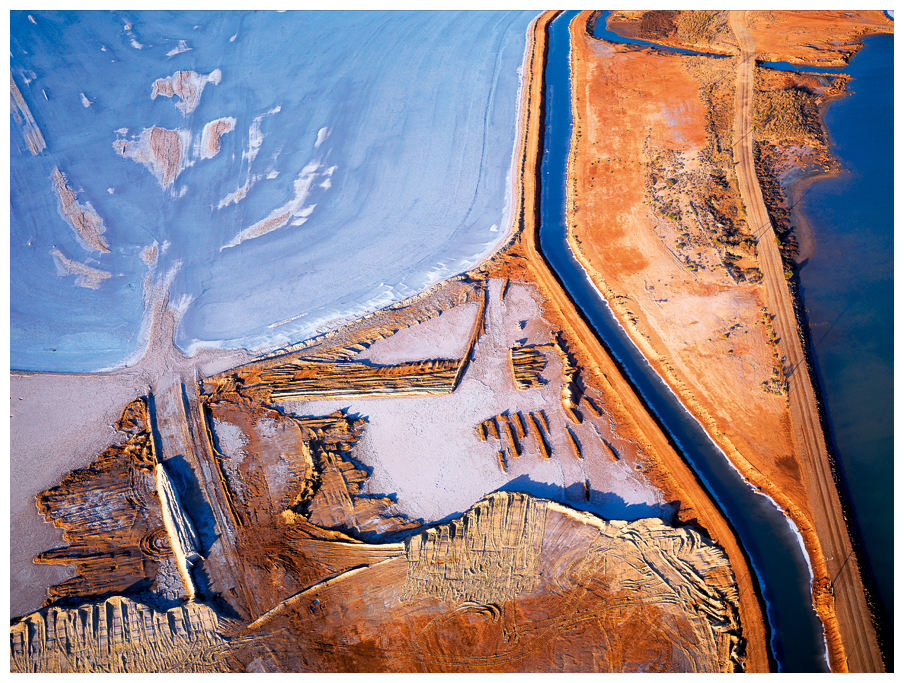 Les Walkling untitled, 2011
Walkling's reflections about his relation to the Pilbara landscape are very interesting. He says that:
The Pilbara is not my home so I am an incurser (to incuse), who stamps my way on what I find. At worst this is imperialist, at best it is colonialist. My response to date is culturally naive and artistically suspect. I can't hide behind notions of objectivity or professional privilege. I need a thesis. I need a belief.....I am a stranger in the Pilbara. I have engaged with it as a professional tourist, at best. Or at least that is how I have responded. I have not done enough research, so I started with no greater motivation than to be with friends, photographing together while exploring a new environment. Though that was more than sufficient to get me involved.
He highlights how relatively 'unknown' the Pilbara is to curators and other friends on the east coast of Australia. There is a blind-spot on the east side of the country, to most of the rest of Australia in fact, even though the land pervades our consciousness through literature, music, film, poetry and other cultural mythologies.
But in photography, the most visual of all media (but not necessarily the most intelligent), we have a mighty gap or absence. Where in our photographic histories is the treatise on the history of Australian landscape photography? It doesn't exist.
Well, we do have the 19th century colonial photographers who represented the landscape. This is being recovered by the photographic art historians--eg., Helen Ennis Photography and Australia. I'm just beginning to dig into the landscape work of the 19th centiuy photographers in South Australia.
|


The digital shakeup meant a cruel transition for the medium format camera market.The digital revolution was unkind to the ranks of medium format camera makers with few companies able to make the leap.