August 31, 2007
Gunns pulp mill: health concerns
Unlike Pulpmill Pete ---the new style Peter Garrett, aspiring ALP Environment Minister----the Tasmanian academics swing into action. Some background on the pulp mill by Warwick Raverty in New Matilda.
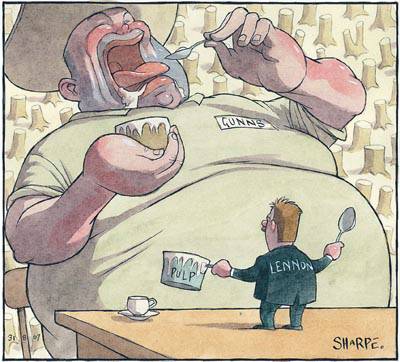
Sharpe
The Tasmanian branch of the Australian Medical Association says that it has concerns relate to the additional air pollution particles in the Tamar Valley so close to Launceston city, the likelihood of the mill's bad smell causing headaches and nausea, the expected increase in log truck accidents and the accumulation of toxic dioxins and furans in the food chain.
AMA spokesman Andrew Jackson said the AMA had concluded it was unable to support the mill, despite the organisation not being opposed to large-scale industrial development in Tasmania.
red moon
The moon passed close to the center of Earth's shadow on August 28th. I missed it. I just forgot.

This telescopic image was taken near mid totality from Yass, NSW Australia.
August 30, 2007
Freedom Wall
The downtown of Charlottesville, Virginia has a chalkboard wall at its northern end where those strolling past are encouraged to write in chalk on it. The wall has chalks and erasers. There is a sign at the southern end of the wall which says, "Please only write on the chalkboard. Writing on the bricks not permitted" I presume by bricks they mean the pavers.

A larger version of that photo can be seen here. Someone has scrawled on the edge of it, "Freedom Wall". The wall itself is well graffitied with chalk markings. Engraved into it is part of the bill of rights, "Congress shall make no law ... " which protects freedom of expression.
Liberty is heavily steeped into American culture. Not just American political culture.
American individualism is incomplete without an understanding of American Constitutionalism.
Civics do matter.
the culture industry: for petrol heads
Introducing his pathbreaking work The Production of Space (1991), Henri Lefebvre explains that:
...instead of emphasizing the rigorously formal aspect of codes [of representation], I shall instead be putting the stress on their dialectical character. Codes will be seen as part of a practical relationship, as part of an interaction between 'subjects' and their space and surroundings
Can we thinks of the social and cultural effects of advertising, with their spectacular distortions, in terms of a reckoning of how these distortions perform in terms of the Freudian logic of the dream?
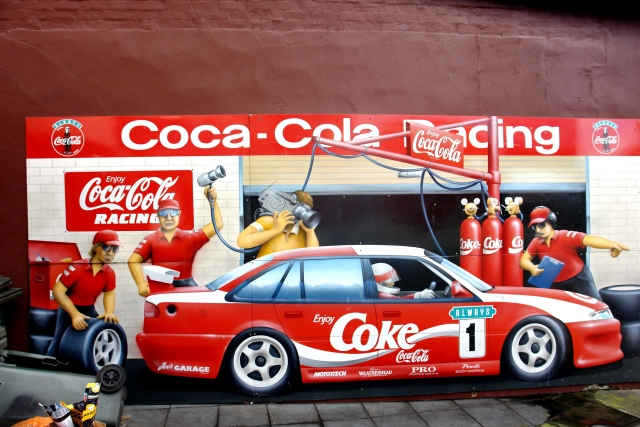
Gary Sauer-Thompson, mural Hobart CBD , 2007
Cars, coke and racing speak to petrol heads and their dreams of driving fast and desire for freedom from all social constraint. It is a mythic dreamscape constructed by global advertisers.
Secondly, the pre-eminence of vision is intimately related to speed in modernity,Travel through landscapes at increasing velocities in self-contained vehicles generates a fundamental disjuncture between travellers and the world outside, elevating the visual faculty as the pre eminent and architectonic sense through which one experiences space. This is best represented in the onboard cameras on the Formula I cars during a grand Prix race.
Update: 31 August
The film that keeps coming back to me on this visuality/travel issue nexus is Dziga Vertov's Man With a Movie Camera (1929), which uses radical editing techniques and cinematic pyrotechnics to portray a typical day in Moscow from dawn to dusk. Vertov isn't just recording reality, he transforms it through the power of the camera's "kino-glaz" (cinema eye). Vertov uses kino-eye to transcend the very reality he celebrates. In a 1923 manifesto, Vertov wrote:
I am kino-eye, I am builder..in bringing together shots of walls and details I have managed to arrange them in an order that is pleasing...I am kino-eye, I am mechanical eye, I, a machine, show you the world as only I can see it.. My path leads to the creation of a fresh perception of the world I decipher in a new way a world unknown to you.
If the Kino-eye (or camera-eye) is a cyborg combination of the mechanical movie camera and the human eye, then it offers new visual perspectiveand modes of perception; one akin to that of the flaneur strolling the urban streets of modernity.Visual impressions of the phenomeon of the streets flow past. Vertov juxtaposes images of everyday events, with the only suggestion of a narrative in Man with a Movie Camera is that Vertov is tracing a city from dawn till dusk.
August 29, 2007
Hobart snaps: punks versus society
Last weekend, as I walked around Hobart's CBD with my camera, I kept on thinking about corporatist Tasmania--that unholy alliance between the two main political parties and Gunns Ltd. If Gunn's calls the shots on resource development, then the Lennon government provides the support to ease the obstacles. The corporatist alliance's contempt for due process and democracy be seen in the events to impose the pulp mill on Bell Bay near Launceston. Those who resist are 'misinformed’ by The Greens.
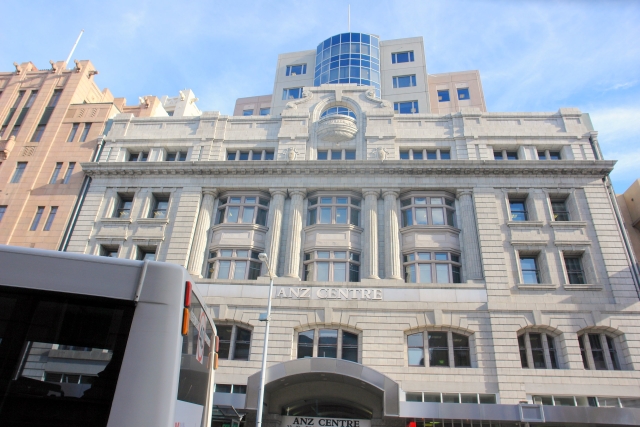
Gary Sauer-Thompson, commercial facade, Hobart, 2007
Who then were the exiles on main street? Where was the trashy vitality, the lust and rebellion, the sleaze to be found? Was this where opposition to the systematic destruction of the old growth native forests and the subsequent poisoning of the very fabric of Tasmanian politics and life could be found?
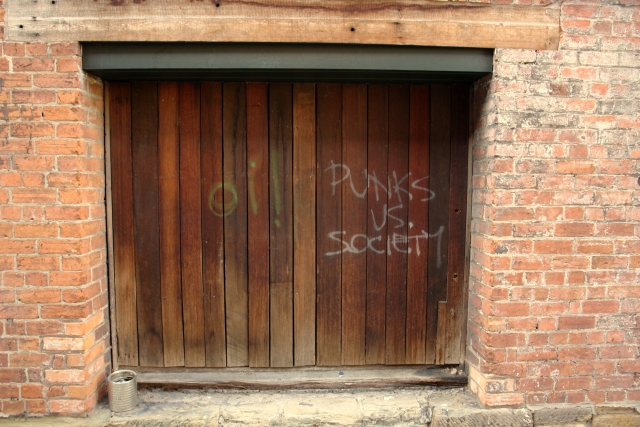
Gary Sauer-Thompson, politics, Hobart, 2007
It wasn't just the libertarian punks who were against society --it is also Tasmania's wilderness photographers against Gunn's proposed pulp mill. They critique the destruction through clearfelling of the very landscapes that have contributed to clean and green Tasmania’s image as well as the toxic emissions from the pulp mill itself.
Martin Flanagan, in his "Out of Control: The Tragedy of Tasmania's Forests' article in issue 23 ( May 2007) of The Monthly magazine says:
Clearfelling, as the name suggests, first involves the complete felling of a forest by chainsaws and skidders. Then, the whole area is torched, the firing started by helicopters dropping incendiary devices made of jellied petroleum, commonly known as napalm. The resultant fire is of such ferocity it produces mushroom clouds visible from considerable distances. In consequence, every autumn, the island’s otherwise most beautiful season, china-blue skies are frequently nicotine-scummed, an inescapable reminder that clearfelling means the total destruction of ancient and unique forests. At its worst, the smoke from these burn-offs has led to the closure of schools, highways and tourist destinations.
Tasmania is the only Australian state that clearfells its rainforests. While the rest of Australia has either ended, or is ending, the logging of old-growth forests, Tasmania is the only state where it is secretly planned to accelerate the destruction of native forests, driven by the greed for profit that can be made from woodchips.
August 28, 2007
Bonnie Raitt, Hobart, cityness
Bonnie Raitt was being played in the Hobart Sushi Bar by a couple of the customers when I was sitting there having a bit of lunch. It was a bluesy song with John Lee Hooker---a smoldering “I’m In The Mood”. The customers were talking about how they watched music videos on YouTube. A older Chinese man, at another table, was reading what looked like a poetry book--haiku?
So when I went back to the hotel I took a look on YouTube for the critically admired Raitt, as I had heard little of her music --apart from the Don Was produced Nick of Time. All I knew was that she had been struggling to do more than sell product on the drug addicted backroads of the lonesome highway, and that Raitt was one of the few women to play bottleneck.
What is of interest is the way music and graphics are being put together by the fans and then posted for us to see. A lot of work goes into putting the found imagery together into a video form that expresses the music in a visual form, which takes us beyond the broadcast yourself ethos.
Back to the cafe and urban life:
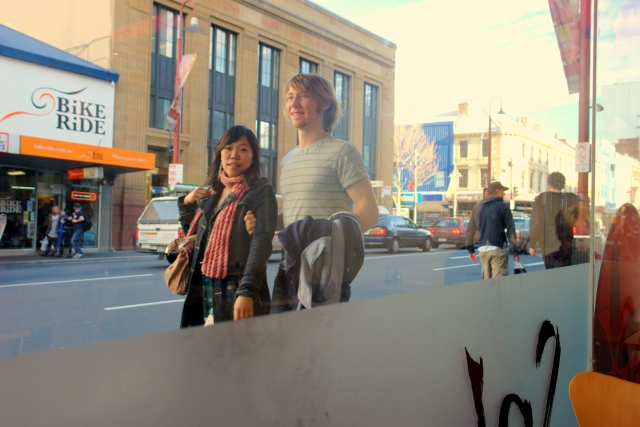
Gary Sauer-Thompson, Sushi Cafe, Hobart, 2007
The moment in the cafe was spent wondering about the art/culture side of Hobart--the local designer clothes shops, the graffiti, the wilderness photographers, artists etc whose the clean and green image that Tasmania enjoys internationally was in such contrast to that of Gunn's Tasmania. The latter stands for a return to the environmentally destructive ways that have historically been so damaging to the island. When I returned to the hotel I've dug up links to wilderness photographers living and working in Tasmania:
Chris Bell
Rob Blakers
Wolfgang Glowacki
Martin Hawes
Ian Riley
Ian Wallace
More links can be found at Raw Impressions
However, as my interest was in 'cityness', not wilderness photography, in the sense of liveliness of people in public space.
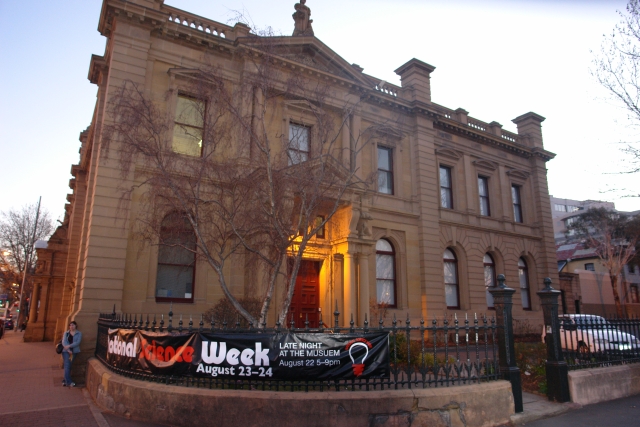
Gary Sauer-Thompson, Museum, Hobart, 2007
It is cityness as urbanity I was interested in:- in the sense of meetings of difference, life and play, speech and conversation - also with strangers - and the use of all the senses--that I was interested in. The city, its buildings, art and human lives should be seen as works contrary to routine production and profit of the capitalist market. It offers the potential for unplanned events, chance encounters and coincidences, which can create new possibilities and resources.
Few Australians think of Hobart in terms of cityness.
August 27, 2007
Hobart snaps: homage
The order, form, substance, and American (ie., federal) flavour of the Australian Constitution owed more to Andrew Inglis Clark than any other single individual. Sir William Deane, the former Governor-General, has fairly dubbed him 'the primary architect of our constitution'.
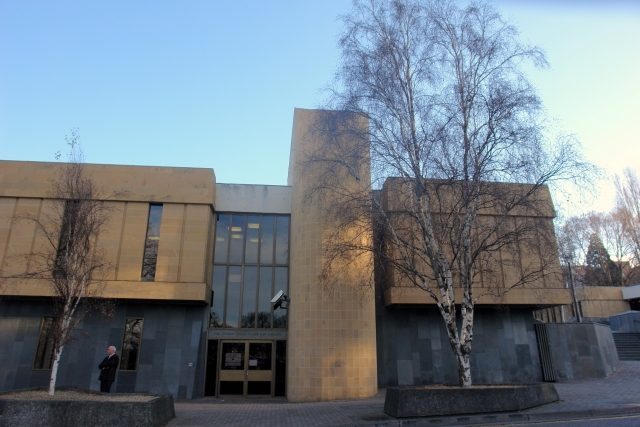
Gary Sauer-Thompson, Andrew Inglis Clark Library, Hobart, 2007
On Sunday I wandered around Battery Point, Hobart, looking for ‘Rosebank’, Clarke's home in Battery Point, but I could not find it. I didn't really know where to look. I did not even know whether it still existed. Latter I came across this website when I was at the Qantas Club and started exploring this 1902 text on the Australian nation.
August 26, 2007
Hobart snaps: traces of graffiti
I spent the morning and the early afternoon walking around the Hobart CBD as I crisscrossed my trail on Friday and moving onto the new territory of Battery Point.
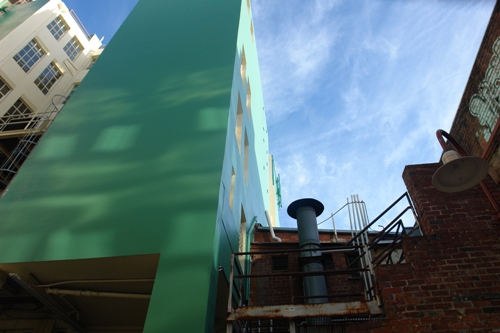
Gary Sauer-Thompson, Hobart graffiti, 2007
I started like any good tourist with a camera by taking in the City of Hobart Art Prize in the Tasmanian Museum and Art Gallery in Macquarie Street, Hobart. It is a unique art award, as the Prize is open to artists, craftspeople and designers nationwide, with the categories, for which the main prizes are awarded, change every year.
The categories for the 2007 City of Hobart Art Prize are Photography / Digital Media and Glass. The work in the exhibition was very diverse, good and interesting. I was most impressed.
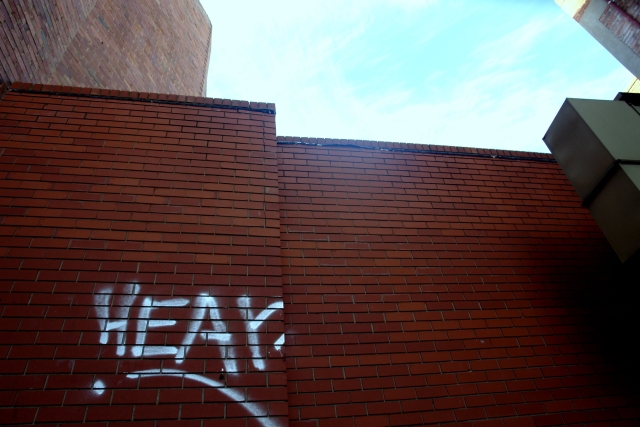
Gary Sauer-Thompson, Hobart graffiti, 2007
I came across a reference to the photographic work of Doug Thost, and his questioning of the iconic "wilderness" images of Tasmania that often ignore the elements of humanity that exist side-by-side with them.
August 25, 2007
Hobart snaps
I've been in an all day meeting and I'm tired. I have a work dinner to attend tonight. So no photography or reading has been done. So I'm posting a couple of images that I took as I was returning to the hotel on yesterday's excursion.
The ship dominates the wharf area:
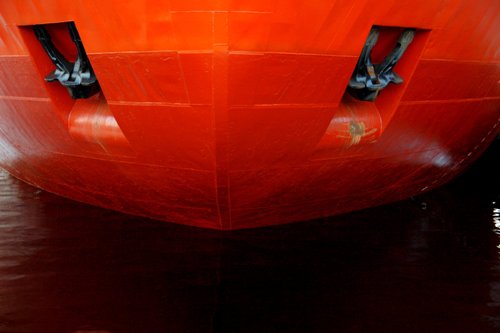
Gary Sauer-Thompson, Aurora Australis, Hobart, 2007
It was a lovely mild evening---so different from the cold that I experienced a month or so ago. I was all rugged up with a coat, whereas many of the locals were in t shirts or shirt sleeves.
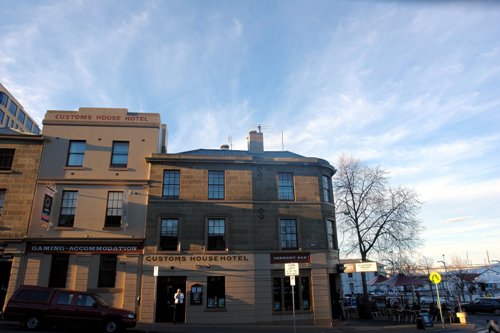
Gary Sauer-Thompson, Customs House Hotel, Hobart, 2007
It was just a moment of warmth the locals tell me. By Sunday it will be different.
August 24, 2007
Hobart snaps
I went wandering around Hobart town with a tourist map in my pocket after work with a camera. I had a lovely time. Hobart is a very beautiful city with its own island dynamic and street knowledge that life is more than work.
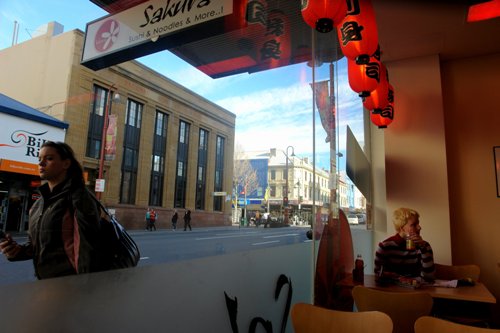
Gary Sauer-Thompson, Hobart cafe, 2007
Canberra seems a long way away here. Unlike Canberra people respond and interact with you if you want it. A smile instead of indifference and disdain. Life is more leisurely here. People enjoy themselves as people not just as workers living a life on the margins of work.
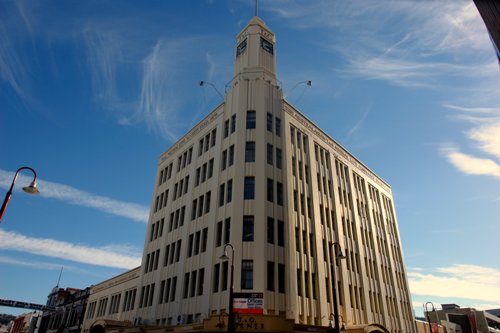
Gary Sauer-Thompson, T+G building , Hobart, 2007
The city was dominated by cars and trucks. There has been little attempt to roll back the car to let people wander. I kept on thinking of all the air pollution in the city. Surely the traffic can be directed to ring roads?
on the road to Hobart
I'm off to Hobart this morning on an early flight from Adelaide via Melbourne. I'll post a quick Hobart image before I catch the cab to the airport:
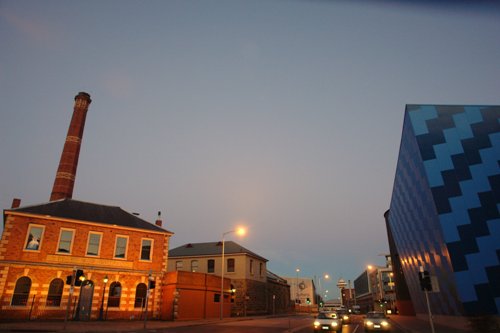
Gary Sauer-Thompson, Gas Company Hobart, 2007
I've taken the few moments in the Qantas Club in Melbourne between flights to look for wireless hotspots in Hobart. I am surprised by Hobart not being a wirelessed city. Unlike Adelaide, the free wireless hotspots are minimal. For some reason I thought that Hobart would be a wirelessed city--to give it a competitive edge in the global economy. However, not even the State Library is wirelessed.
What's happening? All the government's money going into subsidising Gunns and their pulp mill in Launceston? Is the state so caught up in the old resource economy that it is not willing to embrace the new knowledge economy?
I'm in the Hobart Qantas Club so that I can access broadband on their computers. I've discovered that only Sushi has a free wireless hotspot that allows me to use the laptop I'm carrying with me. So its off to the Old Wool Store Apartment Hotel
Update
Suprise suprise. The Old Woolstore Apartment Hotel has broadband access (cable and wireless) at $5.00 a day. What a welcome change from the standard $20-25.00 a day that most Australian hotels charge. So things are beginning to shift.
I'm back in the same wharf area of Hobart that I was here in July. I'm a block away from Hobart’s waterfront this time. An imag from last time:
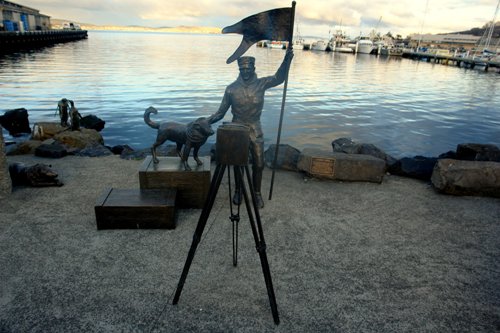
Gary SauerTthompson, public sculpture, Hobart wharf, 2007
I do not recall the name of the explorer. Nor can I remember what I did. I just remember the icy cold of dusk.
August 23, 2007
John Brack in Canberra
I see that the National Portrait Gallery in Canberra is have an exhibition of portraits by John Brack. I'll definitely go when I'm next in Canberra in early September, as Brack was a painter of modern life - he represented the starkness, shadows and i brooding self-reflection of Australian modernity:

John Brack, The Bar, 1954
This refers to a time long ago, when wowsers ruled the country and the pubs closed at 6pm. It is the world of my father and they knocked down the booze so fast after work that they drove home to the family meal drunk.
Brack has such a strong sense of form and colour even when doing portraits:

John Brack, Barry Humphries in the character of Mrs Everage, 1969, oil on canvas
His works are graphic, animated scenes of banal existence that allow for a larger, more complex critique.

John Brack, Collins St., 5p.m. 1955, oil on canvas
My favourites are the Shop Paintings from the 1960s, which represent the relationship between the observers looking in on a shop front; the dynamics of sealed-off, glassed-in occupants in the shop and the barricade that separates the observer from the occupants of the space.
August 22, 2007
David Lynch: Blue Velvet
I saw David Lynch's stylish 1986 "film noir" film Blue Velvet on DVD on the weekend. It is familiar to the terrain of Twin Peaks, as it explores the dark side of small hometown (Lumberton, North Carolina) that starts from the chance event of discovering a severed ear in a field.
Like Twin Peaks the self-conscious artiness appeals to the cinephile, as it is littered with quotations and allusions and it encourages us to identify these and interpret them.
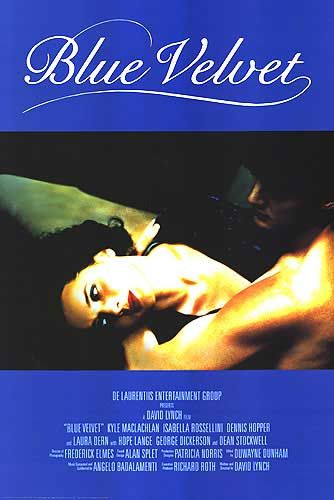 After we start with a death scene, we have a fragment--the ear in the field--that is the result of an act of severance, cutting, mutilation. We are presented with rotting flesh: an image that evokes feeling ie., sensation of revulsion and morbid curiosity.
The narrative is one of misogynist violence hidden beneath the veneer of idealised small town middle America: a parable about domestic violence in a patriarchal society shown through the eyes of an innocent boy/man who comes to enjoy voyeurism and rough sex.
What is presented is a tragedy about people living in a world of darkness and confusion and succumbing to violence and the desire to control others. The central male figure is an authoritarian character, a misogynist and a psychopath.
In this world of desire the law is instituted in the name-of-the-father who rules. Seduction, sadism and perversion go together and are part of a will to mastery and domination.
However, there is no coherent context or whole to the film as the text is self-consciously littered with part-objects and image fragments, within a duality of light and dark.
August 21, 2007
Jack Marx on Rudd +hot sex in New York city
Award winning Sydney Morning Herald journalist/blogger Jack Marx was sacked by Fairfax for publishing a satirical post on his Daily Truth blog, which imagined Opposition Leader Kevin Rudd reactions to hot sex in a drunken night in an expensive "New York strip club.
 \
\
Leahy
The veteran journalist is best known for an expose of actor Russell Crowe's extraordinary attempts to manipulate journalists. The article, “I was Russell Crowe’s Stooge”, was voted the best newspaper feature of 2006 at the prestigious Walkley awards for journalism.
The post that resulted in Marx's sacking is over the fold --just in case it disappears from Murdoch's archives. It is a good piece of writing from an experienced inhabitant of strip clubs. Marx should be celebrated not sacked.
There is more commentary by Ken at Club Troppo and Phil at Larvatus Prodeo.
The article that got Jack Marx sacked
Kevin Rudd "has no recollection" of a visit he made to a gentleman's club in New York in 2003.
This is unfortunate, for if one is going to put one's arse on the line by doing such a thing, one might as well afford oneself the luxury of being able to recall the experience if one so desires.
Fortunately for everyone, I've visited such establishments many times myself, and thus I believe I'll be more than capable of filling in the blanks with a few educated guesses, thus shaking the ball from the selfish grasp of Kevin's memory while, at the same time, providing the public with those saucy details so infuriating for being missing.
First, he would have sat himself down beside the stage - the one with the pole in the middle. There is restaurant in another part of the club, far from the nudity, and one could presumably argue that Kevin and friends went there. But let's be frank about this and assume that three pissed Australians weren't entering a strip club for soup.
A dancer would have emerged - perhaps blonde, perhaps brunette - in some manner of cocktail dress, a g-string underneath and clear plexiglass heels. Being that it was New York, September 2003, I'd say it's a fair bet the stripper's routine would have kicked off to Rock Your Body by Justin Timberlake.
The dancer would have begun with some general pole work; a few twirls here and there, leaning back, bending forward at the waist, that sort of thing. Nothing spectacular - not yet - just some gentle gymnastics to get the blood pumping. Perhaps she would have noticed the little man smiling at her from the edge of the stage, perhaps she didn't. But he noticed her, that's for sure. He couldn't keep his eyes off her. She was gorgeous.
The change in soundtrack, to, say, Gossip Folks by Missy Elliot, would have signaled to the dancer that it was time to start getting a bit better acquainted with the men at her feet - to make 'connections' with them that the men would want to pursue with private lap dances later on. And so the dancer would have begun to skirt the boundary of her little stage, engaging the men who looked interested as she went. At some point, she would have come to our Kevin.
On her knees, but still towering over him, she would have leaned forward and stared him square in the eye - a pout, a coquettish smile, a flutter of the lids. She'd have doubtless smiled back.
Leaning into his ear, she'd have told him her 'name', which would not have been Sharon or Therese, but Cheyanne or Loquita, or any number of exotic concoctions designed to hide the girl's true identity. The Australian politician representing his country would have told her his name was "Kevin".
The girl would have kept Kevin's eye as she balanced on her knees and elbows, arching her back so that he could see how lithe and flexible she was. Then, swiftly, she would have spun herself 'round in a scissor movement, one heel planting itself on the backrest of Kevin's chair, the other swishing through the air just above his head, causing his fringe to flutter, before planting itself on the other side. Here, spread-eagled on the edge of the stage, she would have arched her back, run her hands along the length of her legs and leaned into him, her hair cascading into his anxious loins.
Kevin would have smelled her - the silky perfume, the hint of sweat, the musky other. Perhaps, out of sheer drunken instinct, he'd have reached up to touch, her finger shaking in front of his eyes, firmly, but seductively. She would have whispered a gentle admonishment; he'd have felt her breath in his ear, seen her naked breast become the universe in his eye. His glasses would have fogged to near zero visibility as she nestled her bosom on the crown of his head, her breasts as saddlebags over the man's steaming ears. And, through the leaden swamp of drunkenness, to the sound of Tweet's Oops Oh My, an erection would have creaked to life in the trousers of the future Australian Opposition leader.
With minutes until her act were to cease, the dancer, now in but a g-string and heels, would have returned to her pole to close off her act with some swings and upside-down splits and things. At the edge of the stage Kevin would have remained, watching her now from afar until, with a flourish, the dancer would have gone. For just a moment, Kevin would have been crushed as any lovesick man, his heart going pitter-patter, the blood pulsing to his nether regions. For a time, he might have stalked the club in search of the girl who had seemed so keen. But a voice - perhaps belonging to another - would have told him it was hopeless, and to think of Therese.
Back at his hotel room, the shadow foreign affairs minister would have laid in the dark, thinking. He would have smelled her, felt her lingering touch still upon him, like that of some phantasmic seductress. Perhaps, if he were lying face down, he'd have begun a gentle humping, his pillow underneath as kapok mistress. Or perhaps, with closed eyes to the heavens, deliverance would have been at hand. Whether sleep came down before ecstasy we will never know.
And we will never know whether this version of events is close to truth or miles from it. For Kevin Rudd doesn't remember a damn thing.
Pity, that. Some details might have been interesting.
Jack Marx
winter colour
Last Friday I fled the Canberra winter, the flu, the cold workspace, and the sense of feeling enclosed in a valley for the sea and some winter colour in my old haunts on the Fleurieu Peninsula in South Australia:
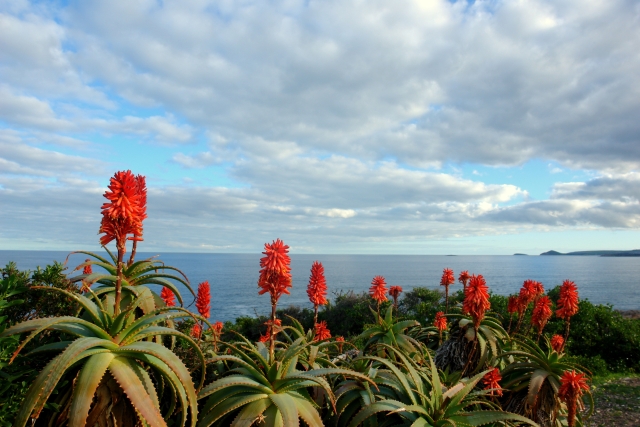
Gary Sauer-Thompson, Port Elliot, 2007
There I could recover from the winter and breathe in the sea and sky of the southern ocean. It was the space and colour that I longer for. This region was my roots and I could recover a sense of self that was more than nomadic.
I wanted to step away from my movement through space being positioned as a concrete, material realization of freedom.
Canberra has its own charms in a garden city sort of way and I enjoy being there:
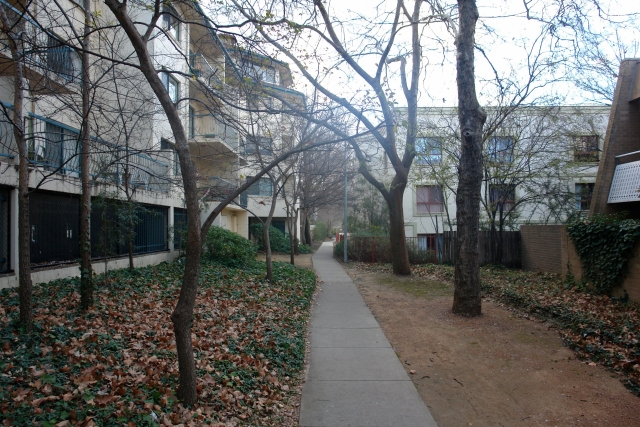
Gary Sauer-Thompson, walkway, Kingston, Canberra, 2007
But I was tired of this utopia—the good place—that is also a 'no place', because we dream about finding the promised utopia elsewhere. It's hard to explain.
technological optimism
Douglas Kellner in an article entitled Theorizing New Technologies writes:
The notion of the information superhighway and discourse of "surfing" or "cruising" the 'web or 'net carries connotations of fast travelling, of adventure, and of individual excitement and adventure -- connotations enhanced by the discourse of the "electronic frontier" with the connotations of exploration, the establishment of new communal spaces, and of being on the cutting-edge of the new. The metaphors of the 'net and 'web also point to connectedness, rhizomatic and multilayered levels of experience and texture, that naturalize and domesticate the highly artificial and complex technological worlds of the new computer networks.
The notion of a "friction-free" capitalism covers over the messiness, conflictedness, and suffering created from the reorganization of capitalism in which there are necessarily winners and losers, and tremendous pain from dislocation, downsizing, and economic downward mobility, uncertainty and anxiety.
That is what we experienced in the 1980s. Pauline Hanson expressed the cry of pain and anguish of the industrial working class who became Howard's battlers after 1996.
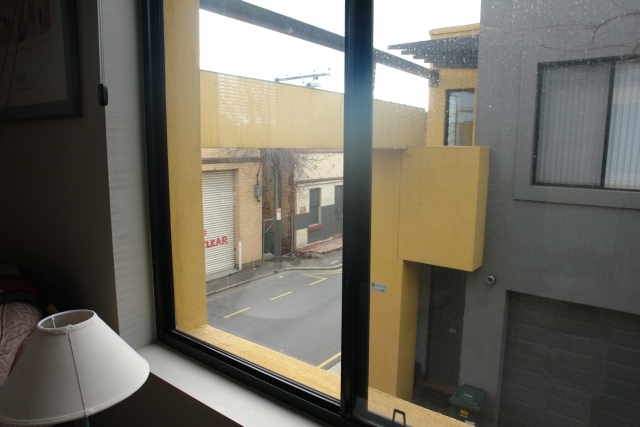
Gary Sauer-Thompson, Sturt Street, Adelaide, 2007
We feel that we stand on an abyss between life and death, and we realize that in general, there can be no friction-free capitalism: capitalism itself depends on competition, antagonisms, and what Schumpeter called "creative destruction." It's a sobering enlightenment and hard to handle.
What I experience is the road-weary, lonesome nomad strolling aimlessly and forlornly; raw and confused as I wander through the shopping malls
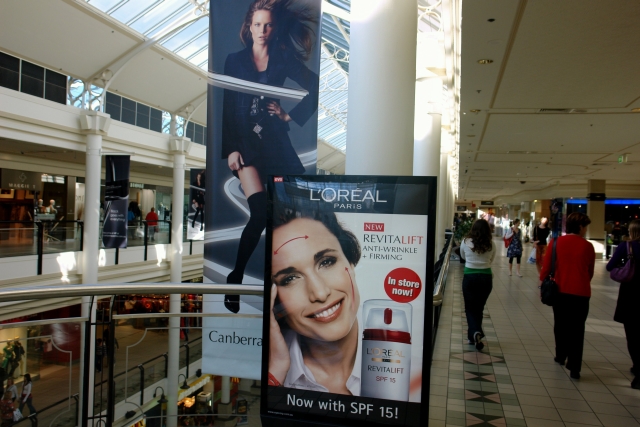
Gary Sauer-Thompson, Canberra Centre, 2007
The image is the only outlet for expressing my desolation as I struggles with a market-mechanism predicated on self-interest and a Darwinian logic of the survival of the fittest. That logic is most clearly expressed in the workings of the financial markets.
So we buy an ipod and listen to music on our own. It's our therapy, technological style.
Music is a way to patch the holes in our dream. Or is it two bottles of loneliness?
August 20, 2007
buses, planes cars
Another 'on the road post' based on life as a flow or movement through different spaces. It's a nomadic existence.
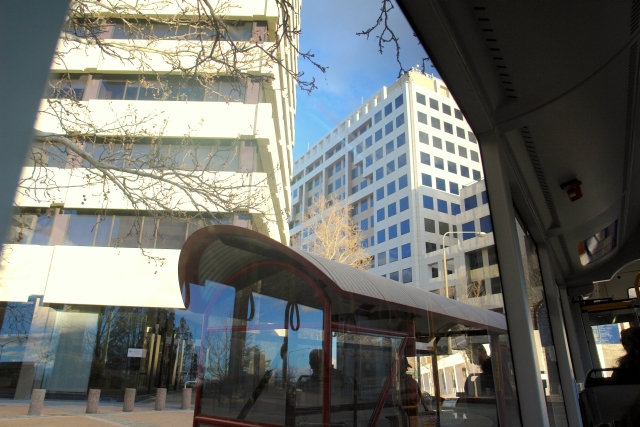
Gary Sauer-Thompson, Canberra bus, 2007
Home is now a state in between different periods of being on the road. Home used to be the solid roots from which I judged the violent effects and collateral damage of the global flows on a particular place. No more. I am now a part of the global flows in a country that is in transition; one that is increasingly placing an emphasis on competition, existential desires and individual initiative.
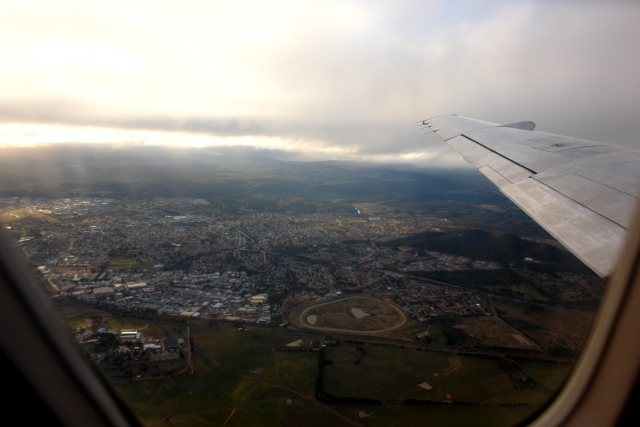
Gary Sauer-Thompson, Canberra, 2007
We are part of a state of complexity, chaos and velocity that is being transformed by the spread of markets and new technologies into fluid, transnational networks of power, money, information, people and goods that circulate in uneven and unpredictable flows throughout the globe.
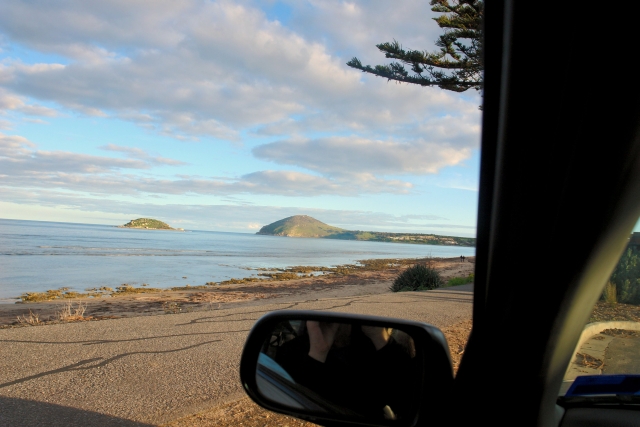
Gary Sauer-Thompson, Rosetta Head, Victor Harbor, 2007
Mr Rudd goes to New York
So a squeaky, clean Kevin Rudd hangs out in Scores, a "gentlemen's strip club" in Manhattan New York, gets drunk and can't remember what happened. Rudd, who was a guest of Col Allan the New York Post editor and was accompanied by Labor backbencher Warren Snowdon, was on a taxpayer-funded trip to the UN.

Bill Leak
The commentary in the mainstream media says that such stories humanise Rudd's nerdy, cyborg image. He's not just a talking head with a halo. He's human, all too human apparently.
Rudd's carefully constructed media image is that of a cautious, temperate, happily married family man. Presumably, one who suffers from hangovers when he momentarily loses control over things. The mask slips and we discover a good Christian family man hanging out in bar where women take their clothes off, and men pay big time to watch. It's called leisure for the likes of Col Allan.
The story surfaced in News Corporation’s Sunday tabloids written by Glenn Milne with lots of gossip about Rudd had been asked to leave the strip club after touching up the dancers.
August 19, 2007
an evening winter walk
Spring has come to Victor Harbor. It was so noticeable after returning from a fortnight in Canberra. The air was warmer, the spring colours were present, and the wind was not so cold. It was actually very pleasant walking in the late afternoon, just before the light went and dusk fell:
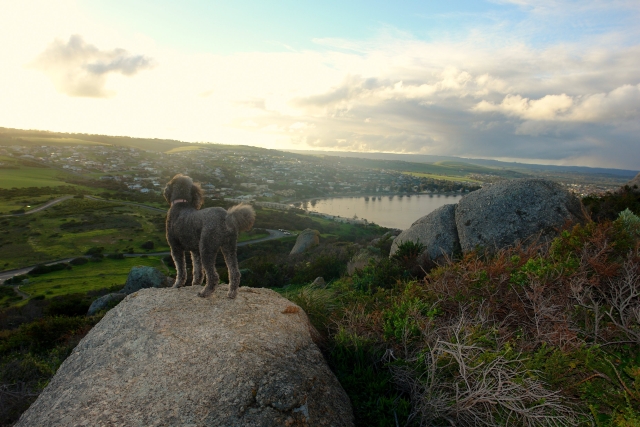
Gary Sauer-Thompson, Agtet Bluff, Victor Harbor, 2007
It was the yellow of the wattle that initially caught my eye, then the crimson of the Geraldton Wax, and then the pink of the Callistemons. The garden at the weekender in Victor Harbor was so rich in colour.
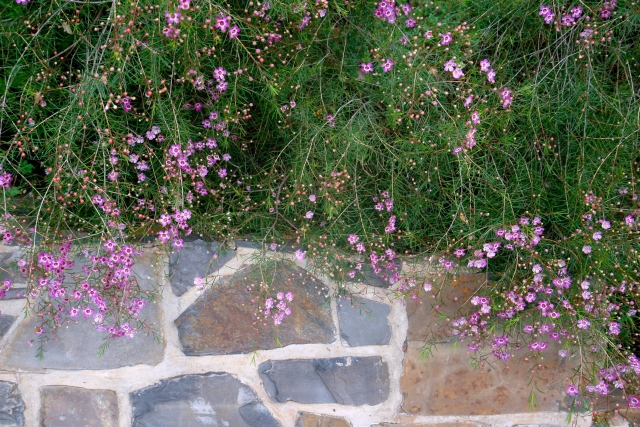
Gary Sauer-Thompson, Solway garden, Victor Harbor, 2007
There is little winter colour in Kingston, Canberra. Despite the spaces of and parks of bush Kingston is so European in feel--English oaks, willows and all that. It's all bare trees at the moment.
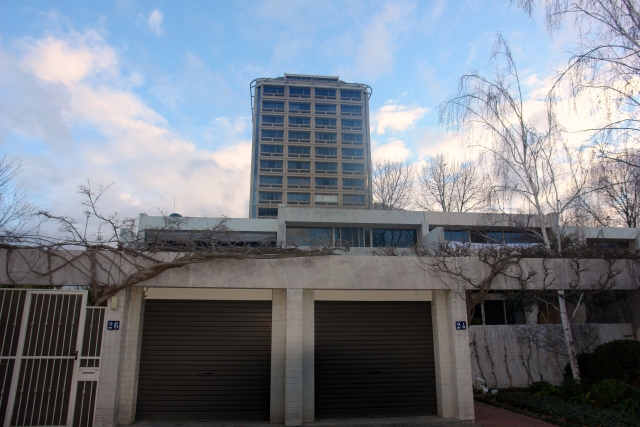
Gary Sauer-Thompson, Gosse Street, Kingston, Canberra 2007
Winter in Victor Harbor is so visually rich. It's a joy to be out walking there.
August 18, 2007
A quiet musical moment
The Grateful Dead play an acoustic version of Ripple" live on Halloween night at the Radio City Music Hall in 1980. The Radio City Music Hall evokes another era.
There are some nice piano lines floating around and embellishing the guitars. Some of the material from this gig surfaced on Reckoning, which initially surfaced in 1981. It had the rustic, folk-rock feel of the classic Workingman's Dead and American Beauty albums, although much of it consists of traditional and bluegrass material favored by Garcia.
August 17, 2007
empty public spaces
When I wandered out of the happy shoppers in the Canberra Centre I came across the public square of the official civic buildings --the art and political precinct of Canberra? I was the only person there. Even though Civic square is a non-commodified-- the cultural precinct of Canberra where the new library joins Canberra's theatres, museum and art gallery--- I found it an alienating experience. I was the only person there in this space outside the market.

Gary Sauer-Thompson, Public Library, Canberra, 2007
An empty public square, even though there was little wind and it was sunny. But no people. Was it because there was nothing to attract them, as the public library, Playhouse theatre and the Canberra Art Gallery + Museum were closed. So there was no reason for people to hang around the square. Even the water fountains were not moving. This was no piazza.

Gary Sauer-Thompson, David Jensz's Fractal Weave, Canberra, 2007
The public spaces have been commodified as shopping centres. It's the centres that are the vibrant place in the heart of the city. They speak to us in a seductive language: "good life" is not a matter of having a well-defined list of status goods now possessed by wealthy television personalities. It is an open-ended project of self-creation. The idea is to circulate continually through new experiences, things, and meanings--to play with different identities by consuming the goods and services associated with them. The market promotes a sense of freedom from constraint, an ultimate individuality through commodities.
August 16, 2007
Canberra snaps: mural
I'm due to fly back to Adelaide tomorrow morning and so I will have a desktop PC to use whilst the overheating Toshiba laptop is being fixed. This is the third time the laptop is being returned to have the cooling module looked at or repaired.
So I've posted a few murals I came across around the mall and Canberra Centre area of the CBD when I was looking for graffiti or rather murals, Canberra style.

Gary Sauer-Thompson, Canberra mural, 2007
I do not know the artist. Nor do I know much about the mural or its history. It appeared to be a sequence of images:

Gary Sauer-Thompson, Canberra mural 1, 2007
This work is hard to quickly dismiss as vanity publishing. Will it be regarded as a significant cultural expression? ArtsACT is not much help.

Gary Sauer-Thompson, Canberra mural 2, 2007
August 15, 2007
Canberra Snaps: Canberra Centre
I discovered that the crowds in Canberra 's CBD last Sunday were flocking to the new Canberra Centre to shop:
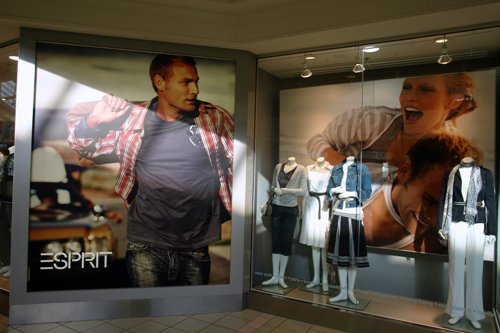
Gary Sauer-Thompson, Canberra Centre, 2007
Shopping has become a leisure time activity. Our leisure---or free time---has been thoroughly commodified. The apparent separation of work and free time is maintained because free time is needed for recreation. We restore ourselves for work.
Our mode of subjectivity is increasingly shaped by the fashion industry.
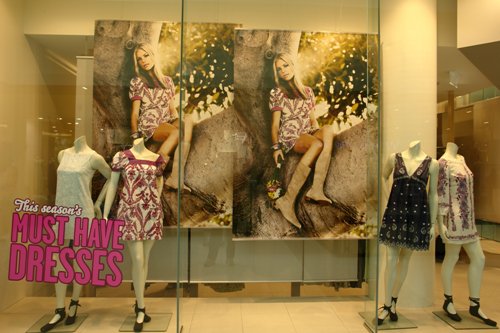
Gary Sauer-Thompson, Canberra Centre 1, 2007
The Canberra Centre's shaping of our subjectivity is done through seduction--- we are enticed by the 'exceptional contemporary shopping experience in a sun-filled, relaxed and friendly atmosphere'.
August 14, 2007
Canberra snaps: CBD
As I mentioned in the previous post I wandered around Canberra's CBD on Sunday afternoon taking the odd photograph. This area seemed to be walkable one in a city literally driven by the automobile. Clearly the fluidity across fashion, art, music, and design---the cultural economy--- was not there in Kingston or Manuka.
I was on the lookout for the creative industries like fashion, art, and music that drive the economy of Canberra as much as--if not more than--finance, real estate, and law. Did they exist? Is art and culture a meaningful part of an urban, regional, economy?
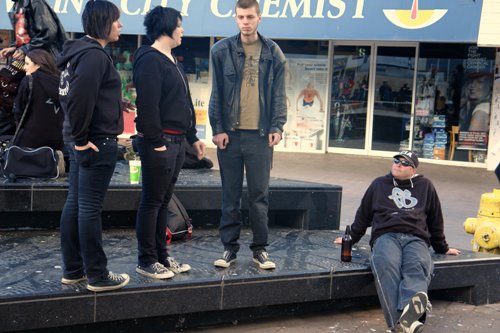
Gary Sauer-Thompson, Christians, Canberra 2007
A Korean Christian rock band was playing in the mall and the audience was small. This was the main event in the mall. Though the shops were open there were few people around. An few couples strolled by, a dog wandered around looking for food, and an odd family or two hung around.
Where was everybody I wondered? Where is the urban life in out capital city? Is it just a bureaucratic city? Where was the grungy rock club that launches the best new bands?
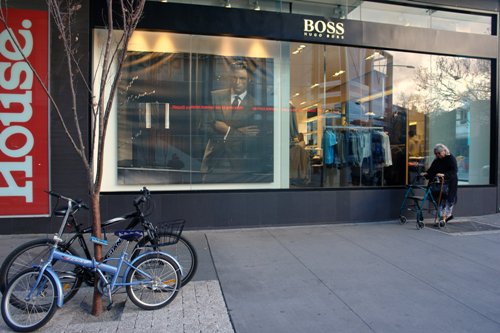
Gary Sauer-Thompson, Canberra CBD, 2007
I followed the movement of people through the mall to the more modern part of the CBD---the new shopping precinct. There was more life here. It felt more urban than the strange mall. I had to yet to find the creative industries fueled by the social life that whirls around the clubs, galleries, music venues, and fashion shows where creative people meet, network, exchange ideas, pass judgments, and set the trends that shape popular culture.
Would the graffiti artist also work for an advertising agency? Where woud I find the cultural clustering in the broader “downtown scene”?
August 13, 2007
Canberra snaps: city
This is the hazy view of Kingston I have when I'm waking up in Canberra. There is a touch of spring in the air at the moment. I'm sure the fog and the cold will return.
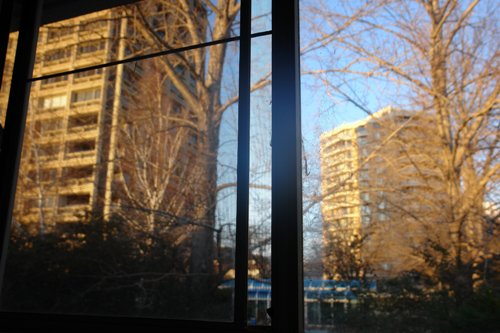
Gary Sauer-Thompson, bedroom view, Canberra, 2007
I'm tired of walking around Kingston and Manuka. There is little there to see. However, I don't have any transport and Canberra is a classic car based city. Public transport is rarely used, and the bus stops are hard to find. Since it is the only transport option I have, I caught the big orange bus bus from Kingston to the city--CBD.
I had decided to do a 'from the bus series' of photos. I'd just buy a days ticket, go where the bus took me and jump off when something caught my eye, walk around taking photos, and then catch the bus again. A nomadic existence.
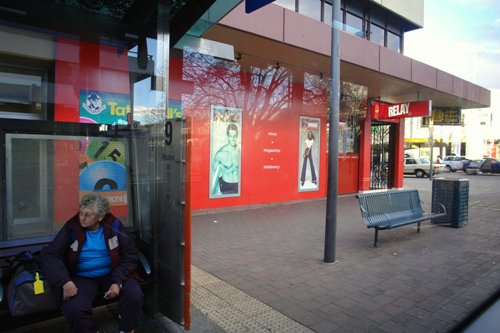
Gary Sauer-Thompson, Canberra bus, 2007
The bus trip was quite interesting. The bus wandered all over the place on the way to the city. It was so much better than catching a cab and a lovely way to see the city between Kingston and the CBD. The bus stopped outside Harry Seidler's old (1970-74) but elegant Trade Group Office, which is now heritage listed:
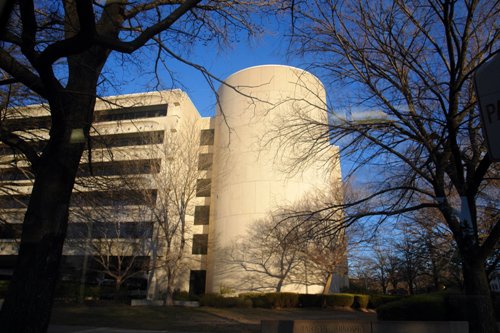
Gary Sauer-Thompson, Edmund Barton Building, 2007
The journey indicated how much Canberra is dominated by the commonwealth bureaucracy. What do the bureaucrats do on the weekend I wondered. Dash off to Sydney to shop? Go to Bateman's Bay? Hanging out in the independent galleries? Sitting at home watching the big TV. Chatting with friends in the local cafes?
August 12, 2007
Canberra snaps: Manuka
In her Chic Theory article in the Australian Humanities Review Joanne Finklestein explores the idea that when
we encounter one another in the anonymous sphere of the public domain, our clothes become garrulous and disclose desires, beliefs, even secrets. It makes sense to her to use appearances to mark culture, gender, class, religion, sexual proclivities.
She says that if mapping personal identity and values onto physical appearances in this unmediated manner seems simplistic, it is a widespread cultural practice.
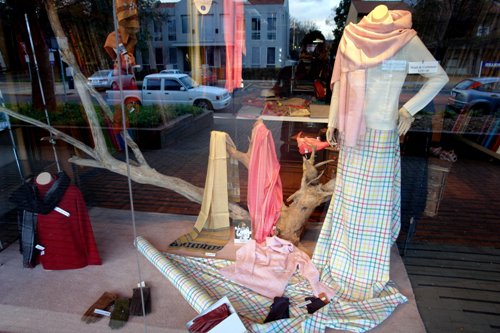
Gary Sauer-Thompson, Kingston, Canberra, 2007
It's less personal identity and values and more cultural identity and values---as in this look in this shop window is middle class and conservative. These are codes of taste, social location, and subjectivity of social identity.
Is it as Simmel, suggested, that we can interpret appearances and specifically fashion as a means of protecting individuals from a sense of being ground-down, levelled out and overwhelmed by the overarching socio-technological mechanism that is the metropolis.
We do have the transformative properties of fashion. Urban fashion provides a means of acquiring multiple lives, which works best in a social climate saturated with commodities, each of which is infused with promises of new sensations and new opportunities.
In Canberra we have stylish imagery in shop windows in upmarket Manuka coupled with the crass vulgarity of the public sphere that we move though to access the chic look.

Gary Sauer-Thompson, Manuka Court, Canberra, 2007
What we have is a smart shopping centre with its clothes shops, book shops, restaurants and public squalor in the piazza's that are not designed as squares for people intermingling with on another and meeting friends. There is little sense of being ground-down, levelled out and overwhelmed by the metropolis here.
But then Canberra is not a metropolis is it. Take away the overlay of federal Parliament and we are left with a country town, albeit a very affluent one.
August 11, 2007
The cultural conservatives are decrying the internet for its porn, gambling and the way living a virtual reality disconnects us from from others and turns us into self seeking exhibitionist individuals. The politicians are embracing the internet with their videos on YouTube and KevinO7 with gusto and exuberance:
What is more interesting is the way the hip upscale professionals in their 30' and 40's are turning to
Facebook has buzz.These professionals are using it to build their social capita by reaching people in a personal way that's not too invasive, and so grease the connections for interaction.
So I guess that you could use Facebook to critique and respond to current architectural and urban issues in a specific region. For instance, Facebook could be used by people in Adelaide or Canberra as a forum to provide up-to-date information on new building proposals as well as architectural endeavors that have recently been approved, built, or that are currently under construction.
Or it could be used to criticizing the city's approach to urban development and the role of architecture in defining Adelaide or Canberra's culture and peoples.
Urban Light and Magic
Cars are as transient as graffiti in an urban environment, and like graffiti are often just as unwelcome in cities. Yet the automobile defines the urbanscape as heavily as it does suburbia. Consequently it is not unusual for car art to take the form of being immersed in urban industrial structures and bathed in the highly directional fluorescent street and parking garage light. Almost as if it is being birthed.

August 10, 2007
Friday dog blogging #6
The series continues
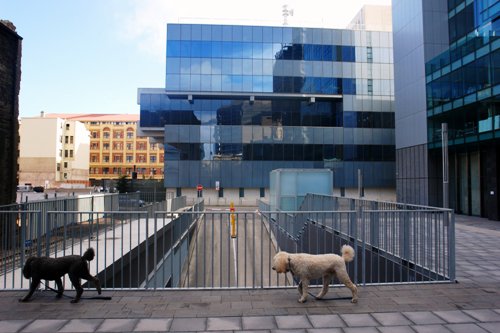
Gary Sauer-Thompson, urban dogs, Adelaide 2007
It's not just photographers exploring the city. What we have is the reappearance of nature in the modern city that is premised on repudiating nature ---the city as a mode of life stands for the human mastering over nature through science and technology. Dogs are increasingly seen as wild beasts with big fangs who maul vulnerable humans--as wolves.
In the tabloid's view of contemporary life this is wild nature that is fearful. It arouses hostility in the urban population, and a law and order approach is taken. Things must be locked down. A firm hand is required.
August 9, 2007
urban images + cultural conservatism
This graffiti image is just down the road from where I live in Sturt Street in the south west of the CBD of Adelaide. It's down a little lane consisting of a bunch of warehouses, car repair shops, and boarded up buildings. They will eventually be replaced by townhouses for young professionals and retirees.
This is an area in the process of redevelopment, in which the old trades give way way to the new service industries: lawyers, accountants, graphic design, financial companies.

Gary Sauer-Thompson, Graffiti, Adelaide CBD, 2007
Cultural conservatives would argue that I'm wasting my time taking photos of graffiti and interpreting them. This implies that I've embraced postmodernism wherein all texts or images are equally worthy of study, whether they are Patrick White novels or bus tickets, Heidelberg School paintings, advertising or graffiti. Such texts or images, these conservatives argue, are no longer evaluated for their moral or aesthetic value, but for their politics or ideology.
An editorial in todays Australian newspaper states this position in relation to literature:
Texts are no longer studied to reveal their moral or aesthetic value, they are "unpacked" or "decoded" to expose perceived racism, sexism and the exploitation of "victims" by the hegemonic classes. This ideological approach means that even if students do study anything from the canon of great literature it is through the jaundiced eye of left-wing politics, turning a deaf ear to the musicality of language or the aesthetics of beauty. It is extraordinary that at a time when young people feel more freedom to express open pride in their Australian identity they are not being exposed to what our greatest writers and poets have to say about being Australian.
Why should we evaluate images in terms of an aesthetics of beauty? Why not the ugly? Works by Goya are not beautiful. Or the sublime--the horrors at the heart of things? So why beauty, rather than the ugly or the sublime, then? Why concentrate just on high art paintings in our art galleries when we are surrounded by images (eg., advertising and graffiti) in our daily lives and need to learn how to critically read them?
The Australian's response is not persuasive. All that it says is that students have a right to see Australia through the eyes of our greatest painters, poets and (presumably, artists.) This is a defence of high culture in opposition to mass or popular culture, with the latter being rejected as kitsch, junk or trash.Yet it is the latter contemporary images that speak to me today about living in Australia than this kind of picture:
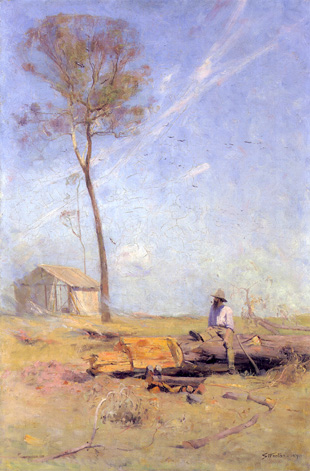
Arthur Streeton, Selectors Hut: Whelan on the Log, 1890, oil on canvas
That's colonial Australia of the past --before it became a nation. It refers to an Australia of a hundred years ago, not the urban Australia today that is plugged into the global world with its culture formed by global advertising.
August 8, 2007
broken dreams
My portable Toshiba computer is playing up (the fan is not working). As it is all I have in Canberra for the fortnight that I am here, I can only work online for short periods. So there will be few extended posts.
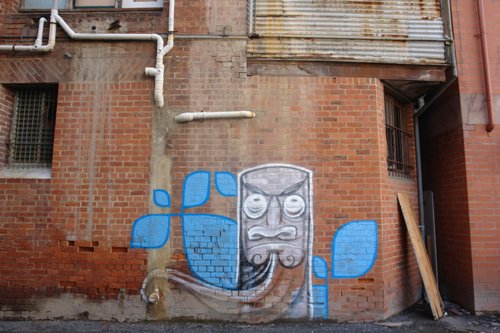
Gary Sauer-Thompson, Adelaide CBD, 2007
There is a lot of urban decay in the CBD--blocks of old warehouses and factories that look as if they go back to the nineteenth century. They indicated the lack of growth in the CBD during the 20th century once the boom of the 1890s had gone bust. The suburbs developed during the 1950s and 1960s but large parts of the CBD remained unchanged.
Walking around exploring these areas of decay its impossible not to experience the broken dreams and lives gone sour. Yet the promise of a better life had once been so great. Now we are haunted by the ghosts of the past and this street art expresses the cry of pain of stunted lives in a provincial city.
This is reading these kind of street images critically. Cultural conservatives, who rage about postmodernism, counter culture and poststructuralist philosophies entering the university and school, dislike the emphasis on critical analysis in the study of literature and art and pictures and consider it inappropriate. They--eg., Kevin Donnelly -- view it through the frame of the culture wars, political correctness (left-wing bias) and the falling standards and dumbing down of education by progressive (cultural left) educationalists.
Literacy has been broadened to a social-critical literacy that critically interprets all kinds of texts and images has transgressed the horizons of traditional approach to literature and the arts that is based on teaching students to read with sensitivity and discrimination and to value the aesthetic and ethical value of the classics. The aesthetic here is about valuing literature and art for its own sake; places the author centre stage; holding that literary texts have something lasting and profound to say about human nature and those existential challenges that define who and what we are; and that words and images have an agreed meaning in a common culture.
August 7, 2007
A bush capital
I'm back in Canberra, so a snap of Parliament House in Canberra, which was opened in 1927. It is now known as Old Parliament House. It has a modest but dignified presence and is the definitive symbol of the nation's political heritage:
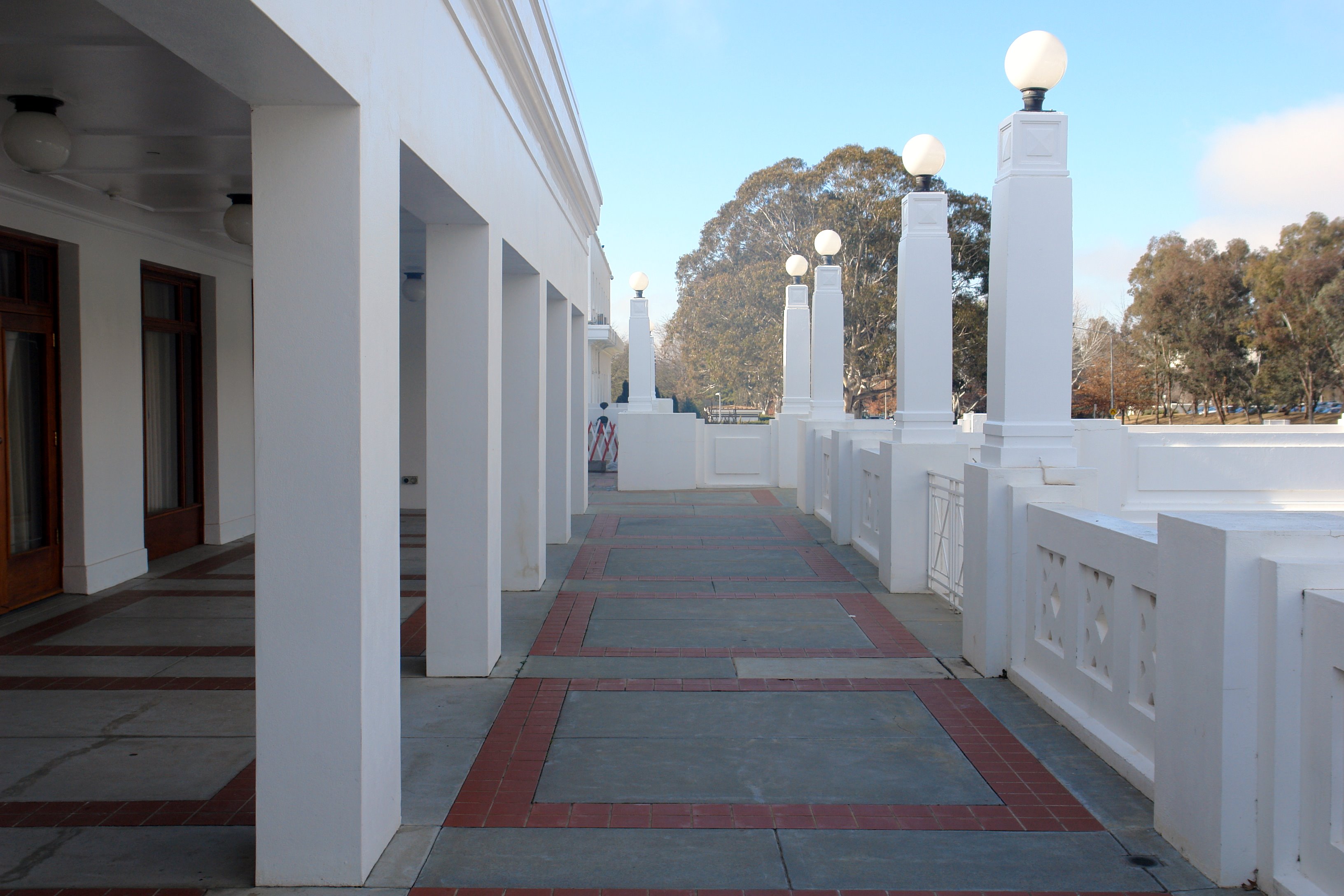
Gary Sauer-Thompson, Old Parliament House, 2007
The building, which is the work of John Smith Murdoch (the Commonwealth's first government architect), sits in the cultural landscape known as the "Parliamentary Triangle" reflecting the design for Canberra by Walter Burley Griffin, in which Kurrajong Hill - now Capital Hill -was the focal point. From it, the main avenues of the city radiated outward, as did the city's principal axis - the Land Axis - to Mount Ainslie.
Lying astride the Land Axis, Griffin's Government Group of buildings occupied one corner of the triangle formed by Commonwealth and King's Avenues and the central basin of his ornamental lake. The apex of the triangle rested on the Hill. The position of Old Parliament House near the apex symbolises the primacy of the parliament over the executive and judiciary.
The internal courtyards and open gardens between the building and Lake Burley Griffin uphold the "garden city" ideal.
August 6, 2007
Adelaide---bouncing back?
I walked around the Adelaide CBD yesterday afternoon. There are a lot of new buildings going up at the moment --a mini-boom you could say. This is such a contrast to the lack of development from the end of the 1980s--the end of the last national boom. Adelaide was the place to escape from in order to find work and to live a more fulfilling life.
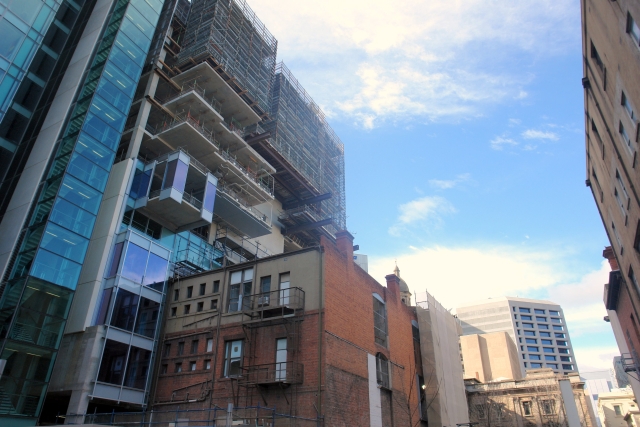
Gary Sauer-Thompson, development, Adelaide, 2007
This regional urban space is deemed to be an unremarkable, and even a constraining force, according to the global adverts (eg., the 4 wheel drive ads) which promise excitement, stimulation and empowerment, if we travel to new, exotic and unfamiliar spaces. According to the adverts we daily live in the spaces of our urban neighborhoods and surburban communities that are deemed to be diminished and unremarkable and provincial.The latter offer dreamworlds of promotional culture and exciting experiences elsewhere.
Car advertising invokes the fantasy of leaving behind the constraints of a crowded, mundane and polluted urban environment for the wide open spaces offered by a nurturing nature.
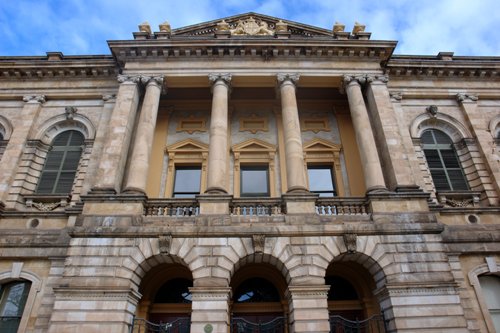
Gary Sauer-Thompson, Supreme Court, Adelaide, 2007
The flip side of the denigration of urban life-- our-imprisonment within the spaces of the everyday life--- is the idealization of nature (and the technology to get us 'there') as the antidote to the mind-numbing boredom of daily life. Invoking nature (spectacular wilderness terrain) as the endpoint of vehicular travel confirms the belief that spatial mobility can offer access to places, experiences and events that are fundamentally different (eg., the visual splendour of the natural landscape).
In the Arcades Project Benjamin remapped nineteenth century Paris as a primeval, phantasmagoric landscape in which humanity once again slumbered under the spell of myth and nature. Horkheimer and Adorno developed this constellation of ideas as one of the principle organizing motifs of Dialectic of Enlightenment: "It is as if," they write, "the final result of civilization were a return to the terrors of nature" (p.113). So we have dystopian nightmares of frightening and dangerous spaces that threaten our safety, security and well-being.
But the adverts says that the 4wheel drives protect us from the sublime forces of nature.
August 5, 2007
street art in a global world
An example of expressionist street art in Adelaide that can be counterpoised to the world of mythic dreamscapes constructed by global advertising

Gary Sauer-Thompson, Graffiti, Adelaide, 2007
The advertising of global corporations does more than provide deeply ideological explanations of what space is and how it should be organized: it also implicitly offers normative models of how we might orient ourselves towards and engage with our spatial surroundings.
the woes of a literary culture
Sven Birkerts puts some of his worriesabout the decay of print culture and literary criticism in a digital age in an article entitled Lost in the blogosphere, in the Boston Globe. This expresses what many in the literary world currently feel and think about blogging. He is not simply sayingthat newspapers are reducing the space allotted to literary criticism or too many people on the Web are writing about books.The frame is one of a threat to literary culture and lost cultural forms.
Birkerts identifies himself as a man of print, shaped by its biases and hierarchies, tinged by its not-so-buried elitist premises, then adds:
My impulse is to argue that if the Web at large is the old Freudian "polymorphous perverse," that libidinally undifferentiated miasma of yearnings and gratifications, unbounded and free, then culture itself -- what we have been calling "culture" at least since the Enlightenment -- is the emergent maturity that constrains unbounded freedom in the interest of mattering. But this "mattering" requires the existence of a common ground, a shared set of traditions -- a center which is the collectively known picture of private and public life as set out by artists and thinkers, and discussed and debated not just by everyone with an opinion, but also most effectively by the self-constituted group of those who have made it their purpose to do so. Arbiters, critics . . . reviewers.
I'm not sure what 'mattering' means. Something to do with hierarchy, canons and cultural authority I guess; something that points to the Mathew Arnold tradition with its centre of cultural excellence (eg. [culture is] the best which has been thought and said' in Culture and Anarchy), which fills the void left by the decline of Christian religion.
The blogosphere, Birkets argue, works in the opposite direction. Though there are arbiters aplenty -- some of the smartest print writers are active on blogs as well -- the very nature of the blogosphere is proliferation and dispersal; it is centrifugal and represents a fundamental reversal of the norms of print culture.
Proliferation -- the chaos of the endlessly branching paths -- is one crucial structural difference between the print and digital realms. Never mind that the Web has swallowed vast archives of print material; we are also seeing a significant shift in the nature of the discourse itself. Blogs and on-line journals do not simply transfer old wine into new bottles -- the wine itself is changing.This is true. What then is the wine becoming? Birkerts says the implicit immediacy and ephemerality of "post" and "update," the deeply embedded assumption of referentiality (linkage being part of the point of blogging), not to mention a new of-the-moment ethos among so many of the bloggers (especially the younger ones) favors a less formal, less linear, and essentially unedited mode of argument. Many of the blogs venture a more idiosyncratic, off-the-cuff style, a kind of "I've been thinking . . ." approach.
Fair enough as an account to the way the wine is changing. Birkerts interprets this change in terms of the difference between amateur and professional. What we gain in independence and freshness he says we lose in authority and accountability. So It's freedom versus order issue. Birkerts adds:
I'm talking about print reviewing here. For as exciting as the blogosphere is as a supplement, as a place of provocation and response, it is too fluid in its nature ever to focus our widely diverging cultural energies. A hopscotch through the referential enormity of argument and opinion cannot settle the ground under our feet. To have a sense of where we stand, and to hold not just a number of ideas in common, but also some shared way of presenting those ideas, we continue to need, among many others,
Mathew Arnold resonates through this. Freedom is being able to do what you want; it is an error which leads to anarchy.
August 4, 2007
urban despair
This kind of imagery stands in stark contrast to the glossy advertising promoting the brand identities of corporate giants such as Microsoft, and Nike. These global images speak less to the features of any particular good or service and more to the virtues of capitalism itself as a revolutionary economic force that brings radical social, political and technological change in its wake.
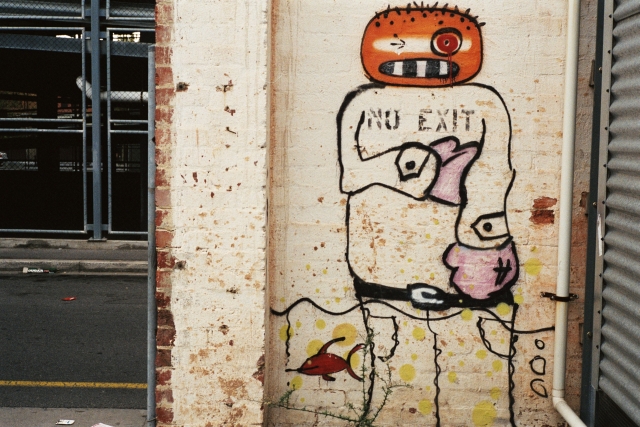
Gary Sauer-Thompson, no exit, Adelaide, 2007
The advertising imagery of global capitalism presented the world as a space of growing complexity, chaos and velocity, transformed by the spread of markets and new technologies into fluid, transnational networks of power, money, information, people and goods that circulate in uneven and unpredictable flows throughout the globe.
Such an fluid order is represented as opening up tremendous opportunities for profit and success to those willing and able to adapt themselves to the exigencies of this new world order.
August 3, 2007
Friday Dog blogging #5
The series continues:

Gary Sauer-Thompson, Ari + Agtet, Victor Harbor, 2007
I'm not sure what the convention means. Does it matter? It seems to? Why? Is it the reappearance of the personal in the public sphere? The appearance of animals in human lives? I suspect that it is the latter, as living with animals expresses the breakdown of the modern divide between animals and humans.
August 2, 2007
Melbourne Docklands goes avant garde
I see that Iraqi-born, London-based Zaha Hadid is designing a Melbourne landmark for the Melbourne Docklands. Hadid will oversee the design of a spectacular $1.5 billion scheme earmarked for Collins Street by Middle Eastern investment company Sama Dubai. This will be Australia's greenest and most expensive office and housing complex.
The images of the proposal are not online. A pity. In 2004 Zaha Hadid won the prestigious Pritzker Prize for Architecture. Some examples of Hadid's work:
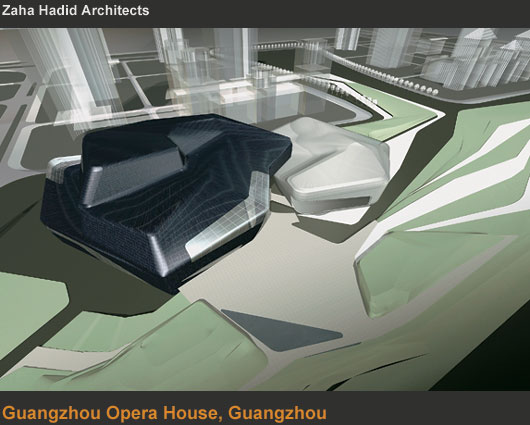
Zaha Hadid consistently pushes the boundaries of architecture and urban design. Her work experiments with new spatial concepts ranging widely from urban master planning to products, interiors, and furniture. She is widely known as one of today’s most innovative architects, consistently testing the boundaries of architecture, urbanism, and design.
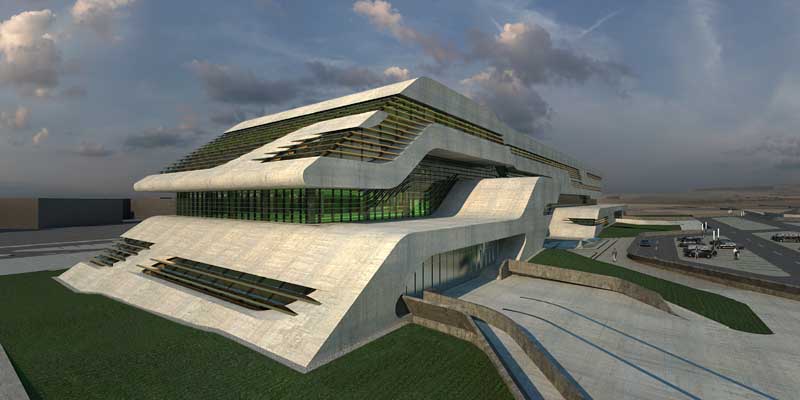
’Pierres Vives building’ of the Department of Herault in Montpellier
The building is a unique combination of three civic institutions - the archives, the library and the sports department - within a single envelope.
August 1, 2007
it's a messy world
Someone mentioned Facebook in passing in a recent conversation. What is Facebook?, I asked. You don't need to know, they responded. Someone quipped that it's about the mass exhibitionism of the "Facebook Generation" of Web 2.0, who text-message during class, talk on their cellphones during labs, listen to iPods and post their diaries and personal stories on YouTube.
So now I know. Facebook is a social networking website that connects people through social networks at educational institutions. So why the fuss?
Well, Facebook is a Janus-faced symbol of the online habits of students that undermine the traditional objectives of higher education, one of which is to inspire critical thinking in learners rather than just multitasking.
But it goes deeper than this.
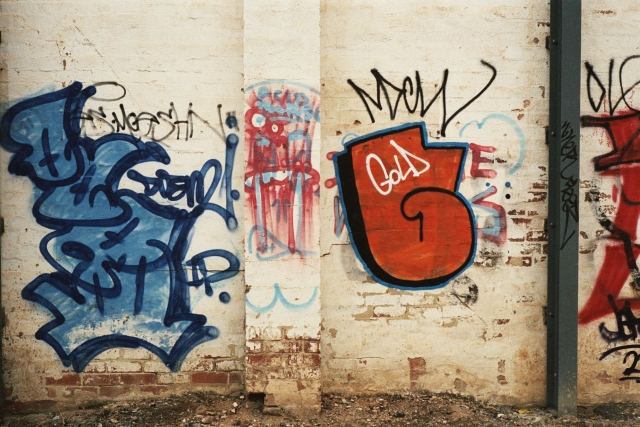
Gary Sauer-Thompson, messiness, Adelaide, 2007
Radio National Breakfast interviewed Andrew Keen, an English digital media entrepreneur and Silicone Valley insider, who has written widely on digital culture. His new book is called The Cult of the Amateur: How Today's Internet is Killing our Culture and assaulting our Economy.
Keen argued against the rise of the "amateur" because of the harm -- economic, social, cultural and political -- we amateurs will cause. Without "standards," without "taste," without "institutions" to "filter" good from bad, true from false. The Internet, Keen argues, is destined to destroy us. The 'amateur' was assumed to be a hobbyist who does not make a living from his or her field of interest and lacks credentials.
These dabblers have broadband access and they have become bloggers and digital photographers. What is created is not as great as what the professional creates, as we are developing our capacity to create.You could feel the professionals distaste for us amateurs. We need canons and experts to help sort the high quality stuff from the junk.
Keen's views were presented with little by way of criticism from the presenter-- Geraldine Doogue---- even though one of Keen's examples of the harm caused by bad amateurs was Wikipedia! The talk was of cultural conservatism and the defence of a modernist ontological order without even mentioning the postmodern view that, in the cyberworld we now inhabit, everything is disordered.
The digital world is messy, like it or not, and it’s only going to get messier as the Web destroys the modernist hierarchical rules, rule-makers and experts and so flattens our culture.
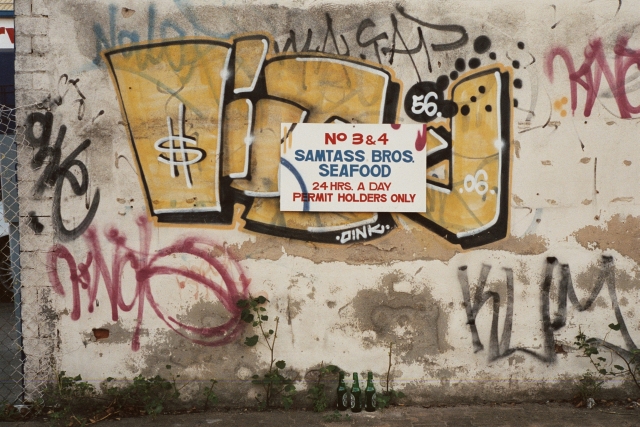
Gary Sauer-Thompson, messiness #1, Adelaide, 2007
Nearly every field of human endeavor presupposes hierarchy, and every hierarchy is under assault from the Internet, which is revealing both the biases presupposed by our classificatory systems and discloses a new kind of knowledge that more faithfully represents the messy, linkages of the meanings flows in cyberspace.
Hence the fights being waged today over whether bloggers are real journalists, or whether Wikipedia is a real encyclopedia, express the resistance to the messy and disordered l meaning that the Internet's users infuse its pages with.
So the contrast is actually between the Wikipedia entries that require further attention or editing by the community and the self declared indisputable authority of traditional media like the New York Times or the Encyclopedia Britannica.