|
August 8, 2007
My portable Toshiba computer is playing up (the fan is not working). As it is all I have in Canberra for the fortnight that I am here, I can only work online for short periods. So there will be few extended posts.
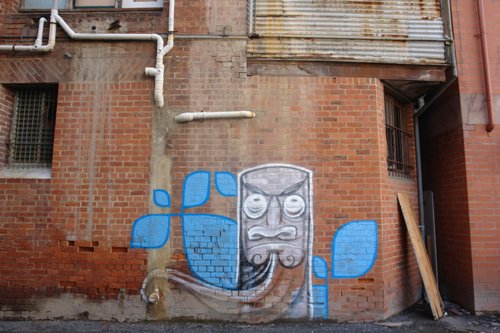
Gary Sauer-Thompson, Adelaide CBD, 2007
There is a lot of urban decay in the CBD--blocks of old warehouses and factories that look as if they go back to the nineteenth century. They indicated the lack of growth in the CBD during the 20th century once the boom of the 1890s had gone bust. The suburbs developed during the 1950s and 1960s but large parts of the CBD remained unchanged.
Walking around exploring these areas of decay its impossible not to experience the broken dreams and lives gone sour. Yet the promise of a better life had once been so great. Now we are haunted by the ghosts of the past and this street art expresses the cry of pain of stunted lives in a provincial city.
This is reading these kind of street images critically. Cultural conservatives, who rage about postmodernism, counter culture and poststructuralist philosophies entering the university and school, dislike the emphasis on critical analysis in the study of literature and art and pictures and consider it inappropriate. They--eg., Kevin Donnelly -- view it through the frame of the culture wars, political correctness (left-wing bias) and the falling standards and dumbing down of education by progressive (cultural left) educationalists.
Literacy has been broadened to a social-critical literacy that critically interprets all kinds of texts and images has transgressed the horizons of traditional approach to literature and the arts that is based on teaching students to read with sensitivity and discrimination and to value the aesthetic and ethical value of the classics. The aesthetic here is about valuing literature and art for its own sake; places the author centre stage; holding that literary texts have something lasting and profound to say about human nature and those existential challenges that define who and what we are; and that words and images have an agreed meaning in a common culture.
|


