March 30, 2012
Joseph Lycett: saltpan, Tunbridge
Whilst I've been staying in Tunbridge and photographing the region I've been digging into the history of representations of Tunbridge and the Tasmanian Midlands. Martin Walch mentioned this one of the Landscape of plains around present-day Tunbridge looking north.
 Joseph Lycett, Salt pan plain, Tunbridge, Van Diemen's Land,1824, etching and aquatint, printed in black ink, from one copper plate; hand-coloured.
Lycett worked as a professional portrait and miniature painter. Like fellow convict, Francis Greenway, Lycett was convicted of forgery and transported to Australia for a term of fourteen years. He carved out a successful career as a landscape painter in Australia after receiving a conditional pardon.
March 23, 2012
rephotography
It was Mark Klett who pioneered and refined the art of rephotography. In 1977, Klett, with Ellen Manchester and JoAnn Verburg, began the Rephotographic Survey Project. This located the vantage points of iconic 19th-century photographs of the American West (eg., those by Timothy O'Sullivan and W.H. Jackson) and meticulously reframed these views from a century ago.
The new photographs were published alongside the originals in Second View: The Rephotographic Survey Project (1984). Informed by Klett’s training as a geologist and his reaction to the New Topographics exhibition, Second View is deemed to represent the human interaction with the landscape and, as a result, it highlights the different time scales of human development and geologic change.
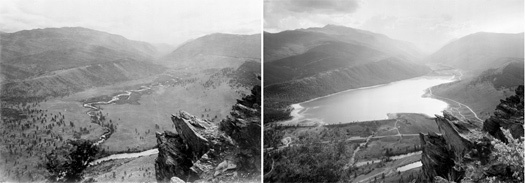
The above images are from From Second View. On the left is William Henry Jackson, 1873, “Moraines on Clear Creek, Valley of the Arkansas, Colorado." [U.S. Geological Survey]. On the Right is Mark Klett and JoAnn Verburg for the Rephotographic Survey Project, 1977, “Clear Creek Reservoir, Colorado.”
The nineteenth-century surveys, which were led by scientists like Clarence King or military men like George Wheeler, were not strictly photographic surveys; they were geographical and geological surveys that took photographers along. Klett and Co basically honed in on the photographers they admired and they followed in their footsteps and in doing so they showed the long-term changes that we normally never see.
March 22, 2012
Frank Hurley: Queenstown landscapes
Whilst it has been raining I have been searching the archives for old photographs of Queenstown. I came across a couple by Frank Hurley in the Collections Australia Network (CAN).
There are quite different interpretations of the Tasmania landscape to the tradition of William Charles Piguenit whose visual conventions emphasised the grandeur of the mountain wilderness---ie., the Romantic interpretation of the Kantian sublime.
One of Hurley's pictures was of the landscape around Queenstown:
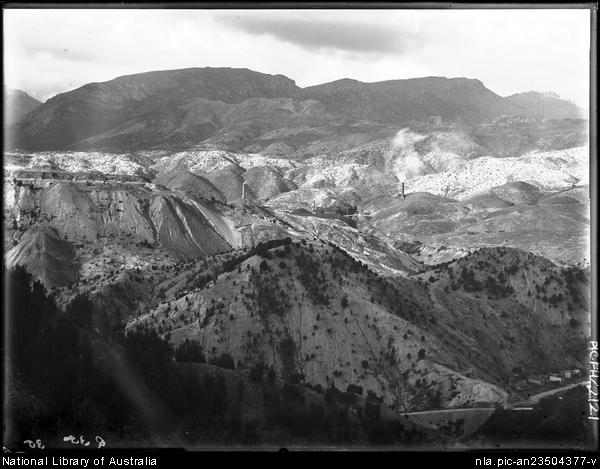 Frank Hurley, Mt. Lyell, Queenstown, Tasmania NLA
This does not highlight the beauties of the Tasmanian landscape or the magnificence and power of nature that was followed by John Watt Beattie.
Another picture was of the Mt Lyell mine within the Queenstown landscape
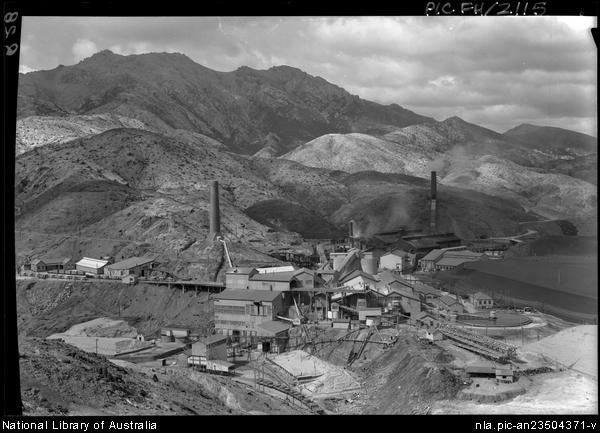 Frank Hurley, Mt. Lyell Smelter Queenstown, Tasmania NLA
Hurley's work suggests a different interpretation of the Tasmanian landscape to the wilderness one that some have argued has provided Tasmania with its identity and importance; or to the Gothic one of Tasmania as a dark and threatening place. It is a counter tradition that highlights the altered landscape and suggests that a Tasmanian sense of place can emerge from within these altered landscapes.
The West Coast of Tasmania would be one example.
March 21, 2012
John Watt Beattie: Mt Lyell mine, Queenstown
I was at the Mt Lyell mine site yesterday and I heard that John Watt Beattie, the Tasmanian photographer, had photographed the mine in the 1890s. He was also employed by the North Mount Lyell Company to photograph between Gormanston and the Kelly Basin.
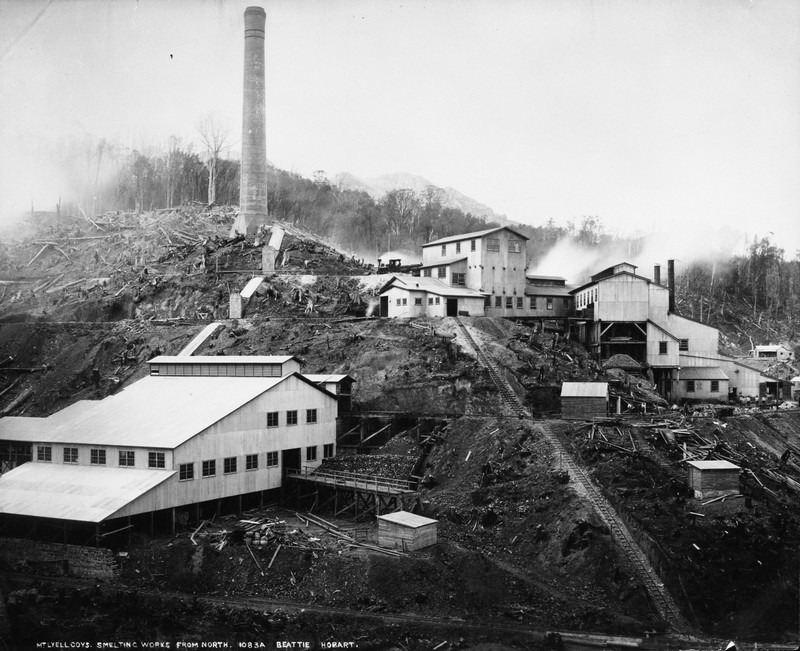 John Watt Beattie, Mt. Lyell, Queenstown, Smelter Works, NLA
Beattie began working in the studio of the Anson brothers in Hobart ion 1882. By 1891 he had bought out the brothers, acquiring photographs by them and others which he was able to publish. He was elected a member of the Royal Society of Tasmania in 1890 and formed the historical and geographical section of the society in 1899. He was appointed Tasmania's official photographer in 1896, and operated a successful business in Hobart, eventually selling his collection in 1927 to the city of Launceston.
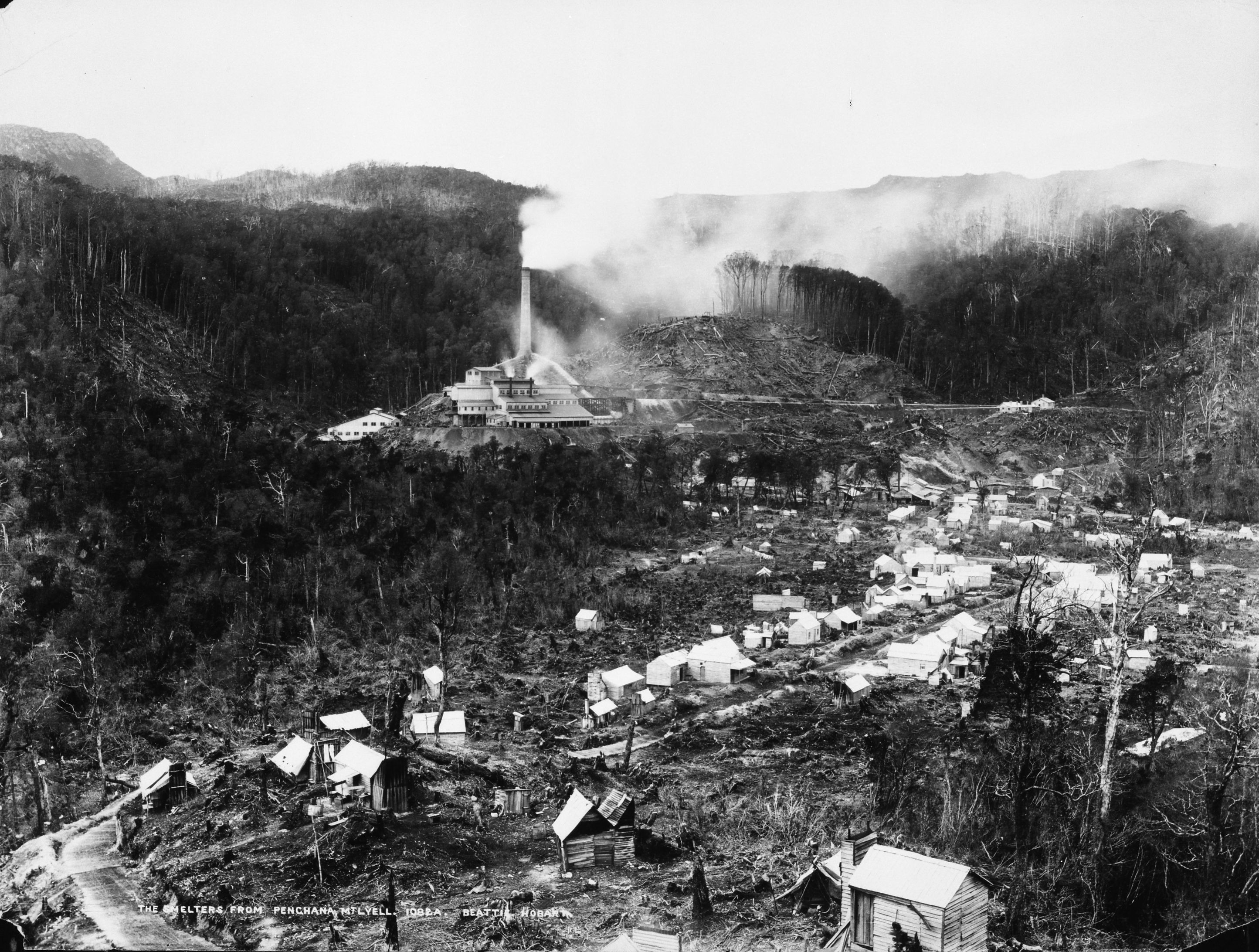 John Watt Beattie, M Lyell Smelter, NLA
Beattie was not alone as I've since discovered that John Spurling 111 also photographed the Lyell mine and smelter in the early twentieth century.
March 19, 2012
Picturing Tasmanian landscapes
In the Introduction to her Tasmanian Visions: Landscapes in Writing, Art and Photography, the cultural historian Rosalyn D. Haynes refers to the category of Land Art. This avoids representing natural beauty in favour of the altered landscaped.
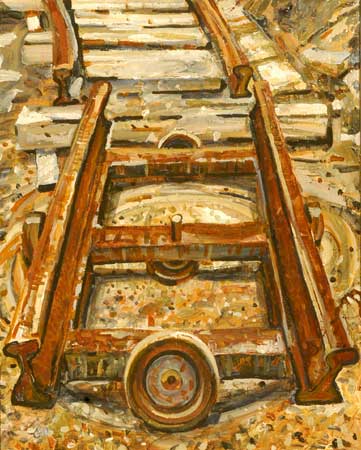 Raymond Arnold, Natural Environment and Wilderness Studies VI (2001)
The cultural context is the changing conceptions of Tasmania's unique natural environment. Haynes says:
Places formerly reviled as desolated, hostile wasteland, that drove desperate men to cannibalism and retained the moral scars, now have international status as a World Heritage Area, not only providing the State's major tourist attractions but offering the most potent source of its acclaimed creativity in photography, art and fiction.
The listing of the South-West wilderness, for instance, catapulted Tasmania from a nonentity to a key player on the international stage. Tasmania was no longer the tail-end of the world; nor was the narrative one of the pioneer's struggle for survival in a harsh land.
The emphasis of Tasmanian artists in the 1970s and 1980s was on the destruction of wilderness and the ecological damage wrought by industry by the hydro-industry and the wood-chipping forestry industry. They politicized the landscape tradition.
Photography, for instance, almost constructed 'wilderness' and how we view it: the Romantic sublime, natural beauty and landscape detail. In doing so it erased the presence of humans in the landscape; an intervention that altered the landscape. They have helped Tasmania achieve mega status as the exclusive proprietor of wilderness--pristine wilderness and it is hard for Tasmanians to deconstruct the privileging of wilderness.
This deconstruction or interrogation of place was exemplified by the Senses of Place: Art in Tasmania, 1970-2005 exhibition at the Plimsoll Gallery, Tasmanian School of Art, Centre for the Arts, Hunter Street, Hobart, Tasmania in 2006.
March 18, 2012
weekend cartoon
I've been photographing in and around Queenstown Tasmania for the past week or so, and the postings on junk for code have been non-existent. I just haven't had time to search the internet for interesting work in Tasmanian photography or the visual arts cos I've mostly been out on location.

Queenstown is so very different from this Australian suburbia. It's a ramshackle old mining town and one characterised by poverty, survivors and people down on the luck. I wonder why it wasn't one of the test sites for the national broadband network---it certainly needs to become part of the high speed broadband infrastructure that is starting to be rolled out.
March 12, 2012
Bea Maddock: Terra Spiritus ... with a darker shade of pale (1993-98)
I've recently been photographing in Tunbridge in the Tasmanian Midlands. Raymond Arnold at LARQ mentioned that Bea Maddock had done a print of the Midlands around Tunbridge in the late 1980s.
Bea Maddock's panorama of the Tasmanian Midlands landscape (sic) is entitled Terra Spiritus....with a darker shade of pale 1993-98.
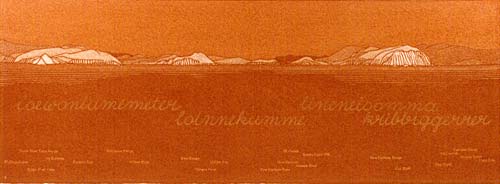 Bea Maddock, Terra Spiritus....with a darker shade of pale 1993-98.
There is a dialogue between photography and traditional print media in Bea Maddock’s works. She had turned from autographic printmaking to photo-screenprinting in the 1960's and at that time for her photography (understood as reportage) was a form of drawing.
Terra Spiritus was conceived to be viewed as an installation, circumnavigating the walls of a room. The suite of 51 (in an edition of 5) incised drawings took five years of intensive work to complete. Its genesis lies in the trip the artist took to Antarctica in 1987.
Update
I since discovered that Terra Spiritus is not the panorama that Raymond Arnold was referring to with respect to the Midlands. The four panel panorama of the Tasmanian Midlands landscape is entitled Tromemanner..forgive us our trespass (1988-9). It is held in the Queensland Art Gallery and is not online.
Martin Walch at the School of Art in the University of Tasmania pointed out to me that Maddock's Terra Spiritus is not a panorama from inside Tasmania as I had assumed. It was a topography of Tasmania as seen from the sea.
March 11, 2012
The Glover Prize 2012
Whilst we were in Tunbridge in the Tasmanian Midlands we drove up to Evandale to view the 2012 Glover Prize. The Glover is Australia's richest landscape prize and entries must depict a Tasmanian landscape. It was won in 2012 by Rodney Pople's painting of Port Arthur haunted by an arms-bearing Martin Bryant.

The winner was judged by a panel made up of former Queensland Art Gallery director Doug Hall and artists Jan Senbergs and Brigita Ozolins. There were 43 finalists from a record 262 entries.
March 9, 2012
Launceston, Tasmania: Hits and Memories
Postings on junk for code have been non-existent since last Friday as I've been on the road to Tasmania. I'm on a phototrip and I haven't much time to post and Telstra's mobile broadband service has been flaky to say the least.
When we were in Launceston I visited the Academy Gallery at School of Visual and Performing Arts at the University of Tasmania. They were showing Hits and Memories: ten years at the Academy Gallery exhibition. The exhibition will include showcase of Academy Gallery archive media, exhibition catalogues and memorabilia associated with the Academy Gallery history.
One artist who caught my eye in the exhibition was Jane Burton:
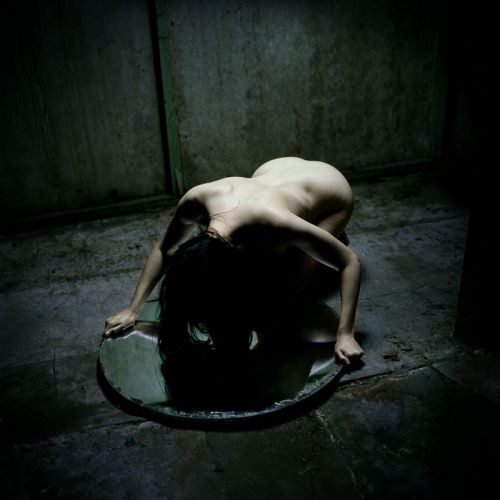 Jane Burton, White Stain, 7
I have previously posted about Jane Burton's work on junk for code.