|
January 10, 2010
There is a Flickr aesthetic that is best expressed in Flickr's Explore. It aims to be sensational looking, is computer based, uses powerful post processing software, and it looks to be very similar to the hyped -up saturated colour that we find on both our large higher definition digital television screens and in advertising. Lets call this a neon aesthetic.
Do art photographers develop a counter aesthetic that functions as a critique of this neon aesthetic? Are they developing a different colour language to the neon language? A language that is different from the Rosemary Laing, Deborah Pauwe approach based on the production of mammoth prints where the viewer is seduced as much by the saturation of colour on a gargantuan scale as by the subject.
One option is to continuing working in the black and white photographic tradition as Jane Burton does in in her "Cul-de-Sac (2000) or Badlands ( 2001) series. In The Other Side (2003) the colour is muted and dark:
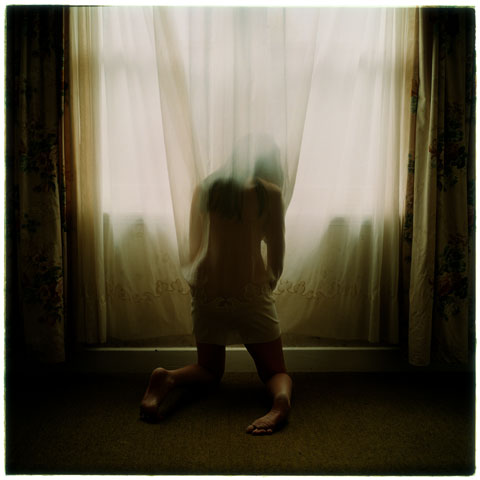 Jane Burton, The Other Side #4 (2003) Type C photograph.
The dark and muted colour refers to Romanticism, personal spaces, film noir, edgy and seductive. Burton's female bodies are in isolated environments (home and nature), and she constructs a kind of psychological drama of desire and longing where naked feamle bodies are juxtaposed to empty architectural interiors and dark and moody landscapes. This is a sexualized subjectivity bordering on solipsism and a melancholy that is tinged with nostalgia.
The dark and moody Romantic landscape comes to the fore in Motherland (2008) series:
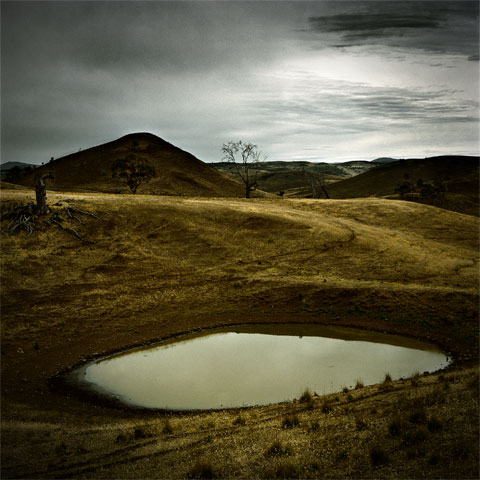 Jane Burton, Motherland #6, from Motherland (2008), Type C photograph.
The landscape is strange and full of foreboding and mystery, suggesting a dark enchanted world that refers to the Romantics' view of nature's correspondence to the mind.
The narratives are ambiguous ones of innocence and desire tinged with a darker edge. So we have a strong visual style that creates mood and atmosphere. Narrative, atmosphere, emotion are contained within this frozen moments of thedifferent series.
|


Since its invention, photography has fought a long, embittered battle to distinguish itself from painterly traditions, to be understood as an entirely separate but equally legitimate visual interpretation of the world. This battle was nearly won more than four decades ago with modernism.
Has something been lost?