May 31, 2008
'whats the world coming to?
Virginia Haussegger says that just after giving a speech at a Sydney weekend conference titled ''Let's Talk About Sex'', run by the Australian Reproductive Health Alliance, in which she argued against the increasingly overt use of sexism in media advertising and popular culture, particularly music videos, an attractive 22-year-old woman stood up and said, ''Look, I just want to say I'm a slut, and I'm proud of it.''
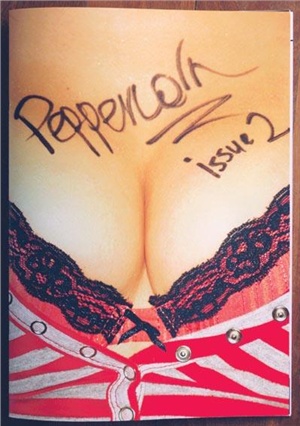 Haussegger says that what followed was a pretty fierce debate about the word ''slut'' and sexual power. She says that:
I was fascinated to learn that many of the young women viewed aggressive sexual behaviour as a form of ''female empowerment''. Unlike me, they didn't feel offended or degraded by the kind of soft-porn imagery in much of our daily media. Far from criticising it, they were more inclined to celebrate it. My arguments about the objectification of women, and disempowerment caused by the reduction of female sexuality to the sum of our body parts, just didn't wash with this hip, young crowd. I was effectively shouted downThe cover of the ANU Law Student Society's quarterly publication Peppercorn is another example of this divide. Sex is being used to sell the magazine.
Haussegger says that the fact that it's not the students but the lecturers who have been offended by the ''sexist'' cover speaks volumes about a very different generational response to what constitutes sexism.
May 30, 2008
German Photography: Arwed Messmer
This post picks up from this earlier one as it continues my exploration of contemporary German photography. Arwed Messmer. There is little commentary online in English on the internet.
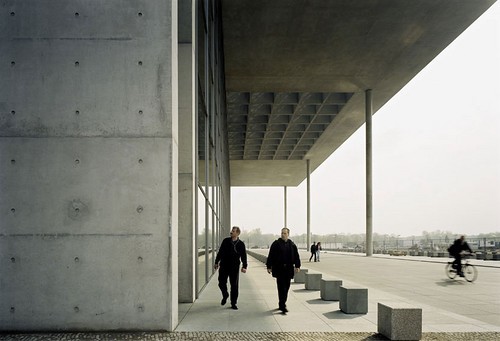 Arwed Messmer.
This is large format work on a tripod that is designed to increase our sensitivity for those images which perhaps reveal themselves only on a second or third sighting. So we using the tripod as an ankle shackle, as it were, as we roam the city and develop a topographic theme-- a certain building, a defined site or a neighborhood.
 Arwed Messmer, Berlin,
However, there is an international art side to Messmer's work.
Arwed Messmer and German writer Annett Groschner have documented Bus Four’s in cities in Eastern Europe as part of a book project. They have also exhibited their documentation in installation formm within an exhibition space in collaboration with Argentine musician Emilio Miler to create BusLineStory, a visual-textual-musical installation based on Buenos Aries Bus number 4 in 2005. In this installation Messmer and Groschner created a bus with borrowed seats and windows, photographic projections of images taken on and along the bus route, writings about the bus’s history and route, and sounds taken from the bus.
May 29, 2008
urban futures
The Spooner cartoon is a bleak image. But peak oil, reduced water, climate change, inflation (high food prices) and more expensive energy are taking their toll on us and portend a different kind of future to the endless prosperity promised by neo-liberal economics. So we have the sense of a dis utopia--what the gods have mysteriously delivered to us they could easily take away as it were.
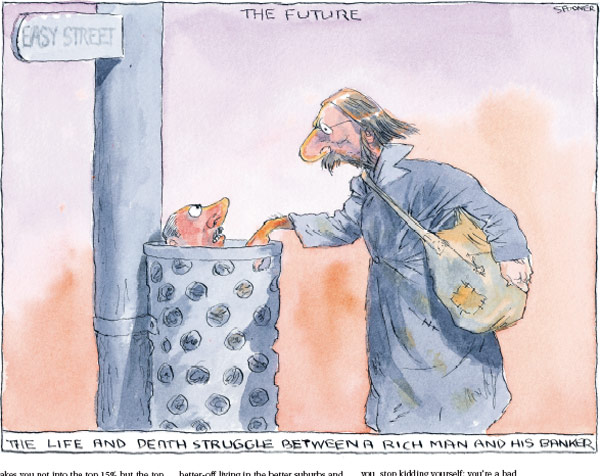 Spooner
If our cities are places of encounters can we talk of the loss of a location for the critical potential of reason? The negative can be reinterpreted to form the basis of a critique of business-as-usual, the fine sounding words and little action, the policies written by the powerful interest groups (eg., the Greenhouse mafia) and the hegemony of instrumental reason.
The latter refers to the positivist variant of rational thinking (a classification of facts within mathematized formulas) that defines itself as rational thinking as such, and as a structure of knowledge concerned with the technically useful and which serves productivity through increased control over natural processes.
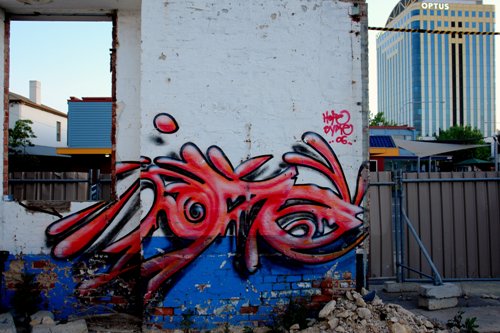 Gary Sauer-Thompson, building site, Adelaide CBD, 2007
Can we critique the positivist Enlightenment from an aesthetics of decay? Can we look at the world created by the positivist Enlightenment and neo-liberalism from the perspective of the waste and destruction that it causes in its normal everyday workings? Can this location in an urban wasteland provide a space to express those experiences and unfulfilled demands that are routinely dismissed by positivist economic reason as junk?
May 28, 2008
consumerism: novelty + nostalgia +.....
The Rollei MiniDigi AF 5.0 is a three-inch high, fully functional digicam replica of the original classic twin reflex camera. This camera is all about nostalgia as it is not much higher than a roll of 120 film -- the capture medium of the original TLR Rolleiflex! It can be worn around the neck as a pendant without looking ridiculous. If it were hanging on a Christmas tree, it wouldn't stand out from the other ornaments.
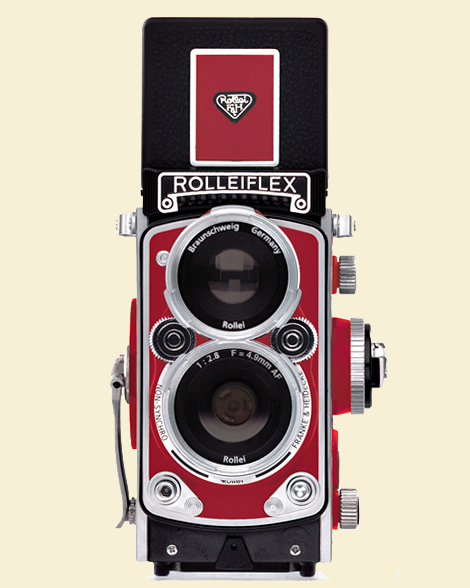
Since Rollei is selling the cachet of its brand here, not state-of-the-art electronics I guess that it will become part of the already strong cult followings for the Diana+, Holga, Lensbabies, and other funky, niche cameras and lenses that open out the possibilities of fragmentary compositional form that implies an ongoing (re)construction of a more complex, polycentric, labyrinthine order.
These kind of cameras push us away from the technological fetish in photography and the modernist style of photography that is concerned with its own difference and medium to a more artistic use of the camera as in this work by Penny Elizabeth Neil at Flickr and on the lovely Sparrow Salvage weblog or visual journal, whose roots are in the west Gippsland region of Victoria.
This is 19th century world on the edge of a railway town that is a world away from the consumerism of the modern metropolis, and if it is nostalgia for what has past into history, then it is a reworking of that nostalgia in a critical Walter Benjamin like vein to express the undercurrents of post-modernity.
Penny says that her work explores:
a sort of post-apocalyptic slumber, a place where people have long ceased to be, and the environment we so obsessively build up has continued on without us. I combine this with my mysterious adoration of the torn, the tattered, the rusting and the bracken-entwined.
We are moving away from the habitual resort in the art institution to the Romantic prerogatives underlying modernist aesthetic tenets such as the avant-garde "original", the artist as unique creative instance, the dialectic of subjective realisation through liberation from convention and so forth, that informs much cultural criticism of the contemporary "postmodern" moment.
May 27, 2008
political humour
The more serious political stuff is to be found over at public opinion. This is about a good laugh.
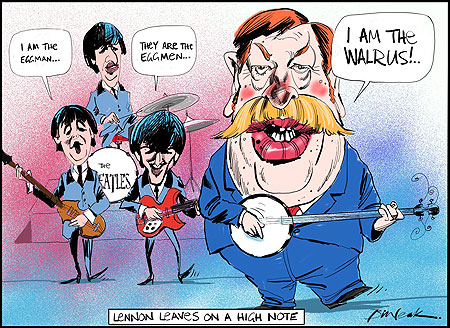 Bill Leak
I just couldn't resist Leak's humour, as I'd always seen Big Red, ie., Paul Lennon th ex-Premier of Tasmania, as a buffoon. The ALP was desperate and Big Red left without a fight or even a whimper. Will we now see a shift to a cool, modern, tech-savy Tasmania that embraces innovation and the knowledge economy?
Bill Henson: Leo Schofield interview
This interview with Bill Henson is courtesy of Nicholas Pickard at the Sydney Arts Journo blog. It is Leo Schofield interviewing Bill Henson on the Ovation; a digital cable tv channel l that I've never watched and know little about.
I introduce the interview because there is a common judgement that Henson's photographs are disturbing (repulsive and distasteful are the words often used), and that, consequently, his motivations in making these images are questionable. A contrary way of thinking about the issue can be found at both Pavlov's Cat and Sorrow at Stills Bend. Both are well worth reading.
I've juxtapositioned Henson's comments with an eloquent expression on this post at Audrey and the Bad Apples ----of the view that finds Henson's work very disturbing.
Clemintine Ford, an Adelaide journalist says that the Henson photographs that she saw:
placed the subjects in very vulnerable poses, downcast eyes and hesistancy in the way they held their bodies. It seemed to me that the poses were primarily a construction of Henson's visions of sexuality. This doesn't mean they're designed for sexual gratification, nor that he is intentionally pornifying them. However, in the same way I would find images of passive, unresponsive naked women cast in a dark metaphorical forest quite arrogant and offensive (as supposedly insightful art), I found the photographs released last Friday quite repulsive in terms not of the children's bodies but in terms of the photographer's eye.
This why there are legitimate reasons to question Henson's motivation here and his procedures. At this point we do need to listen to what Henson is saying about his work, as opposed to making things up or projecting.
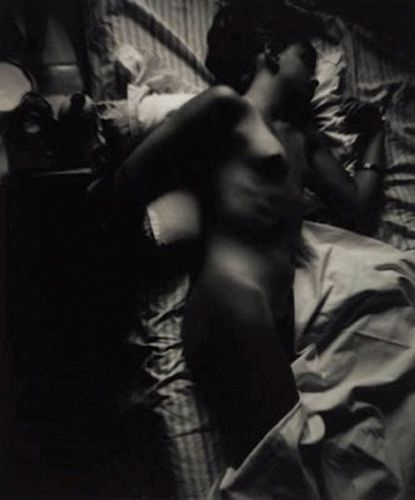 Bil Henson, Untitled, silver gelatin print,?
A critical examination of Henson's work is much more fruitful than assuming that these works are kiddie porn or that art should not be criticized from the perspective of mainstream values. If we do this then can begin to see that Henson's photographs explore loneliness and desire with states or moments of transition and metamorphosis in everyone’s lives. Adolescence as a growing towards adulthood, is an uncertain and ambiguous period as there is some knowledge and certainty as well as a tenuous grasp of adult life.
This in between state is also found in the landscapes --the wasteland, or the spaces between the shopping mall and the petrol station:
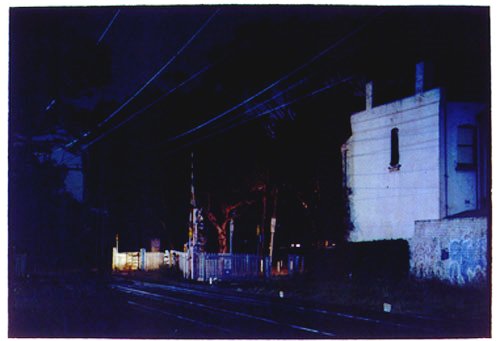 Bill Henson, untitled, 2005
The lonely suburban landscapes with the night light are both locally familiar (Melbourne) as Russell Dengnan points out and eerie. The eerie refers to solitude; intimacy; transitional, incommunicable states; desecration, melancholy and moments of self-mourning.
Update: 28 May
Sebastian Smee in The Australian gives a context for the darkness or the twilight world of Henson's photographs when he says:
We live in a society that has less and less time for ambiguity. It is a society of maximum visibility. And yet the values of brightness and transparency that are so emphasised in the media are often little more than a veneer for various kinds of bullying. Just look at the way advertising - always so nerve-rackingly upbeat - incessantly cajoles and manipulates children into an awareness of sexuality that is always attached to emotional blackmail and commercial gain.with other work from the dark repressed space:
As an art critic, every month I see imagery that is revolting, cynical and exploitative in a way that puts Henson's work into perspective. I have been subjected to video footage from a probe inserted into the artist's anus (Mona Hatoum), I have seen mannequins of children with penises and vaginas attached to their face (the brothers Jake and Dinos Chapman) and, yes, I have seen images of naked pubescent and prepubescent children by the likes of Jock Sturges and Larry Clark that I find, for the most part, unredeemed by artistic merit.
Henson's work has artistic merit. We should also take seriously the fears and anxieties about the way sexual abuse of children has become rampant, as the evidence is undeniable and the damage inflicted by those in positions of trust and responsibility is very real.
May 26, 2008
Bill Henson, biopolitics, moral panic
As those in the art institution continually point out there are lots of images of nude females in the world's art galleries and on the multitude of internet art sites. Art has gone online in a digital age. Moreover, there has been previous exhibitions of Bill Henson's work in Australia with little comment about the sexualised nature of kids. So Henson stands in a tradition consisting of Donatello, Caravaggio and Murillo and Balthus.
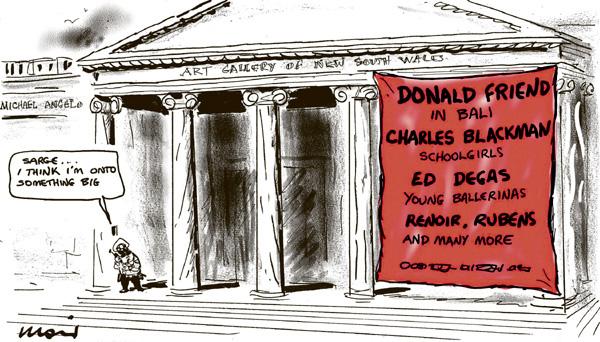 Alan Moir
Why the fuss now? So why close down Bill Henson's exhibition? Why choose Benson's current work to make a stand? Why wage war against Benson and the art institution? Why run the crazy line that Henson is a pornographer who abused the trust of the young girls and exploited them with their parents collusion? Hetty Johnson's claims about Henson corrupting the young cannot be taken seriously, given that the models and their parents are saying the opposite. Moreover, if Henson's intent was to produce a work of art and solely a work of art, then I cannot see how Henson has committed a crime, despite Hetty's Johnson claims that he has.
More broadly, why do we this deep concern and anxiety about teenage innocence, young female bodies, nudity and sexual exploitation? Henson's work discloses the anxieties, fears and concerns. It's a catalyst as it were that discloses a culture of fear.
If we take this broader perspective, then what is disclosed is the link off naked teen girls to pornography, pedophilia and the extensive depiction and exploitation of young women in our society for commercial gain. There is a moral panic happening, and it is one based around the politics of fear and social deviance. The moral panic is specifically being framed in terms of morality by the mass media, as it is being expressed more as outrage, rather than fear per se. Behind the outrage lies the concern for social control over those who are defined as a threat to society's values, community standards, and interests’.
The issue is one of the sexualisation of adolescents – especially girls – in the media, by which is meant a thirteen-year-old model pouting from the Weekend Australian Magazine’s fashion page. Clive Hamilton, in todays Crikey Daily, states the case for those concerned about the sexualisation of children:
Over the last decade or so advertisers and the wider culture have increasingly eroticised children. They have been over-loaded with adult sexual material and have had attributed to them forms of adult sexual behaviour, including being dressed, posed and made up as if they were sexual practices at their age is fine. Children as young as eight and nine are now routinely treated in this way.
This has been a recent phenomenon ─ previously it was only teenagers of around 16 or more who were presented this way ─ yet it has occurred slowly enough for most Australians to be inured to it or to accept that that is just how the world is. After all, when even respectable retailers like David Jones eroticise 10 and 12-year-old girls in their advertisements, it is easy to dismiss any objections we may have as peculiar to ourselves.
The eroticisation of childhood means that we have been conditioned to see children differently, as having adult sexual characteristics, urges and desires. How else can we explain why we seem to accept mothers going shopping with 12-year-old daughters dressed like prostitutes? Why are we blasé about pre-teens watching video clips show anal sex is a "personal choice"
A line needs to be drawn in the sand. Yet there is little challenge to the way young children are being bombarded with sexual images from the broader media. From this perspective Henson's work is similar to that in the Weekend Australian Magazine's fashion page, but pushes the boundaries as it involves more nudity. Henson photographs naked adolescents--teen girls (the boys have been forgotten).
The reason for this kind of biopolitics is that Henson is being used by conservatives to take a stand, and help to ignite the moral panic about the sexualisation of kids in order to create public support for the need to "police the crisis. The media play a central role in the "social production of news" in order to reap the rewards of sex and crime (pornography and pedophilia ) stories.
Internet pornography and its accessibility to children has been perhaps the longest-running moral panic of the last decade, with its emotions of fear, loathing and outrage. The fear is justified. Why the fuss now, especially when the same industry that made the panic possible has produced the tools to filter out the tools to deal with it as concerned parents can now download software to block offending websites and protect their children?
Moral panics have a tendency to occur ‘at times when society has not been able to adapt to dramatic changes’ and when such change leads those concerned to express fear over what they see as a loss of control. The internet stands for loss of social control as images can circulate all over the world in a flash.
May 25, 2008
Bill Henson # 6 uncensored
This appears to be the image in the Bill Henson exhibition at the Roslyn Oxley 9 Gallery in Paddington, Sydney that has created all the fuss amongst Sydney conservatives, and led to their moral outrage. They are suffering deeply from a Big disgust at the sexualised images of naked children. So here we go again on another round of banning and closing down art exhibitions.

Bill Henson, nude, untitled, 2008
Does the image support the conservative interpretation ot being child pornography? For it to be a pornographic image, then it needs to show engaging in sexual activity, or (being) depicted in an indecent sexual manner or context. Does this image show that? Isn't this the question we should be asking?
We do have to start from this image on the internet for this context is the only way that we see can it, since the exhibition has been closed and the image impounded. This image shows the vulnerability and fragility of the model and the beauty of her body, rather than pornography disguised as art. What makes people say that this particular image is child pornography. A mere photograph in an art exhibition does not amount to child pornography.
If you hold that this pictures can be characterised as pornography and not art, then how do you get that interpretation of the image from the image itself? We are debating this image are we not?
Do not these claims and interpretations need to be argued for, as opposed to asserted as absolute truths beyond all debate? Could not this image be interpreted differently in different contexts--exhibition, internet, newspaper, weblog etc? And from whose perspective should the image be interpreted?
A common conservative interpretation is to read the images in terms of the viewpoint of pedophiles:--how would they view the images? This interpretation holds that pedophiles would find them sexually arousing (bad) and it is implied, this would cause them to commit acts of child abuse (crime.) Therefore, the images are porn. Moreover, Henson should be morally responsible for the consequences of his actions, whatever his intention.
This interpretation is countered by those who say is that Henson' work is art not porn. As Zahava Elenberg, who was 12 when she posed for a series of dark and evocative photographs taken by Henson 20 years ago, said in the SMH I''m a parent myself and I abhor child pornography, but this is not child pornography. It's artistic and creative.' A similar story is told by other ex models.
So we have different perspective from which to interpret the image. Where to now? Kevin Donnelly in The Sunday Age addresses this defence of Bill Henson's photographs as art by saying that:
Fortunately, not all have swallowed the nihilistic cant of the postmodern. Art can be defined as having certain characteristics and qualities. Art, to use Keats' words, tells us that: "Beauty is truth, truth beauty".Art deals with human emotions, predicaments and the world around us in a profoundly moral, spiritual and aesthetic way. Art is uplifting and helps us, to use the words of another English poet, William Blake, "To see the world in a grain of sand, and to see heaven in a wild flower".
Well, that's one definition of art amongst many competing others. Donnelly offers no argument as to why we should accept his pre-modernist definition of art as distinct from an understanding of art as critique. Shouldn't this be argued?
The issue is not really about art though for moral conservatives. Donnelly is quite explicit on this. He says that it is:
... also critical, at some stage, to stand firm. Over the years we have had several cases involving censorship and art, the most famous involving D. H. Lawrence's Lady Chatterley's Lover and the later controversy surrounding the satirical magazine OZ. Based on the idea of a slippery slope, each decision to uphold the rights of the artist has led to a downward spiral in terms of what is considered acceptable.The result? A world surrounded by crass, vulgar and obscene images — maybe it is time to say enough is enough.
So Henson's work has been chosen by moral and cultural conservatives to make a stand against postmodernism, nihilism, pornography, consumerism etc etc. Note yet again that there no argument for his {Donnelly's} slippery slope claim that it is high art that has lead to a world surrounded by crass, vulgar and obscene images rather than the capitalist market.
Update: 26 May
Paul Sheehan in the Sydney Morning Herald says: about artists pusshing the boundaries:
if you confront people long enough, don't whine when you yourself are confronted. If you mine the terrain of adolescent sensual awakening for commercial gain, if you spend years living on the artistic edge, while gaining public attention and financial reward, don't complain when your actions begin to carry the taint of exploitative voyeurism.
Sheehan says that the electric jolt of public unease that Henson and the art institution have received in recent days is justified.
Why? Because pederasts and child sexploiters have had a dream run in our society. A subculture of pedophilia among gays, an epidemic of child sexual abuse in the Aboriginal community, and a multimillion porn industry on the internet have all been protected variously by privacy laws, artistic licence, freedom of expression, and Aboriginal rights. What these rights have done is mask, exacerbate or even rationalise a significant and growing problem.
Sheehan says that the wider issue is the depiction and exploitation of very young women in our society for commercial gain, and adds that the Bill Henson exhibition may be the wrong time and wrong place for this particular battle, but it is the right time and right place to reinvigorate this particular war.
Why not do something about the porn sites instead of banning an art exhibition?
Update 2
The SMH reports that criminal investigations into Bill Henson have widened to include previous work by the controversial photographer, after police received complaints about several Henson works on display at a regional gallery. Police advised the Albury Regional Art Gallery to take down several photographs by the artist dating back to 1985, after they received a complaint from the public about "inappropriate" images, which they are investigating.The Herald also says that a number of older Henson works were seized from the Roslyn Oxley9 gallery storerooms when police raided it last week.
How far are they going to go? Raid the National Gallery, the Museum of Contemporary Art in Sydney, the NSW Art Gallery?
It still seems as if th debate is being conduction in the old terms of a clash between the conservative philistines and the cultured libertarians. There is more at stake than this--- more feeling, more legitimate grievance and more fear-- as the social and cultural context has changed due to the way that the sexual abuse of children has been disclosed to have been so rampant. So we need to step away from art per se to look at the wider cultural context and what is called moral panic, and then try and situate the debate in that cultural context.
May 24, 2008
Jupiter
It looks like a surrealist image of the unconscious:
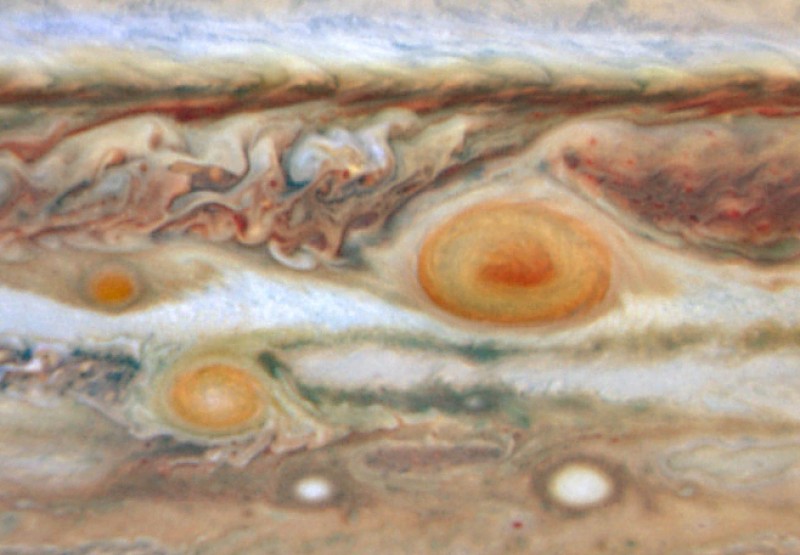 Jupitor, Three Red Spots Astronomy Picture of the Day
May 23, 2008
yesterday's hero?
The future or the past? It's the latter with soaring petrol prices and peak oil a reality. Todays 4WD's will become antique collectors’ items. They were premised on depended on cheap petrol
 Gary Sauer-Thompson. sign, Adelaide CBD, 2008
Big changes in the way we live in our cities will start to happen as we need to find ways top live that requires us to drive less. Sure, city councils are encouraging more people to live in the CBD, they do very little about reducing the imprint of the car as a way to move around the city. Adelaide, for instance, is beholden to the car industry. The car is sacred.
The price of oil may not definitely be headed over $200 a barrel, as per some of the more pessimistic claims made by analysts, but with 1.3 billion Chinese and 1 billion Indians eager for a western standard of living, demand for everything we consume, and particularly energy, is going to keep rising. It is going to become political.
May 22, 2008
Bill Henson #5: censored images
Bill Henson has an exhibition at the Roslyn Oxley 9 Gallery. It opens tonight. More eroticised images of underage children mutter the critics. You can sense some---those defending community standards--- reaching for the weapon of censorship before the show even opens. They will not see the sombre interiors, dramatic landscapes, delicate young bodies and faces emerging from the shadows. What they will see is naked bodies of young girls.
Moral conservatives, such as Miranda Devine, question Benson's presention of children in sexual contexts that runs through his work, which is quite explicit in linking sexuality, street kids and prostitution.
The political context is the advertising industry's sexualisation of children and the current Senate inquiry by the Environment, Communications and the Arts Committee into the sexualisation of children in the media instigated by the Democrats leader, Lyn Allison. This explores community standards and concerns about the harmful effect of premature sexualisation, particularly on young girls.
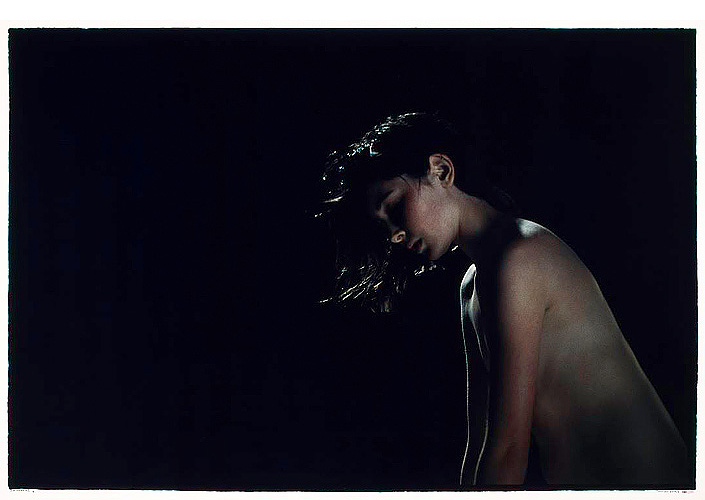 Bill Henson, untitled, 2008
Henson is part of the continuing tradition of photographers pushing the boundaries of photography as fine art amidst claims that photography as an art form is on the wane and that it's losing its grip on the public imagination. However he is also seen as indulging in a kiddie-porn aesthetic by many.
Update 1
I see that the exhibition has been canceled, there's a moral panic happening in conservative Sydney circles, talkback radio is outraged, the images are censored the Roslyn Oxley 9 website is down, and the police are investigating. Investigating what I'm not sure. That the 13 year old models were not sex slaves? Or that the images are "indecent" images. I understand that the contentious images have been removed by police and voluntarily withdrawn by the gallery. Who persuaded the police to investigate? Alan Jones?
Hetty Johnston, founder and executive director of Bravehearts, a child sexual assault action group, says she knows what 's going on. She has called for Bill Henson and the Roslyn Oxley 9 gallery to be prosecuted over the images. This is her argument:
It's child exploitation, it's criminal activity and it should be prosecuted, both the photographer Bill Henson ... but also the gallery because these are clearly images that are sexually exploiting young children They are clearly illegal child pornography images, it's not about art at all, it's a crime and I hope they are prosecuted.
Why is it child exploitation? Not art? The photos of naked kids are being shown in an art gallery not in an adult shop or on a porn site. Why are erotic photos of naked 13 year old bodies a crime? Prosecuted for an image of a young topless girl expressing her sexuality as well as the awkwardness and the “letting go of childhood. These girls and boys are becoming sexual beings in a dark world. So what makes these images illegal child pornography?
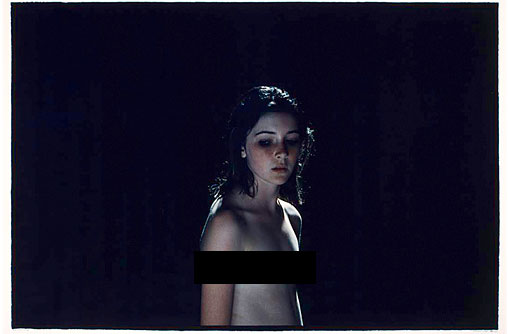 Bill Henson, untitled, 2008
Does that constitute child pornography? Or this sexing up the kids? Why aren't these bodies not seen as vulnerable and beautiful? Why not celebration of female beauty?
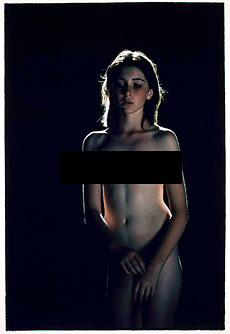 Is this exhibition a porn site? You would think that with consumer images saturated with nudes selling soap and chocolate and even, weirdly, clothing, people would be less outraged about nudity, especially when these erotic photos are juxtaposed with landscape and architectural studies.
Is nudity sinful? Well we know that for the moral conservatives Benson has gone too far. These are kids. So erotic images are bad. He's crossed the line in sexing up the kids, say the neo-conservatives.
The subtext is an implicit request for the censorship of these images and, by association, the censorship of contemporary art.There are boundaries to the ethical rights of artists to freedom of expression. The police should act as moral guardians and adopt Plato’s philosophy that it is the responsibility of authority to regulate and censor the arts, for the sake of the good.
There has been a history of moves to censor art in Australia in the last twenty years. They include complaints about the exploitation of adolescents in Bill Henson’s work:
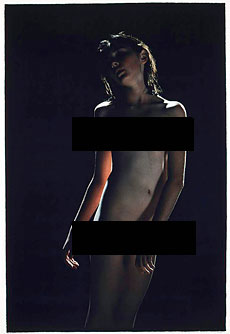 These censorship attempts also include the cancellation of Sensation by the Australian National Gallery, the removal of Juan Davilla’s painting Stupid as a Painter’ from the 1982 Biennale of Sydney by the police after moral outrage at its sexual references.
This is evidence that contemporary art can be confronting on grounds of sex, religion, gender and race--it can shock, disturb & offend.
Henson's subject matter can seem disturbing or even sensational and they do cause anxiety.
What is on display is public pressure to make contemporary art conform to conventional public levels of acceptability or community standards.
Whose community are talking about here? Is there not a diversity of communities in Australia?
Is there not a a diversity of communities in the global city of Sydney? So how do you c decide what constitutes community standards? Which community do you choose and why that one?
Update 2
Alison Croggon at Theatre Notes makers explict what I implied about the critical edge of Hanson's photography. She says:
I live in a world awash with advertising images of commodified and sexualised children or women whose bodies are routinely scalpeled and injected with toxins to meet some generically porned-up notion of feminine sexuality, a world where genuine child porn is something that people can access by simply tapping a keyboard.And what raises the hue and cry? An artist of integrity and passion, whose sensitive and beautiful photographs of adolescents reveal the twilit zones of human liminality, vulnerability and feeling. An artist whose work, in its painful and intimate honesty, directly challenges the crass exploitation and commodification of young bodies by the mass media and porn industries.
The images of naked teens are deemed to be revolting by the PM and are deemed to have no artistic merit. We should just let allow kids to be kids.But kids are sexual beings:

Bill Henson, Untitled, 200-2003
Are they not entitled to their sexuality?
I understand that the NSW police have seized 20 of 41 photographs from the exhibition with the intention of launching criminal proceedings under the Child Protection Act. Police say charges will be laid under both the NSW and Commonwealth Crimes acts for publishing an indecent article.The alleged Commonwealth offence relates to publishing some of the photographs on the internet. The decision to launch a prosecution was made public by Rose Bay police commander, Superintendent Allan Sicard outside the gallery while detectives carried out a search.
May 20, 2008
Philip Hunter
Philip Hunter has an exhibition at the Tim Olsen Gallery in Woolahra Sydney. The work in this show, entitled Lines in the Dirt, continues the themes of his earlier work --the idea of a layered landscape as a nightscape.
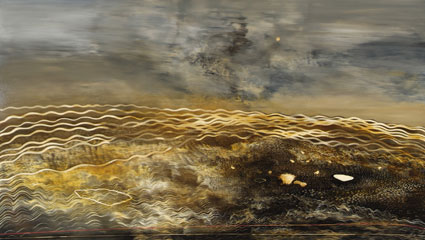 Philip Hunter, Ocean Floor - Inland, 2007
Peter Corrigan's exhibition catalogue talks in terms of the work enabling us to reflect on a shadow world that eludes our everyday reality. Does it refer to the shadow world of Bill Henson
No. The shadow world for Corrigan is represented in terms of immaterial reality, imaginary terrain close to the universe of dreams, and Hunter's engagement with the metaphysical that reveals a netherworld. For Corrigan metaphysical implies spiritual in a country that has lost its understanding of 'shaman' and lacks faith.
We are a long way from photography's representation of the landscape, however much that representation is informed by Romanticism. But then again no--Hunter's work is not so much interested in place per se, as in an experience of place. How would photography do that?
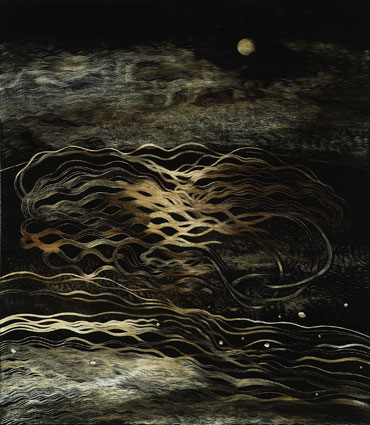 Philip Hunter, Night Plains 12, 2008
My reading of the work is that of a landscape in the tradition of Sidney Nolan's or Authur Boyd' s Wimmera or Fred Williams' landscapes: a representation haunted by water --or rather the lack of it---as in the history of the colonial explorers imaginings of a vast inland sea in central Australia; or the salt pans of today; or arid landscapes shaped by receding water.
May 19, 2008
Peter Bogdanovich: Targets
I watched a DVD of Peter Bogdanovich's early film Targetsthe other night.
It is about an insurance agent and Vietnam veteran, played by Tim O'Kelly, who goes on a shooting rampage from atop a Los Angeles oil refinery and then, when police start tracking him down, flees to and resumes his shootings at a drive-in theater where an aging horror film actor is making a final promotional appearance.
It is low-budget, down and dirty, and references a lot of film history. It was made under Roger Corman’s watch and stars an ageing Boris Karloff as a romanticized version of himself and is about American gun culture:
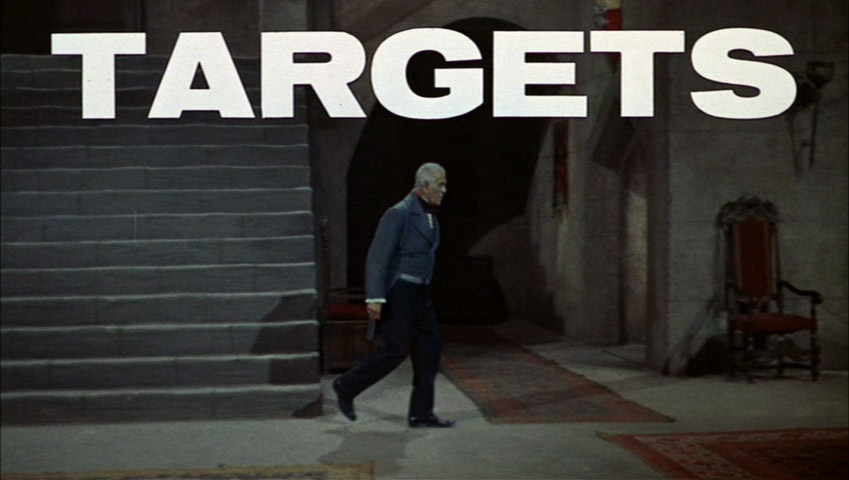
I was intrigued by the different perspectives, the subjective cinema, the influence of Alfred Hitchcock, the photography of real places, the long one shots, the strong emphasis on the post production process and the way that it draws on the classical Hollywood vernacular.
Even more impressive was the way other movies eg The Criminal Code (1931, directed by Howard Hawks plays on television), are woven into the film. Sadly, I haven't seen any other films made by Bogdanovich --not even The Last Picture Show (1971), which was made three years after Targets.
May 18, 2008
lazy Sunday at Goolwa
The autumn rains have finally come to South Australia. The landscape is beginning to green and the creeks starting to flow. We look forward to winter in the Fleurieu Peninsula---it will be is very pleasant after the long harsh summers we've experienced.
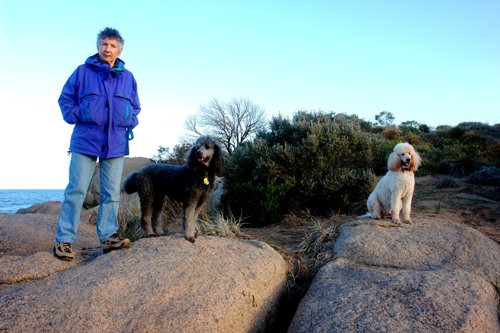 Gary Sauer-Thompson, near Port Eliot, Fleurieu Peninsula, SA, 2008
Alas the rains are nowhere near sufficient to increase the flows in the Murray River. Judging by what we saw at Goolwa, the river is in a poor state. We had lunch just across from the bridge at Hectors and we noticed just how low the water level of the River Murray had fallen---a year or so ago the water was just above the pontoons of the bridge.
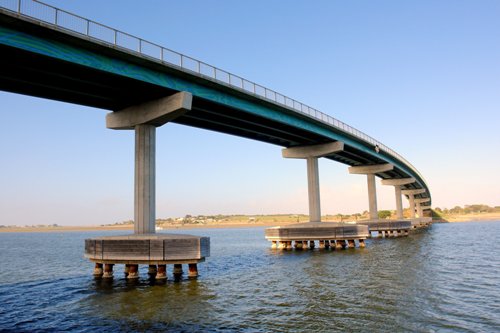 Gary Sauer-Thompson, Hindmarsh Island Bridge, Goolwa, 2008
There is next to no water flowing down to the mouth from upstream. Few downstream expect the situation to change soon. We think that the River Murray is dying bit by bit. So that means Adelaide needs to reduce its dependence on water from the River Murray. It needs to find alternative supplies of water to help it adjust to a drier climate.
The Rann government is addressing this in terms of its Water Proofing Adelaide strategy.
May 17, 2008
Melbourne: urban liveability
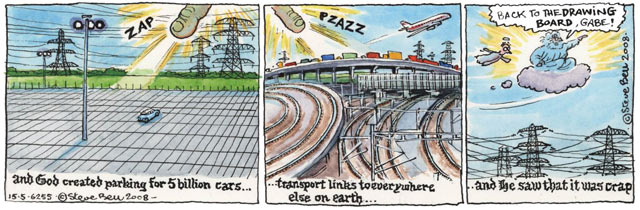
Surprisingly, cities did not rank front and centre in Prime Minister Kevin Rudd's 2020 summit. They were pushed into the background in spite of the effects of climate change, water scarcity, urban sprawl and rising petrol prices. There is a lot of rhetoric about making Australia's cities more sustainable and liveable, but little action.
Melbourne, for instance, is supposed to be turning away from urban sprawl, with the Melbourne 2030 blueprint being used to control the city's growth, make the city more compact and affordable, and less car-dependent. Royce Millar and Simon Mann say in The Age that the Melbourne 2030 blueprint's
central thesis was to move from a city-centric hub-and-spoke landscape to one of a network of almost self-contained commercial and community centres. Car dependence and greenhouse emissions would be reduced through the building of stronger local economies and communities allowing Melburnians to live, work and play in their own neighbourhoods. Though how that was to be achieved was never exactly clear.
The reality is otherwise. Melbourne's outer suburbs have expanded as fast as ever, public transport is under great pressure, there are commuter bottlenecks (the West Gate Bridge) its growing faster than all other state capitals, greenhouse emissions continue to rise.
 Steve Bell
Suburban residents are still hostage to the car, Melbourne is still dominated by the car, and those on migrate to the fringe for cheaper housing end up stranded away from jobs and infrastructure.
May 16, 2008
Friday humour
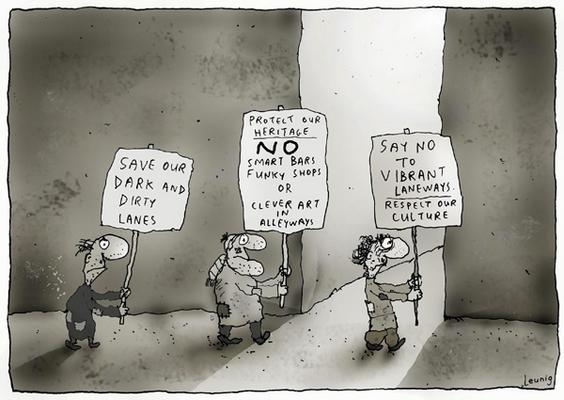
Adelaide is boring and dead. Melbourne, in contrast, is alive and jumping. That's the general consensus amongst those who live in Melbourne is vibrant. Who would live in dreary Adelaide, they ask? It lacks the bars in the back lanes of the CBD--- the hole-in-the-wall bar culture---and there is little nightlife. Come alive Adelaide.
 Leunig
This kind of account ignores the developments that are taking place in the CBD and the effects that the shift to inner city living is beginning to happen. It does not look at the positives or the potentiality that could happen with right kind of urban planning. It just says that Adelaide is not like Melbourne rather than exploring the way that Adelaide could develop as something different.
 Gary Sauer-Thompson, Adelaide, Development, 2008
Creativity is more important than vibrancy as the former is based around the artists, musicians, digital entrepreneurs and being able to live and work in a city. That requires cheap rents and cheap studio space ----as in Berlin---and being able to access part time work and having easy access to galleries, clubs across a wide geographical area---once again as in Berlin. The vibrancy comes from a creative economy.
May 15, 2008
tourism, photography, desire
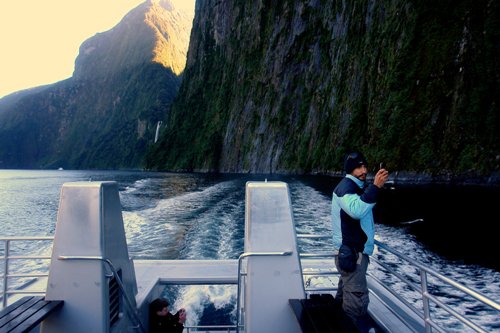
When you return home to the country of your birth for a holiday after a couple of decades living in Australia are you a tourist? Or an expatriate? I'd seen myself as a tourist; or rather I wore the mask of an international tourist and traveled on an Australian passport.
 Gary Sauer-Thompson, tourism, Milford Sound, New Zealand, 2008
But I was really an ex-pat as I still was an NZ citizen in my own country. An expat looking at the culture of international tourism I was a part of, noticing the way the landscape is mediated by the diverse images of it. These images of iconic tourist sites are everywhere and we were surrounded by these cultural codes that said 'NZ wilderness.'
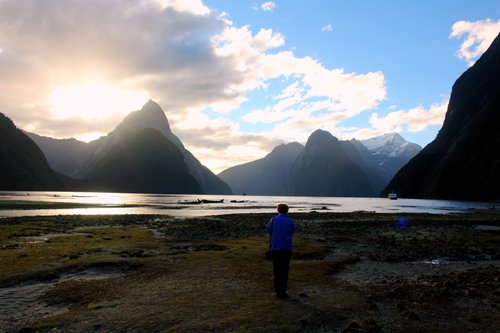
We tourists all ended up at the same coded, iconic location. We used our digital cameras to take our photos from the carefully constructed locations (a scenic platform, boat, foreshore walkway, or walking trail). Our images were similar kinds of pictures and they had a lesser quality to the carefully crafted tourist ones that we had seen as we traveled to the desired iconic location.
 Gary Sauer-Thompson, tourist photography, Milford Sound, New Zealand, 2008
The core tourist spaces, such as Queenstown, indicated that, from a spatial relations perspective, space is not neutral within consumer capitalism---the different spaces we traveled through had different relationships of power, embody different meanings and codes. I kept on thinking about the spectre of tourism taking philosophy from behind amidst these deterritorialised flows of global capitalism.
Isn't the history of philosophy as a kind of “buggery--as Deleuze argued? What would result from such an encounter I wondered? Something quite different no doubt. That repetition involves the instantiation of difference? Maybe a turning away from the calculable and the numerable? Or that philosophy has a sado-masochistic complex, whose will to power, desires to live its own life of rationality by overthrowing law and custom? Or the emergence of bodily experience and the way in which subjectivity emerges through embodied creative desire amidst the regional flows of global capitalism.
If the movement of desiring tourist bodies through this space was part of the flow of global capitalism, then It is around these diverse coded global flows that we sense the powers of capital to remake space and time (to continue making profits). Wilderness was constructed as a space of capital’----a coded landscape of modern capitalism as it were.
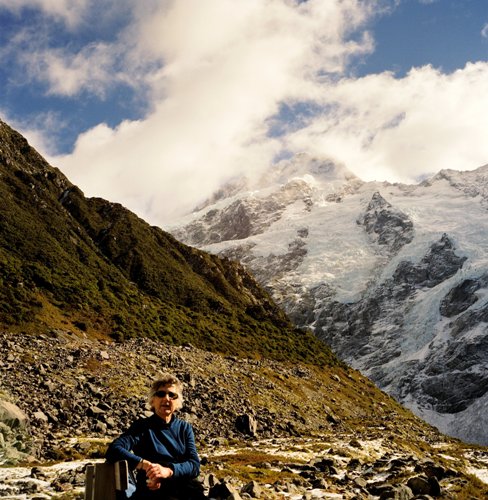 Gary Sauer-Thompson, Suzanne, Mt Cook, 2008
Even as we yearned (productive desire) to experience nature as external to the hegemonic discourses, power structures and lives of consumer society (to experience wilderness), we realized that this experience was what was being sold to us in different tourist packages. Our desires were being channeled and coded by the interests of those making money from the flow of tourist bodies.
What we could do is to experiment with was is, to create something new from within the multiplicities of the coded flows.
May 14, 2008
German Photography: Christian Schmidt
Christian Schmidt Another contemporary German photographer courtesy of Barbara Fischer--a Melbourne based photographer.
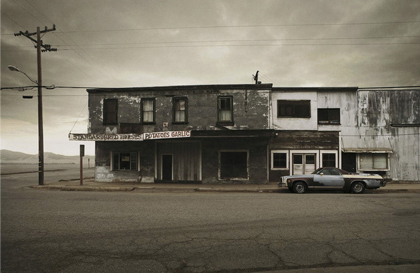 Christian Schmidt
Unfortunately, like Johannes Backes, there is very little of Schmidt's work on the web. We just have the photos on the links to explore.
May 13, 2008
returning home to suburbia
When I was in New Zealand I visited the home I grew up in Christchurch to see my mother. It was a return to the suburbia that I grew up in and then fled, because of the desolation and emptiness in what then was the outer ring suburb of St Albans.
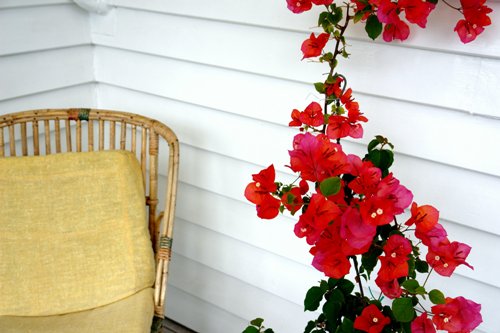 Gary Sauer-Thompson, 259 Knowles Street, Christchurch, New Zealand, 2008
There was little sense of hope in the suburban heartland in a major city in the South Island. Though the suburbs in Christchurch were divided by class--separate localities for the welfare poor, workers, middle class-and the rich -- there was a sense of during the second half of the 20th century of social stability, decent housing, home ownership and steady growth. Racial diversity and tension was absent.
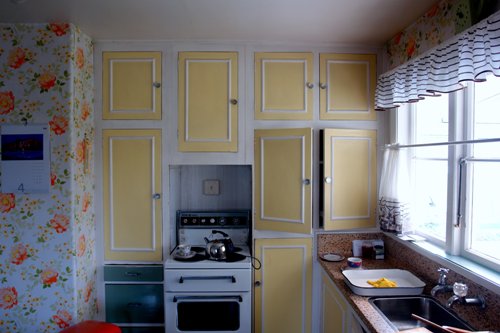 Gary Sauer-Thompson, kitchen, 259 Knowles Street, Christchurch, New Zealand, 2008
This provincial suburban landscape was characterised by outward social homogeneity and a rough uniformity in the style of the houses. They were a vast improvement over areas traditionally occupied by the industrial white working class whilst the substantive public housing protected the most vulnerable.
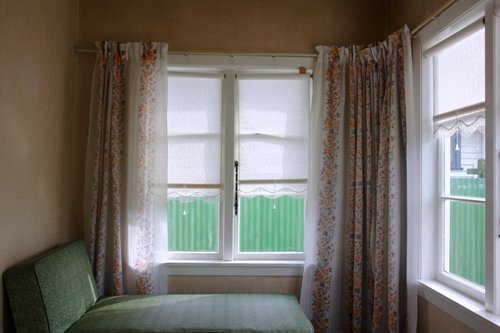 Gary Sauer-Thompson, sunroom, 259 Knowles Street, Christchurch, New Zealand, 2008
Today, as a result of the dislocation associated with large scale economic reforms under a neo-liberal mode of governance since the 1970s, the local press--The Press---rages on about crime and violence in the city's CBD streets and the need for law and order to get tough on the thugs who attack, rob and rape international tourists. The thugs are represented as Maoris and as members of gangs. Its worse than New York ever as and the local authorities need to control the violence and clean up the gang filth.
And so we have the politics of ethnicity in a white society.
May 12, 2008
cultivated nature
This is how we traveled around the South Island. It was our base and a lot of my photos were taken from this van:
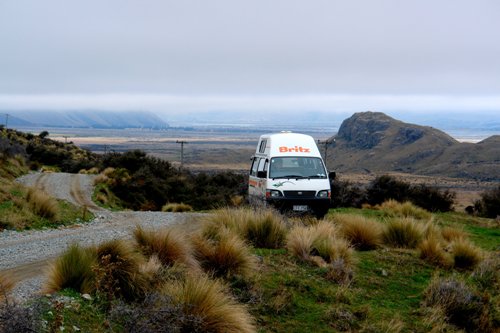 Gary Sauer-Thompson, Rangitata River Valley, South Island, New Zealand, 2008
This part of the high country was tussock country and it was where a significant part of the "Lord of the Rings" was filmed. The caravan park in MT Somers, which is where we stayed one night, had a very colourful garden structured around English flowers and trees.
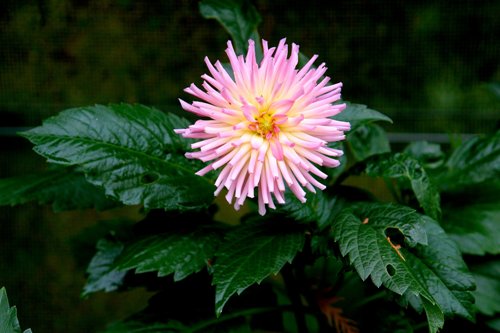
There was a pride in the garden which celebrated autumn colour, but this garden, like a lot of the cultivated nature in the South Island was so English. The native flora was hard to find outside the wilderness ---in the towns or the farms on the Canterbury Plains. The exotics, including the pine trees, were everywhere.
What did the native NZ flowers and trees look like I kept wondering? Weren't they unique because of their isolation? The layout of traditional New Zealand home gardens followed the British style, with flower beds, lawns and borders at the front and vegetables at the back. There seemed to be few popular native plants grown in the front garden and many still seemed to hold that native plants were drab and difficult to grow.
 Gary Sauer-Thompson, flax in private garden Lake Wanaka, 2008
The more modern, architecturally designed houses, at Lake Wanaka expressed a greater valuation of NZ's natural heritage through planting natives in the gardens and local areas.The native gardens weren’t based around colourful, seasonal flowers. Instead, gardeners create year-round interest by contrasting form, texture and foliage colour.
Cyclone Nargis: images
The effect of Cyclone Nargis on Burma (Myanmar) has been devastating and international relief is only trickling into the country. The military junta continues to bar access to most international disaster relief specialists and continues to block aid. So a natural disaster threatens to become a a humanitarian crisis of genuinely epic proportions.
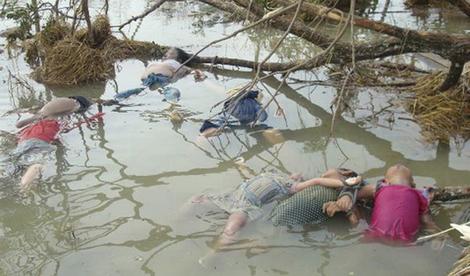 AP, corpses in the Irrawaddy delta, 2008
Without proper sanitation and clean water people still scavenging in the inundated remains of their homes could fall victim to waterborne diseases-----cholera, dysentery, dengue and malaria epidemics spreading among survivors is a frightening possibility. Burma is on the brink of a “devastating public health crisis” if help is not allowed to flow across its borders immediately.
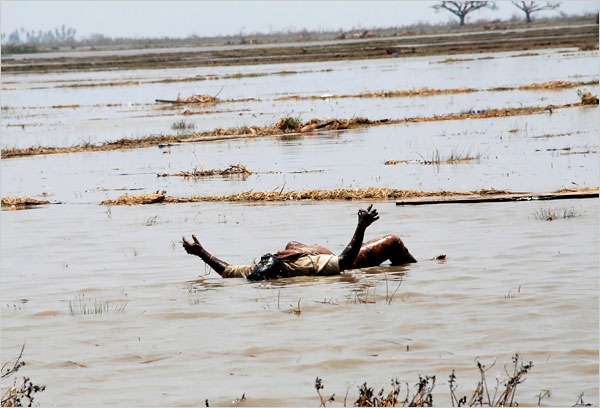 AP, New York Times,
The UN says that 'thousands of bodies' were floating in nearly 2,000 square miles of the flooded Irrawaddy delta.The junta's refusal of international humanitarian aid is, the UN laments, “unprecedented”. The United Nations has said that it had a responsibility to protect' the civilians victims of crimes against humanity regardless of whether sovereign governments wanted them to or not.
May 11, 2008
Poolside Scottsdale
It is almost summer in Arizona and the days are inching up to 100F. Despite Phoenix being beachless, Australians would be completely comfortable with the sun-drenched culture of the desert city. Weekends are spent lazing by the pool, stretched out on sun chairs, or in outdoor activities with the shirt and off and the chest bare. The local hipster hotels throw all day pool parties with cover fees in order to cash in on this love affair with the sun and socialisation.

One thing that suprised me was the level of segregation in pool culture between the creative and service industries. I was recently surprised to see several young people lazing by the pool on a weekday while the sun was at its zenith. I wondered why they weren't at work. It was not until later it occurred to me they worked in the service industry and their nights were dominated by working timetables.
By the same token I was over-hearing a conversation today between strangers where one woman was lamenting her long work hours and how it cut into her sun time such that she could only get a few hours in on the weekend. Not unlike my own situation.
German photography: Johannes Backes
Barbara Fischer has kindly given me some links to contemporary German photographers. One of these photographers is Johannes Backes:
 Johanne Backes, Bundesstrasse series,
There is very little commentary or images on the web about Backes' work and so we we have to rely on the work on his website.This appears to be organized into projects, one of which is about the Bundesstra entitled Bundesstrasse Nr. 1.This particular image, which is towards the end of the series, is untypical of the series as the interesting photography is mostly done in a documentary style.
The Bundesstrasse Nr. 1(a motorway) is burdened with history, wanders with a rural region and is over-ladened with the Nazi past. Do we have a fossilization" of "posthistory" here in contemporary German photography.
May 9, 2008
landscapes from a car
I used my recent holiday in the South Island of NZ to continue my exploration of taking photography of the landscape from within a car or van. After all, we spent a lot of time traveling in the Britz Van, and we mostly viewed the South Island landscape we were traveling through from the van windows:
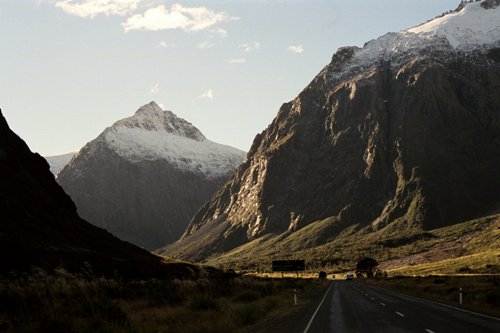 Gary Sauer-Thompson, on the road to Milford Sound, Fiordland National Park, 2008
The international tourist holiday is structured around spending a lot of time driving from one iconic site to another, with quick stops at various scenes or views on the way. Most photography is taken in and around the iconic sites, such as Milford Sound or the Franz Josef Glacier.
The car interior is a control center of sorts, a center of emotional and social activity that frames a particular view of the world outside, and which occasionally offers the outsider glimpses within. Meaningful moments and substantial portions of our lives take place in cars especially when a tourist . We frame the landscape. from the perspective of our experience of being inside a car looking outside.
This way of working was explored by Lee Friedlander, with respect to the urbanscape.
May 8, 2008
Mesas Mars
Another kind of photography:
 Rocky Mesas of Nilosyrtis Mensae, Mars, NASA Image of the Day
The Mesas in the Nilosyrtis Mensae region of Mars appear in enhanced color in this image produced from the High Resolution Imaging Science Experiment (HiRISE) camera on NASA's Mars Reconnaissance Orbiter (MRO). The image, which was taken on April 5, 2007, is part of a campaign to examine more than two dozen candidate landing sites for the NASA Mars Science Laboratory rover, which is scheduled for launch in 2009.
May 7, 2008
Leunig: urban nature
An example of urban nature in an empty (industrial and modernist?) city:
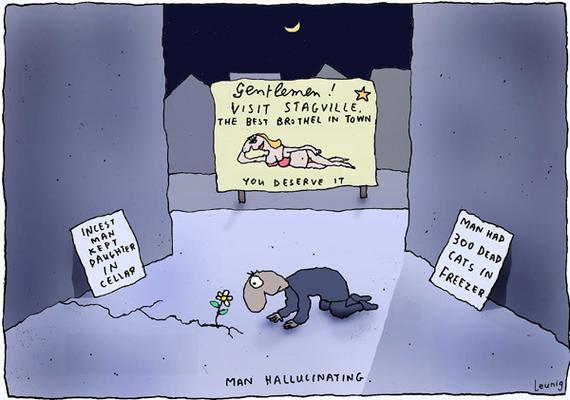 Leung
Leung
It's a bleak urban image. However, some of our cities are changing. As Norman Day observes in The Age about Melbourne:
The city centre has benefited from people making it their home, bringing it back to life at all hours so it is no longer just the business centre of a dormitory metropolis. There are now fewer dead parts to the city. Relaxed licensing laws have resulted in a proliferation of small bars, cafes and restaurants that keep the city active.
This makes Melbourne, in contrast to Adelaide or Perth, a livelier city than the old industrial one of the 20th century.
However, as Day goes on to say:
But while the city is much livelier than in the past, much remains to be done. With the notable exception of Federation Square, Melbourne lacks plazas, green open spaces and traffic-free streets. The Bourke and Swanston street closures are a failure of nerve that take life out of the city rather than invigorate it.
So how does good urban design change that? Day doesn't really say. He says that we have the template in our alleys and arcades and should be prepared to extend these as the city grows. However, liveability is not the same as sustainability.
May 6, 2008
German Photography: Jitka Hanzlová
If the boom in German photography was in the 1990s, then the sole supremacy of the Düsseldorf Becher school with its strictly documentary perspective of the first generation of practitioners looks to be fading, if not definitely over.
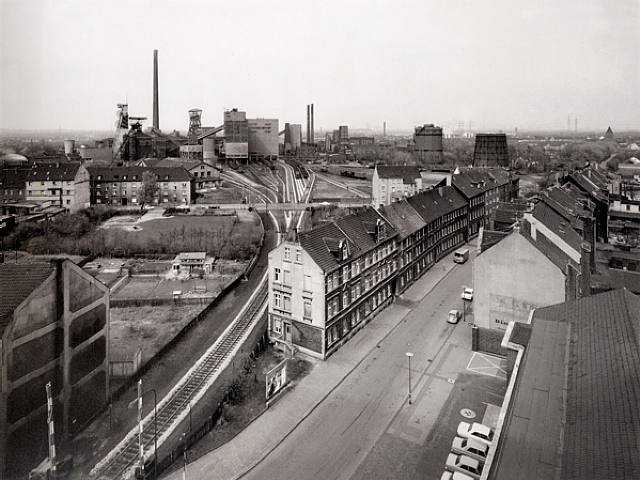 Bernd and Hilla Becher, Zeche Consolidation, Celsenkirchen, Ruhr Germany, 1974, gelatin silver print
An alternative photography school is at the University of Essen. An example is the work is Jitka Hanzlová, which is characterized by careful composition, a subtle sense of colour and light, and a quietly poetic painterly quality. She is known for her portrait work but there is an non-portrait strand about the village where she grew up.
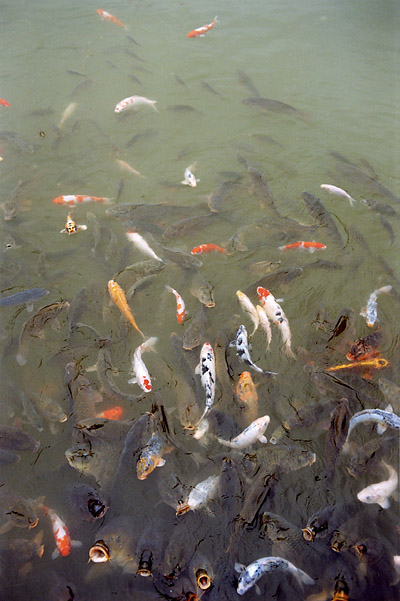 Jikta Hanzlová, Untitled (hungry fishes), 2004
The forest series is particularly interesting given my difficulties with the beech forests in NZ.
May 5, 2008
Biosphere 2
Biosphere 2 was established as a private concern by a Texan billionaire which was intended to pay its own way through the development of patents. It was established sixty miles east of Tucson due to the strong sunlight and clean environment.

From a visual point of view the most interesting aspect is the structure itself with its strong white interconnected lines, pale glass windows against a strong blue Arizonan sky.

The structure itself contains squarish pyramids, mushroom towers, oval greenhouses and the domish lungs. All capture the light strongly and contrast heavily as lined man-made shapes against the rough and rugged south-west landscape.
German Photography: Bernd and Hilla Becher
I know little about contemporary German photography apart from the work of Andreas Gursky and the landscape work of Michael Reisch. My impression is that photography in Germany is booming.
What I do know that in the 1920s and early ‘30s German photography was dominated by two distinct approaches to making images. The first is associated with the work and ideas of László Maholy-Nagy (1895-1946), championed unconventional forms and techniques, unexpected vantage points, and playful printing techniques to engender a fresh rapport with the visible world. The other, part of a movement called New Objectivity (Neue Sachlichkeit), emphasized rigorous and close observation, bringing a sharply focused, documentary quality to the photographic art. It included Albert Renger-Patzsch, August Sander, and Werner Manz.
And since then? The key figures among the later group are Bernd and Hilla Becher, who since 1959 have explored the forms of the built environment, including traditional German houses and, most famously, industrial structures, making hundreds of images of water towers, blast furnaces, and mining apparatus.
 Bernd and Hilla Becher, large, steel storage tank, circa 1960s, silver gelatin print
I gather that there work has been been influential and so way can talk in terms of the Düsseldorf school ie., the so-called Becher School at the Düsseldorf Art Academy.
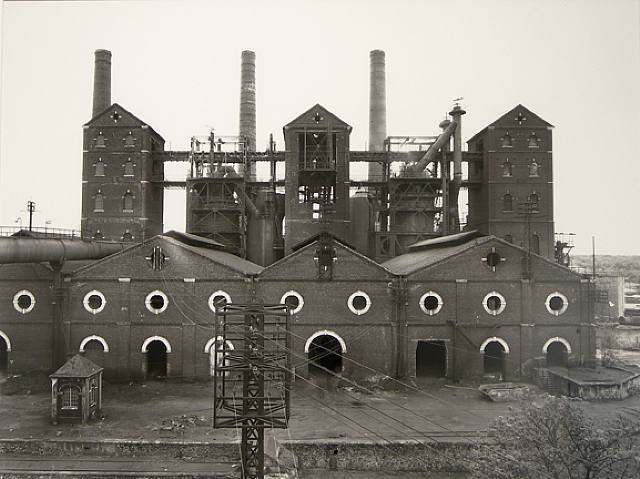 Bernd and Hilla Becher, (Blast Furnace) Neuves Maisons, Lorraine, France, 1971, silver gelatin print
Key figures in the Düsseldorf school that emphasis a clinical objectivity and large format cameras are Andreas Gursky, Candida Höfer, Axel Hütte's land and urbanscapes, and Thomas Struth. There is also the more idiosyncratic work of Thomas Ruff.
The art context is painting's beleaguered position in a world increasingly dominated by film, and by photography in particular, whether the best painting aspires to the condition of photography or the best photography aspires to the condition of painting, or that photography hasn't really spelled the death of painting since art went mechanical.
May 4, 2008
virtual reality
Australia on the international fashion map. Sydney is the hub of Australia’s fashion design and manufacturing industry – and it aims to become the fashion capital of the Asia Pacific. Like the Logies the Rosemount Sydney Fashion Week is a bubble around which circulate a galaxy of media.
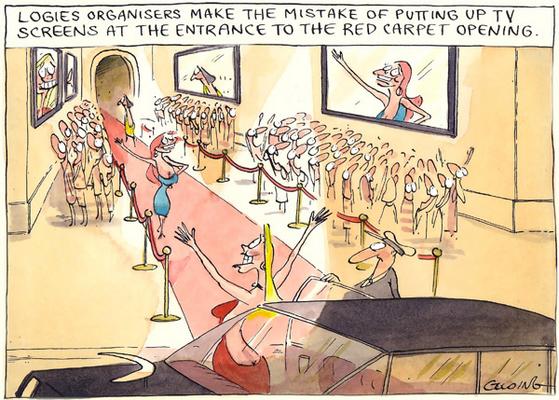 Matt Golding
The media commentary is very much a celebration of what is happening inside the bubble, rather than a cultural criticism of fashion, by the fashion bloggers.
May 3, 2008
Astro photography
This image is from the Astronomy Picture of the Day series and is the work of an amateur astrophotographer.
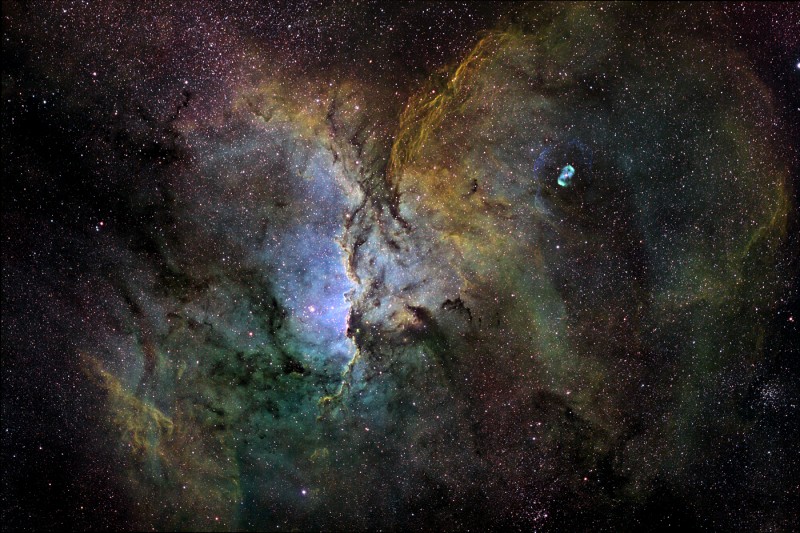 John Ebersole NGC 6188
Astrophotography is booming with the advent of digital cameras, since special light-pollution filters and advanced techniques of computer processing, allow photographers to capture l astrophotographs even from light-polluted, suburban skies.
May 2, 2008
Photoforum + NZ photography
Photoforum showcases New Zealand photographic work and, from all accounts, it is run on a shoestring with lots of volunteer labour, gathered around the editorship of John B Turner. It is part of the art institution and the people associated with this non-profit society have historically aimed to:
showcase local talent, critically inform, stimulate and challenge New Zealand photographers to develop their ideas into a tangible body of work, as a portfolio, essay, exhibition, or book.
They organise exhibitions, workshops and lectures, produce a magazine MoMento and run their own blog. The work nurtured is primarily that of contemporary photographic artists and social documentarians.
 Gary Sauer-Thompson, waterfall, Waiho River, Franz Josef Glacier, New Zealand, 2008
What surprised me about Photoforum when I rediscovered it whilst surfing the internet when in NZ was the absence of the work of landscape photographers, such as Kate Pedley and Daniel Murray. They did not appear in PhotoForum's survey of contemporary New Zealand photography in 2000--The Active Eye.
In exploring those photographers selected back in Australia I realized that these two digital-based wilderness photographers started their work after the survey, and that the survey took us up to the beginning of the digital revolution in photography. If a customary definition of landscape is a portion of land which the eye can comprehend at a glance, then the contemporary understanding of landscape includes the sense of it as a cultural convention shaping the way in which we envision and construct the natural world.'
Closer examination of Photoforum indicated that the Active Eye's understanding of the category 'landscape' was idiosyncratic, as it included images that were not landscape and it contained only a few images that could be understood as wilderness photography. It did not include the work of established wilderness photographers, such as Craig Potton, and Andris Apse and Rob Brown.
My judgement is that there is a big gap between photographic work produced in art circles and those wllderness/landscape photography working outside art circles who are not commercial-only photographers.
 Gary Sauer-Thompson, waterfall, Waiho River, Franz Josef Glacier, NZ, 2008
Do we infer that wilderness photography is not landscape art? Or is that landscape photography has become unfashionable in the art institution because of its pictorial or picturesque conventions? These make it pre-modernist for the modernist art institution and so a decayed artistic style.
Could not the picturesque be considered as an aesthetic category that is a combination of the sublime and the beautiful and is midway between the the most violent aspects of the sublime and the most tranquil forms of beauty, and so a reduced, gentler, less exalted form of both? As such it is mode of perception, a particular set of artistic conventions and an interpretation of the landscape. It is one that is based on the idea that beauty does not reside in some objective property, like symmetry or proportion, but rather in gestures that both train and associate our memories or emotions.
New Zealand artistic culture attempted to humanize modernism with picturesque asymmetries and a touch of robust popular culture.
Colin McCahon
Colin McCahon's 'Victory over Death 2' belongs to his Practical Religion series. I was never able to connect with this religious based work when I was living in NZ, even though McCahon is known for incorporating text and iconography. I much preferred the abstracted regionalist landscapes then.
Now I can appreciate the the stark black and white and tonalities of grey, the way that the text is an integral part of the work and the struggles with faith in 'Victory over Death 2'.
 Colin McCahon, Victory over Death, 1970, synthetic polymer paint on canvas
In 1978 the painting was given by the New Zealand government to Australia in commemoration of that country's bicentenary. The tabloid media in Australia had a ball. This iconic work is now in the National Gallery of Australia’s collection.
My response to McCahon's work is through the concepts of place, identity, cultural memory and spirituality and his New Zealand's artistic traditions and critical practices'. His work was grounded in the landscapes of New Zealand and it was the landscape that served predominantly as a vehicle for his propositions regarding the relation of the individual to physical and religiousl worlds.
May 1, 2008
celebrity + teenage sexuality
This is the Annie Lebowitz image from her Miley Cyrus photo shoot for Vanity Fair that is causing all the fuss ---- "topless" photos of hitherto wholesome 15-year-old Disney star Miley Cyrus.
 Annie Lebowitz, Miley Cyrus, Vanity Fair, May 2008
Lebowitz has portrayed Little Miss Innocence, role model to six-year-old girls as a provocative sex kitten. The Family values crowd are outraged.
Isn't sex what celebrity culture is all about? Isn't this a standard VF pouty pictures of an ingénue? Isn't Cyrus 15 and so becoming, or is, a sexual person? What's new about a girl's sexuality being used to sell magazines. Hasn't the Miley/Hannah been used to sell everything from bedsheets to karaoke machines?
Like Britney Spears before her, Miley Cyrus has been deliberately marketed as a Lolita: both innocent and knowing, sexy but not sexual. Isn't this image Cyrus with her dad, Billy Ray, more disturbing than bare back?

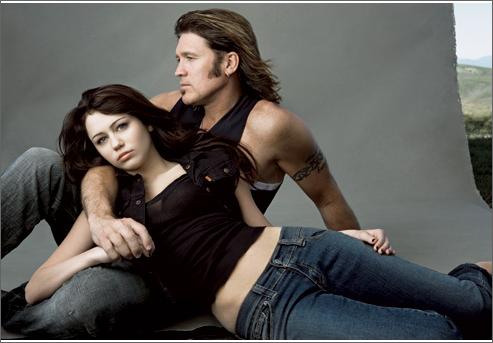 Annie Lebowitz, Miley Cyrus and Billy Ray, Vanity Fair
Check the video.
Isn't it more disturbing that our culture sends message to young girls that their job and their worth as young women will depend on their ability to look and act sexy, but they have to talk in about virginity, purity and sexual innocence.