|
November 24, 2006
With the advent of the hand-held Leica camera in the mid-1920s, photographers acquired the capacity to go out into the world---updating the 19th-century flaneur, eg., Baudelaire--to try to capture that instant when visible reality itself seemed to yield an artistic result. Often the street was represented by many of the more poetic photographers as pretty, or a making beautiful. Beauty remained the core aesthetic value.
Not so here with this wandering through the city streets of modernity by Lee Friedlander:
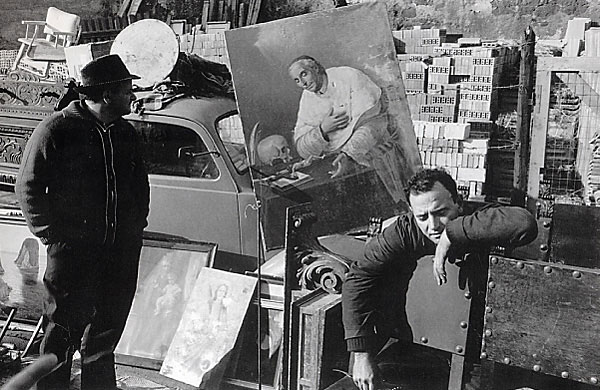
Lee Friedlander, Rome, Italy, 1964
The isolated photographer goes into the seductive marketplace full of bewitching commodities to have a look at it, but also to find a buyer for his product.
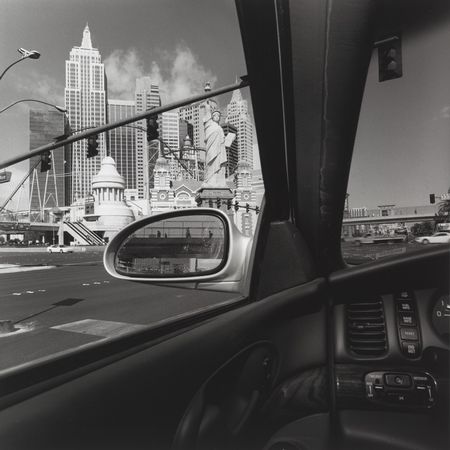
What is offered by Friedlander are moments of existence, which enter the memory as disconnected sequences of images of the diverse meanings, that are associated with the daily shocks and conflicts of late modernity.
Often in modernist American accounts of the history of photography we have the group of Dianne Arbus, Robert Frank, Garry Winogrand, Lee Friedlander and William Eggleston as the formal/content core. Then its decline: --photography lost something back in the '70s somewhere, somehow. Maybe we need an alternative way of reading of the photographic tradition than the old modernist one?
An alternative that is a critique of visual culture, but is alert to the power of images for good and evil and is capable of discriminating the variety and historical specificity of their uses.
|


