May 30, 2011
the photographic and the filmic image
As is well known the modernist art critic and theorist Clement Greenberg held that a particular medium has to be defined on the basis of its own features (which are unique to its nature), hybrid images belong to the category of the ‘post-medium’ which puts into crisis the very idea of medium specificity.
From this perspective, hybrid images--eg., digital crossovers between film and photography in artworks----are seen as a symptom of a crisis of the modernist understanding of the medium of photography or even photography's obsolescence in so far as video technology takes over its most significant characteristics and functions.
In Photo-filmic images in contemporary visual culture in Philosophy of Photography (Vol.1 No. 1) Alexander Streitberger and Hilde Van Gelder say that:
Over the last two decades studies on the interaction between the photographic and the filmic image became increasingly popular. This new orientation is partially based on the insight that the ontological difference between film and photography, usually claimed by scholars of photography theory and film studies up to the 1990s, no longer holds in the digital era. With the advent of digital technology, the boundaries between the photographic and the filmic image are constantly blurred, both technically – in drawing on the same software and hardware engineering – and perceptively – in leaving the spectator in doubt of the (photographic or filmic) nature of the image.
It is it is widely accepted that the profound shifts in the complex technology of the visual caused by the digital evolution challenge the traditional distinctions between the filmic (moving) and the photographic (still) and give rise to the photo-filmic hybrid.
May 29, 2011
photography as a mould of time
In Francis Bacon: The Logic of Sensation Gillles Deleuze characterizes the photograph as a ‘mould’ of time that immobilizes the instant and, in a way that remains alive to the limitations of photography, privileges a given point of view and its creation of an (institutionalized) subject.
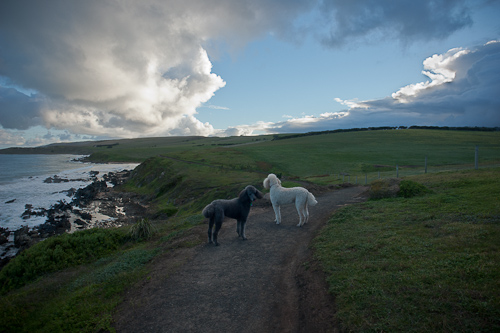 Gary Sauer-Thompson, cliff top walk, Victor Harbor, 2011
In his analysis of Bacon’s oeuvre Deleuze contrasts the possibilities of painting and photography thus:
We are besieged by photos which are illustrations, newspapers which are narratives, cinema- images, tele-images [...] Here there is an experience which is very important for the painter: a whole category of things that one can term ‘clichés’ already occupy the canvas.
Here, Deleuze plays with the double sense of cliché in French, which signifies both the snapshot and a stereotyped mode of thought: both of which require only minimal skill, time or effort and both of which freeze and limit reality.
Space is continuous and contiguous, exemplified by ‘any-point-whatever’ as the indivisibility of movement itself. Photography limits that perception, privileges certain views – of space and instants of time. Deleuze contrasts the photograph, a mould of space, with the cinematic shot: a mould of change. Whilst he sees the painting as providing the possibility of ‘the adventure of the line’ photography can only trace the ‘state of things’ rather than becoming.
Photography does not have the ability to address, treat, or disrupt the imposed objectivity and pre-disposed documentation of the mechanically-reproduced image, engender new forms of creativity, and point toward productive desires.
Is this the case? Can we think of the photographic differently to Deleuze? Can we expand the limitations of photography? Can photography be organized into various types of image? Can we think in terms of a daguerreotype that moves?
May 28, 2011
Getty Images
After a long period of indecision I've decided to contribute my photos to Getty Images; or rather to submit the 24 or so images their image "editor" has selected from my Flickr archive. An example.

Gary Sauer-Thompson, Starfish Hill, Cape Jervis, 2010
Flickr has become the world's shoebox, a place where anyone can store their pictures, or put on an exhibition. In a partnership with Flickr the Getty Images editors handpick photographs from Flickr’s community of 3 billion images and they refresh the collection with thousands of new ones each one month. Images from the Flickr Collection are meant for professional use, typically come with royalty-free or rights-managed licenses, and start at $49.99 for 500KB RGB photo and go up in price with increased size.
This partnership is upending the role of traditional gatekeepers and destroying the older economics of scarcity. And it too is leading to a cottage industry of hand-wringing and nostalgia for the old days. Photography, ain't what it used to be.
Essentially, Getty acts as the middle man by informing the prospective buyer of details such as pricing and Conditions of Use before sending a request to the owner of the image.These become stock images used by those who want to spice up a presentation or blog post etc.
I was not a member of the Getty Images Call for Artists group on Flickr. I kept on getting Flickr mail which I ignored, apart from contributing one image.
Why the indecision? After all, this partnership gives photographers a new way to make some money for their work, something that is always appreciated in the artist community. It was mostly due to the computers in the digital suite being switched over from Windows-based PC to Macs, and then setting up the back up systems.
I wanted to see how things panned out--- a stock company’s motives can often be to merely warehouse images for themselves with no guarantee of return, despite your images providing them an asset.
Professional photographers are disturbed--their occupational world is being torn apart by digital technology---eg., the digital camera enabled almost anyone to take a photograph that was accurately exposed, in focus and sharp. What's happening to professional photography is just one instance of "the mass amateurisation of publishing", to use a phrase coined by the cultural critic Clay Shirky, who has no time for elegies for vanishing worlds.
May 26, 2011
Victor Harbor Council + Rambler
Though junk for code is about our visual culture and photography I sometime blog about local issues at Victor Harbor. These have been about the impacts of rising sea levels on the coastline. See here and here.
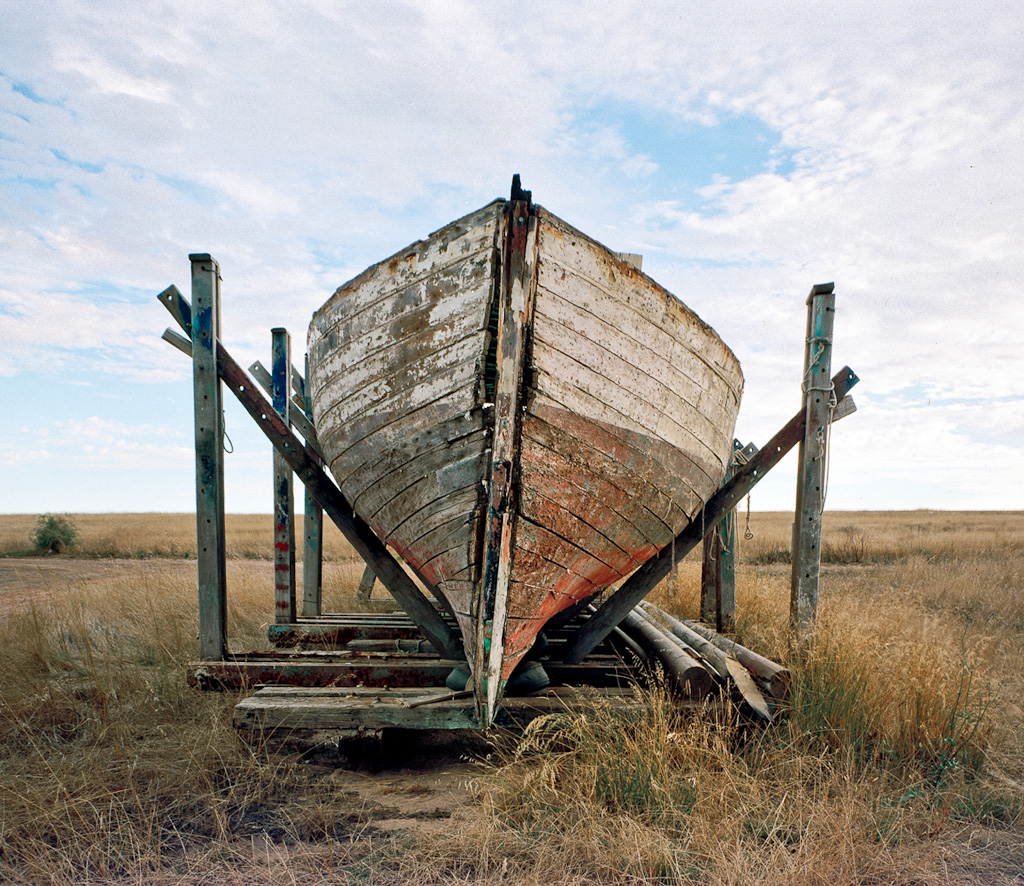 Gary Sauer-Thompson, Rambler, rubbish dump, Victor Harbor, 2011
This post is about protecting heritage --or more specifically preserving South Australia's maritime heritage. In this case it is about the boat Rambler which was built by Peter Sharp at Cruickshanks Corner, Port Adelaide, in 1875 and is possibly Australia’s oldest racing yacht. That is something worth preserving.
When Searles Boatyard in Port Adelaide was shut down to make way for the now stalled Port Waterfront Redevelopment, people from the Victor Harbor Council offered to take Rambler as a restoration project. The Council, rather than working on a restoration project has dumped Rambler in its council dump unprotected even though the boat is part of SA's and Australia's maritime heritage.
See what I mean about not preserving SA's maritime heritage? My Flickr stream has more background on Rambler.
May 25, 2011
American photography: Taryn Simon
In her photographic project An American Index of the Hidden and Unfamiliar the photographer Taryn Simon compiles an inventory of what lies hidden and out-of-view within the borders of the United States.
Her large-format photographs examine a culture through documentation of subjects from domains including: science, government, medicine, entertainment, nature, security, and religion. There was an exhibition of her work at the Centre of Contemporary Photography, Melbourne late 2010.
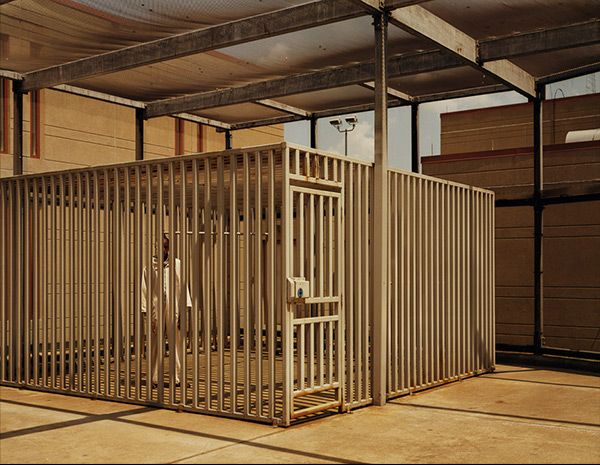 Taryn Simon, Death Row Outdoor Recreational Facility, "The Cage", Mansfield Correctional Institution, Mansfield, Ohio
Whilst engaged in the business of exposure and dispersion, it is ironic that the places she chooses to depict are often sites of restriction. In many cases she leads us up to and across boundaries, into institutions that would ordinarily remain closed to us.
At Mansfield Correctional Institution, death row inmates are permitted one hour of outdoor recreation per day in individual or group containment areas known as cages or bullpens. Inside segregated cages there is only a chin-up bar and inmates are not permitted to bring any items with them. In non-segregated cages there is a stationary basketball net and they are permitted to bring with them items including a basketball, radio, deck of cards, and cigarettes.
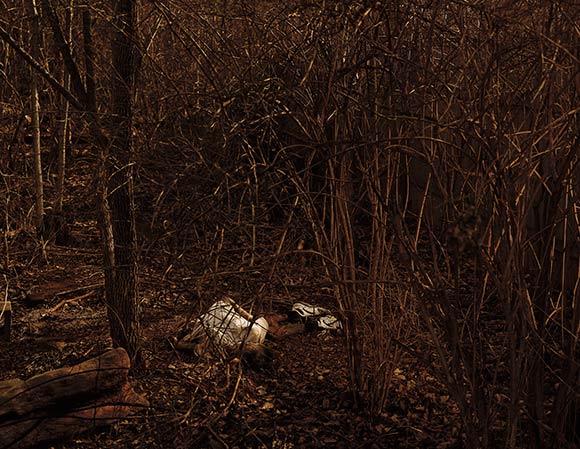 Taryn Simon, decomposing corpse, Forensic Anthropology Research Facility, Knoxville, Tennessee
Simon made her name with An American Index of the Hidden and Unfamiliar, published in 2007, a book that delves deep into a secret America in images that are often both detached and ominous: a nuclear waste storage facility in Washington State; a cryopreservation unit where bodies are frozen just after death; a bio-containment laboratory where deadly animal diseases are studied; a death row outdoor recreational cage; a cave where a sleeping black bear and its cubs are monitored by biologists studying hibernation.
She is part of a movement of relatively new kind of photography that blurs the boundaries between reportage, conceptualism and portraiture. Alongside the likes of Jim Goldberg and Paul Graham, whose work she makes work that straddles the worlds of documentary photography and fine art.
Dr Marcus Bunyan in a review of the exhibition Simon's work at the Centre of Contemporary Photography, Melbourne for the Art Blart blog says:
This is photography as documentation used to disseminate information, documentation that reinforces the indexical nature of photography (the link between referent and reality) as a form of ‘truth’ – hence the ‘Index’ in the title of the body of work, a taxonomic ordering of reality. Even then some of the photographs have to be validated by text for them to have any meaning. “The visual is processed aesthetically and then redefined by its text” trumpets the wall text.
Bunyan goes on to make a critical judgement of the quality of this body of work. He says despite their ‘hidden’ and ‘unfamiliar’ context these photographs are very dull spaces. Simon’s camera angles are by the book.
So are most of the photographs. Of course, I understand the revealing of meaning in the photograph by the text and the surprise this entails but this simply does not dismiss the fact that some of these works are just poor. In fact I would say only about 50% of these photographs could stand alone without the validation of the text. Does this matter? Is this important? Yes I think it is, for some of these works are just deadpan photographs of entropic spaces that are only given meaning because the photographer says they are important things to photograph.... Even with text some of the photographs still have no resonance.
May 24, 2011
Patricia Piccinini: between animal/human
There is a survey exhibition of Patricia Piccinini's work entitled Once Upon A Time, now at the Art Gallery of South Australia.
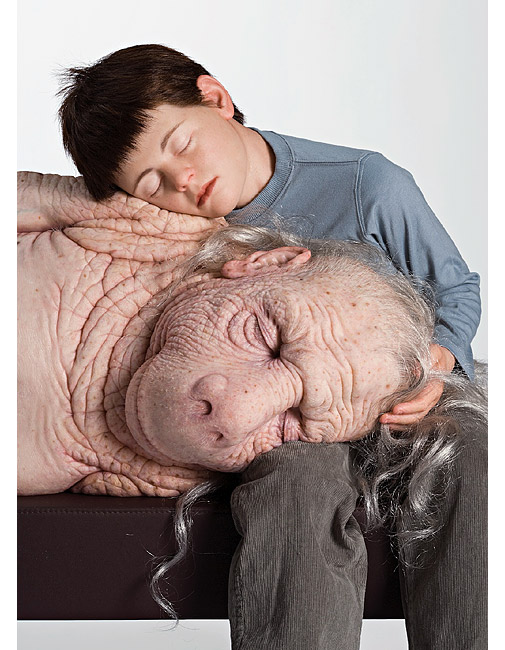 Patricia Piccinini The Long Awaited, 2008, sculpture
Piccinini, who lives and works in Melbourne, is known both in Australia and internationally for her critique of what is natural and artificial in the current digital and technological world. Her sculpture, photography, video and installations interrogate issues such as biogenetics and cloning, bioethics, consumer culture, artifice and nature, in particular how these ideas are subtly changing our society.
She says, in describing her practice:
I am interested in the way that contemporary biotechnology and even philosophy erode the traditional boundaries between the artificial and the natural, as well as between species and even the basic distinctions between animal and human.
It is the concepts that underpin modern science, such as genetic engineering and other forms of biotechnology, that Piccinini explores.
May 23, 2011
Australian Photography: Tim Handfield
Tim Handfield is a Melbourne based fine art photography and founder of The Colour Factory, which he managed from 1980 to 1992. The Colour Factory Gallery, which is located in the arts precinct of Fitzroy, Melbourne, hosts contemporary exhibitions with an emphasis on photo-based art, on a monthly basis.
Handfield's Plenty exhibition explores the margins of Plenty Road between Bundoora and South Morang, where Melbourne’s outer urban development meets the grassy eucalypt woodland of the Victorian Volcanic Plain.
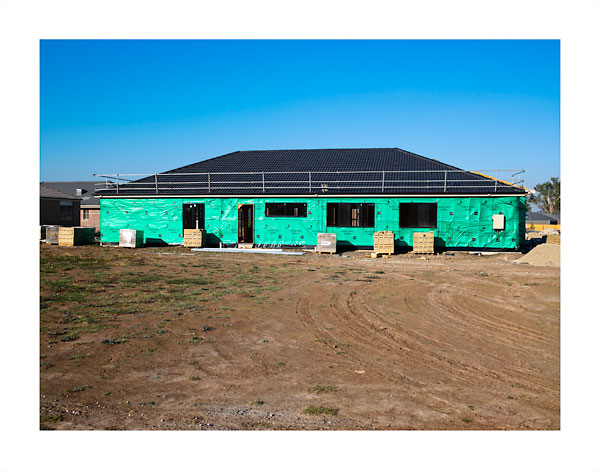 Tim Handfield, untitled, from Plenty
The photographs in the exhibition explore the austerity of new suburbia with its strange and compelling mixture of excess and decay, opportunity and loss as the landscape undergoes dramatic change.
Tim has also established and managed a number of successful businesses including: a professional photo processing laboratory, a leading supplier of technology solutions for design, photograph and video editing, and a web based system for marketing and delivering stock photography. Tim’s current work includes personal photographic art projects, and providing digital photography consulting services to leading cultural institutions.
May 22, 2011
Seven Central Australian Photographers
The SA Museum has an exhibition entitled Images of the Interior, which is a selection of photographs by 7 photographers from its extensive archives. The photographers are Francis J Gillen, Samuel Albert White, William Delano Walker, George Aiston, Cecil Hackett, Ernest Kramer and Rex Battarbee.
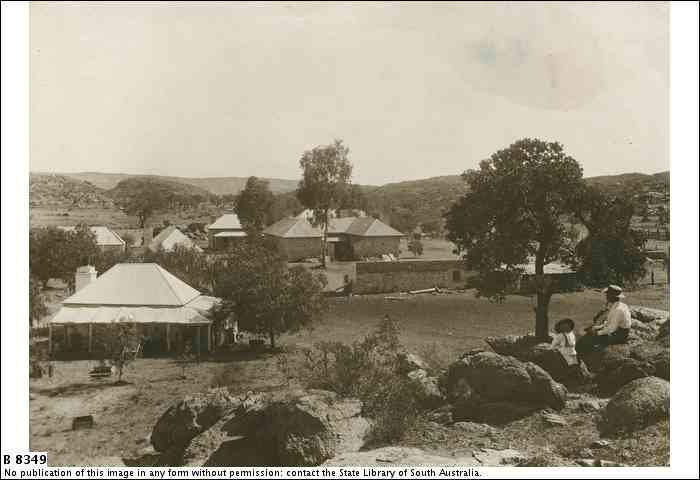 Francis J. Gillen, Telegraph Station at Alice Springs, 1856
These exhibition photos document the frontier society and fragile environment of Central Australia during the half-century from the 1890s to the 1940s. Unfortunately not many of the images are online and not much text. Nor are the extensive photographic archives either.
The curation of the exhibition left a lot to be desired in that these are photographs of aboriginal people taken by by colonialists --the aborigines were objects of the powerful colonial gaze. They were primitives with little about the colonial dispossession of the aborigines from their lands and the poisoning of their waterholes or them becoming the prisoners of the brutal colonial regime.
May 19, 2011
German photographic discourse
Sarah James in her Photography's Theoretical Blind Spots: Looking at the German paradigm in Photographies (vol. 2 No. 2) explores the differences in the Anglo-American and German photographic discourses. She says that:
German photography is often considered to be a “photographic photography” that makes clear its technical facility. Much of the most influential recent German photography – from Bernd and Hilla Becher, to Thomas Struth or Michael Schmidt, or the less well-known Evelyn Richter and Rudolf Schäfer – demonstrates a highly precise documentary vision, alongside a distinctive tactility, which seems to stem from a desire to derive experience from a photographed reality.
She adds:
By the 1970s, art historians and critics in Germany such as Klaus Honnef, Enno Kaufold, Berthold Beiler, Peter Pachniche, Ulrich Domröse and Friedrich Herneck had begun to lay the foundations for a theoretical and historical discourse on photography. A consistent characteristic of this German criticism is found in the desire to picture photography’s particular vision, objectivity, and aesthetic in a dialectical fashion. The main currents of this scholarship sought to analyse photography in terms of its visual, perceptual, “photographic”, documentary character, and the medium’s unique attachment to the real.
The German avocation of photography as objective as opposed to subjective, and the location of its definitive nature in its crucial attachment to reality, as opposed to an inherent meaninglessness runs through German photographic thought.
She adds that the dominant theoretical approaches to photography in Germany – which emerged in the 1970s, and have developed to the present – differ quite significantly from those in the Anglo-American context. In the latter:
in the 1970s photography entered the art world, an art world that was largely defined by conceptualism. The medium became entangled with the cultural theory, semiotics and poststructuralism that were dominant in the art pro- duction and theory that have since come to be synonymous with the “postmodern”. As much photo-art was bent on the deconstruction of past modernist values, this situation resulted in the equation of photography with postmodernity, and the consequent tabooing of terms such as “truth”, “autonomy”, and the complex politics of photography’s “objectivity”.
So much so that in American and British photographic discourse “objectivity” has become a dirty word, chastised as one of modernism’s positivist progeny, unsustainable for postmodern sensibilities, characterized by their aesthetic suspicions of the real world. With it, the idea of photography’s crucial attachment to the real has been buried. If postmodernism ushered in a discourse of the “anti- aesthetic”, then photography came to symbolize its most anti-aesthetic form.
The Anglo-American artis tic practices that employed photography from the 1960s, and the theories that developed around them, were defined by their critique of Greenbergian modernism and the dismantling of its founding ideologies; visuality, autonomy, aesthetics being the central “myths” under attack. If experiencing and thinking art aesthetically were rendered problematic in the Anglo-American context from the 1970s onwards, with the rise of conceptual practices deliberately set upon demolishing the restrictions of aesthetics and formalism with a new political and cultural content.
In Germany, the postmodernism and poststructuralist critique affiliated with it, which was perhaps the dominant critical discourse in France since the late 1960s and in the United States and Britain since the middle of the following decade, never really gained much of a following. Instead, “hermeneutics, reception theory, and various forms of neo-Marxism reigned supreme among German humanists”.
In the German context, this suspicion towards a highly aesthetic or romantic photography led to a new cultural privileging of photography’s particular relationship with the real and the emergence of an investment in refiguring the autonomous spaces and experiences peculiar to photography; particularly in its documentary forms. Importantly, unlike the photography affiliated with Anglo-American conceptualism, even many German practitioners who engaged in sophisticated conceptual strategies – such as the Bechers – were united in their renewed commitment to realism and the objects of photography, to the possibilities of the medium’s capa- city for truth and objectivity.
There was also a renewed commitment to an ideal central to modernism: art’s autonomy. Crucially, though, the autonomy sought by post-war German photographers was not that of the l’art pour l’art but the damaged autonomy that art was now understood to require more than ever While much of the British and American conceptual photographic art that developed in the 1970s relied heavily upon introducing textuality into the photographic practice, via captions and other textual elements, the majority of German practices remained committed to the visual language of photography itself, without any added textual appendages.
Yet, unlike the modernist documentary photography that went before, in this work the photographic medium was in no way regarded as transparent, nor was the photographic image presented as simply reflecting the properties of the real. In relation to these practices the intention of the photographer was no longer important, nor was the notion of the documentary photographer as witness. Instead, beyond the individual, what is recoverable in the aesthetic experiences of much German photography is an investment in the dimension of looking, and the discursive knowledge that it produces.
German photographers continued to share a belief in photography’s fragile objectivity, and the idea of “photographic seeing”, pursued through a highly skilled and rigorous photography.
May 17, 2011
the phantasmagoria of modernity
Walter Benjamin characterized modernity as “the world dominated by its phantasmagorias.” The Oxford English Dictionary gives the following meaning to the word “phantasmagoria” in the late eighteenth and early nineteenth centuries: “a shifting series or succession of phantasms or imaginary figures, as seen in a dream of fevered condition, as called up by the imagination, or as created by literary description.
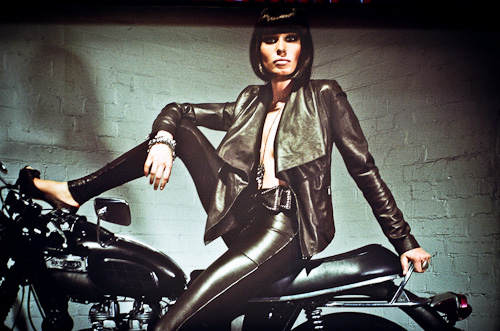 Gary Sauer-Thompson, poster, Adelaide, 2010
For Benjamin, the term seems to indicate the main aspects of the experience of the spectacle a general mode of experience in the world of commodities that have become their own visual culture; to our sensory experience in the commodity culture of capitalism in 20th century modernity that is conditioned by a particular mode of technological advancement.
Benjamin explored the spectacle associated with various forms of the entertainment industry in The Arcades Project (department stores, industrial exhibitions, arcades panoramas, and so on) centred around Paris in the nineteenth century.
An arcade in English is a passage in French and it basically connects two parallel streets and the passage has shops, cafes and other establishments that face each other. The passage is thus open at both ends and covered with glass and iron. Although arcades are found in other European cities, the arcades were invented in Paris and thus remain a Parisian phenomenon.
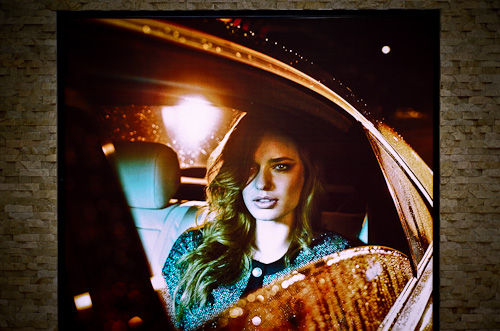 Gary Sauer-Thompson, advertising, Adelaide, 2010
Benjamin’s notion of the phantasmagoria of modernity gives us an understanding of how since the nineteenth century the physiognomy of the city, its architecture and urbanism, as well as the industries of entertainment and display can be understood as historical and material realizations of the commodity culture in our world of global capitalism.
Phantasmagoria for me refers to the magical world of commodities as signs that are designed to seduce and enchant us. A commodity culture is our visual culture in late modernity. This is our regime of visibility and more generally, of representation; it is self-referential system of signs that express modernism system of beliefs--- the utopia of progress, the cult of novelty and fashion etc --that become a site for our urban experience.
May 16, 2011
the networked snapshot
In A Life More Photographic: Mapping the networked image in Photographies (vol.1 no. 1 March 2008) Daniel Rubinstein and Katrina Sluis explore the world of popular digital snapshot photography. In the days of film this personal world was known as the Kodak culture.
 Gary Sauer-Thompson, bone, Victor Harbor, 2011
'Kodak culture' refers to the archetypal readymade image: placeholder for memories, trophy of sightseeing, produced in their millions by ordinary people to document the rituals of everyday life.
Rubinstein and Sluis say:
the technological innovations that made storing limitless numbers of images possible on cheap hard disks and memory cards, and fast and economical distribution of photographs through a high-speed Internet connection, would not have amounted to a restructuring of the place of photography in society if they had not been augmented by a shift in the marketing of computers. At the axis of this second digital revolution in photography was the re-branding of the home computer as the centre of ‘‘digital lifestyle’’.
This concept aims to situate the computer at the heart of family life, replacing the television and the sound system, the coffee table, the phone, the family album and the slide projector. Part of this re-branding exercise earmarked photography, together with music and video, as central to the ‘‘fun’’ things that the computer can do.
By discretely eliminating references to craftsmanship and specialist knowledge from digital photography software, photography is incorporated into the suite of friendly multimedia applications designed to appeal to every computer user. This re-branding of photography occurred in tandem with the disappearance of the camera inside the telephone, thereby bonding photography to the most important device of personal communications that ever existed – the mobile phone.
The consumption of personal photography has become intimately linked with the software interfaces which mediate their display on-screen and photo-sharing platforms such as SmugMug and Flickr. This networking of the snapshot provides something which vernacular photographers have always lacked: a broad audience.
May 15, 2011
American photography: Alex Webb
Alex Webb is classified alternately as a street photographer, photojournalist, and fine art photographer, who runs an interesting blog with his wife Rebecca Norris Webb. They are photographic team who often work together on books and exhibitions and curation.
Alex Webb often uses an off-center, often oblique, frame divider and he understands colour in terms of atmosphere and emotion and the feel of a place.
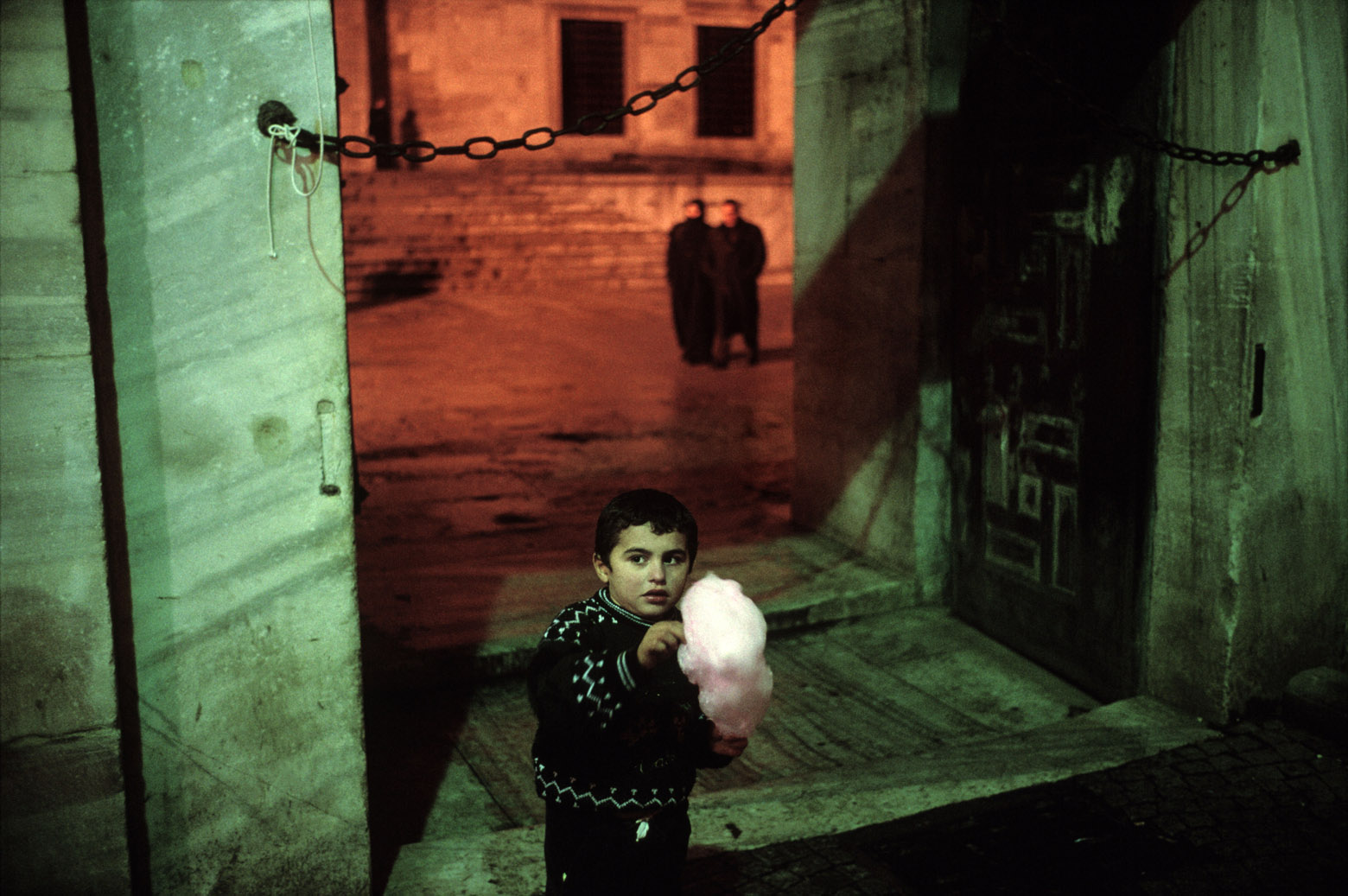 Alex Webb, Sultanahmet, Istanbul, from Instanbul: City of A Hundred Names", 1998
Webb is well known for complex compositions with many moving figures momentarily arranged in a perfect way.
He says:
I only know how to approach a place by walking. For what does a street photographer do but walk and watch and wait and talk, and then watch and wait some more, trying to remain confident that the unexpected, the unknown, or the secret heart of the known awaits just around the corner.
He says that he works in color, where light is really important in a very special way, so he work certain hours much more than others. He is always out at the latter half of the afternoon and in the evening. " It is a whole sort of ritualistic process and a part of it is also that notion that if it is not working I just have to walk more."
He adds:
It is really about walking and feeling the situation. How do you enter the situation. Some situations you get comfortable just walking right in. Others you have to sort of dance around the edge and come in here. The whole sense of the process, a rhythm of the process. The process of going back to a place. The process of learning about a place.
May 14, 2011
American photography: Ira Cohen
Ira Cohen, poet, photographer, filmmaker, publisher from the Beat Generation, is known for his mylar images which he created in the late 60's in his loft on the Lower East Side, New York City. Among the artists reflected in his mirror were John McLaughlin, William Burroughs, Jimi Hendrix and Angus Maclise, poet and original drummer with The Velvet Underground.
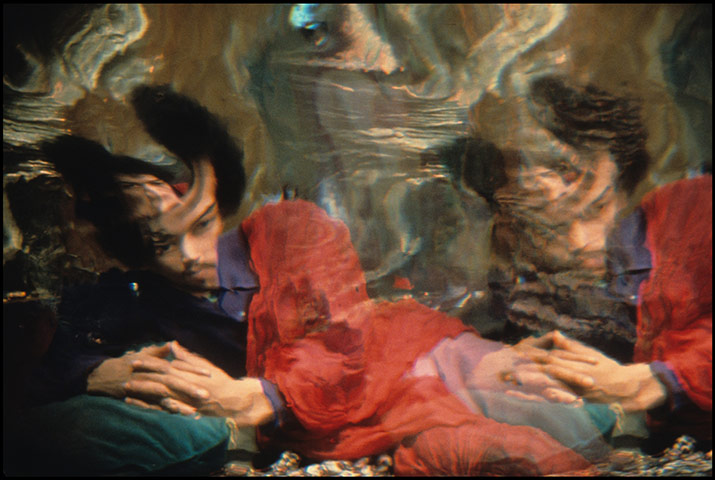 Ira Cohen, Jimi Hendrix, Jefferson Street loft, from Mylar Chamber, New York, late 1960s
Ira Cohen's mylar photographs propose a theatre where actors act out their parts as they go along. It is a making strange.
He says:
I never wanted to be a photographer like the commercial photographers. For me, it was more about the involvement of the mirror, and scrying, reflection, crystal-ball-gazing, trying to get to some other place. It was all about reflection, in the deepest sense of the word.
Though quite well known amongst a certain coterie of artists, poets, intellectuals, collectors, and performers, he has received very little to no attention and he was never been asked to publish a big book of either his poetry or photographs.
May 12, 2011
art photography: assumptions
In her essay "Winning the Game When the Rules Have Been Changed: Art Photography and Postmodernism" Abigail Solomon-Godeau argues that the ideology of mainstream art photography have remained unchanged throughout all its various permutations - stylistic, technological, am! cultural - that it has undergone during its hundred and forty year history.
What has remained unchanged is that art photograph is the expression of the photographer's interior. Implicit in the notion of the photographer's expressive mediation world through the use of his or her instrument is a related constellation of assumptions: originality, authorship, authenticity, the primacy of subjectivity.
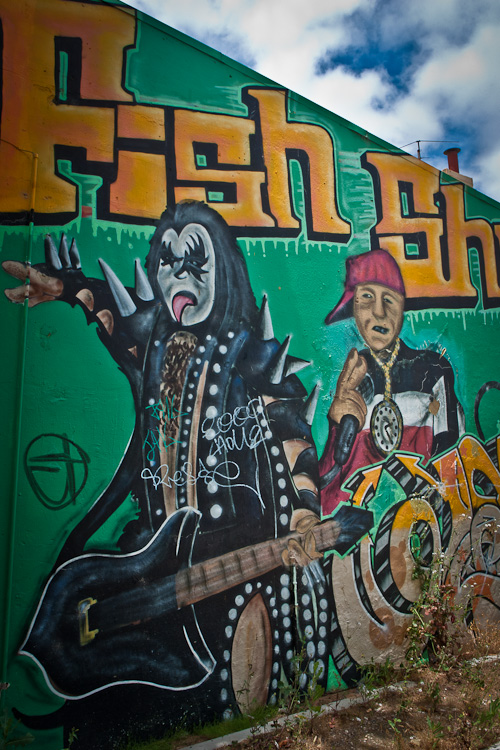 Gary Sauer-Thompson, street art, Port Adelaide, 2010
The concepts of originality, self expression and subjectivity have, at least since romanticism, been seen as the very core of art, and run through modernism. One of the major claims of modernist art theory was the insistence on the autonomy and purity of the work of art.
Modernism emphasised the primacy of formal organisation and values, the autonomy of the photographic image, the subjectivisation of vision, the fetishising of print quality, and photographic authorship. So we have disputes over the merits of the documentary mode over self expression, and working within an exhausted formalism that can no longer generate either heat or light.
Postmodernist practice, in contrast, hinges on the assertion of contingency and the primacy of cultural codes and it jettisons the values of photography as a creative fine art---the concepts of originality, authorship, authenticity, and the primacy of subjectivity.
May 11, 2011
deskilling in art
As I've mentioned on my poodlewalks blog here and here my work flow is often based on me making photographic sketches of a scene or object with a point and shoot digital camera, then play around with the image on the computer, and then decide whether or not I'll reshoot the scene with a large format camera. Underneath his lies the idea of skill and artistic labour.
In the Preface to his The Intangibilities of Form: Skill and Deskilling in Art After the Readymade John Roberts asks:
what kind of theory of authorship do we want after the displacement of the author from the centre of his or her artisanal labours in the twentieth century? One in which the decentred author is returned to art history merely ‘intertextualised’ within a history of artistic styles, or, one in which artistic authorship as an ‘open ensemble of competences and skills’ is grounded in the division of labour and the dialectic of skill–deskilling–reskilling? This distinction is crucial because, despite the general cultural assimilation of the avant-garde and acceptance of the readymade in contemporary practice, there is much intellectual confusion about what constitutes skill in art after the readymade and the critique of productive labour and art in the early avant-garde.
He adds that if today there is a notional acceptance that the readymade, and later Conceptual art, have irreversibly changed the value of what artists do, there is little understanding about why – on the basis of the alignment between artistic technique and general social technique – this is the case. There is, therefore, a limited understanding of why deskilling in art after the readymade does not represent an absolute loss of artistic sensuousness.
May 10, 2011
Chicago Institute of Design: formalism
In her essay "The Armed Vision Disarmed: Radical Formalism from Weapon to Style" in Richard Bolton, ed., The Contest of Meaning: Critical Histories of Photography (Cambridge, Mass: MIT Press, 1989) Abigail Solomon-Godeau asks: "What, if anything, made the Chicago Institute of Design based formalist practice similar to, or different from, the indigenous American variety—that is, purist, straight photography—exemplified by Paul Strand after 191S and the f/64 group in the following years?
She says that there were common grounds in the two formalisms—shared convictions, for example, that the nature of the medium must properly determine its aesthetic and that photography must acknowledge its own specific characteristics.
Deriving ultimately from Kantian aesthetics, Anglo-American formalism insisted above all on the autonomy, purity, and self-reflexivity of the work of art. As such it remained throughout its modernist permutations an essentially idealist stance. Such concepts, as well as related notions of immanence and transcendence, with the parallel construct of the promethean artist....
[It was] the continued emphasis placed on experimentation.... that made I.D. photography rather different from American art photography of the 1950s and 1960s. Whether through the encouragement of color photography or through the various workshop exercises utilizing photograms, light modulators, multiple negatives, photo-etching, collage, and so on, I.D. photography encompassed a broad range of photographic technologies and experimentation that distinguished it somewhat from the dominant purist notions of East and West Coast art photography....
The early Institute of Design rejected the construct of the promethean artist and its individual expressivist subjectivity and private vision.
The very notion of the artist-photographer producing images for a knowledgeable or peer audience was essentially at odds with the dynamic, public, and functionalist concept of photography sanctioned by the German Bauhaus. For Moholy, the pedagogical system of the Institute of Design was conceived literally as a training program, a vocational system that would prepare designers, architects, and photographers to go into the world and in some vague, Utopian sense transform it.
The latter Institute of Design--under Harry Callahan from 1946 and Siskind from 1951--- embraced a subjectivized notion of camera seeing and Callahan exemplify the committed art photographer; equally aloof from marketplace or mass media, content to teach and serve his vision. Photography was a medium of subjectivity. The battle to legitimate photography as art had been consistently waged in terms of the camera's ability to express the subjectivity and unique personal vision of the photographer, and with the postwar valorization of individualism, detachment, and originality, art photographers returned again to their historic agenda.
It embraced Anglo-American formalism assumptions that art photography, at its highest level, represented the expression of a privileged subjectivity, and the use of the formal and material properties of the medium to express that subjectivity. This formalism, which sustained the best work of a Callahan or a Siskind, has run its course and it became a cul-de-sac.
May 9, 2011
American photography: Charles Swedlund
I know very little about Charles Swedlund, the American photography who worked in the mid-1950s, and whose roots were in the formalist world of the Illinois Institute of Design that was founded in 1937 in Chicago by László Moholy-Nagy as the New Bauhaus. Apparently, he taught at Southern Illinois University - Carbondale
The New Bauhaus was the single most influential school for photography and design in mid-twentieth century America, and its photography teachers were Harry Callahan and Aaron Siskind.
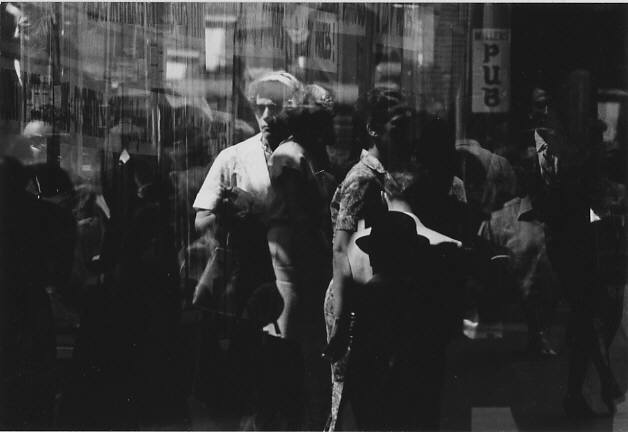 Charles Swedlund, Chicago Loop, c.1955 | Gelatin silver print
Moholy-Nagy's enthusiasm for photography was predicated (at least in the 1920s) on his conviction that the machine age demanded machine-age art: functional, impersonal, rational. Formalism for Moholy signified above all the absolute primacy of the material, the medium itself. Thus if photography, and indeed a photographic processes including film, was defined by its physical properties— the action of light on a light-sensitive emulsion.
The camera was privileged precisely because it was a machine, and camera vision was privileged because it was deemed superior to normal vision. Herein lay the total reversal of terms that had historically characterized the art versus photography debate. "The photographic camera," wrote Moholy, "can either complete or supplement our optical instrument, the eye."
May 8, 2011
renewing Adelaide: unpopular culture
It appears that Adelaide is undergoing a renewal in the unpopular culture’ sphere associated with an emergent urbanism.
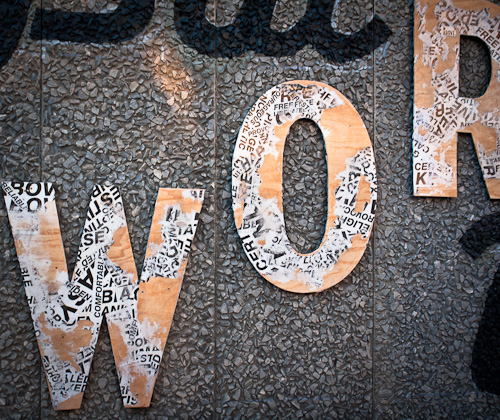 Gary Sauer-Thompson, words, 2011
This is the space between the high culture – with it’s big venues and ‘quality’ art sponsored by the public purse and the occasional big name corporation or philanthropist, and low or pop culture – the mass media, the mass cultural market and the so called ‘mainstream’. In this sphere ‘culture’ is more of a dialogue than a product or commodity; one organized around user generated content and Web 2.0 .
Marcus Westbury says that unpopular culture is:
a thread that connects the independent or alternative, experimental ends of popular genres with a lineage of artists that have always sought to reflect and respond to the real world. It’s in indie films, alternative music, small press, and DIY comics. It’s there in a lot of independent theatre or new music. It’s an engine of creativity, experimentation and innovation that is constantly creating and recreating itself. It’s abundant, vibrant, enthusiastic and perpetually under-resourced.
We can see this renewal at a number of levels. A new Lord Mayor committed to street art; a more innovative city council; online magazines; artists collectives; zine shops; new galleries (see Facebook).
This kind of renewal has undercut my feeling of being depressed about Adelaide since returning from Tasmania. It also counters the urban strategy of "if you push enough people into the city, then it’ll be ‘vibrant’ and ‘diverse’". Notwithstanding that, as
the Renew Adelaide crowd say:
There is an entrenched attitude within particularly local council that a healthy city is a city with a strongly administered, quiet and polite population. If it’s not administered right, we’ll all be tripping over A frames whilst drunk and trying to sue the Council or beat each other up.
The entertainment in the city is focused around suburbanites coming into the city for heavy, late night drinking with its associated drunken violence; and fails to support small venues to host entertainment, live music, theatre, gallery exhibits.
The state government doesn't see small scale cultural activity as a legitimate cultural and economic activity and doesn’t seem to be interested in or understanding the role of the small to medium and independent arts sector at all.
Australia doesn't design cities very well. They are structured around economic growth not culture even though poorer cities (such as Adelaide) look to cultural renewal for salvation and rejuvenation from economic decline and depression.
May 7, 2011
Tim Hetherington: In Memoriam
Tim Hetherington was an acclaimed documentary or war photographer and film maker. He was killed by a rocket-propelled grenade along with the photojournalist Chris Hondros in the besieged port city of Misrata, Libya, on April 20.
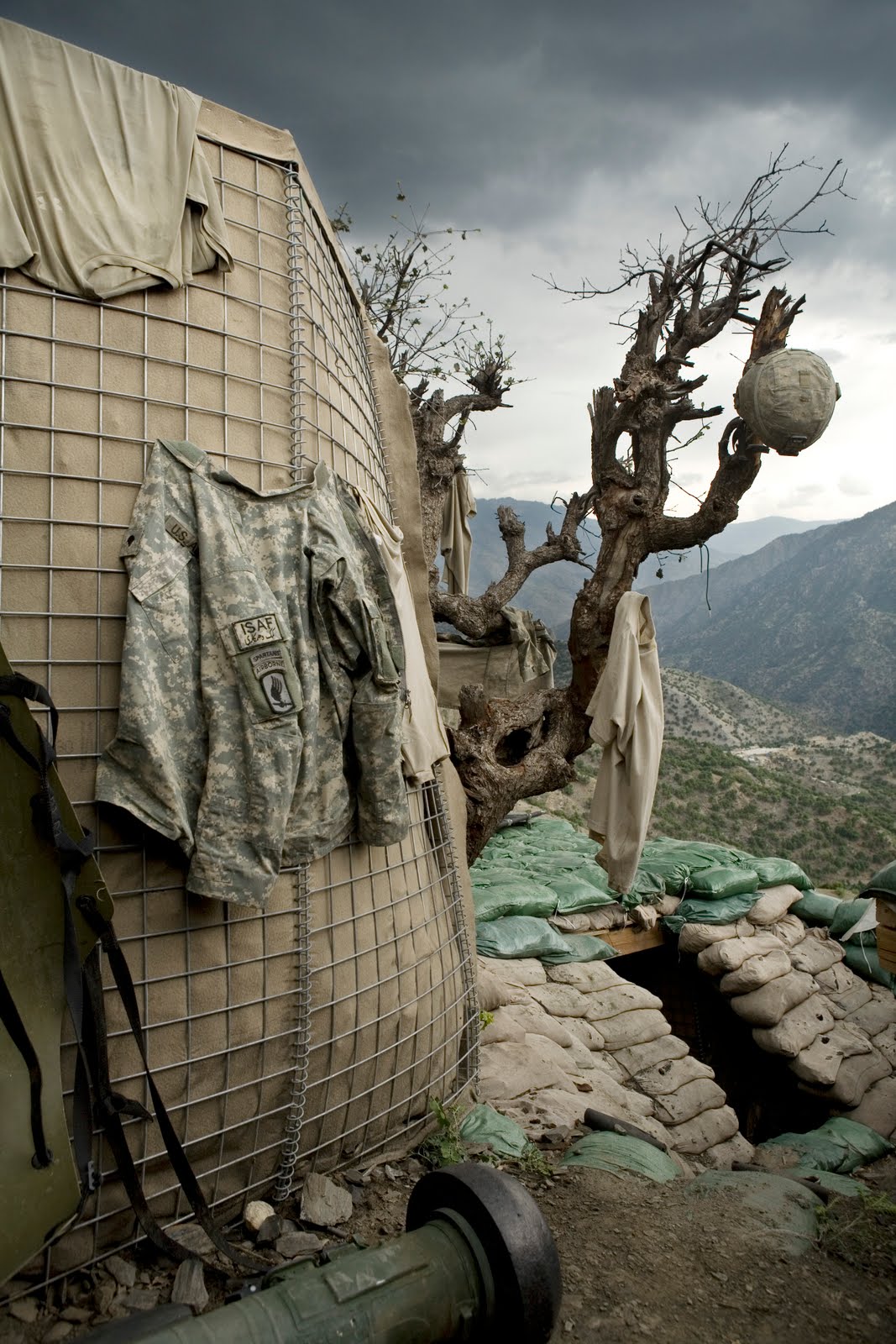 Tim Hetherington, a still from Restrepo
Restrepo, a year in the life of one U.S. military platoon that had been dropped into Afghanistan’s Korengal Valley, where everything from the landscape to the local customs is fraught with peril. Restrepo captures the combination of determination, disorientation, and despair that so many soldiers have said characterizes this war.
Hetherington had left a successful stills career behind to follow up his Oscar-nominated film documentary about the American Marines in Afghanistan and was shooting more video. War photographers are increasingly expected to shoot video – and without the back-up that a TV crew might expect.
Roger Tooth in The Guardian says:
This leads to a new sort of moving visual journalism that is more immediate and personal, without the reporter between the viewer and the action.It feeds off the strengths of the photographer the need to get in close, the need to create a relationship with the fighters he's working alongside.
However, the e amount of war photojournalism being published by news organisations has shrunk dramatically over the years.
May 6, 2011
Exposed: Climate Change in Britain’s Backyard 2007
This is an interesting idea:--photographers exploring what climate change means for the UK by capturing the effects of climate change through the lens. The question that is asked is: 'What does climate change mean for the UK?'
Working with Magnum Photos, the National Trust challenged 10 of the UK’s top photographers to answer this question by representing the impacts of climate change that are already visible in the landscape.
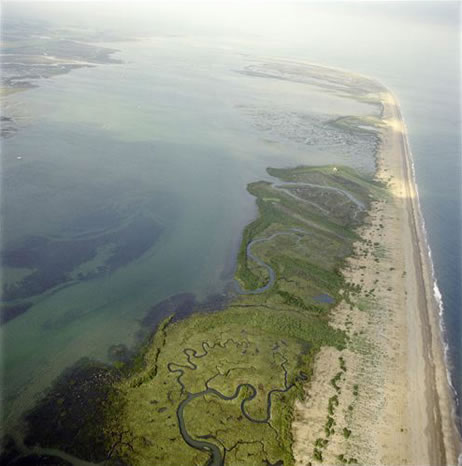 Paul Wakefield, Blakeney National Nature Reserve and Scolt Head, Norfolk, 2007
The rising sea levels means that the vast area of sand, mud and saltmarsh home to globally important populations of birds is covered more frequently by high tides.
Images of climate change usually depict polar ice caps or parched deserts. But climate change is happening in the UK, and it’s also happening in Australia. There are the effects of climate change on our coastline, landscape, trees, wildlife and houses and this is beginning to create a feeling of unease amongst us.
I have started to explore the effects of rising sea levels on the coastline down near Victor Harbor, albeit in a minor or low key way:
 Gary Sauer-Thompson, erosion, sand dunes, Victor Harbor, 2011
The results are not that interesting photographically speaking--especially when compared to the UK work in the National Trust exhibition. I'm considering how to develop this.
photography's uniqueness
The issues that inform the very process of representation in photography are generally those around the relationship between fact and fiction (or the documentary and the aesthetic), objectivity and subjective description, and material object and interpretation.
In Introduction: Photographic Interventions in the International Journal for Theory and Analysis of Literature and Communication Volume 29, Number 1, Spring 2008 Silke Horstkotte and Nancy Pedri say:
More than anything else, it is the photograph’s mechanical production and its supposed indexicality which have set the study of photographic images as well as their use in literature apart from other images Theorists who have linked the photograph’s specificity to its mechanical origins include Bazin (1975), Sontag (1977), and Barthes (1984), among others. As Rosalind Krauss (1981: 26) specifies, “photography is an imprint or transfer of the real; it is a photochemically processed trace causally connected to that thing in the world to which it refers in a manner parallel to that of fingerprints or footprints.” The product of an automatic apparatus, “a photograph is always a photograph of something which actually exists” (Walton 1984: 250). It is the photograph’s indexical quality that makes it the most realist of images and links it to the real world.
Born of a photochemical process, this line of reasoning goes, the photograph is a physical trace of (the light reflecting off ) that which existed before the camera in the real world. The photograph, in short, is a concrete impression of a particular object in the real world.
The almost automatic association of the photograph with the real, the authentic, and the referent is difficult to break. Belief in the photograph’s objective truthfulness persists even in what William Mitchell (1994) calls a “post-photographic era,” an age in which the photomechanical image is being replaced by digitally manipulated or constructed images.
May 4, 2011
British landscape photography: Joe Cornish
Joe Cornish is a well known and highly respected traditional landscape photographer, best known for his nearly twenty-year long contribution of landscape work to the National Trust, and for his columns and articles in the British photographic press.
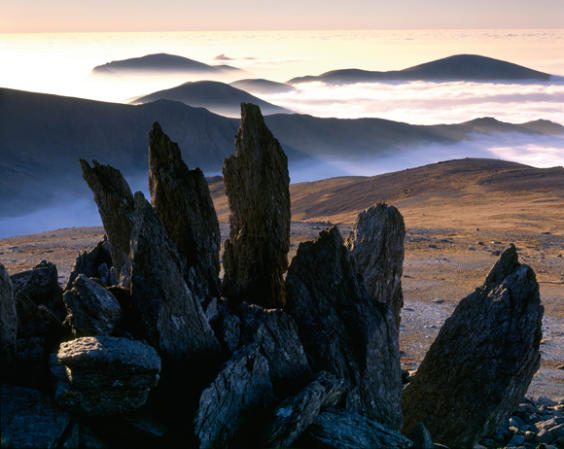 Joe Cornish, Glyder Fawr, Snowdonia, 2007
In this video by Tim Parkin Cornish counts landscape work of the Australian photographer Peter Dombrovskis as one of his primary influences when he was starting photography. He interprets Dombrovskis' pictures as hailing back to Eliot Porter's sense of natural beauty and quiet composition.
 Joe Cornish, View of Dunstanburgh castle, 2000
Cornish says in introducing Tim Parkin's Great British Landscapes:
My own experience of photographing landscape is that what began quite simply as a way of adding a creative element to a walk or simply being outside, grew to become a whole way of life. As an eye-witness to the shape of the land, the seasonal cycles, the variety of habitats and the extraordinary variety that arises on the planet, we become engaged by it and ultimately connected to it. This sense of connection feeds back through our photographs, giving us new conversations and communication with both people we know, and now with complete strangers via the Internet.
For those interested in gear Cornish traditionally used an Ebony 4 x 5in field camera with 90mm (wide-angle), 110mm (wide-angle) and 150mm (standard) lenses. He increasingly uses digital medium format--a back.
May 2, 2011
Australian photography: Andrew Stark
Andrew Stark, an Australian street photographer who has mainly photographed in Sydney since the early 1980s, has published two books of photographs Snaps from Sydney (2003) and Candidly Inclined (2005).
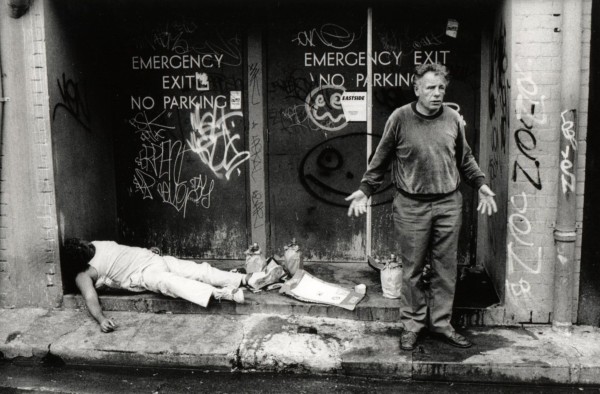 Andrew Stark, Sydney, 1993
Traditionally, street photography is wandering the streets "capturing the moment", or "seizing time", of the world around us. It was usually done with a Leica M and some rolls of Tri-X and it has that gritty, grainy 35mm black & white style. A free e-book on street photography. The new tradition is the Leica M Reloaded.
Stark describes the ethos of street photography aptly:
I genuinely believe photography to be at it's most potent when underscored by truth. To contrive is to control and frankly I'm more interested in observation than direction. Riding the ebb and flow of Sydney's streets, approaching the next corner afresh, never quite knowing what may present itself in the adjoining street. That's the random beauty of street photography. Control has to be a stultifying, creative brake. The magic, emotion charged moments are in my experience invariably captured using an almost sub conscious process, they must never be orchestrated and can rarely be dogmatically collated
Large format photography, in contrast, is more about control and direction rather than observation in the flux of the moment. However I'm not sure that it dispenses with truth.

Andrew Stark, Auburn, 2004
In Random Thoughts he adds that it's fair to say that unposed or candid photography has rarely been as harassed as it is today:
The historians of tomorrow tracking photography's path will note the earliest years of the 21st century as a period filled with challenges as street photographers are confronted by an aggressive public riddled with paranoiac suspicion. In an age of dry conservatism, the pursuit of the largely misunderstood will always meet with frenetic opposition...Photographing in shopping centres, public buildings, railway stations, airports and the like, you can just sense those dark bubbles on the ceiling reacting to your every move and within minutes the big serious guys are in your face, onto your case and if you're lucky, pushing you gently back out into the street. If you're not so fortunate you get to sit in a dingy office for an hour trying to explain the history of street photography to a handful of armed security guards whose idea of fine photography is the latest J Lo calendar.
He adds that neo conservative periods in history are always loaded against true freedom of expression. Ours is one such time and those practising street photography are seen as strange men wielding camera's and then equated with paedophiles.
May 1, 2011
a digital solution
It appears that photographers are now starting to use medium format digital, primarily because of its convenience for their pre-planned projects. John Kiery's work at Llyn Trawsfynydd is one example that I have come across. He uses a Hasselblad 503cwd with a CFV16 digital back and Zeiss glass, and he produces an image that is close to the film look.
Hasselblad haven't completely abandoned the V-system owners in the way Leica abandoned the R-system owners. This backward compatibility is one way to incorporate digital technology into Hasselblad's system or modular 500 series or V cameras. Backward compatibility is what lacking with my Rolleiflexes--eg., SL66 and 6006. I'm stranded in the film world.

Gary Sauer-Thompson, McCafe, from waste series, 2010
For those photographers who already own V-system gear getting any CFV-digital back is the cheapest way into the medium format digital world. The Hasselblad 503CW is still being made, and the digital backs for it are becoming ever more sophisticated.
The only way out for me is buying a Rolleiflex HY6---for film or digital back--- and that is a major investment. It's around $8,000 for the camera body, $4000 for the 50mm f/4 Zeiss and $12,000---$16,000 for a digital back. With accessories that is around $30,000. Hasselblad's backward compatibility looks so very attractive.
Digital was a compelling innovation for commercial photography because film increasingly became too expensive ... not for the shooter, for the clients who had to pay for scans on top of film and the processing costs when all commercial printing shifted to digital. Plus, with digital there are less reshoots ... clients can see the results immediately.
If the desire is for a big, square full frame sensor (56mm square chip), then affordability is the key. The truth of the matter is that there is not enough 6X6 potential to fuel development of a 56 X 56 sensor for medium format cameras. There's not enough of a market to make it economic.