|
May 7, 2008
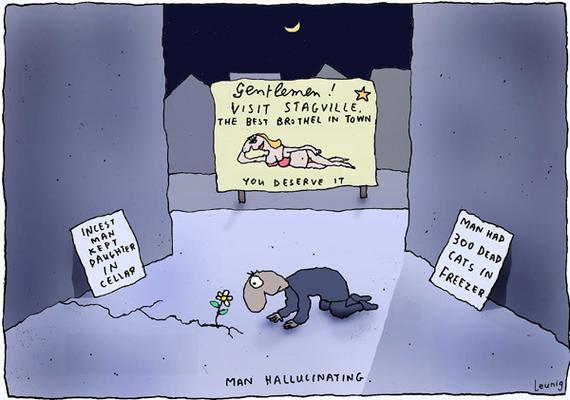
An example of urban nature in an empty (industrial and modernist?) city:
 Leung
Leung
It's a bleak urban image. However, some of our cities are changing. As Norman Day observes in The Age about Melbourne:
The city centre has benefited from people making it their home, bringing it back to life at all hours so it is no longer just the business centre of a dormitory metropolis. There are now fewer dead parts to the city. Relaxed licensing laws have resulted in a proliferation of small bars, cafes and restaurants that keep the city active.
This makes Melbourne, in contrast to Adelaide or Perth, a livelier city than the old industrial one of the 20th century.
However, as Day goes on to say:
But while the city is much livelier than in the past, much remains to be done. With the notable exception of Federation Square, Melbourne lacks plazas, green open spaces and traffic-free streets. The Bourke and Swanston street closures are a failure of nerve that take life out of the city rather than invigorate it.
So how does good urban design change that? Day doesn't really say. He says that we have the template in our alleys and arcades and should be prepared to extend these as the city grows. However, liveability is not the same as sustainability.
|


Gary,
Liveability is being confused with sustainability in Melbourne.