|
January 27, 2012
Suzanne and I drove up to Willunga from Victor Harbor late this afternoon to attend the opening of an exhibition of recent paintings by the Dutkiewicz family: Wladyslaw Dutkiewicz, Ludwik Dutkiewicz and Adam Dutkiewicz. Recent meaning done in the last 20 years.
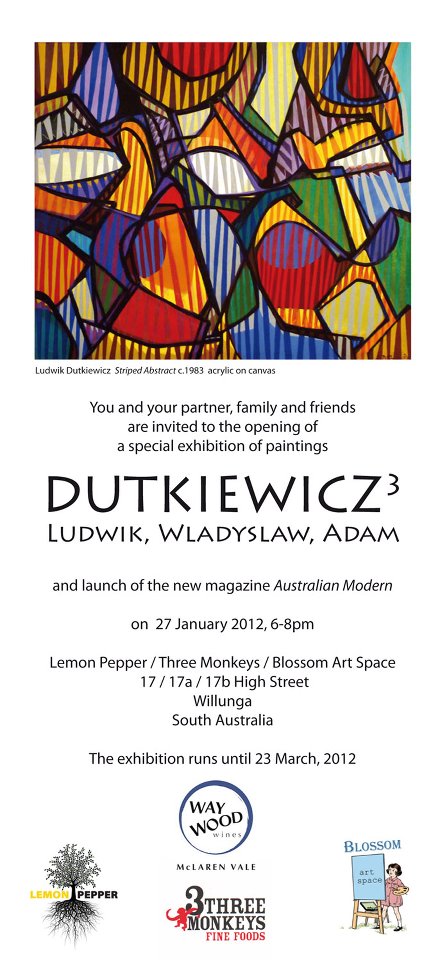
There was also the launch of the first issue of Australian Modern, a magazine about 1950s modernism in Oz. It was a glorious summer evening, people were going out to eat, and it was a fascinating exhibition.
I'm ashamed to admit that I just didn't know this Adelaide abstract modernist work at all--not even that of Wladyslaw Dutkiewicz, who was an expressionist, constructivist, abstract and semi-abstract painter and occasional sculptor who was also involved in theatrical design, directing and acting. He appears to have faded off the screen of conventional art history that constructs Adelaide modernism in terms of Dorrit Black, Dora Chapman, James Cant and Kathleen Sauerbier.
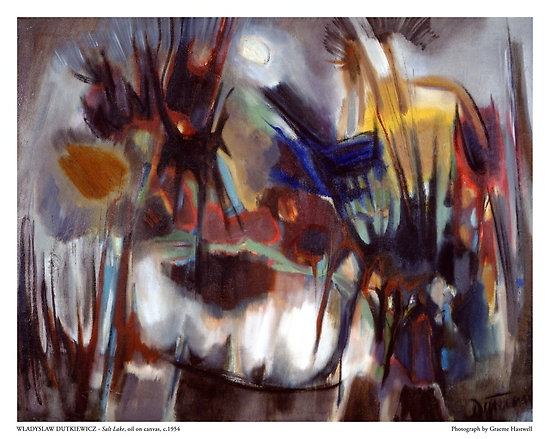 Wladyslaw Dutkiewicz,, Salt Lake, oil on canvas, c.1954
Wlad and his younger brother Ludwik were part of the influx of migrant artists who arrived in Australia after the Second World War. They settled in South Australia and soon became two of Adelaide's leading modernist painters in the 1950s and 1960s. At the exhibition opening Adam mentioned that the Dutkiewicz family hosted regular salons and parties and their home was the hub of creative life in Adelaide.
The exhibition highlighted how sketchy my understanding of South Australian modernism was. Despite abstraction becoming mainstream in a modernist culture after the 1950s I thought that this form barely existed in Adelaide. My vague understanding was that there had been a strong Surrealist undercurrent in Adelaide modernism.
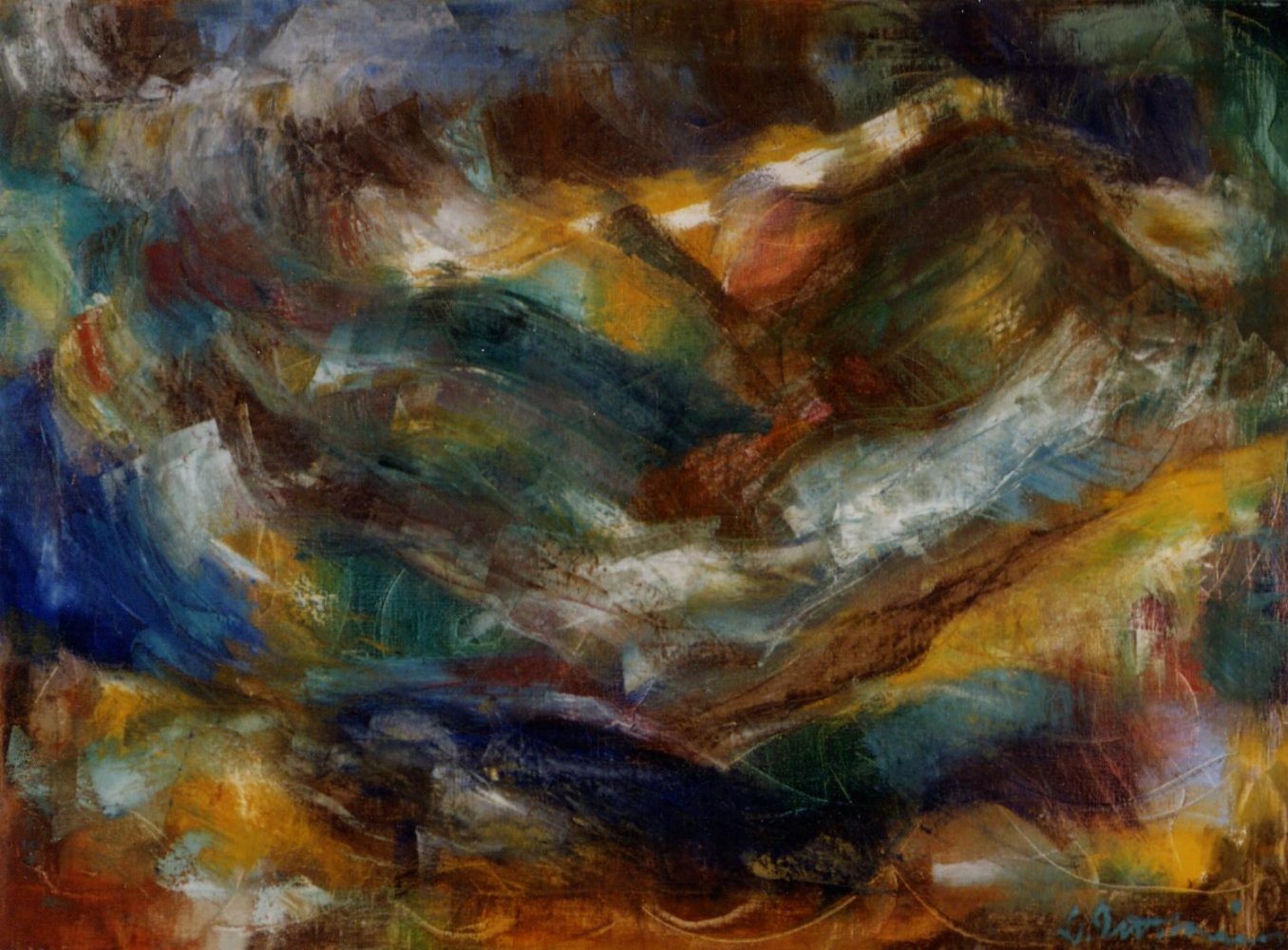 Ludwik Dutkiewicz, Waves, oil on canvas, 1954
Ludwik Dutkiewicz worked as a botanical illustrator for the Adelaide Botanic Gardens and State Herbarium. He became the state’s first official botanic illustrator, a position he held for 30 years before retiring in 1983.
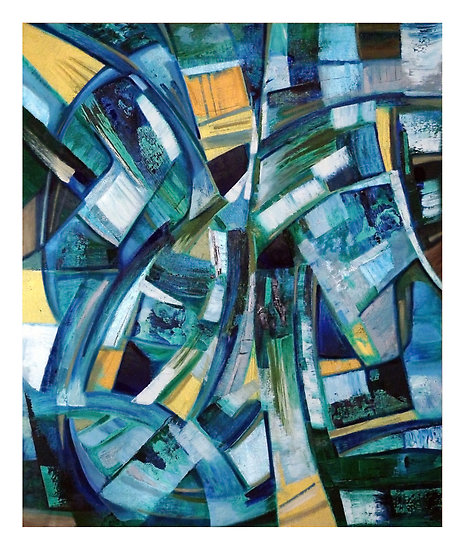 Adam Dutkiewicz, Faction Painting, oil on canvas, 2006
Adam is an art critic and art historian as well as a painter. He published a “quarterly” arts magazine, Words And Visions (WAV), issues 1-17 in the 1980s and currently runs the interesting Moon Arrow Press. He remains a resolute modernist --art is experimental and aims for masterpieces---in opposition to the corruption and commercialization of the art institution's gallery system.
|


The Adelaide abstract modernists' work in terms of both the dramatic blocks of colour and their interest in geometry and structure meant their work was dismissed as freakish by conservative critics from the 1930s to the 1950s.