|
August 30, 2005
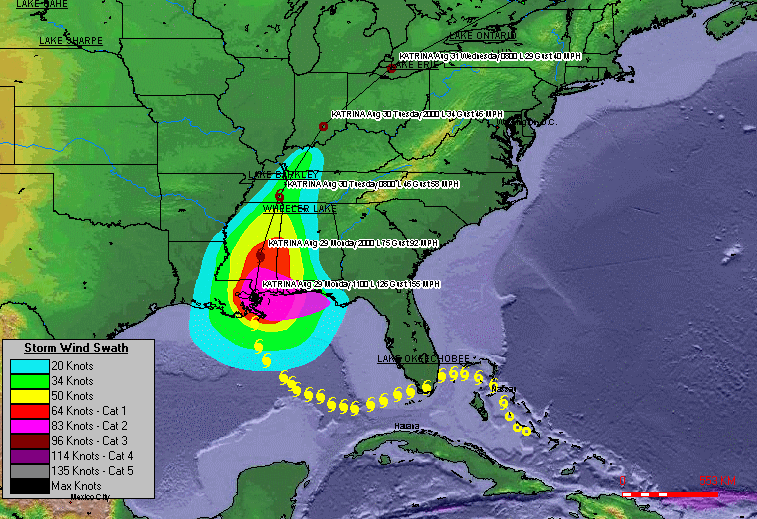
Hurricane Katrina, which was a Category 5 storm with winds up to 280km/h that roared towards the city of New Orleans in the southern US state of Louisiana in the Gulf of New Mexico, has been downgraded to a category three tropical storm with strong winds and heavy rains.
HurricaneKatrina blog. BY all accounts New Orleans is a disaster waiting to happen. The city lies below sea level, in a bowl bordered by levees that fend off Lake Pontchartrain to the north and the Mississippi River to the south and west. Because of draining the Mississippi River delta for agriculture the city is sinking further. This puts it at increasing flood risk from storms. Many of the Louisiana city's 500,000 residents live between 1.8 and 2.4 metres below sea level.They are surrounded by the waters of the Mississippi River, Lake Pontchartrain, and several bays that are n higher than the city.
New Orleans was spared the worst when the Category 4 storm turned at the last moment as it hit the Gulf of Mexico coast. However, New Orlean's network of levees, canals and pumps are likely to be overwhelmed if the forecasts of a 28-foot storm surge and 15 inches of rain proved accurate. It is highly likely that the levees will break, and most of the city could be under water up to 30 feet deep.
Is this hurricane more than just wild weather? Just simply the fury of an untamed nature? Is it a natural environmental cycle is responsible rather than any human-induced change?
Can we think that way about nature anymore at a time of global warming caused by human intervention? Soem studies suggest that hurricanes have become significantly stronger in the past few decades during the same period that global average temperatures have increased. The link is not that global warming causes hurriances, rather global warming increases the intensity of hurricanes.
That is not good news for the cities along the Gulf of Mexico Coast.
Update: 31 August
Barista is keeping a good eye on what is happening in New Orleans.
What happened is that New Orleans gradually filled with water after the worst of the danger had appeared to pass. Billion desscribes what is happening in graphic terms as streets are transformed into canals;
Add in the raw waste from a hundred backed-up sewer lines, the rotting food from a hundred thousand kitchen refrigerators and the industrial filth of one of the country's largest ports and petrochemical centers, plus the corpses, dead animals, debris and the mosquito eggs -- many of them no doubt already hatching -- and you've got the makings of a first-class public health nightmare. Stew in the sun and the heat of a Louisiana September for a week or two, and watch the nightmare become a reality.
New Orleans as a living, functioning city has ceased to exist.
|


