|
August 1, 2011
The world of large format world photography is a strange one. One of its attractive qualities is the craft ethos of using old equipment and repairing the gear rather than forever desiring the new and tossing away the old. I am very sympathetic to this ethos, even though I am not a craft person who can make things.
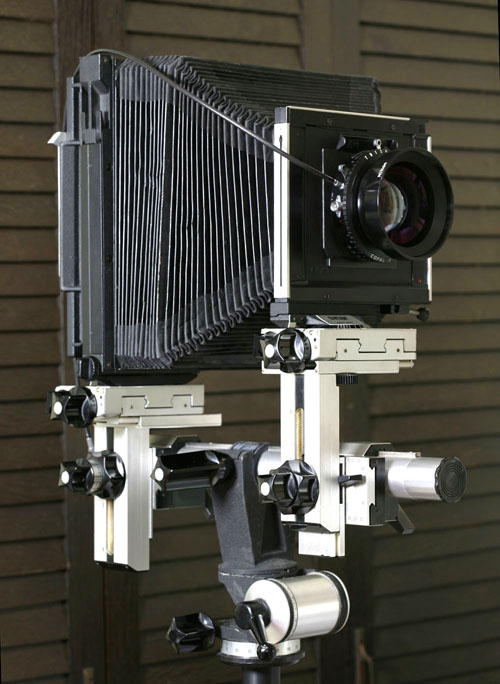
On the other hand, this culture is often marked by rigid boundaries: film is superior to digital; large format film is serious not 35m amateur; black and white is better than colour; the darkroom is better than the computer; the fine print is better than the digital image; it is heroic masculine as opposed to the playful feminine.
These kind of boundaries act to box this photographic culture into a very small corner characterized by a defensiveness and a self image of superiority to the culture around it. Often when these photographers get together in an informal social setting they generally begin by saying the equipment is just a tool for taking photos and that photos are what it is about. That is the essence of large format photography. They are the real thing--the j keepers of the fame in a consumer world addicted to digital cameras.
Then they proceed to spend an entire evening talking about their technology---camera, lenses, darkroom, chemicals, exposure systems and camera movements. More often than not their comportment is that of a collector not a photographer working on projects; nor a photographer interested in art and aesthetics.
What is usually being recycled from this craft niche with its rigid boundaries is the American art photography of the 1930--1960s---prior to the turn to colour in the 1970s; a turn that often referred back to 19th century photography.
|


In my experience they are basically snobs who fancy themselves as heroes and who hero worship Edward Weston and Ansel Adams. Or they just collect old cameras. They are old men who do little quality photographic work.