|
August 29, 2011
Rebecca Dagnall, the Perth-based art photographer and lecturer in photography at Curtin University, has been confirmed for the Turner Galleries in North Perth during FotoFreo 2012 as part of the core programme of the Festival.
The work to be exhibited is the series Paradise in Suburbia, which is an exploration of the relationships that people develop with places in their suburbs. The images are taken in small areas of bush – tranquil pieces of paradise – that are in reality surrounded by houses and shopping centres.
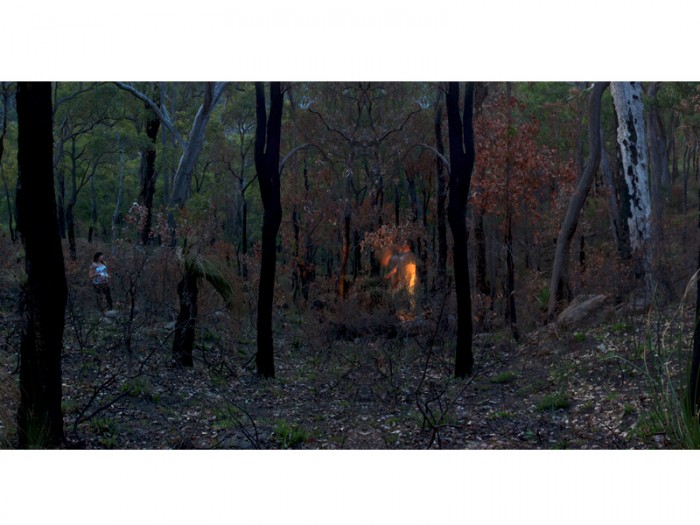 Rebeca Dagnall, Paradise Lost #4, 2009-10 pigment print
These landscapes appear to enclose the people standing, sitting, walking, talking, picknicking or canoeing within them. The imagery could refer to European Impressionist paintings of people spending their leisure time strolling, picnicking or boating in scenes of ordered nature or to Melbourne’s Heidelberg School of painters dealt with similar themes in their depictions of ‘the Australian way of life’.
Dagnall says that:
There is an element of documentary work in this series as all of the places photographed are in actual suburbs; however, the work is more about our perceptions than it is about the space actually depicted in the work. In the areas where the image overlaps there are layers of icons and images that allude to the iconography of heavy metal culture. It is in these mirrored patterns that the skulls and creatures dwell, here the faces and totemic images give the work a depth that goes beyond an analysis of the physical and into the realm of our experience.
Dagnall’s Paradise Lost series depicts another form of suburban escapism, but as if in opposition to the peaceful, leisurely activities depicted in her Paradise in Suburbia series these images explore teenage angst and the identification of this demographic with the loud, aggressive and often angry expression that is associated with Heavy Metal music
|


