|
February 08, 2006
We often describe ourselves by explaining how we are different from something else -- the Other. It is ironic that in spite of growing globalization there remains in the world a split between the West and the rest. The Muslim world is seen as a mishmash of religious excess, superstition and despotism whereas the West stands for truth, good and justice.
This kind of description, which is often based on the relationship between power and knowledge in scholarly and popular thinking, is particular evident in European/Western views of the Islamic Arab world being constructed around the fallout from the 12 Muhammad cartoons. What we have is the Muslim Orient and Occident working as oppositional terms, in that the Muslim Orient is constructed as a negative inversion of Western culture.

Graeme MacKay
Edward Said argued that Orientalism can be found in current Western depictions of "Arab" cultures. The depictions of "the Arab" as irrational, menacing, untrustworthy, anti-Western, dishonest, and--perhaps most importantly--prototypical, are ideas into which Orientalism has evolved.
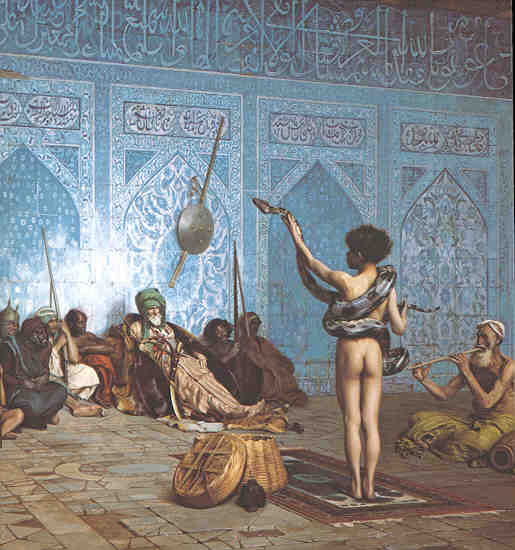
Orientalism arises from the way that the West has created a dichotomy, between the reality of the East and the romantic notion of the "Orient."
The Middle East and Asia are viewed with prejudice and racism in orrientalism. They are backward and unaware of their own history and culture. To fill this void, the West has created a culture, history, and future promise for them. On this framework rests not only the study of the Orient, but also the political imperialism of Europe in the East.
So President Bush, in creating the culture of democracy and freedom in the Middle East, fits into, and is a part of Orientalism.
|


We are not obligated to respect Islam. The left can go on about orientalism, the Other, yada yada, but their values are quite different than ours. Athenians over Persians man; Caesar instead of barbarians.