December 27, 2012
Frank Gohlke: Accommodating Nature
There is an interview below with Frank Gohlke on the occasion of his Accommodating Nature 2008 retrospective exhibition at the Smithsonian American Art Museum.
December 26, 2012
happy holidays
on vacation:
 Gary Sauer-Thompson
Suzanne, Ari and I are at Victor Harbor for the Xmas week. Suzanne then goes back to work for week, before we have ten days or so at American River on Kangaroo Island.
December 25, 2012
The end of photography
I've always found the end of photography thesis puzzling. It implies that photography is over at a time when it is both more popular than ever with digital technology and it dominates every aspect of popular visual culture. It's a lament.
The end of photography thesis implies the fear that photography as we have known it disappearing in the sense of being eroded. What is that fear or anxiety grounded on? A sense of crisis presumably. Does the crisis refer to the art institutions and how they treat photography?
In this Symposium at the San Francisco Museum of Modern Art ---there is more material on their blog--- we find some participants arguing that a shift is taking place in photography. But what kind of shift?
Blake Stimson argues that photography as a social medium now might mean in the context of Facebook is unsatisfying:
There’s a way in which it sort of feels like a consumer experience. Right? It doesn’t quite feel like a family photo album. Right? It doesn’t have that same kind of social life to it, quite in the same way. It feels a little bit more like shopping. Or it feels a little bit more like a Hallmark card version, where you have a prefab card that you write your personal note in, but it’s still a Hallmark card. Right?
There's no takers. Joel Synder argues that the sense of a photographic tradition as art has died---it’s defunct, it’s exhausted. Contemporary practitioners are not interested in the old.
Maybe it is the tradition of the canon of art photography---photography as a culturally institutionalised, ghettoised, and, frankly, dull and acquiescent, photo-art-market-serving "discipline"---that is over. This is photography as an artistic medium. After all, photography outside the art world --on Flickr and Facebook---is very active and vital.
The fear and anxiety is that of the art institution's relevance. There was always lots of different versions of photography going on, we live in a visual world in which photography is all around us all the time, being used for all kinds of different purposes (predator drones, surveillance cameras, astronomy) and you can’t readily divorce it from power.
December 22, 2012
Hubble Space Telescope
The NASA/ESA Hubble Space Telescope image of the planetary nebula NGC 5189:
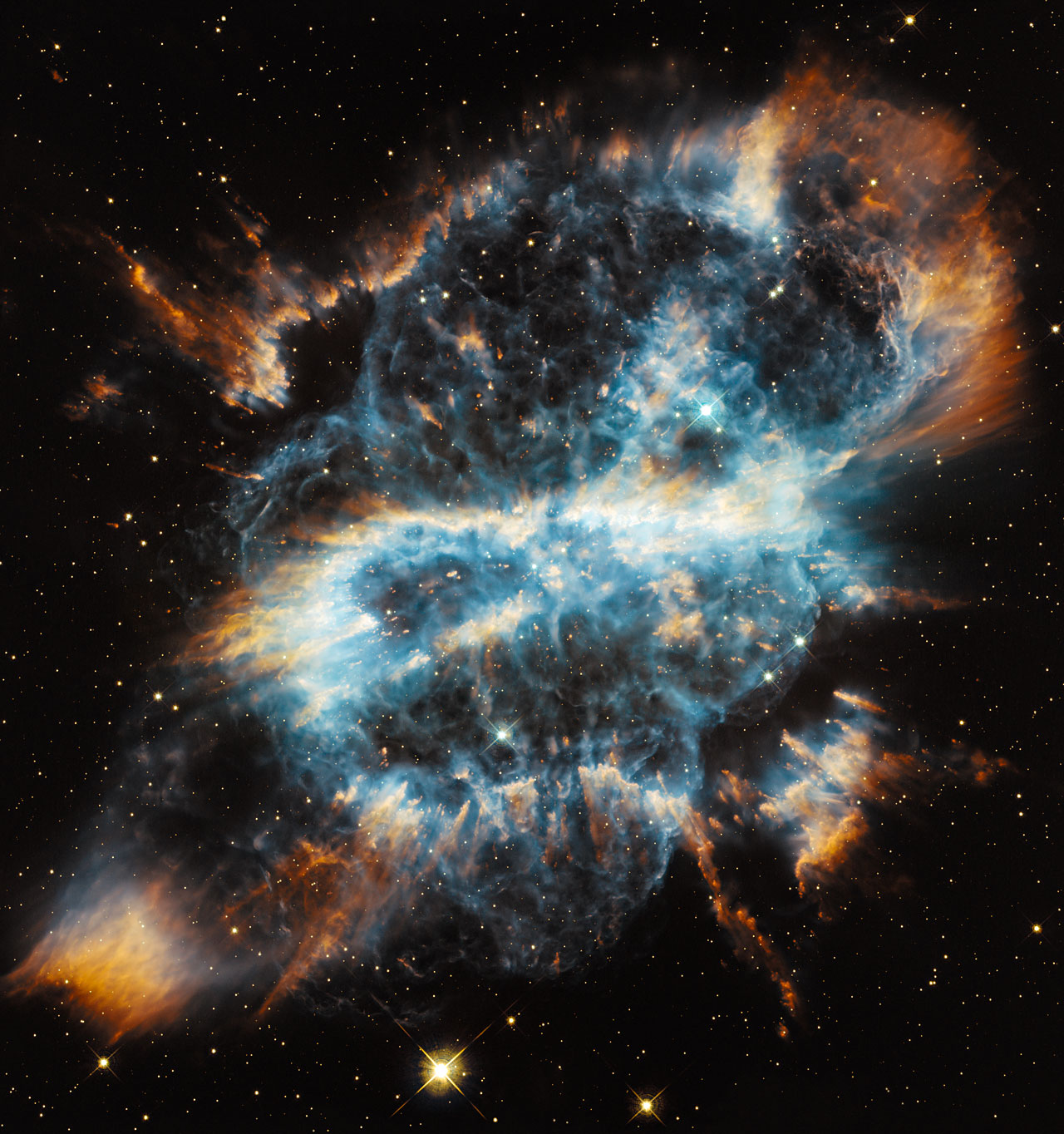
The nebula shows a series of dense knots in the clouds of gas. The gas and radiation flowing out from the dying star carves out shapes in the clouds, forming glowing bow-wave-like patterns towards the centre of the nebula.
December 17, 2012
The Kodak Salon, Melbourne
The 2012 Kodak Salon is still Australia's largest open-entry, photo-media exhibition and competition and is designed to show a diverse snapshot of contemporary, Australian photo-media practice.
December 11, 2012
Leunig on Leunig
Michael Leunig says that:
As a cartoonist I am not interested in defending the dominant, the powerful, the well-resourced and the well-armed because such groups are usually not in need of advocacy, moral support or sympathetic understanding; they have already organised sufficient publicity for themselves and prosecute their points of view with great efficiency.
The work of the artist is to express what is repressed or even to speak the unspoken grief of society.

He adds that:
the cartoonist's task is not so much to be balanced as to give balance, particularly in situations of disproportionate power relationships such as we see in the Israeli-Palestinian conflict. It is a healthy tradition dating back to the court jester and beyond: to be the dissenting protesting voice that speaks when others cannot or will not.
That is the role of a cartoonist.
December 10, 2012
urban landscape exhibition
The Center for Fine Art Photography in Colorado in the US has ongoing juried exhibitions of fine art photography by artists from around the world. One of these is the Urban Landscape with fifty three artists from six countries being included in the exhibition. Most of the artists are from the US.
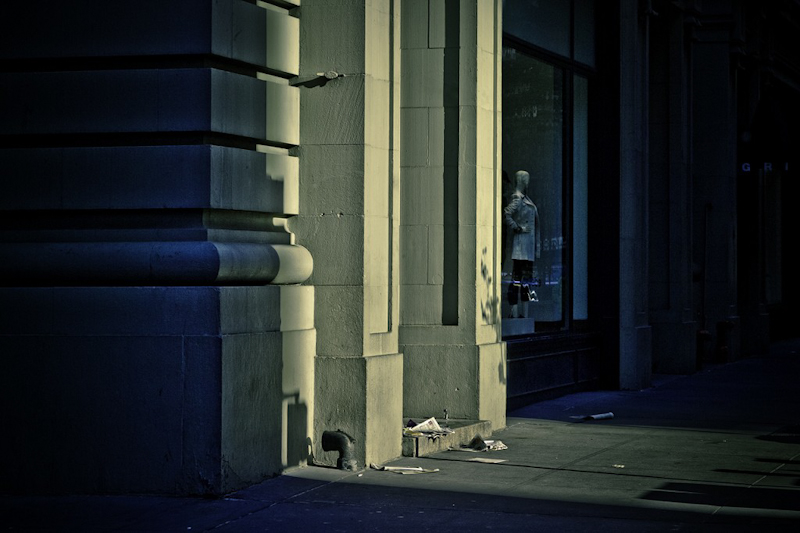 Thom O'Connor, Empty City, New York, 2012
I am not sure if this is the Thom O'Connor --I doubt it. The Center gives no links to the photographer's websites. This is subtle and elegant image. There is a quietness here amidst the constant visual noise that occurs in the urban spaces of a global city; a noise that includes the collapse of the analog photographic industry.
This is a noise of destruction in which once powerful companies such as Kodak, Polaroid, Ilford and Agfa spiralled into perpetual decline. This was the destruction or abandonment of factories that produced photographic paper or film in a technology driven and quickly shifting economy that saw no place for ‘old’ technologies or its workers.
Unfortunately, the Centre gives no indication of what technology was used to make the photographs in the exhibition. We are just presented the printed image.
December 9, 2012
Kate Breakey
When I visited Michal Kluvanek's studio yesterday I saw some early landscape work done by Kate Breakey. Small sections of the landscape--eg., parts of a tree trunk-- were hand coloured.
This body of work was done while she was still living in Adelaide before going to the USA moving to Austin, Texas in 1988. She completed a Master of Fine Art degree at the University of Texas in 1991 where she also taught photography in the Department of Art and Art History until 1997. In 1999, she moved to Tucson, Arizona.
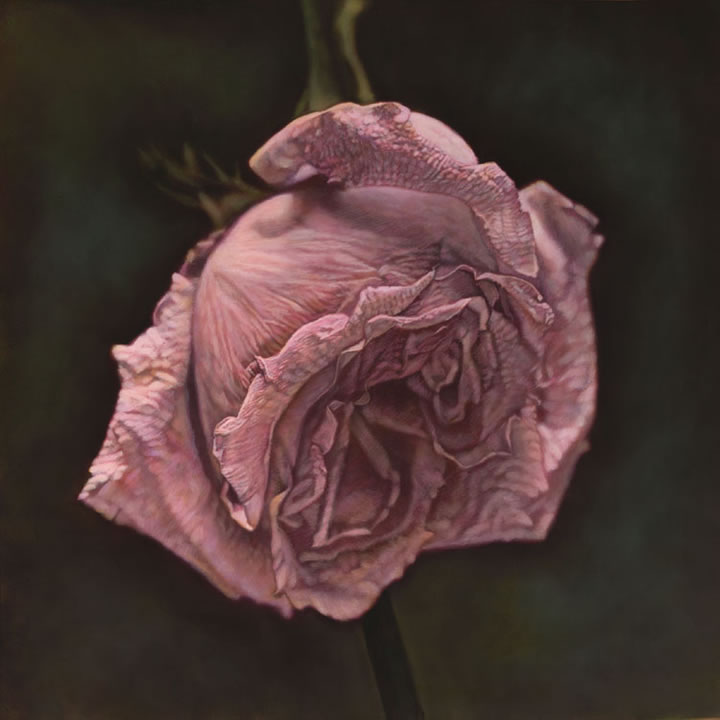 Kate Breakey, hybrid tea rose, hand colored gelatin silver print, 1999, from the series Small Deaths
It is simple, elegant studio photography --albeit hand coloured. I can never achieve results this good with my work at Encounter Studio. Small Deaths includes approximately 50 hand-colored, over-sized images of the remains of birds, lizards, insects and flowers that Kate Breakey has preserved and memorialized through her photography. Breakey carefully photographs her subjects and then paints each photo with oil paint and colored pencils, staying true to its natural appearance and color
December 8, 2012
thoughtfactory's Gallery
I've been working away on beginning the process of setting up a gallery of my images. I realized that I had opened an account at Cargo but I'd never worked on developing it. I have basically followed Stuart Murdoch's lead here.
It is early days yet, as I am trying to get a hang of the functionality of the Cargio software. You could say that the gallery is 'under construction'. The plan is to organize my archive of photos into projects that I have worked on. I've opened up galleries for three projects starting from the early Bowden work.
December 7, 2012
nocturnal photography: Effie Paleologou
Contemporary nocturnal photography reaches back to the Surrealist and Situationist wandering the city. The city by day is a crowded and lively place. By night, empty corners and dark shadows can suggest sinister possibilities and create a highly charged atmosphere.
One example of contemporary nocturnal photography is Effie Paleologou's Mean City, which emerges out of her walking at night through the city of Hasting, an unfamiliar city:
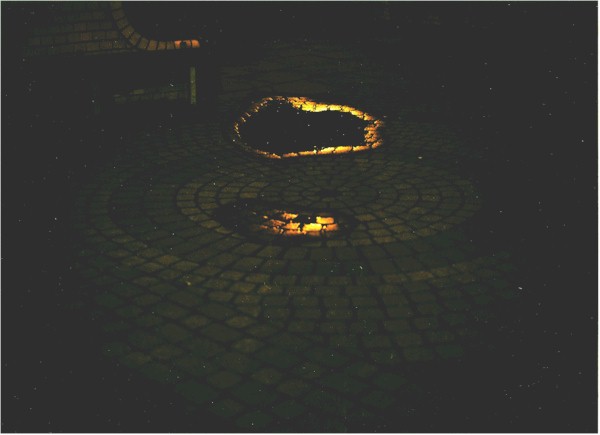 Effie Paleologou, hole, 2000 , C-type print , from series Mean City.
There is a sense of a psychological unease as well as a sense of an absence and longing.
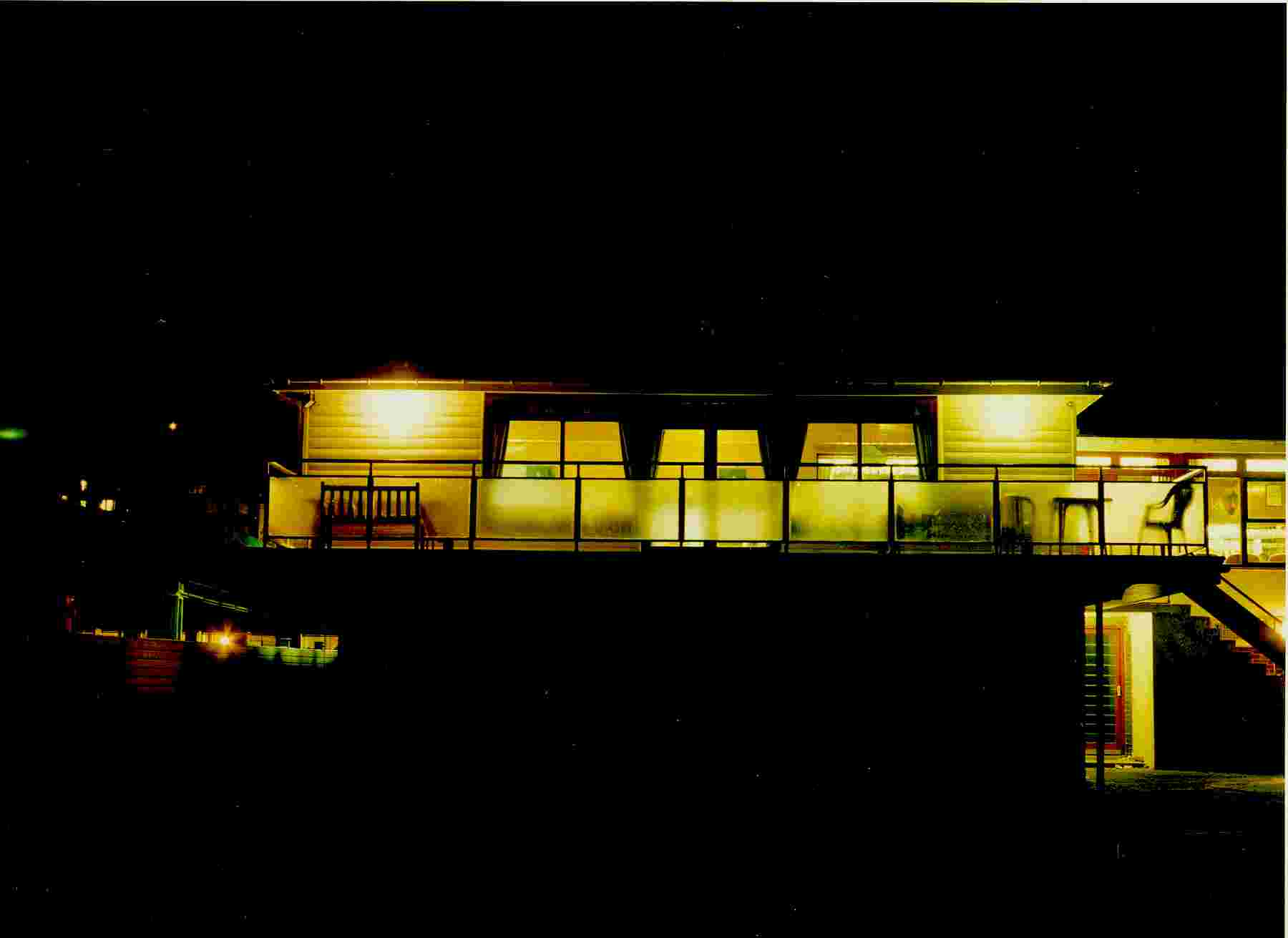 Effie Paleologou, Club, 2000, C-type print, from Mean City
December 2, 2012
Czech photography: Jitka Hanzlová
I have referred to the Czech-born photographer Jitka Hanzlová, in an earlier post. Born in 1958, Jitka Hanzlova grew up in Communist Czechoslovakia before fleeing her home country and seeking asylum in Germany in 1982.
Influenced by her own life experiences in exile as well as recollected childhood memories, her practice revolves around photographic series that examine the identity of individuals, primarily women, set in their local environments. She has organised her work around different series in which she reflects upon her own life experiences, and upon the representation of the places and themes in the history of art.
In the earlier post I mentioned her forest series.
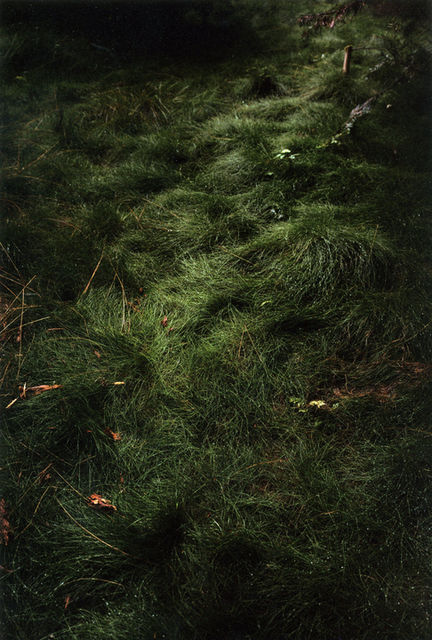 Jitka Hanzlová, Grass Path, from the series "Forest", 2003,Chromogenic Print
This series suggests a sense of the photographer’s deep identification with the mysteriousness of Europe's northern forests. She travelled to the places of her childhood, and to the forest next to where she grew up.
Hanzlova uses a strict vertical format to capture her subjects and pays particular attention to the effects of light, using its transcendental qualities to confer the significance of each subject's surroundings:
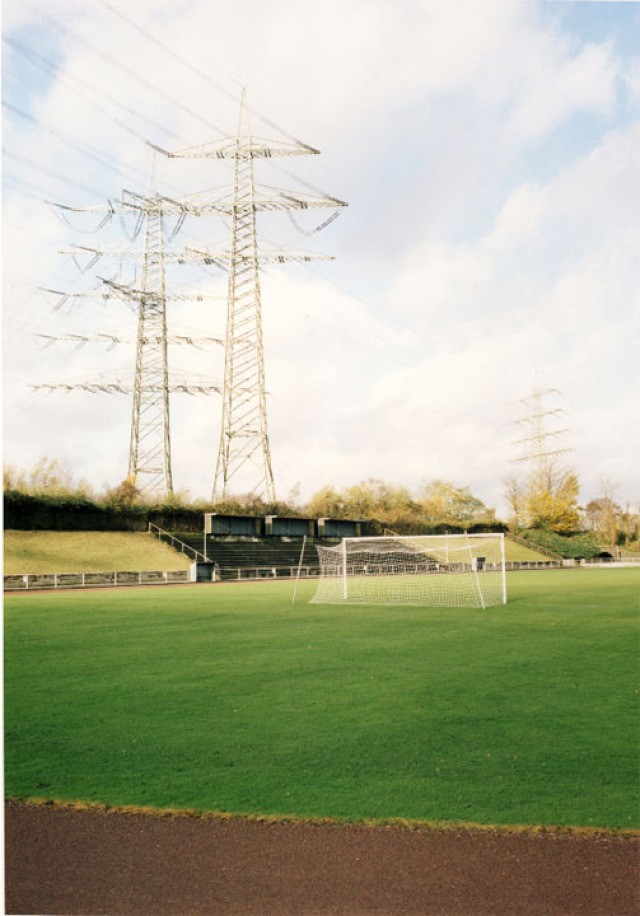 Jitka Hanzlova, Untitled (Stadium), from the series Here, 2008.
Hanzlova's series Here, begun in 1998 is an ongoing exploration of the artist's new home and evolving foreign life in Essen, Germany, or more specifically, the Ruhr basin. The series reflects upon the sensation of ‘non- belonging’ to a context. In this way, the subjects seem to be passive before the objective, and seem to be ‘intruders’ within their own milieu. The landscapes are strongly altered by the zone’s urban and industrial development, and the relationship between characters and environment seem marked by conflict.
December 1, 2012
Tumblr
The Tumblr micro publishing platform continues to grow in popularity --mostly amongst teenagers and smut peddlers. Tumblr makes it super easy to post content in different formats.---text, photos, quotes, links, dialogue, audio, video. Many posts on Tumblr consist of photos, animated gifs or videos and not text. Many are simple reblogs. People signed up to Tumblr to express themselves and around 70 per cent of all Tumblr's traffic comes from inside the network, from users looking at others' posts.
I am on Tumblr here and here. I joined without really knowing much about it.
It is a popular social network for self-expression.Tumblr is a strong interest network---also see the Lensbr photographers network. This interconnectedness indicates that the social network that emerges out of Tumblr is driven by content, or more specifically, the creative works of the content creators on Tumblr. The content creators are seen as part of a community.
Tumblr makes no money. It continues to raise venture capital. Can the network can actually bring in revenue to match its growth? How can it turn itself into a profitable business? Where will the cashflow come from apart from its cut on the premium designs for blogs?