November 28, 2012
the frame
An interesting talk by Joel Meyerowitz about the significance of the frame in photography---- what is inside and outside, and the relationship between the two. Many reduce the frame to the edge of the photograph and thus to its content.
The frame initially appears as a device that separates the work (of art) from the non-work (the gallery or the general context.) It gives our gaze a directionality, a point of view that we come to occupy. The frame, as a part of technology (or technological apparatus), conditions our viewing habits (perception) and renders us as spectators.
A question arises: is the frame the work itself or what it is beside or adjacent to the work? And another question: can we make clear distinctions between what is inside and outside and between perception and technics.
Formalists argued that photography has clear, discrete edges and that these edges defined it as a separate and unique medium with a specific history and aesthetic criteria. This gives us a formalist history of photography that disavows the sheer multiplicity of uses, techniques, and discourses that are the field of photography.
The problem with the formalist position, as advocated by John Szarkowski, ignores the plurality of discourses in which photography has participated in favour of photography itself.
November 27, 2012
Adelaide: Place 2012
Place 2012 is a spring festival of art, architecture and design which explores and celebrates our sense of place during September, October and November. The spring festival of art, architecture and design is aimed at invigorating a broad conversation about the value of great places. The Adelaide City Council's Snap Your City, Your Place photography competition is a part of this festival.
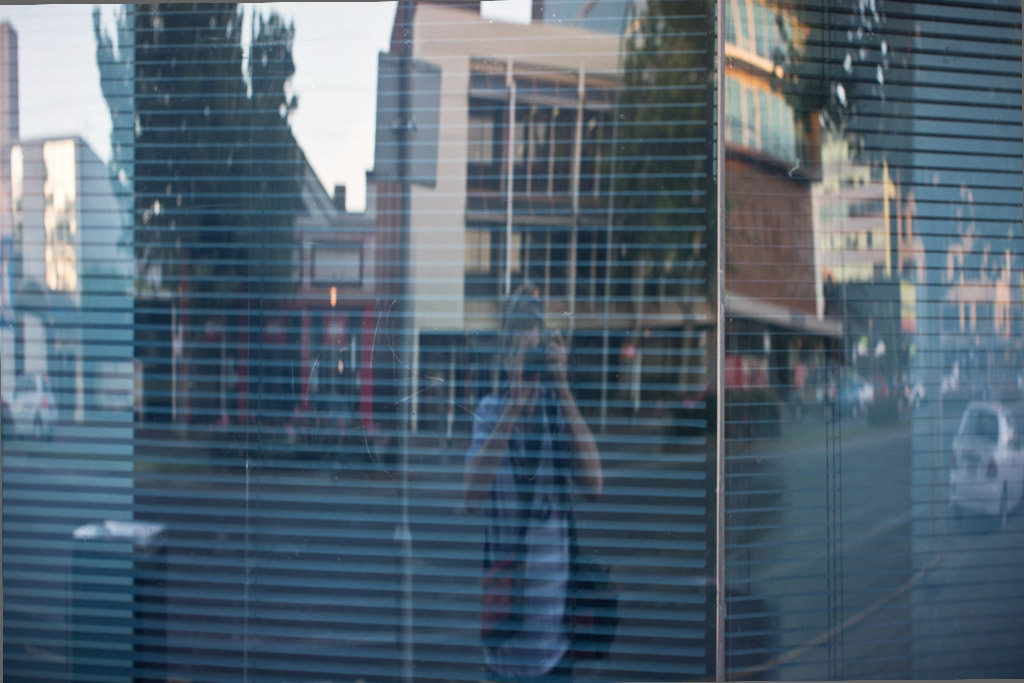 Gary Sauer-Thompson, reflections, Adelaide, 2012
Place12 has continued the civic conversation on the future of Adelaide begun by the 5000+ project, which was a design-led project for the redesign, renewal and reactivation of inner Adelaide that emerged out of the work of 2009 Adelaide Thinker in Residence, Professor Laura Lee.
Adelaide had been planned around defined zones, creating a 'work' zone – the CBD (central business district), the factory, etcetera, a 'living' zone (our suburbs), and a 'rural' zone (the green bit where farmers and livestock worked and lived). Now we realise that zoning has produced many of the issues we face today, such as traffic congestion when we empty the suburbs each day to travel to our jobs in commercial centres.
In the past, designers were often brought in at the end of the planning process after all the major decisions had already been made. Integrated design brings everyone together from the beginning – the designers, architects, artists, Councils, Government, builders, planners and community. Headed by theIntegrated Design Commission SA, the project embraces a collaborative way of working by involving design and planning professionals, government, business, industry and community to imagine and design a Adelaide city.
Place 2012 livens up the inner city. Revitalizes it through artistic activity --art, architecture and design. Does it address the problem Ianto Ware raises here:
South Australia needs risk takers and innovators. It can’t compete for the top of the food chain, but it can definitely compete for grassroots and start-ups, and it could grow them. It would need to let this happen organically, because that’s how innovation works. Unfortunately, the ‘risk averse’ regulatory environment, combined with a remnant faith in ‘top down’ culture left over from Dunstan, hinders its capacity to recognise, let alone grow, this smaller, less glamorous portion of the cultural environment and knowledge economy.
Does Place 2012 help to foster Adelaide as a city where they can innovate and make their own ‘vibrancy’ than live in a city where civil servants supply ‘vibrancy’ like it’s a service akin to rubbish collection or street sweeping?
November 26, 2012
Bowness Photography Prize 2012
Established in 2006 to promote excellence in photography, the annual non-acquisitive William and Winifred Bowness Photography Prize is an initiative of the MGA Foundation. Among Australia’s most important art prizes, the Bowness Photography Prize is the country’s most coveted photography prize.
The 2012 finalists are here. The winner was Jesse Marlow, the first time a street photographer has won the prize.
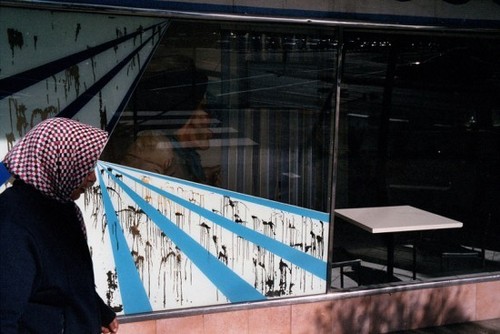 Jesse Marlow, Laser Vision, 2012, from the series Don't just tell them, show them
Marlow is a member of the Australian documentary photography agency OCULI, and he says that:
Street photography is my main passion. The solitary experience of walking the streets seeking out ‘that’ moment – a rare emotion, a chance sight. And yet, it is often the most everyday things that I keep coming back to, such as people meeting on a summer’s day; a kiss; journeys made on the train.
Street photography, which has a long tradition in photographic history, is experiencing a significant rebirth.
Marlow says that the Don’t Just Tell Them, Show Them’ project:
is a visual reaction to encounters in my daily travels. For me, it’s about searching for the unusual in the ordinary – an ambiguity that lies just below the surface. Set in the environment of everyday, this series aims to explore the banality of modern day existence through themes of abandonment, suburbia and daily rituals...
He want these photos to raise more questions then answers and to to illicit a far greater interaction with the viewer.
November 24, 2012
Dusan Marek: surrealism in Australia
Dusan Marek was a migrant European (Czech) surrealist in the post-war climate of Australia, which was tantamount to openly professing a belief in communism. Conservative Adelaide was hostile to his work.
The days of radical (modern) art in early 1940s when the original Contemporary Art Society in Adelaide had been formed by artists such as Douglas Roberts, David Dallwitz, Ivor Francis, Jeffrey Smart and Ruth Tuck had gone. Cultural conservatism ruled and it had no time for surrealism or communists.
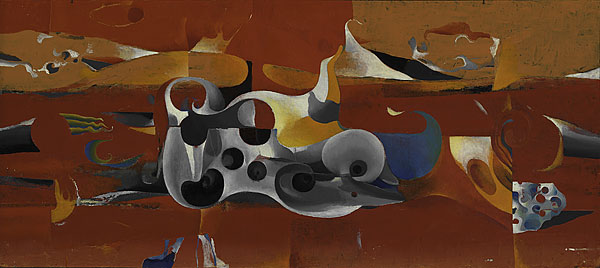 Dusan Marek, Summer In Coorong, 1971, oil on canvas
Marek was not a Czech surrealist in exile, as he was fascinated by the Australian landscape and the coastline. The style that developed was a merging of his own surrealist iconography with abstraction and abstract expressionism.
Marek is an indication that though WW2 is often taken to signal the decline of surrealism, it continued to exist as a historically decisive artistic tendency and experience in Australia.
We can talk about the Australian surrealists and it was more than the Angry Penguins magazine and the group founded in 1940 by the literary critic Max Harris; or the painters Albert Tucker, Sidney Nolan, Joy Hester and Arthur Boyd. That conventional art history narrative ignores the postwar European migrants.
November 23, 2012
Jeffrey Smart: Kapunda Mines
I went to view Jeffrey Smart's early, Adelaide works at Carrick Hill this afternoon. It's an appropriate location given the close association between Smart and the Hayward family. It was in the home of Edward and Ursula Hayward that Smart first found himself surrounded by pictures, books and people that were no available in a conservative provincial Adelaide.
The exhibition is a small upstairs section of Carrick Hill. It shows that Smart travelled widely in the South Australia from, for example, Robe in the south to Kapunda in the mid north and to the Flinders Ranges. His paintings of Adelaide and the countryside are urban and industrial landscapes with disused buildings and desolate vistas.
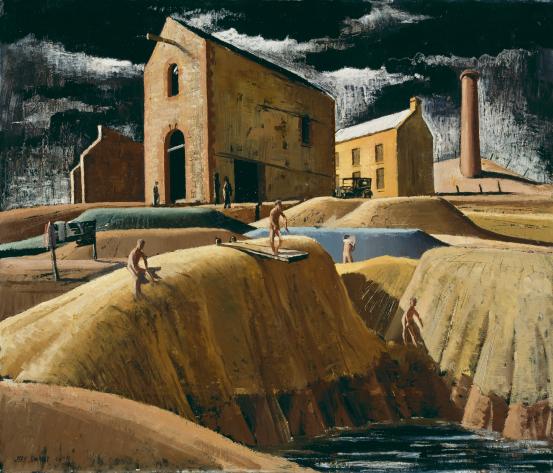 Jeffrey Smart, Kapunda Mines, 1946, oil on canvas
The most striking was Kapunda Mines with its dark skies, powerful industrial forms, strong light and bathing figures. It has a good composition and structure with dramatic contrasts between the bright highlights and deep shadows.
November 22, 2012
Jeffrey Smart: Adelaide paintings #2
It is often held that to many non-Indigenous Australians there is an intensely surreal quality to our being in this land – an ancient land full of mystery and magic upon which, even after many years of colonisation, we find ourselves somewhat perilously situated. We may love our country but we generally turn away from the centre and cling to the shore, snuggled cosily (or not so comfortably) in suburbia.
It was the Surrealist paintings which expressed the weirdness of our presence in this land, especially those of Jeffrey Smart.
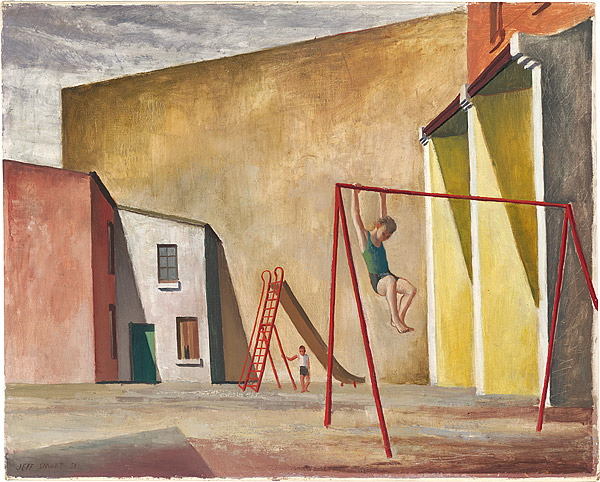 Jeffrey Smart, Playground (Children playing), 195, oil on canvas
It is not just the Australian outback which can be perceived as surreal. Jeffrey Smart has shown us that there can be a sense of menace in our everyday streets in suburbia – in the haunting quiet of a playground.
According to Elena Taylor at the Australian National Gallery there was no organised Surrealist movement in Australia; its importance lies in the fact that some of Australia’s leading artists were influenced by Surrealism at a formative period of their careers.
In Adelaide, Surrealism crystallised around the precocious poet and intellectual Max Harris. In 1940, while still a student at the University of Adelaide, Harris had established the literary journal Angry Penguins. Harris declared himself an anarchist and a Surrealist, and the second issue of Angry Penguins featured a reproduction of Ralph Gleeson’s Surrealist painting Images of spring. Taylor says:
Ivor Francis was Adelaide’s most prominent Surrealist painter. Around 1940, he met Max Harris and began his own investigations into Surrealism. Francis was also greatly inspired by Harris’s writing, particularly his Surrealist novel The vegetative eye of 1943. Investigation, scientific or otherwise, of matter without form 1943 employs a nightmarish dream-imagery to suggest the fate of man at the mercy of psychic forces.
She adds that Adelaide soon received another adherent of Surrealism. Dusan Marek arrived in Adelaide in 1948 after fleeing the communist regime in Czechoslovakia (now the Czech Republic). Marek had studied at the Institute of Fine Arts in Prague where his teachers included Frantisek Tichy, a supporter of Surrealism.
November 21, 2012
Jeffrey Smart: Adelaide paintings
Jeffrey Smart and Jacqueline Hick visited Cradock near Hawker during 1945, painting the sunburnt countryside wracked with drought – stark outposts of survival.
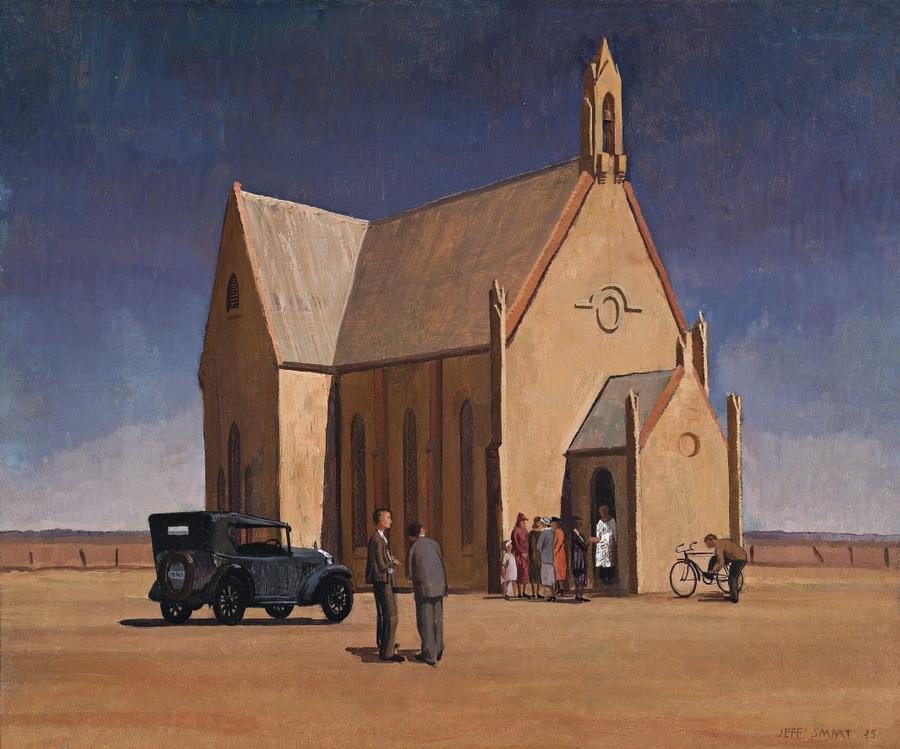 Jeffrey Smart, Sunday Morning Service, 1945, oil on canvas
In 'Sunday Morning Service' Smart makes the horizon low and long in the best surrealist tradition, heightening the isolation and verticality of the church and its presence, gothic in the vastness of the countryside. Everything is utterly still, like a still from a movie, while the shadows cast in the bright sunlight whisper of that which is not seen. The people, the car and bike are motionless in that atmosphere of expectation and piercing clarity that precedes a storm, heralded by the pulsating purple of the sky.
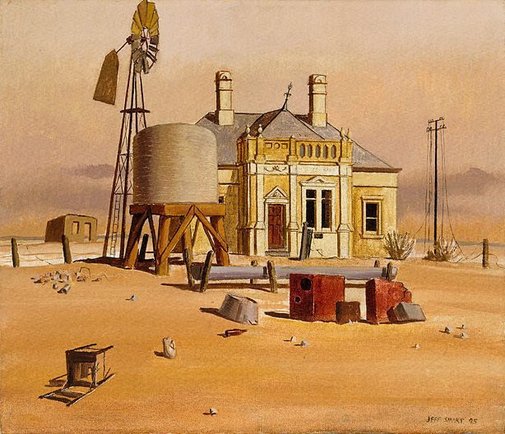 Jeffrey Smart, Wasteland 11, 1945, oil on canvas
Other paintings from this period that express the surrealist concern of an imaginative transformation of reality include 'Keswick Siding' 1945 and 'Kapunda Mines' 1946.
Smart's early work indicates that surrealism was not just a literary movement set by the theoriests (Breton) and litterateurs (Aragon), that the visual arts play second fiddle, and that surrealism was not rooted in pictorial concerns whose roots are in the idea of the poetic image.
November 19, 2012
Emil Otto Hoppé
Emil Otto Hoppé was Britain's most influential international photographer between 1907 and 1939. He was crucial link in British photography between Frederick Evans and those contrasting moderns, Bill Brandt and Cecil Beaton.
At the onset of the Great Depression in 1929 and throughout most of 1930 Hoppé crisscrossed the Australian continent making a nation wide documentation of depression-era Australia. It was part of a trip to India, Ceylon (Sri Lanka) and New Zealand.
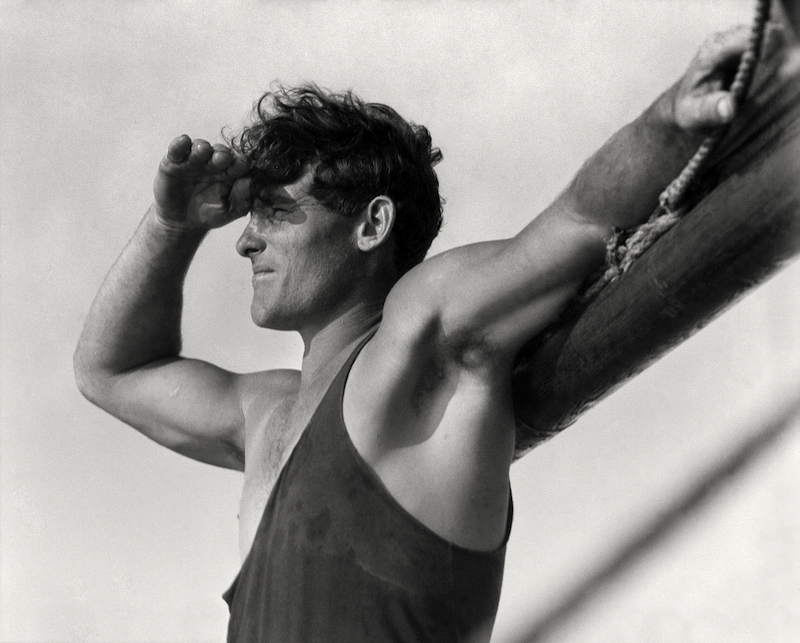 Emil Otto Hoppé, Pearl Lookout Man, Queensland, 1930
Hoppé was the undisputed leader of pictorial portraiture in Europe. He epitomised the celebrity portrait photographer and after 1925 he devoted himself with increasing commitment to travel photography.
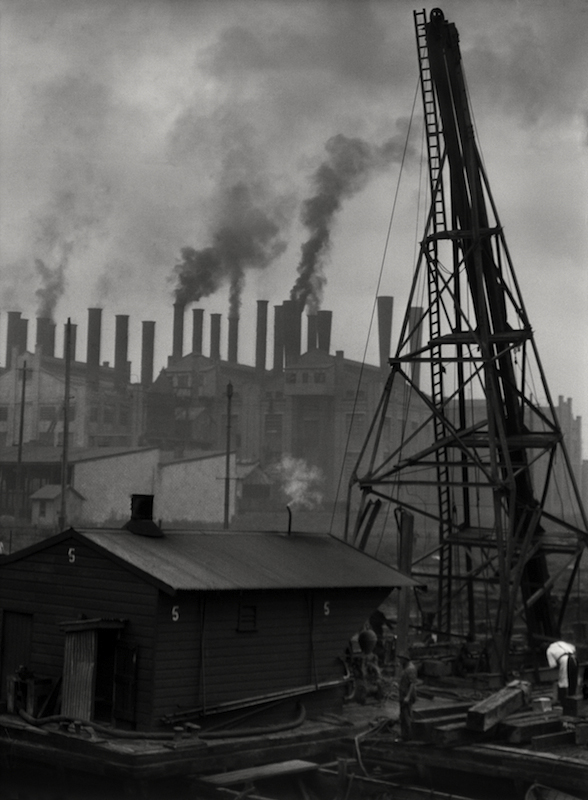 Emil Otto Hoppé, Power Station, Sydney Harbor, 1930
Though he had started out in 1902 using the fashionable soft-focus Pictorialism style of the day, by the 1920s he had begun to embrace modernism, displaying a hard-edged clarity and a stunning grasp of technique. His Australian work focuses on the everyday life of Australians – including the relationship of Aboriginals to their white “masters”. He was not immune to the typological temptations of modernist photography (ie., the “noble savage” depictions of Aboriginal hunters).
November 14, 2012
scarred by a church
This is a good representation of the way that the Catholic Church has resisted public inquiries into child sex abuse by members of the clergy--both priests and brothers.
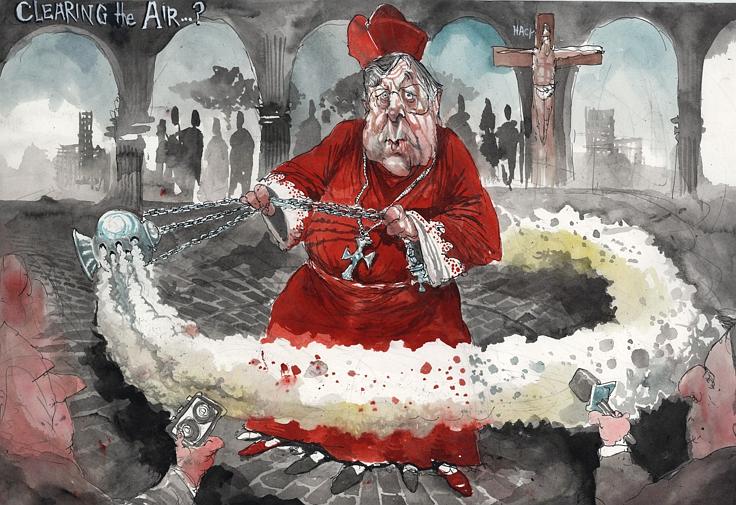 David Rowe
Compassion and saying sorry for the decades of criminal inhumanity, complicit silence and culpable neglect, are notable absent. There is a here is a powerful culture of always presenting a good external appearance to the world. Hence the culture of secrecy and the way the church has been treated being made into the central issue.
November 12, 2012
German photography: Thomas Birke
Thomas Birke is a large format (Sinar P2 8x10) urban photographer who specializes in photographing metropolises, or megacities such as Berlin, Hong Kong, Singapore, Shanghai, Tokyo. He scouts the locations s during the day and comes back at twilight with his camera.
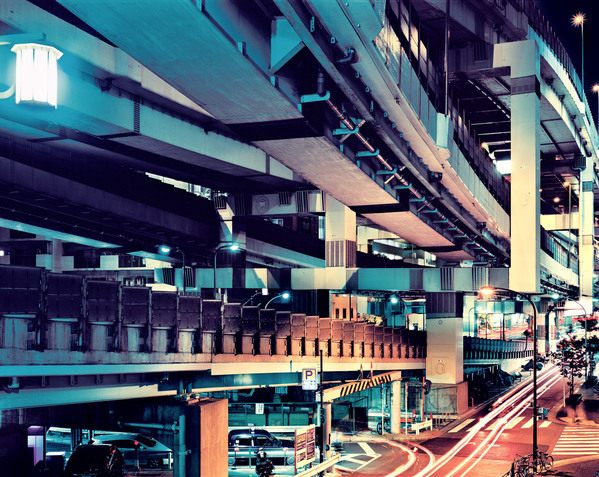 Thomas Birke, Tokyo, 2008
Tokyo represent the urban future for Birke, whose aim is to create a preview of our urban life in the future. Birke's world is one of neon signs, public video screens, rooftops and concrete. He is fascinated by density and the traces of people--lluminated windows of their apartments, the light streaks of their vehicles or their clothes hung out of windows for drying.
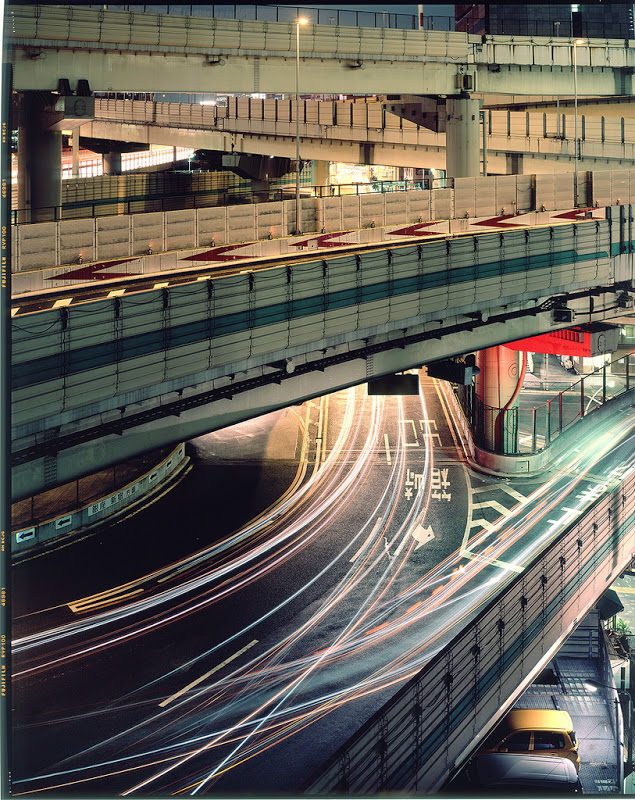 Thomas Birke, Tokyo, 2008
Tokyo was the bladerunner city for Birke.
November 10, 2012
Indian photography: Dayanita Singh
Dayanita Singh is a bookmaker working with photography who lives and works in New Delhi and Goa.
She is considered to be an important figure in contemporary Indian photography:
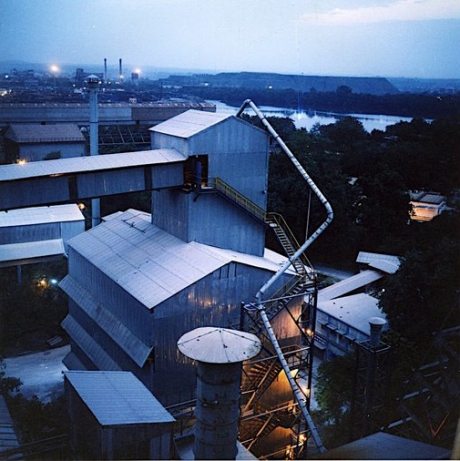 Dayanita Singh, Blue Book 19, 2008, C-type print
Blue Book is a series of images made during Dayanita Singh’s wanderings in the industrial landscapes of India. Blue Book is made of 23 postcards bound into a cardboard-folder. The Blue Book is really a set of postcards meant to be detached and mailed and indicates the ongoing shift away from her roots in photojournalism.
November 7, 2012
South West Light: ND5 group
The body of work, currently on show at Yallingup Galleries in Western Australia of this project is based on the collaboration between the five members of the ND5 group, four photographers Peter Eastway, Christian Fletcher, Tony Hewitt and Les Walkling, and videographer Michael Fletcher.
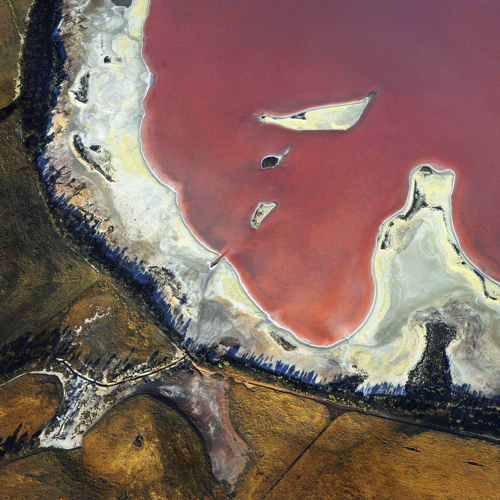
Tony Hewitt, Pink Lake, Stirling Ranges, 2012
Landscape art in Australia has traditionally been the last preserve of the Australian myth about nature, culture and beauty--ie., the timeless beauty of nature that transcends history.
The Australian landscape tradition has largely been overshadowed by the American one and landscape painting Australia. The South West Light's representation of space in the south west of Western Australia is about place and the photographer's responses to particular places. Most of this work is based on a perspectivalism in which in which the human being is centered as a spectator of a scene organized around a single point of view.
November 4, 2012
November 3, 2012
Mark Rothko: black + gray paintings
Mark Rothko’s late black and grey paintings were painted in the year leading up to his suicide in 1969. Unlike the sumptuous depths of his colour saturated paintings, they are completely flat.
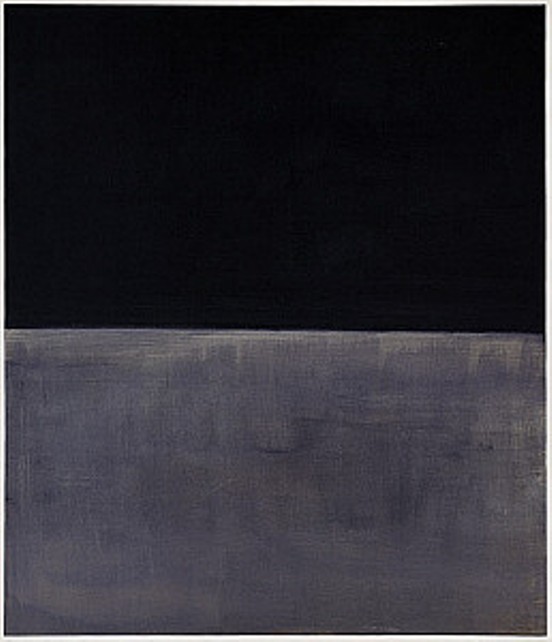 Mark Rothko, Untitled (Black on Grey), 1970
The paintings in this series are divided into two parts, each work has its upper section painted in a blackish brown acrylic, while the lower half - though the ratios differ from painting to painting - is made up of scrubbed, mudflat greys.
These paintings look almost like photographic abstractions.