|
November 19, 2012
Emil Otto Hoppé was Britain's most influential international photographer between 1907 and 1939. He was crucial link in British photography between Frederick Evans and those contrasting moderns, Bill Brandt and Cecil Beaton.
At the onset of the Great Depression in 1929 and throughout most of 1930 Hoppé crisscrossed the Australian continent making a nation wide documentation of depression-era Australia. It was part of a trip to India, Ceylon (Sri Lanka) and New Zealand.
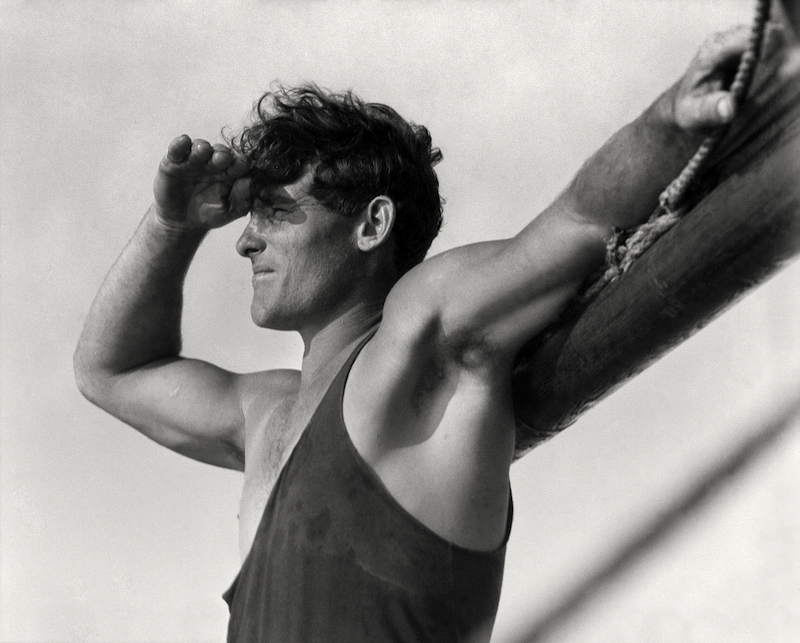 Emil Otto Hoppé, Pearl Lookout Man, Queensland, 1930
Hoppé was the undisputed leader of pictorial portraiture in Europe. He epitomised the celebrity portrait photographer and after 1925 he devoted himself with increasing commitment to travel photography.
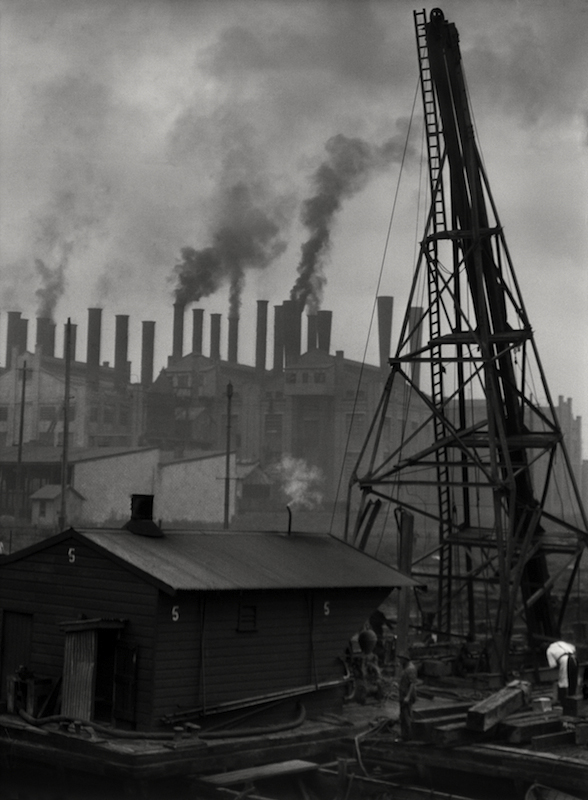 Emil Otto Hoppé, Power Station, Sydney Harbor, 1930
Though he had started out in 1902 using the fashionable soft-focus Pictorialism style of the day, by the 1920s he had begun to embrace modernism, displaying a hard-edged clarity and a stunning grasp of technique. His Australian work focuses on the everyday life of Australians – including the relationship of Aboriginals to their white “masters”. He was not immune to the typological temptations of modernist photography (ie., the “noble savage” depictions of Aboriginal hunters).
|


