|
December 2, 2012
I have referred to the Czech-born photographer Jitka Hanzlová, in an earlier post. Born in 1958, Jitka Hanzlova grew up in Communist Czechoslovakia before fleeing her home country and seeking asylum in Germany in 1982.
Influenced by her own life experiences in exile as well as recollected childhood memories, her practice revolves around photographic series that examine the identity of individuals, primarily women, set in their local environments. She has organised her work around different series in which she reflects upon her own life experiences, and upon the representation of the places and themes in the history of art.
In the earlier post I mentioned her forest series.
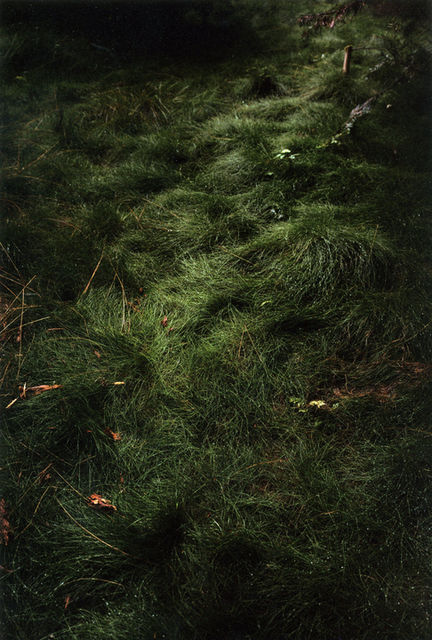 Jitka Hanzlová, Grass Path, from the series "Forest", 2003,Chromogenic Print
This series suggests a sense of the photographer’s deep identification with the mysteriousness of Europe's northern forests. She travelled to the places of her childhood, and to the forest next to where she grew up.
Hanzlova uses a strict vertical format to capture her subjects and pays particular attention to the effects of light, using its transcendental qualities to confer the significance of each subject's surroundings:
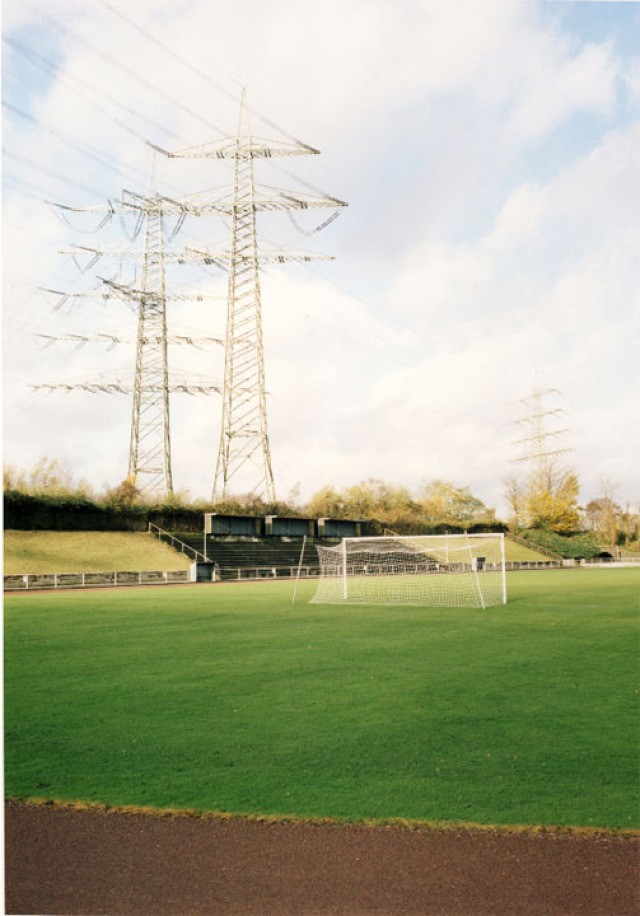 Jitka Hanzlova, Untitled (Stadium), from the series Here, 2008.
Hanzlova's series Here, begun in 1998 is an ongoing exploration of the artist's new home and evolving foreign life in Essen, Germany, or more specifically, the Ruhr basin. The series reflects upon the sensation of ‘non- belonging’ to a context. In this way, the subjects seem to be passive before the objective, and seem to be ‘intruders’ within their own milieu. The landscapes are strongly altered by the zone’s urban and industrial development, and the relationship between characters and environment seem marked by conflict.
|


