|
May 14, 2005
The south east and western parts of Australia are currently enjoying unseasonably warm weather with temperatures about 2C to 3C above the average. The autumn rains are late in this part of Australia, very late. There have been no rains as we begin to move into winter.
Australia is vulnerable to the increases in temperature and decreases in rainfall projected for the next 50 to 100 years, because it already has extensive arid and semi-arid areas, relatively high rainfall variability from year to year, and existing pressures on water supply in many areas.
This is not good news for those parts of the parched southeast of Australia with their low water supplies due to what many say is the ongoing drought.
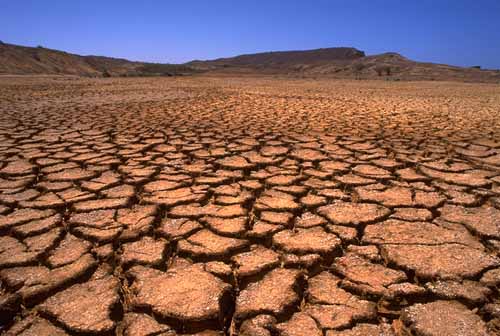
When I was having a drink in Manuka last Monday night after flying into Canberra I read an article in the Canberra Times about drought, lack of water and the town of Goulburn. Goulburn lies between Sydney and Canberra, and it is close to running out of water for its inhabitants. This situation of a big dry formed the core of my conversation with the waitresses, and again in the context of climate change with friends late Thursday afternoon, when we were waiting at the airport to fly back to Adelaide.
I remembered reading CSIRO modelling that says Australia's continental-average temperature has risen by about 0.7°C from 1910-1999, with most of this increase occurring after 1950. This increase will continue: by 2030, annual average temperatures wll be from 0.4 to 2.0°C higher over most of Australia; and by 2070, annual average temperatures will increase by 1.0 to 6.0°C over most of Australia with spatial variation.
The Canberra Times had a photo of a some water in a cracked and dried-out dam bed that once held a vast depth of water.This is the last of the drinking water, the shower water, the water to wash the dishes and laundry for the people of Goulburn.
The Australian has picked up the story. Amanda Hodge says:
With less than 2000 megalitres of water - less than eight months' supply - left in store, the town's situation is critical. And the drought has already played havoc with Goulburn's social fabric...This year, cherished public and private gardens are dead, the public swimming pool is about to close and footballers of all ages and codes are having to share the few rock-hard grounds still open.
Goulburn has few options to find more water. It can tap into a broken acquifer to would give it a few more months. It is unlikely to be able to build an emergency 8km pipeline to pump water back upstream from the Wollondilly River as Goulburn lies within Sydney's Warragamba Dam catchment area, and Sydney is also caught up in averting its looming water crisis.
So Goulburn will have truck water in for 22,000 people. That is expensive--too expensive for many. Presumably Goulburn is not recycling water and is not using treated effluent produced from wastewater plants. Time to become a little smarter.
Is it just the drought or natural variability?
The increase in termperature, lack of rain in winter, decreasing water and reluctance to shift to recycling is a familar story across parts of southern Australia. People continue to rely on the rains as the climate changes around them, even though Australia is heading into its third drought run, with 45 per cent of the nation drought-declared even before the large winter cereal crop is sown.
Climate change should be a dominant issue in planning Australia's medium and long-term future as Australia is 'vulnerable' since global warming will enhance the drying associated with El Niño events. Areas, such as WA's fast-growing Southwest Region, are places where significant impacts from global warming can be expected. The decrease in rainfall in WA's Southwest together with similar reductions on the southeast mainland, will lead to a further drying out across the country between now and 2070.
|





My thoughtful sister bought my wife a subscription to "Coast & Country" magazine which wings its way across the pacific to us each quarter. One of the stories is on the colonial grandeur of Goulburn. Plenty of pics of architecture with bright green cooch and yellow-green eucalypts.
The only non-green pic is one of an abandoned farm shed, but the tone of that picture matches the pretty blonde modeling "Thomas Cooke Clothing" on the opposing page.
I used to travel through the Southern Tablelands often. Beautiful country, hard to think it cant supply enough rain for its people. Like you said, it may require new thinking on water conservation. It appears that the lack of water is already having an effect;
But Stephenson doesnt say whether this drop in usage is because the water is almost gone or not.