Thought-Factory.net Philosophical Conversations Public Opinion philosophy.com Junk for code
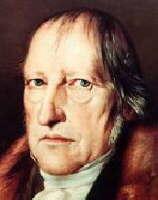
hegel
"When philosophy paints its grey in grey then has a shape of life grown old. By philosophy's grey in grey it cannot be rejuvenated but only understood. The owl of Minerva spreads its wings only with the falling of dusk." -- G.W.F. Hegel, 'Preface', Philosophy of Right.
RECENT ENTRIES
SEARCH
ARCHIVES
Library
Links - weblogs
Links - Political Rationalities
Links - Resources: Philosophy
Public Discussion
Resources
Cafe Philosophy
Philosophy Centres
Links - Resources: Other
Links - Web Connections
Other
www.thought-factory.net
'Constant revolutionizing of production, uninterrupted disturbance of all social conditions, everlasting uncertainity and agitation distinquish the bourgeois epoch from all earlier ones ... All that is solid melts into air, all that is holy is profaned.' Marx

from state to nation « Previous | |Next »
March 20, 2006

In Empire Hardt and Negri argue for a revamped Marxism in that they talk in terms of the transcendence of modern sovereignty…by the immanence of capital flows and their insistence on capitalist power as the major focus for resistance and political action. We can see this imperial corrosion of the state in the constraints placed on sovereignty in neo-liberal economic restructuring with the opening to international capital flows during the 1980s.This globalisation-induced upheaval is furthered witeh restructuring of industrial relations and the shift away from centralized bargaining to individual contracts.

But we have, contra Negri and Hardt, a reassertion of sovereignty vis-a-vis the refugee and the terrorist, rather than their thesis of the dissolution of sovereignty. This reassertion, which is associated with the demonisation of the Other, the Stranger, and their incarceration and punishment for simply being non-citizens, is part of the general apparatus of governmentality and biopower intrinsic to modern sovereignty.

Now this reassertion of sovereignty is associated with promises to provide Australians with a sense of security and 'home', appeals to the nation. So what do Hardt nad Negri say about the nation?

They say that:

The nation is a kind of ideological shortcut that attempts to free the concepts of sovereignty and modernity from the antagonism and crisis that define them. National sovereignty suspends the conflictual origins of modernity (when they are not definitively destroyed), and it closes the alternative paths within modernity that had refused to concede their powers to state authority. (p.95)

The conflictual orgins of modernity in Australia were the destruction of the indigenous peoples. Hardt and Negri then add:
The process of constructing the nation, which renewed the concept of sovereignty and gave it a new definition, quickly became in each and every historical context an ideological nightmare. The crisis of modernity, which is the contradictory co-presence of the multitude and a power that wants to reduce it to the rule of one----that is, the co-presence of a new productive set of free subjectivities and a disciplinary power that wants to exploit i----is not finally pacified or resolved by the concept of nation, any more than it was by the concept of sovereignty or state. The nation can only mask the crisis ideologically, displace it, and defer its power. (p. 97)

| Posted by Gary Sauer-Thompson at 10:58 PM | | Comments (6)
Comments

Comments

Gary, I read through the section in Multitude last night about revolutions being the process of increasing democratisation. Even the structure of the guerilla groups are more democratised than the systems they are opposing.

I think that has merit.

Seen in the light of the republic referendum in 1999, the political class didnt offer anything that would increase freedom or democratic involvement in the process.

Cameron,
I agree with you about the republican referendum under Paul Keating.

Would not Pauline Hanson's one nation be an expression of a populist revolt trying to democratize the institutions of liberal democracy?

Gary, One Nation don't fit in Hardt and Negri's thesis. I think I agree with them. One Nation didn't expand the democratisation at all. It was a populist movement that used old-school politics with an urban figurehead. Given the quick way they imploded I think it shows in the industrial style of politics there is really only room for a duopoly. Their implosion being helped along by Liberal and Labor is probably an example of that.

The Australian Democrats have a claim to it though. They came out of the unresponsive parliament. The centrist parties they amalgamated, Chipps leaving speech and the organisation of the Democrats (namely voting on policy by members rather than executive) are examples of a desire to increase the democratisation process.

Cameron,
I know that right wing populist reaction to the effects of globalization does not fit hardt and Negri's thesis. They only see progressive reactions to globalization.

But the last decade in Australia is marked by a conservative reaction to globalization at the levels of economics, politics and culture.

I'm not going to dismiss this reaction---and this populism is much more pronounced in the US--just becase it doesn't fit the neo-Marxist thesis of Hardt and Negri.

Marxism has traditionally been strong on economics and poor on politics.

Gary, But has there been a conservative reaction to globalisation? Havent we always been like that? Other than the reformist zeal of Whitlam and Keating, Australia has otherwise been a pretty staid, conservative, isolationist country.

I havent found myself agreeing with their definition of biopolitics yet. I am nodding my head at the decentralised patterns they are seeing in modern society though. I have participated in opensource software projects and know how easily structures like that can route around capital, hierarchy etc.

If you want a laugh at how industrialism doesnt doesnt understand opensource this is a good example.

I am up to how they are defining labor,


Cameron,
yes there is a conservative reaction to globalization, eg:

economic protectionism

conservative conceptions of nationalism