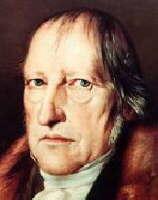
"When philosophy paints its grey in grey then has a shape of life grown old. By philosophy's grey in grey it cannot be rejuvenated but only understood. The owl of Minerva spreads its wings only with the falling of dusk." -- G.W.F. Hegel, 'Preface', Philosophy of Right.
|
|
'Constant revolutionizing of production, uninterrupted disturbance of all social conditions, everlasting uncertainity and agitation distinquish the bourgeois epoch from all earlier ones ... All that is solid melts into air, all that is holy is profaned.' Marx
|
|
|
Rorty: philosophy & democracy
« Previous |
|Next »
|
|
|
December 30, 2007
Richard Rorty, as is well known, argues for the irrelevance of philosophy to democracy. He does in terms of a historical argument. He says at Eurozine that:
Philosophy is a ladder that Western political thinking climbed up, and then shoved aside. Starting in the seventeenth century, philosophy played an important role in clearing the way for the establishment of democratic institutions in the West. It did so by secularizing political thinking – substituting questions about how human beings could lead happier lives for questions about how God's will might be done. Philosophers suggested that people should just put religious revelation to one side, at least for political purposes, and act as if human beings were on their own – free to shape their own laws and their own institutions to suit their felt needs, free to make a fresh start.
He adds that the eighteenth century, during the European Enlightenment, differences between political institutions, and movements of political opinion, reflected different philosophical views. Those sympathetic to the old regime were less likely to be materialistic atheists than were the people who wanted revolutionary social change.But now that:
... Enlightenment values are pretty much taken for granted throughout the West, this is no longer the case. Nowadays politics leads the way, and philosophy tags along behind. One first decides on a political outlook and then, if one has a taste for that sort of thing, looks for philosophical backup. But such a taste is optional, and rather uncommon. Most Western intellectuals know little about philosophy, and care still less. In their eyes, thinking that political proposals reflect philosophical convictions is like thinking that the tail wags the dog.
The philosophical justification for this position is anti-foundationalism; the view that contests the claim of Enlightenment rationalism that there is something above and beyond human history that can sit in judgment on that history.
Rorty says:
anti-foundationalists like myself agree with Hegel that Kant's categorical imperative is an empty abstraction until it is filled up with the sort of concrete detail that only historical experience can provide. We say the same about Jefferson's claim about self-evident human rights. On our view, moral principles are never more than ways of summing up a certain body of experience. To call them "a priori" or "self-evident" is to persist in using Plato's utterly misleading analogy between moral certainty and mathematical certainty.
To say that a statement is self-evident is, Rorty the anti-foundationalists argues, is merely an empty rhetorical gesture. The existence of the rights that the revolutionaries of the eighteenth century claimed for all human beings had not been evident to most European thinkers in the previous thousand years. That their existence seems self-evident to Americans and Europeans two hundred-odd years after they were first asserted is to be explained by culture-specific indoctrination rather than by a sort of connaturality between the human mind and moral truth.
|
|
|
| | Posted by Gary Sauer-Thompson at 8:56 PM | Permalink |
|
|
|
|
|
|
|


