|
August 26, 2009
Though urban violence is not new it has become more visible, mobile, and common. Its contemporary public face is often bad gangsta rapper gestures and the hoodie all the way over. The Leunig cartoon refers to the drunken violence in Melbourne that is associated with the multitude of clubs and bars:
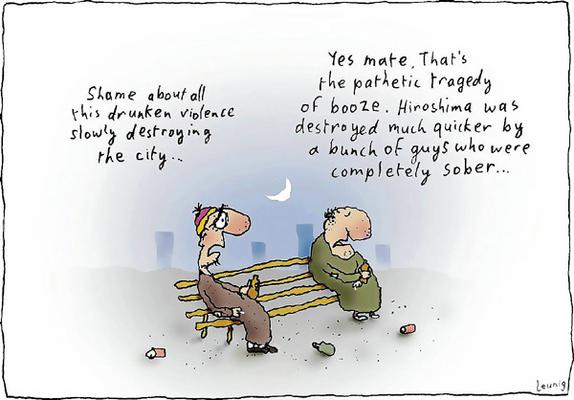
According to politicians and the press, late at night, Australian cities are transformed into ‘warzones' (even in Adelaide) where alcohol is fueling violence and thuggery around urban pubs, bars and clubs.The response of state governments across the country has been to impose ‘lockouts' upon licensed venues-bans on entering venues after a certain hour. The venues may remain open, and those inside can still purchase alcohol, but no new patrons can enter.
Guy Rundle in Crikey says:
The more casual violence of the CBD is a lot of things. Partly, it’s the old violence that used to be less visible out around suburban beer barns — many of which are now closing, as the CBD and other inner areas become the place to go. Partly it’s sheer levels of drunkenness, as spirits replace beer as the tipple of choice. Melbourne’s high levels of amphetamine use — and high levels of amphetamine in what is ostensibly ecstasy — fuel aggression. The culture of the crawl, rather than staying at one pub, increases circulation, and so on.
'Partly', is important, since alcohol is a contributing factor to violent acts. Many high-profile incidents of urban violence have involved no alcohol at all; doctors in hospital emergence wards say some assaults are not just alcohol-related, the police and prosecutors have pointed out that alcohol consumption had only a minor involvement. Rundle's argument is that a deeper cultural process going on, and one that covers both the more random CBD violence and what goes on further out.
He argues that the aggressiveness is an assertion of atomised individualism, a getting the first punch in against an indifferent world:
Far from being a generation that has it all, the kids at the station look like they don’t have much of anything. In a region stripped of manufacturing jobs, locked out of further education, effectively left to rot by a Labor government, the violence directed against Indian students is both racial and non-racial, directed against people from an international class who are going places that they’re not — trying to make a division between opportunistic and racial crimes is a false dichotomy. Often, attacking an Indian kid is simply a bonus for someone who was going to attack someone anyway.
|





I saw the City Messenger the other day. The lead article was about street l violence in Gouger street, with traders telling the reporter--Emily Charisson--- that it was a troubled precinct with a notorious reputation, sparked by a string of violent attacks that included three shootings.
The traders finger was pointed at the clubs and bars. They want these banned.